About
Cryosphere science shows irreversible ice loss is underway, but can be slowed with emission cuts. At a side event, scientists warned negotiators often soften evidence, urging choices guided by science.
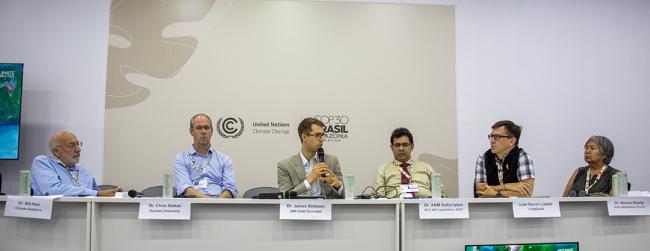
As global temperatures continue to rise, the Earth’s cryosphere is crossing dangerous thresholds with potentially irreversible consequences. This side event featured researchers from the Intergovernmental Panel on Climate Change (IPCC) and other leading organizations. It sought to highlight the urgency of protecting glaciers and ice sheets, the cascading impacts of their loss on ecosystems and societies, and the persistent gap between scientific evidence and political action.
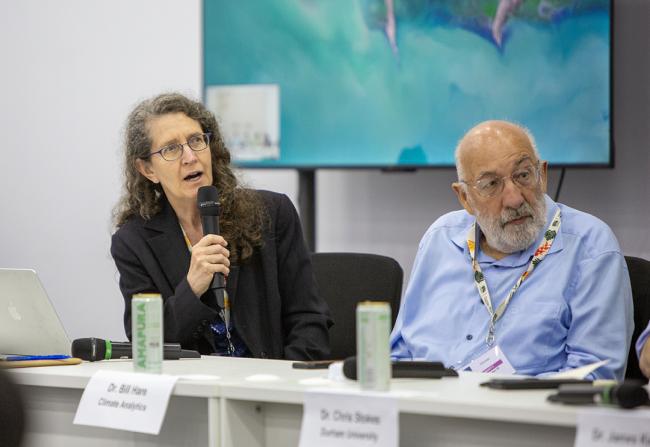
Moderator Pam Pearson, Director, International Cryosphere Climate Initiative (ICCI), opened the event by noting that despite mounting data, cryosphere science often fails to inform negotiations, and key findings are sometimes diluted in official texts. She recalled how recent negotiation drafts under the Research and Systematic Observation track in the climate process had softened language on cryosphere risks, weakening the scientific integrity of the outcomes.
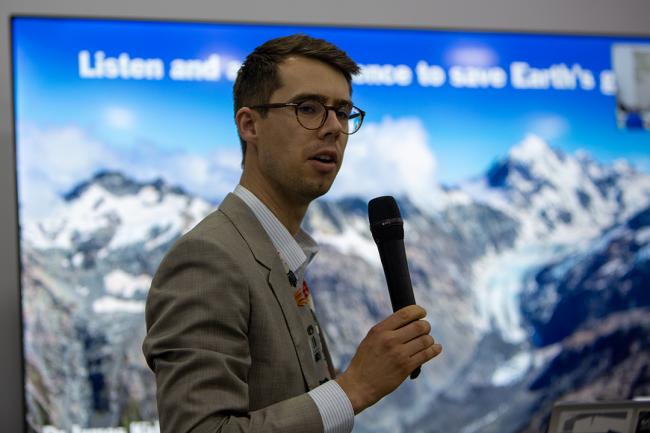
A first segment on actionable science began with James Kirkham, Chief Scientist at the Ambition on Melting Ice (AMI) High-Level Group, who stressed that glacier melt is no longer a distant concern. He cited research showing that between 2000 and 2023, the world lost about 5% of its glacier mass with some regions, such as the Caucasus and Central Europe, losing one-third or more. He warned that every additional 0.1°C of warming translates to roughly 2%additional glacier loss, and that around half of the world’s glacier ice could vanish under a 3°C scenario by the end of the century, whereas limiting warming to 1.5°C could preserve up to twice as much ice globally over centennial timescales, and up to 25 as much in some regions. “The message from science is clear,” he concluded, “we need to act now, and we need multilateral cooperation to do so.”
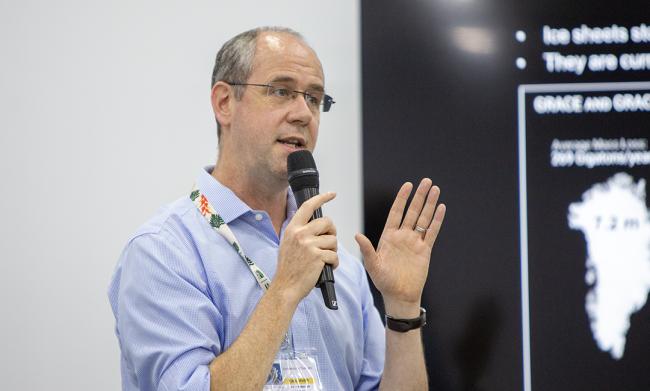
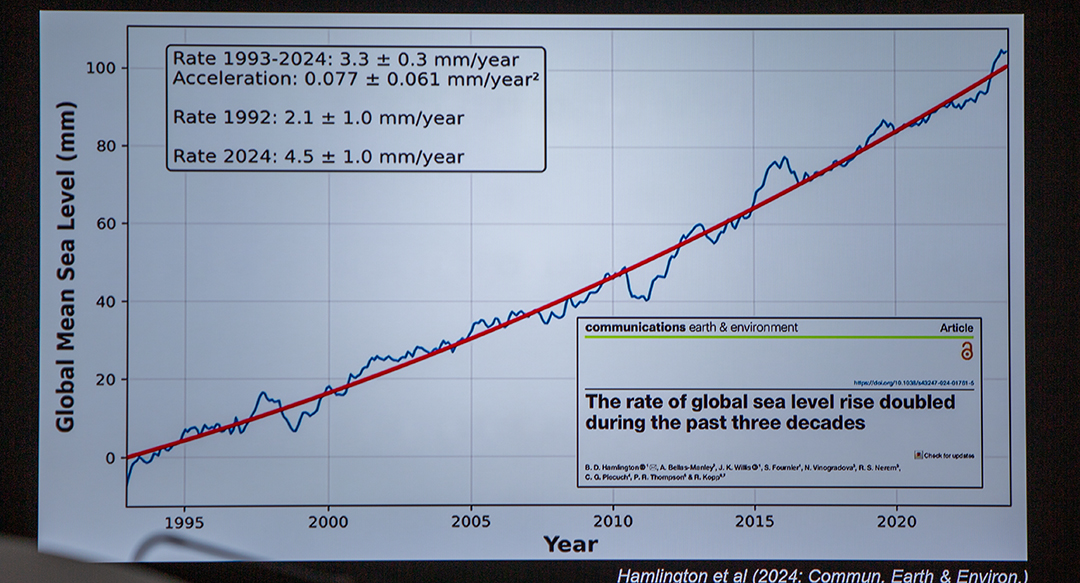
Chris Stokes, Professor of Glaciology at Durham University in the UK, explained that the so-called “safe” threshold for the Greenland and Antarctic ice sheets is around 1.0°C warming, meaning even 1.5°C is too high. Further, he said that at current trajectories—toward 2.5°C to 2.9°C—several meters of sea-level rise are effectively locked in over coming centuries. Stokes warned that geoengineering proposals to slow ice flow are unlikely to work, as the cryosphere’s feedback systems are interconnected. Policymakers, he said, must prepare for significant sea-level rise regardless of short-term emissions cuts.
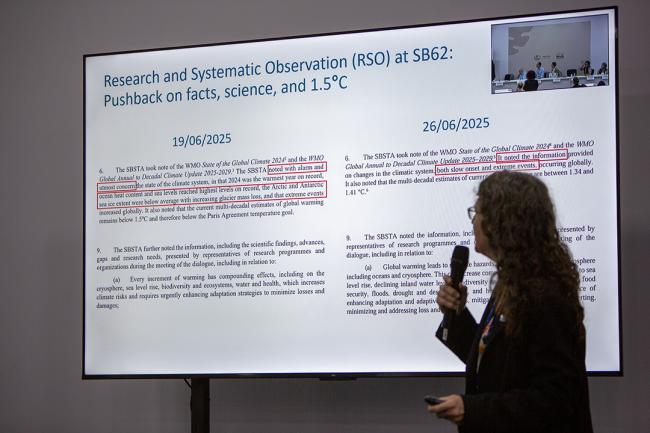
Bill Hare, Founder and CEO, Climate Analytics, presented pathways for limiting warming. He argued that while avoiding an overshoot of 1.5°C may no longer be realistic, 1.7°C could still be achievable with unprecedented action. This would require, he stressed, phasing out coal by the 2040s, gas by the 2050s, and oil by the 2060s, while aggressively cutting methane emissions from both energy and agriculture. He underscored that overshooting 1.5°C increases the likelihood of triggering irreversible cryosphere tipping points. “The climate system is exiting the Holocene,” he said. “To stabilize it, we must accelerate the transition faster than ever imagined.”
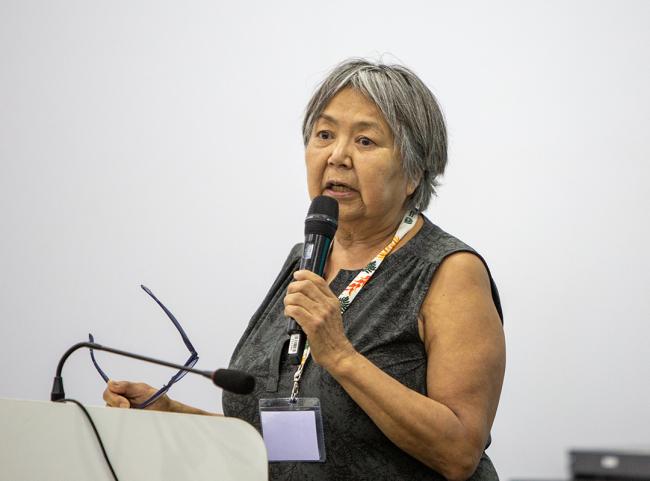
A second segment explored the lived consequences of cryosphere change. Norma Shorty, an Indigenous researcher with the Alaskan Athabascan Council, spoke about the deep ties between ice, culture, and sovereignty in the Yukon Territory. Indigenous stories, she noted, record the end of past ice ages and the rise of the seas, reminding us that “the study of ice is the study of humans.” She called for scientists to work with Indigenous knowledge holders to co-produce understanding and solutions.
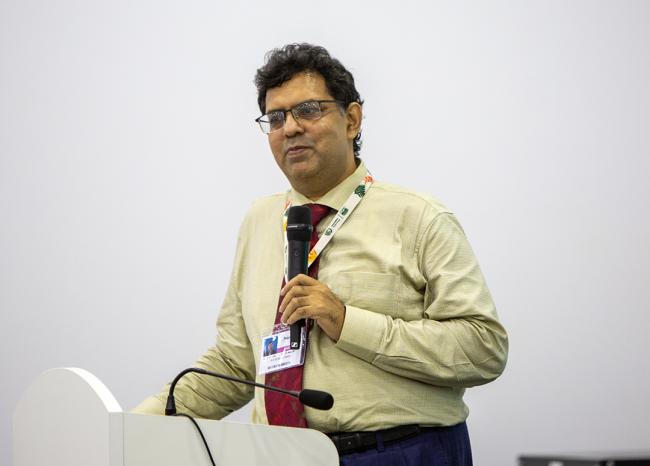
A.K.M. Saiful Islam, IPCC Seventh Assessment Report Lead Author and Professor at Bangladesh University of Engineering and Technology (BUET), described how melting glaciers in the Himalayas combine with sea-level rise to threaten Bangladesh’s 180 million people. Urban planners, he said, are ill-equipped to adapt to such cascading risks, while international negotiations continue to lag behind scientific reality.
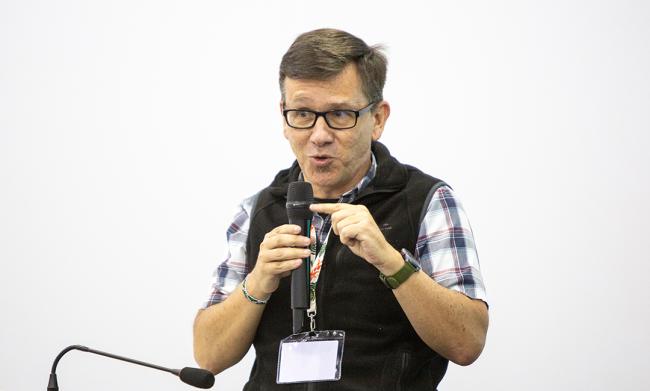
From the Andes, Luis Daniel Llambí, Programme Coordinator, Consortium for the Sustainable Development of the Andean Ecoregion (CONDESAN), explained that the loss of tropical and subpolar ice has both profound ecological and cultural consequences. “An Ecuador without glaciers is almost unimaginable,” he said, noting glaciers are part of its cultural fabric. He stressed the importance of science in helping media outlets “get the story right” about the cryosphere, including with respect to its impact on people.
Pearson added that two countries—Venezuela and Slovenia—have already lost all their glaciers, a fact still contested in the negotiations. She invited speakers from the two panel discussions to engage in dialogue with each other. In response to a question from Shorty on how narratives and Indigenous knowledge could better inform global understanding, Hare reflected on his collaborations with Indigenous communities in the Pacific and Australia, emphasizing that sea-level rise is erasing not only land but culture, history, and social cohesion as well. These non-economic losses, he added, must be recognized within the climate regime.
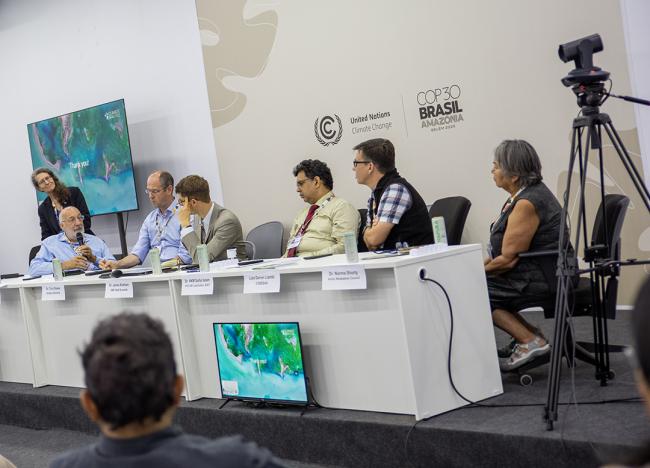
As the session concluded, Pearson stressed that the science on the cryosphere is unequivocal, but it remains sidelined in negotiations. Stokes added that the human dimension—stories, memory, and culture—may be the most powerful way to communicate the scale of what is being lost. “People are twenty times more likely to remember a story than a graph,” he noted, urging scientists to connect evidence to lived experience.
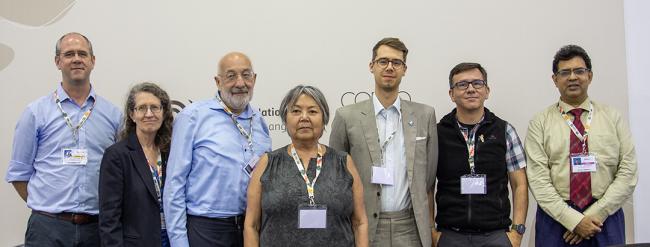
Organizers: AMI, ICCI, Karuna Foundation, and George Washington University
Contact: Amy Imdieke, ICCI | [email protected]
For more information: https://iccinet.org/
To receive free coverage of global environmental events delivered to your inbox, subscribe to the ENB Update newsletter.
All ENB photos are free to use with attribution. For 2025 UN Climate Change Conference Belem - Side Events , please use: Photo by IISD/ENB | Angeles Estrada Vigil
Selected Images
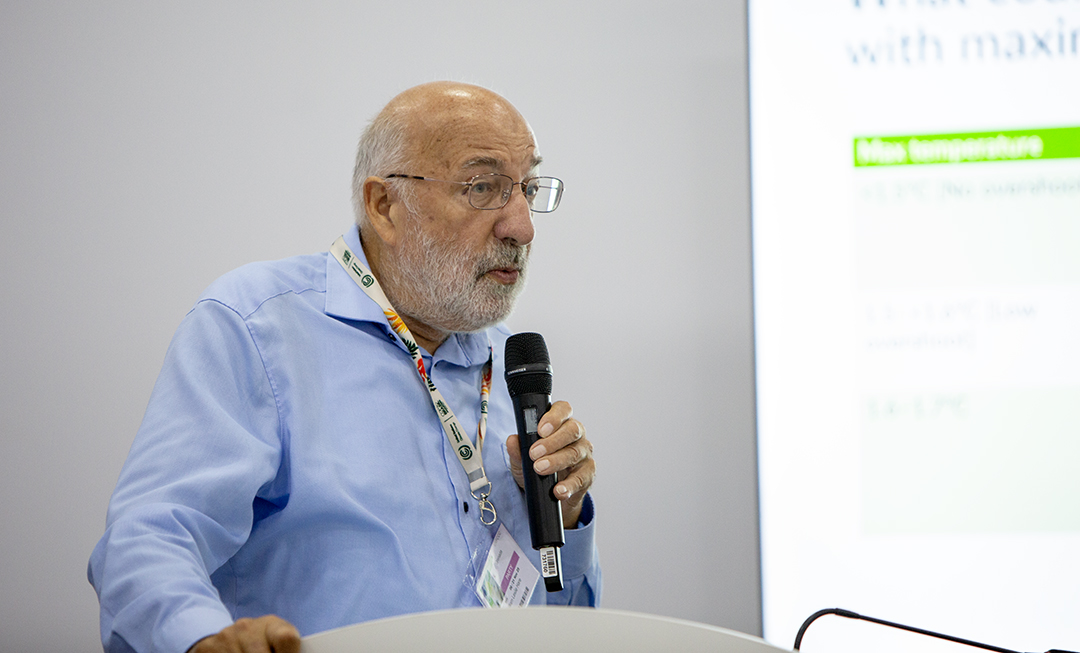
Bill Hare, Founder and CEO, Climate Analytics
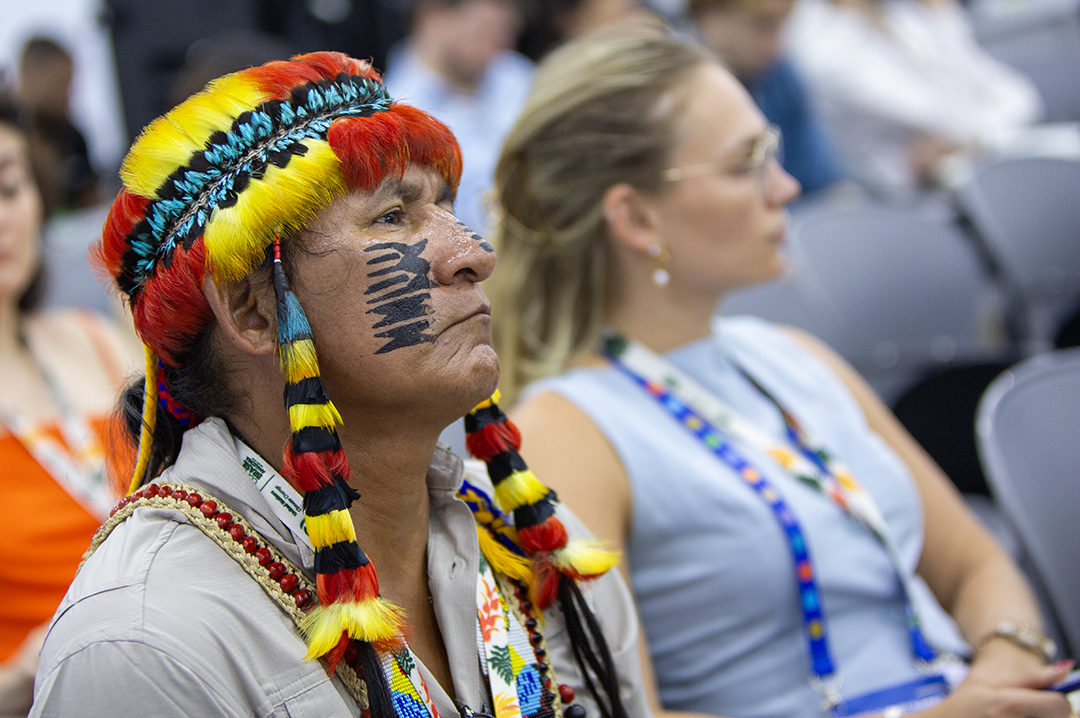
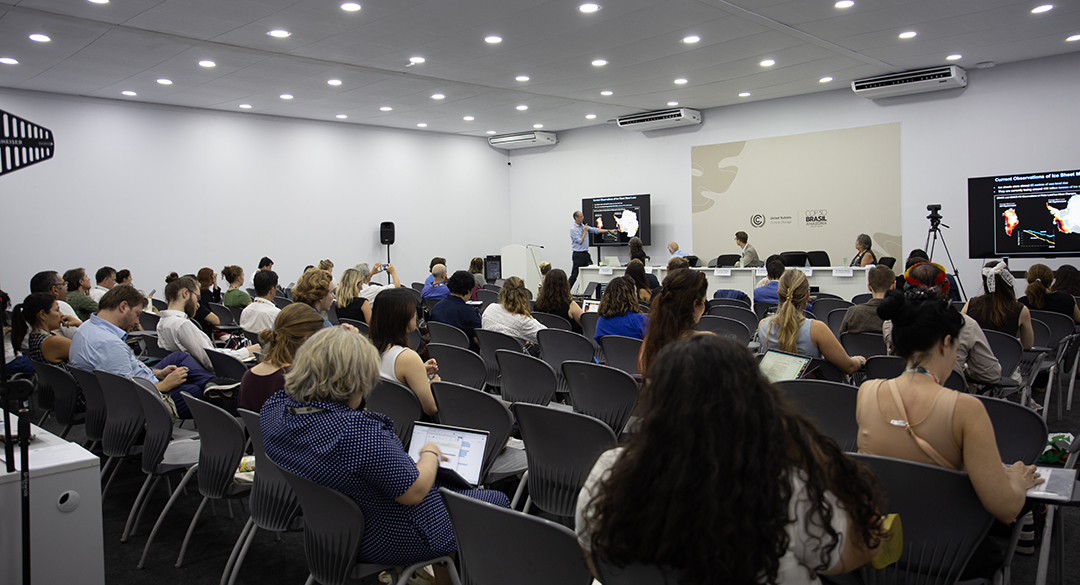
A view of the audience during a presentation by Chris Stokes, Professor of Glaciology at Durham University in the UK
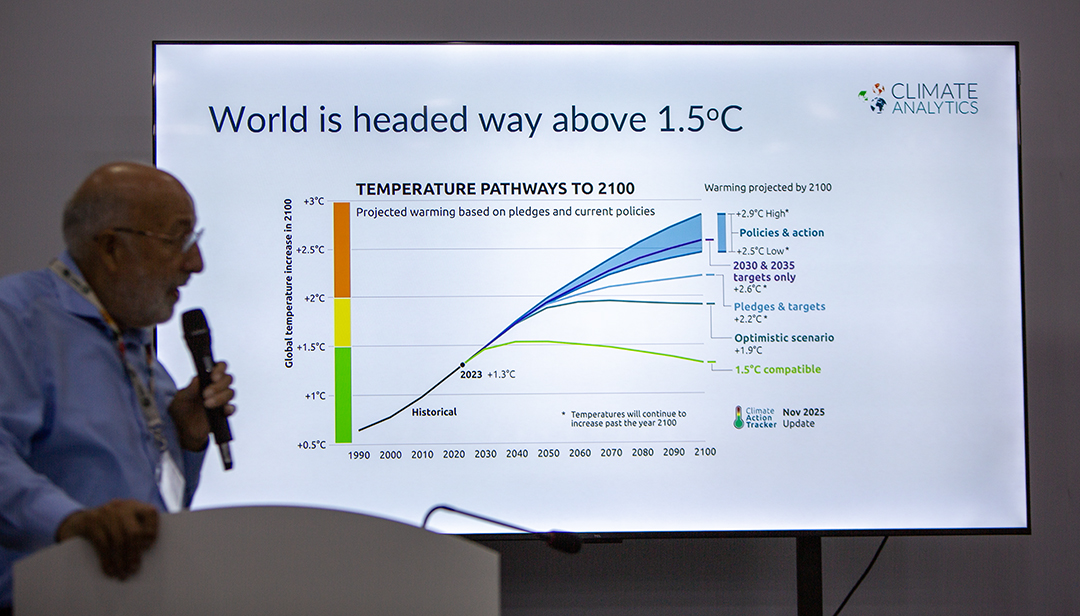
Bill Hare, Founder and CEO, Climate Analytics