Brokering Solutions to Safeguard Our Planet
19 February 2026
As I look back on 2025, I am excited by the ongoing commitment of governments to engage multilaterally to address our most pressing global environmental issues—pollution, climate change, and biodiversity loss.
Despite other geopolitical challenges evolving as we speak, the profound sense of purpose and solidarity that has defined our collective work under the Basel, Rotterdam, and Stockholm Conventions remain strong and resolute.
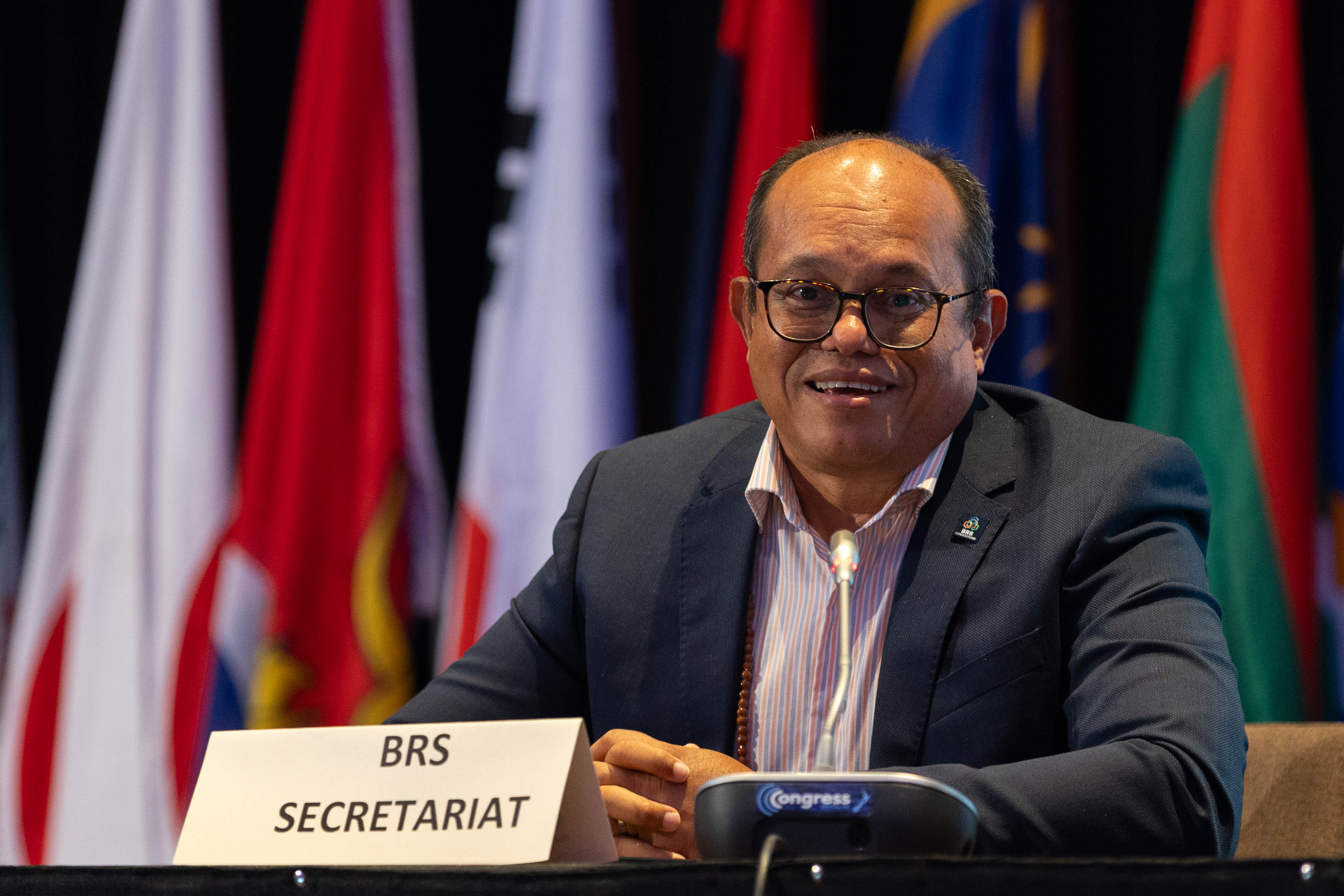
(This article by Rolph Payet, Executive Secretary, Basel, Rotterdam and Stockholm (BRS) Conventions, first appeared as the foreword in The State of Global Environmental Governance 2025.)
This was evident during the 2025 meetings of the Conferences of the Parties to the Basel, Rotterdam, and Stockholm Conventions, which saw the participation of over 2,000 negotiators from 182 parties joining us under the theme “Make Visible the Invisible.” A total of 56 decisions of global significance were taken through consensus, including the listing of new chemicals under the Stockholm and Rotterdam Conventions, as well as amendments to the Basel Convention aimed at further strengthening global safeguards against hazardous chemicals and wastes.
However, behind these achievements lay real challenges with additional complexities, capacity constraints, access to financing to implement commitments, and, in many cases, grappling with balancing economic growth and job creation against the demands of health and environmental considerations. Whilst such negotiations are often long and intense, I am always in awe at the determination of parties to find solutions that meet their needs, move from divergent positions to common understanding, and at the same time not short-circuit their collective ambition. There is indeed growing appreciation that multilateral environmental agreements do not operate in isolation from reality, nor are they just archives of resolutions and reports, but have the profound ability to bring states together to commit to joint action. Indeed, the UN80 reforms, which are ongoing, are pushing us beyond polishing the spotlight toward lighting the way. Furthermore, our role is to broker solutions, not get lost in endless meetings and plans that never see the light of day. Indeed, having our Conferences of the Parties every 2 years is advantageous as it allows us to implement those important decisions.
Critical to making a difference on the world stage are partnership and cooperation, that is, between countries, international, regional and local organizations, civil society, academia, as well as the private sector. Within the chemicals and waste cluster, cooperation with the private sector is indispensable as it holds both the solutions and resources to drive this change. Our cooperation with other global agreements, such as the Montreal Protocol on Substances that Deplete the Ozone Layer and the Convention on International Trade in Endangered Species of Wild Fauna and Flora, has shown that strengthening national customs organizations concomitantly addresses illegal traffic and dumping of ozone-depleting equipment and the illegal wildlife trade, as well as illegal trade in chemicals and wastes. Our global PCB elimination initiative has also shown how we need to work with the energy sector, public utilities, and development banks as we near the global phase-out of the chemical by 2028.
Underpinning such important work are the scientific processes as well as global monitoring programs. This became evident during the intergovernmental negotiating process to develop an international, legally binding instrument on plastic pollution, including in the marine environment. Whilst there were many challenges with the negotiations in 2025, it became clear that the most problematic areas were about the life cycle of plastics and chemicals in plastics, both of which are technically demanding and require appropriate time for negotiations. Whilst ambitions and tensions remain high, I am confident we will land with a plastics pollution instrument that addresses in a significant manner the global threat of plastic pollution.
Following the successful negotiations for the Global Framework on Chemicals, we also managed to conclude negotiations for the establishment of the Intergovernmental Science-Policy Panel on Chemicals, Waste and Pollution, not to rival existing panels, such as the Intergovernmental Panel on Climate Change and Intergovernmental Science-Policy Platform on Biodiversity and Ecosystem Services, but to complement their excellent ground-breaking work in ensuring we have robust science for decision making. I believe the new panel will incentivize more research into greener and more sustainable chemicals and products, as well as stimulate innovation in that important sector.
The environment and the economy are inseparable, and history has repeatedly shown that neglecting one in favour of the other can have severe consequences for livelihoods and public health. This is why sustainability—and the Sustainable Development Goals—must remain at the forefront of our priorities when negotiating multilaterally. Fishermen who once resisted the establishment of marine protected areas eventually came to recognize that these zones are essential for the long-term viability of their fisheries. The same lesson applies to industrial development pursued without adequate environmental safeguards: in the 1970s, Europe’s skies were choked by acid rain, and today many cities across the global South face dangerous levels of air pollution that threaten not only schoolchildren and the elderly, but productive workers.
Overall, the year was both productive and impactful, while also exposing important fissures—as well as opportunities—within the global environmental multilateral framework. These insights underscore the need to reinforce existing mechanisms even as we pursue new avenues of commitment, cooperation, and financing that bring these conventions into the daily lives of people everywhere. By advancing sustainable jobs, green chemicals, circular approaches to resources and wastes, as well as ensuring access to healthy food, clean water, and secure livelihoods, we can continue to work toward safeguarding our planet as we translate global commitments into tangible benefits for every citizen of planet Earth.
—Rolph Payet, Executive Secretary, Basel, Rotterdam and Stockholm Conventions