Minamata Convention on Mercury
21 October 2025
Over 2,000 years ago, the first emperor of China wanted to live forever, and believed that mercury held the key to eternal life. Over the centuries, the perception of mercury as mystical gave way to an idea that it was safe; safe enough to use as dental fillings for children, and to apply directly to scraped knees, even though there were concerns about the negative impacts of mercury exposure.
But in 1950, villagers in the small coastal town of Minamata began exhibiting strange and sometimes fatal neurological and other symptoms. It took until 1956 for this strange disease to be officially acknowledged as Minamata disease, a type of heavy metal poisoning caused by consuming contaminated fish and shellfish. In 1958, research confirmed that chemical waste containing mercury had been dumped into Minamata Bay by the Chisso Corporation since 1932. Subsequent research revealed other companies had also dumped similar waste in the Minamata Bay watershed. It was not until 1968 that the Japanese government officially recognized Minamata disease. Studies indicate that approximately 3,000 people fell ill, approximately 1,800 died, and many were born with severe birth defects.
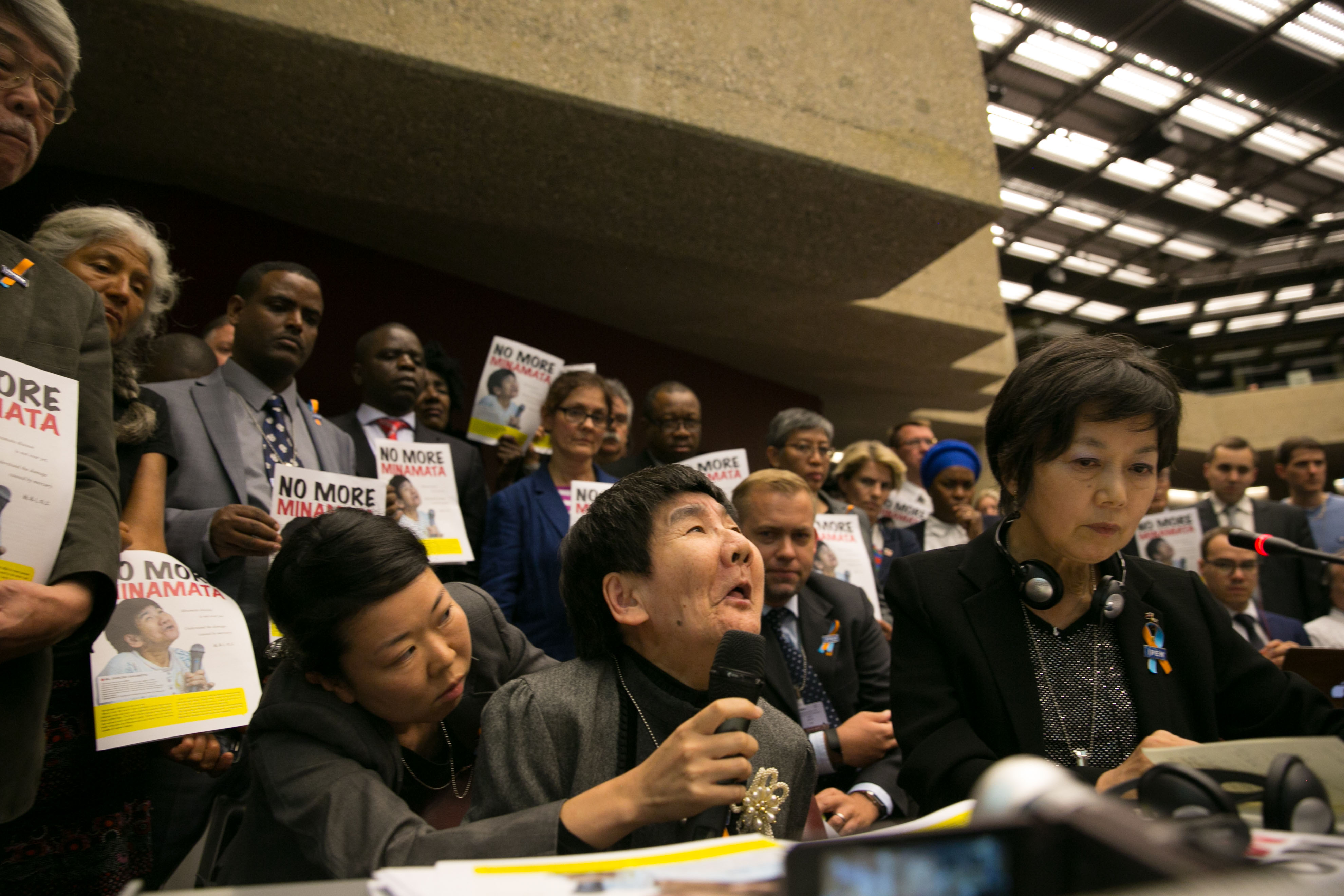
Incidences of Minamata disease have been found elsewhere in Japan and China. In 1971-1972, perhaps 500 people died in Iraq, and more than 6500 were poisoned when they ate or used wheat seed that had been treated with mercury as a fungicide. Panicked farmers then dumped the remaining seed in the Tigris river, polluting the riverbed and marine life and causing additional health impacts.
Despite widespread attention to the dangers of mercury poisoning since Minamata, the first truly global action to address mercury did not happen until 2001 when the United Nations Environment Programme (UNEP) launched a global assessment on mercury, its health effects, sources, transport, and prevention technologies. The assessment concluded in 2003 there was sufficient evidence of significant global adverse impacts to warrant international action to reduce the risks to human health and the environment. This led to adoption of a treaty ten years later in 2013 in Minamata, giving its name to the Minamata Convention on Mercury.
The Minamata Convention aims to reduce mercury releases into the atmosphere, land, and water to protect human health and the environment. But as Parties to the Convention gather in Geneva for the sixth meeting of the Conference of the Parties (COP-6) in November 2025, they will continue to grapple with the difficulty of addressing mercury when emissions and releases come from multiple sources, some of which are difficult to regulate, and all are linked to important economic interests.
What is Mercury?
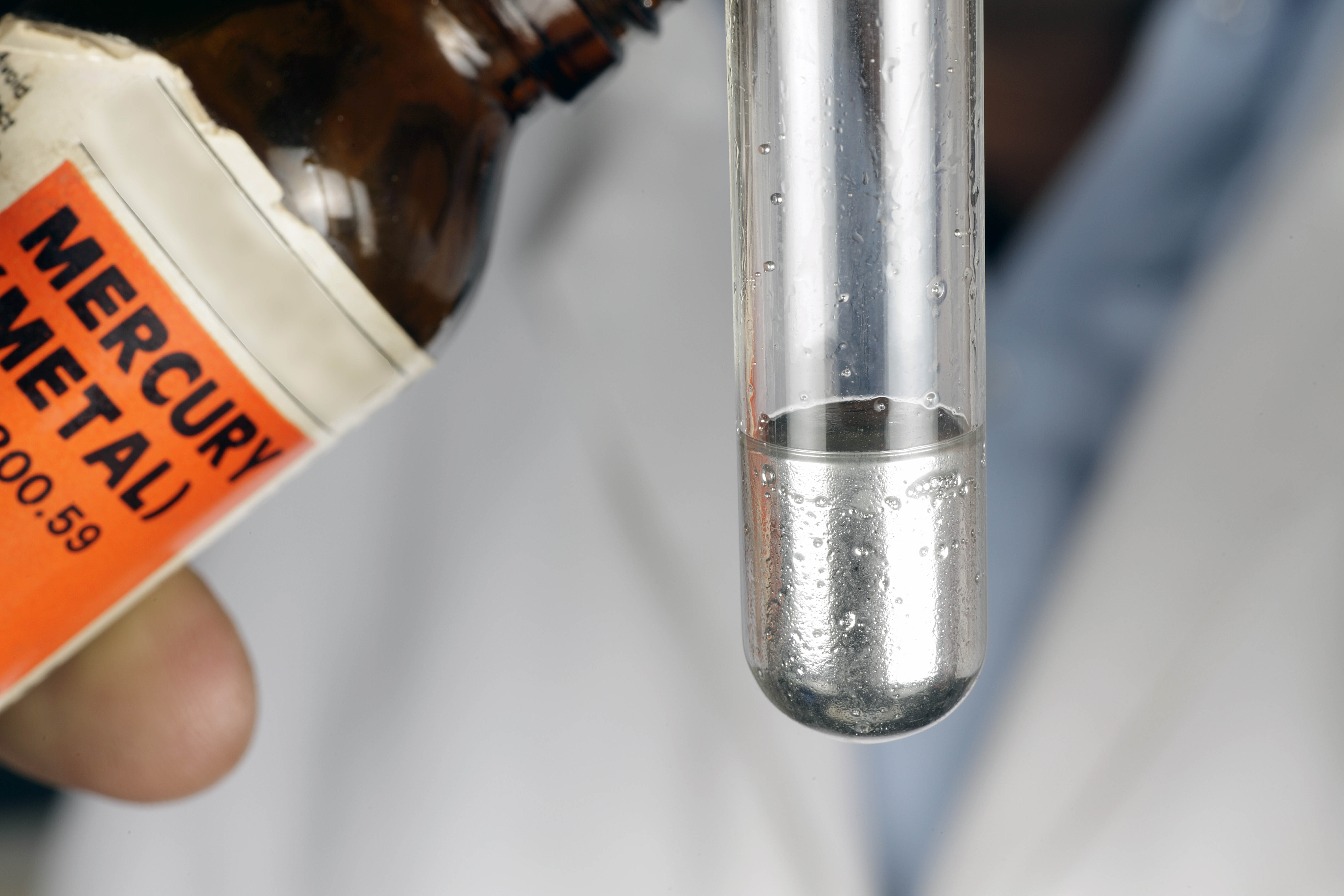
Mercury (Hg) is a widespread, inorganic, naturally occurring element. In its pure form, mercury exists as a liquid at room temperature and can vaporize quickly. Mercury is released into the air, water, and soil through erosion and weathering of rocks and soil containing mercury ore, volcanic eruptions, and human activities. Once released, mercury can be carried far from its emission source via air, water, and the food chain. Mercury is removed from this global cycle only through burial in deep ocean and lake sediments and subsurface soils.
Of particular concern is methylmercury, a toxin that is produced from mercury, largely in aquatic ecosystems, through microbial action and is biomagnified in aquatic food chains. The human health risks and environmental impacts of exposure to mercury, especially methylmercury, include serious neurological effects, brain and nerve damage, fetal physical and neurological development and birth defects, tremors, lowered fertility, kidney damage, damage to digestive systems, and contribution to cardiovascular disease.
Human use of mercury dates back at least to 1500 BC, when where Egyptians used it in the paint that adorned ancient tombs. Over time, humans discovered many ways to use mercury, including in large-scale industrial processes, medicine, medical equipment, consumer products, dental fillings and cosmetics. As use expanded, so did evidence, and eventually concern, for the impacts of mercury exposure. For example, in the 1500s Spaniards rediscovered the ancient Roman method of using mercury in mining to purify gold, which they brought to the Americas. Miners suffered documented negative health effects in Peru as early as the 1600s, including tremors and hallucinations, from what we now know as extensive mercury exposure. This method of artisanal small scale gold mining is still practiced today, particularly in developing countries.
In the 18th and 19th centuries, industrial workers used mercury nitrate as part of the process of turning fur from small animals, such as rabbits, into felt for hats. The constant inhalation of the vapors caused hatters to experience tremors, hallucinations, and psychosis, giving rise to the expression “mad as a hatter,” which Lewis Carroll turned into a character in Alice’s Adventures in Wonderland. Although it was clear that extensive exposure to mercury has harmful effects on humans, awareness of the potential for widespread mercury poisoning did not occur until the tragic contamination of Minamata Bay in Japan.
What is the Minamata Convention?
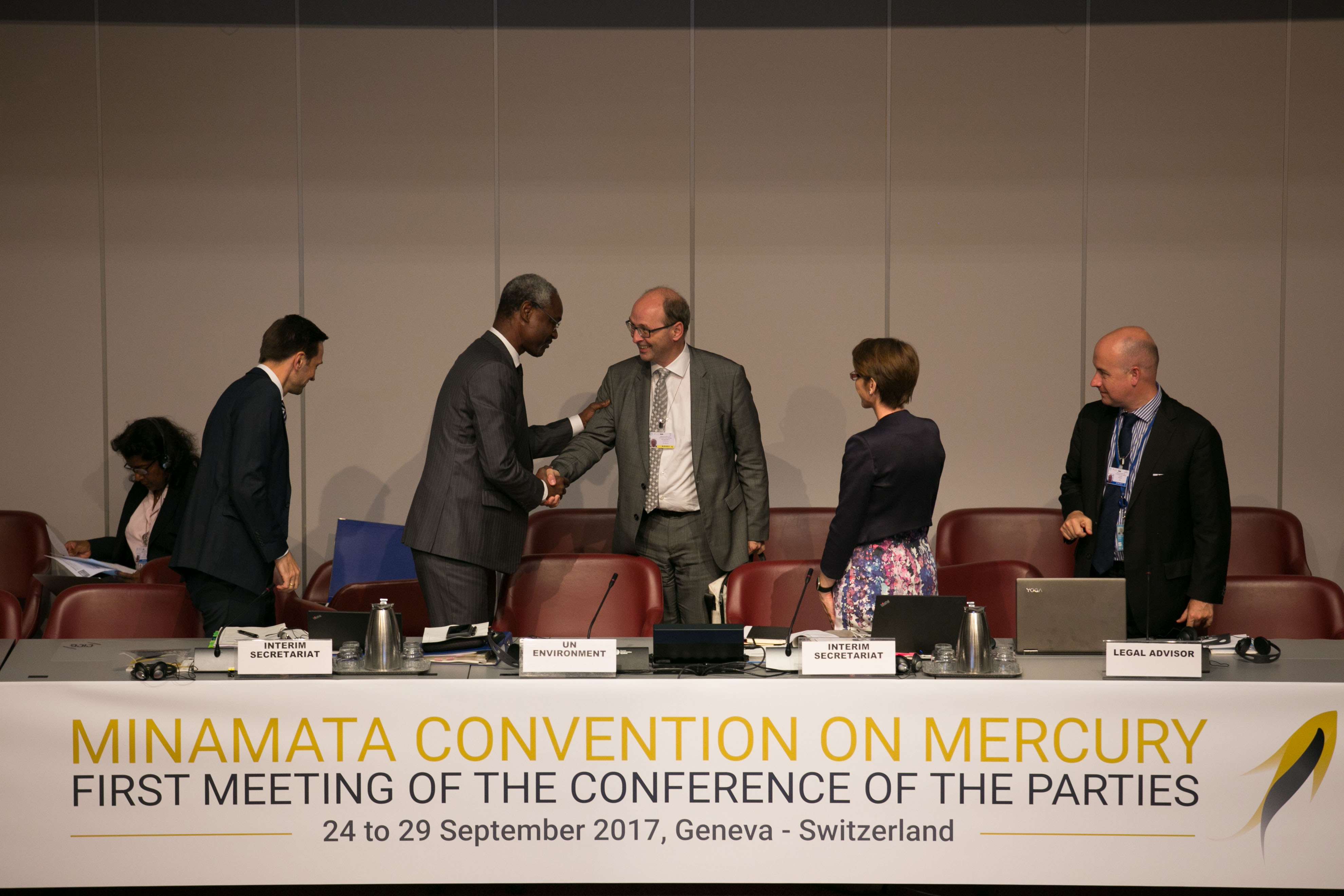
The Minamata Convention is the first dedicated legal instrument for mercury emissions and releases regardless of the source or where the mercury ends up in water, air, or land. The Convention covers the entire lifecycle of mercury, from production to waste, and addresses both human health and the environment. Negotiations began in 2010, the Convention was adopted in 2013, and it entered into force in 2017. There are currently 153 Parties to the Convention.
The Minamata Convention sets ambitious objectives that could have a rapid effect on the supply of and demand for mercury. It bans new mercury mines and existing mines can continue for only 15 years after a country joins the treaty. The Convention also phases out and phases down the use of mercury in a number of products and processes. Several of these phase-outs had a 2020 deadline, meaning that beginning in 2021, Parties could no longer manufacture or trade in many products that use or contain mercury. Such mercury-containing products include some batteries, switches and relays, compact fluorescent lamps under 30 watts, certain fluorescent tube lamps, mercury vapor lamps, cosmetics (such as skin lightening creams), pesticides, and certain measuring devices such as barometers and thermometers. Bans on other products started in 2025, including vacuum pumps and photographic film and paper, and by 2027 all the other types of fluorescent lamps will be banned. Chlor-alkali production using mercury, formerly a major source, is supposed to end in 2025. But countries can apply for an extension of five years.
Vaccines are excluded from the controls of the Convention. Given the lack of evidence of negative effects of thimerosal, a mercury-based preservative used in some vaccines, and the risks associated with limiting access to some vaccines, the World Health Organization (WHO) urged parties to exclude these products. The WHO and the World Dental Federation supported a phase down in the use of dental amalgam, which became the only product listed for restricted use.
The Convention carefully handles artisanal and small-scale gold mining (ASGM) and its use of mercury to mine gold. Countries with “more than insignificant ASGM” are to develop national action plans for the sector. These plans include national objectives and reduction targets, which could help promote accountability and transparency of efforts. Baseline estimates of the mercury used, and the practices of the sectors, help formulate these goals. The plans also call for steps to formalize or regulate the sector, strategies to reduce emissions, releases, and exposure to mercury in the sector, and a public health strategy to protect and treat ASGM miners and their communities.
For mercury emissions from coal-fired power plants and coal-fired industrial boilers, there is a similar nationally driven approach. China and India preferred a voluntary approach while developed countries, the African Group, and NGOs wanted mandatory limits. The Convention allows countries to choose which technologies and practices are economically viable.
There are also provisions on waste and storage, and a financial mechanism to provide resources to developing countries to implement the Convention.
Has the Minamata Convention been effective?
As the Convention matures, the path toward a mercury-free future grows more complex, marked by intricate technical advancements, obstructed by commercial interests, and complicated by political challenges.
Many mercury-added products are now banned, and COP-5 in 2023 added many more to the list. Acetaldehyde production using mercury catalysts, the cause of the Minamata Bay incident, was phased out in 2018, and chlor-alkali and polyurethane production using mercury catalysts are being phased out in 2025. Restrictions on the manufacture, trade and use of dental amalgam are underway. Parties are also preparing national inventories and plans on emission reductions from key sources such as coal-fired power plants, cement clinker production, and waste incineration.
Parties have also adopted guidance on best available techniques (BAT) and best environmental practices (BEP), and started national reporting on actions to phase out mercury. At COP-5, Parties launched an effectiveness evaluation process for the Convention, set a threshold value for controlling waste contaminated with mercury, and began the process toward a new Convention annex on the environmentally sound management of mercury waste. COP-5 also adopted decisions on the phaseout of dental amalgam and mercury-added cosmetics, and on considering the feasibility of using alternatives to mercury in the production of vinyl chloride monomer (VCM), a precursor chemical used to produce the plastic polyvinyl chloride (PVC).
Overall, the Minamata Convention has increased attention to mercury and led more governments and intergovernmental organizations to make public commitments to address the threat anthropogenic emissions pose to human health and the environment. But there is still much more to be done.
What’s Next?
When COP-6 convenes in November 2025, Parties will have to address challenges they still face in implementing the Convention, including trade control, waste management, and mercury use in cosmetics, dental fillings, ASGM, and industrial processes.
With regard to trade, Parties acknowledge the presence of informal or illegal primary mining in their territories and cases of mercury trade not conforming with the Convention, as well as illicit trafficking, illegal trade, or smuggling of mercury, in particular for use in ASGM. But Parties also need more support to address these problems.
The COP has already set thresholds for mercury waste, and the Convention is working with the Basel Convention on the Control of Transboundary Movements of Hazardous Wastes and Their Disposal, whose COP decided earlier this year to update the technical guidelines on the environmentally sound management of wastes consisting of, containing or contaminated with mercury or mercury compounds. COP-6 of the Minamata Convention is expected to launch a process to prepare for the review of mercury waste thresholds.
Eliminating mercury-added skin-lightening products is a multifaceted challenge. Skin lightening is commonly practiced around the world, with deep roots in colorism that privileges light-skinned people over dark-skinned people. In addition to identifying patients with elevated mercury exposure, it is important to address the pervasiveness of colorism as a major barrier to reducing the demand for mercury-containing cosmetics.
As Parties continue to address this challenge, they need to examine: the lack of national implementing legislation and/or measures; inadequate enforcement; lack of national capacity to develop and enforce measures to control mercury-added cosmetics; the need for global cooperation; and lack of awareness in key groups, including beauty center staff, customs officials, and healthcare professionals.
At COP-5, efforts by the African Group and other parties to phase out dental amalgam, which is still widely used for dental fillings, did not achieve consensus. The final decision only required parties that have not yet phased out dental amalgam to report on how they plan to do so. At COP-6 they will reconsider a proposal to phase out the use of mercury in dental amalgam by 2030.
ASGM continues to be the sector with the largest use, emissions, and releases of mercury globally, with significant impacts on human health, land, ecosystems, and biodiversity. Driven by increasing global demand for gold, especially in developing countries with expanding economies, mercury emissions from ASGM increased significantly between 2010 and 2015. Today it is estimated that 38% of all mercury pollution comes from the ASGM sector.
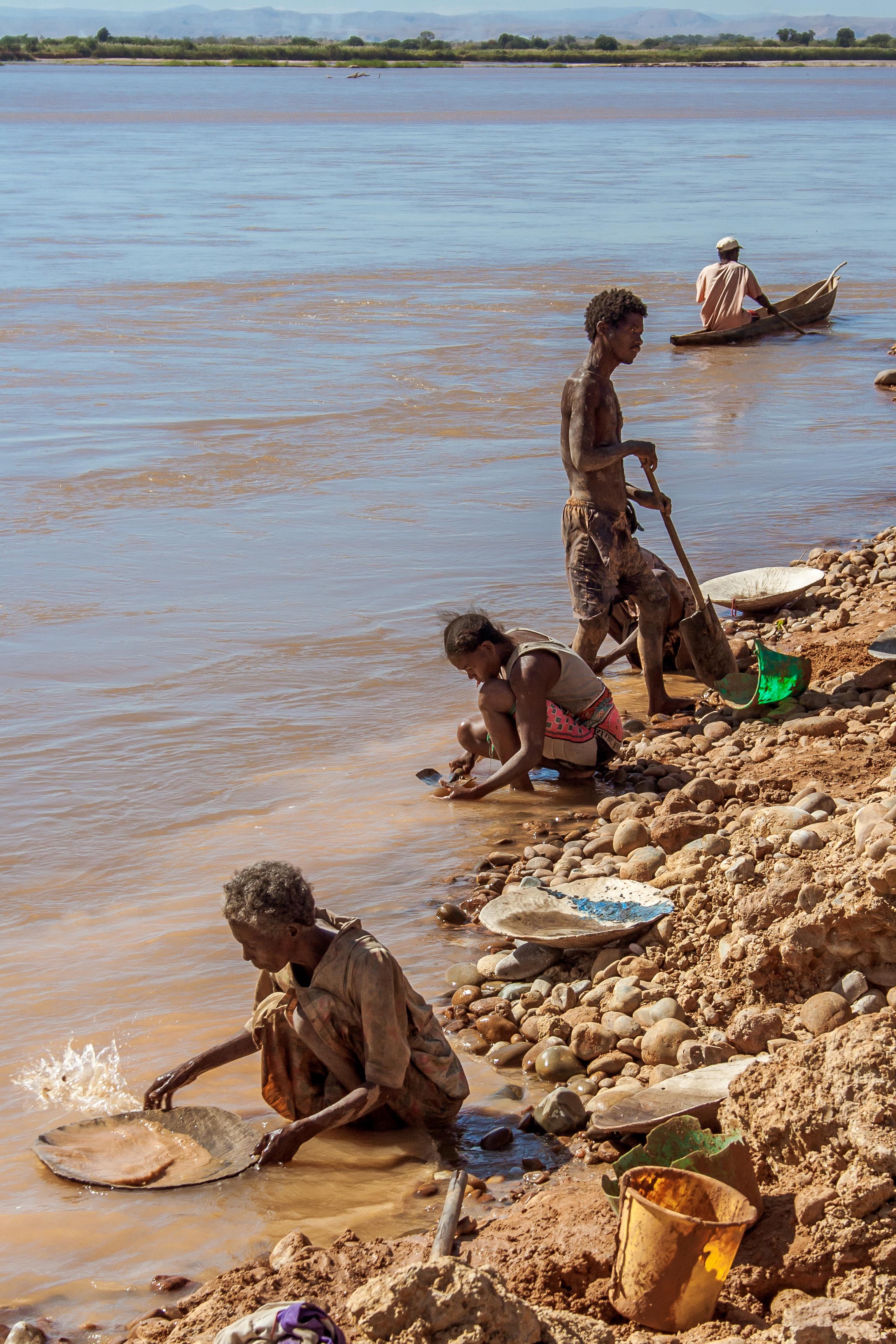
Most ASGM operations are part of the informal economy, and many operate illegally in forests and other remote places without environmental regulations or enforcement. Operations range in size from a few individuals to hundreds working in a particular location. ASGM produces up to 20% of the world’s gold, employs 10–15 million people, including women and children, in 80 countries, where it is an important part of local and regional economies. COP-6 will have to address effective engagement and participation of Indigenous Peoples, local communities, and other stakeholders, and improving national capacity to take steps to reduce, and where feasible eliminate, the use of mercury and mercury compounds in mining and processing.
As for industrial processes, COP-6 will address whether or not to phase out the use of mercury and mercury compounds as catalysts in VCM production. While many Parties argue that alternatives to mercury catalysts are now technically and economically feasible, China and India have expressed doubts.
The first formal assessment of the Minamata Convention’s effectiveness is scheduled for 2027. At the same time, the Convention still lacks specific targets and timetables for reducing emissions in key sectors and significant exemptions or caveats exist. New large power plants, industrial boilers, and cement clinkers are still expected to be built in many developing countries, and it is not clear if these countries will require and enforce BAT and BEP. Also unclear is if donor countries will provide funds needed for all developing countries to take the necessary measures to restrict ASGM.
How these and other issues play out at COP-6 will determine if the Minamata Convention can fulfil the regime’s aim to “Make Mercury History.”
Pamela Chasek, Ph.D., is the Co-founder and Executive Editor of the Earth Negotiations Bulletin.