Montreal Protocol on Substances that Deplete the Ozone Layer
20 October 2025
When scientists discovered a hole in the Earth’s ozone layer over Antarctica in 1985, the world was struck with fear. The reaction was swift. Public health experts immediately warned the increasing intensity of ultraviolet (UV) radiation may greatly increase the incidence of skin cancer and cataracts, and could significantly damage global crops and the aquatic food chain.
Scientists and the United Nations Environment Programme (UNEP) were already aware of the threat of stratospheric ozone depletion and had begun to respond. In fact, the 1985 Vienna Convention for the Protection of the Ozone Layer and the 1987 Montreal Protocol on Substances that Deplete the Ozone Layer are often seen as the most effective environmental treaties in the world. In fact, the World Meteorological Organization’s September 2025 Ozone Bulletin reported that the Earth’s protective ozone layer is healing and the ozone hole in 2024 was smaller than in recent years. Furthermore, the Montreal Protocol is part of the global response to climate change by addressing potent greenhouse gases.
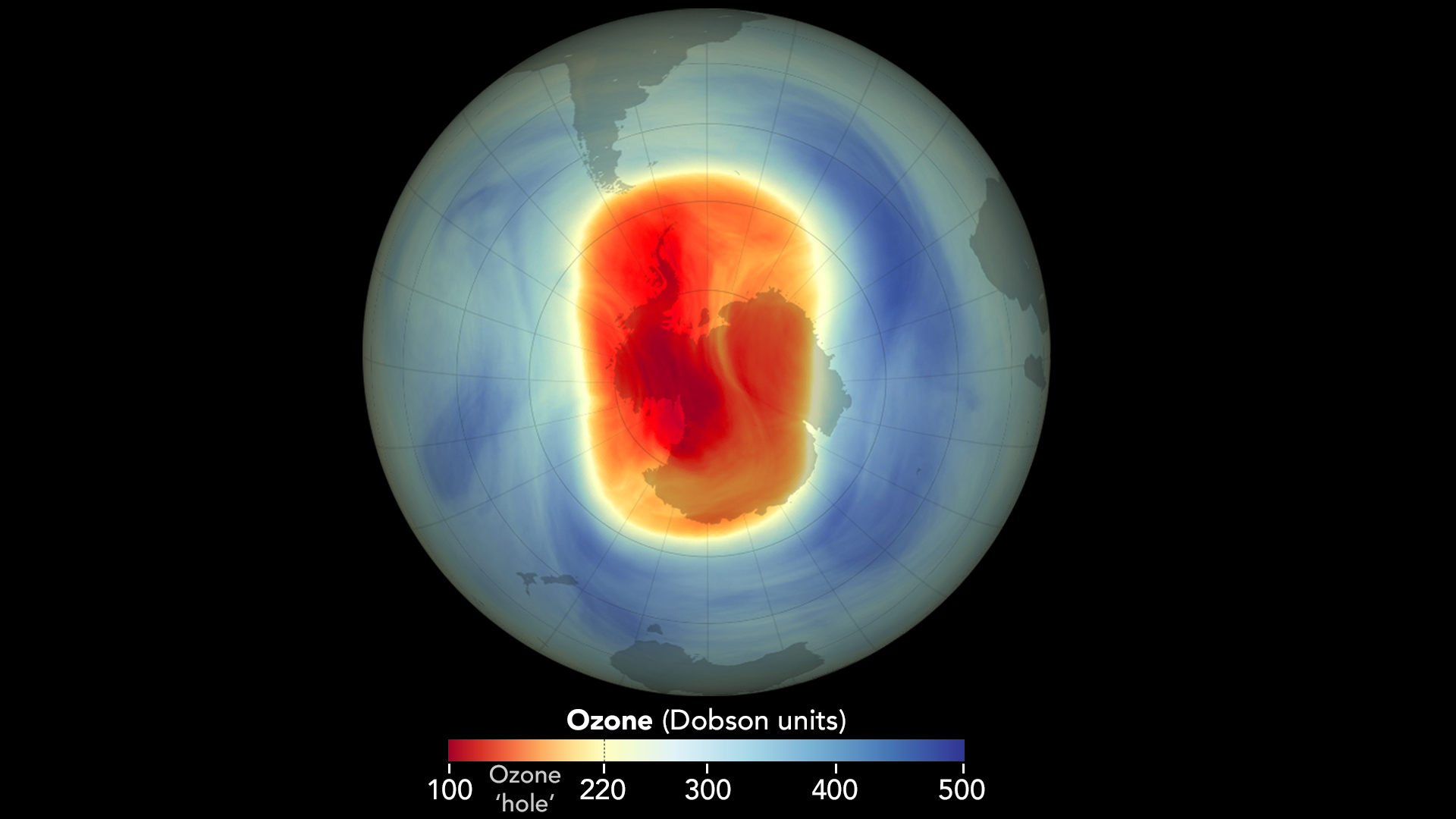
The protection of the ozone layer is one of multilateralism’s great success stories. If current policies remain in place, the ozone layer is expected to recover to 1980 values (before the appearance of the ozone hole) by around 2066 over the Antarctic, by 2045 over the Arctic, and by 2040 for the rest of the world, according to the most recent quadrennial Scientific Assessment of Ozone Depletion
But as Parties to the Vienna Convention and the Montreal Protocol gather in Nairobi in November 2025, in addition to celebrating the healing ozone layer and the Vienna Convention’s 40th anniversary, they will need to address some continuing threats to the Earth’s ozone layer and climate system.
Why is the ozone layer important?
Ozone is a pungent, slightly bluish gas composed of three oxygen atoms (O3). Nearly 90% of naturally occurring ozone resides in the stratosphere, the portion of the atmosphere ten to fifty kilometers (six to thirty miles) above the Earth. By absorbing the most dangerous UV-B radiation in the stratosphere, the ozone layer prevents harmful levels of this radiation from reaching the Earth’s surface.
Increased exposure to UV radiation can cause skin cancer, cataracts and weakened immune systems in humans. It can damage aquatic food chains, and cause direct damage to crustaceans and fish eggs, threatening fisheries and other aquatic resources that contribute to the global food supply. Furthermore, even a 10% reduction in stratospheric ozone could reduce plant production by about 6%, reducing global crop production. Ozone depletion also threatens plants, animals and microbes that provide important ecosystem services that the planet relies on for clean air and water, and the absorption of carbon dioxide.
Concern about ozone depletion
Created in the 1920s to replace flammable and noxious refrigerants, chlorofluorocarbons (CFCs) are inert, nonflammable, nontoxic, colorless, odorless, and adaptable to a wide variety of uses. By the mid-1970s, CFCs had become the chemical of choice for coolants in air-conditioning and refrigeration systems, propellants in aerosol sprays, solvents in the cleaning of electronic components, and the blowing agent for the manufacture of flexible and rigid foam.
In 1974, scientists Mario Molina and F. Sherwood Rowland published a paper showcasing their research suggesting that long-lived organic halogen compounds, such as CFCs, could reach the stratosphere where they would be dissociated by UV light, releasing chlorine atoms. These chlorine atoms act as a catalyst in the destruction of ozone molecules. Furthermore, they found CFCs can live for decades in the stratosphere. In fact, according to the US Environmental Protection Agency, one chlorine atom can destroy over 100,000 ozone molecules before it is removed from the stratosphere.
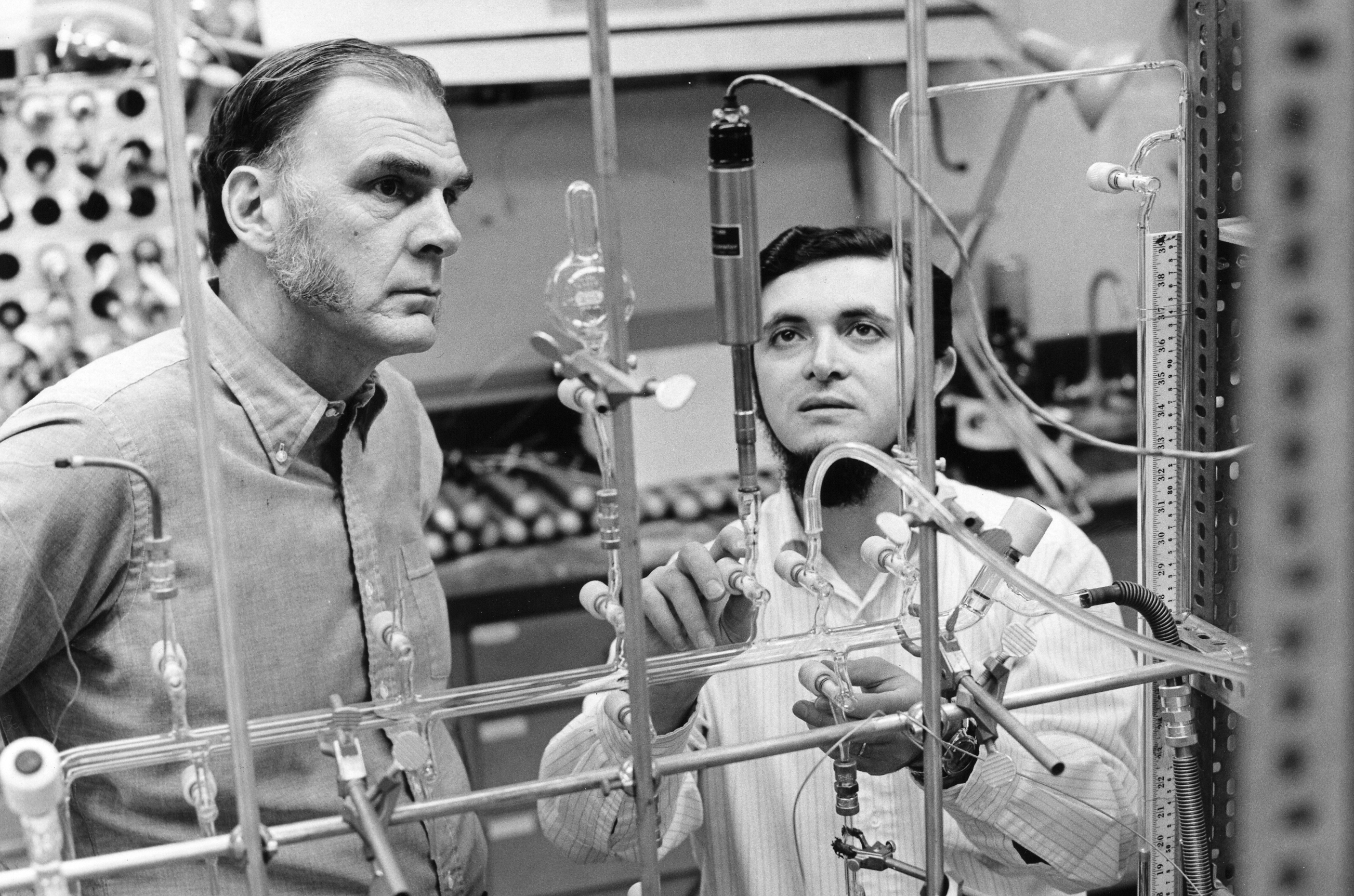
“The years following the publication of our paper were hectic,” said Molina, “as we had decided to communicate the CFC–ozone issue not only to other scientists, but also to policy makers and to the news media; we realized this was the only way to ensure that society would take some measures to alleviate the problem.”
Molina and Roland’s research, which was awarded the 1995 Nobel Prize in Chemistry, along with the confirmation of an ozone hole above the Antarctic by British scientists Joseph Farman, Brian Gardiner, and Jonathan Shanklin in 1985, were the catalysts that spurred the international community to coordinate an effective response to this shared crisis.
What are the Vienna Convention and the Montreal Protocol?
UNEP responded to concerns about the health of the ozone layer in 1977 by adopting the World Plan of Action on the Ozone Layer. This plan, which called for intensive international research and monitoring of the ozone layer, was followed in 1981 by a decision to draft a global framework convention on stratospheric ozone protection. This ultimately led to the adoption of the Vienna Convention for the Protection of the Ozone Layer in 1985.
The Vienna Convention was a dramatic step forward to protect the ozone layer. Often called a “framework convention” because it serves as a framework for efforts to protect the Earth’s ozone layer, it focused on research, cooperation and monitoring. However, spurred on by the discovery of the Antarctic ozone hole, just two years later in 1987, the Montreal Protocol on Substances that Deplete the Ozone Layer was adopted and included control measures for certain CFCs and halons, a class of chemicals that were commonly used as fire extinguishing agents.
The Montreal Protocol mandated that industrialized countries freeze and then reduce by 50% their production and use of the five most widely used CFCs by the year 2000. Production of three key halons would be frozen on the same terms. Developing countries (Article 5 Parties) were given ten extra years to meet each obligation, allowing them to increase their use of these chemicals before taking on commitments. This grace period was necessary to get developing countries on board, especially since they argued they deserved access to these important chemicals for their economic development and that industrialized countries had emitted almost all of the CFCs in the atmosphere to that point.
This grace period reflects the principle of common but differentiated responsibilities, which has since become a feature of global environmental politics. The principle states that all countries have a common responsibility to address global environmental issues but in some cases, “developed” countries have the responsibility to act first or enact more measures because of their contribution to the problem or their access to greater financial and technological resources to address it.
The protocol also includes provisions establishing scientific and technological assessment panels to provide Parties with independent and authoritative information, requiring Parties to report on their ozone depleting substance (ODS) production and use, banning trade in CFCs and halons with countries that did not ratify the agreement, creating provisions for reviewing the effectiveness of the regime, and strengthening controls through amendments and adjustments by a decision of the Meeting of the Parties (MOP).
The Protocol’s decisions have always been taken based on sound science. The Protocol has three assessment panels—the Technology and Economic Assessment Panel, the Scientific Assessment Panel, and the Environmental Effects Assessment Panel—which provide the necessary expertise to investigate and review the latest scientific developments. Moreover, the Montreal Protocol was crafted so that if scientific evidence shows further action is needed, adjustments and amendments can be made. This option has been used to great effect with the adoption of the London, Copenhagen, Montreal, Beijing, and Kigali Amendments.
Each amendment strengthened control measures under the Protocol. The 1990 London Amendment and Adjustment required that Parties completely phase out the production and use of the original eight CFCs and halons, as well as carbon tetrachloride and all other CFCs and halons by the year 2000 and methyl chloroform by 2005. In 1992, the Copenhagen Amendment accelerated the existing phase-out schedules; added controls on methyl bromide, a toxic fumigant used in agriculture and once the second most widely used insecticide in the world; and agreed to phase out hydrochlorofluorocarbons (HCFCs), used in refrigeration, by 2030.
The 1997 Montreal Amendment included the phaseout of HCFCs in developing countries, as well as the phaseout of methyl bromide in developed and developing countries in 2005 and 2015, respectively. The 1999 Beijing Amendment included tightened controls on the production and trade of HCFCs. Bromochloromethane was also added to the list of controlled substances with phaseout targeted for 2004.
The establishment of the Multilateral Fund for the Implementation of the Montreal Protocol in 1991 was an early milestone. This dedicated, stand-alone Fund provides financial and technical assistance to Article 5 Parties to help them comply with the control measures of the Protocol. Since its inception, the Multilateral Fund has supported over 10,000 projects including industrial conversion, technical assistance, training and capacity building worth over USD 4.2 billion.
The Vienna Convention and the Montreal Protocol have 198 parties, representing universal ratification.
There are several elements that have contributed to the Montreal Protocol’s success, including the partnerships between governments, industry, scientists, non-governmental organizations (NGOs), and academia. Another key to success has been the development and availability of alternatives to ODS. If there were no alternatives, the Protocol wouldn’t have worked. But the Protocol has provided a stable framework for industry to plan their research and innovation and ensure a smooth transition to these alternatives.
Climate and ozone
From the outset, the ozone regime has played a large role in combating both climate change and ozone depletion. While CFCs and HCFCs have been best known for their ozone-depleting potential, they also have a significant global warming potential and contribute to climate change. Thus, the Protocol has had significant climate co-benefits: by phasing out these substances, greenhouse gas emissions have also decreased.
These climate co-benefits have been enhanced through the adoption and entry into force of the 2016 Kigali Amendment. The amendment calls for a gradual reduction in the consumption and production of hydrofluorocarbons (HFCs), which are potent greenhouse gases. HFCs are used primarily in air-conditioning systems, where they replaced HCFCs. Initially, HFCs were welcomed because of their low ozone-depleting potential, and they seemed to make a good substitute for HCFCs. But Parties did not take their impact on the climate into account. The global implementation of the Kigali Amendment is envisioned to avoid as much as half a degree Celsius of warming by the end of the century.
What’s next?
Despite the success of the Montreal Protocol, there is still more work to be done. When delegates convene in Nairobi for the thirty-seventh Meeting of the Parties (MOP37) on 4 November 2025 they will address these issues as they seek to finetune the balance between advancing the Protocol’s implementation and enhancing the protection of both the ozone layer and the climate.
Although most ODS are either phased out or on their way to being phased out, the Montreal Protocol still allows some quantities of ODS to be produced and used for certain applications through essential use exemptions. Cost-effective alternatives to these applications need to be developed. Although the development of environmentally-friendly alternatives is promising, the use of HFCs continues, in response to higher global temperatures that trigger the need for enhanced cooling solutions. The Montreal Protocol needs to address this issue, walking the delicate line of limiting HFC emissions while also catering to the needs of countries that endure extremely high temperatures.
Large quantities of ODS can still be found in old equipment such as refrigeration systems and air conditioners, especially in Article 5 countries. These chemicals will be released into the atmosphere if not properly reclaimed and destroyed. Parties to the Protocol will discuss the need for studies and the development of strategies to find medium- and long-term solutions to the significant accumulation of inventories of refrigerant gases nearing the end of their life cycles in Article 5 Parties, and highlight concern about the increasing volume of such substances and the impact on those countries lacking the necessary technology or economic capacity to dispose of them.
Prior to MOP37, an informal meeting on facilitating the implementation of the Montreal Protocol will be held on 2 November 2025. This will enable interested parties to reflect on possible ways of dealing with illegal production of and illegal trade in controlled substances under the Montreal Protocol, and identify potential gaps in the non-compliance procedure, challenges, tools, ideas, and suggestions for improvement. The informal meeting will report back to the MOP, which is expected to take a decision on the way forward.
Parties are also expected to start the replenishment process for the Multilateral Fund. The Multilateral Fund is replenished every three years with a decision taken by the MOP. Parties need to agree on the level of replenishment for the Fund in 2026 based on a report produced by the Technology and Economic Assessment Panel (TEAP), which assesses the needs of Article 5 countries in order to comply with the obligations under the Protocol. At this meeting of the MOP, Parties must develop the draft terms of reference for the TEAP study, which comprises the report on the 2027–2029 replenishment.
Parties are also expected to address issues aimed at strengthening the Montreal Protocol and addressing emerging issues that could threaten the health of the ozone layer and the climate. One is enhancing atmospheric monitoring sites to better track emissions of controlled substances. Another issue is the growth in the production and use of feedstocks, since associated emissions from their use as well as transport, distribution, storage, handling, and repackaging are not insignificant, as had been assumed in the past. They will also review current methodologies for estimating, reporting, and reducing HFC-23 emissions from HCFC-22 production.
Parties will also examine the continued use of halon 1301 in aviation, which was currently projected to continue for at least the next 50 years if alternatives were banned owing to their inclusion in the ban on the use of perfluoroalkyl and polyfluoroalkyl substances (PFAS). Other issues include sharing information and experiences on strategies, policies and activities of existing regional centres of excellence and their approaches in promoting sustainable cooling and cold chains, to implement the Kigali Amendment.
The wide range of issues to be considered by MOP37 points to the fact that even the most successful multilateral environmental agreement must always stay ahead of implementation challenges, new technologies, new substances, and threats due to illegal trade. While there is expected to be a robust debate on these and other issues, the end goal remains the same: ensuring the effectiveness of the Convention and the Protocol for the continued health of the ozone layer, people and planet.
Pamela Chasek, Ph.D., is the Co-founder and Executive Editor of the Earth Negotiations Bulletin.