About
What would it take to unite climate and biodiversity agendas? Speakers from science and policy stress that neither can succeed alone, urging collaboration, better data, and funding to bridge divides and protect both ecosystems and the climate.
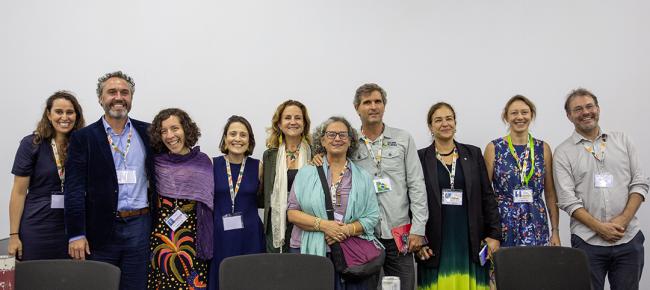
Climate change and biodiversity loss are twin crises that exacerbate each other’s impacts. Although both are recognized as global priorities, their policy frameworks have largely evolved in isolation, often creating fragmented or even conflicting responses. This side event, held during what several speakers described as a significant milestone – the first climate COP to take place in the Amazon – aimed at bridging the longstanding divide between climate and biodiversity policy by exploring ways to align the efforts of the UN Framework Convention on Climate Change (UNFCCC) and the Convention on Biological Diversity (CBD). The event stressed the role of science in underpinning coherent policymaking, highlighted the centrality of nature-based solutions for achieving climate goals, and called for stronger institutional and financial mechanisms to align climate and biodiversity action across global, national, and local levels.
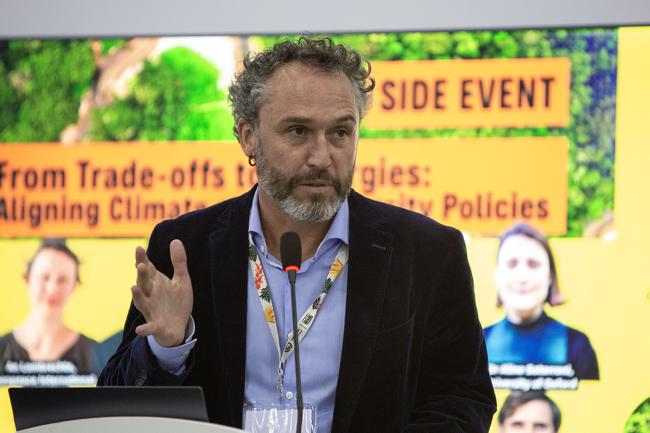
Moderator James Allen, Executive Director of OLAB, a Brazilian food and forests strategic consulting firm, set the tone by reflecting on the symbolic distance between the two COPs – Belém for the UNFCCC and Cali for the CBD – despite both taking place on the same continent. That distance, he said, mirrors the institutional divide between the conventions, which have a different set of parties, mandates, and funding streams. Yet, he added, their objectives are deeply intertwined, since biodiversity loss drives and is driven by climate change.
In a first panel on translating scientific understanding into concrete national examples, particularly from Brazil, Nathalie Seddon, Professor of Biodiversity at the University of Oxford and Founding Director of the Nature-based Solutions Initiative (NbSI), called for an integrated vision grounded in both science and moral responsibility. She observed that climate change and biodiversity loss are symptoms of a “broken relationship” between humans and the Earth system. Further, when ecosystems degrade, both mitigation and adaptation become much harder to undertake; thus, biodiversity must not be treated as an afterthought to climate policy. Seddon warned against “industrializing the biosphere in the name of cooling the planet” and urged collaboration with Indigenous and local communities. She evoked the Brazilian notion of mutirão – collective effort – which the COP 30 Presidency has put at the center of its vision, as a guiding principle for restoring balance.
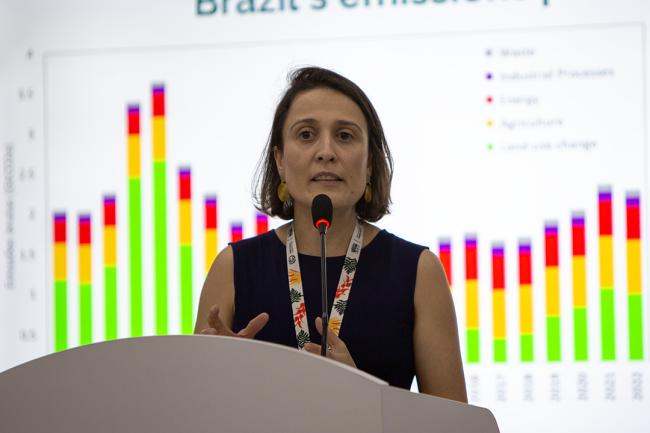
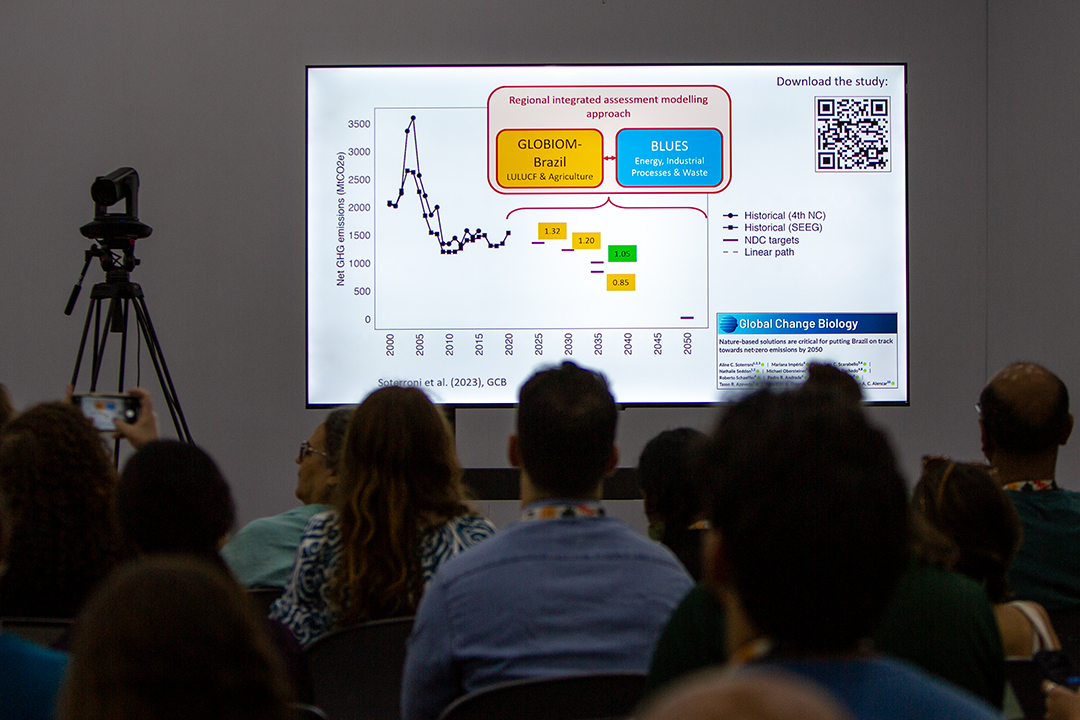
Aline Soterroni, Senior Research Fellow at Oxford Net Zero and NbSI, explained how Brazil’s national climate commitments intertwine with biodiversity goals. About three-quarters of Brazil’s greenhouse gas emissions come from land-use-related activities, mainly deforestation, which also drives biodiversity loss. She cited a recently published article she led that used a regional integrated assessment modeling approach to project possible pathways to net zero, and found, among others, that roughly 80% of Brazil’s emission reductions could be achieved through NbS, primarily by halting deforestation and restoring ecosystems. “There is no net zero in Brazil without nature,” she stressed, adding that protecting forests also sustains ecosystem services and supports the livelihoods of forest-dependent communities who have contributed least to the crisis.
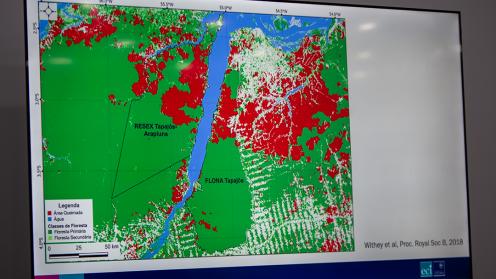
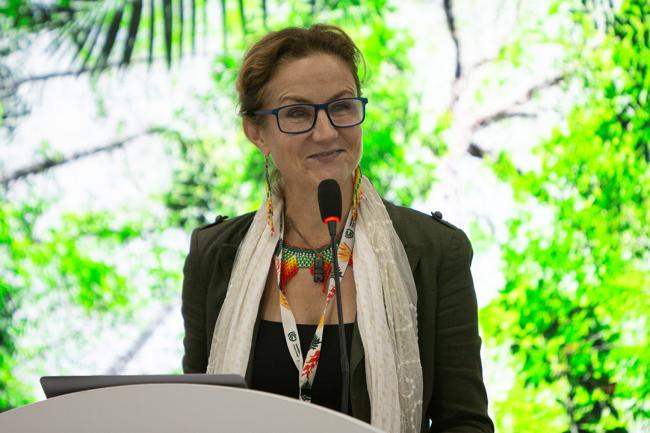
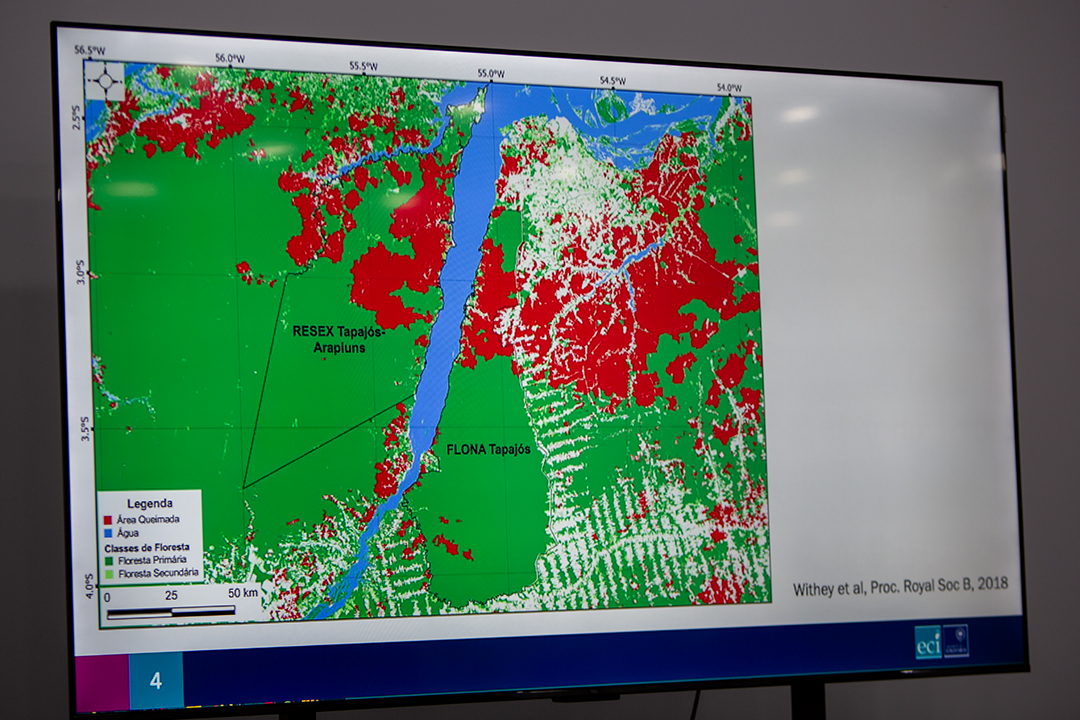
Erika Berenguer, Senior Research Associate, University of Oxford and Lancaster University, warned that fires pose a major and underestimated threat to Brazil’s climate goals. She noted that the vast fires now engulfing parts of the Amazon are almost entirely human-ignited and have grown more destructive as droughts intensify. She pointed to findings on the record burning of Amazonian flooded forests showing that, in 2023 and 2024, burned flooded forests covered an area larger than all deforested land combined, releasing emissions several times greater than Kenya’s annual emissions. These fires killed large numbers of trees and erode both biodiversity and carbon stocks. “We must fireproof the Amazon,” she urged, stressing that the fire crisis undermines every form of climate action.
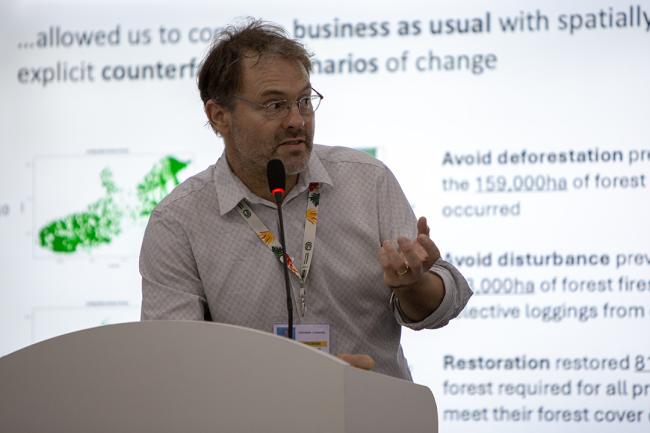
Jos Barlow, Lancaster University and the Federal University of Pará, and co-founder of the Sustainable Amazon Network, presented research comparing the benefits of avoiding forest degradation with those of restoration. He explained that the findings show that preventing disturbance in existing forests delivers high carbon and biodiversity benefits at low cost, while restoration alone cannot compensate for continued degradation. Combined interventions, as well as avoiding damage to intact forests, he added, remain the most cost-effective conservation strategies.
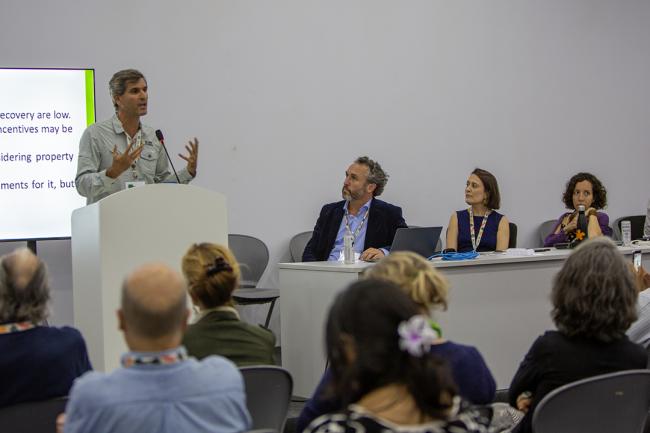
Luis Fernando Guedes Pinto, Executive Director, SOS Mata Atlântica Foundation, followed with a study on forest recovery in the Atlantic Forest. From 1993 to 2022, he said, 4.9 million hectares were restored, yet 22% of that area was then once again later lost. Much of the recovery occurred on private and smallholder lands, revealing that incentives must reach local landowners. Keeping regrown forests standing is relatively inexpensive, but requires strong policies and sustained investment, he said. “We cannot afford to lose what is coming back,” he concluded.
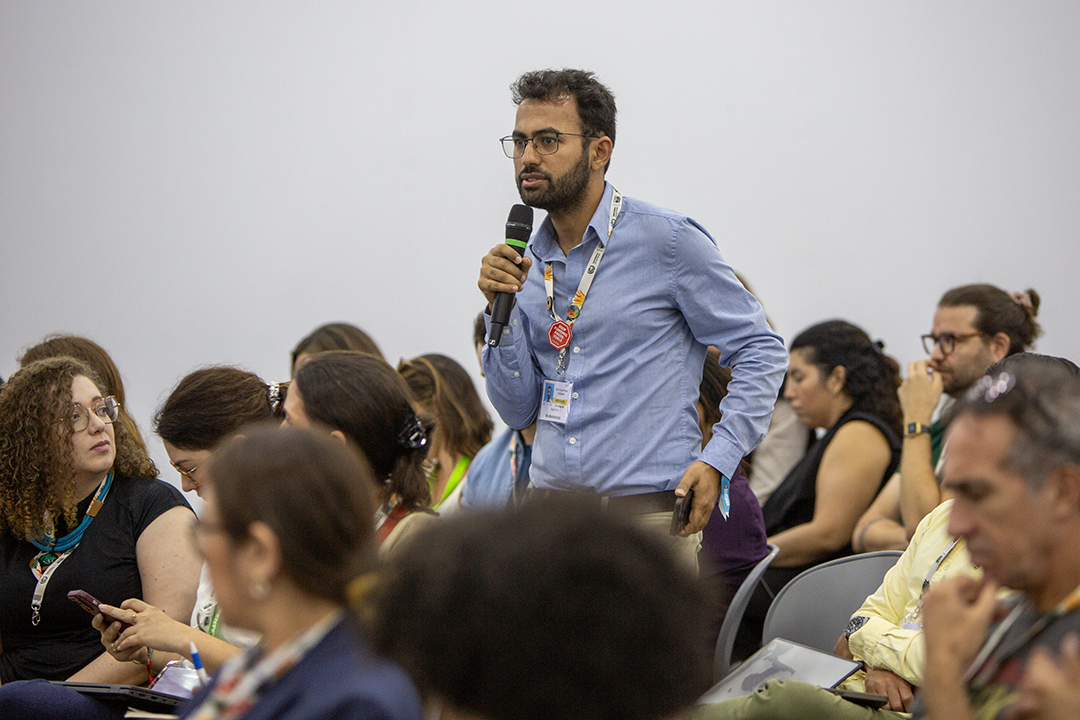
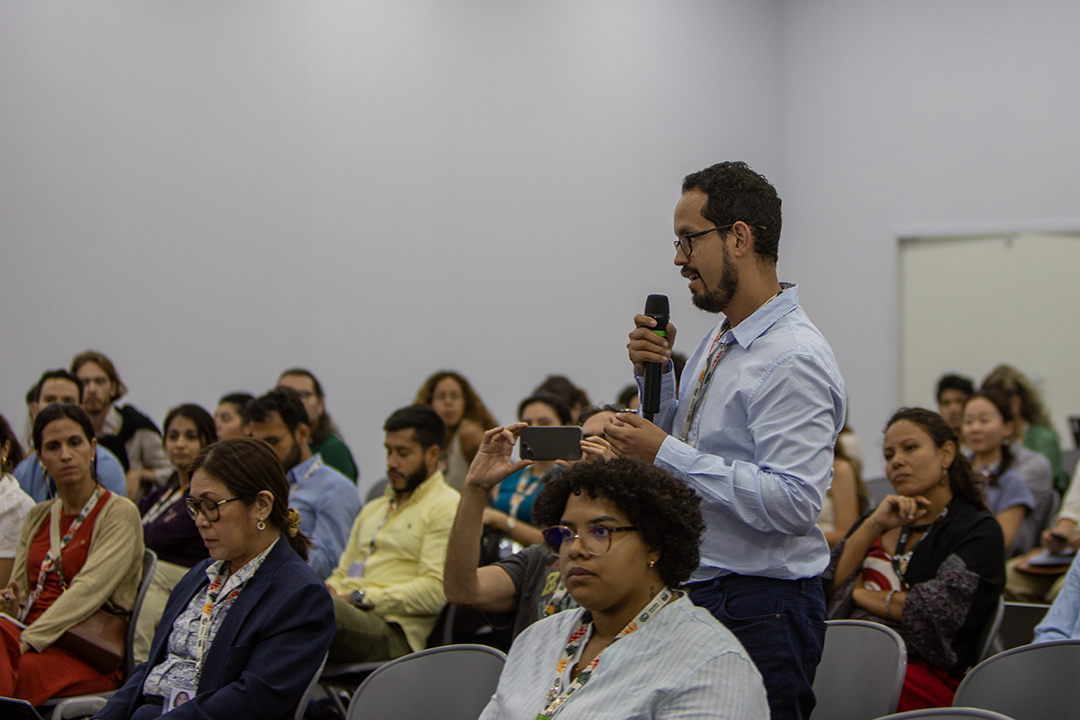
During the discussion with the audience, participants examined how to apply these insights, highlighting the need for early fire detection, incentive mechanisms for private lands, and efficient allocation of limited funds to the most effective local initiatives. Speakers agreed that much forest degradation in Brazil remains legally permitted, underscoring the need for stronger regulation and governance.
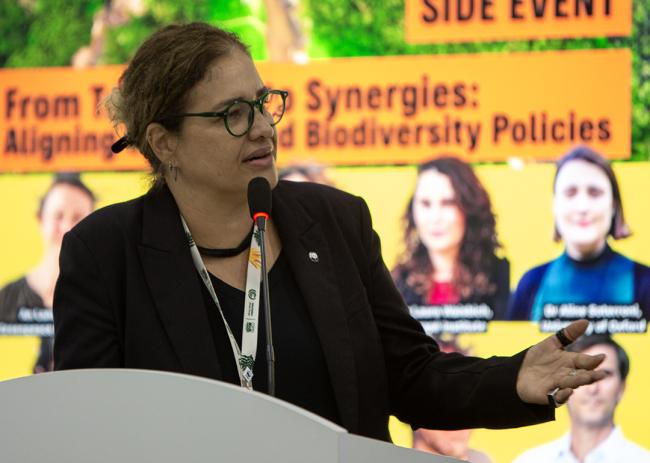
The second panel turned to the political and institutional dimensions of integrating climate and biodiversity agendas. Fernanda Carvalho, Head of Policy for Climate and Energy, World Wildlife Fund (WWF) International, warned that the planet is likely to overshoot the 1.5°C threshold and may already have crossed key tipping points such as coral reef collapse. She called for a “nature package” to emerge from this COP, combining scaled-up finance for nature-based and ocean action, a climate and nature programme under the UNFCCC with a focus on implementation, and strong implementation through national commitments. Holding a COP in the Amazon, she said, must lead to outcomes that are both “of and for the forest.”
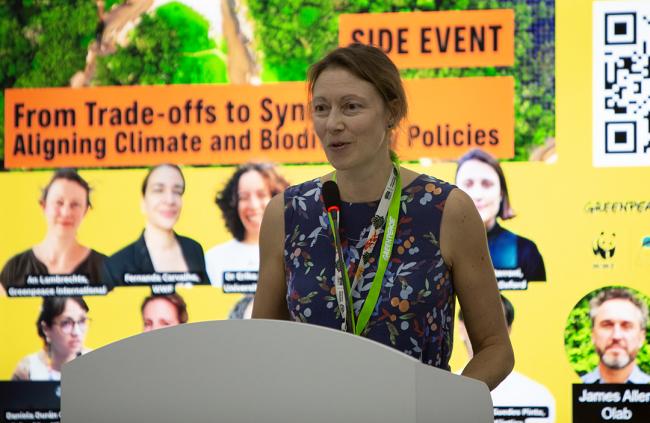
An Lambrechts, Biodiversity Policy Expert, Greenpeace International, stressed the need for political accountability. Two years after governments pledged to end deforestation by 2030, clear roadmaps are still missing. She called for a formal mandate to maximize synergies among the Rio Conventions and for more funding to Indigenous and local communities. Within the UNFCCC, she argued, forest-related work is scattered across multiple workstreams and should be unified under a single roadmap.
Laura Waisbich, Senior Research Fellow, Igarapé Institute, linked these global concerns to Brazil’s domestic agenda. She described the “synergies agenda” as part of Brazil’s vision for COP 30, bridging mitigation and adaptation while connecting local experimentation with international cooperation. Many innovative projects are already being tested on the ground, she said, but they lack visibility and resources. True synergy, she explained, requires believing that international cooperation can support local innovation rather than merely learning from past mistakes. She urged negotiators in Belém to confront the challenge of integration directly.
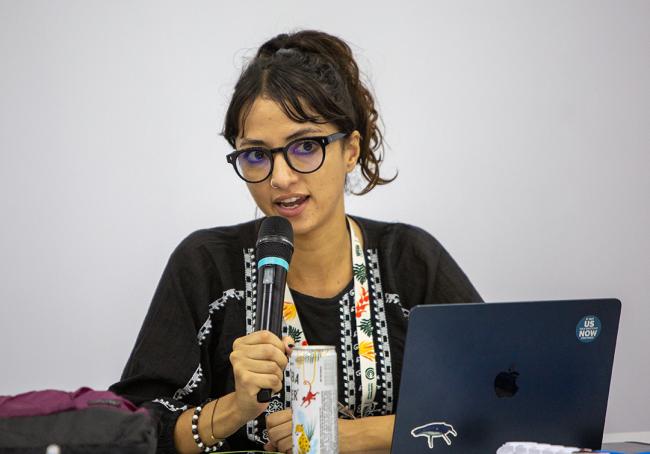
Daniela Durán, Head of International Affairs, Colombia’s Ministry of Environment, affirmed her delegation’s goal of securing a negotiated COP outcome on synergies. Science, she said, makes clear that nature is indispensable to climate goals and climate action essential to protecting nature. She explained that Colombia is advocating for a formal UNFCCC agenda item on interlinkages between biodiversity, climate, and land. Beyond coordination, she argued for a dedicated mechanism to ensure policy coherence, noting parties themselves – not just secretariats – must take ownership of this work.
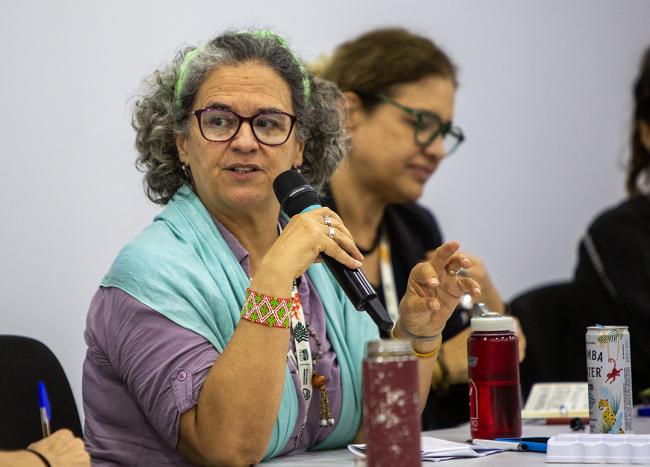
Rita de Cássia Mesquita, Secretary of Biodiversity, Forests, and Animal Rights at Brazil’s Ministry of the Environment and Climate Change, closed the session by stressing that science must underpin every policy decision, and condemning the devastation of burned flooded forests. This COP, she added, must be one of implementation and imagination: “We must imagine a world without fossil fuels if we are to make it real.” For her, synergy represents a path toward peace and toward new economic models, such as the sociobioeconomy, that place ecological limits before market logic.
In the closing exchange, participants emphasized that communication, open data, and the inclusion of scientists in decision making are crucial to bridging the institutional divide between the climate and biodiversity communities. Moderator James Allen concluded that integrating the UNFCCC and the CBD will demand not only technical coordination but also a shift in imagination, from managing crises separately to envisioning shared, regenerative futures.
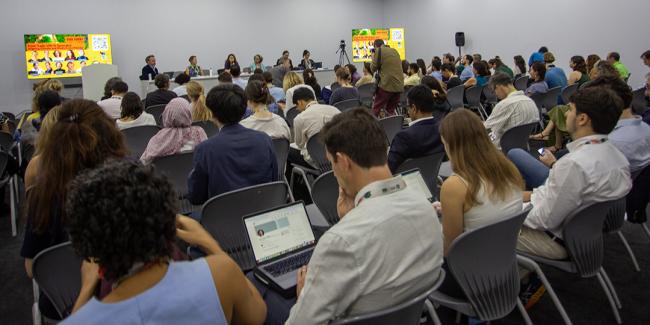
Organizers: Oxford University, WWF International, Greenpeace International, and SOS Mata Atlântica
Contact: Erika Berenguer I [email protected]
To receive free coverage of global environmental events delivered to your inbox, subscribe to the ENB Update newsletter.
All ENB photos are free to use with attribution. For 2025 UN Climate Change Conference Belem - Side Events , please use: Photo by IISD/ENB | Angeles Estrada Vigil
Selected Images
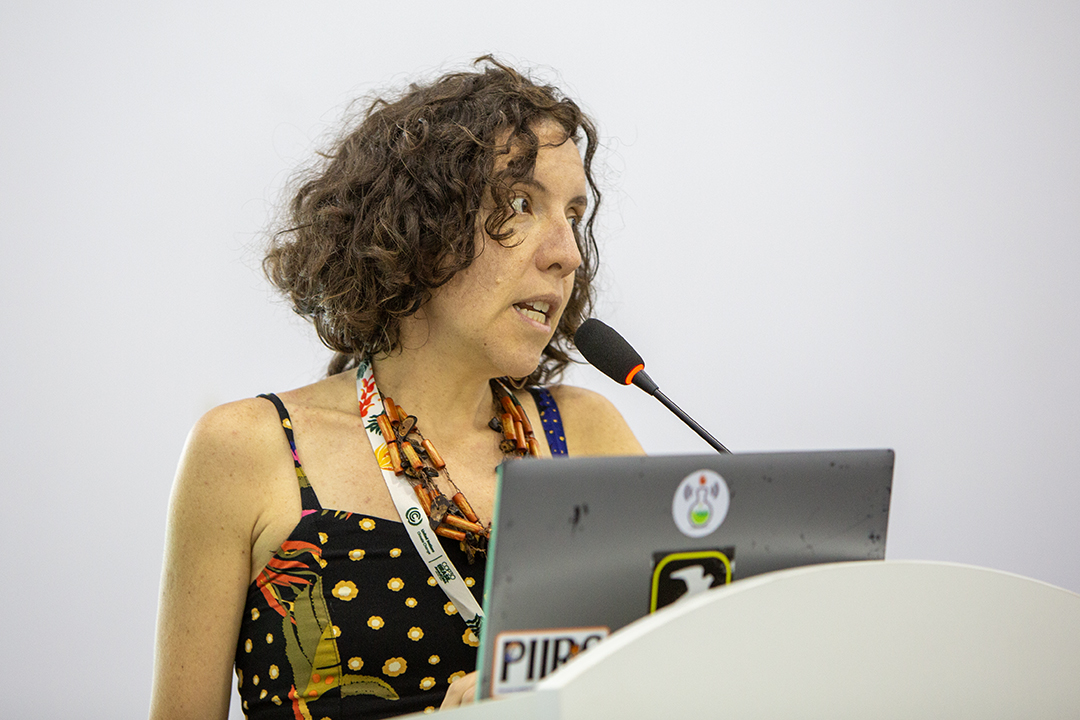
Erika Berenguer, Senior Research Associate, Oxford University and Lancaster University
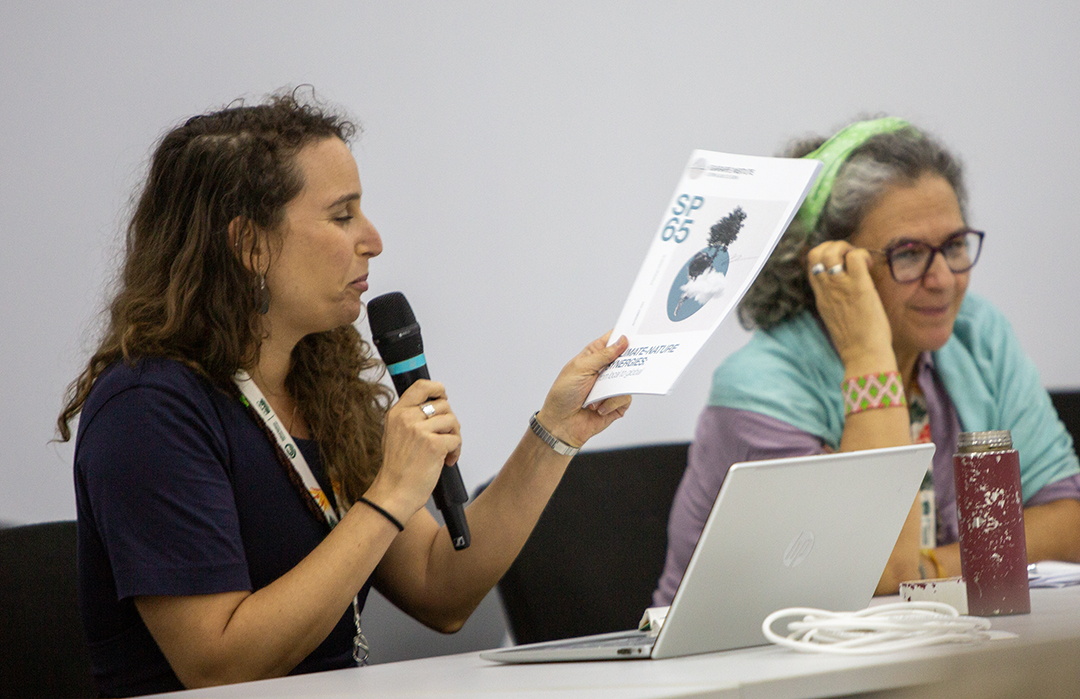
Laura Waisbich, Senior Research Fellow, Igarapé Institute
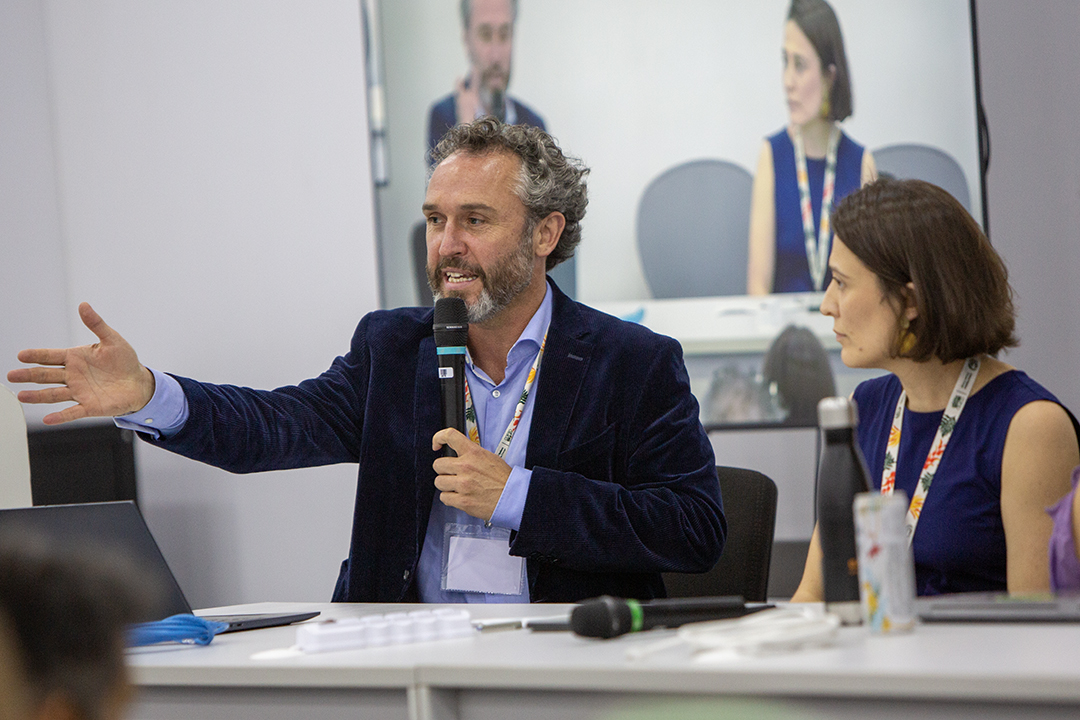
James Allen, Executive Director, OLAB