About
As COP30 tackles how to measure progress on adaptation, a side event brings together speakers from francophone countries on how they track, learn, and fund climate-resilient agriculture.
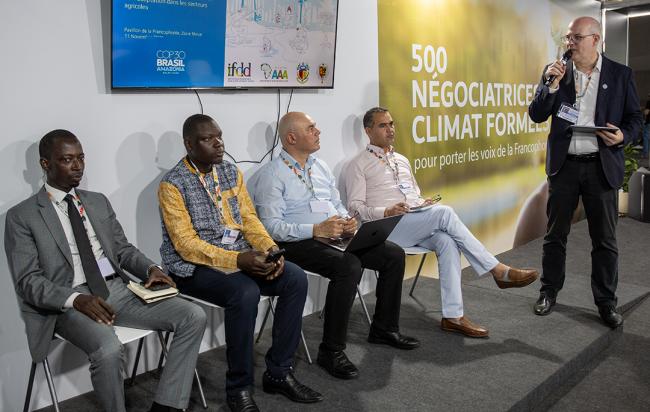
As COP 30 prepares to launch the operational phase of the Global Goal on Adaptation (GGA), one key question emerges: how can countries effectively measure, learn from, and report on progress achieved in adapting to climate change? This side event, organized at the Francophonie Pavilion, brought together representatives from governments and international organizations to discuss monitoring, evaluation, and learning (MEL) systems for agricultural adaptation. Agriculture, a vital sector for food security, rural employment, and climate resilience, is at the center of these efforts. Yet, as several speakers emphasized, francophone countries’ initiatives remain fragmented and underfunded.
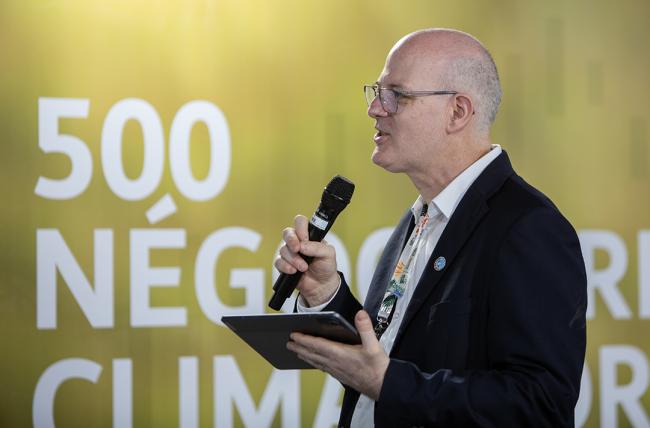
Martial Bernoux, Head of the Climate Change Team at the Food and Agriculture Organization of the UN’s (FAO) Office of Climate Change, Biodiversity, and Environment, opened the session by emphasizing the growing importance of adaptation as a central theme of the COP. He noted that extreme weather events such as Hurricane Melissa in the Caribbean highlight the urgency of adaptation and the need for systems that can track and assess the impact of actions on the ground. Bernoux underlined that FAO works closely with governments to develop science-based indicators and metrics that help assess investments in adaptation and ensure accountability. Partnerships, he said, must operate at the international, national, and local levels to create coherent and effective responses.
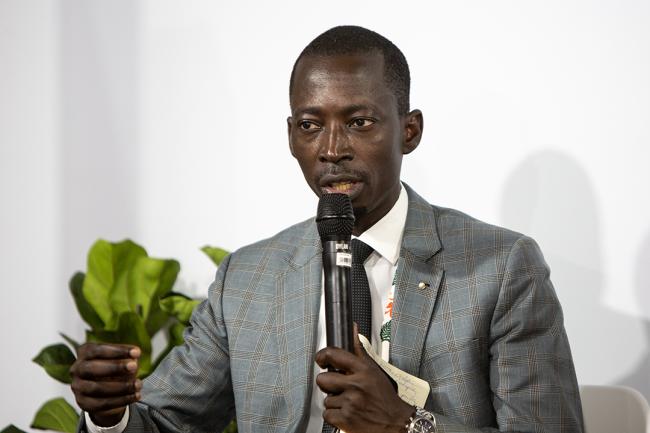
Issa Bado, Programme Specialist for International Negotiations, Environment, and Sustainable Development at the Organisation Internationale de la Francophonie (OIF), framed the event’s objectives. He explained that monitoring, evaluation, and learning are not peripheral but essential to agricultural adaptation. Adaptation, alongside mitigation, he emphasised, stands as one of the two central pillars of the Paris Agreement, and the GGA now calls for measurable progress. Tracking vulnerability, impacts, and capacity needs is critical, he said, because without robust metrics, policymakers cannot identify what works, what needs adjustment, or where financing should be directed. “We have an opportunity here,” Bado said, “to share methodologies and best practices, and to influence each other positively.”
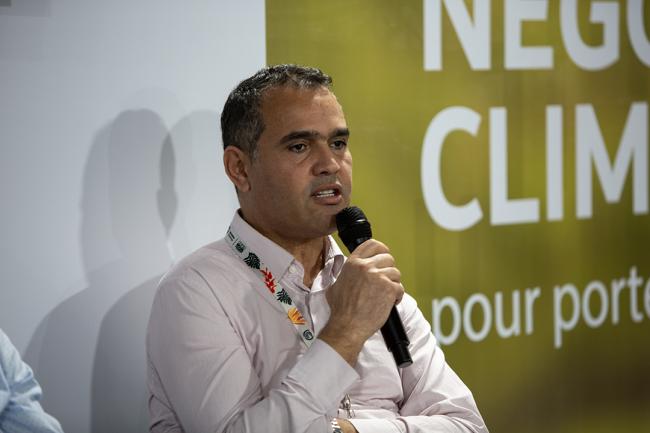
Chamseddine Harrabi, Coordinator of the Climate Change Sectoral Committee at the Ministry of Agriculture, Water Resources, and Fisheries, Tunisia, presented his country’s efforts to create a national MEL system for adaptation, developed with FAO’s technical support. The goal, he explained, is to have a national tool aligned with both the GGA and the UAE-Belém work programme on indicators for the GGA. Tunisia, he added, adopted a participatory and progressive approach, identifying key adaptation priorities in water and sanitation, agriculture and food security, and biodiversity. These objectives were then translated into operational projects and indicators assessed through the SMART (Specific, Measurable, Achievable, Relevant, Time-bound) framework. Harrabi stressed that the MEL tool is not just for monitoring but serves as a strategic governance instrument for climate policy. He emphasised that the Green Climate Fund (GCF) provided crucial financial support, allowing Tunisia to plan its 2026–2030 adaptation strategy through a bottom-up process engaging multiple technical departments.
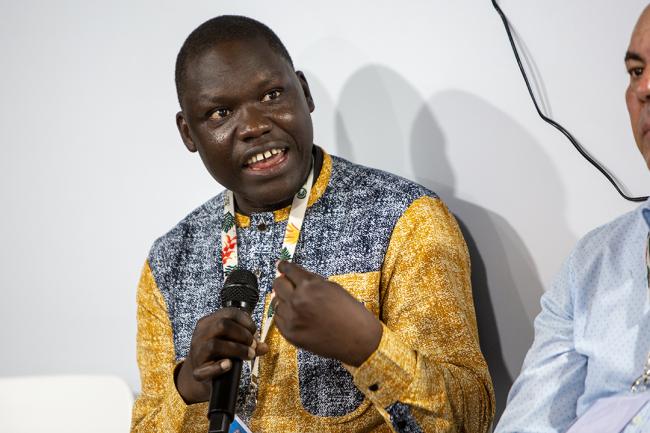
Lamine Diatta, Head of Monitoring-Evaluation at Senegal’s Ministry of Environment and Ecological Transition, explained that Senegal’s approach integrates the “L” in MEL, namely learning. Adaptation, he noted, is fundamental in a country that straddles arid and coastal zones. At the national level, Senegal, he explained, has already developed a National Adaptation Plan (NAP) for the agricultural sector and is preparing to tailor international GGA indicators to national contexts. “Once domesticated,” Diatta said, “these indicators must be popularized and gaps identified.” He emphasized that rather than creating parallel systems, existing sectoral ministries should integrate adaptation metrics into their own frameworks to ensure harmonization and coherence. Building a critical mass of trained professionals and connecting national data systems with global statistical frameworks will be essential for long-term progress, he added. Indeed, data gaps are often not due to absence of information but to lack of coordination and legal frameworks compelling data disclosure. He cited the SAGA 2 partnership as an example of collaborative effort aiming to reinforce the implementation of climate adaptation for food security.
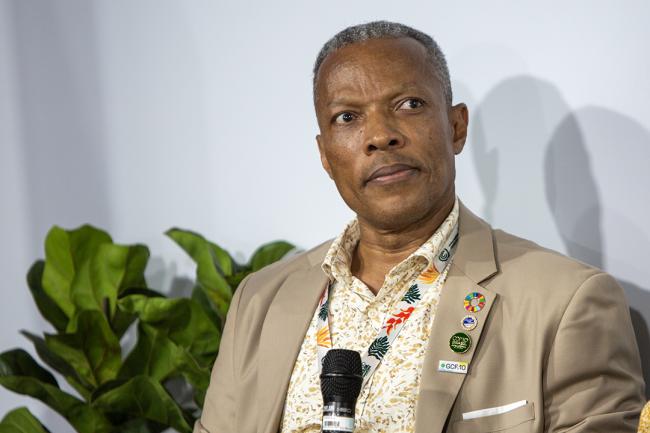
Astrel Joseph, Operational Director at Haiti’s Ministry of Environment, spoke about the country’s extreme vulnerability. With over half of its active population employed in agriculture, adaptation is “not a luxury but a necessity,” he pronounced. Haiti, he said, faces recurring losses from storms such as Hurricane Melissa, which result in devastating human and material impacts. The government has developed an adaptation monitoring plan within its NAP, including agricultural indicators co-constructed with stakeholders, such as seasonal variation in agricultural activity and the percentage of agroforestry holdings. Joseph highlighted the importance of linking adaptation and mitigation, such as reducing emissions from water use, to enhance coherence and reduce costs. However, Haiti still requires significant technical assistance for data collection, analysis, and visualization, he added, as well as financial and technological resources to build sustainable MEL systems. “What we cannot measure,” he concluded, “we cannot improve.”
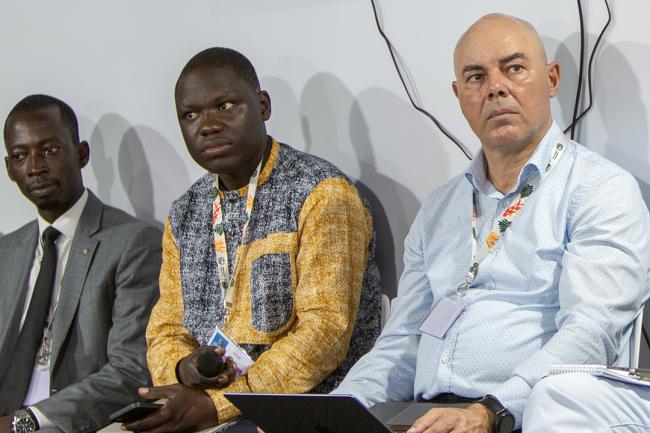
Riad Balaghi, Project Director at the Foundation for the Adaptation of African Agriculture (AAA Initiative), provided a continental overview. He recalled that before COP 22 in Marrakesh in 2016, adaptation metrics were barely discussed. Morocco, he said, believed that inadequate financing stemmed partly from the inability to measure results: indeed, at the time, only 16% of climate financing went to adaptation; today, that figure has risen to just 26%. The AAA Initiative, launched at COP22, has since built an international network of experts across four continents to develop coherent frameworks for adaptation metrics. Balaghi emphasized that out of roughly 100 global indicators under discussion, few focus on actual impacts rather than processes. The goal, he said, is to design country- or region-specific frameworks that can demonstrate theories of change linking actions to resilience outcomes. “If we can develop indicators that show real impact, we can make stronger cases to donors,” he argued. He then pointed to a policy paper to be launched on 12 November by the International Platform on International Metrics, titled Accelerating Global Climate Resilience through Robust Adaptation Metrics.
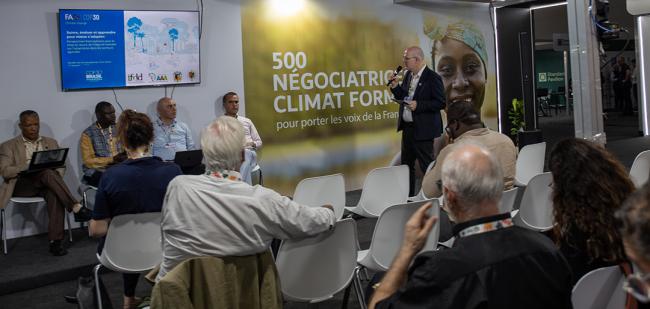
Martial Bernoux closed by reflecting that while many initiatives launched at COPs fade away, others, like the AAA Initiative, endure because they address a real need. As the GGA’s operational phase begins, he added, impact indicators will be crucial to link international commitments to local realities and ensure accountability.
During the Q&A, participants discussed the relationship between agricultural policies and indicators. Balaghi noted that “it is not policies that create indicators, but indicators that should reshape policies.” Diatta added that sectoral development plans often lack a resilience dimension, and that integrating adaptation indicators into investment planning is the most decisive step.
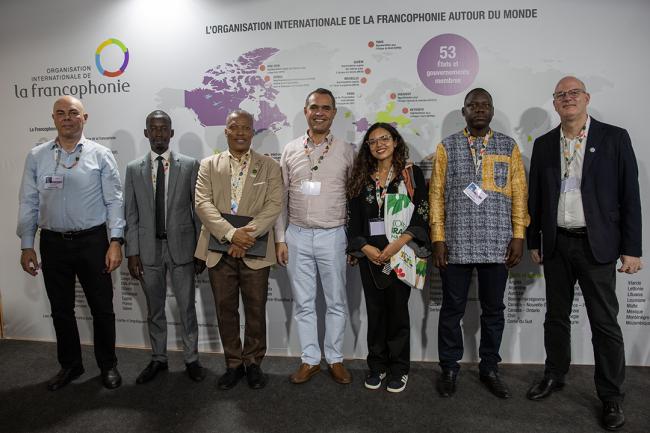
Organizers: FAO and Institut de la francophonie pour le développement durable (IFDD)
Contact: Awa Mbodj I [email protected]
Website:
www.fao.org
www.fao.org/in-action/saga/en
To receive free coverage of global environmental events delivered to your inbox, subscribe to the ENB Update newsletter.
All ENB photos are free to use with attribution. For 2025 UN Climate Change Conference Belem - Side Events , please use: Photo by IISD/ENB | Angeles Estrada Vigil
Selected Images
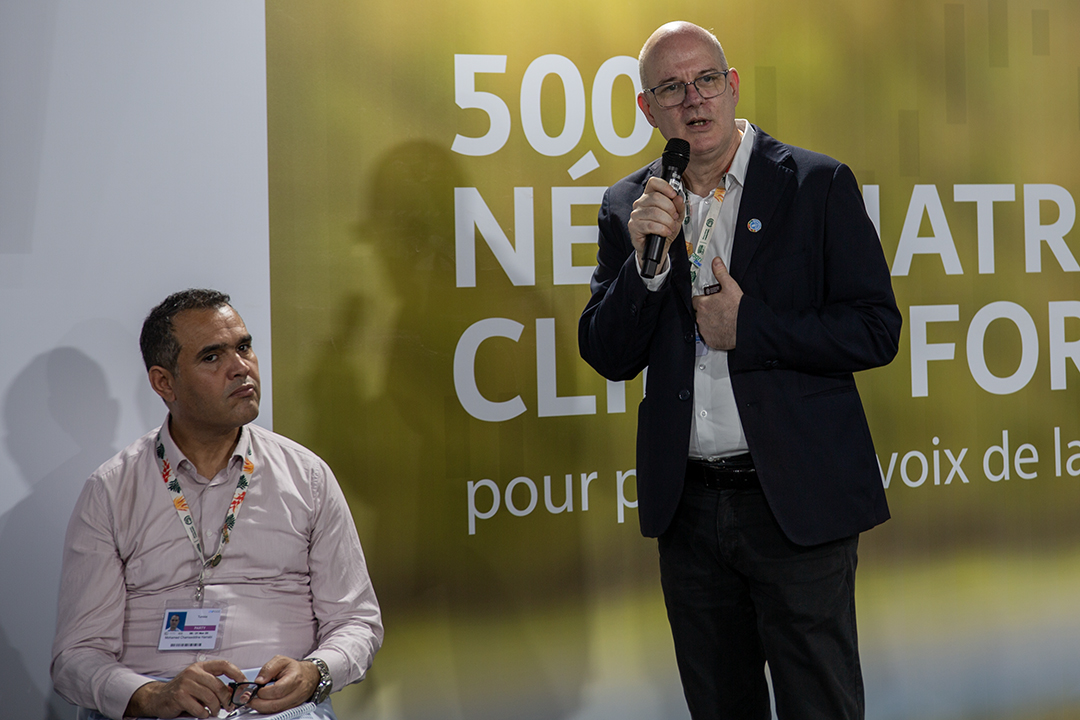
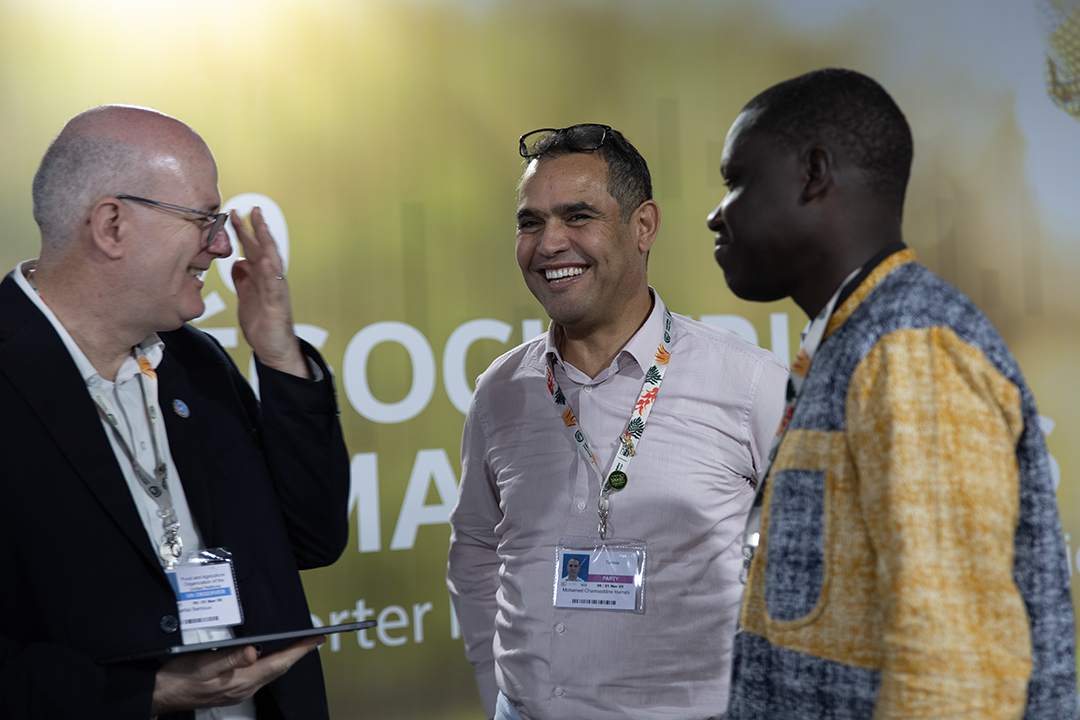
Chamseddine Harrabi, Coordinator of the Climate Change Sectoral Committee, Ministry of Agriculture, Water Resources, and Fisheries, Tunisia, and Martial Bernoux, Head of the Climate Change Team, FAO
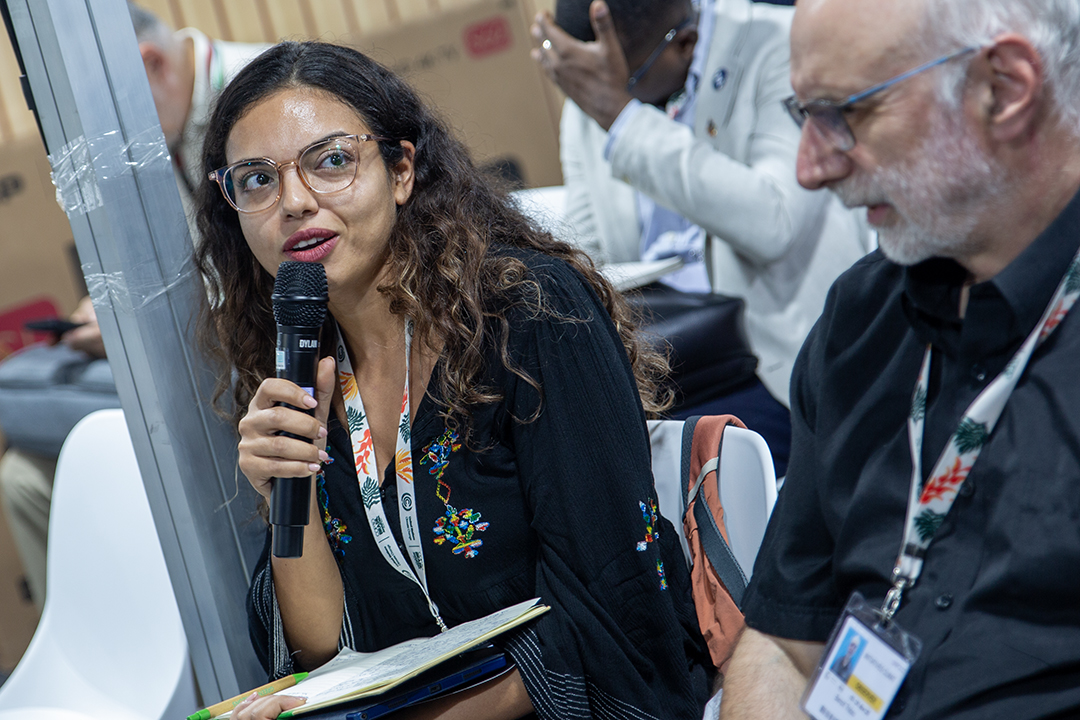
Raoua Tliti, Tunisia, during the Q&A segment
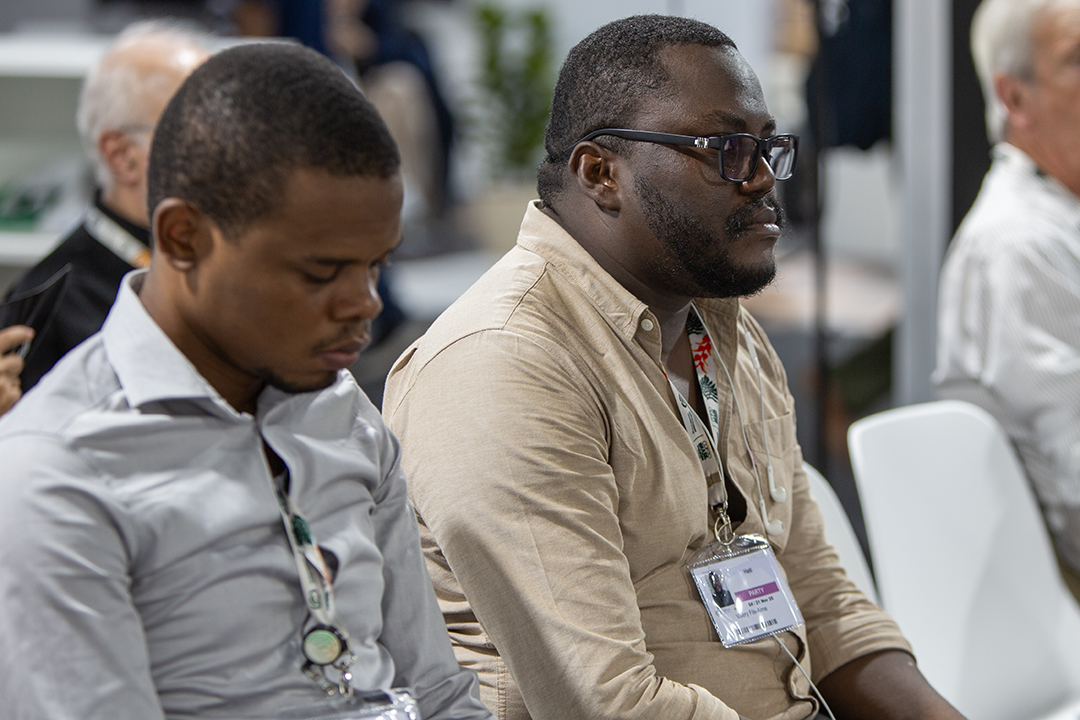
Participants engage during the Q&A segment
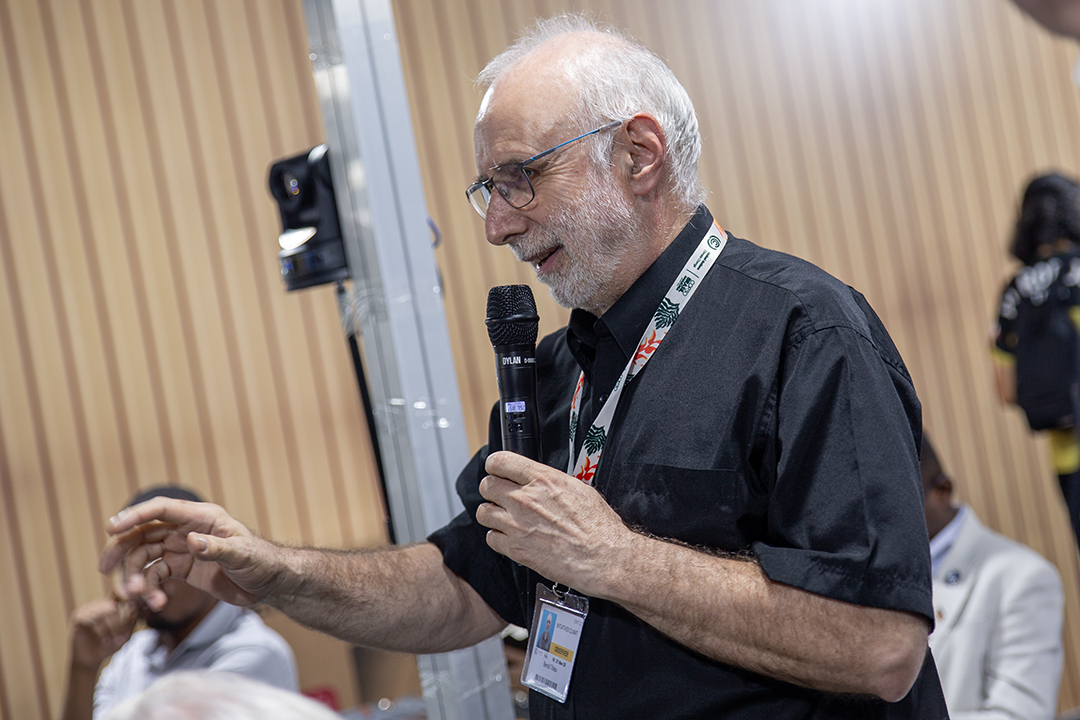
Benoit Théau, Initiatives Climat