About
A side event brought IPCC, FAO, and WMO voices together to show how climate science can drive safer agrifood systems, highlighting findings from key reports on heat impacts and emissions data.

Sustainable and resilient agrifood systems are essential for climate action and for meeting the goals of the Paris Agreement. Scientifically-grounded approaches can lower emissions, enhance carbon sequestration, restore ecosystems, and strengthen resilience, while protecting food security and nutrition for the many people who rely on these systems for their livelihoods. This side event brought together experts engaged in the Intergovernmental Panel on Climate Change (IPCC) process, the World Meteorological Organization (WMO) and the Food and Agriculture Organization of the UN (FAO), to reflect on the evidence, data, and experience most needed as work begins toward the IPCC Seventh Assessment Report (AR7).
Moderator Kaveh Zahedi, Director of FAO’s Office of Climate Change, Biodiversity and Environment, opened the session by saying the focus would be on how climate science can guide the transformation of agrifood systems and clarify pathways that support mitigation, adaptation, and co-benefits for food security, nutrition, biodiversity, and land.

In a video message, IPCC Chair Jim Skea recalled the long-standing cooperation between the IPCC and FAO, pointing to an expert meeting in Rome in 2017 on climate change, land use, and food security which he said helped set the stage for deeper coordination during the preparation of the IPCC Special Report on Climate Change and Land (SRCCL). Skea stressed that the agrifood system is among the sectors most exposed to climate impacts, with droughts and extreme heat already pushing traditional risk management to its limits. He outlined that findings from the SRCCL and the IPCC Sixth Assessment Report (AR6) show that climate change is altering crop yields, livestock productivity, water availability, and ecosystem functioning, all of which have direct consequences for food security, livelihoods, nutrition, and biodiversity. Strengthening resilience in agrifood systems, he affirmed, is essential for protecting communities and the ecosystems on which they depend. Looking ahead to AR7, Skea noted that food systems will continue to feature across the scoping of the Working Groups II and III reports. He closed by highlighting ongoing FAO-IPCC collaboration through an upcoming expert meeting on agriculture, food systems, food security, and climate change.

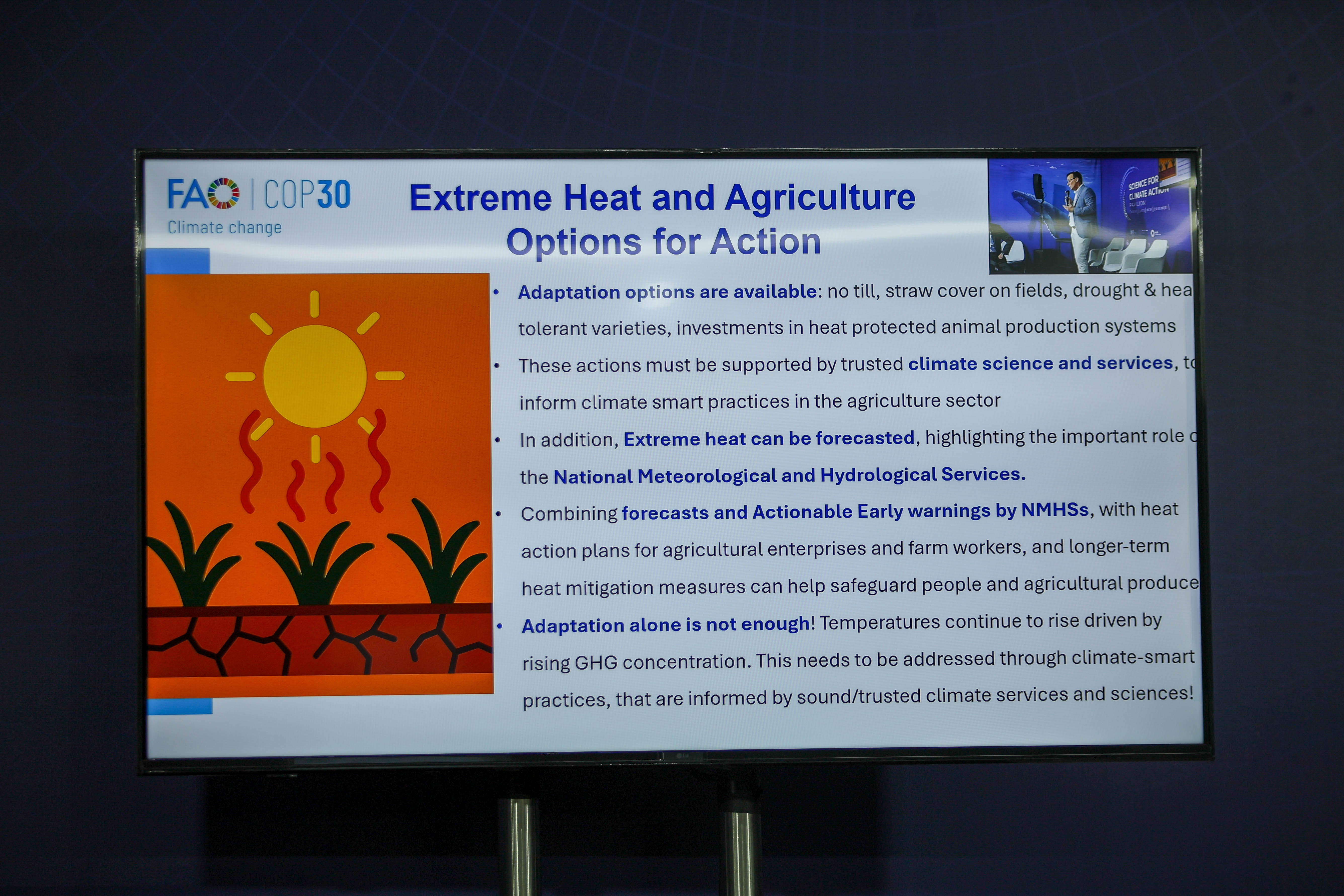
Three presentations of scientific publications ensued. Stefan Uhlenbrook, Director of Hydrology, Water and Cryosphere at WMO, contextualized his intervention by referring to findings from the State of the Climate Update for COP 30, which confirms 2024 as the warmest year on record and indicates that 2025 is on track to set another record. Regarding the State of Global Water Resources Report 2024, he explained it shows water cycle dynamics are becoming increasingly erratic. He also presented findings from the Extreme Heat and Agriculture Report, produced jointly by FAO and WMO, which explores the impact of extreme heat on agricultural producers and on crops, livestock, fisheries and aquaculture, and forests worldwide. He noted that key hazards linked to low precipitation and heatwaves are already damaging crops and driving fire risks. He also warned that a single heatwave can cut agricultural productivity by up to 50%, and that agricultural workers are 35 times more likely to die from heat exposure. Finally, he stressed that early warning systems can guide action but maintained that adaptation alone is not enough.

Martial Bernoux, Head of the Climate Change Team in FAO’s Office of Climate Change, Biodiversity, and Environment, said FAO released an Update on scientific findings on the interactions between agriculture, food systems and climate change. This report, he said, compiles the latest scientific findings on agriculture, food systems, and climate change that have emerged since 2018, and documents what still requires investigation across agriculture and agrifood systems. One aim, he added, is to synthesize material that could inform future IPCC assessments on the links between agriculture, food systems, and climate change. He emphasized that agrifood systems account for one-third of global emissions across the value chain and 70% of freshwater withdrawals, and underlined the importance of soil organic carbon, sustainable rice systems, circular practices, and new work on aquaculture. He concluded that the report will help shape the discussion themes for the upcoming IPCC-FAO expert group meeting.
Speaking remotely, Francesco Tubiello, Senior Statistician, FAO, presented the 2025 update of the FAOSTAT agrifood systems emissions data, released just ahead of COP30. The FAO estimates put annual agrifood system emissions at 16 billion tons of CO2 equivalent, about one-third of the global total. He reported that agriculture accounts for half of these emissions, while land use change is declining as a source and supply chain emissions are rising. He added that the FAO data also show good news, indicating reductions in GHG intensity of agrifood systems, as indicated in the companion Greenhouse gas emissions from agrifood systems 2001-2023 takeaways report. With emissions from pre- and post-production activities rising, he stressed that this part of the system is expanding quickly and requires stronger mitigation strategies. He concluded by noting that the database allows granular country-level analysis, including from major producers such as China, where supply-chain emissions have become larger than those from farmers fields.

A panel discussion then considered how science can better inform planning and investment, particularly looking forward to AR7. Carol Franco, Vice-Chair of the Subsidiary Body for Scientific and Technological Advice (SBSTA) under the UNFCCC, said the Dominican Republic is working to ground its Nationally Determined Contribution and national adaptation planning in climate science. She explained that the agriculture sector now requires clearer assessments of whether proposed emission reductions are realistic and supported by evidence, and that just transition considerations are entering national climate planning to ensure vulnerable groups are not harmed by sector shifts. She finished by cautioning that a time lag persists between available scientific information, and its integration into policy and added that finance often targets implementation rather than data collection.

Lucy Njuguna, IPCC Lead Author and technical expert under the UAE–Belém work programme for the Global Goal on Adaptation, said a major gap of AR6 concerns understanding how adaptation options perform across warming levels and regions. She observed that many adaptation assessments rely on single case studies because of a concern for immediate results rather than long-term assessments, which limits broader conclusions. She said AR7 will update technical guidance on adaptation and noted that progress on indicators at COP 30 will be closely linked to this effort. Finally, she called on FAO and other actors to convene stakeholders to document methods and ensure adaptation guidelines meet “real world” needs.

Ceris Jones, Focal Point of the UNFCCC Farmers’ Constituency and World Farmers’ Organization (WFO), said climate science must align more closely with farmers’ experiences. She stressed the importance of bridging the gap between scientific communities and farmers and noted that farmers’ organizations can help facilitate this connection. She explained that the science must better reflect the pressures farmers face on short-time scales, while also translating impacts to geographic scales that are meaningful locally. She concluded by stressing that fair and accessible data sharing, paired with farmers’ own knowledge, is essential for effective climate action.
Organizers: IPCC, FAO
Contact: Martial Bernoux I [email protected]
For more information: https://www.fao.org/climate-change/en
To receive free coverage of global environmental events delivered to your inbox, subscribe to the ENB Update newsletter.
All ENB photos are free to use with attribution. For 2025 UN Climate Change Conference, Belém - Side Events, please use: Photo by IISD/ENB | Anastasia Rodopoulou
Selected Images
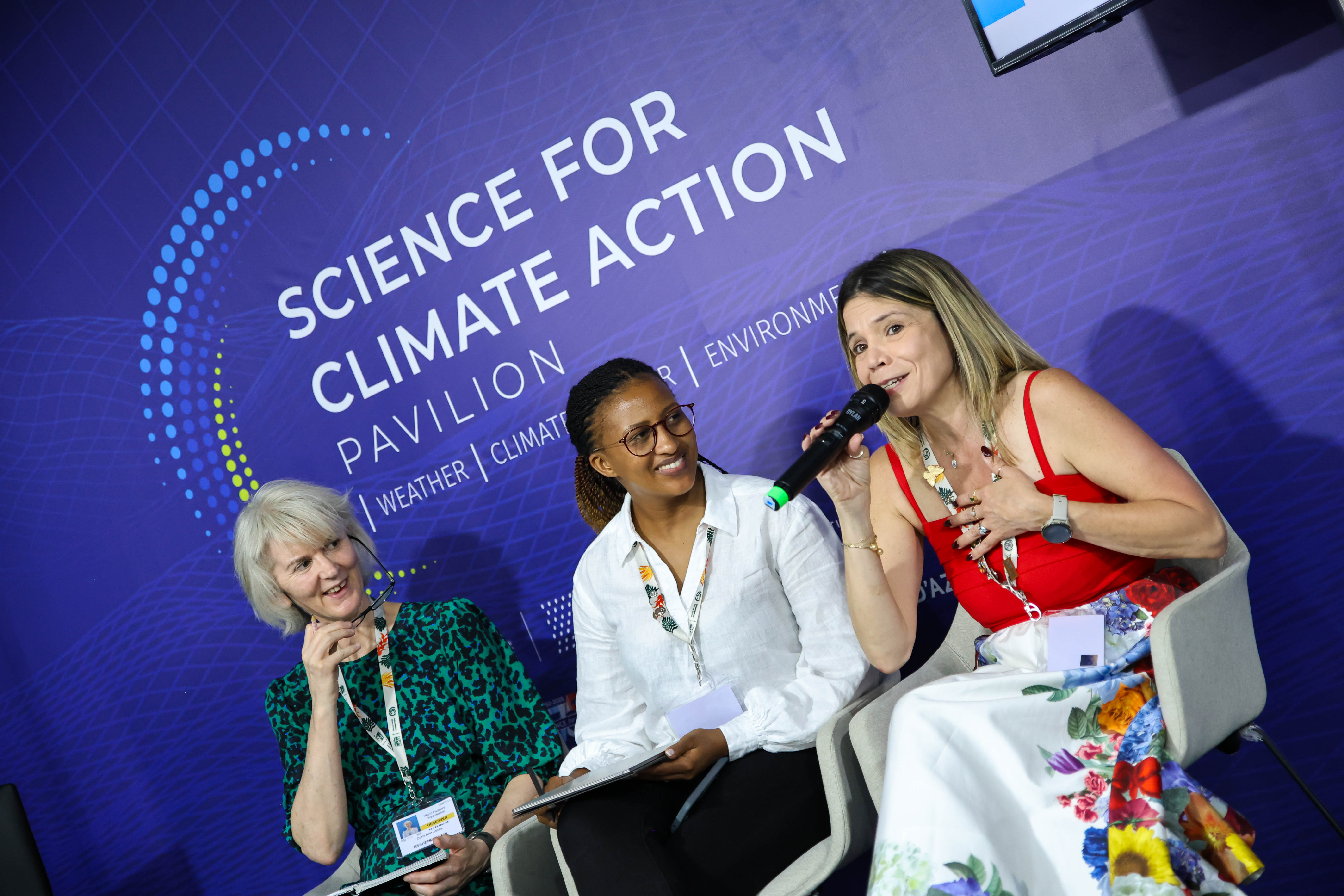
A view of the panel
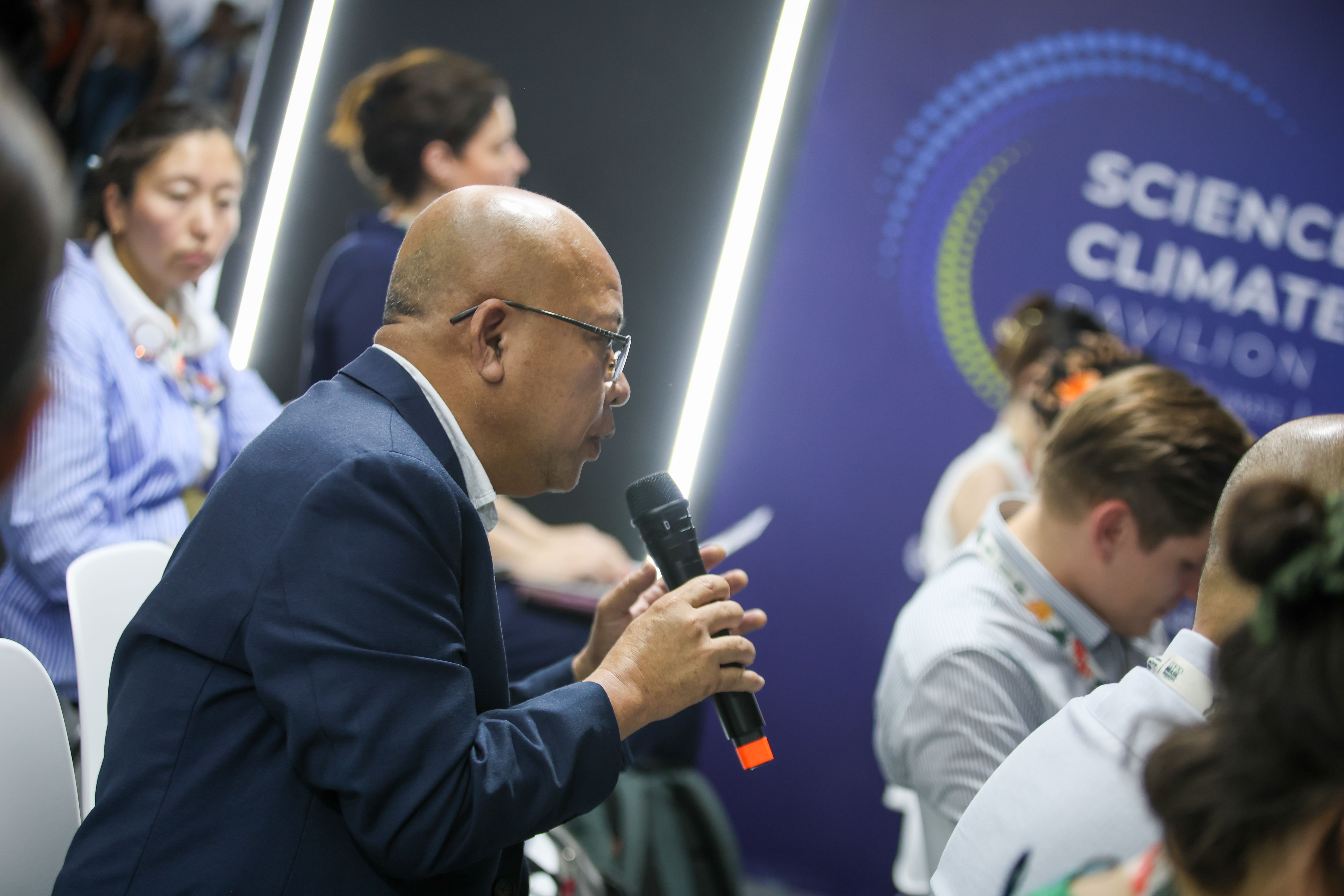
A participant poses a question to the panelists.

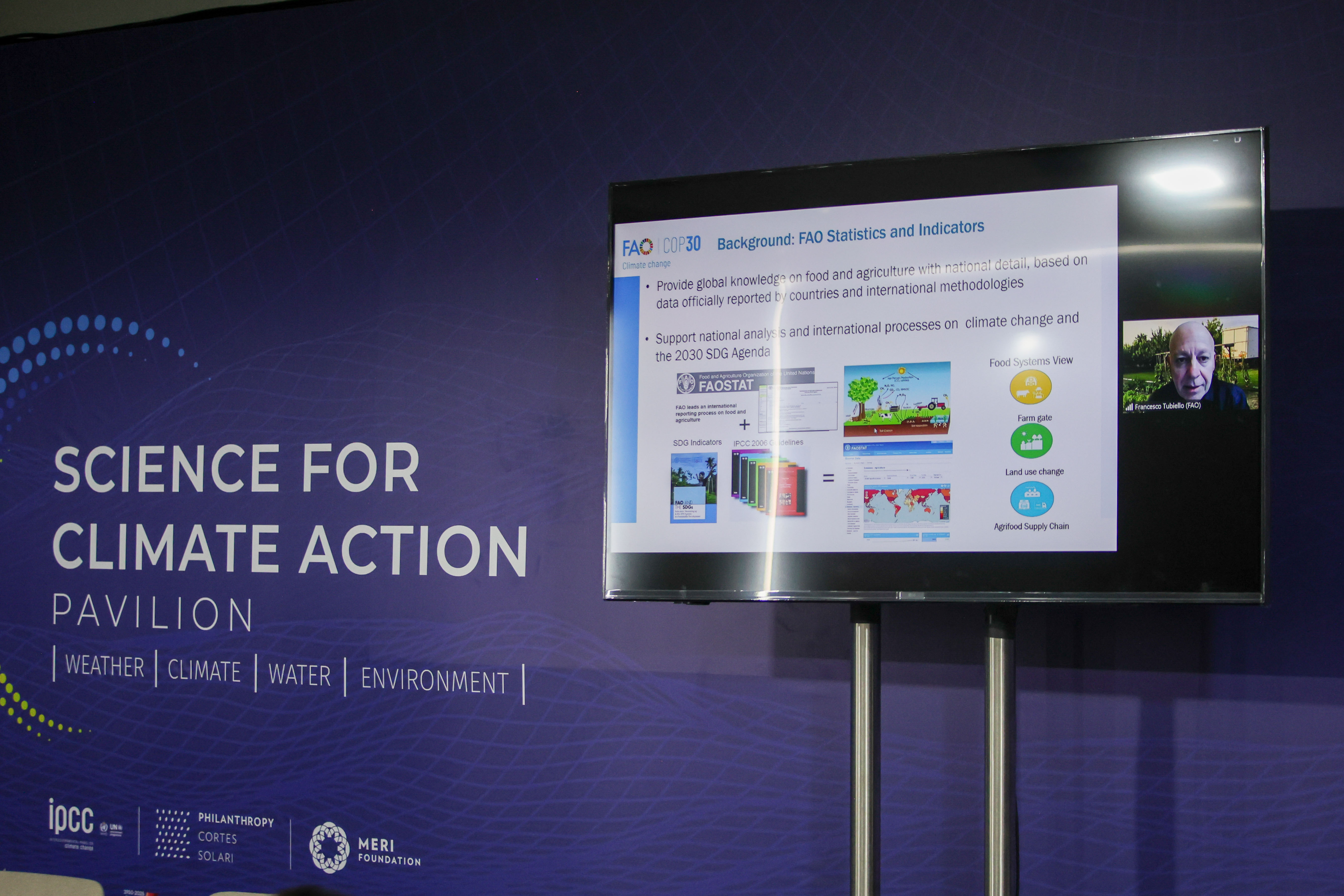
A slide from the presentation of Francesco Tubiello, Senior Statistician, FAO, who addressed the event virtually
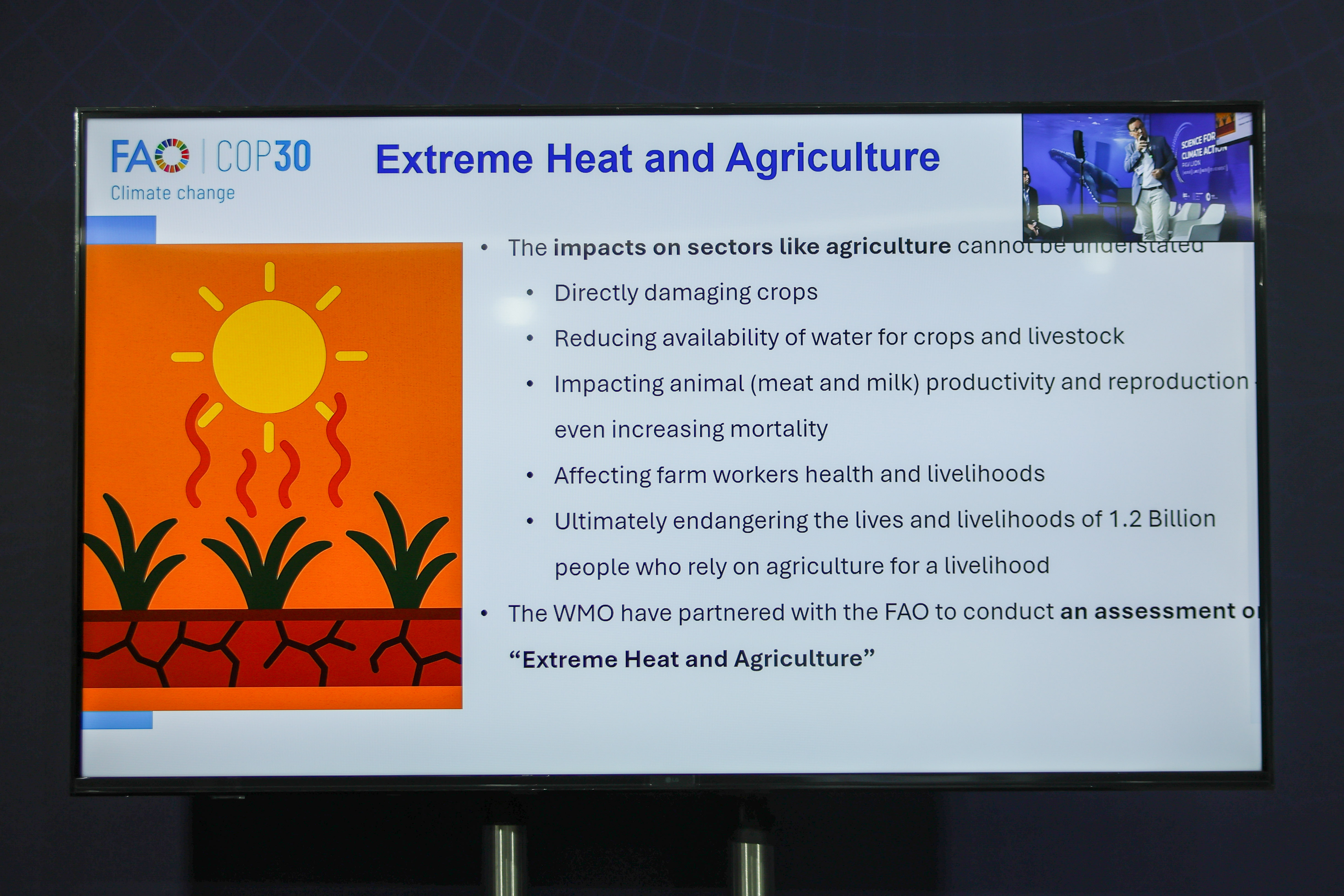
A slide from Stefan Uhlenbrook's presentation
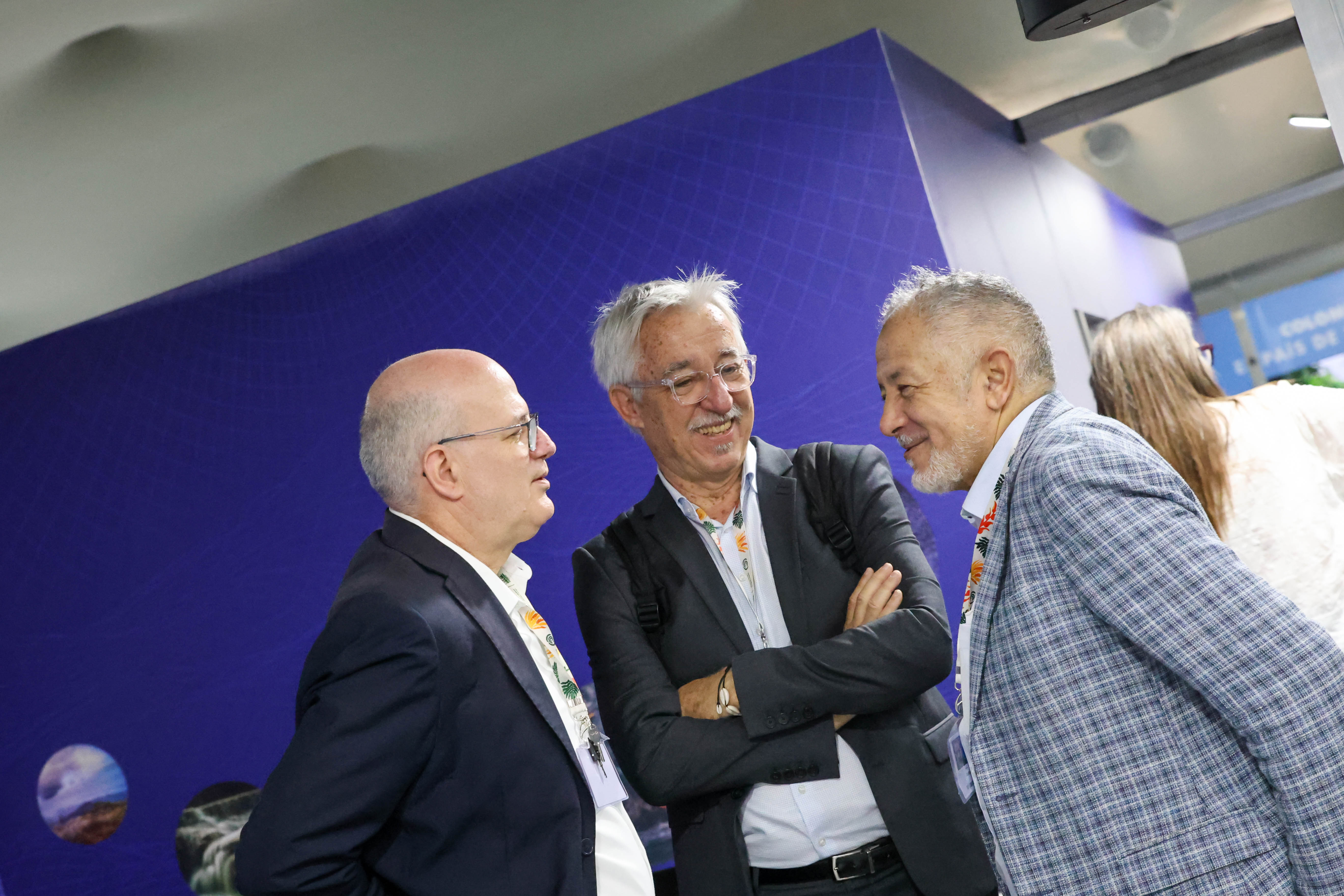
Martial Bernoux, Head of the Climate Change Team, Office of Climate Change, Biodiversity, and Environment, FAO, Jean-Luc Chotte, Research Director, Institut de Recherche pour le Développement (IRD), and IPCC Secretary Abdallah Mokssit
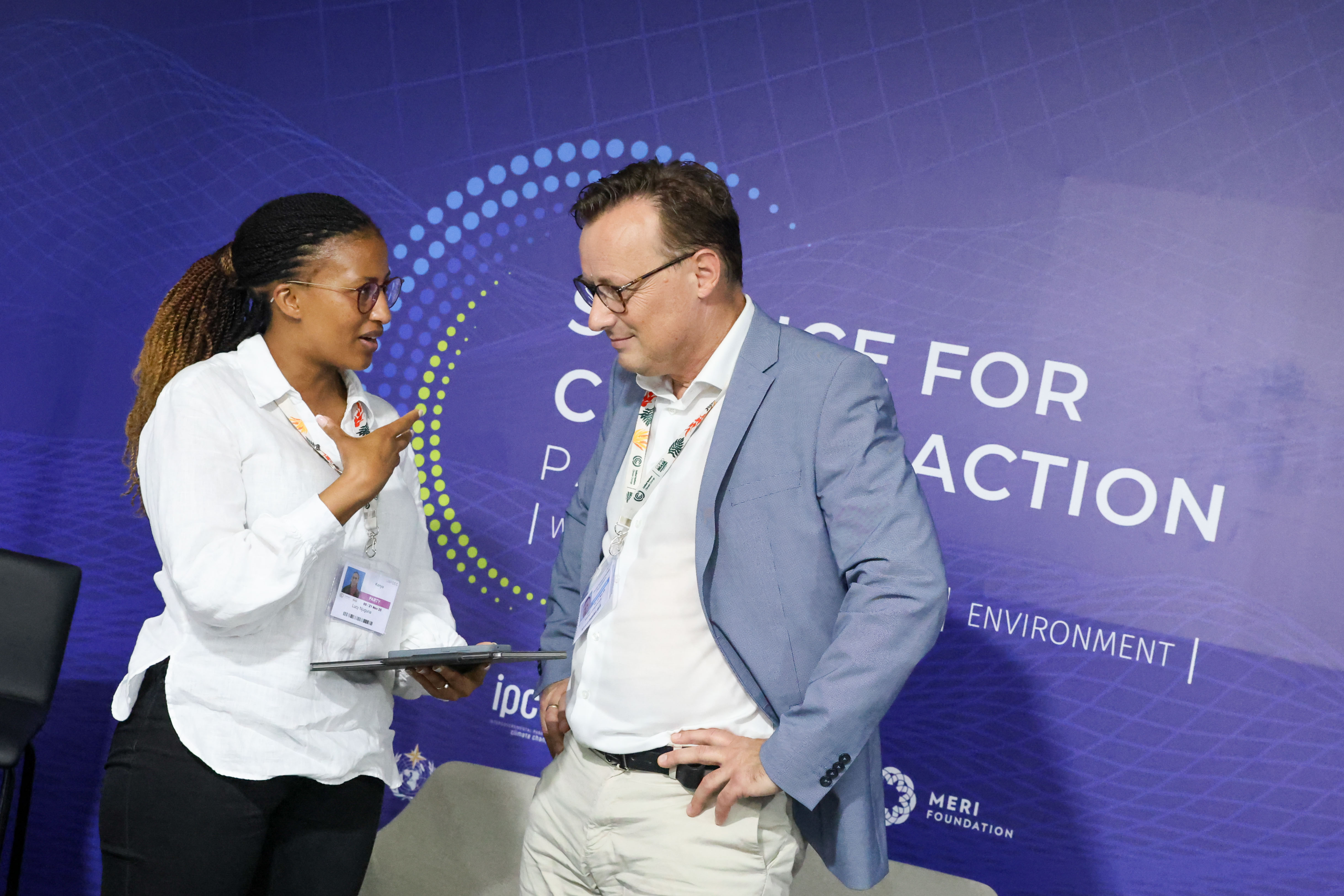
Lucy Njuguna, IPCC Lead Author and technical expert under the UAE–Belém work programme for the Global Goal on Adaptation, CGIAR, and Stefan Uhlenbrook, Director, Hydrology, Water and Cryosphere, WMO