About
While more countries now mention Indigenous Peoples in their climate pledges, this multilingual side event revealed that recognition remains uneven and largely symbolic, urging genuine rights-based participation across NDC design and implementation.
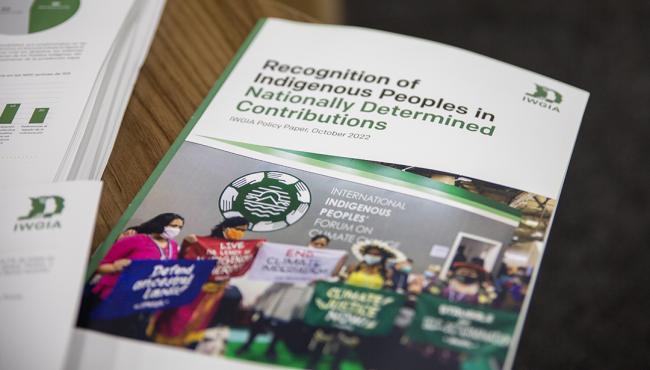
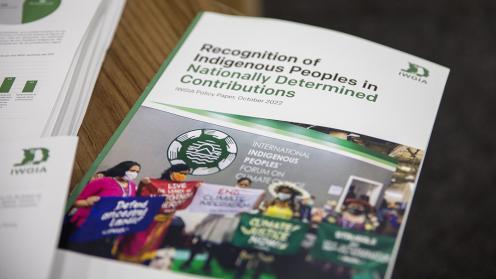
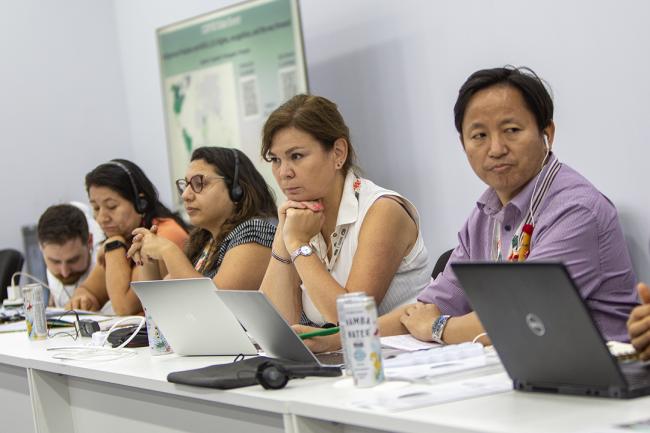
Forty-six percent of third-generation Nationally Determined Contributions (NDCs 3.0) now make reference to Indigenous Peoples, though the depth and quality of the inclusions differ considerably. A multilingual side event, moderated by Indigenous scholar Graeme Reed of the Assembly of First Nations, unveiled a new global mapping of NDCs 3.0 that tracks progress and persistent gaps in integrating Indigenous rights and worldviews into national climate commitments. The event brought together Indigenous leaders from Latin America, Asia, Africa, and the Arctic, alongside representatives from the NDC Partnership, to discuss how Indigenous participation can be strengthened not only through inclusion in NDCs, but throughout the design, implementation, and monitoring of climate pledges as well.
Rosario Carmona, Programme Consultant at the International Work Group for Indigenous Affairs (IWGIA), opened the session by presenting new findings from IWGIA’s updated global review of NDCs. The 2022 baseline report had examined how national commitments referred to Indigenous Peoples, their rights, and their knowledge systems, she explained, adding that the new analysis shows that 90 newly-submitted NDCs mention Indigenous Peoples in some form. Yet, she cautioned that these references differ enormously in scope: only a minority explicitly address rights, effective participation, or jurisdictional authority. Carmona emphasized that Indigenous Peoples must be engaged not only in the drafting of NDCs but throughout implementation and monitoring, so that their contributions shape real outcomes rather than remaining symbolic.
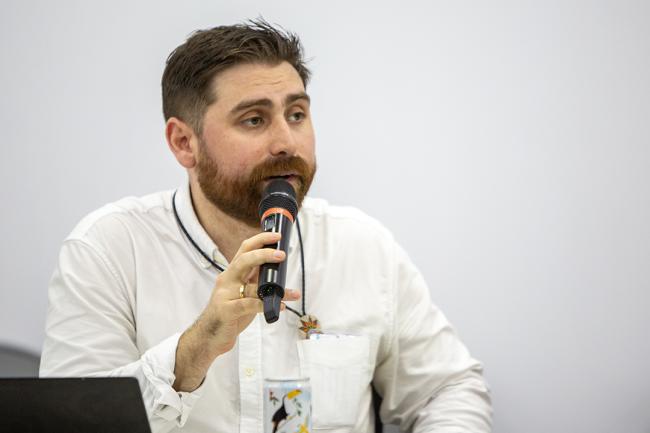
Moderator Graeme Reed framed the discussion around two questions: what lessons can be drawn from Indigenous experiences in NDC processes, and how can future NDCs better embed Indigenous leadership?
On experiences, Camila Romero Peiret, a member of the International Indigenous Youth Forum on Climate Change (IIYFCC), spoke about youth participation. She recalled that in 2023, young Indigenous leaders created the IIYFCC to open new and safer spaces for engagement within the UNFCCC. With support from the NDC Partnership, they conducted an online consultation with more than 700 Indigenous youth and children to identify barriers to participation. The results revealed three main obstacles: limited access to information, lack of funding for capacity building, and weak representation in decision making.
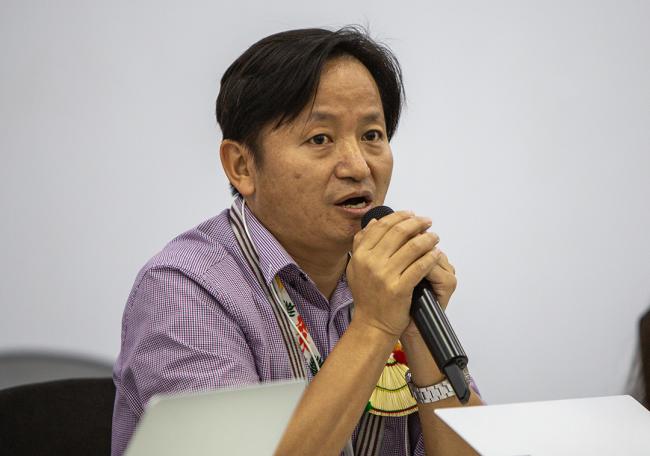
Tunga Bhadra Rai, Director of the Climate Change Program at the Nepal Federation of Indigenous Nationalities (NEFIN), shared his experience in Nepal. He described the difficulty of being recognized as Indigenous within the formal NDC process and of explaining collective rights and customary relationships with land in the highly technical language of climate policy. Ministries, he noted, often failed to understand why Indigenous voices should be included. “Our expertise is not about handling laptops,” he said, “but about connecting daily life and practical knowledge to this technical jargon.” Recognition, he added, must go beyond consultation to include genuine power-sharing.
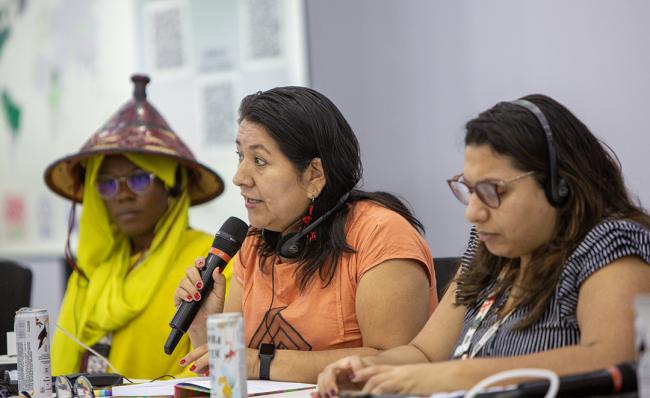
Ketty Marcelo López, an Asháninka leader from Peru and head of the Organization of Asháninka Indigenous Women of the Central Forest (OMIAASEC), spoke about Indigenous women’s participation in her country’s NDC. Peru’s national Indigenous organizations helped establish regional platforms for engagement, she continued, but political instability and weak climate governance have disrupted continuity. She called for Indigenous women’s ancestral knowledge and science to be fully recognized, stressing that these practices have sustained adaptation and mitigation for generations. “We have resisted the climate crisis for years,” she said, “but we are still fighting for our voices to be heard.”
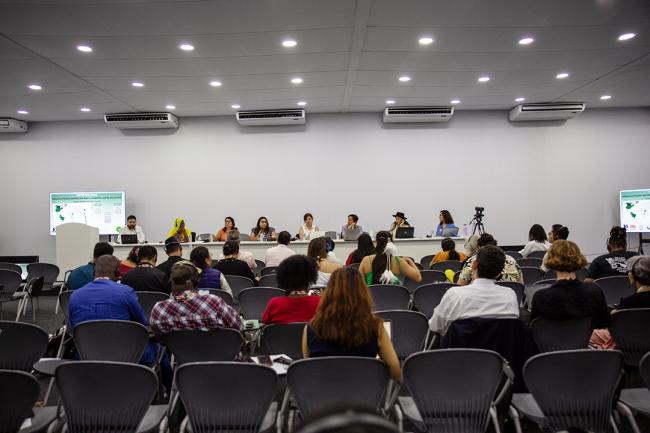
From the Russian Federation, Daria Egereva, Co-Chair of the International Indigenous Peoples Forum on Climate Change (IIPFCC), described a starker picture. Indigenous Peoples are entirely absent from her country’s NDC, she explained, despite the fact that their lands are central to the country’s climate strategy. She added that territories are recognized only as carbon sinks, with no mention of human rights or community needs, and that for Indigenous Peoples in the Arctic, adaptation is not a technocratic exercise but a matter of survival.
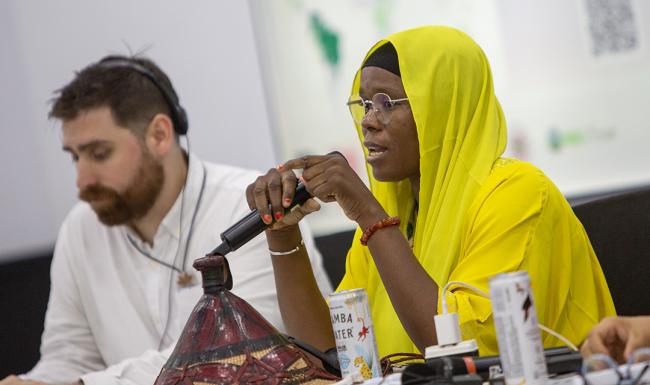
From Chad, Didja Tchari Djibrillah, Gender Officer at the Association of Fulani Women and Indigenous Peoples of Chad (AFPAT), presented a participatory mapping initiative led by Indigenous women. Through community mapping, women identified grazing routes, water sources, and biodiversity corridors, which link pastoralists, fishers, and hunters. These maps, she added, have helped build collaboration across communities and attract donor support for local biodiversity projects and children’s programmes. “Women hold the knowledge of the land,” she said, “and mapping makes that visible.”
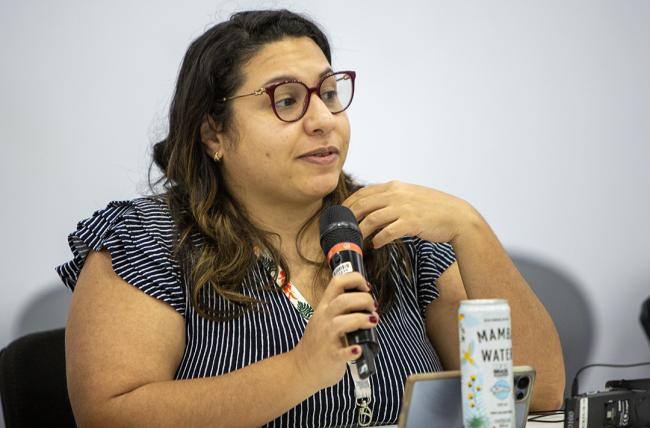
Jennifer Hanna Collado, Latin America and Caribbean Regional Manager at the NDC Partnership, explained how the partnership works with developing countries to align NDCs with the Paris Agreement and the Sustainable Development Goals. Acting as a support unit, it helps governments identify priorities and connects them with partners offering technical and financial assistance.
During a second round of questions, panelists reflected on lessons for future NDC cycles. Peiret emphasized that Indigenous Peoples contribute to climate solutions daily, guided by the long-term perspective of “seven generations.” Implementation, she said, is now the test of credibility. Rai noted that while many NDCs refer to forests and Indigenous participation, these references are often superficial or misplaced—a form of “Indigenous-washing” that fails to acknowledge real relationships with land and livelihoods. López added that effective Indigenous participation will directly improve the quality of NDCs, while Egereva called for Indigenous Peoples to be treated not as “ethnographic subjects” but as partners in climate solutions. Djibrillah urged integrating gender perspectives and bridging scientific and Indigenous knowledge to strengthen local governance. Collado introduced the NDC 3.0 Navigator, a new online tool designed to guide countries in integrating inclusive, participatory approaches into the next generation of climate plans.
Rosario Carmona concluded that Indigenous Peoples are most often mentioned in NDCs as vulnerable populations, yet rarely as agents of change. Future NDCs, she argued, must reflect Indigenous leadership and ensure that climate finance reaches those on the frontlines.
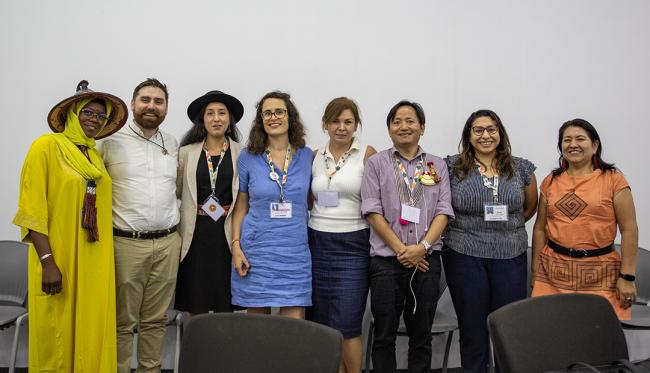
Organizers: IWGIA, Asia Indigenous Peoples Pact Foundation (AIPP), AFPAT, Center for Support of Indigenous Peoples of the North (CSIPN), NEFIN, and Organización Nacional de Mujeres Indígenas Andinas y Amazónicas del Perú (ONAMIAP)
Contact: Stefan Thorsell, IWGIA I [email protected]
Selected Images
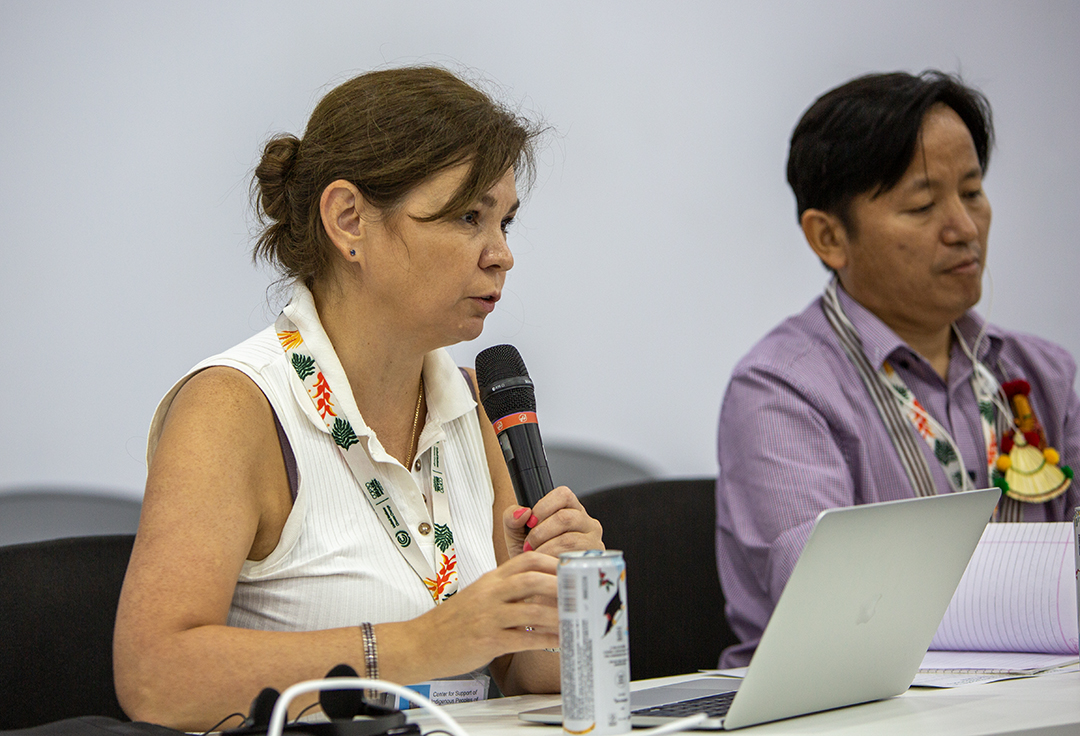
Daria Egereva, IIPFCC Co-Chair
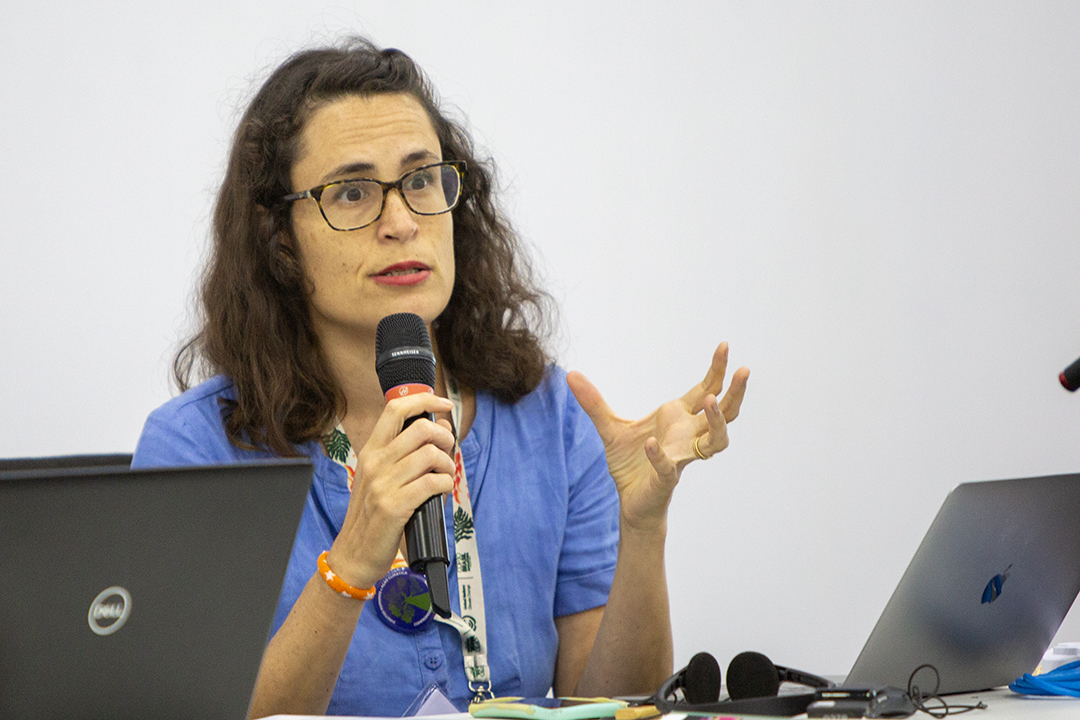
Rosario Carmona, Programme Consultant, IWGIA
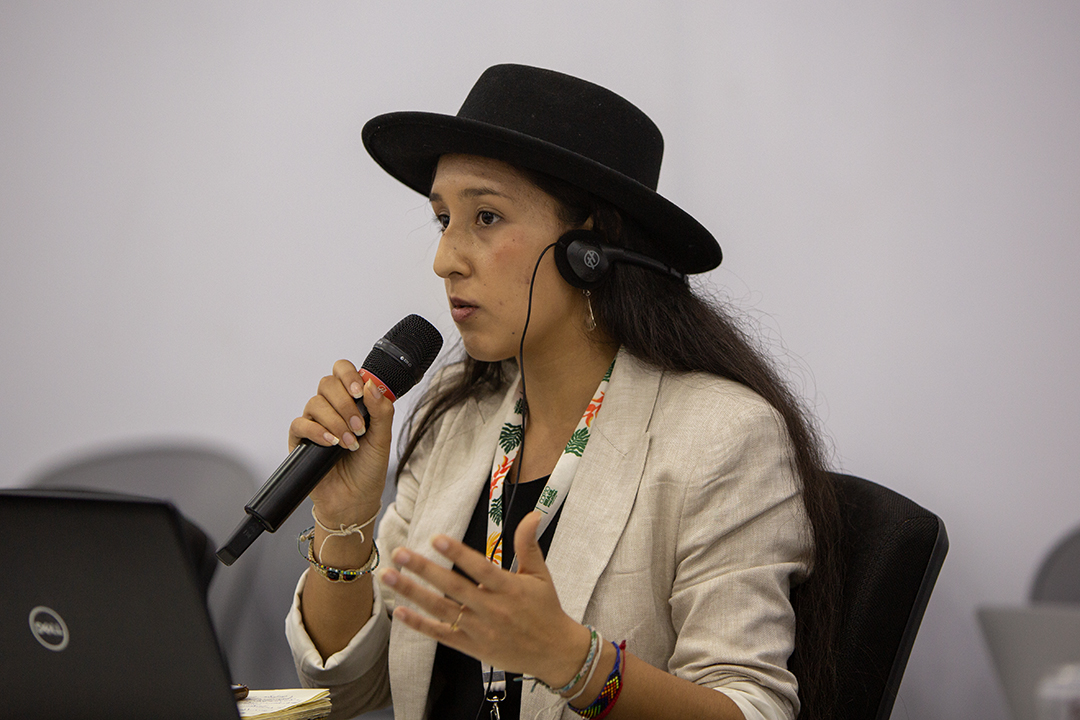
Camila Romero Peiret, member of the IIYFCC