About
A side event showcased rising global momentum for land restoration, with the Riyadh Action Agenda surpassing one hundred initiatives and the COP28 Action Agenda on Regenerative Landscapes mobilising more than USD nine billion in private investment.
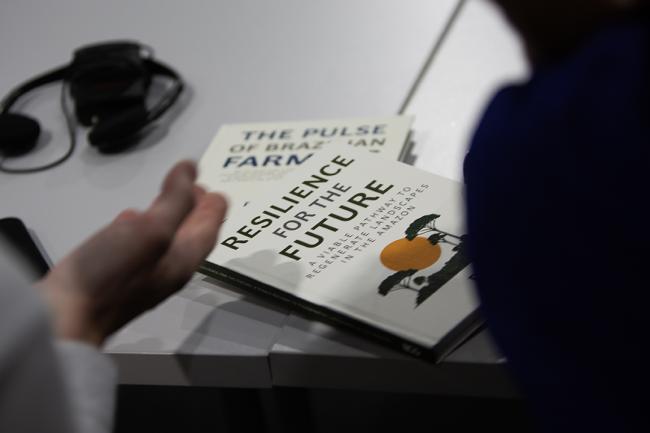
Restoring 1.5 billion hectares of degraded land by 2030 is widely seen as essential for healthy ecosystems, resilient economies, and a stable climate. Against this backdrop, a side event showcased the Riyadh Action Agenda, a global platform designed to mobilize coordinated action among states and non-state actors in support of global land restoration and drought resilience goals. The session also highlighted strong private sector momentum, with the COP 28 Action Agenda on Regenerative Landscapes (AARL) reporting more than USD 9 billion in investment mobilized since its launch and the Riyadh Action Agenda announcing it has surpassed 100 supporting initiatives.
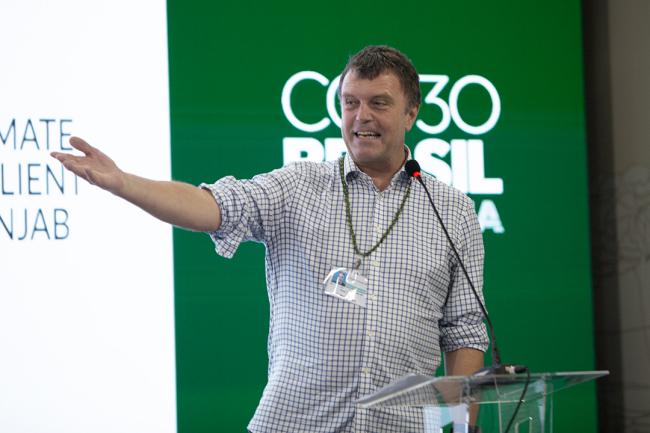
Nigel Topping, Co-Founder and Co-Chief Executive Officer, Ambition Loop, opened the event by underscoring the centrality of land and drought in countries facing rising aridity. He welcomed the growing recognition of land as the connective tissue between the three Rio Conventions and observed that the “Land Mutirão” reflects a collective movement aimed at restoring ecosystems through shared effort. He called for celebrating private sector contributions that are already advancing land restoration and for continued collaboration during what he described as a COP focused on implementation.
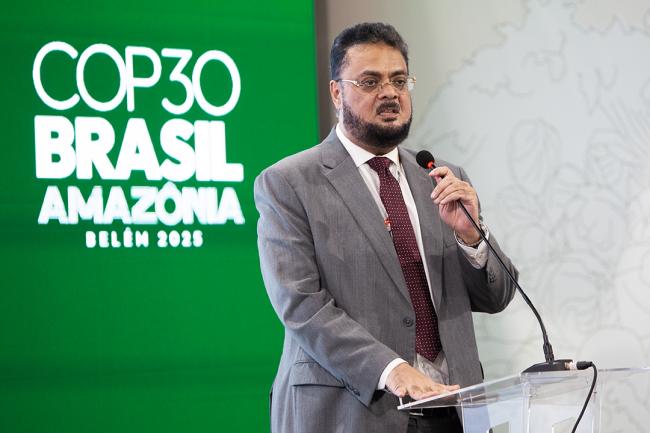
In opening remarks, Osama Ibrahim Faqeeha, Deputy Minister for Environment, Ministry of Environment, Water and Agriculture, Saudi Arabia and Advisor to the UN Convention to Combat Desertification (UNCCD) COP 16 Presidency, thanked Brazil for placing land and biodiversity at the center of the COP 30 agenda. He recalled that the three Rio Conventions were born in Rio de Janeiro in 1992 and said that Brazil’s leadership is essential for bringing them together again. Faqeeha stressed that land is fundamental to life, interconnected with atmosphere and Ocean systems, and often underestimated despite the fact that 95% of food production depends on it. He highlighted the fragility of soil, which takes a millennium to form but can be destroyed within years. He framed UNCCD COP 16 as an effort to shift from policy development to concrete action, led by the Riyadh Action Agenda. He reported that the Riyadh Global Drought Resilience Partnership has mobilized more than USD 12 billion for support across 80 vulnerable countries. He also introduced Business4Land, a platform created to ensure that companies integrate climate, land, and biodiversity objectives rather than focus on climate alone.
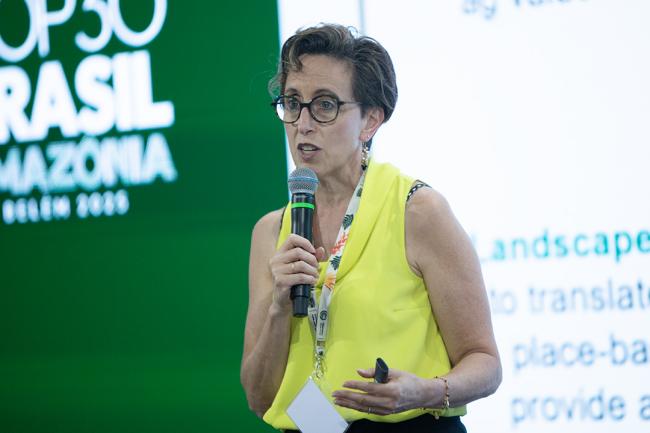
A segment on the COP 28 AARL followed. Diane Holdorf, Executive Vice President, World Business Council for Sustainable Development (WBCSD), explained that the AARL launched at COP 28 aims to scale regenerative land use through collective action. The initiative operates through various pillars, she added, including a community of practice, a global data and insights platform, and landscape-level accelerators. She noted that when the initiative began, no mechanism existed to track private sector investment in regenerative agriculture and landscape management. Two years later, she stressed, it includes more than 40 participants and has facilitated commitments exceeding USD 9 billion.
Shalini Unnikrishnan, Managing Director and Senior Partner, Boston Consulting Group (BCG), underscored that progress made is not only financial. She said participating companies have expanded their programmes and built partnerships that now involve multiple actors rather than isolated initiatives. Unnikrishnan announced that the Landscape Accelerator Brazil (LAB) is the first of its kind to be launched under the AARL in 2025, and will offer a private sector led process to support regenerative transformation across the Cerrado and the Amazon. She also highlighted the forthcoming launch of the Resilient Agriculture Investment for Net Zero Land Degradation (RAIZ) initiative at COP 30.
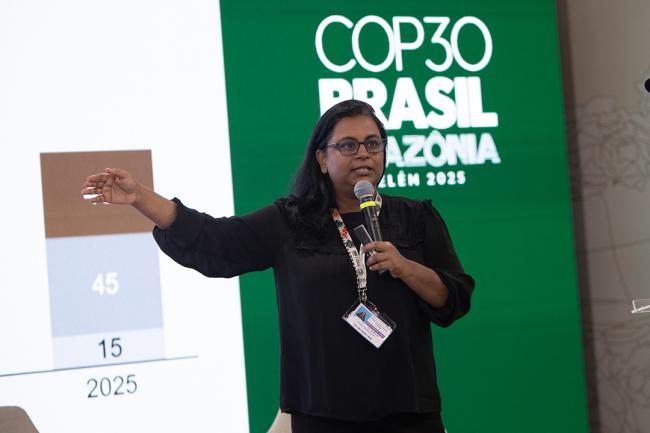
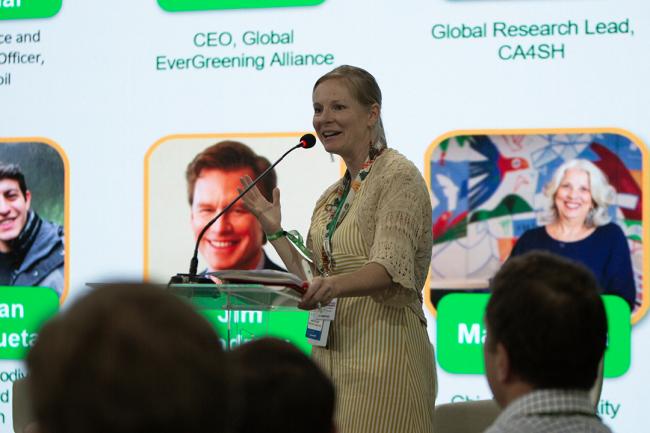
A panel then explored cross-sector approaches to land as an anchor for climate and nature solutions. Moderator Jennifer Lenhart, Director, Land and Soil, Ambition Loop, invited speakers to intervene in a conversational format.
On finance as a lever for restoration, Praveena Sridhar, Chief Science and Technology Officer, Save Soil, observed that global investment needs for regenerative agriculture are great but often overstated when compared with the savings that could be achieved through phasing out harmful incentives. Chris Armitage, Chief Executive Officer, Global Evergreening Alliance, emphasized the difficulty of channeling finance to the grassroots level while also demonstrating viable methodologies that can attract larger scale investment. Cristian Barrazueta, Climate and Biodiversity Officer, World Rural Forum, stressed that family farmers remain disadvantaged by climate finance architecture that is complex and difficult to access. He noted that family farmer organizations have networks and knowledge but need governance structures that recognize them as implementing partners.
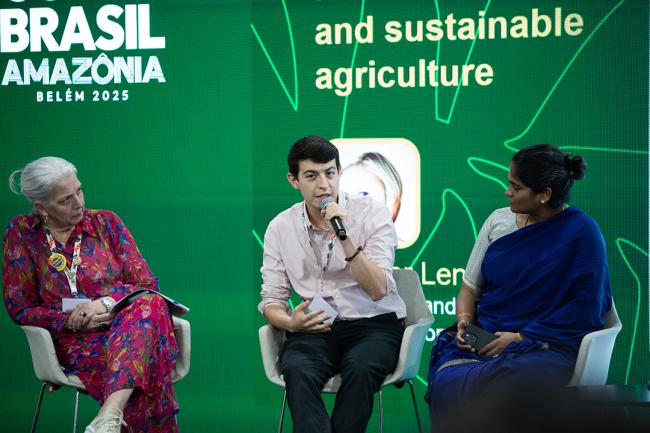
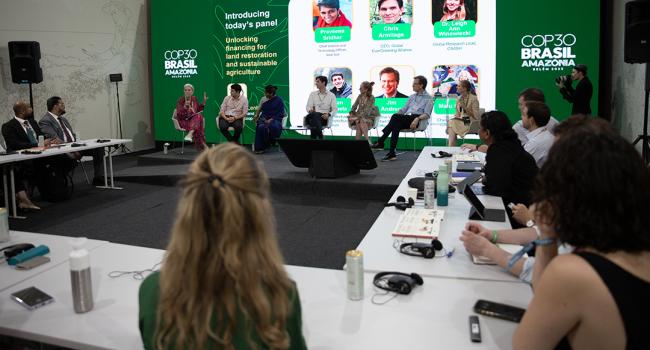
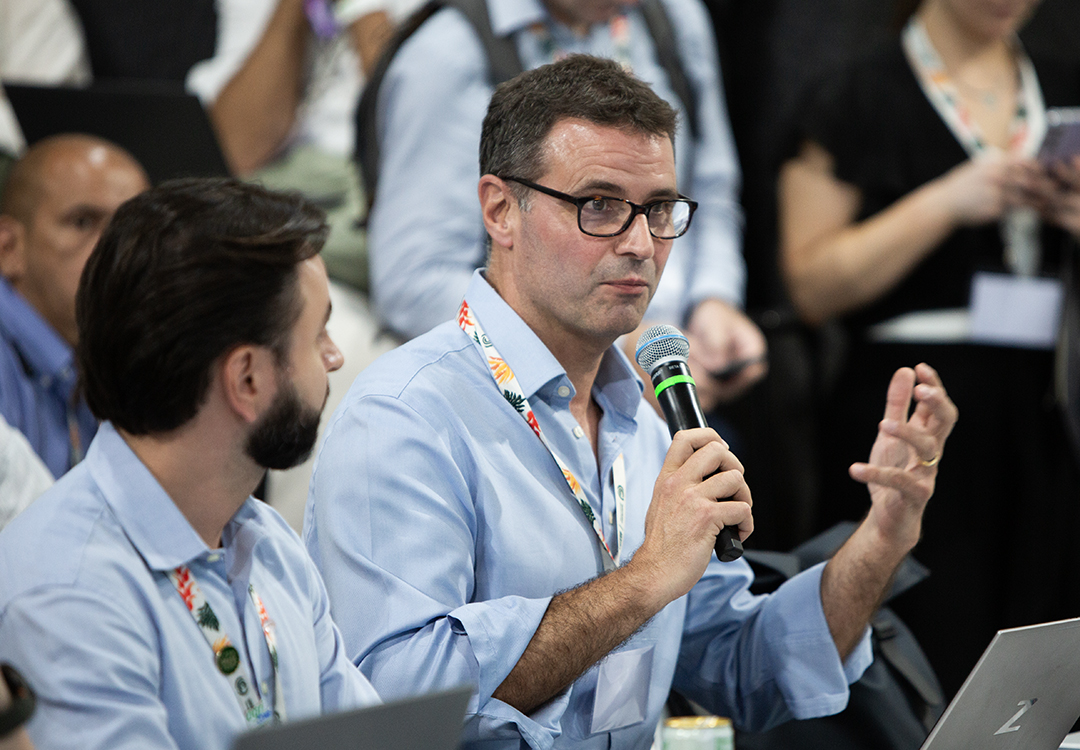
On collaborative models, Jim Andrew, Executive Vice President and Chief Sustainability Officer, PepsiCo, reflected on experience with farmers in the company’s supply chains. He said successful partnerships arise when actors identify a common set of challenges and develop replicable models, such as those under AARL and LAB.
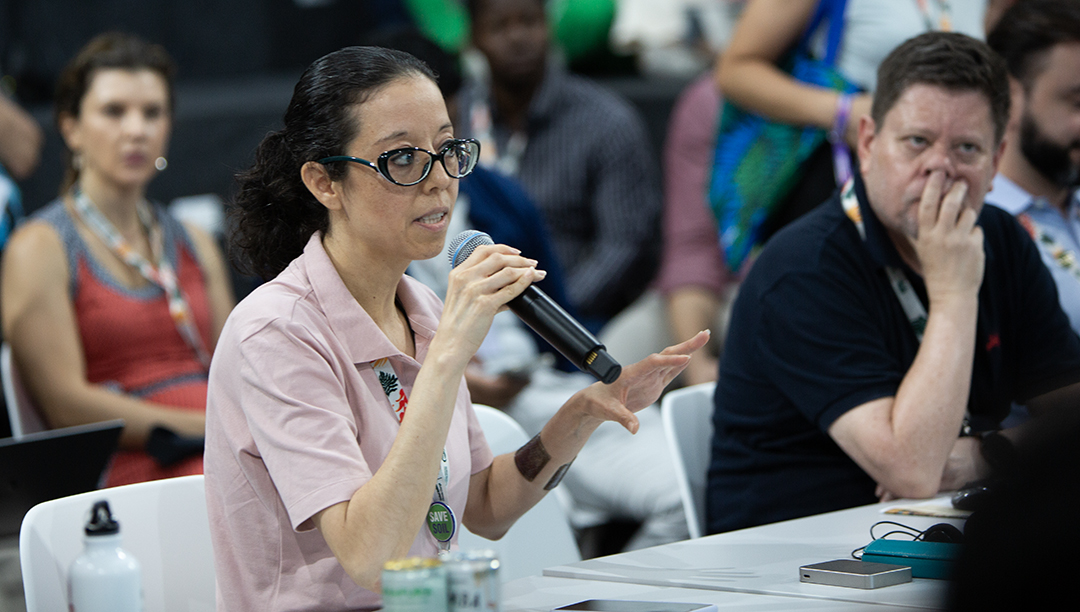
On innovation, Leigh Ann Winowiecki, Global Research Lead, Coalition of Action for Soil Health, underlined the importance of systematic monitoring paired with community-driven data collection. She said these combined datasets can inform reporting, support investment decisions, and reduce risk for local actors. Maria Luiza de Oliveira Pinto e Paiva, Chief Sustainability Officer, Suzano, spoke about combining traditional knowledge, scientific expertise, finance, and innovation, and noted that collaboration and openness to dialogue are essential for scaling solutions. Armitage added that methodologies must adapt to the realities of smallholder agriculture to enable projects to reach an investable scale.
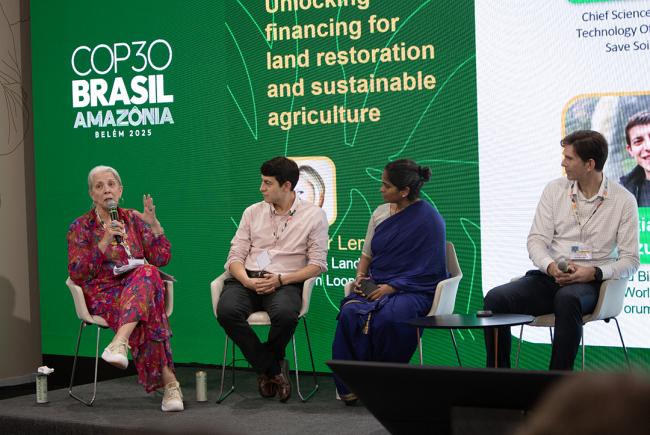
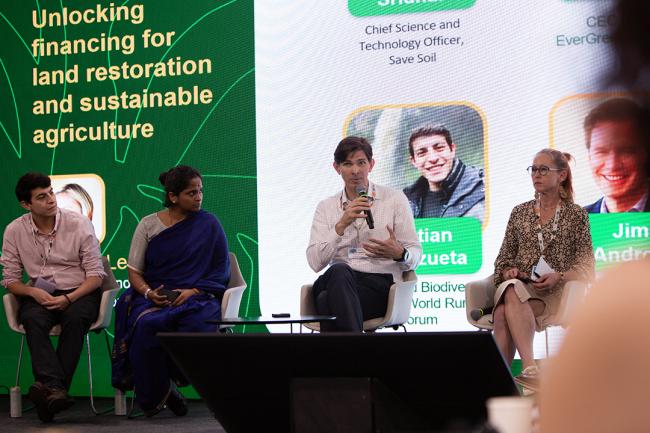
In closing reflections, panelists pointed to the need for farmer-led research, participatory design, and “deeper empathy” in partnerships. They called for stronger recognition of land tenure challenges, closer engagement with soil scientists, and greater involvement of the insurance sector in derisking restoration projects.
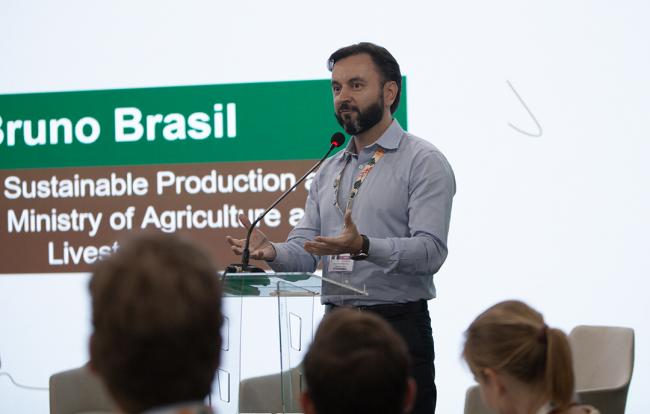
Closing the session, Bruno Brasil, Director of Sustainable Production and Irrigation, Ministry of Agriculture and Livestock, Brazil, said that in moments when multilateral negotiations face difficulties, returning to the values shared across the Rio Conventions is essential. He welcomed the opportunity to bring the three Rio processes closer together and said public private partnerships such as LAB illustrate the potential of integrated action. He confirmed that Brazil will launch the RAIZ initiative on 19 November, positioning land restoration as a strategic thread connecting the climate, biodiversity, and desertification agendas.
Organizers: AARL, WBCSD, High Level Climate Champions, BCG, and the Riyadh Action Agenda
Contact: Diego de León I [email protected]
For more information: https://www.riyadhactionagenda.org and https://www.wbcsd.org/actions/cop28-action-agenda-on-regenerative-landscapes/
To receive free coverage of global environmental events delivered to your inbox, subscribe to the ENB Update newsletter.
All ENB photos are free to use with attribution. For 2025 UN Climate Change Conference Belem - Side Events , please use: Photo by IISD/ENB | Angeles Estrada Vigil
Selected Images


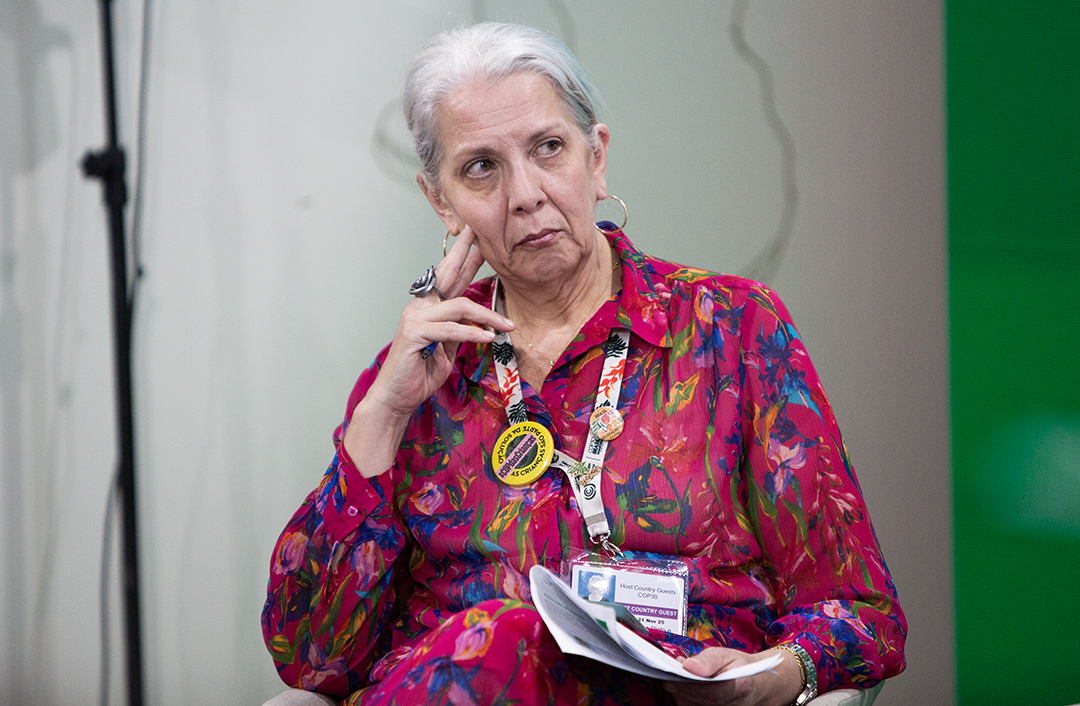
Maria Luiza de Oliveira Pinto e Paiva, Chief Sustainability Officer, Suzano
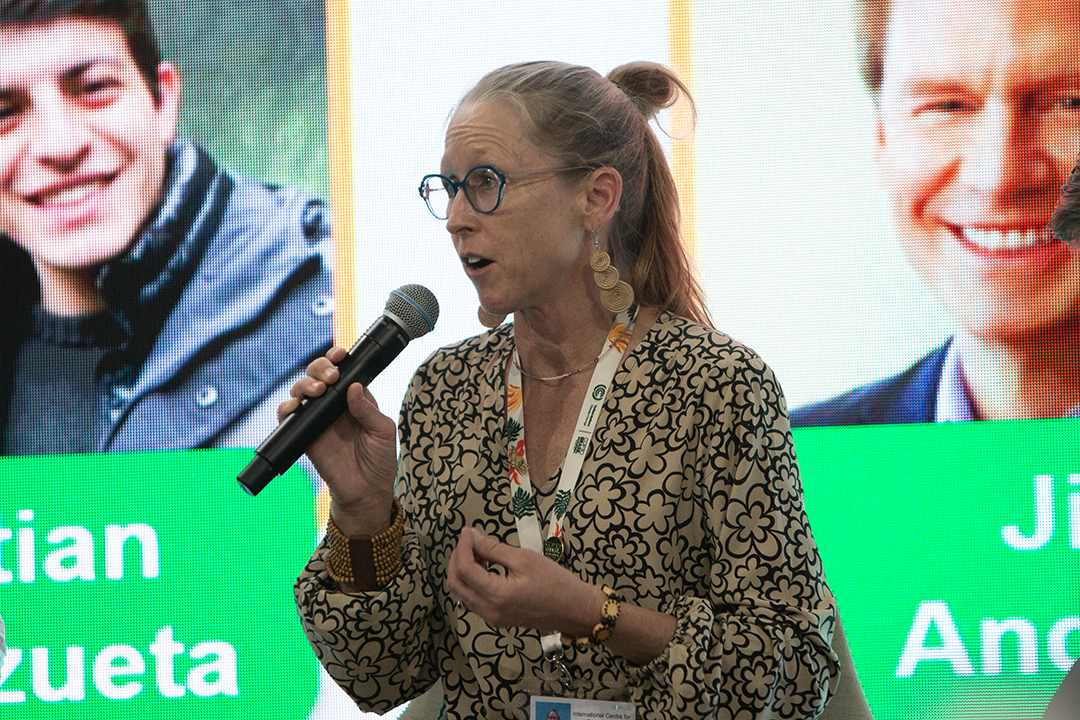
Leigh Ann Winowiecki, Global Research Lead, Coalition of Action for Soil Health
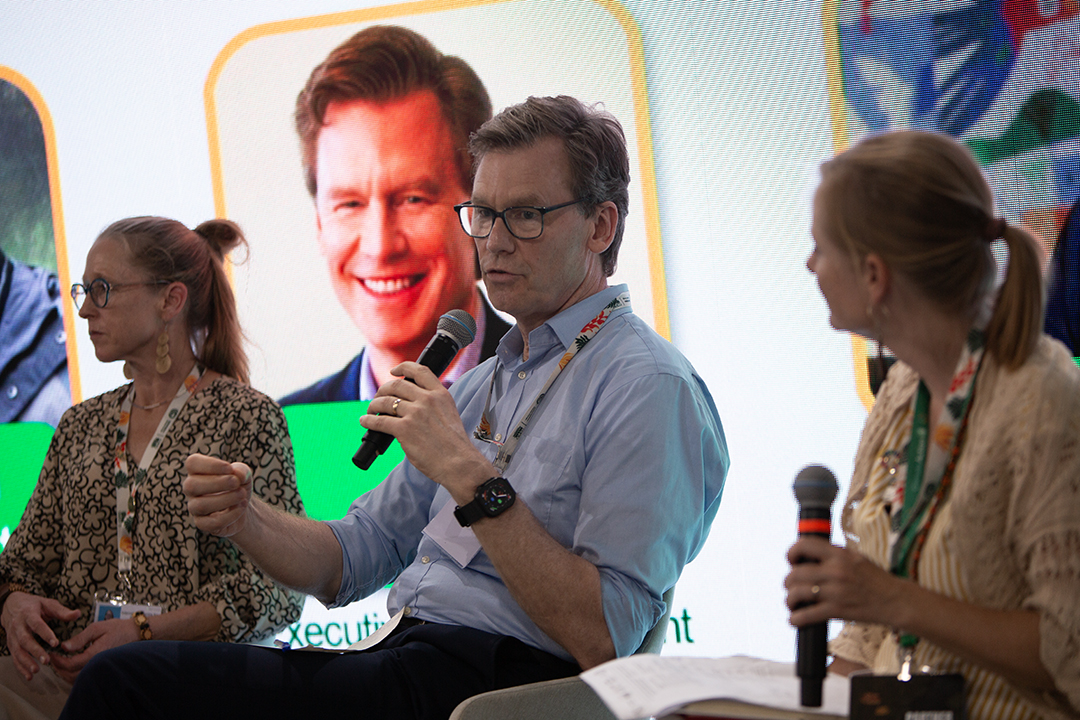
Jim Andrew, Executive Vice President and Chief Sustainability Officer, PepsiCo