About
Speakers stressed the close links between ocean protection, climate change, and employment, while also noting the global spotlight ocean issues have received in 2025.
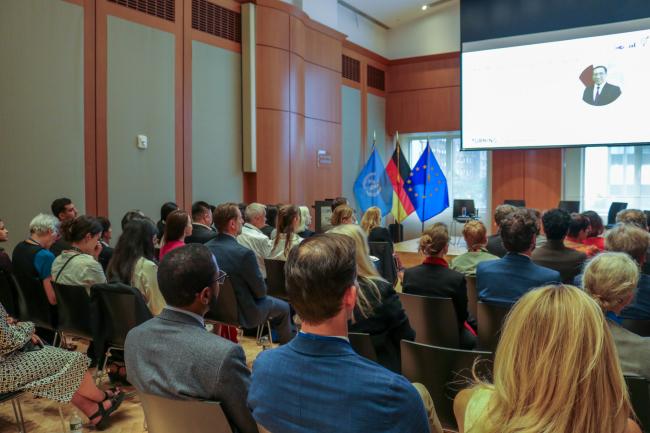
Ocean protection, climate change, and employment and decent work are closely interlinked. Speakers at the side event titled “Turning the Tide: Unlocking the Power of the Ocean” stressed these linkages and highlighted that 2025 is an extraordinary year for the ocean. In particular, they noted that global attention has been directed to ocean policy, biodiversity, and funding, among other topics, during the tenth Our Ocean conference in April, the UN Ocean Conference in June, and the consideration of SDG 14 (life below water) during the High-Level Political Forum (HLPF) in July. Speakers considered these connections during the HLPF side event hosted by the Permanent Mission of Germany to the UN on 21 July 2025, in New York, US.
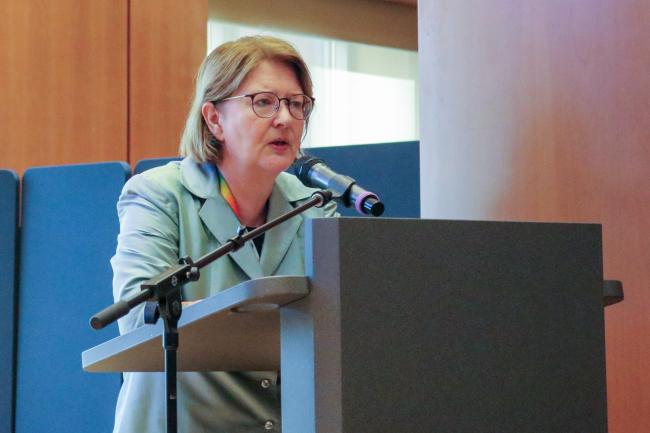
Antje Leendertse, Permanent Representative of Germany to the United Nations, opened the side event, noting that spaces for dialogue and learning like those provided by the HLPF are more crucial than ever. She emphasized we only have five years left to achieve the 2030 Agenda and said the HLPF is essential for promoting multilateralism. Highlighting that ocean health is connected closely to other SDGs, she said the side event would focus on SDG 14.
In his keynote address, Febrian Alphyanto Ruddyard, Vice-Minister of National Development Planning and Vice Head of the National Development Planning Agency (Bappenas), Indonesia, noted that while SDG 14 brings us many benefits, from providing carbon storage and to jobs, it is the least funded SDG. He said Indonesia: will feature ocean issues across many SDGs in its next Voluntary National Review (VNR); is expanding marine protected areas; has adopted a quota-based fisheries system; is supporting women’s cooperatives and entrepreneurship; has issued a sovereign blue bond; and has ratified the BBNJ Agreement and is engaged in the negotiations of a global treaty on plastic.
Bärbel Kofler, Parliamentary State Secretary, Federal Ministry for Economic Cooperation and Development (BMZ), Germany, noted the UN Ocean Conference demonstrated that multilateralism works and said it secured commitments to the BBNJ Agreement. She discussed the support activities of the Blue Action Fund, invited other countries to engage with this financing instrument, and said BMZ would remain a strong and reliable partner on this issue.

Panel Discussion: Multilateral Marine Protection in the Spotlight
Jonathan Kelsey, Director Vibrant Ocean Initiative, Bloomberg Philanthropy, moderated the panel discussion. He noted that ocean challenges and solutions are intertwined with other challenges and extend from the local level to the global scale.
Pamela Castillo, 30x30 Marine Director, Wildlife Conservation Society, stressed the need for regional cooperation for achieving the 30x30 objectives. She noted the need for inclusive, legitimate, and locally grounded governance, and highlighted the Women Ocean Guardians initiative, which elevates women on the frontlines to participate in meaningful ocean governance decision-making. For financing, she noted opportunities for blended financing such as blue bonds and debt-for-nature swaps. She also emphasized inclusion, noting, “When local voices lead, results are stronger.”
Antje Boetius, President and CEO, Monterey Bay Aquarium Research Institute, said the ocean is not yet known or fully mapped and stressed the need to develop baselines. She lamented reductions in support for activities including assessments of types of ocean carbon. She also noted the UN Ocean Conference brought together many people with hope, and highlighted that, scientifically, it is not too difficult to turn things around for the ocean.
Markus Knigge, Executive Director, Blue Action Fund, explained that as marine protected area coverage has increased, so has the need to manage and collect data on these areas. He presented the Blue Action Fund’s work to bring governments together and called for more attention to “economic losers”—such as those whose fishing catches are reduced—and the reasons for their challenges.
During the discussion, participants noted the need to increase what is offered to communities in need so they don’t have to accept unsustainable options. They also emphasized the value of learning from each other.
Closing Remarks
Rita Schwarzelühr-Sutter, Parliamentary State Secretary, Federal Ministry for the Environment, Climate Action, Nature Conservation and Nuclear Safety, Germany, thanked the speakers and said her country is a member of the High-Ambition Coalition and supports a strong plastics agreement. She added that Germany is working on its ratification of the BBNJ Agreement.
Signing Ceremony
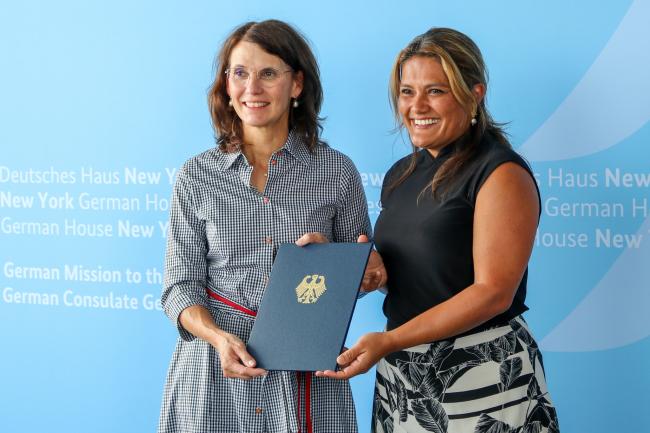
Immediately prior to the side event, Germany became the fourth government to sign the Voluntary Commitment for the Women Ocean Guardians initiative. This public-private initiative elevates women who work on the frontlines of marine conservation and sustainable use and seeks to transform ocean governance for more resilient and sustainable outcomes.
In signing the Voluntary Commitment, Rita Schwarzelühr-Sutter, Parliamentary State Secretary, Federal Ministry for the Environment, Climate Action, Nature Conservation and Nuclear Safety, Germany, noted that women play key roles in economies and emphasized the links between gender equality and the marine economy.
Pamela Castillo, 30x30 Marine Director, Wildlife Conservation Society, stressed that women play essential roles in ocean conservation but face many barriers. She said the initiative amplifies women’s leadership and thanked Germany, on behalf the 20 organizations that support the initiative, for signing the Voluntary Commitment.
To receive free coverage of global environmental events delivered to your inbox, subscribe to the ENB Update newsletter.
All ENB photos are free to use with attribution. For this event, please use: Photo by @GIZ.
Select Images
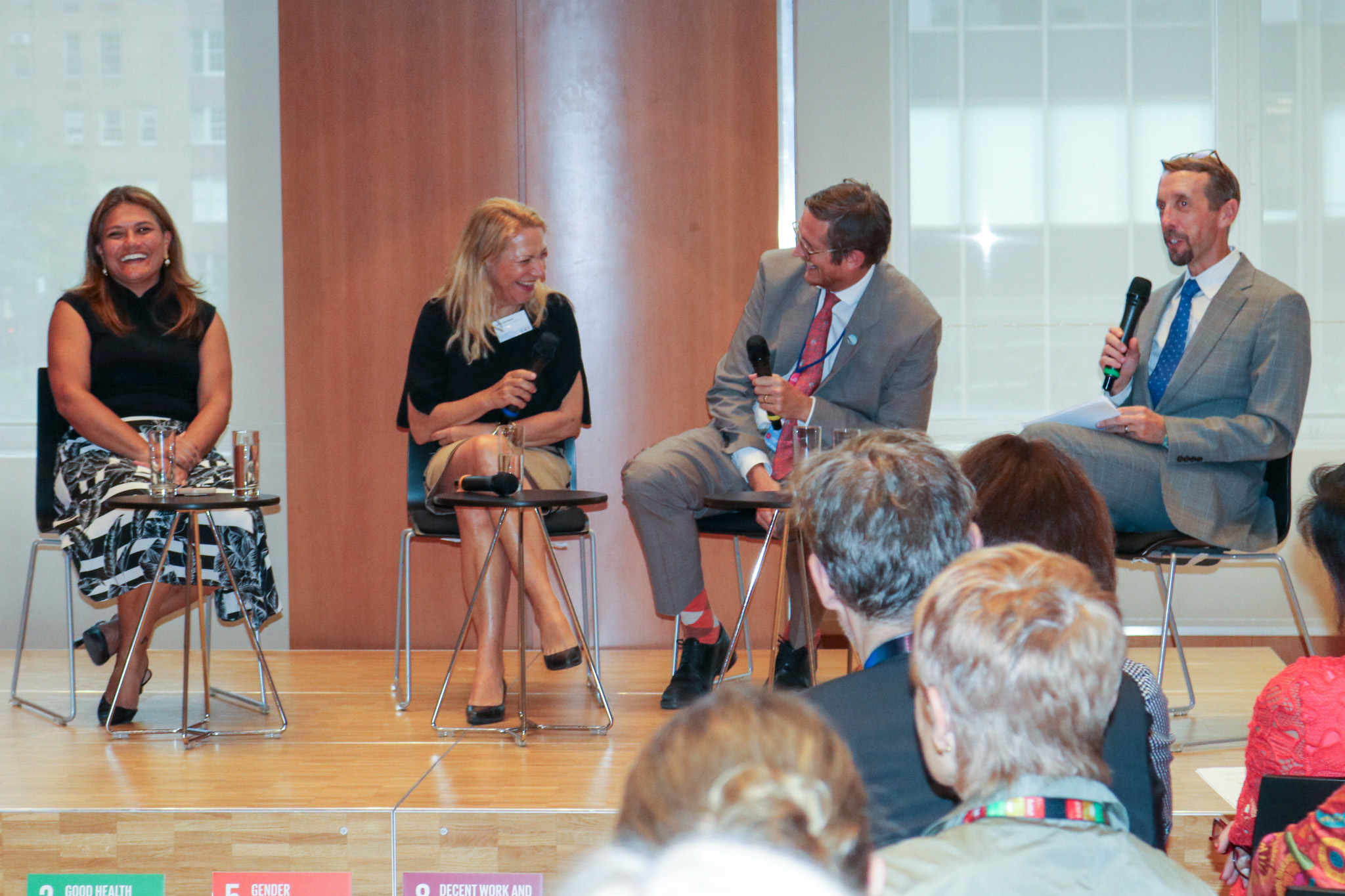
Panelists Pamela Castillo, Wildlife Conservation Society; Antje Boetius, Monterey Bay Aquarium Research Institute; Markus Knigge, Blue Action Fund; and moderator Jonathan Kelsey, Bloomberg Philanthropy
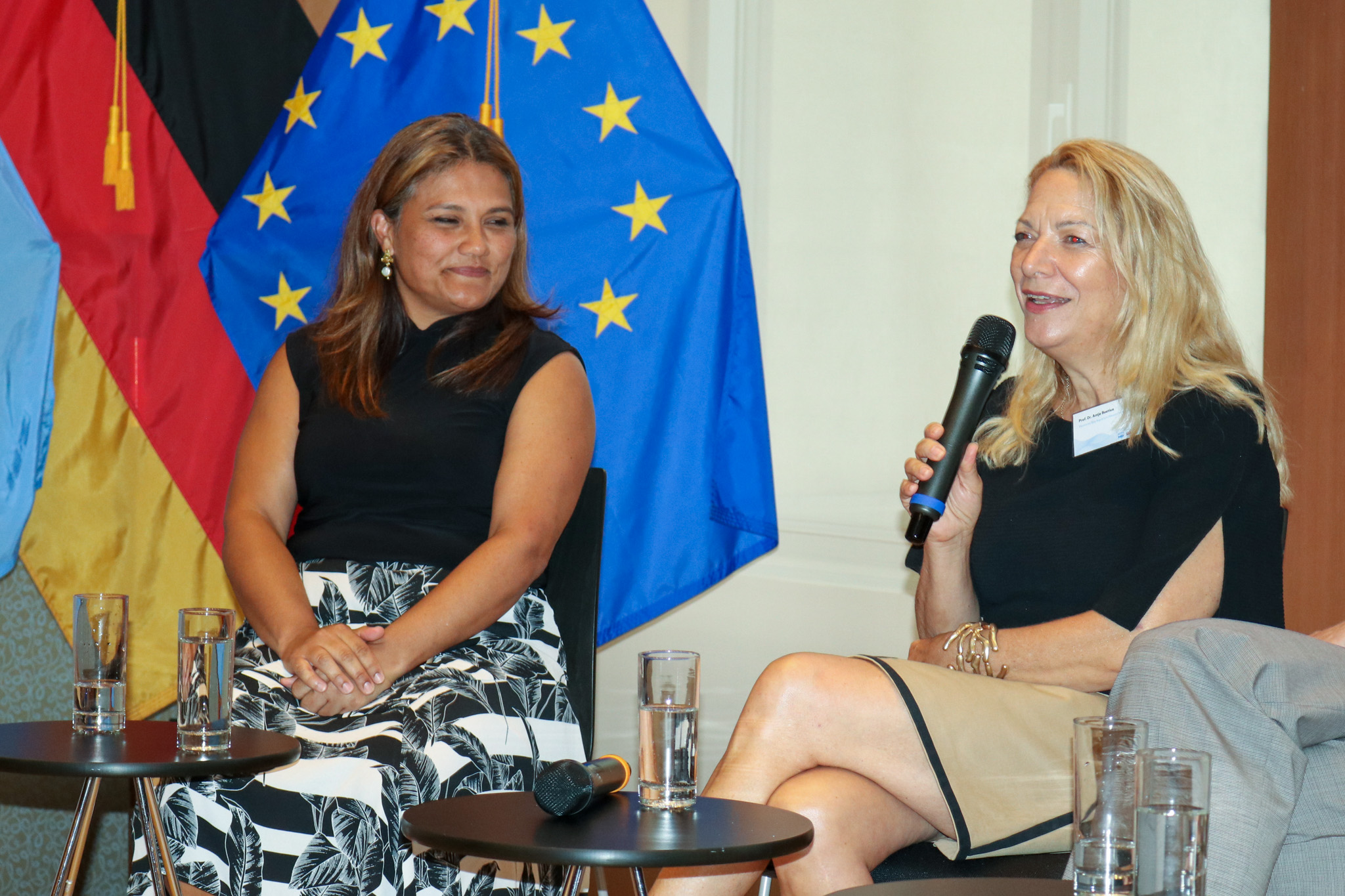
Panelists Pamela Castillo, Wildlife Conservation Society, and Antje Boetius, Monterey Bay Aquarium Research Institute
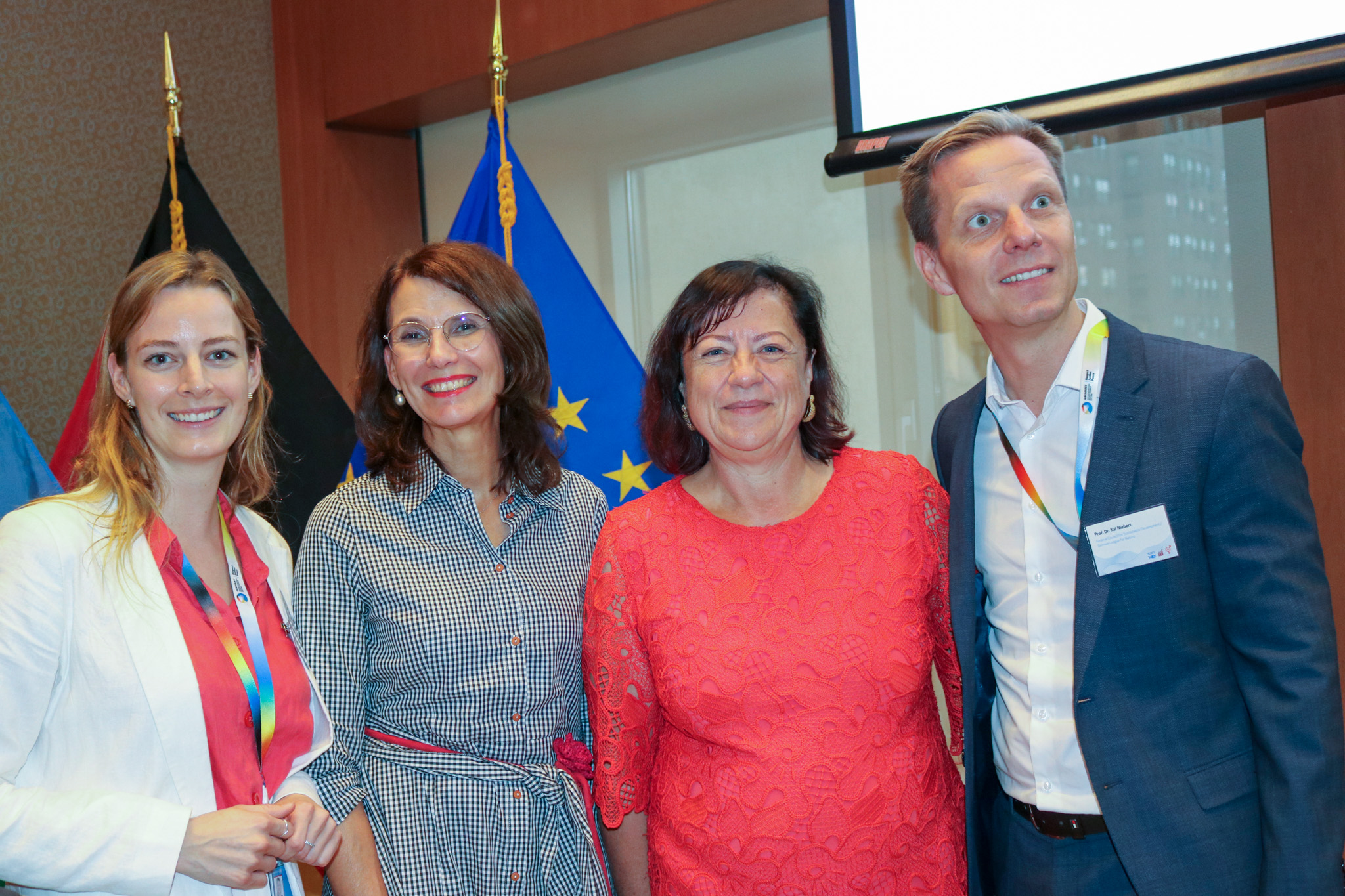
(L-R): Myriam Rapior, The German Council for Sustainable Development (RNE); Rita Schwarzelühr-Sutter, Parliamentary State Secretary, Federal Ministry for the Environment, Climate Action, Nature Conservation and Nuclear Safety, Germany; Bärbel Kofler, Parliamentary State Secretary, Federal Ministry for Economic Cooperation and Development, Germany; and Kai Niebert, President German League for Nature and Environment