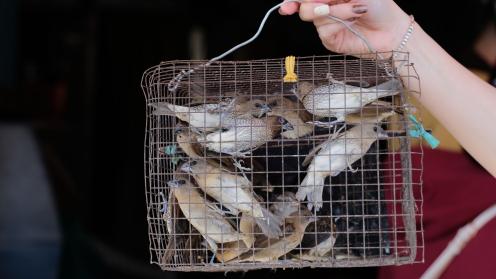
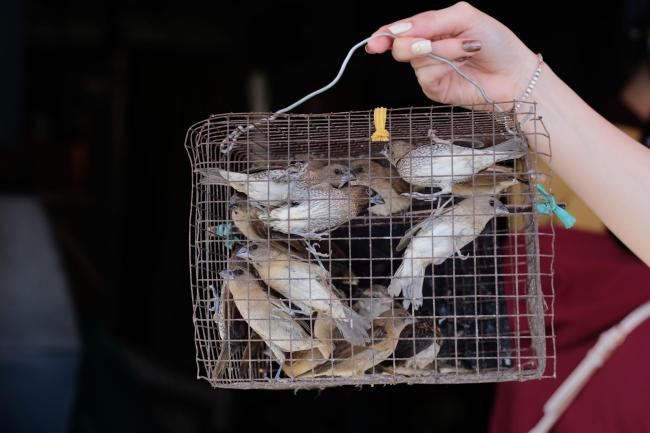
Each year, criminals make billions of dollars by illegally trafficking natural resources. These crimes cover a wide range of activities, including illegal logging, poaching and trafficking of endangered species, illegal mining, waste trafficking, and pollution. While many of the crimes may originate in resource-rich developing countries, resources are trafficked widely and criminals launder their profits globally.
The World Bank has estimated that the true, societal costs of environmental crime amount to USD 1–2 trillion per year. Given the size of this illicit economy, governments recognize that they have to do more to address environmental crime. As a result, in 2024 a number of governments and non-governmental organizations called for the United Nations Convention against Transnational Organized Crime (UNTOC) to adopt a protocol on international environmental crime.
The United Nations Convention against Transnational Organized Crime (UNTOC) is the world’s only global, legally binding instrument in place to combat transnational organized crime. Adopted by General Assembly resolution 55/25 on 15 November 2000, UNTOC entered into force on 29 September 2003 and currently has 195 Parties.
UNTOC establishes a framework for international cooperation and law enforcement regarding transnational organized crime. Addressing organized crime is of growing importance as large transnational criminal organizations have access to more funds than the gross domestic product (GDP) of many countries; and their actions destabilizes global security, damages economies, and undermines public health and the environment. Countering these effects requires international cooperation, which is one of the topics at the thirteenth session of the Conference of the Parties (COP-13).
COP-13 will consider the implementation of the Convention and its three Protocols:
- The Protocol to Prevent, Suppress and Punish Trafficking in Persons, especially Women and Children;
- The Protocol against the Smuggling of Migrants by Land, Sea and Air; and
- The Protocol against the Illicit Manufacturing of and Trafficking in Firearms, their parts and components and ammunition.
It will also focus on other serious crimes, as defined in the Convention, including new forms and dimensions of transnational organized crime, including crimes that affect the environment.
COP-12 adopted resolution 12/4 entitled “Enhancing measures to prevent and combat crimes that affect the environment falling within the scope of the United Nations Convention against Transnational Organized Crime.” The resolution requested that the UN Office on Drugs and Crime (UNODC) to convene an Open-ended Intergovernmental Expert Group on crimes that affect the environment falling within the scope of UNTOC and related offenses covered by the Convention, with a mandate to:
- take stock of the application and collective implementation of UNTOC in addressing such crimes;
- identify any gaps that may exist in the international legal framework and that could be addressed under UNTOC to prevent and combat such crimes;
- consider possible responses relevant to those gaps, including the possibility, feasibility and merits of any additional protocol to UNTOC.
The reports of Expert Group’s deliberations and recommendations will be submitted to and discussed at COP13 for possible endorsement.
COP-13 takes place from 19 to 23 October 2026, in Vienna, Austria, the seat of UNODC, which serves as the UNTOC Secretariat.
The Earth Negotiations Bulletin (ENB) writer for this meeting are Nicole Schabus; Deborah Davenport, Ph.D.; Olivia Pasini; and Denise Young. The Digital Editor is Natalia Mroz. The Editor is Pamela Chasek, Ph.D.
To receive free coverage of global environmental events delivered to your inbox, subscribe to the ENB Update newsletter.