

The largest-ever group of UN agencies, partners, and government representatives faced a heavy agenda for advancing global water and sanitation policy as they convened for the 43rd UN-Water Meeting at International Fund for Agricultural Development (IFAD) headquarters in Rome, Italy.
In addition to final details for the third edition of the UN SDG 6 Synthesis Report 2026, which will reveal limited progress towards Sustainable Development Goal 6 (clean water and sanitation) when it is launched during the July session of the High-level Political Forum on Sustainable Development (HLPF), preparations for the December 2026 UN Water Conference were a prominent agenda item.
Participants recognized the opportunity this event provides to build on the dialogue that began at the 2023 UN Water Conference. They also voiced concerns that the event needs to deliver concrete and actionable outcomes to demonstrate the value of multilateral cooperation in the face of a challenging financial and political environment.
In the six months since the last UN-Water meeting, Co-Chairs have been named for the six interactive dialogues that will be the centerpiece of the 2026 UN Water Conference:
- Water for people, co-chaired by Ghana and Switzerland;
- Water for prosperity, co-chaired by China and Spain;
- Water for planet, co-chaired by Egypt and Japan;
- Water for cooperation, co-chaired by Zambia and Finland;
- Water in multilateral processes, co-chaired by Mexico and Germany; and
- Investments for water, co-chaired by South Africa and France.
During the 24-25 March UN-Water meeting, the Co-Chairs reported on initial discussions on the themes that took place during a January preparatory meeting in Senegal. They also reviewed their draft concept notes, initial consultations, and expectations for the sessions. In each of the six presentations, the Co-Chairs emphasized that discussions should be focused while recognizing the interlinkages among the six themes.
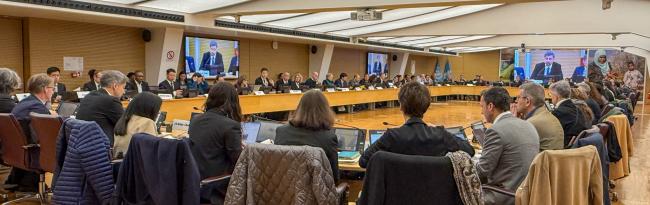
At the conclusion of the two-day open session of the 43rd UN-Water meeting, Alvaro Lario, UN-Water Chair, highlighted participants had stressed that acting coherently across mandates is essential, fragmentation is costly, and coordination must translate into delivery. He said discussions had revealed ways in which the UN System-wide Strategy on Water and Sanitation and its collaborative implementation plan, which were outcomes from the 2023 UN Water Conference, are helping countries make progress. He also called attention to participants’ commitment to deliver tangible results.
Throughout the meeting, participants noted the value of UN-Water as a convening space for discussions on global cooperation on water and sanitation. They also emphasized the need to ensure upcoming meetings, including the 4th High-Level International Conference on the International Decade for Action “Water for Sustainable Development” in Dushanbe, Tajikistan, the review of SDG 6 progress at the July meeting of the HLPF, and the 2026 sessions of the conferences of the parties for the three Rio Conventions, need to be viewed as linked events. Participants also stressed the importance of thinking about the follow-up for each event, and not just the preparations, in order to ensure learning takes place and progress is achieved on the ground.
To receive free coverage of global environmental events delivered to your inbox, subscribe to the ENB Update newsletter.
Select photos
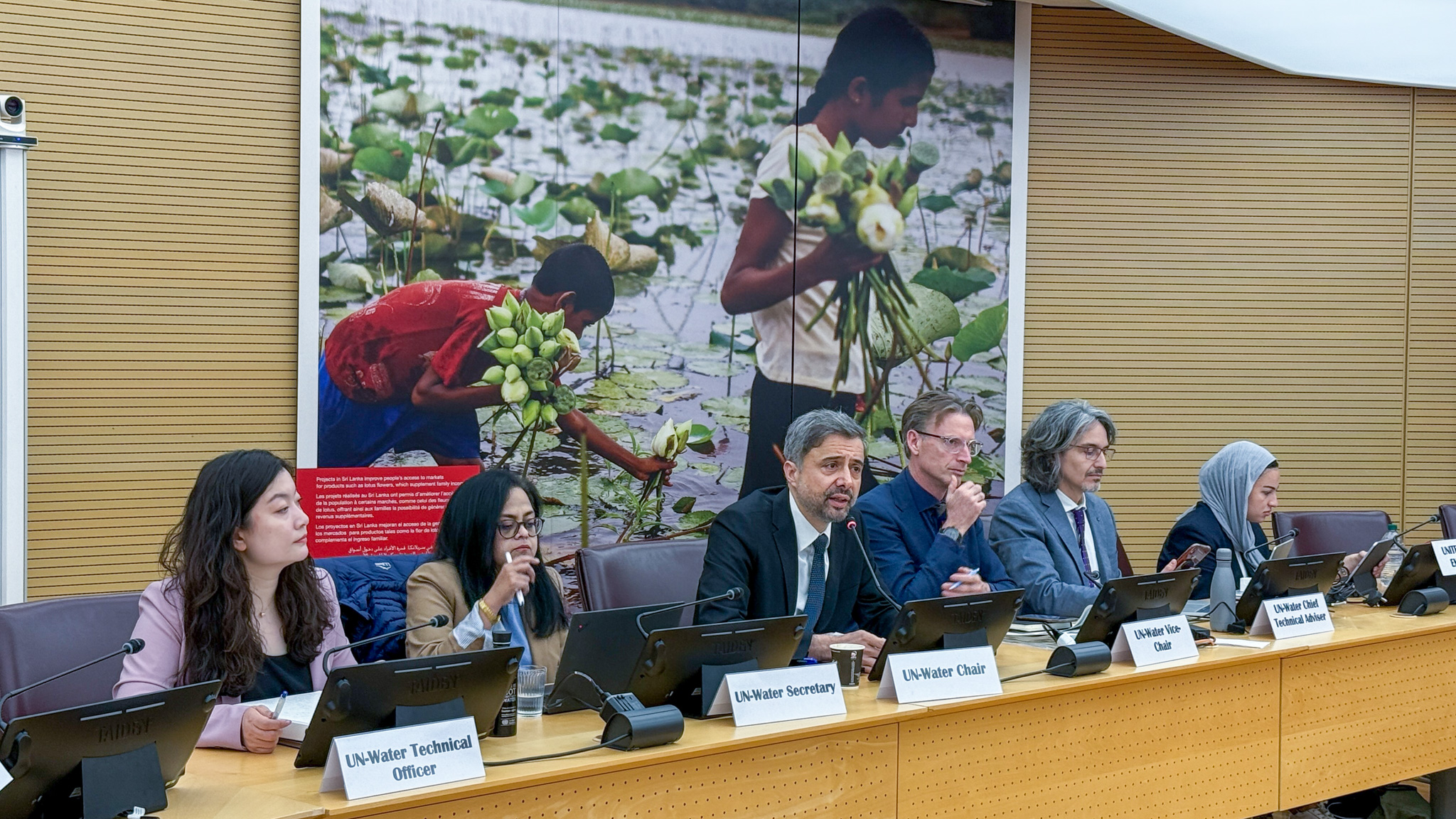
Dais on 25 March: (L-R) Cheng Li, UN-Water; Madhushree Chatterjee, UN-Water Secretary; Alvaro Lario, UN-Water Chair; Bruce Gordon, UN-Water Vice-Chair; Federico Properzi, UN-Water Chief Technical Adviser; Salma Zeid, UAE
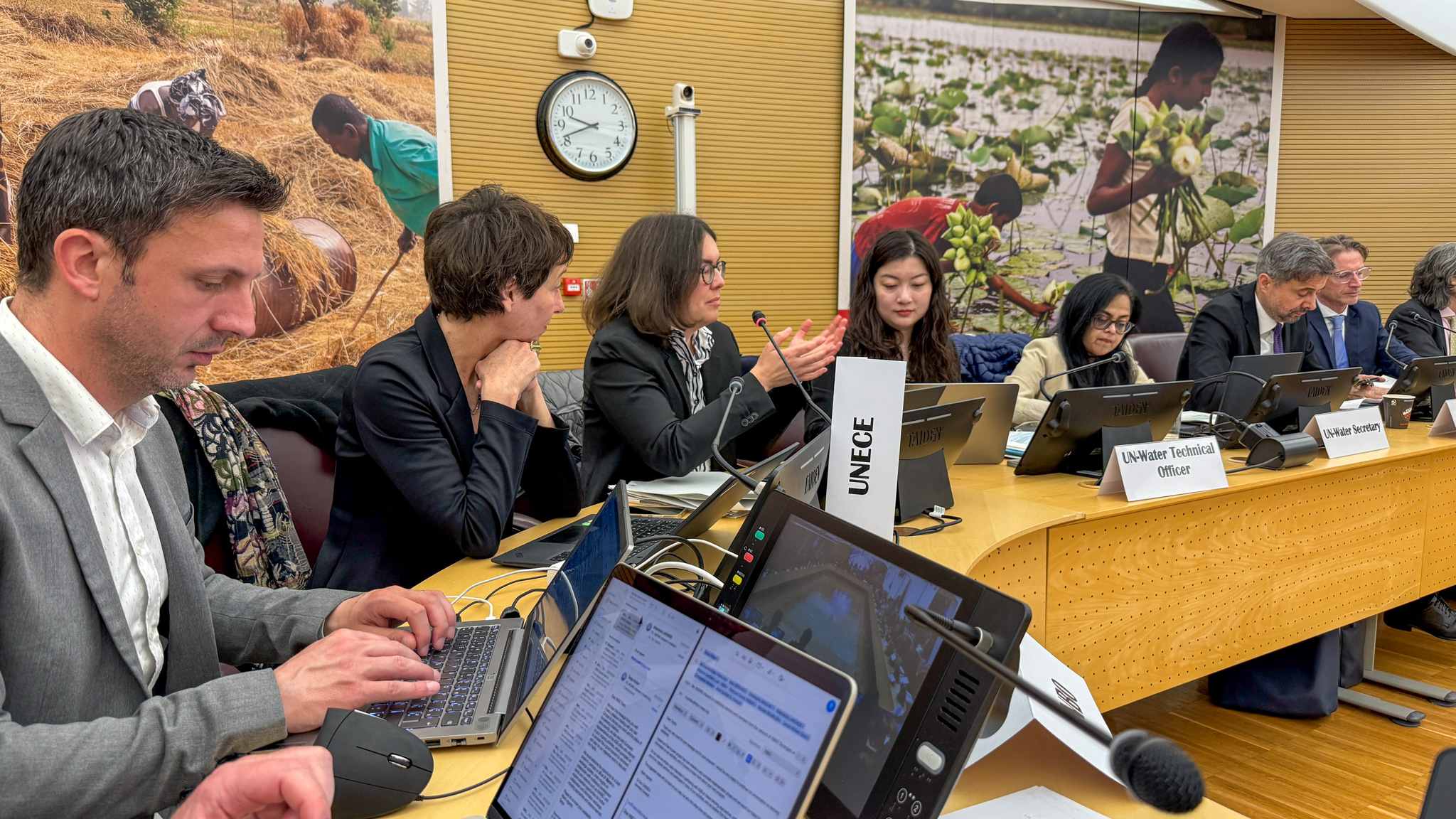
Sonja Koepple, UN Economic Commission for Europe
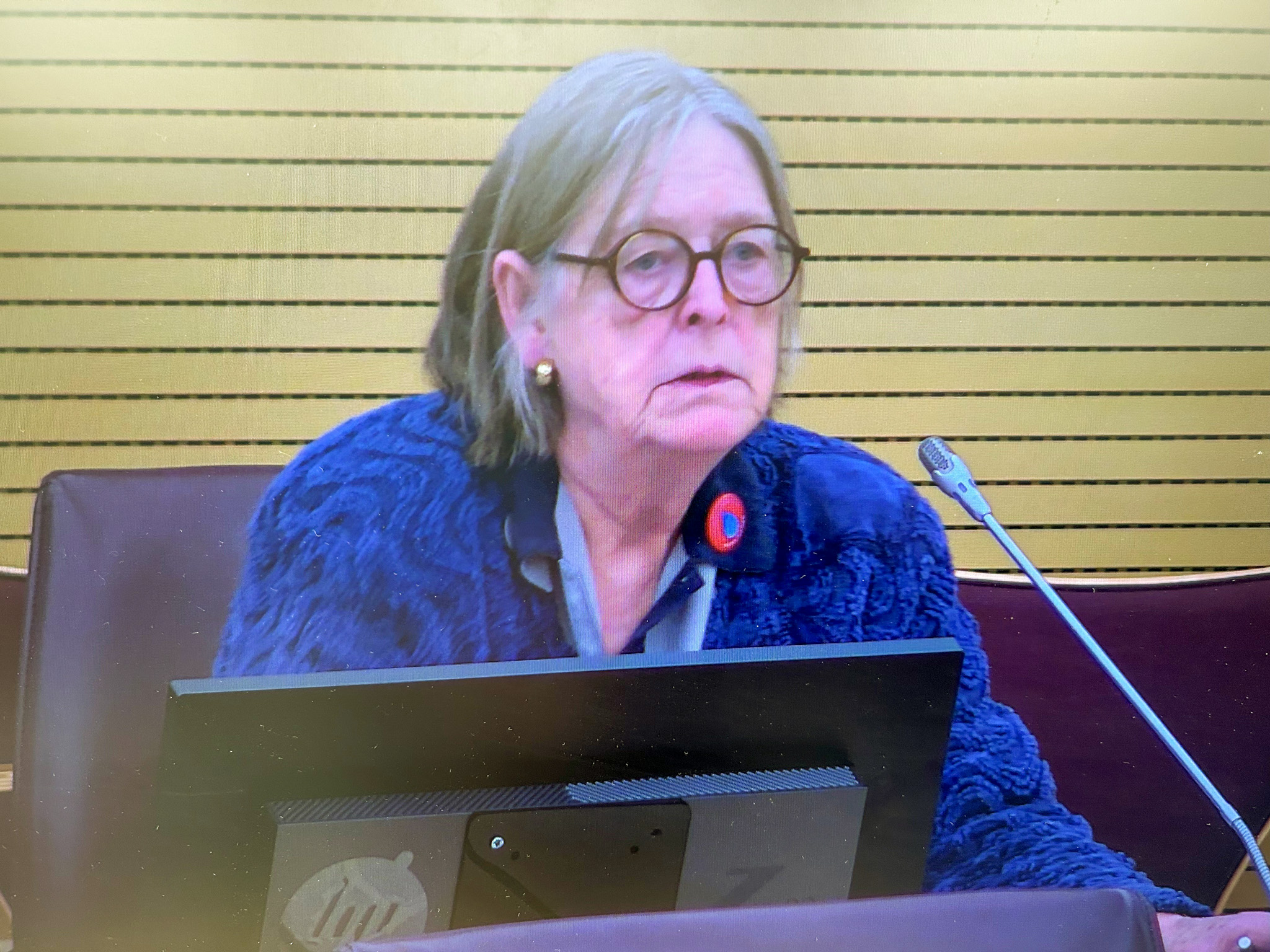
Lesha Witmer, Human Right to Water
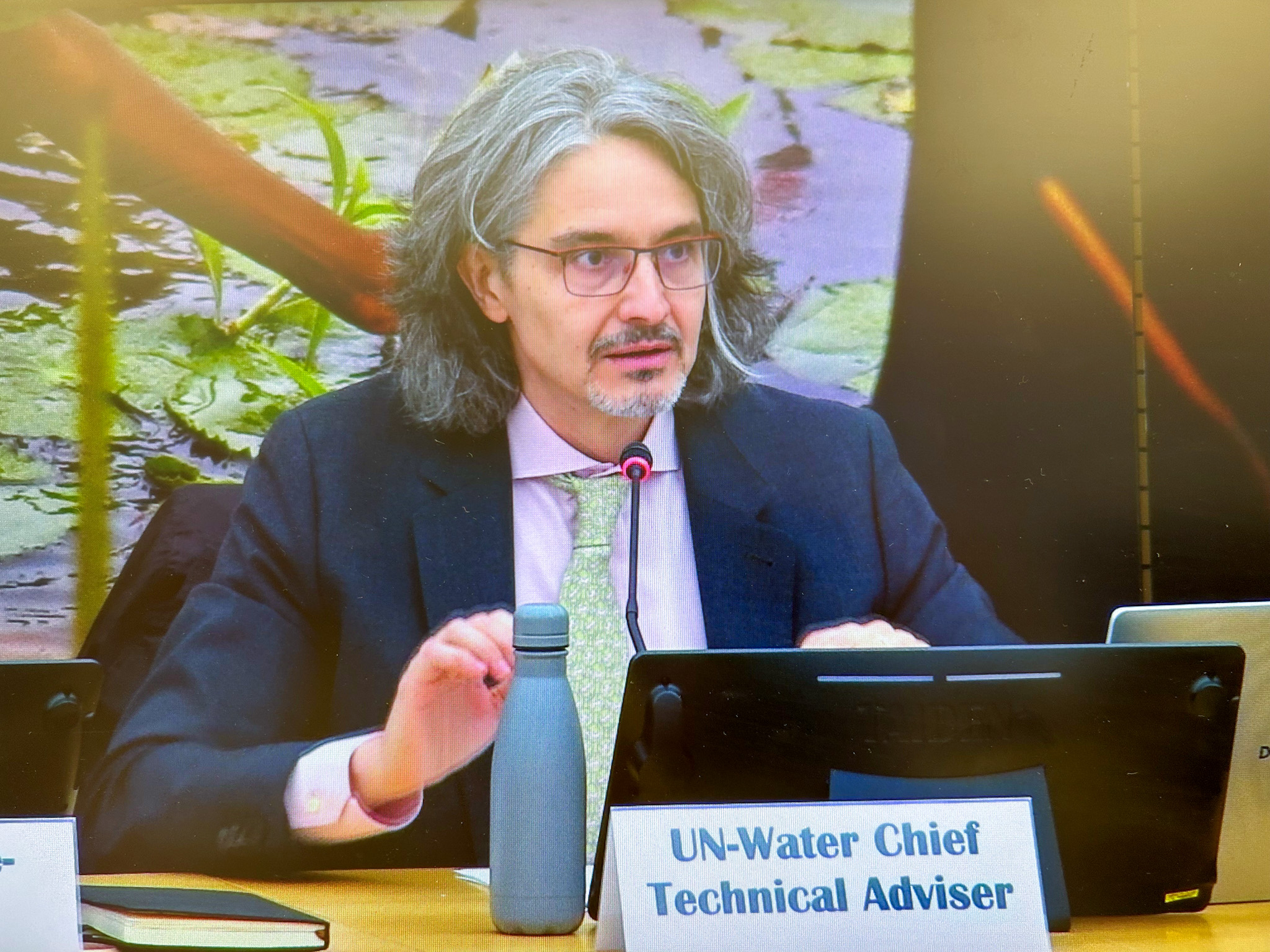
Federico Properzi, UN-Water Chief Technical Adviser
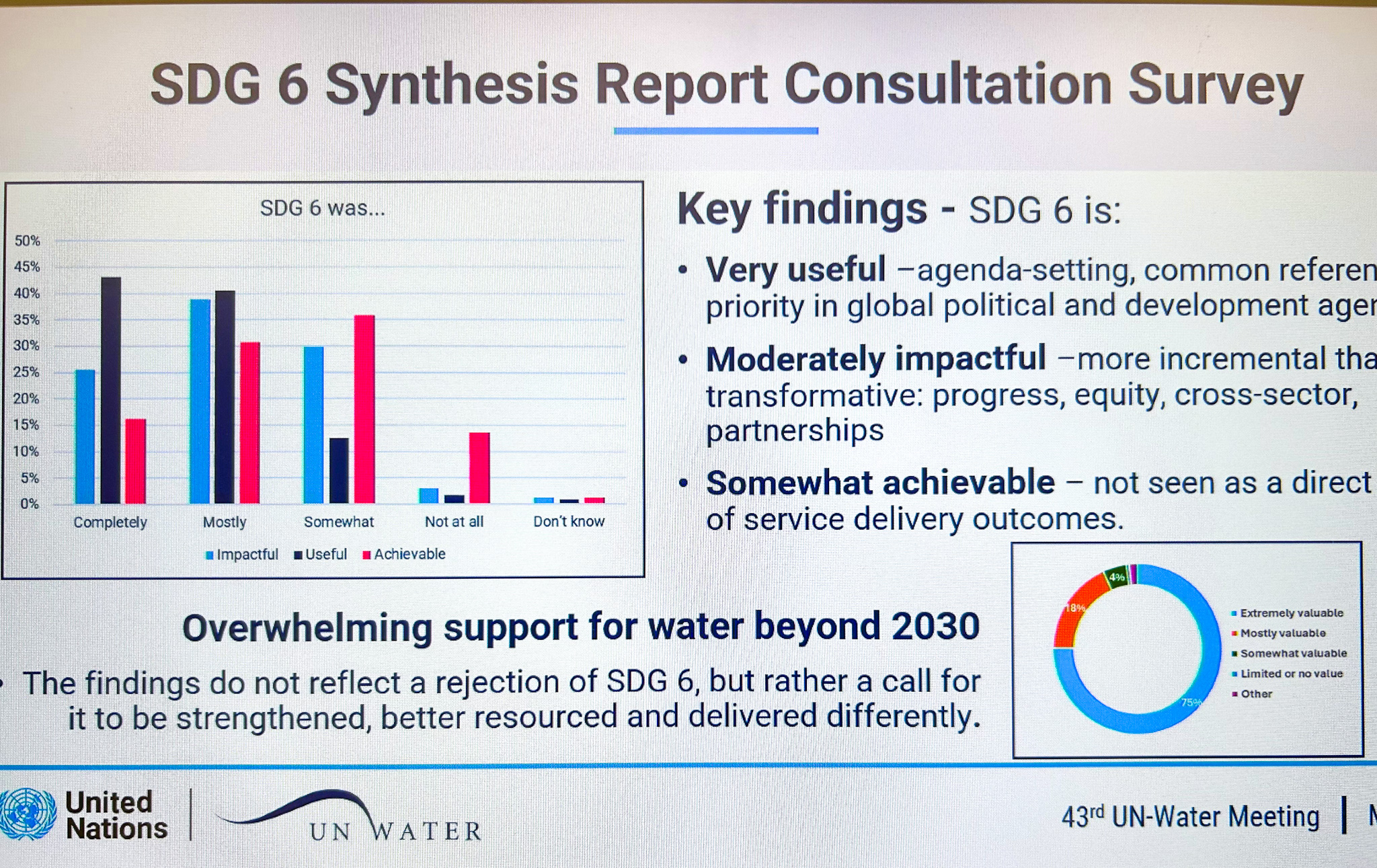
A slide from the update on the SDG 6 Synthesis Report
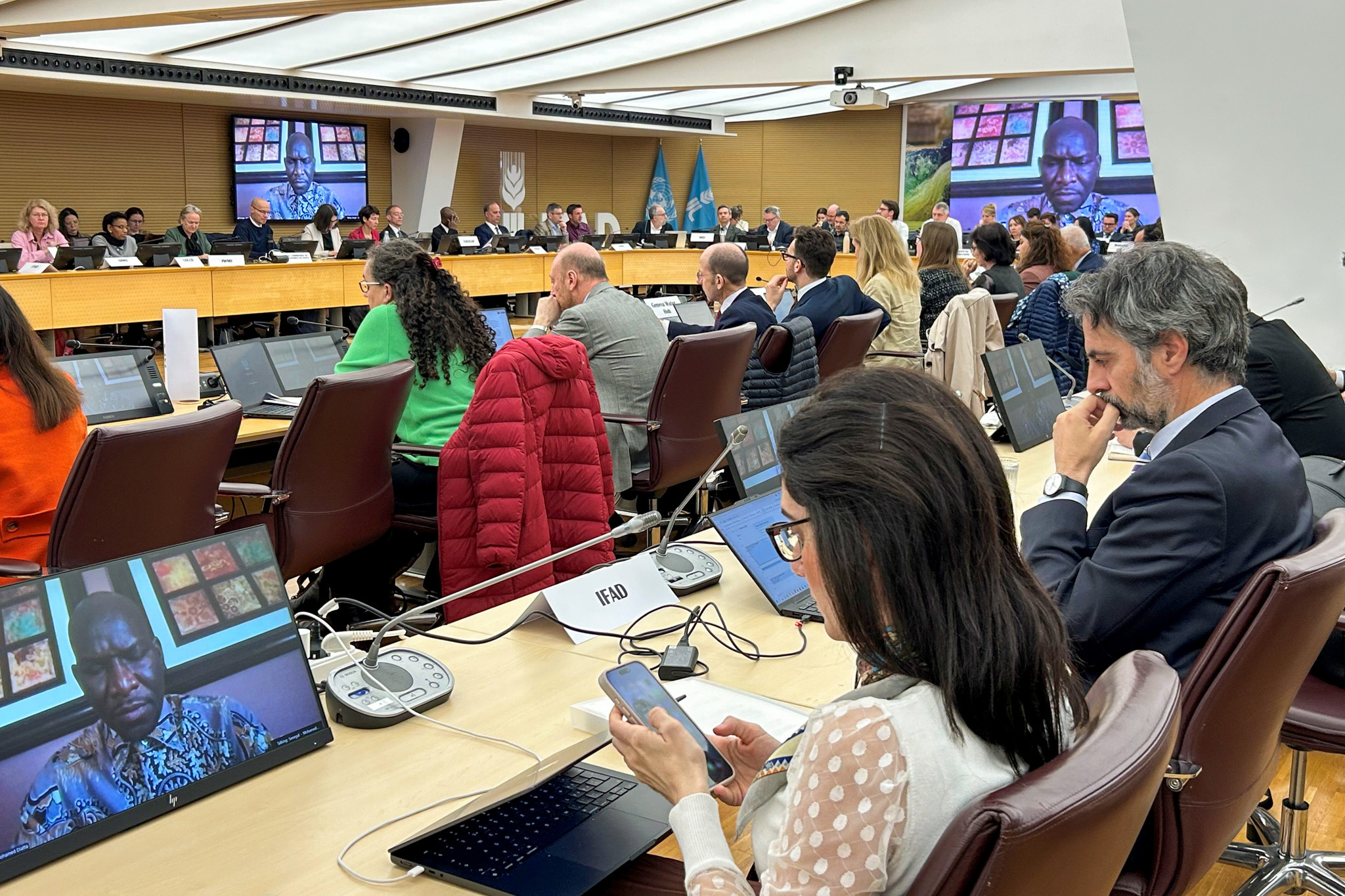
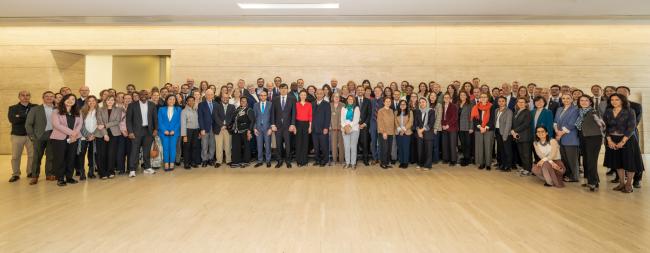
Participants at the meeting
