Participation Works! Strengthening the Role of Stakeholders in the Implementation and Reporting of the 2030 Agenda
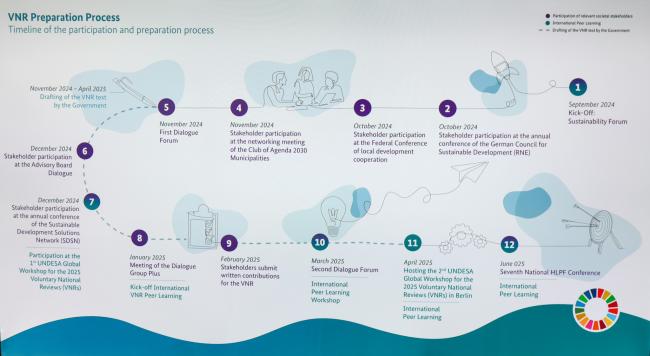
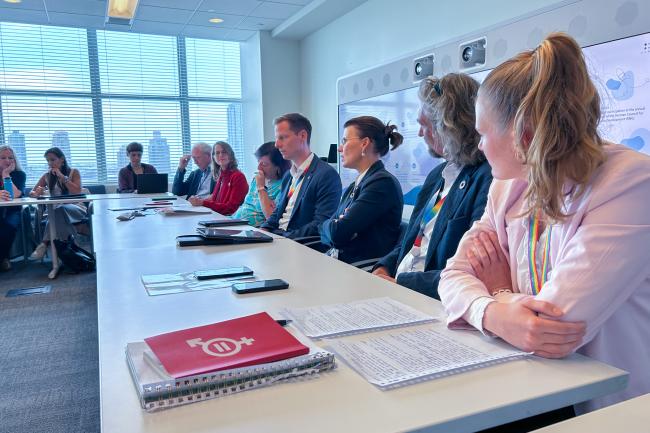
Participatory processes for preparing Voluntary National Reviews (VNR) support stronger and more meaningful implementation of the Sustainable Development Goals (SDGs) and reporting of activities related to the 2030 Agenda. Government officials and stakeholders from Germany discussed the strengths and weaknesses of the process that was used to develop Germany’s third VNR during a VNR Lab on 23 July 2025, at UN Headquarters in New York, US, with a focus on how engagement mechanisms can help strengthen transparency, accountability, and long-term impact.
Kai Niebert, Member of the German Council for Sustainable Development (RNE), moderated the event and invited speakers to focus on the process, not the outcomes, of the VNR. Many speakers highlighted that the VNR had been completed despite the change in the German Federal Government.
Stakeholder participation as a critical success factor in the German Sustainability Strategy (DNS) and VNR processes
Bärbel Kofler, Parliamentary State Secretary, Federal Ministry for Economic Cooperation and Development (BMZ), stressed the importance of the whole-of-society approach and the need to include those who are responsible for implementing the strategy in its development. She reported that the VNR identifies areas where things are not working well and where spillover effects have been identified, and remarked that it includes a lot of information despite being written while elections were underway.
Rita Schwarzelühr-Sutter, Parliamentary State Secretary, Federal Ministry for the Environment, Climate Action, Nature Conservation and Nuclear Safety (BMUKN), said it is important to include actors from all levels – municipalities, länder (federal states), national, and international. At the international level, she noted the value of peer learning among countries. She also highlighted that a structure for dialogue before and after the presentation at the High-Level Political Forum (HLPF) should be established, to keep the momentum for implementation. She noted that trust and an open mind are the basis for good cooperation, especially between the government and civil society. She said this was particularly evident in Germany, where difficult questions were raised during discussions of issues such as national coal mining and nuclear power phase out, and stressed that it was important to demonstrate that the government was listening to stakeholders and civil society’s input.
German stakeholder perspectives on an effective and inclusive stakeholder engagement mechanism
Bettina Bunk, Mayor‘s Office, City of Stuttgart, announced her city had just submitted its fourth Voluntary Local Review (VLR) to the HLPF, which she said had fed into the German VNR. She recommended:
- using integrated monitoring systems that combine VLRs and VNRs at all levels and analyzing developments over time rather than simply identifying changes;
- organizing activities to enhance recommendations from actors at the city level, including learning events among cities worldwide and tool sharing; and
- developing a more institutionalized framework for cooperation.
She also called for involving municipalities in the Beyond 2030 process.
Audrey MacLean, German Federal Youth Council, said powerful stakeholder engagement needs political will and institutional openness, as well as clear mandates and expectations for engagement. She complimented the German government for including these features in the VNR process and noted that connections among different sectors of civil society were enhanced in the process, highlighting for example that Greenpeace Germany had helped youth focused on a variety of issues to connect.
Thomas Hohn, Greenpeace Germany, said the motto “Participation Works” reflects his experience with Germany’s VNR and demonstrates the importance of civil society and its role in providing “swarm intelligence.” On shortcomings of the process, he noted the timeline for developing the VNR created some challenges for conducting consultations with civil society. On strengths, he highlighted the importance of having a focal point in the government for civil society work with.
Discussion
During the discussion, speakers noted the value of participating in peer learning events, to get ideas and advice from peers in other countries who were providing input for their own governments’ VNRs. One participant suggested using civilian assemblies to reach actors at the ground level. Another speaker said we need to become better at storytelling to highlight the benefits of sustainable development.
Reflection on Germany’s stakeholder engagement mechanism and closing comments
Ambassador David Donoghue, Distinguished Fellow at Overseas Development Institute (ODI), noted that Germany has set a gold standard for the involvement of stakeholders around the SDGs and has taken the VNR more seriously than many other countries. He highlighted that VNRs are meant to prompt mutual learning and exchange of best practices and said that has been the case within Germany as well as with its peer countries. Donoghue pointed to the increasing number of VLRs and region-based reports presented at the HLPF and suggested the next goals framework could consider how to make the local level more prominent.
Niebert remarked that the number of times speakers had referred to “our,” “us,” and “we” demonstrated that Germany’s VNR was seen as a collective outcome.
To receive free coverage of global environmental events delivered to your inbox, subscribe to the ENB Update newsletter.
Select Images
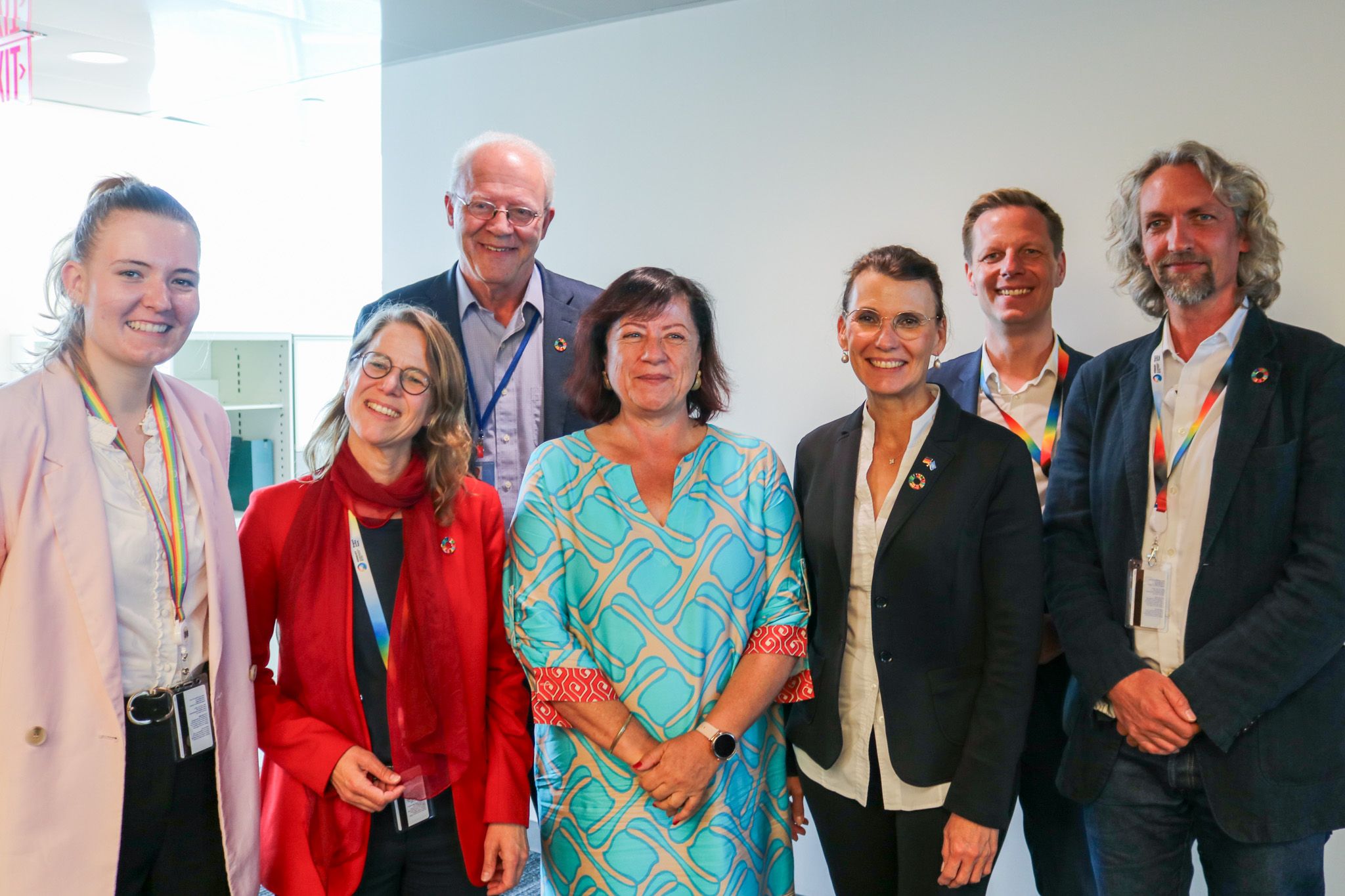
Participants in the side event

View of the room
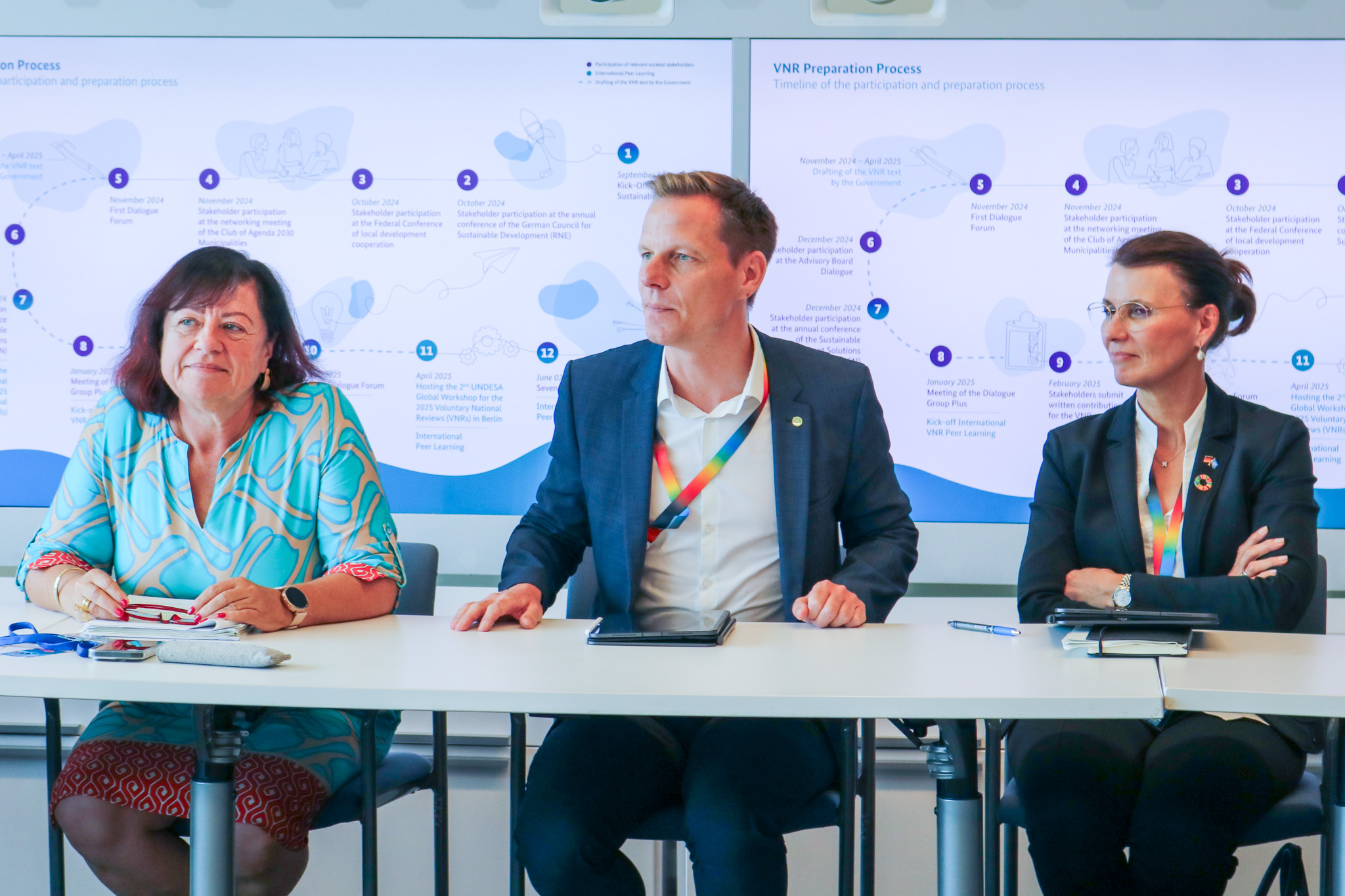
(L-R): Bärbel Kofler, Parliamentary State Secretary, Federal Ministry for Economic Cooperation and Development (BMZ); Kai Niebert, Member of the German Council for Sustainable Development (RNE); and Rita Schwarzelühr-Sutter, Parliamentary State Secretary, Federal Ministry for the Environment, Climate Action, Nature Conservation and Nuclear Safety (BMUKN)