About
Drawing attention to the underrepresentation of food and agriculture in global climate finance flows, government ministers, experts, financial institutions, and private-sector leaders discuss how to unlock the financial support needed to create cleaner, resilient agrifood systems.
Presently accounting for about one-third of total anthropogenic greenhouse gas emissions, agrifood systems require adequate finance to transition to more sustainable practices and unlock their potential in the climate fight. Yet a Food and Agriculture Organization of the UN (FAO) report, Climate-related development finance to agrifood systems – Global and regional trends has drawn attention to the fact that finance flows to agrifood systems amounted to just USD 100 billion in 2021-22, representing only 7.2% of total climate finance and falling far short of estimates that more than USD 1 trillion is needed annually to achieve sustainability. Without transformative finance, climate-fueled impacts undermine food security, drive up future costs, and threaten the livelihoods of the more than 1 billion people supported by agrifood systems.
At this solutions-oriented event, ministers, experts, representatives of financial institutions, and private-sector leaders provided insights on the diverse mix of finance solutions, national policies, carbon markets, Article 6 mechanisms, and philanthropy that can deliver transformative action for agrifood systems.
During this event, Kaveh Zahei, Director, Office of Climate Change, Biodiversity and Environment, FAO, announced the launch of the FAO and UN Development Programme (UNDP) analysis of Agrifood Systems in National Adaptation Plans, revealing a striking gap. While countries recognize that building resilience starts with agrifood systems and that they account for more than half of adaptation finance needs, the sector currently receives only about twenty percent of available funding. The findings highlight the urgent work still required to turn agrifood systems priorities into concrete climate action.
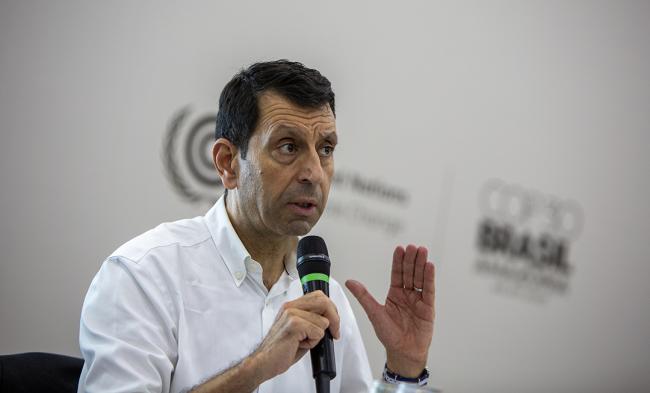
Opening a round of high-level framing remarks from country representatives, Zahedi stressed that the conversations generated during this side event were at the heart of COP 30 conversations because “without agriculture, food systems and the solutions they can offer, we cannot achieve the Paris Agreement.” He emphasized that ”finance will make the difference.”
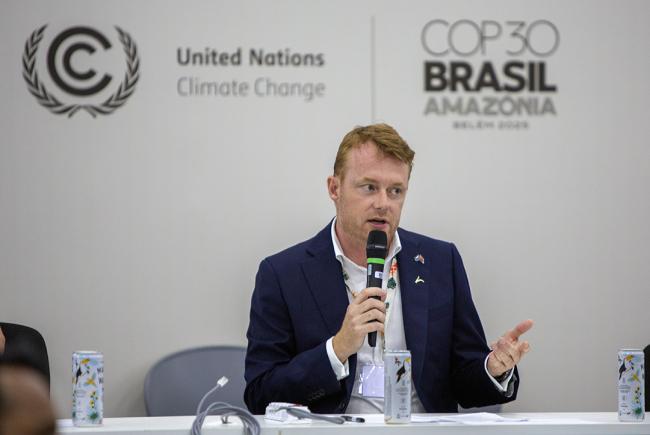
Nick Blong, First Assistant Secretary, Sustainability, Climate and Strategy Division, Department of Agriculture, Fisheries and Forestry, Australia, addressed how to unlock climate finance, calling it “the existential question.” Blong noted that more attention is being paid to decarbonizing other sectors and that it is time to bring more attention to agriculture and food, both in terms of emissions and in terms of climate adaptation. Responding to Zahedi’s point that Nationally Determined Contributions (NDCs) and National Adaptation Plans (NAPs) commonly recognize agriculture but that few turn it into measurable, investible solutions, Blong highlighted Australia’s work to establish mechanisms and enabling tools to help farmers prepare for future climate impacts. This includes robust calculator tools for measuring baseline emissions and promoting sustainable land management practices, he added.
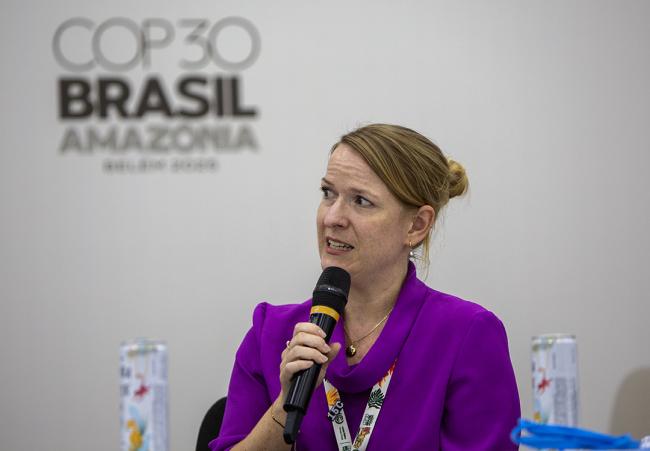
Frauke Rinelli, Senior Policy Officer, Federal Ministry for Economic Cooperation and Development, Germany, highlighted that the “good news” for food and agriculture is that there is a strong case for channeling finance to the sector. Rinelli emphasized that this is essential for limiting global temperature rise to 2°C and for advancing the Sustainable Development Goals (SDGs). She noted that such finance can be scaled up quickly in most regions and that almost 4 billion people are dependent on agriculture and food systems. Zahedi highlighted Germany’s support for agrifood system transitions through the SCALA Initiative and FAST Partnership.
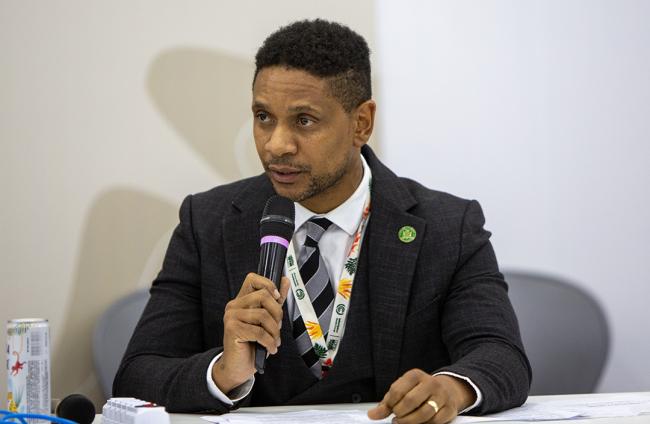
Gabriel Pollen, Permanent Secretary, Ministry of Local Government and Rural Development, Zambia, noted that the recent drought in his country was so severe that in 2024 walking across Victoria Falls was possible. This drought produced a food deficit for 6.6 million people, which is “why it is important for us to think creatively about how we shift agrifood systems,” he said.
Delivering a statement on behalf of Mike Elton Mposha, Minister of Green Economy and Environment, Zambia, Pollen emphasized that agrifood systems are at the heart of food security and economies and yet remain significantly underfunded. “This is a strategic failure that puts our future at risk,” Pollen said. Zambia has placed agrifood systems as a cornerstone of its national agenda, he noted, which has meant mobilizing public finance, building innovative public-private investments, and prioritizing community-centric solutions. Pollen also referred to the Facility for Action for Climate Empowerment to Achieve Nationally Determined Contributions (FACE-NDC), which promotes climate-friendly behaviors to achieve NDCs through education.
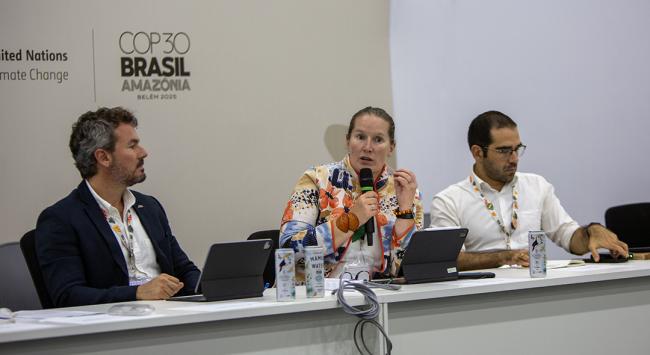
In a panel discussion on finance, Valerie Hickey, Global Director for Climate Change, World Bank, shared the bank’s work to de-risk agriculture and food sectors in emerging markets, which has involved optimizing public resources and unlocking private capital, particularly for small-holder farmers. More specifically, the World Bank is pursuing five key activities: focusing on data on financial flows and impact; developing credible, predictable policies, including land tenure policy reforms to help women access finance; building credible institutional partners, such as government extension services; investing in resilient infrastructure; and coordinating capital.
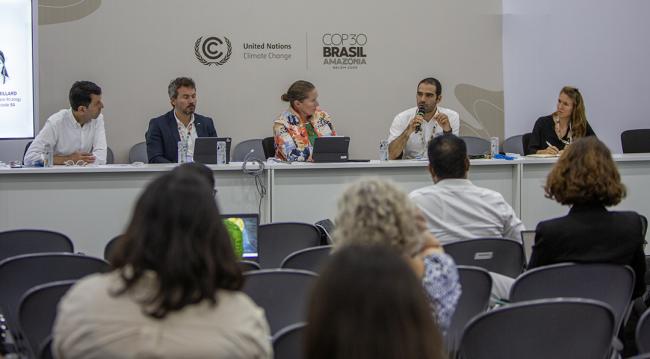
Nabil Kadri, Deputy Managing Director, Environment Division, Brazilian Development Bank, emphasized the bank’s role as a bridge between policies and private investment, Kadri highlighted efforts to use deforestation monitoring data to screen rural loans. The bank also has worked to implement “productive restoration,” to restore deforested lands and boost biodiversity and food production, he added. Finally, Kadri stressed that the bank is helping to link supply chains to new institutional markets, such as organizing small farms to produce foods for school.
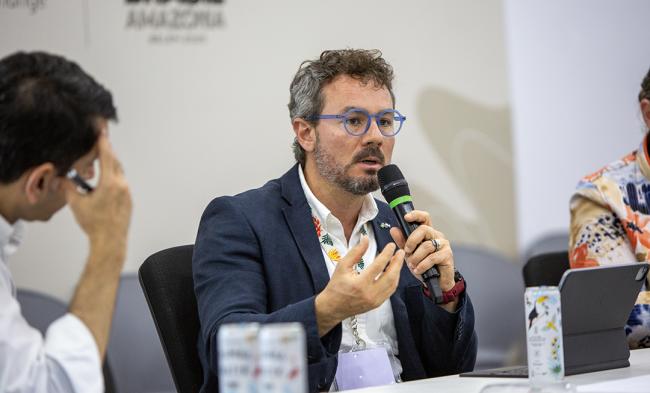
Taciano Custodio, Head of Sustainability in South America, Rabobank, pointed to huge economic opportunities in achieving climate-smart land use and more inclusive food systems. He highlighted strong momentum for using blended finance to de risk and make sustainability a bankable investment. Custodio described how by categorizing land into nature surplus, nature deficit, and low productivity classes, providing tailor-made financing to preserve sustainability is possible.
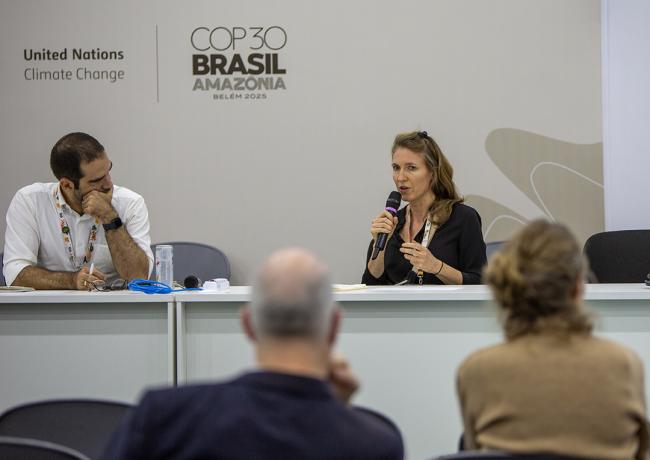
Elise Billard, Head of Climate Strategy, Crédit Agricole SA, stressed that delivering finance to farmers requires understanding the system of institutions and authorities within which they work. Billard emphasized that there is “no one-size-fits-all approach” and that small, incremental technical measures can provide a catalyst for transformation. She noted that Crédit Agricole provides a platform that puts companies and local authorities who want to contribute to carbon neutrality in touch with farmers who have solutions. Zahedi closed the event by asking panelists for final words of advice that can be carried back to the UNFCCC process to advance agrifood system transformations. Hickey emphasized continuing to bring up the agrifood discussion regardless of “whether or not we’re invited” and including nature-based credits under Article 6 or farmers will not be able to access them. Kadri stressed keeping food and agriculture at the heart of conversations about adaptation and loss and damage.
Organizer: FAO
Contact: Julia Wolf, FAO I [email protected];
Website: https://fao.org/climate-change/
To receive free coverage of global environmental events delivered to your inbox, subscribe to the ENB Update newsletter.
All ENB photos are free to use with attribution. For 2025 UN Climate Change Conference Belem - Side Events , please use: Photo by IISD/ENB | Angeles Estrada Vigil
Selected Images
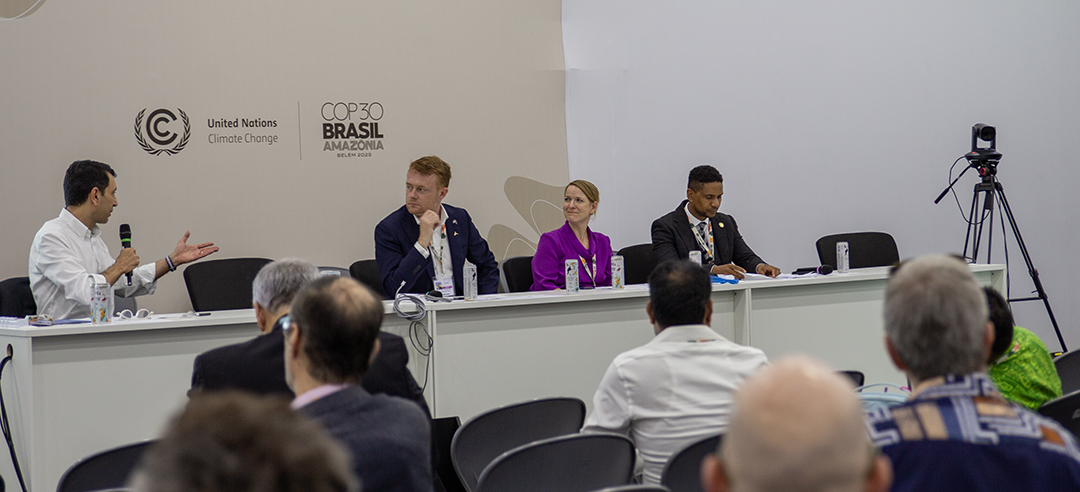
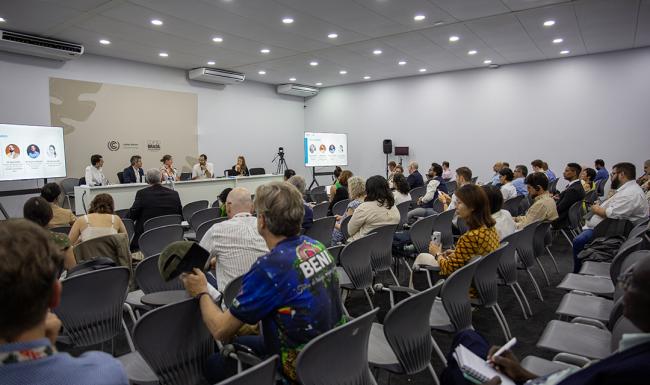
View of the panelists during the side event
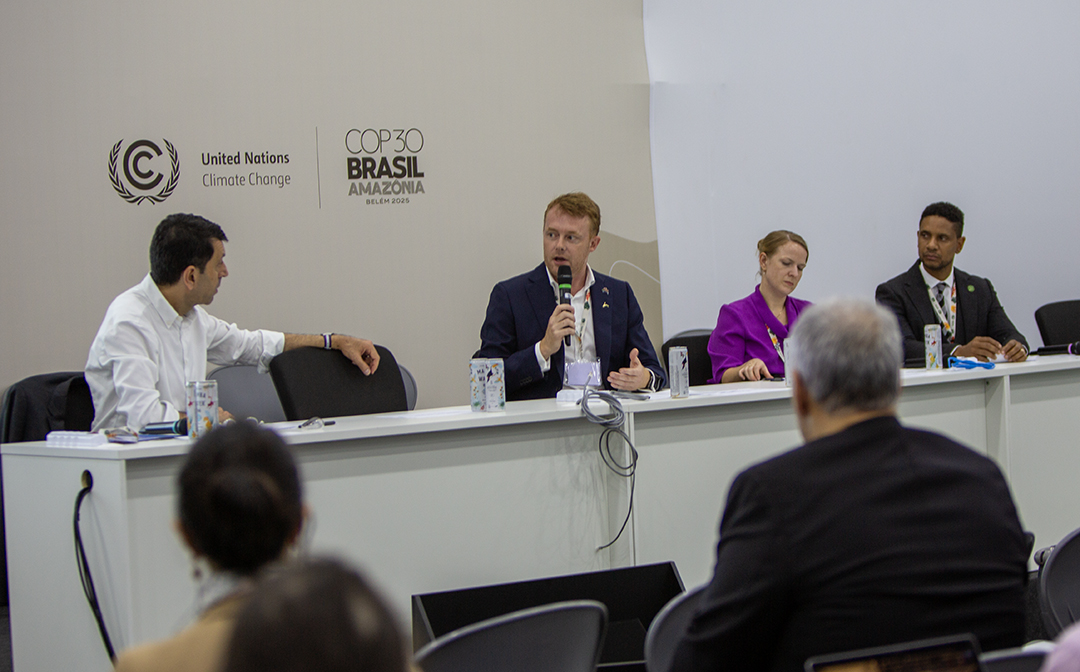
Nick Blong, First Assistant Secretary, Sustainability, Climate and Strategy Division, Department of Agriculture, Fisheries and Forestry, Australia
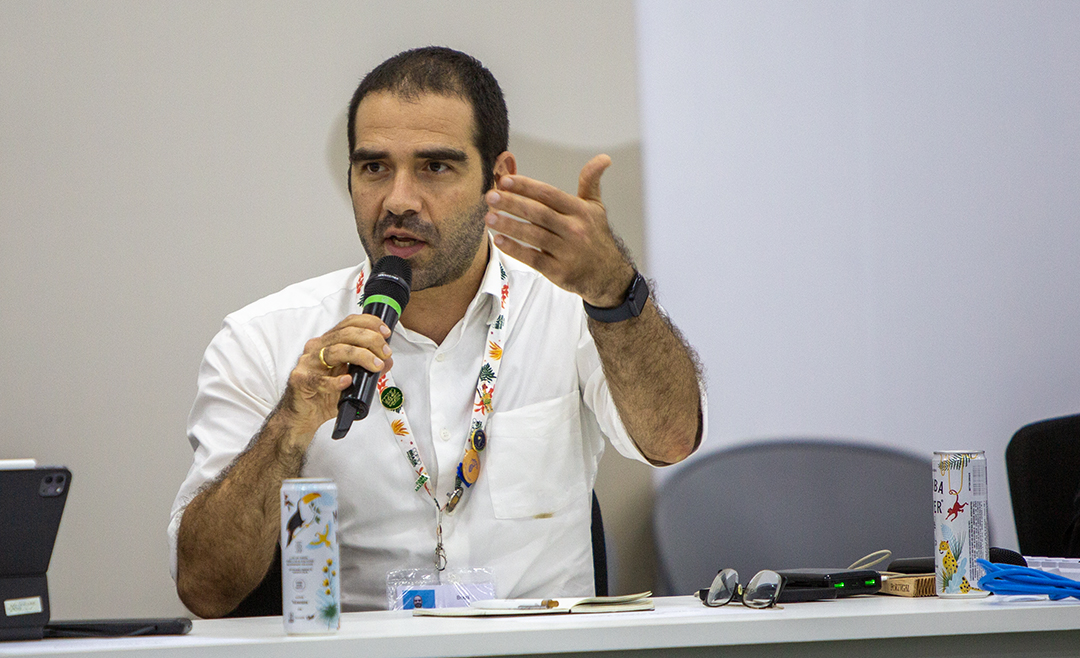
Nabil Kadri, Deputy Managing Director, Environment Division, Brazilian Development Bank
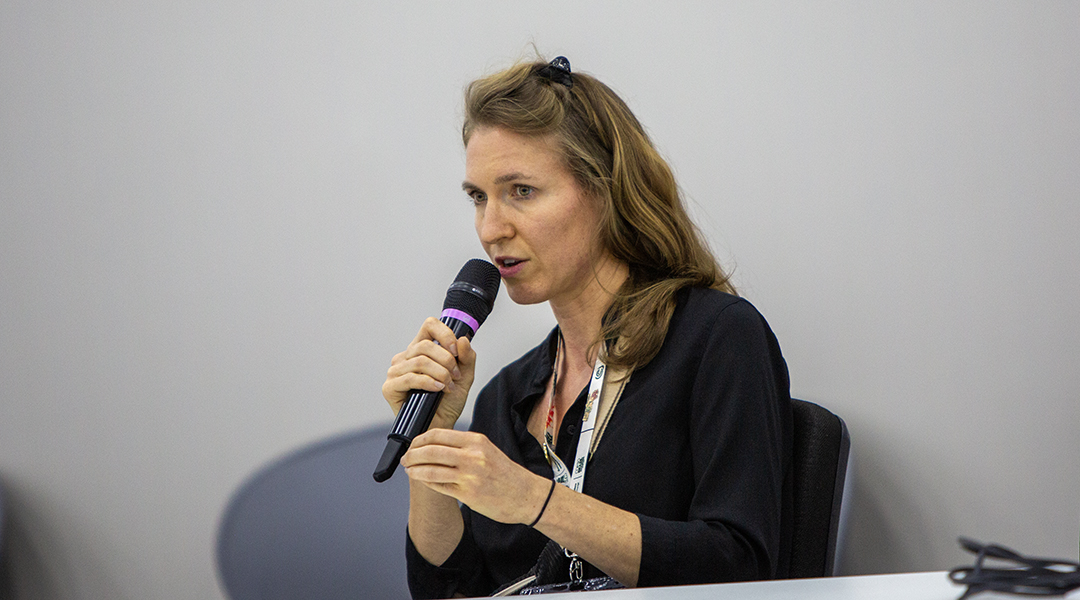
Elise Billard, Head of Climate Strategy, Crédit Agricole SA
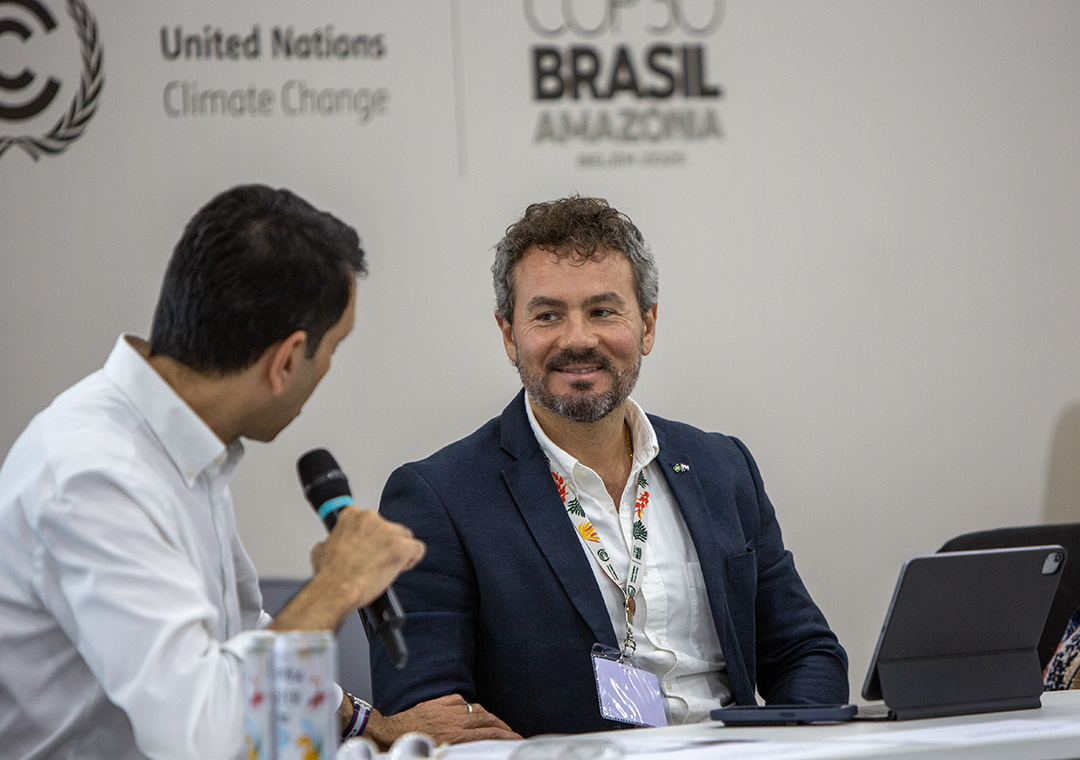
Kaveh Zahedi, Director, Office of Climate, Biodiversity and Environment, FAO, and Taciano Custodio, Head of Sustainability, South America, Rabobank

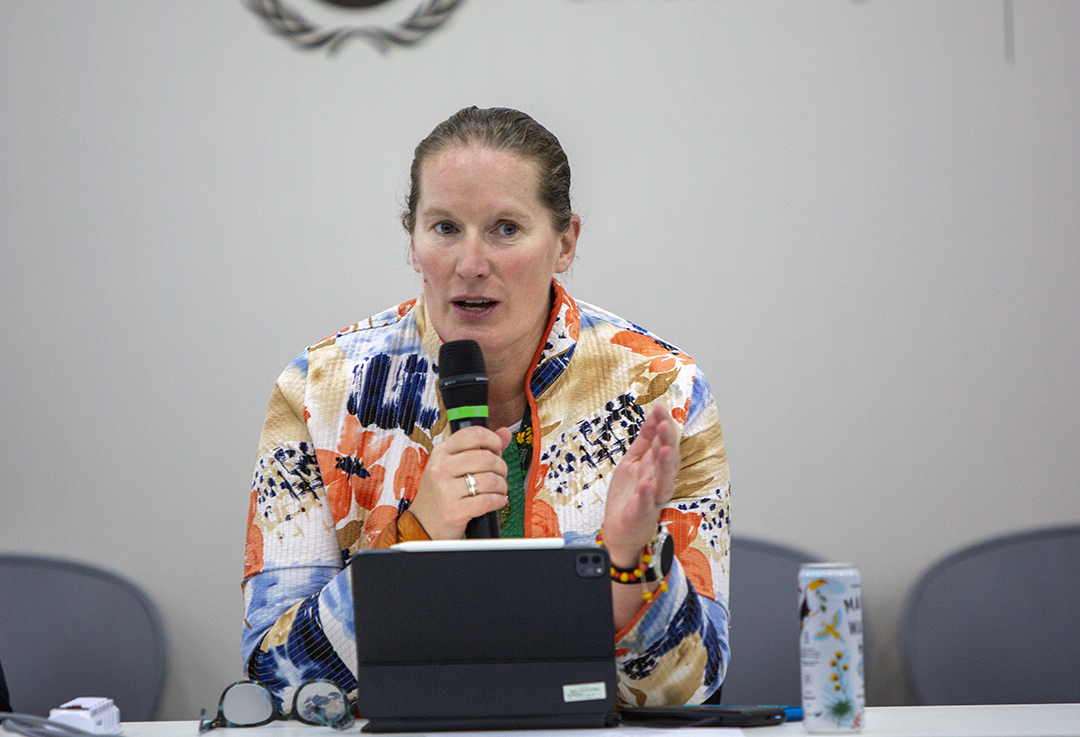
Valerie Hickey, Global Director for Climate Change, World Bank