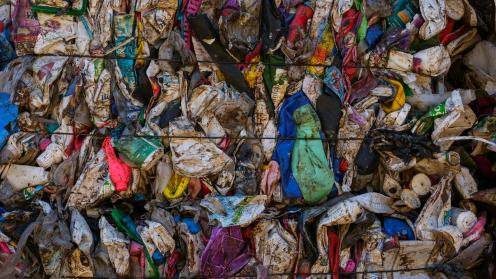
Some African countries have huge sectors reliant on the importation of secondhand clothes that generate jobs and livelihoods for millions of their citizens, particularly women and children. Other countries report they import huge quantities of clothes labeled as secondhand that prove unwearable and end up in landfills.
What they all agree on, however, is that the trade in used textiles and textile waste is growing rapidly and in the process, it may pose waste management challenges as well as environmental risks for importing countries due to the chemicals and microplastics contained in the textiles. They also agree that controls should not stand in the way of promoting a circular economy and green jobs.
In 2025 the Conference of the Parties (COP17) to the Basel Convention called for the development of options for work on this issue to be reviewed by the 15th meeting of the Open-ended Working Group (OEWG-15). The penultimate day of OEWG-15 was spent in informal contact groups grappling with this and other issues.
On used textiles and textile waste, the Technical Matters Contact Group spent the entire morning reviewing the options compiled by the Secretariat from comments submitted in advance of the meeting by Parties and observers.
Most delegates preferred to give first priority to developing technical guidance on how officials can distinguish between used and waste textiles, while gathering data and information to allow work on other options, such as reviewing code and Annex listings, certification and tracing schemes, or extended producer responsibility. However, a handful of Parties opposed prioritizing options for COP18’s consideration. In the end, the contact group decided to invite Parties and observers to submit another round of comments by 30 November 2026, with the understanding that submissions can indicate their ranking of options for Convention action.
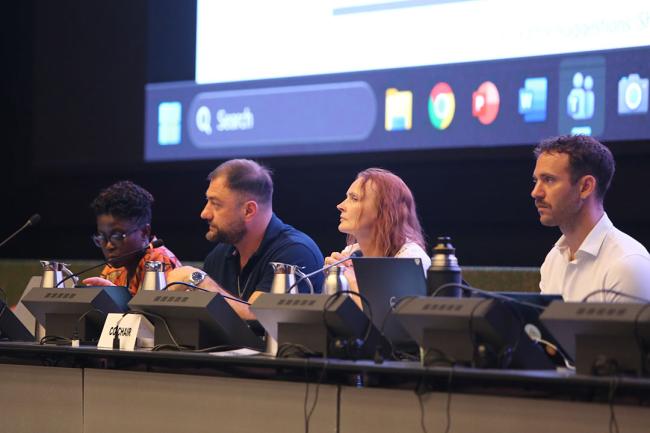
In the afternoon, the Technical Matters Contact Group turned to guidelines and guidance that advise national officials in their implementation and enforcement of Convention procedures and controls. The group:
- finalized work on the technical guidelines on the environmentally sound management (ESM) of persistent organic pollutants (POPs) waste involving short- and medium-chain paraffins; and
- offered direction to an intersessional expert working group on how they can finalize the technical guidance on identifying electronic and electrical equipment waste (e-waste) subject to the prior informed consent (PIC) procedure versus associated equipment that would be classified under other Annex entries.
In the evening the group turned to an initial reading of the draft technical guidelines on ESM of used and waste pneumatic tyres and a second review of the draft technical guidelines on ESM of waste batteries that are not lead-acid batteries.
For its part, the Legal Matters Contact Group toiled throughout the day trying to complete the complex task of finalizing draft recommendations for the review of entries in Annexes I (wastes controlled) and III (hazardous characteristics). These annexes are key to determining which wastes are subject to PIC and other controls under the Convention and are often copied verbatim into national laws and regulations, so changes would trigger adjustments in national regimes and technical assistance and capacity-building to ensure their effective implementation by control and enforcement officials.
Selected Images
Photo courtesy of BRS Secretariat
Photo courtesy of BRS Secretariat
Photo courtesy of BRS Secretariat