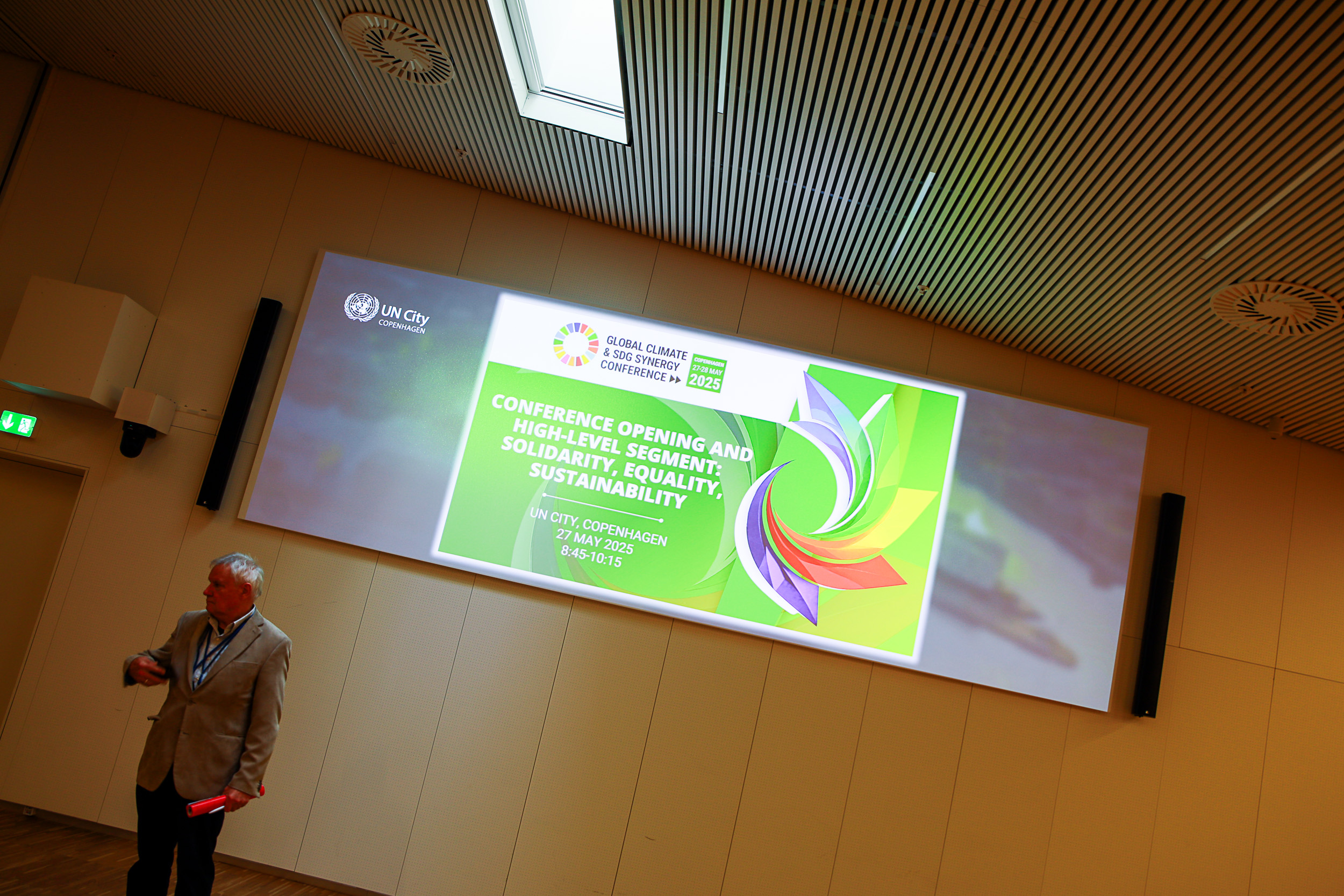
“We are far off track on both climate and SDG actions,” led the opening remarks by Navid Hanif, Assistant Secretary-General for Economic Development, United Nations Department on Economic and Social Affairs (UN DESA) at the Sixth Global Climate and Sustainable Development Goals (SDG) Synergies Conference. As participants met to discuss avenues for addressing the entangled crises of climate change, environmental degradation, and global inequality, another statement rang true: “Climate action done right is development done right.” Throughout its first day, participants heard from high-level representatives and experts on a wide range of topics ranging, such as the benefits of synergistic actions, securing financing for implementation, leveraging Nationally Determined Contributions (NDCs), and multi-stakeholder inclusion in a whole-of-society approach.

In welcoming remarks, participants heard from Jeppe Bruus, Minister for Green Transition, Denmark, about Denmark’s efforts in adopting the world’s first ever greenhouse gas emissions tax on agriculture, which aims to provide the additional benefits of protecting and restoring biodiversity and improving water quality. Navid Hanif, UN DESA, proposed steps forward, including unlocking and aligning public and private capital for green, inclusive and climate resilient societies. Simon Stiell, Executive Secretary, UN Framework Convention on Climate Change (UNFCCC), via a video message, celebrated global investments in green energy, which last year exceeded USD two trillion that, double the amount invested in fossil fuels.

During the High-level Segment, speakers highlighted national efforts to meet climate and sustainable development targets. Participants were also reminded that climate change goes beyond the environment and is also a social crisis requiring equitable responses. One minister stressed that least developed countries and small island developing States feel the impact of climate change most severely. Speakers from UN agencies underscored the importance of international cooperation for reinforcing national ambition and supporting implementation.

In a Scene-Setting session, participants heard from the Expert Group on Climate Change and SDG Synergies, which previewed key findings from its upcoming 2025 Global Report and three thematic reports on: biodiversity/nature and development synergies action; closing the insurance protection gap; and achieving greater health impacts through synergistic action in cities.

Two roundtable discussions took place throughout the day. The first looked at closing the finance gap and leveraging funding to enable greater synergistic action, incorporating climate and sustainable development action. Discussions covered, amongst other things, the role of ministries of finance to coordinate action at the national level, and the challenges and opportunities from private funding and investments. The second roundtable addressed how countries can integrate sustainable development action into their NDCs, where participants gained insight into domestic action across sectors, and heard about avenues for turning NDC ambitions into action.

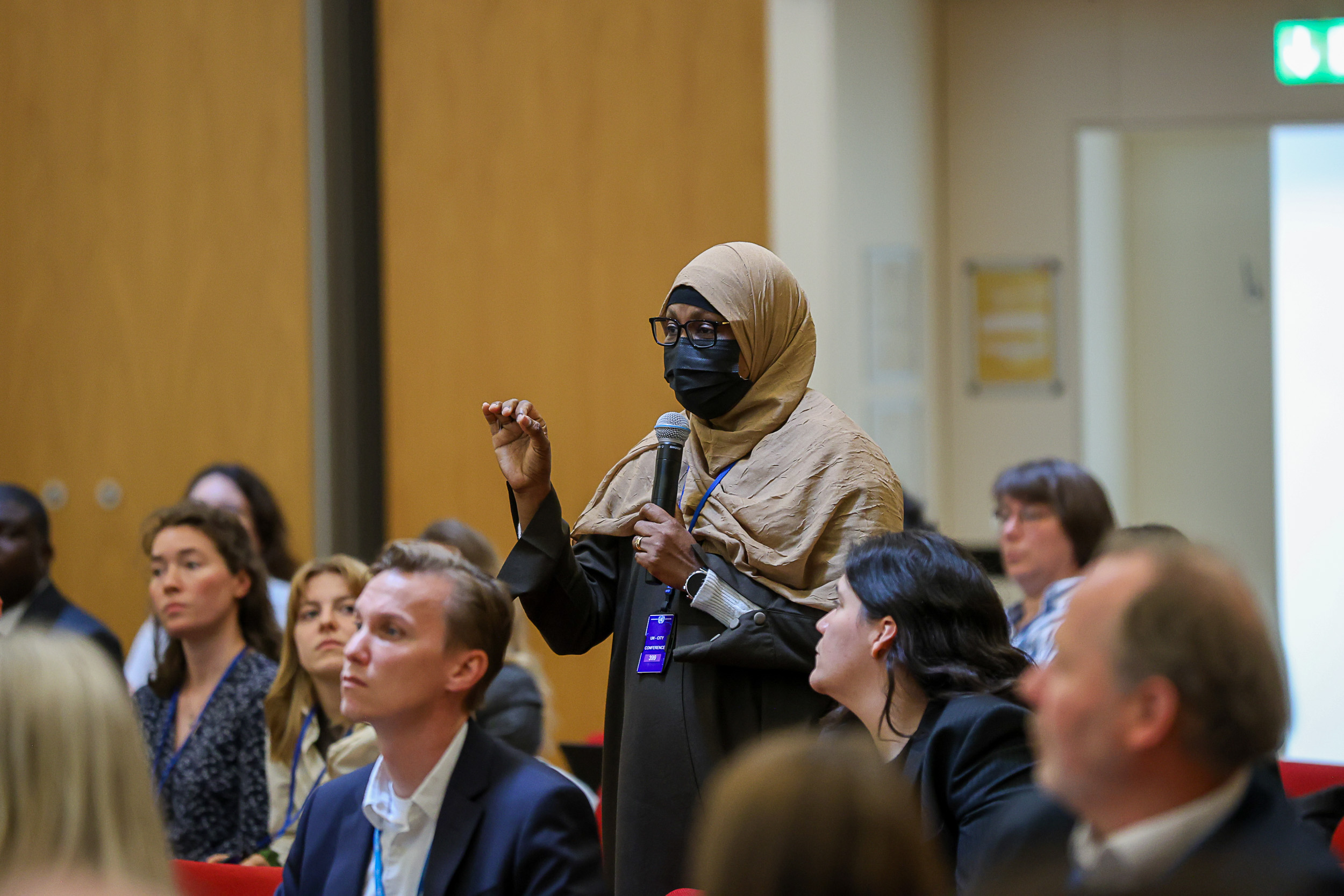
In two panels during the multi-stakeholder dialogue, participants heard about, inter alia, how green energy projects are benefitting vulnerable communities in Bangladesh, the co-benefits arising from addressing climate change and development needs through a human rights-based approach, and the importance of recognizing and respecting Indigenous Peoples rights related to Free, Prior and Informed Consent.

All ENB photos are free to use with attribution. For the 6th Global Climate and SDG Synergies Conference, please use: Photo by IISD/ENB | Mike Muzurakis
High-level Segment
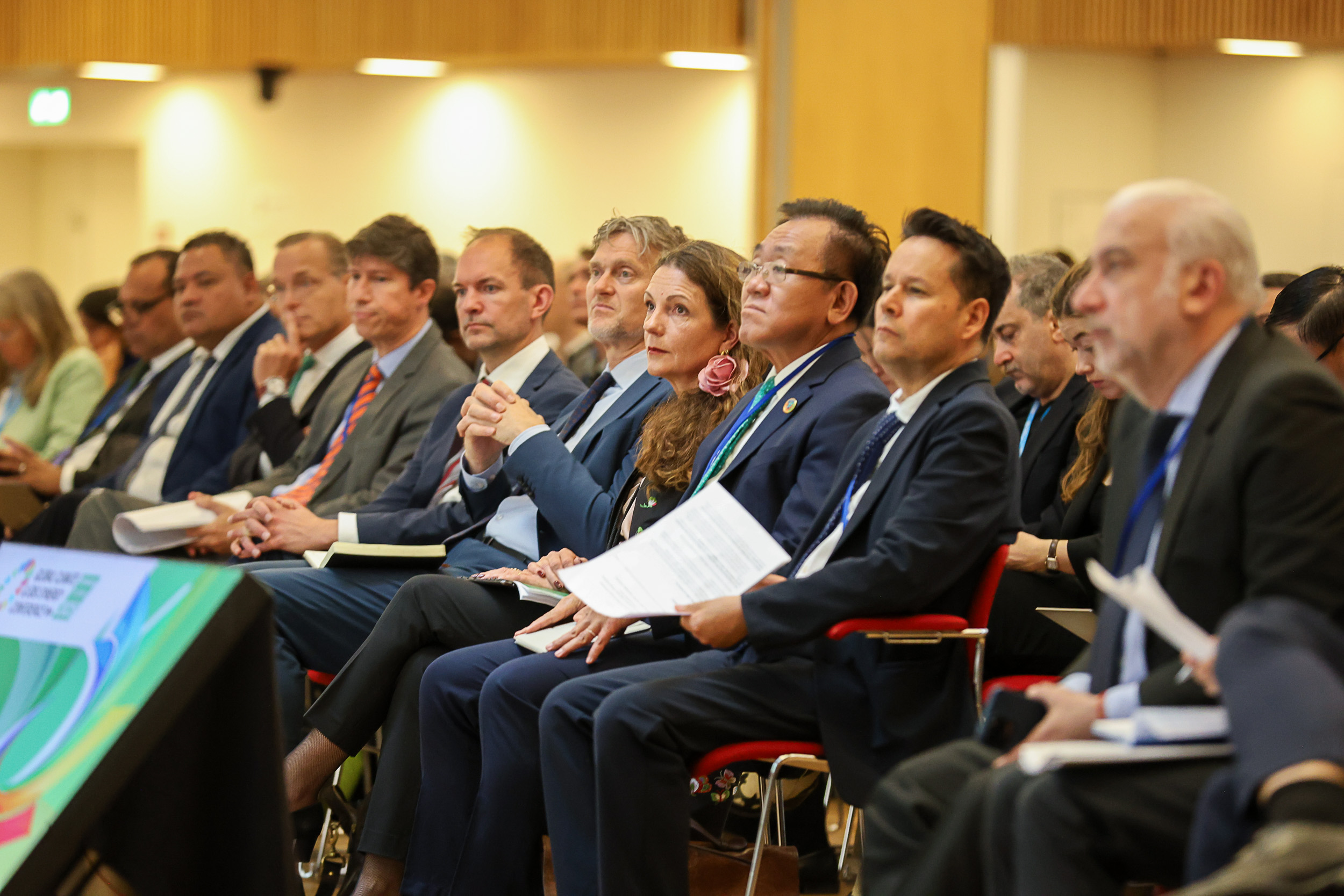
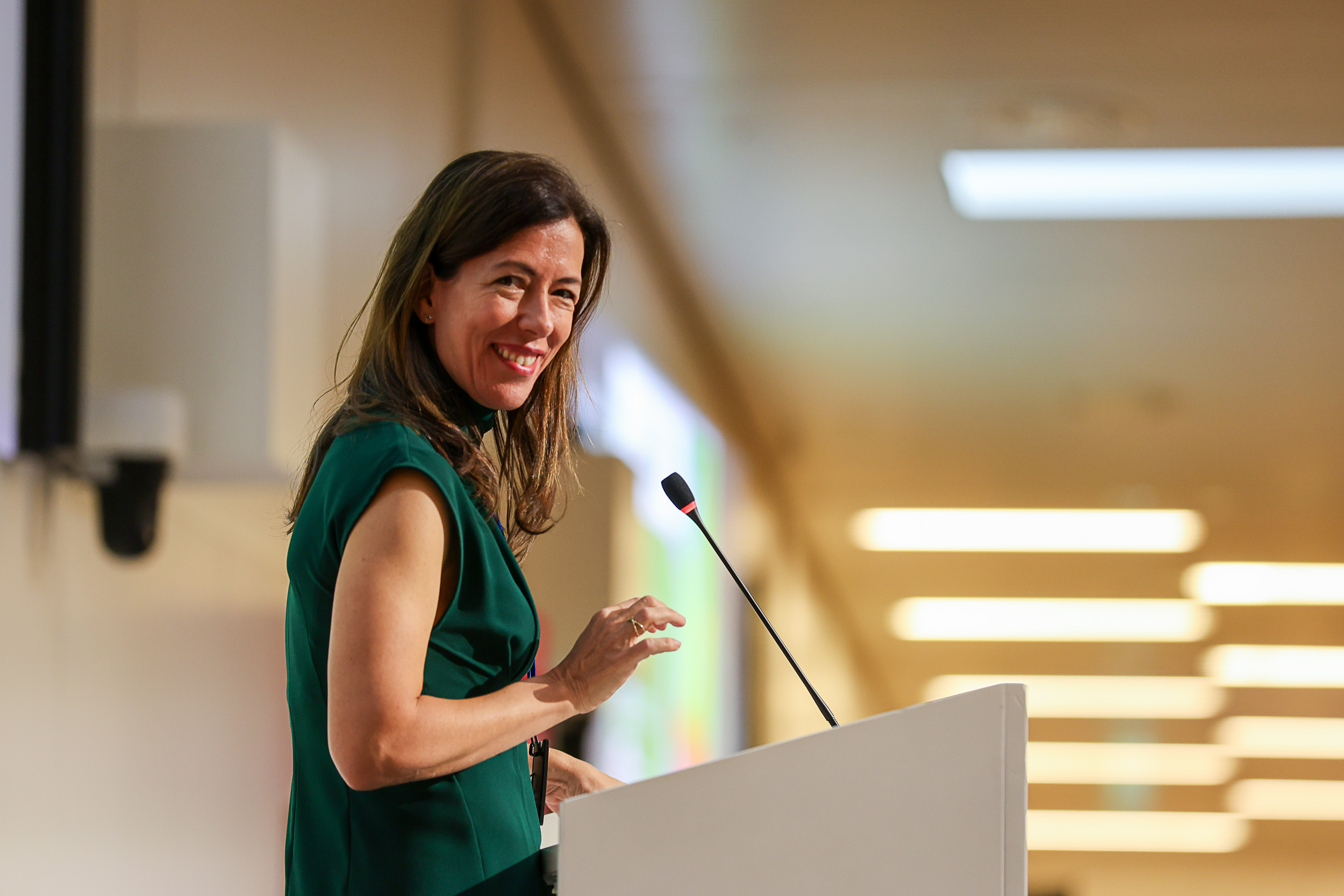
Isabel Raya, Sustainable Energy Expert, Division for Sustainable Development Goals, UN DESA
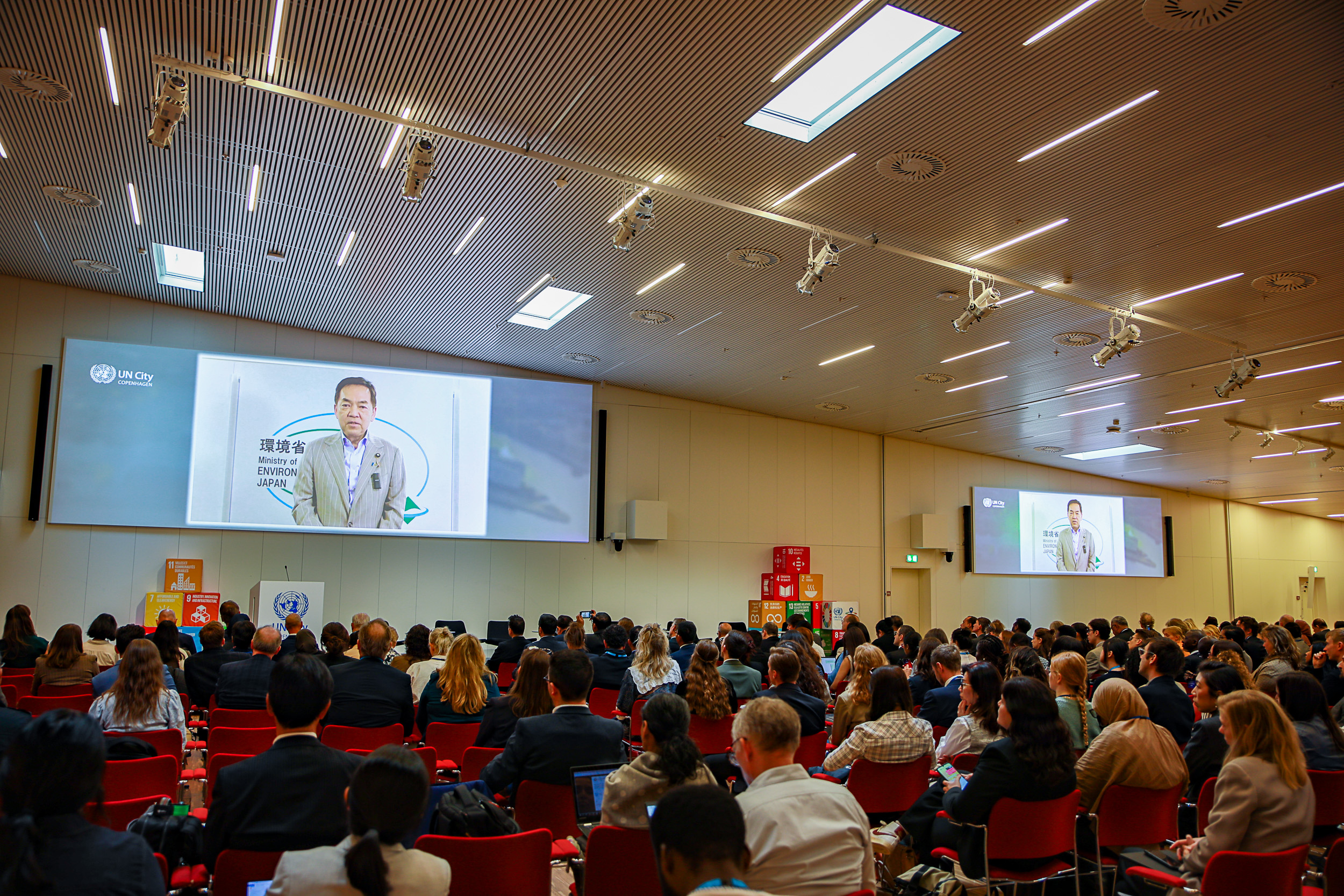
Keiichiro Asao, Minister of the Environment, Japan, delivering his statement through a video message
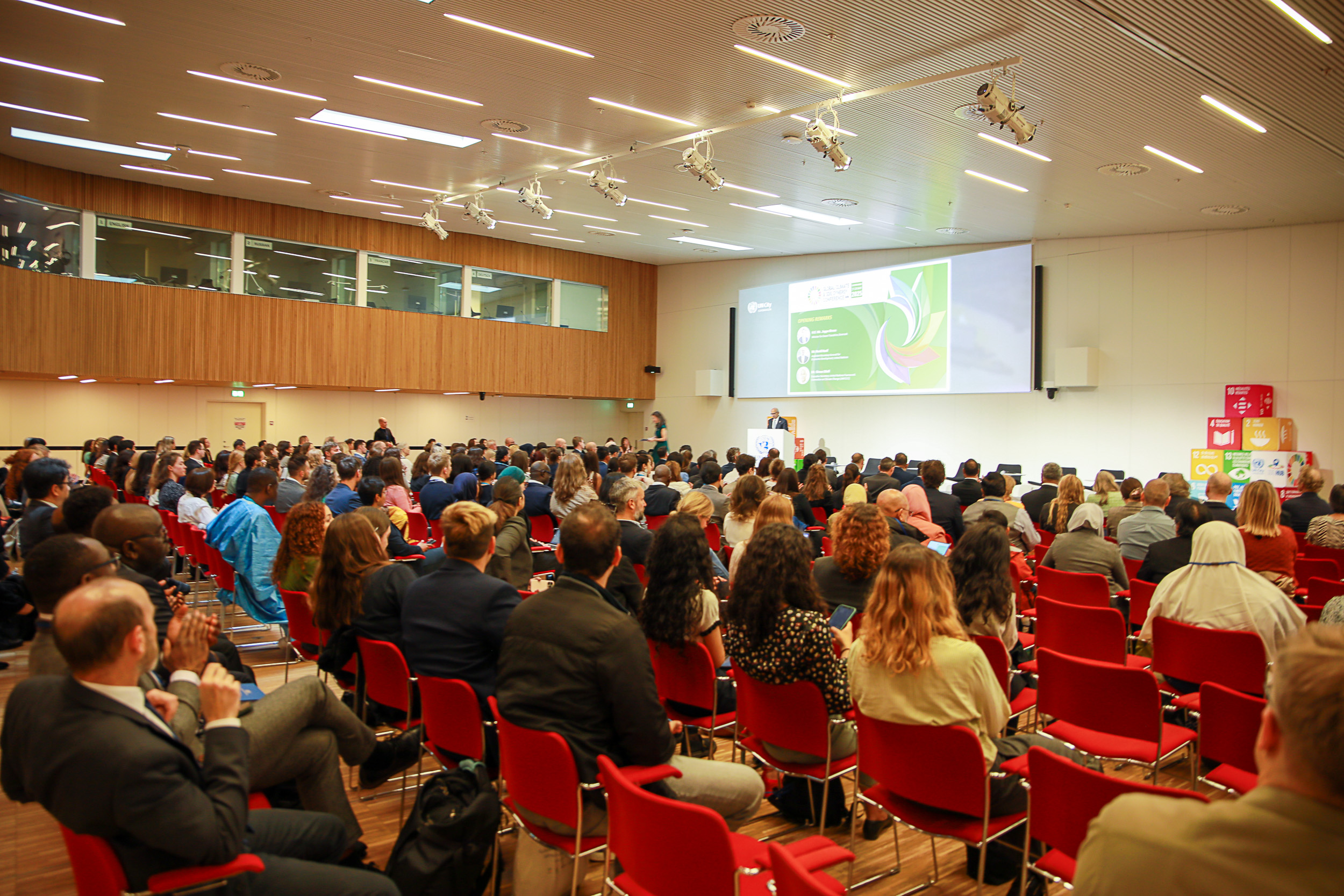
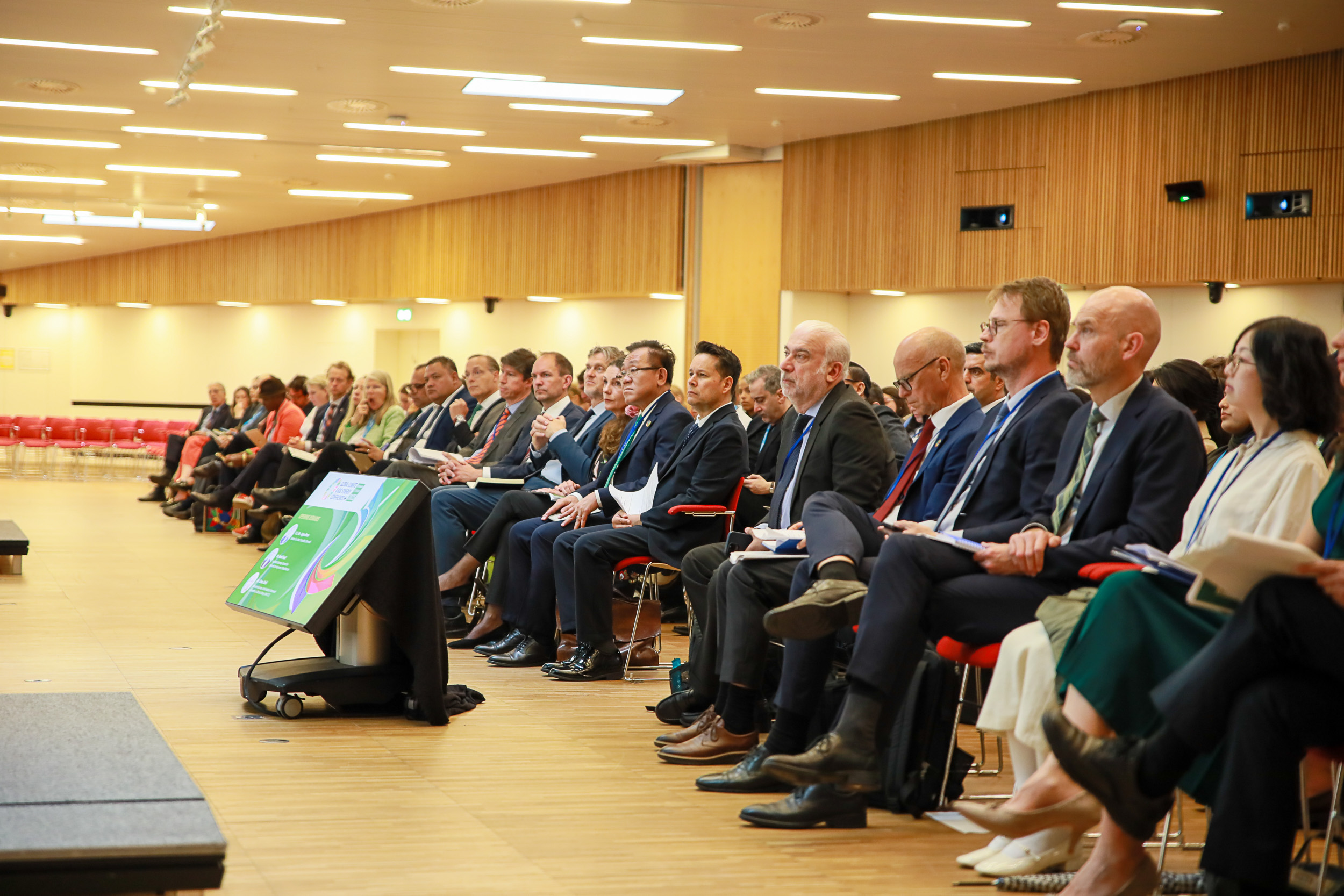
View of the room during the high-level opening segment
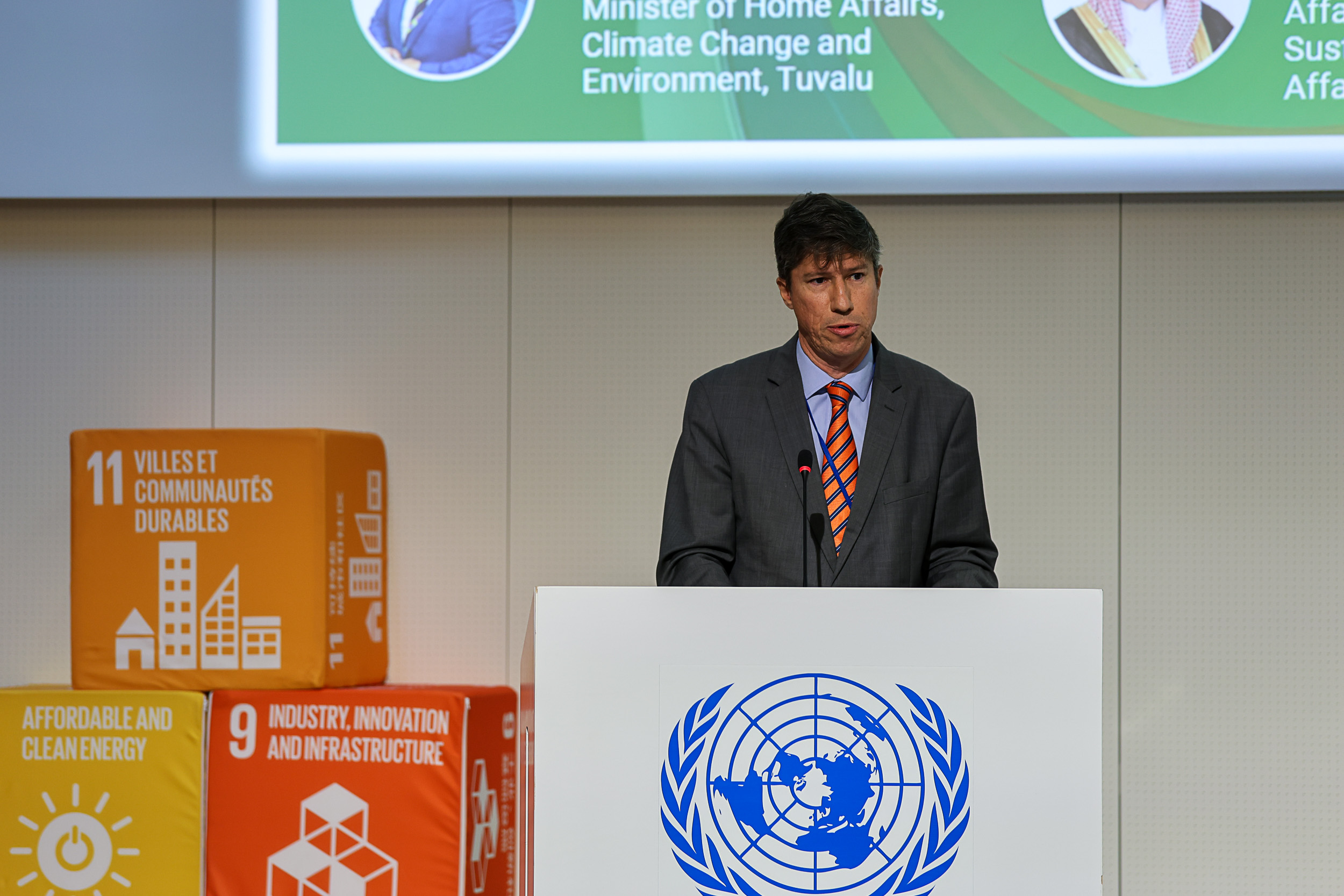
Leonardo Luís Gorgulho Nogueira Fernandes, Ambassador to Denmark, Brazil
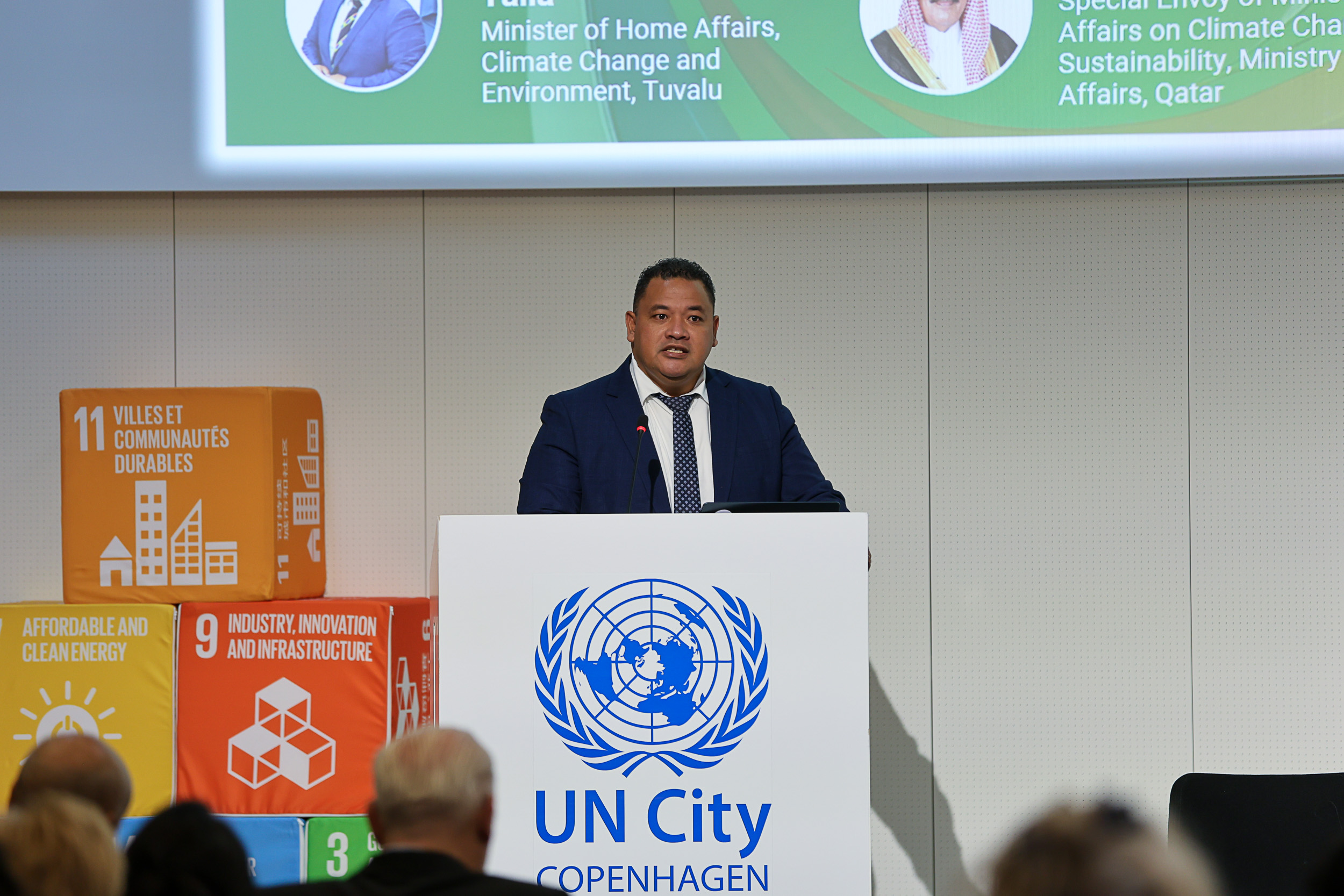
Maina Vakafua Talia, Minister of Home Affairs, Climate Change and Environment, Tuvalu
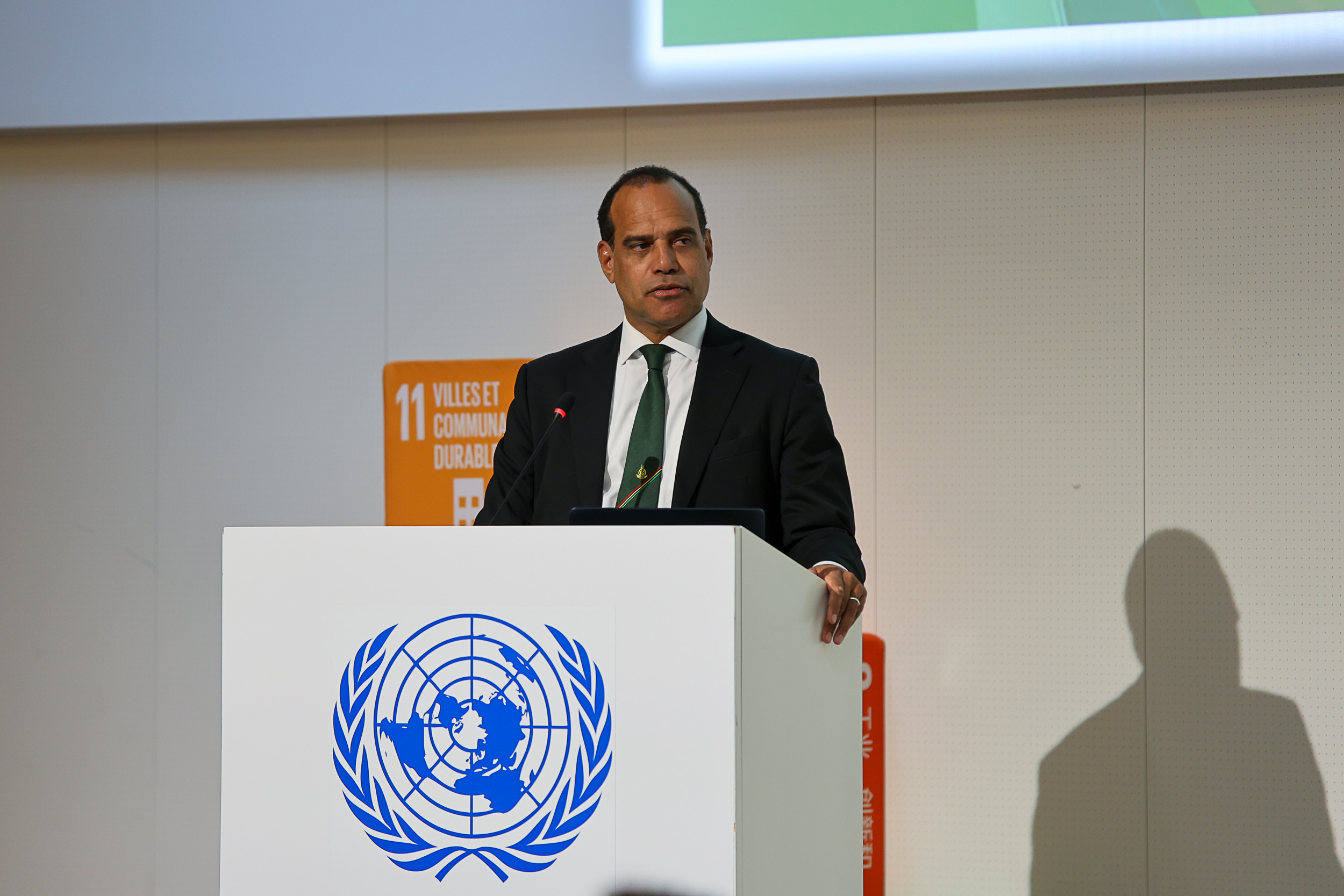
Ralph Regenvanu, Minister for Climate Change, Energy, Meteorology, Geohazards, Environment, and Disaster Management, Vanuatu
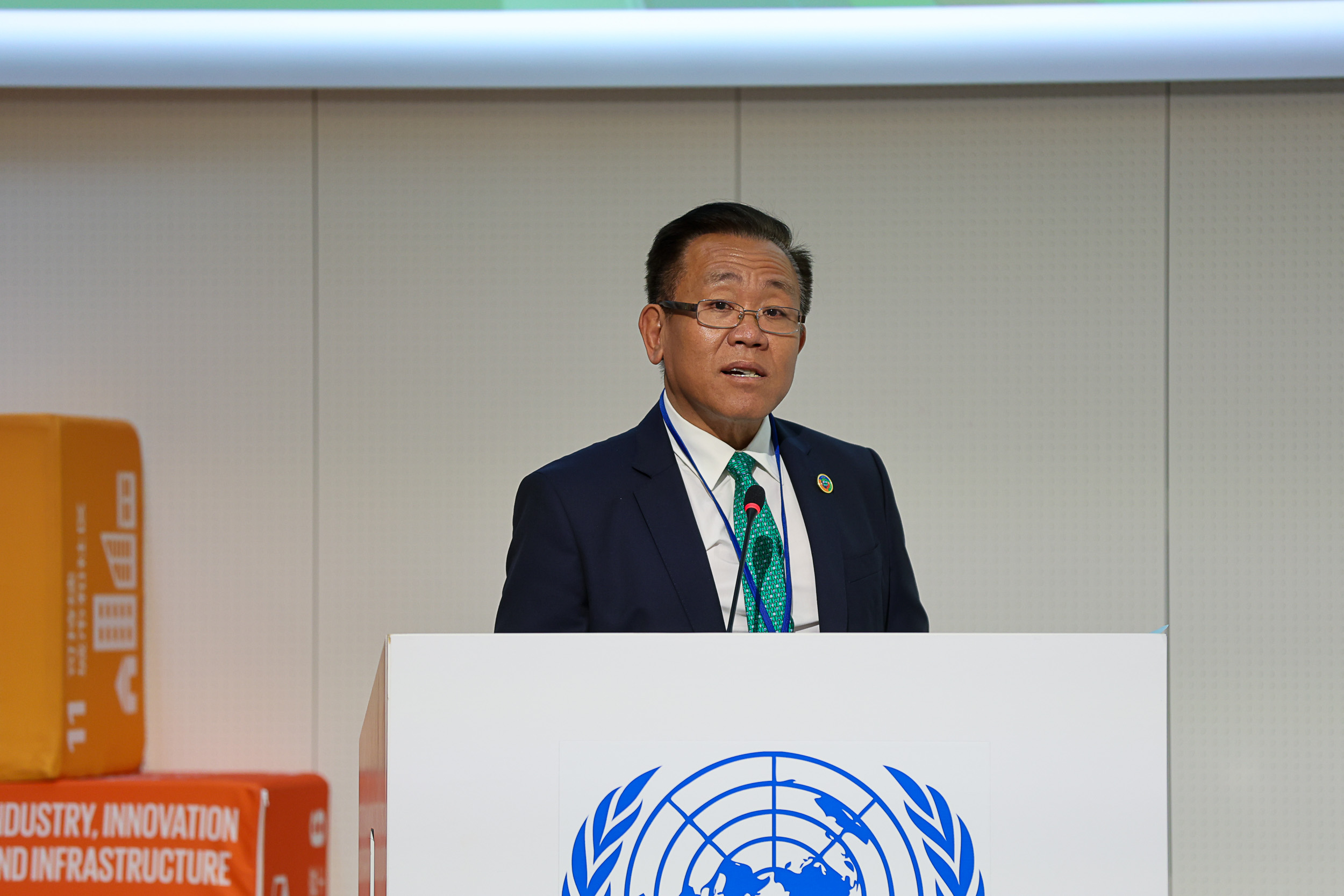
San Vanty, Permanent Secretary of State, Ministry of Environment, Cambodia
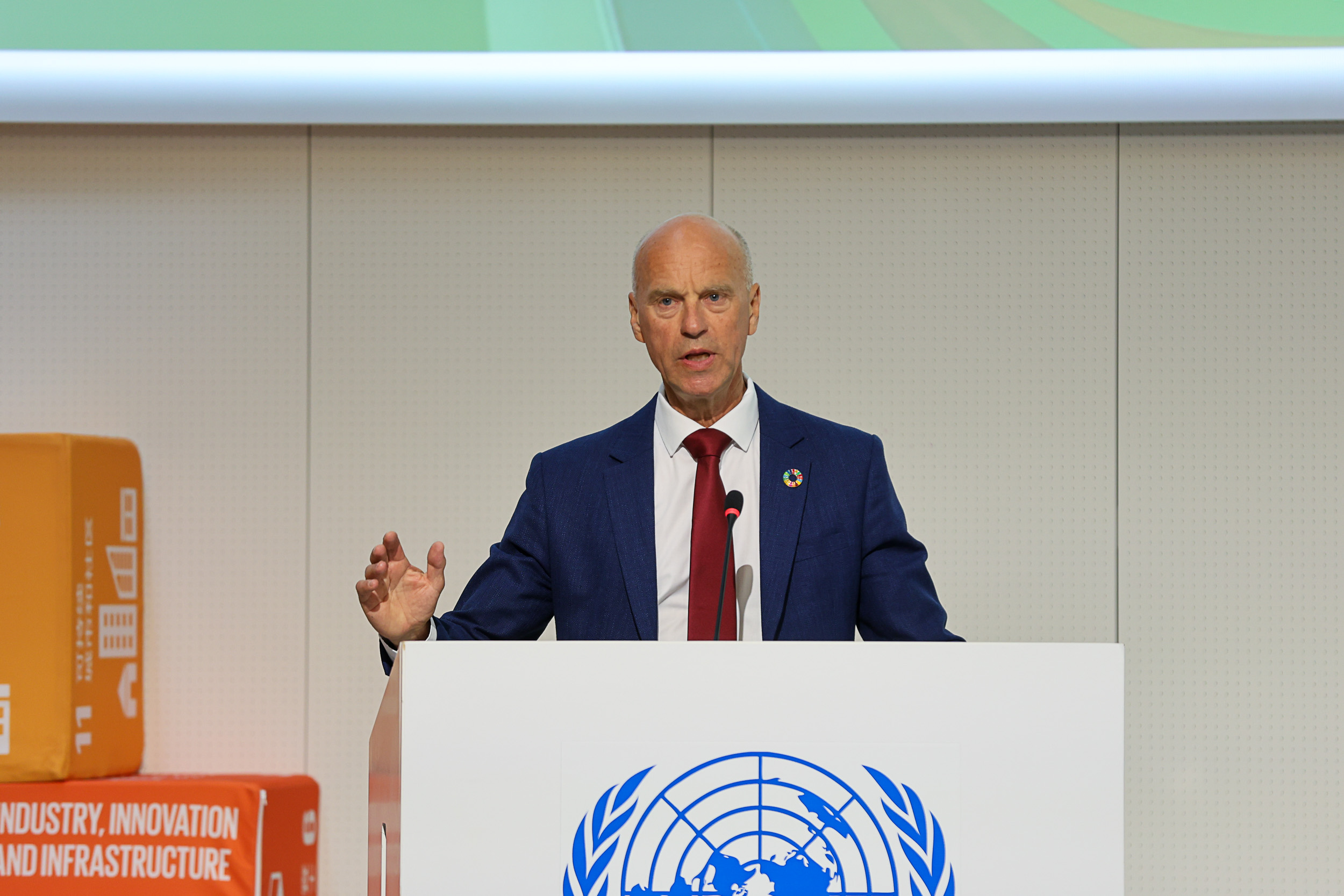
Hans Olav Ibrekk, Special Envoy on Climate and Security, Section for Energy, Climate and Food Security, Ministry of Foreign Affairs, Norway
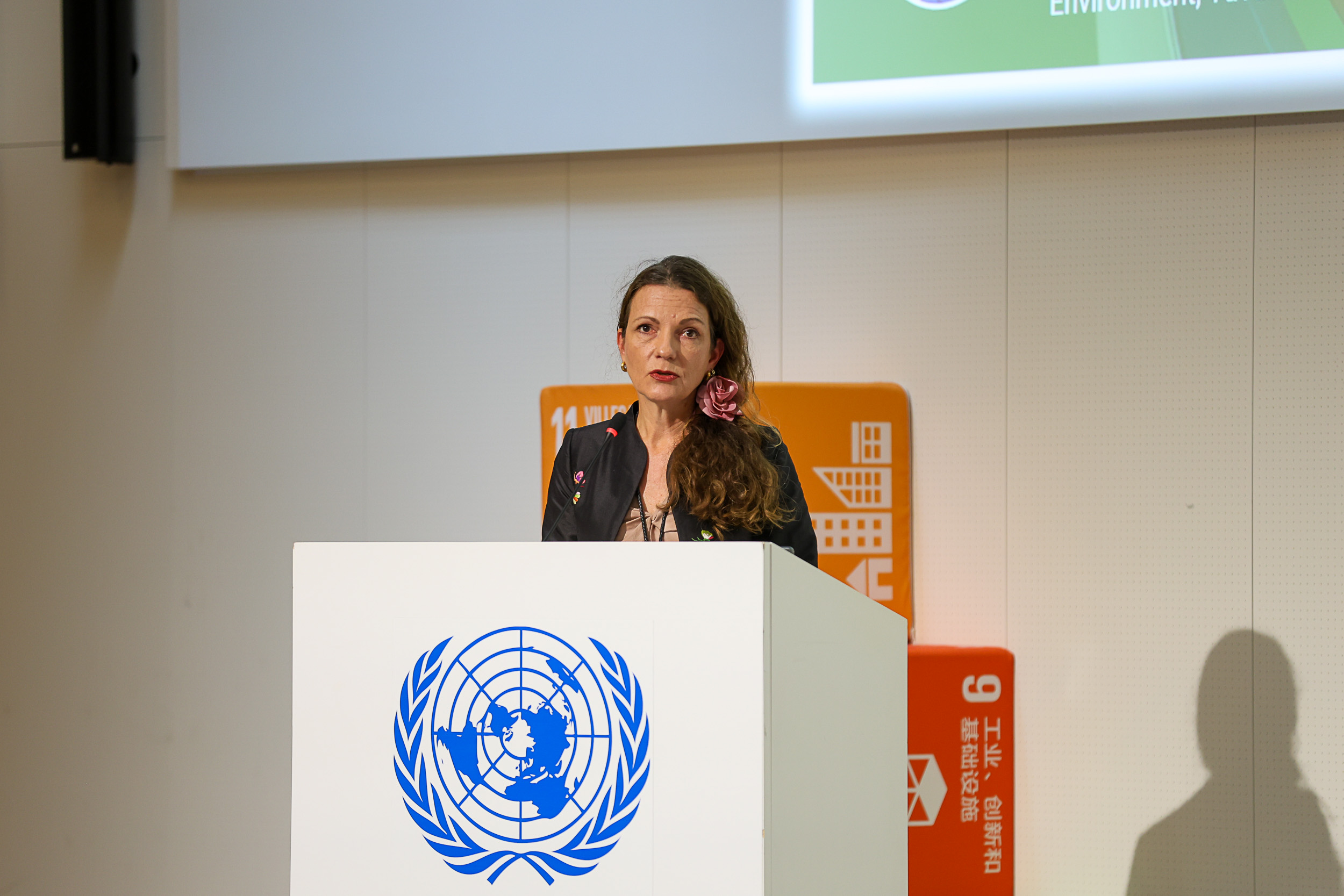
Anne Olhoff, Director ad interim, UN Environment Programme Copenhagen Climate Centre (UNEP-CCC)

George Gray Molina, Chief Economist and Director of Inclusive Growth, UN Development Programme (UNDP)
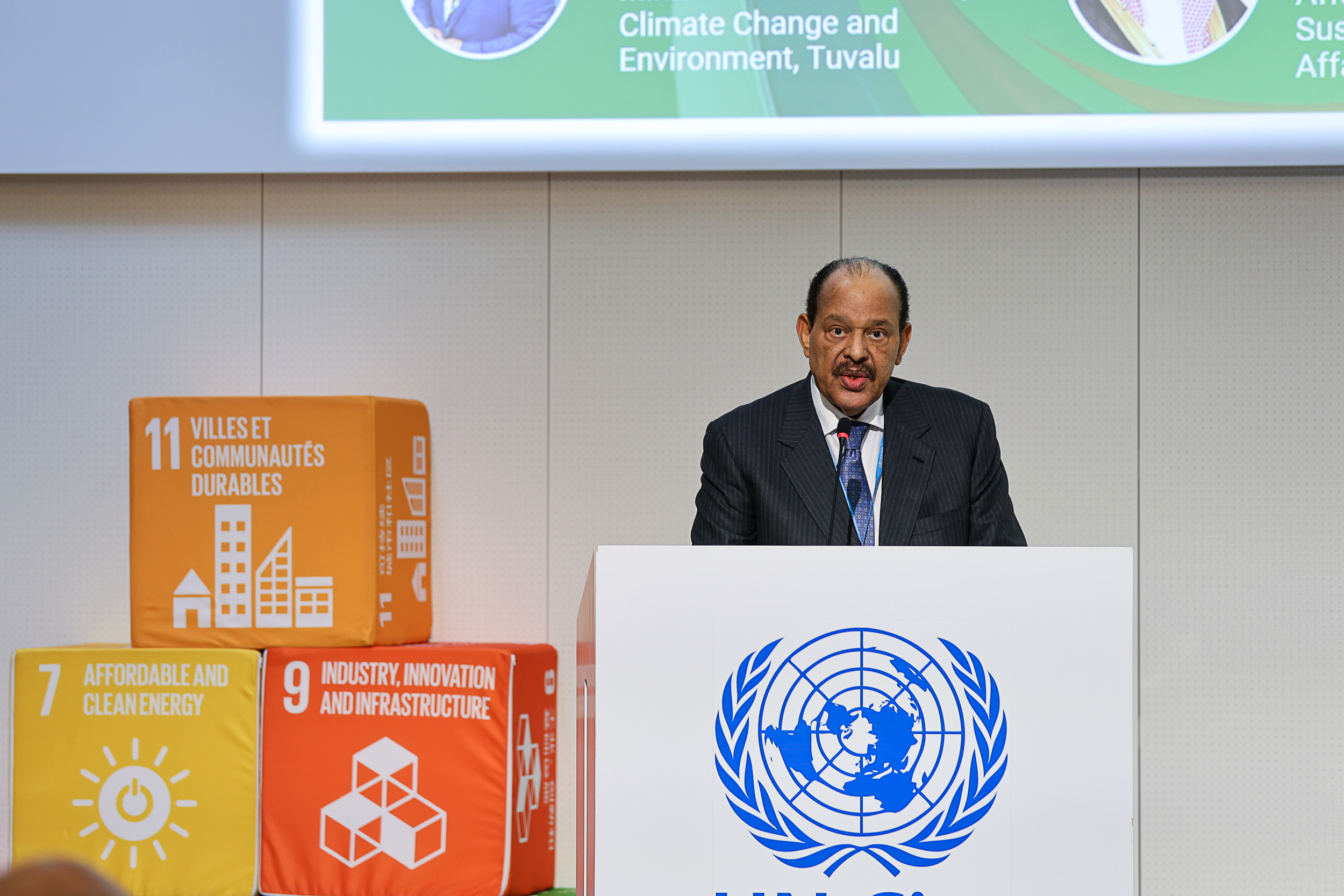
Bader Omar Ismail al Dafa, Special Envoy of Minister of Foreign Affairs on Climate Change and Sustainability, Ministry of Foreign Affairs, Qatar
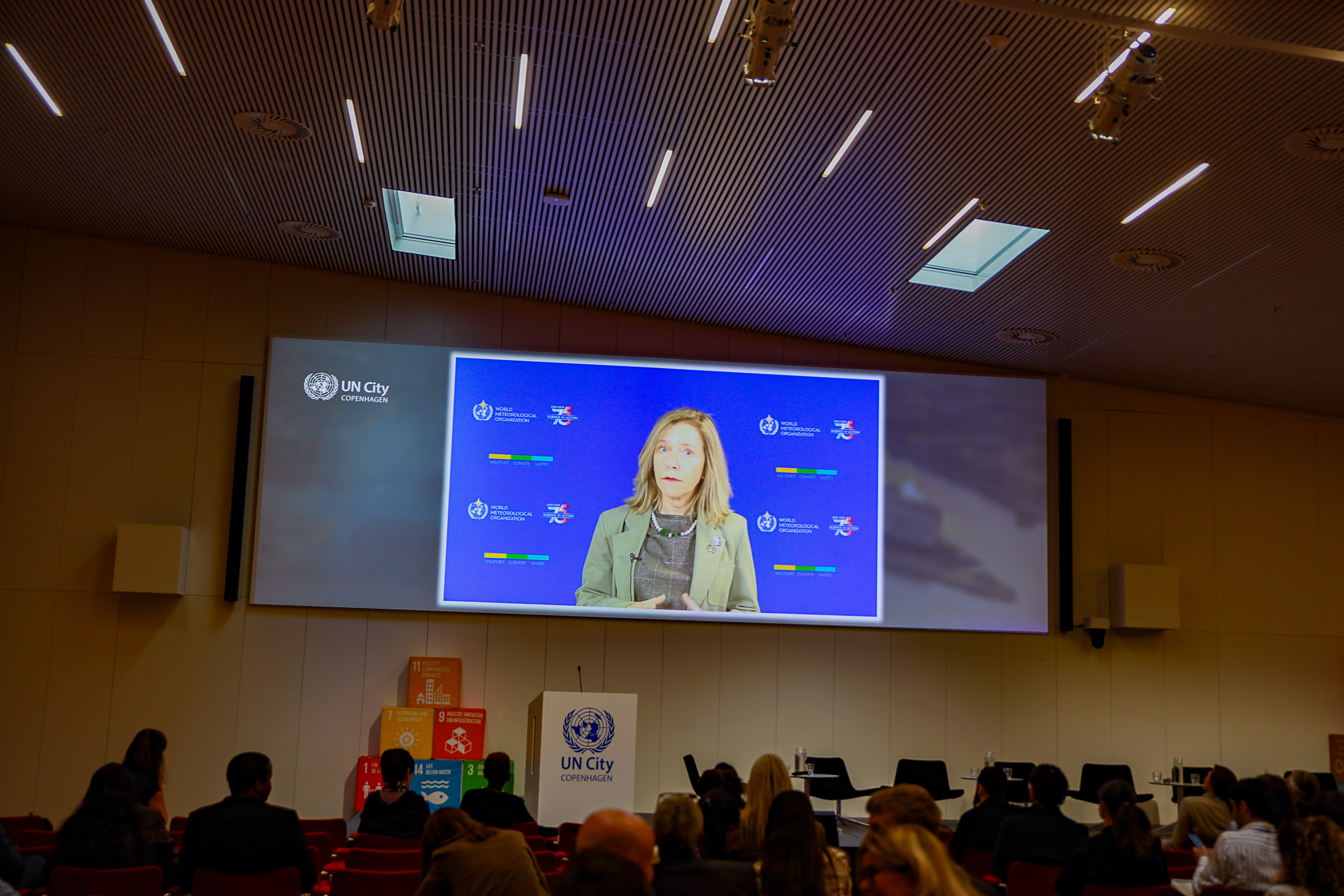
Celeste Saulo, Secretary-General, World Meteorological Organization
The Benefits and Challenges of Tackling Climate and SDG Actions in Synergy: From Global to Local Levels
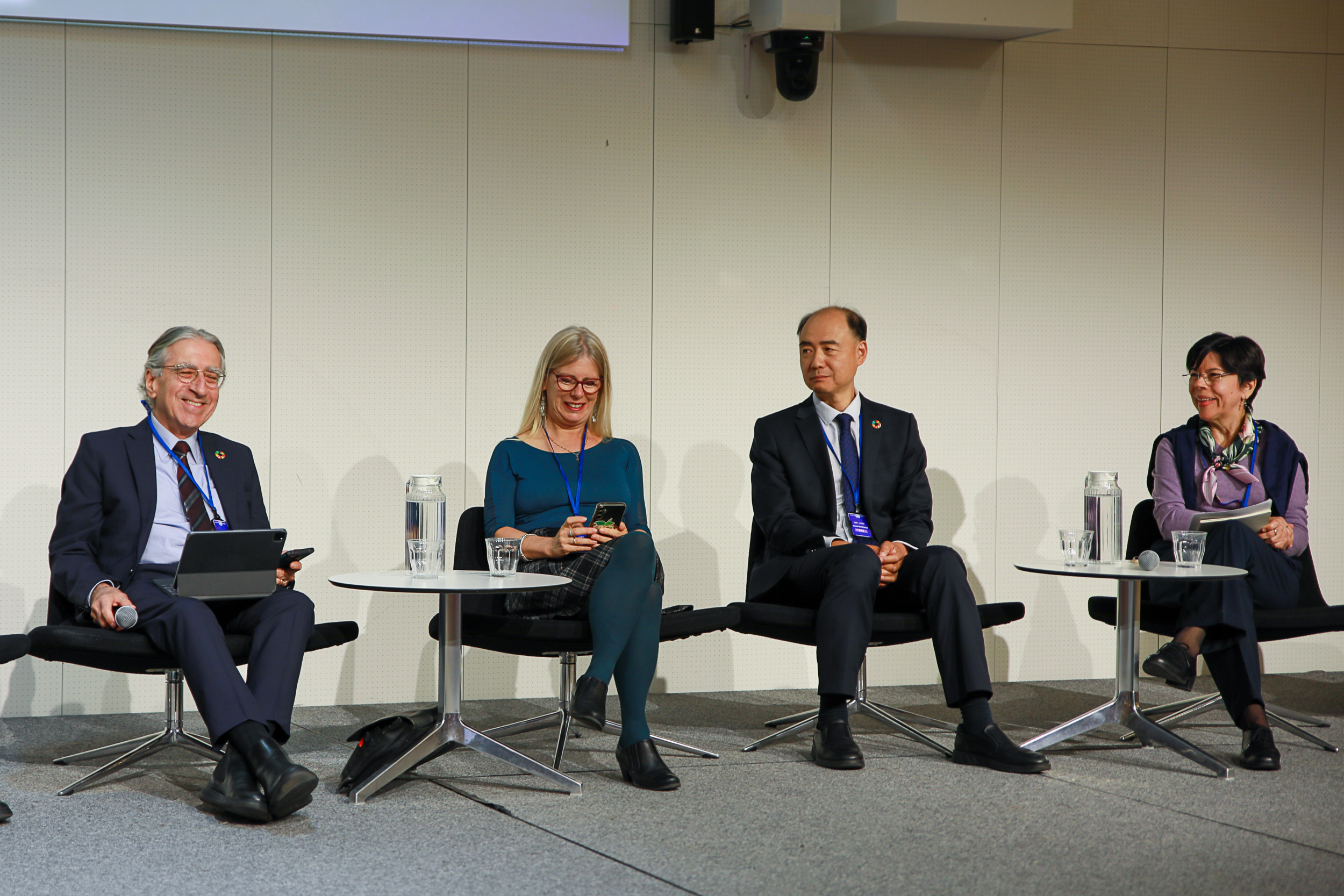
From L-R: Luis Gomez Echeverri, Emeritus Research Scholar, International Institute for Applied Systems Analysis (IIASA); Diana Ürge-Vorsatz, Vice-Chair, IPCC, and Director, Center for Climate Change and Sustainable Energy Policy (3CSEP); Ma Jun, Director, Institute of Public and Environmental Affairs (IPE), China; and Mercedes Bustamante, Professor, University of Brasilia, Brazil
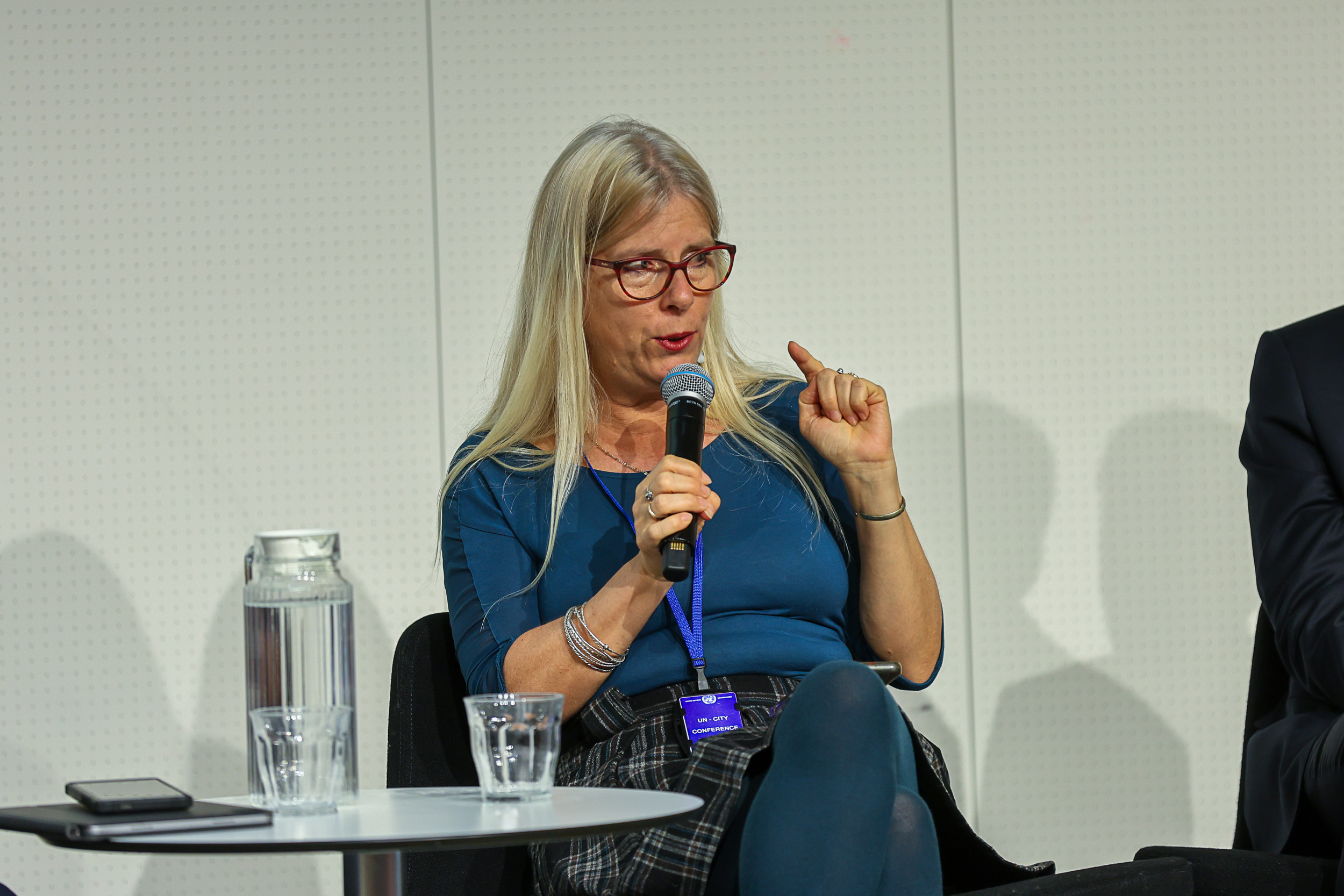
Diana Ürge-Vorsatz, Vice-Chair, IPCC, and Director, 3CSEP
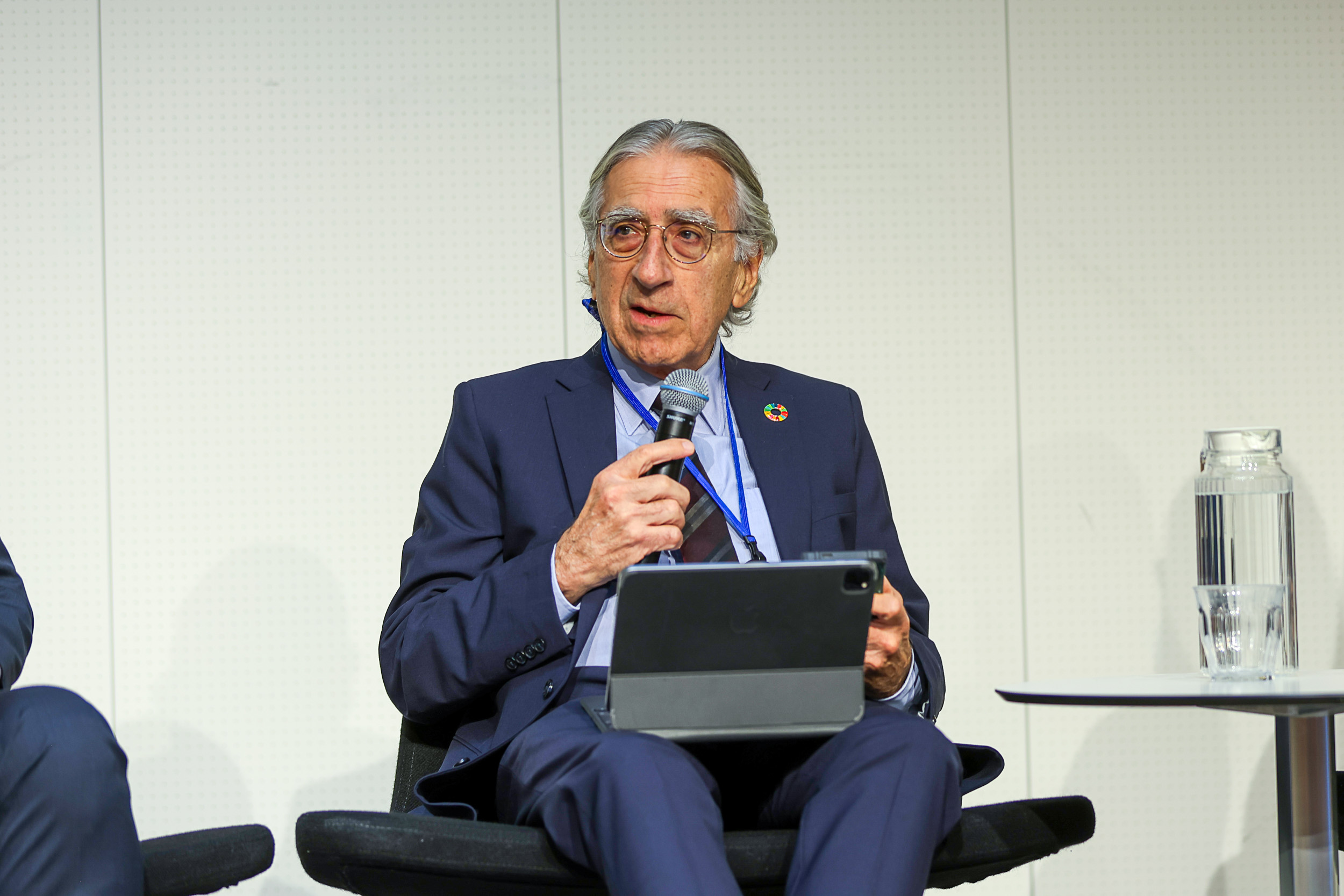
Luis Gomez Echeverri, Emeritus Research Scholar, IIASA
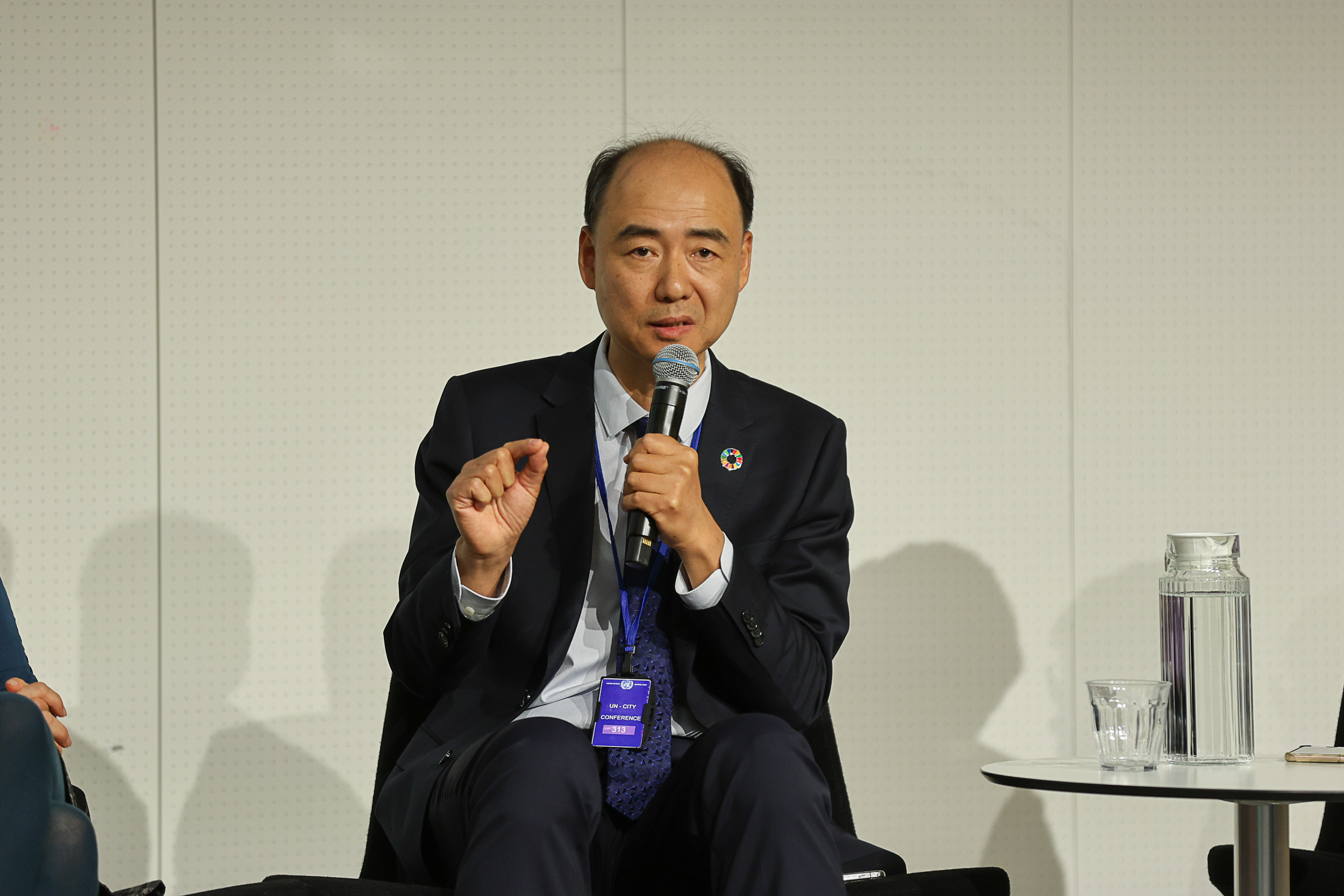
Ma Jun, Director, IPE, China
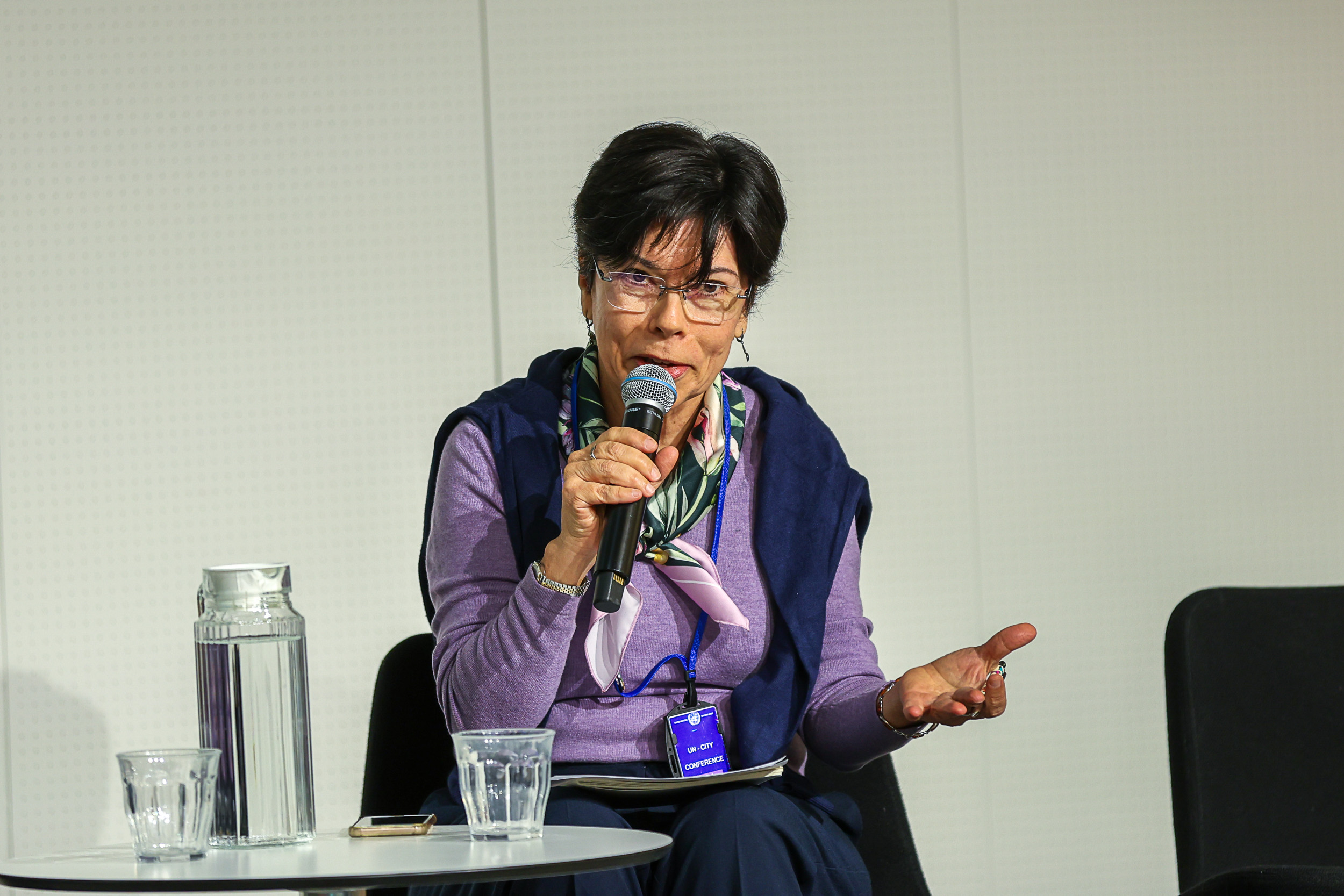
Mercedes Bustamante, Professor, University of Brasilia, Brazil
Prince Jaime de Bourbon de Parme, Climate Envoy, the Netherlands
Financing the Future We Want: Unlocking Synergies between Climate Finance and Development Finance
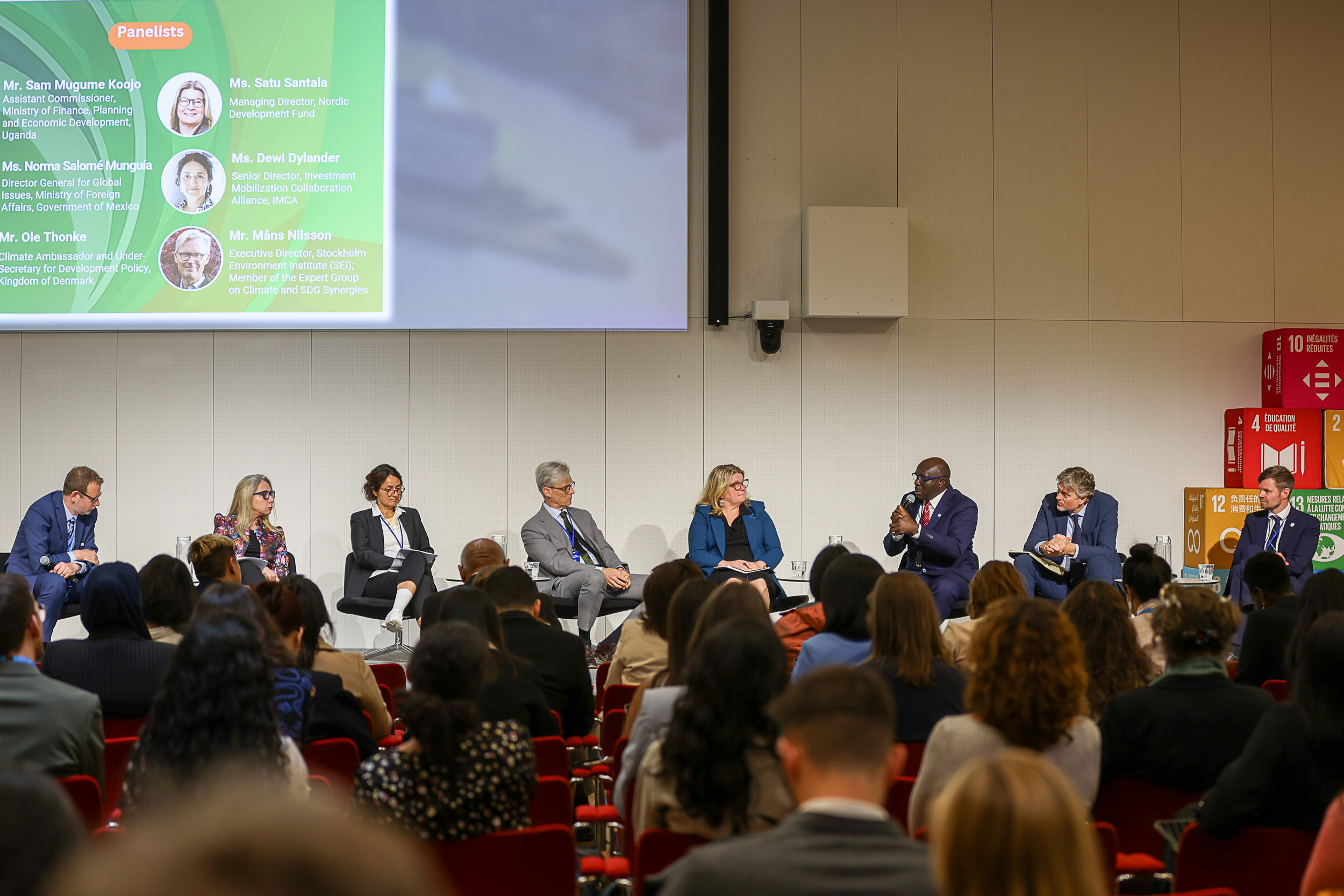
View of the panel during the roundtable session
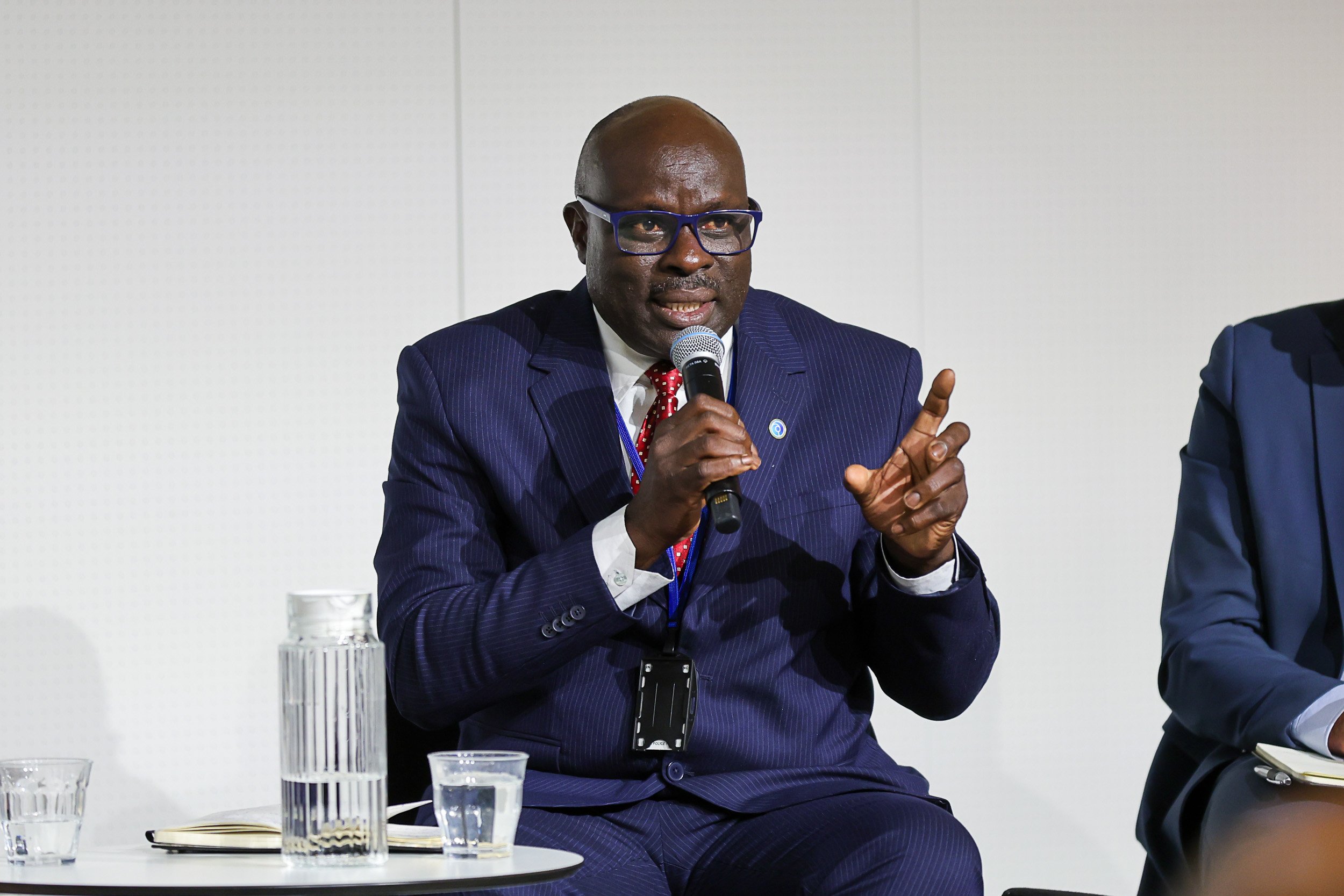
Sam Mugume Koojo, Assistant Commissioner, Ministry of Finance, Planning and Economic Development, Uganda

Norma Salomé Munguía Aldaraca, Director General for Global Issues, Ministry of Foreign Affairs, Mexico
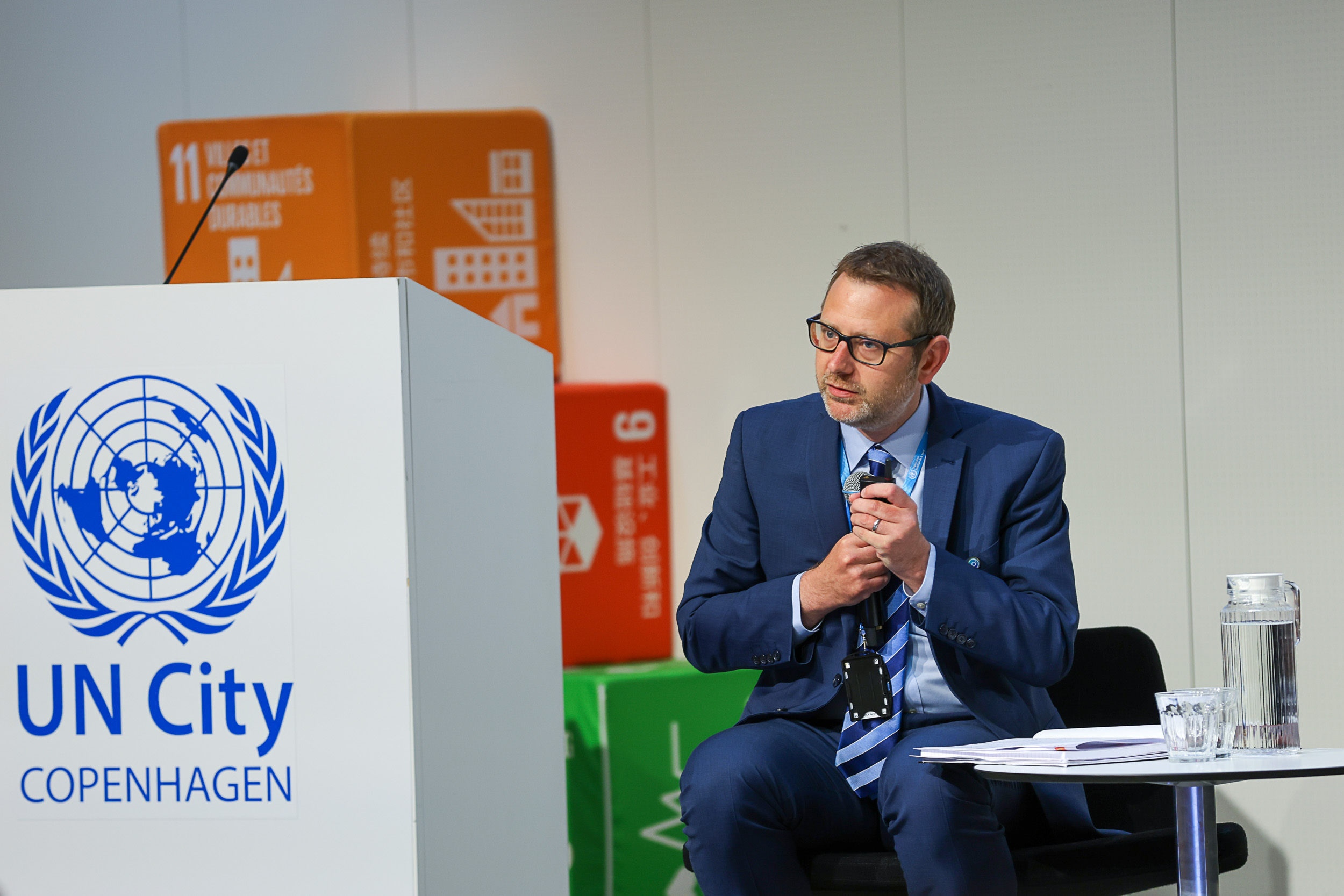
Nick Godfrey, Distinguished Policy Fellow of Public Finance and Economics, Grantham Research Institute on Climate Change and the Environment, London School of Economics
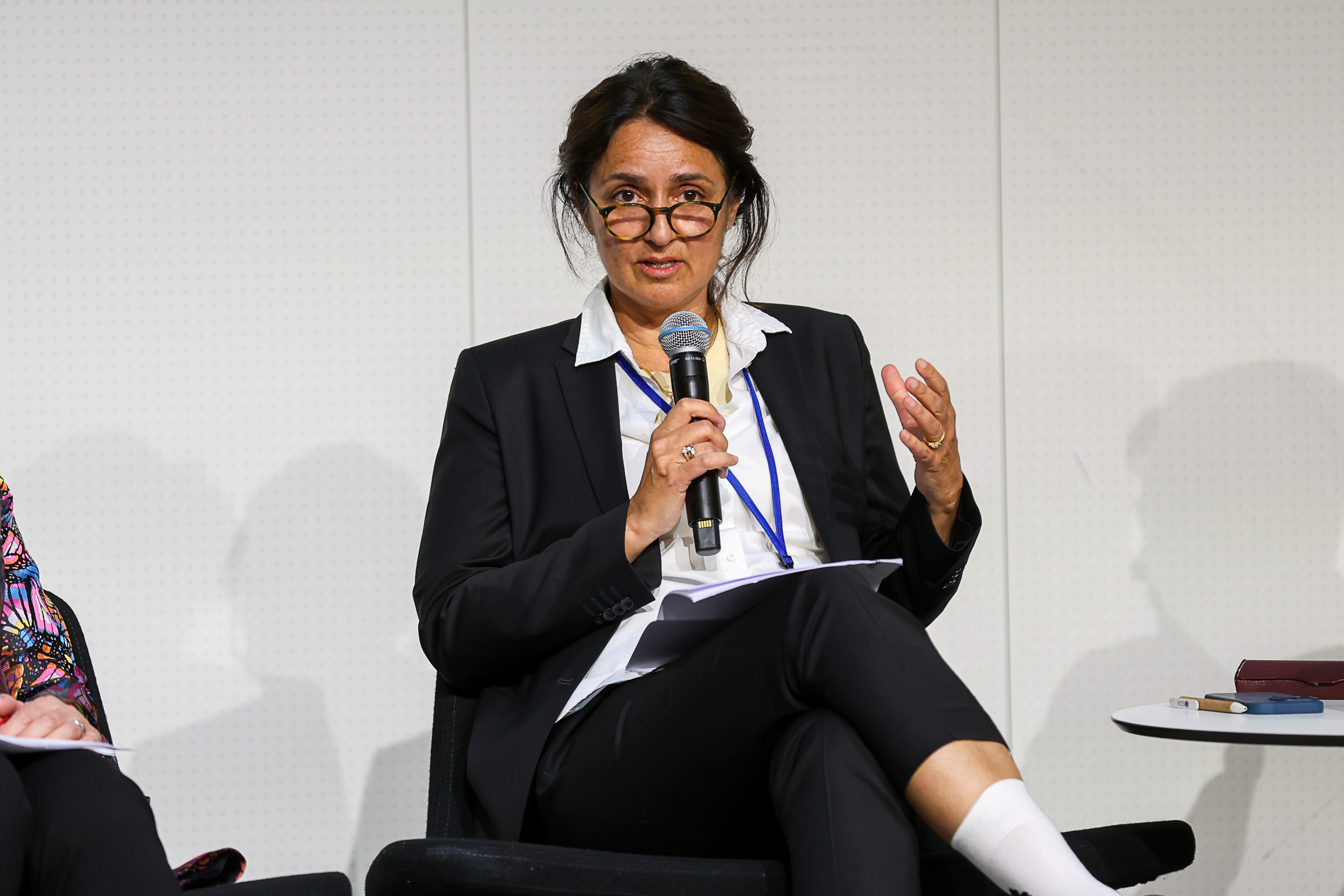
Dewi Dylander, Senior Director, Investment Mobilization Collaboration Alliance
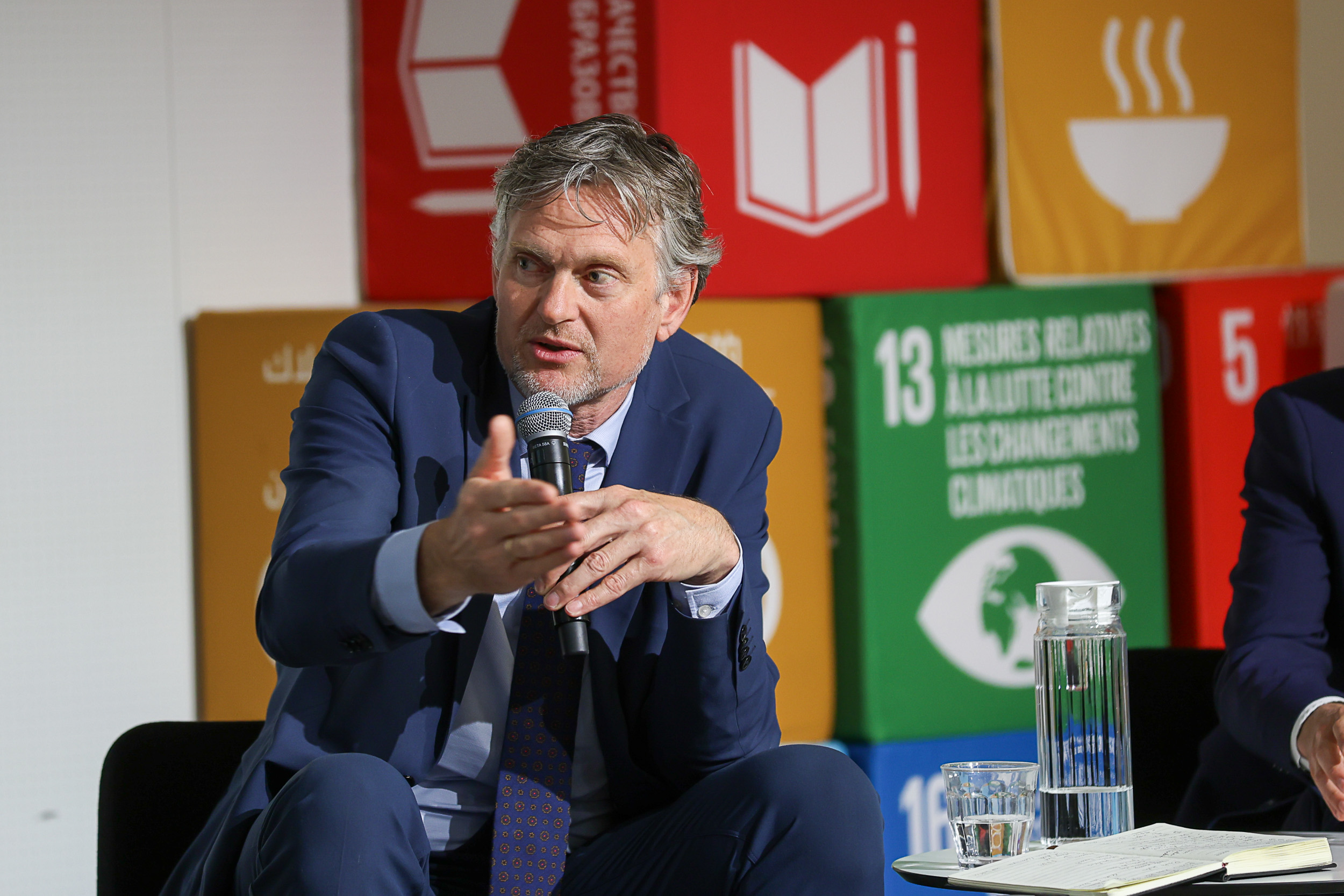
Ole Thonke, Climate Ambassador and Under-Secretary for Development Policy, Denmark
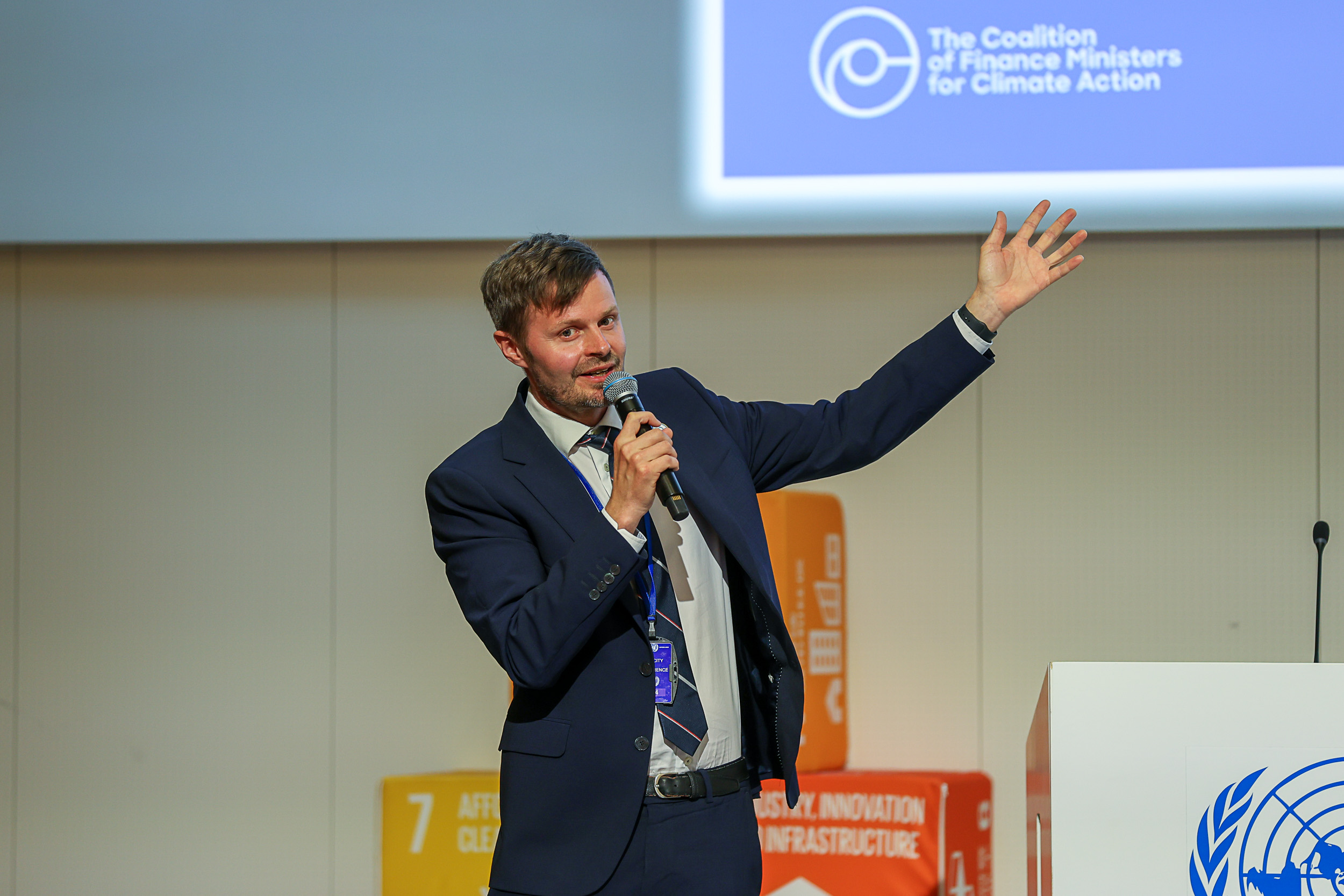
Mads Dalum Libergren, Senior Advisor and Deputy of the Coalition of Finance Ministers for Climate Action, Ministry of Finance, Denmark
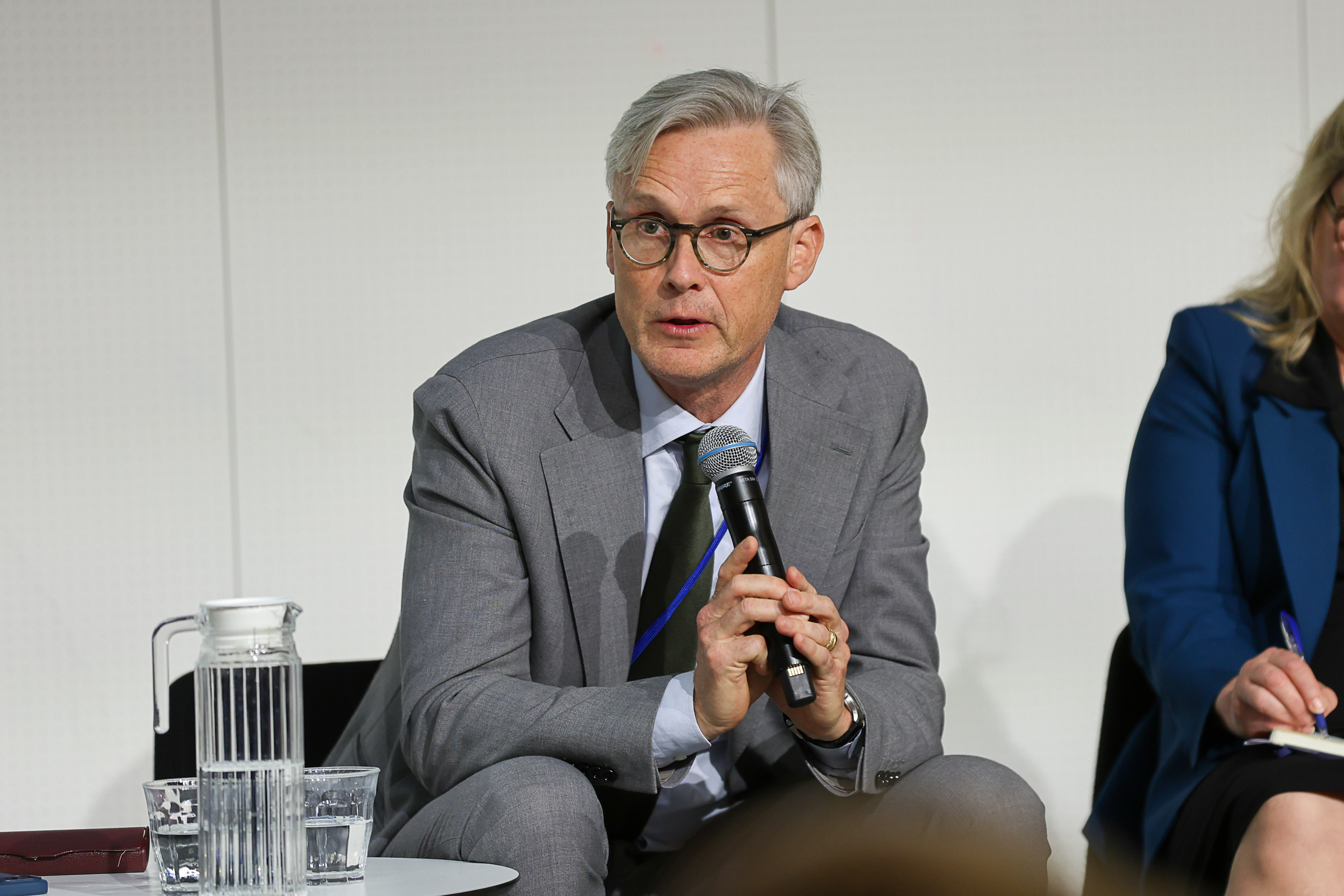
Måns Nilsson, Executive Director, Stockholm Environment Institute
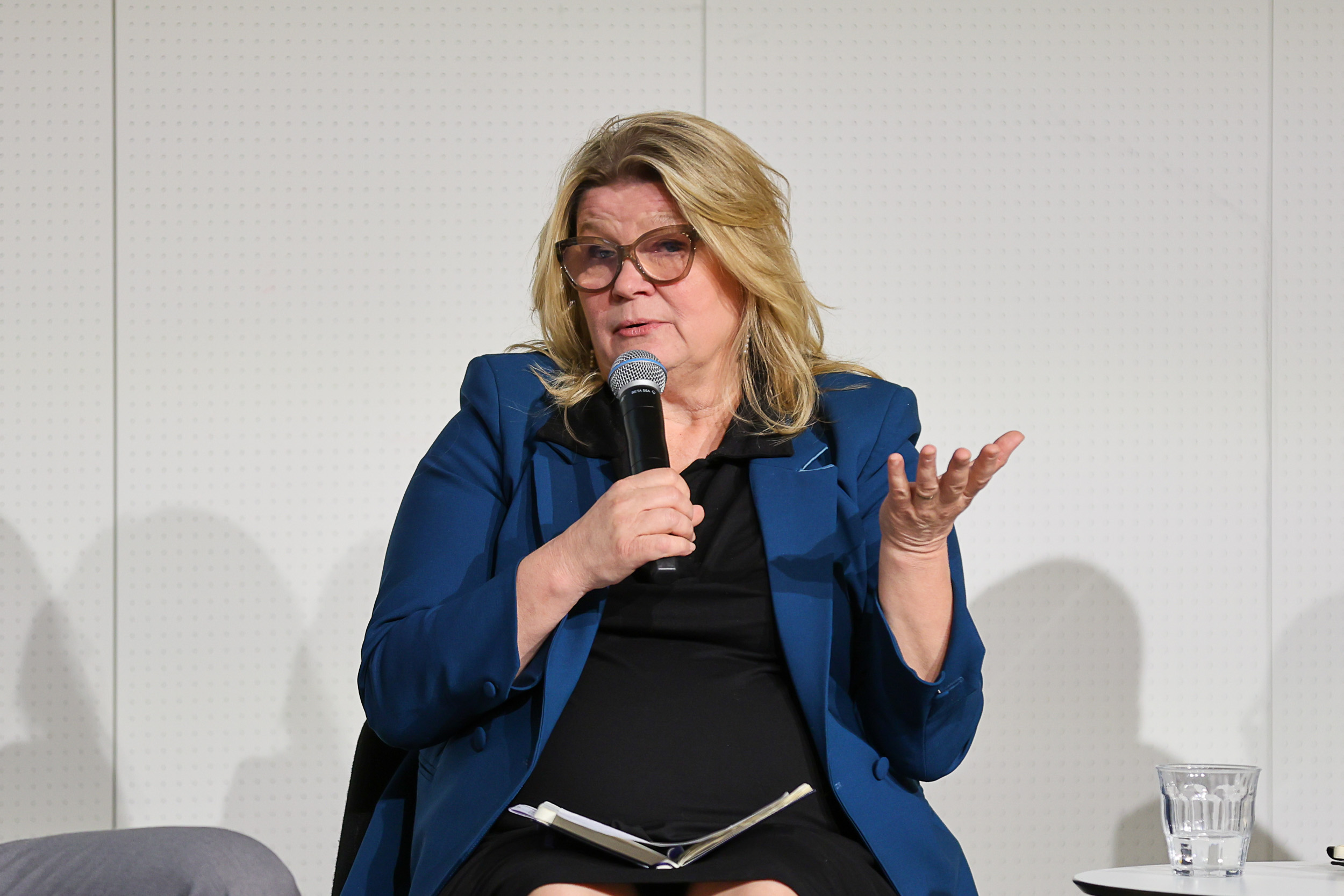
Satu Santala, Managing Director, Nordic Development Fund
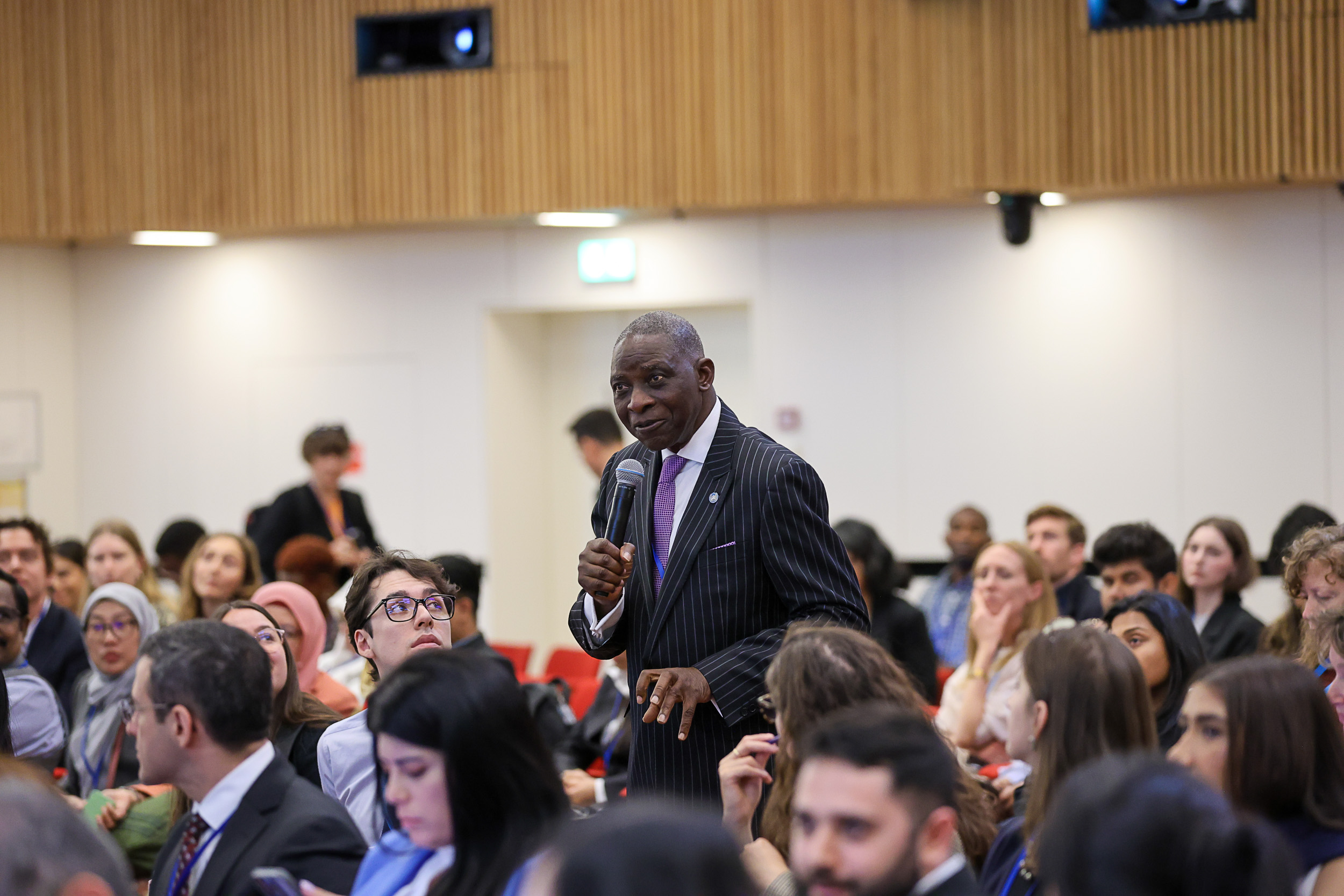
Leveraging NDC 3.0 to Advance NDCs and Co-Invest in Climate Action and the 2030 Agenda
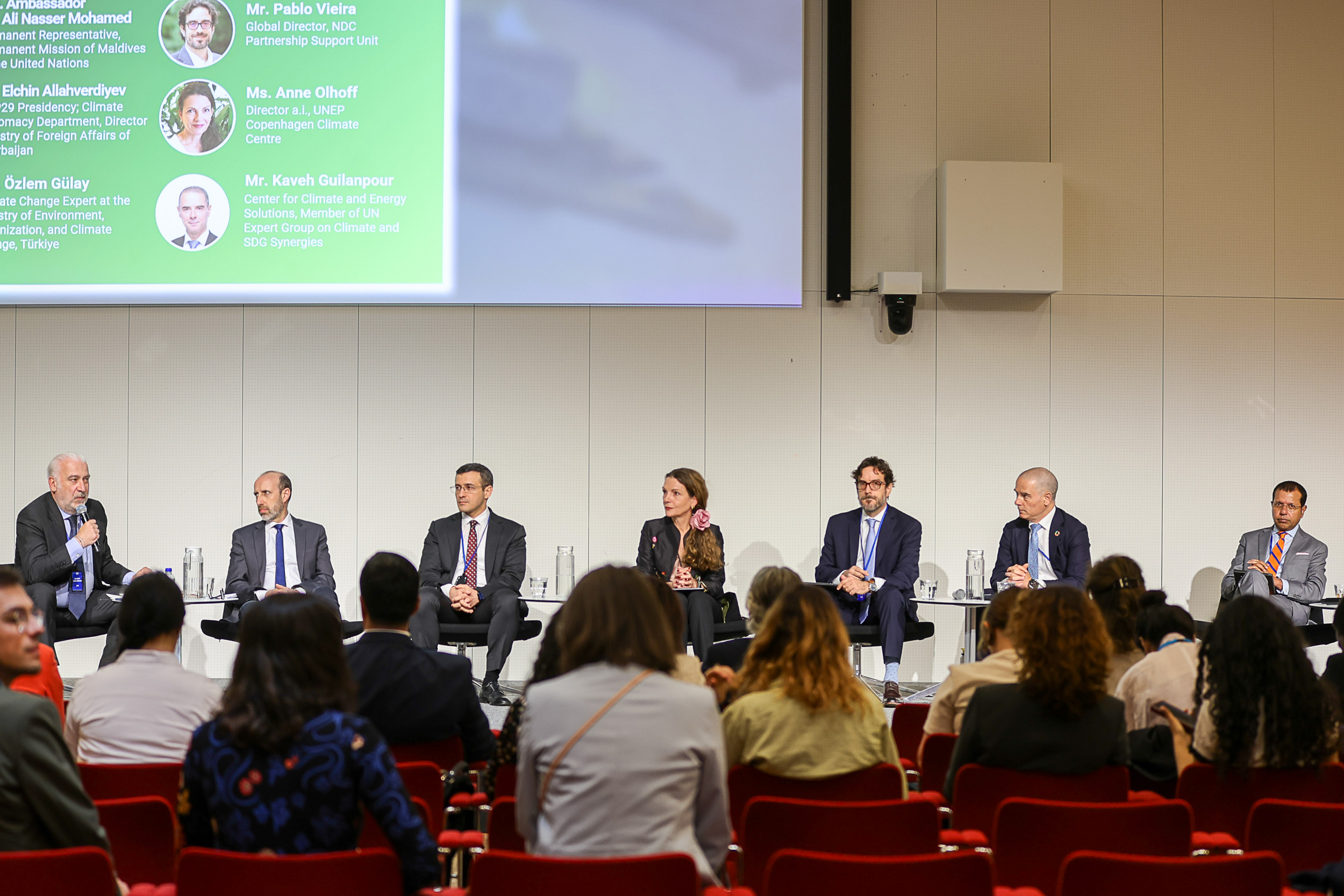
View of the panel during the roundtable
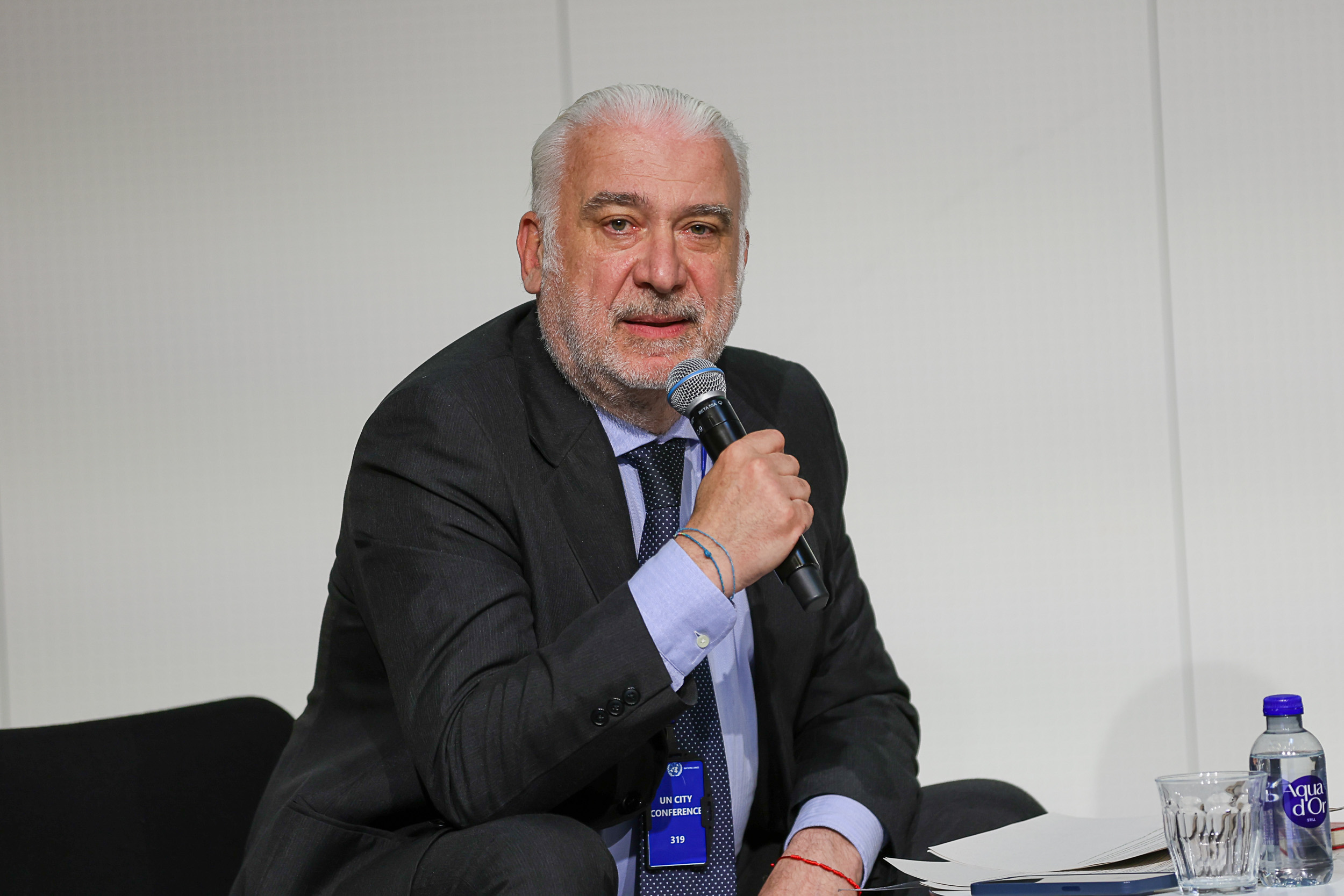
Daniele Violetti, Senior Director, Programmes Coordination, UNFCCC
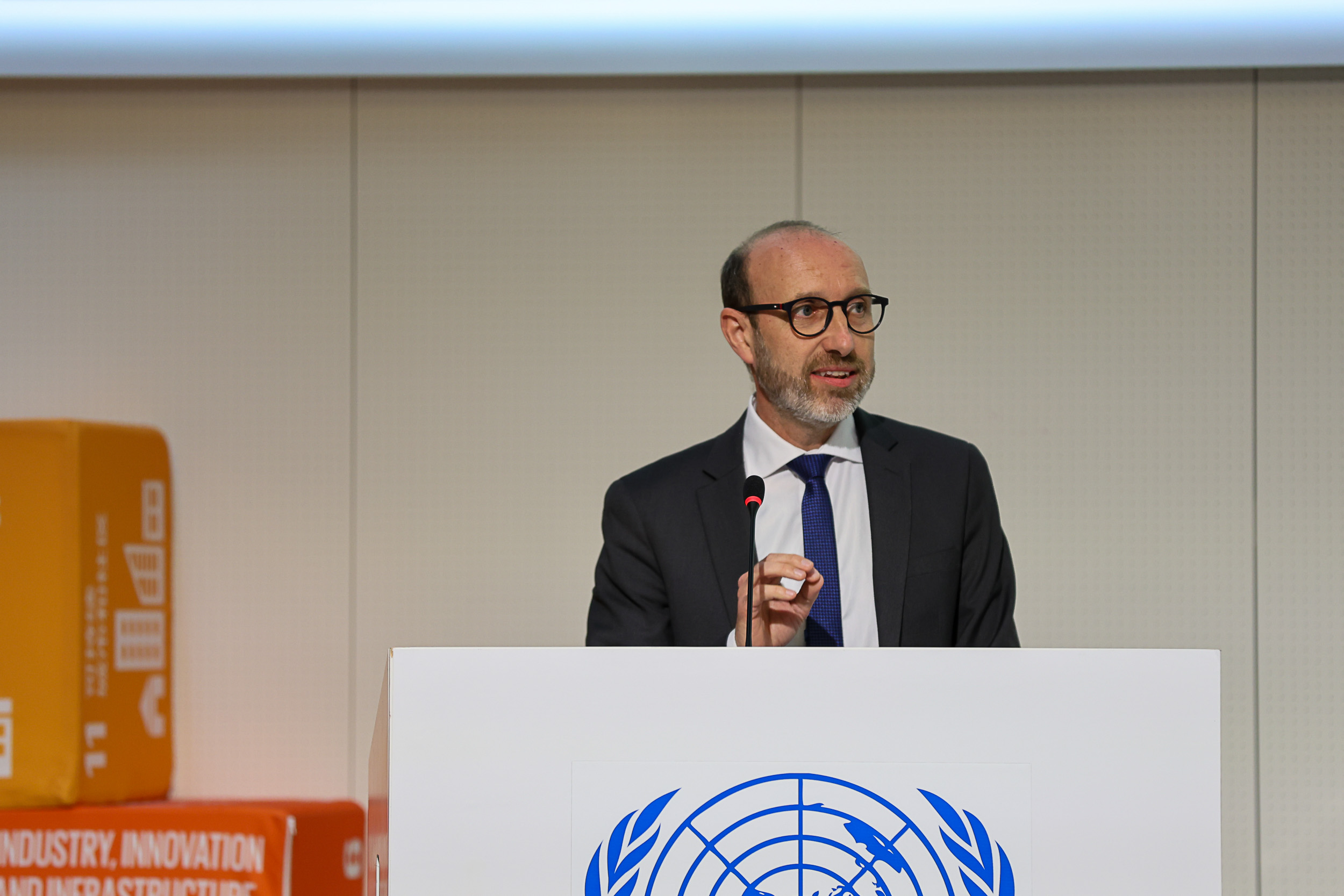
Josep Gari, Head of Climate, Forests and Land, UNDP
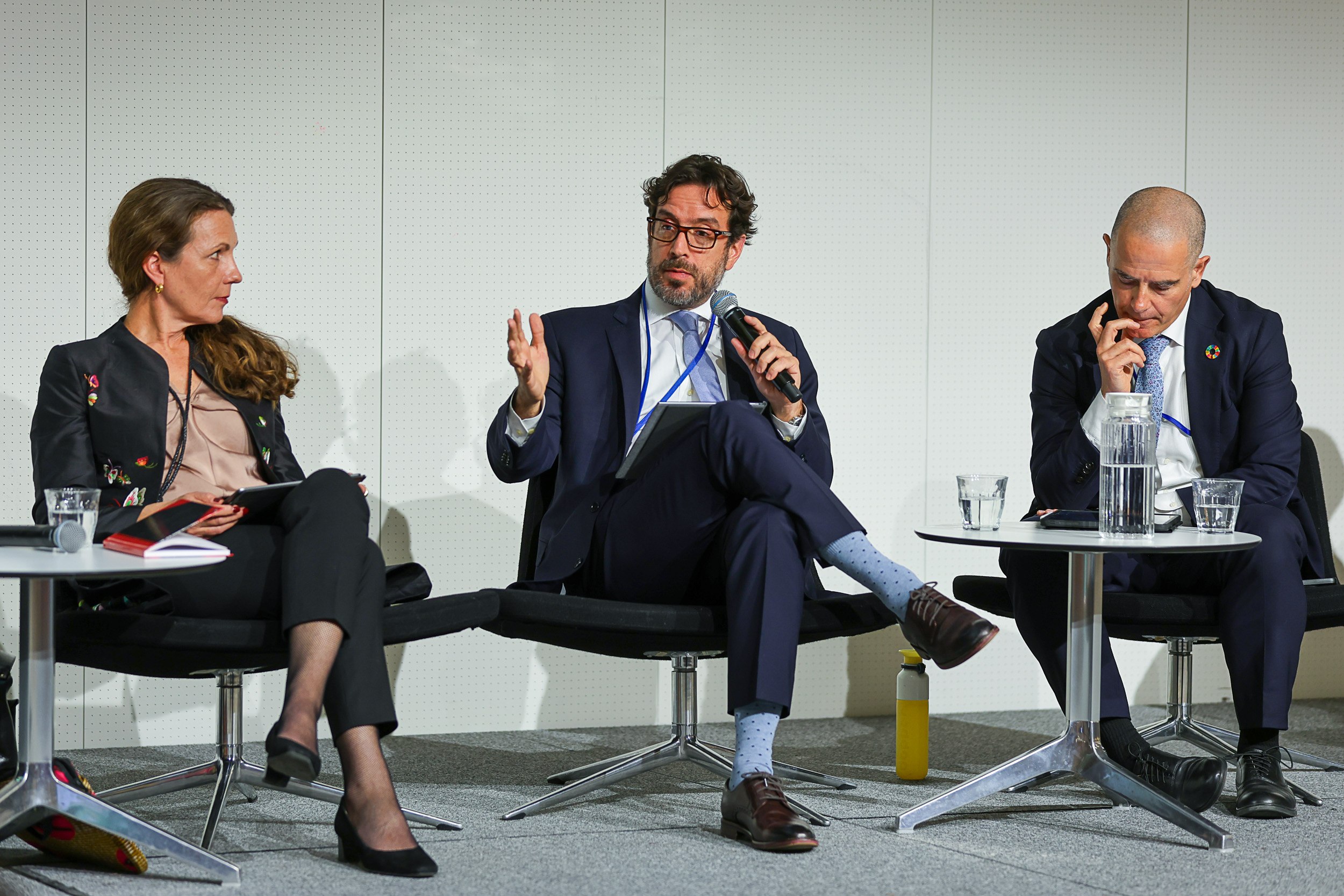
From L-R: Anne Olhoff, Director ad interim, UNEP-CCC; Pablo Vieira, Global Director, NDC Partnership Support Unit; and Kaveh Guilanpour, Vice President for International Strategies, Center for Climate and Energy Solutions (C2ES)
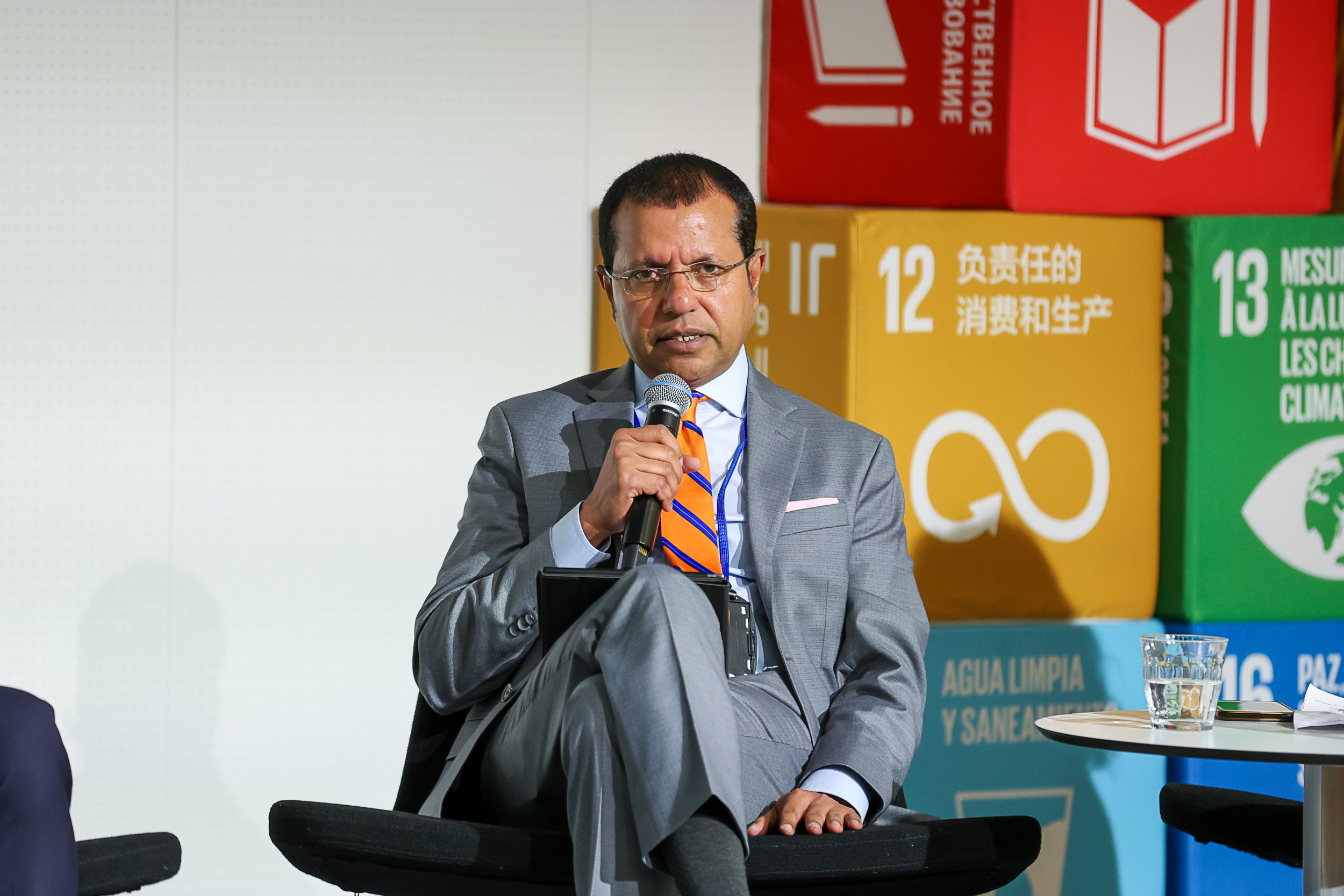
Ali Naseer Mohamed, Permanent Representative of the Maldives to the UN
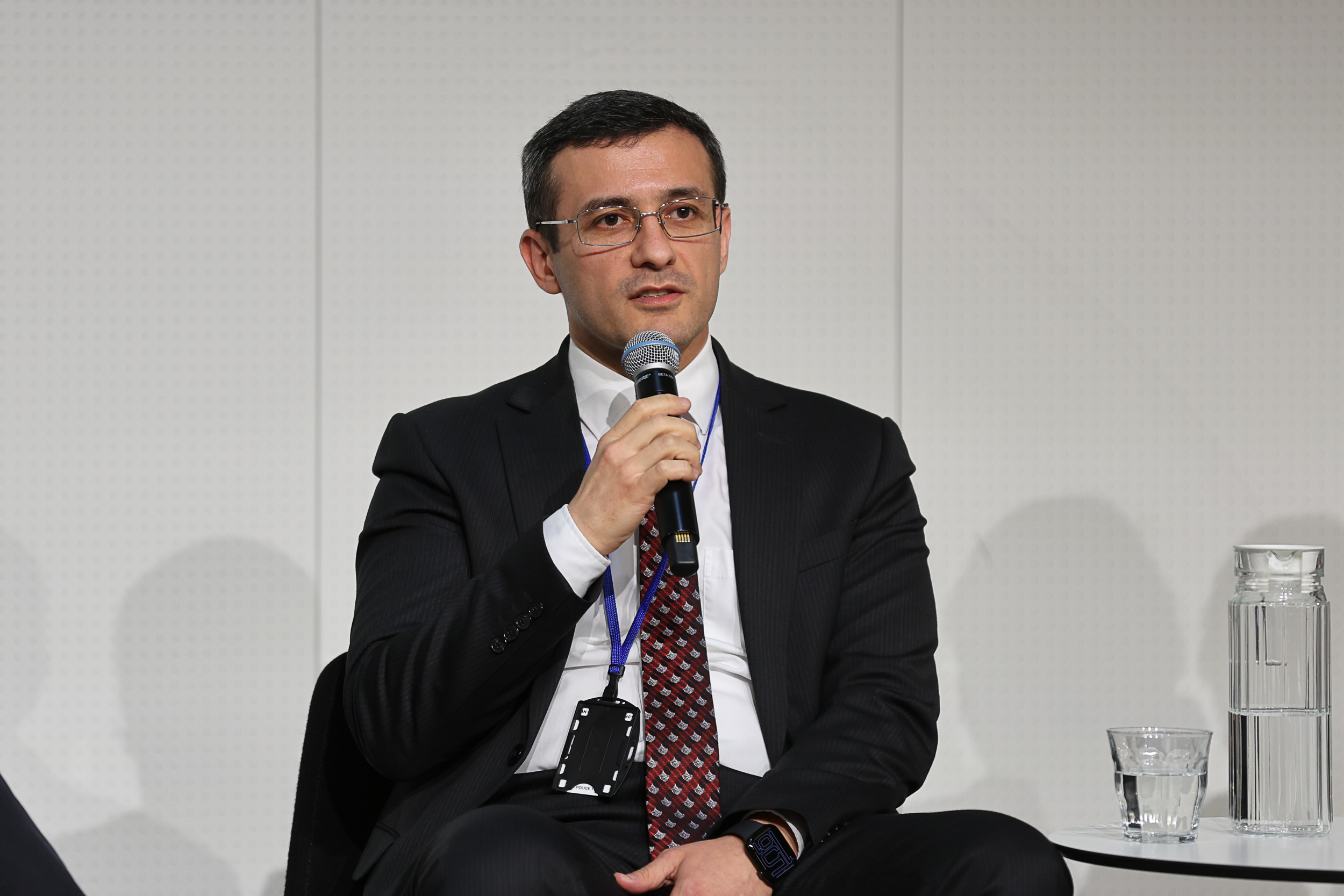
Elchin Allahverdiyev, Ministry of Foreign Affairs, Azerbaijan
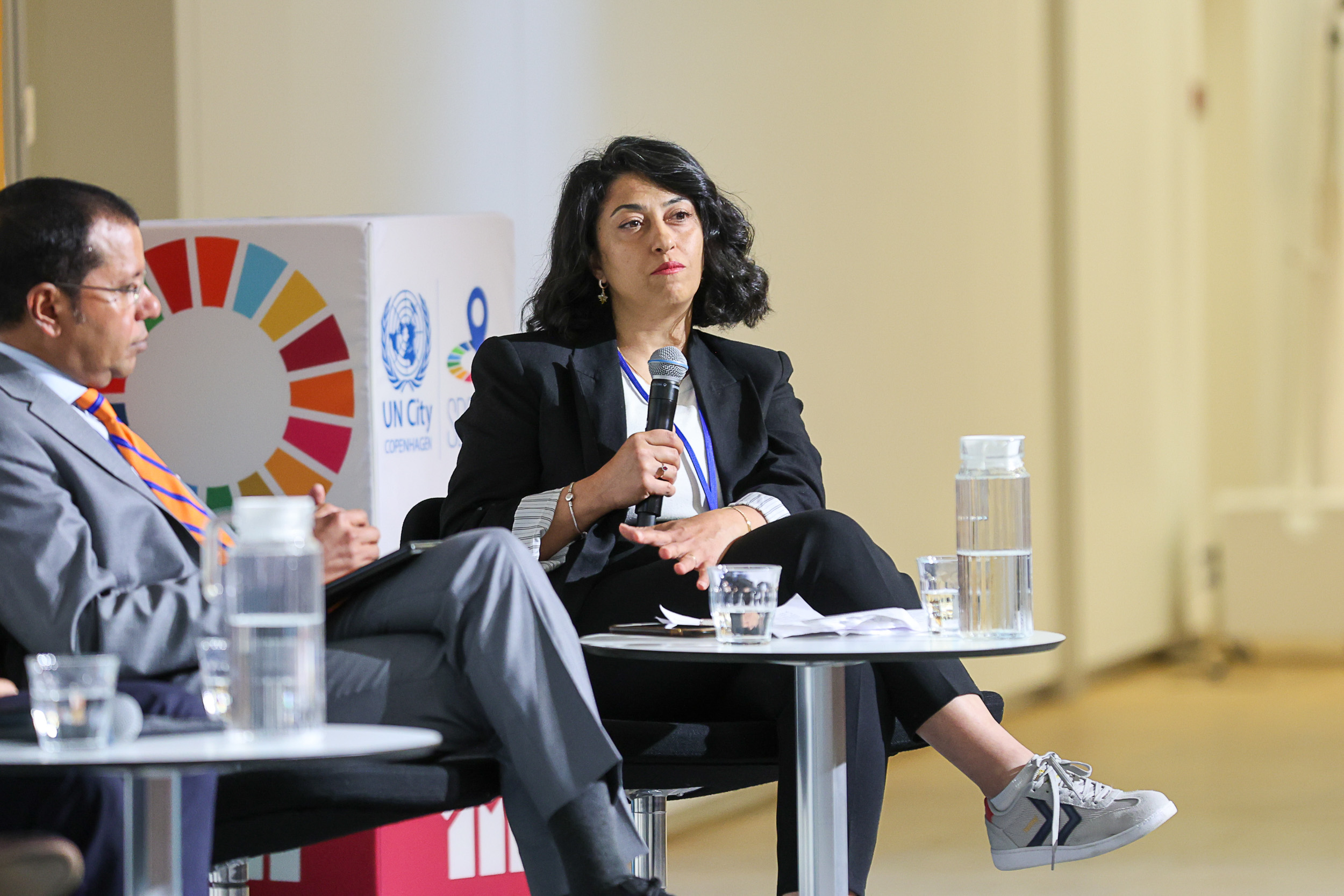
Özlem Gülay, Climate Change Expert at the Ministry of Environment, Urbanization, and Climate Change, Türkiye
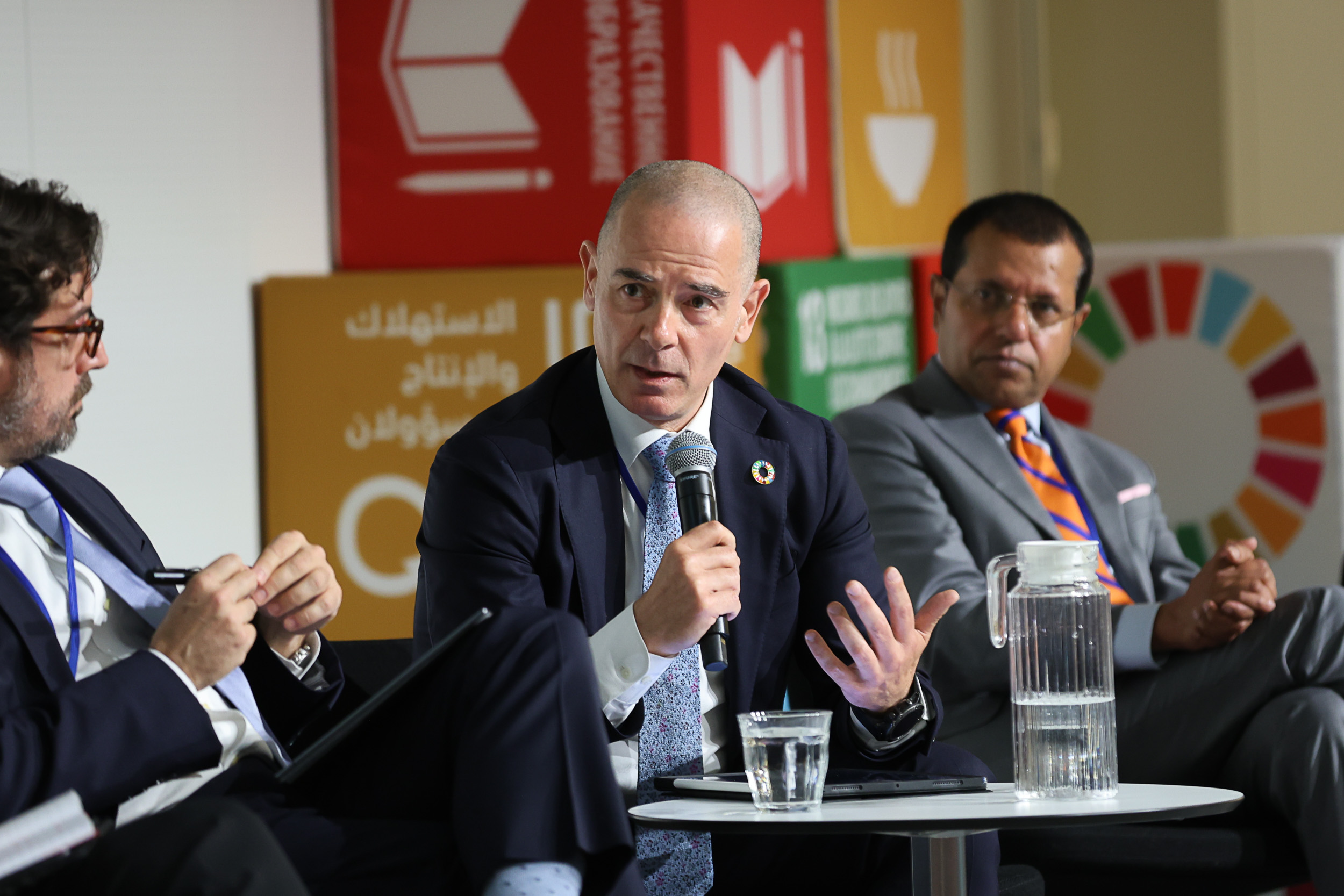
Kaveh Guilanpour, Vice President for International Strategies, C2ES
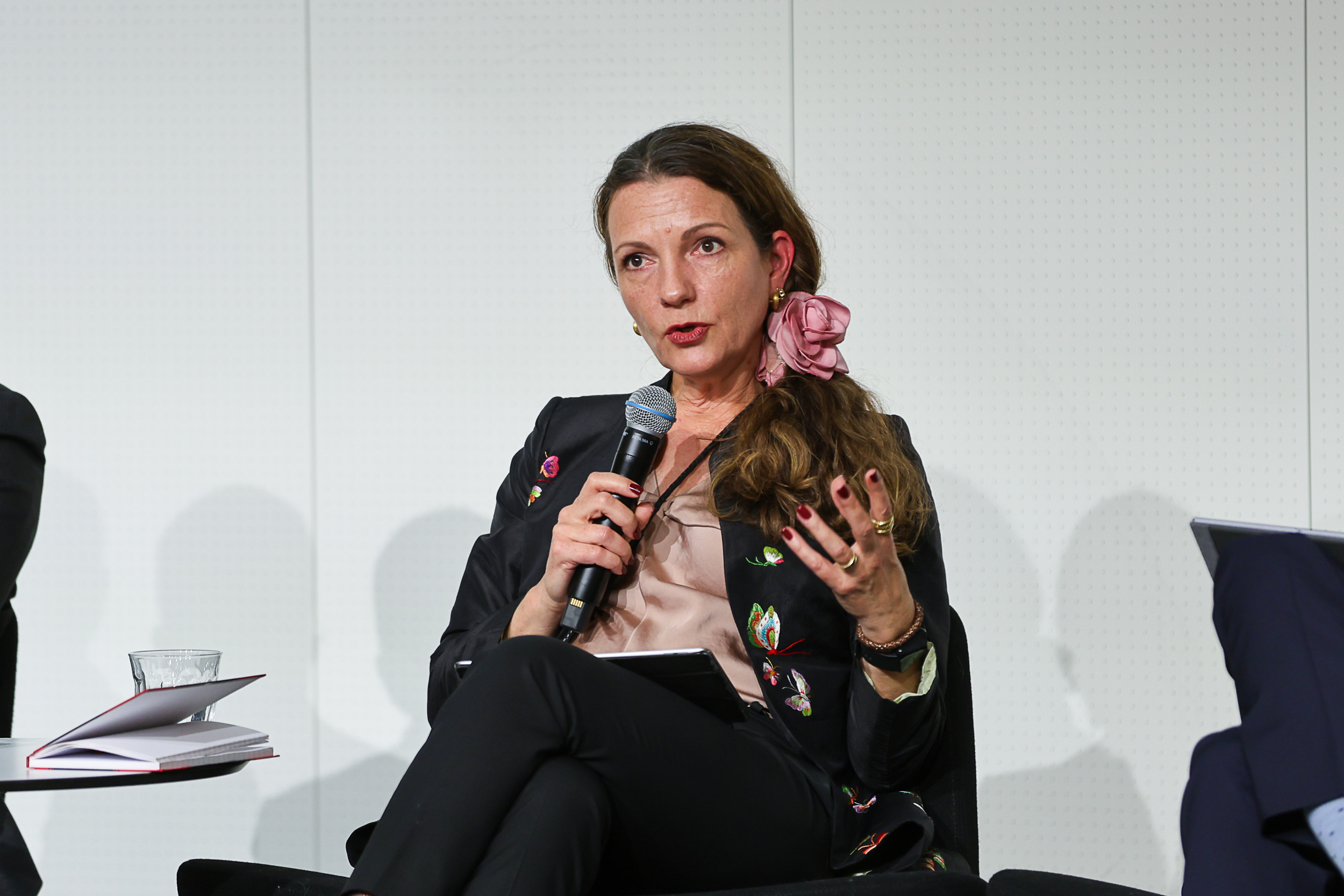
Anne Olhoff, Director ad interim, UNEP-CCC

Synergy Voices: Multi-Stakeholder Dialogue
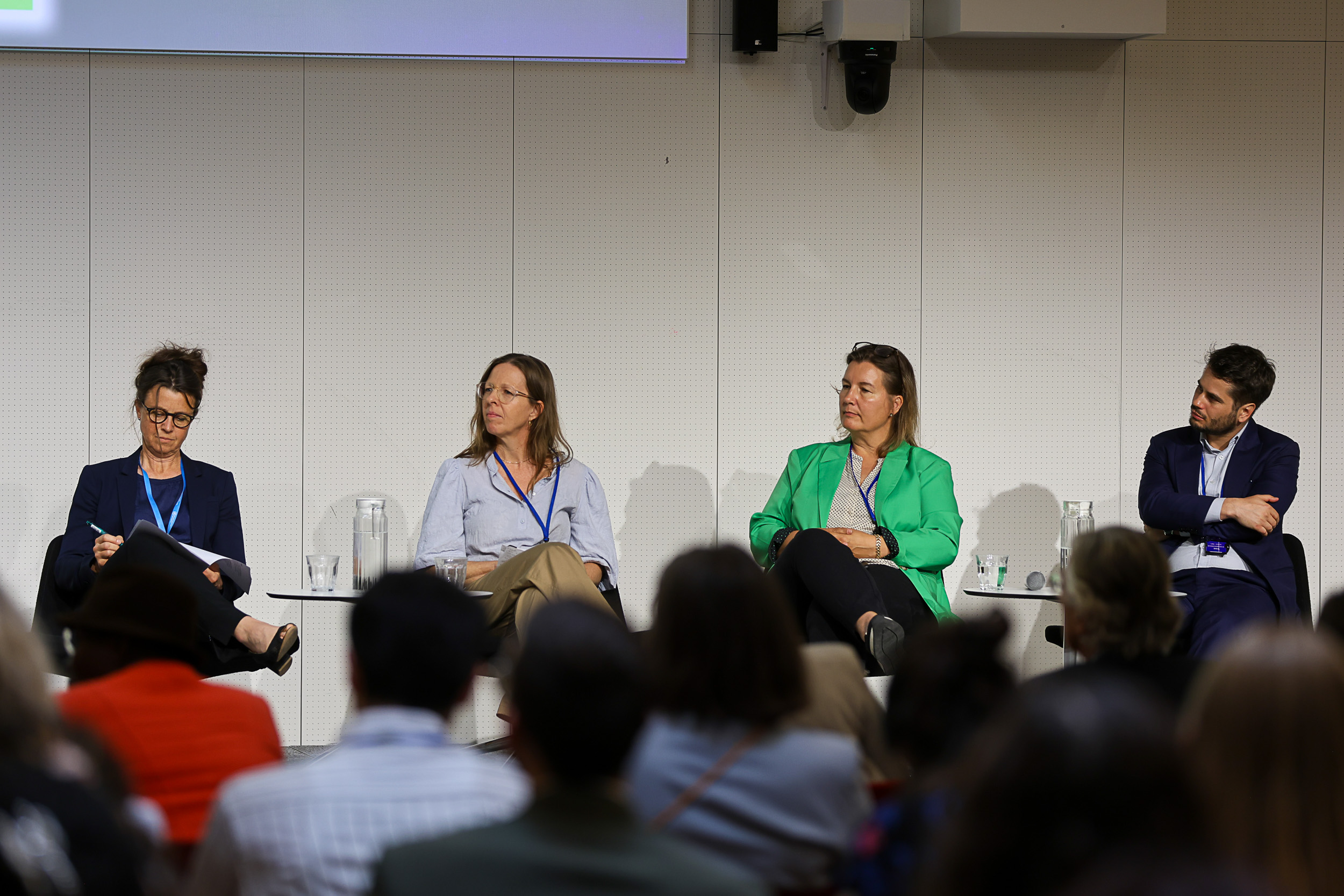
From L-R: Sille Stidsen, Department Director, Human Rights and Sustainable Development, Danish Institute for Human Rights; Ina Lykke Jensen, Senior Advisor, Disabled People’s Organization of Denmark; Lene Bjørn Serpa, Head of Corporate Sustainability, A.P. Moller-Maersk; and Sebastian Groh, Co-Founder and Chief Executive Officer, SOLshare International, Bangladesh
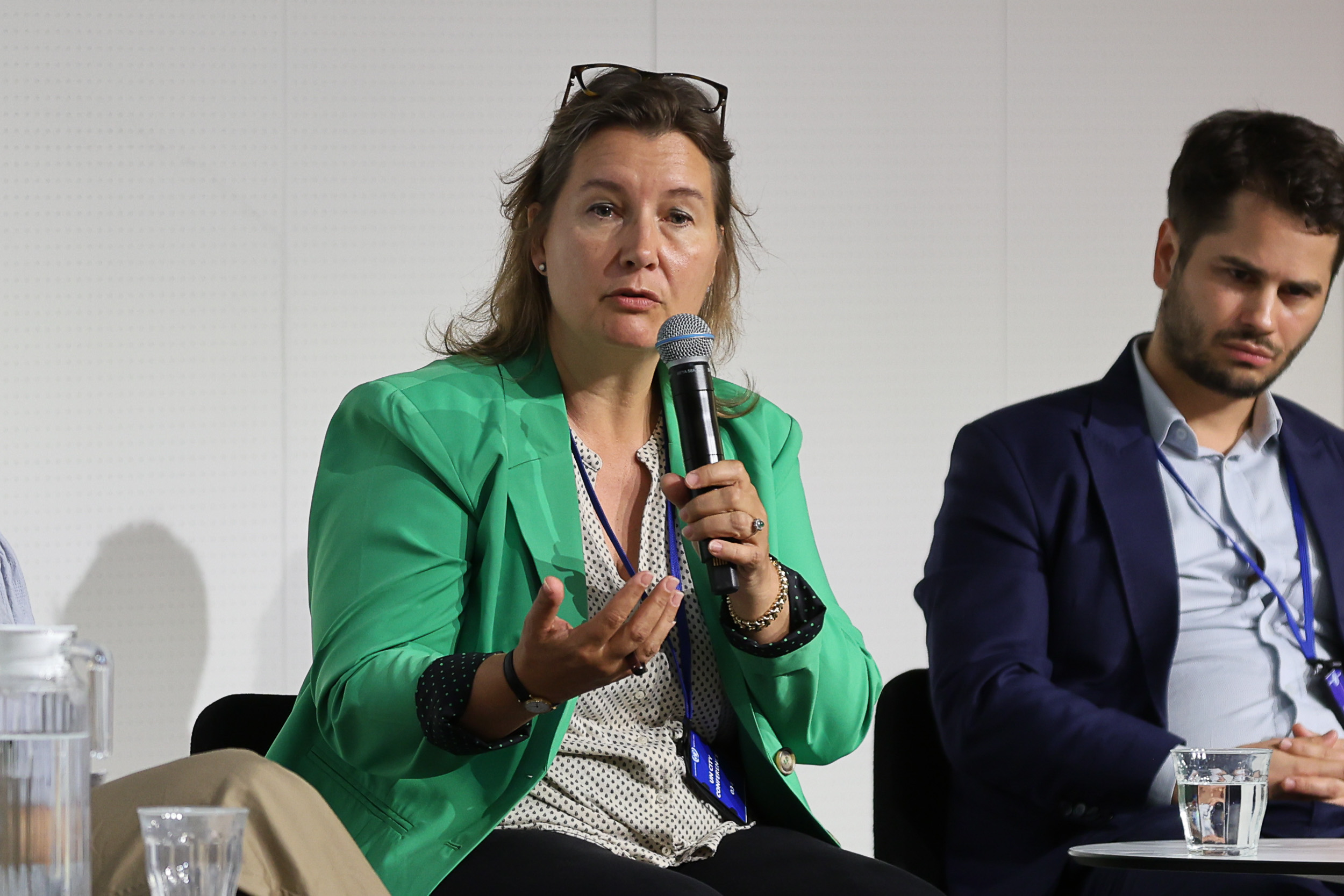
Lene Bjørn Serpa, Head of Corporate Sustainability, A.P. Moller-Maersk
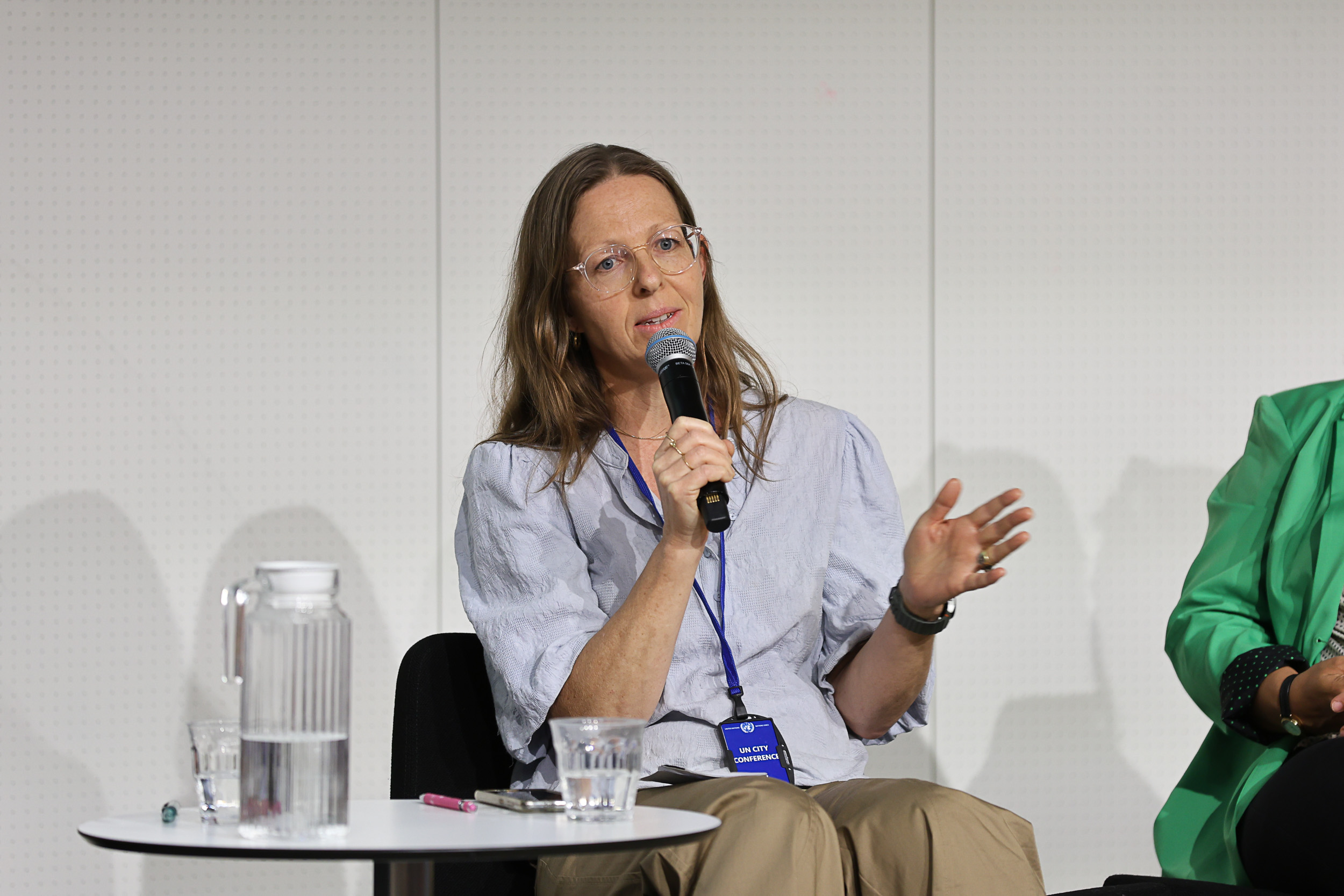
Ina Lykke Jensen, Senior Advisor, Disabled People’s Organization of Denmark
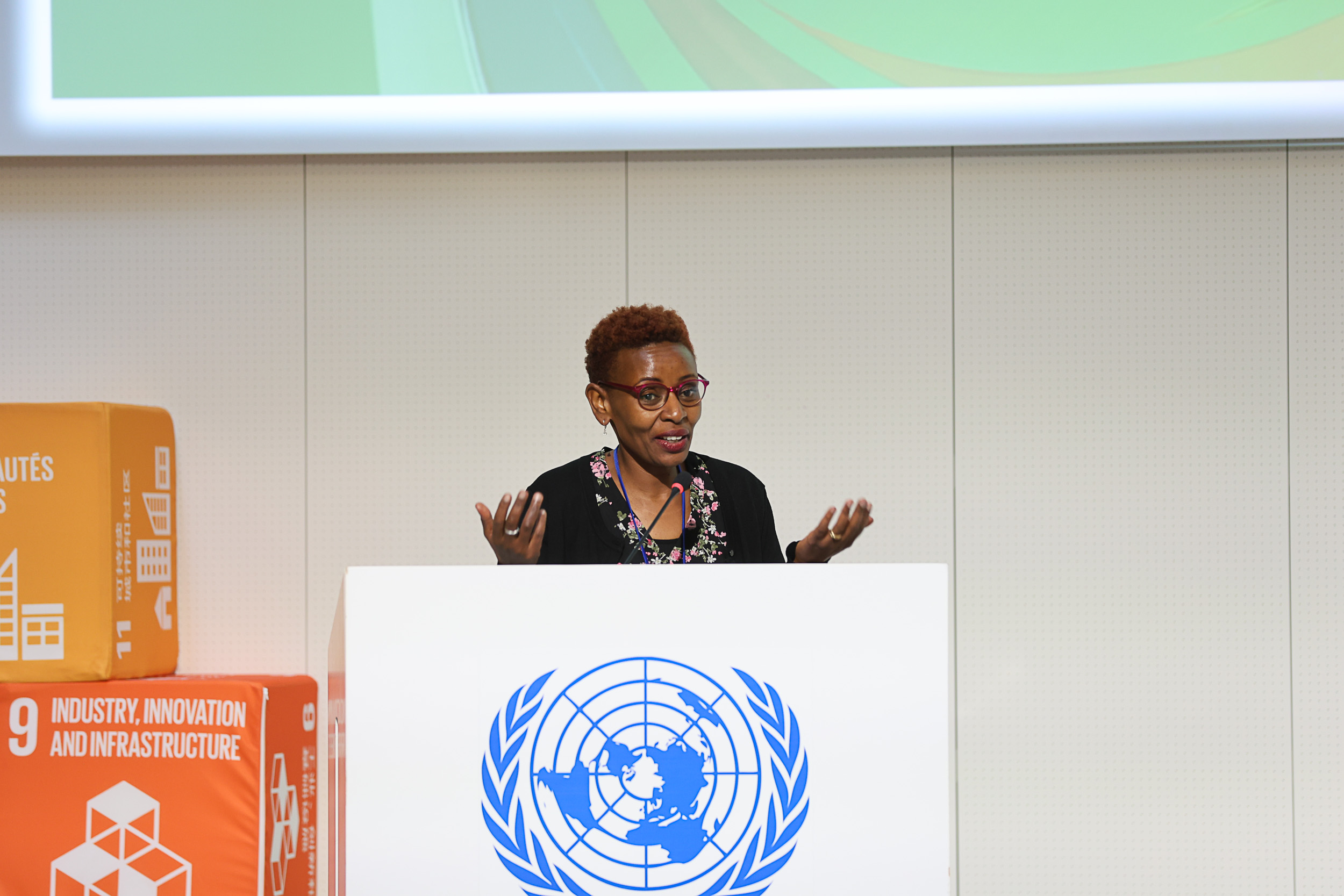
Irene Ngunjiri, Director, Water Governance and Innovation Hub, Strathmore University, Kenya
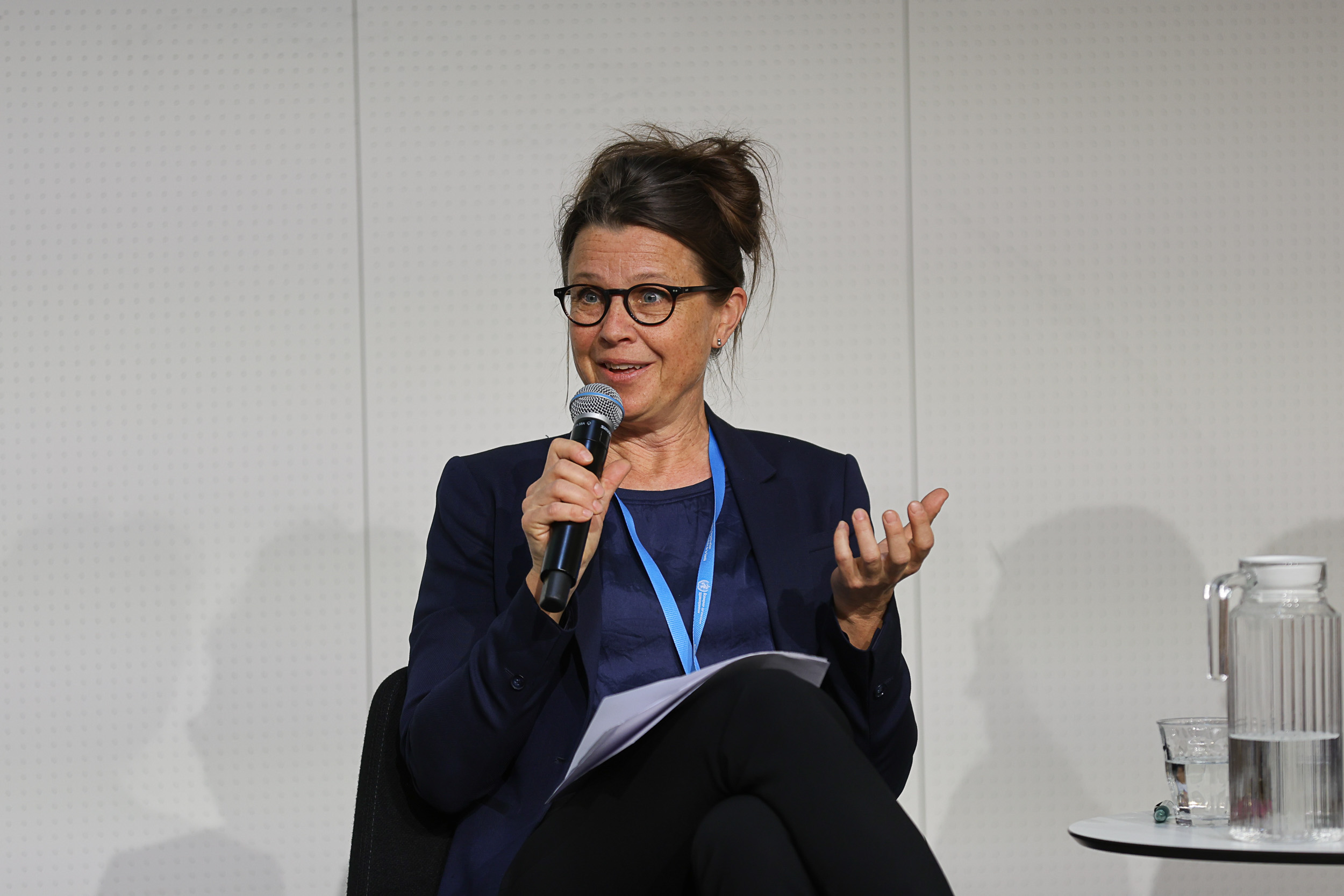
Sille Stidsen, Department Director, Human Rights and Sustainable Development, Danish Institute for Human Rights
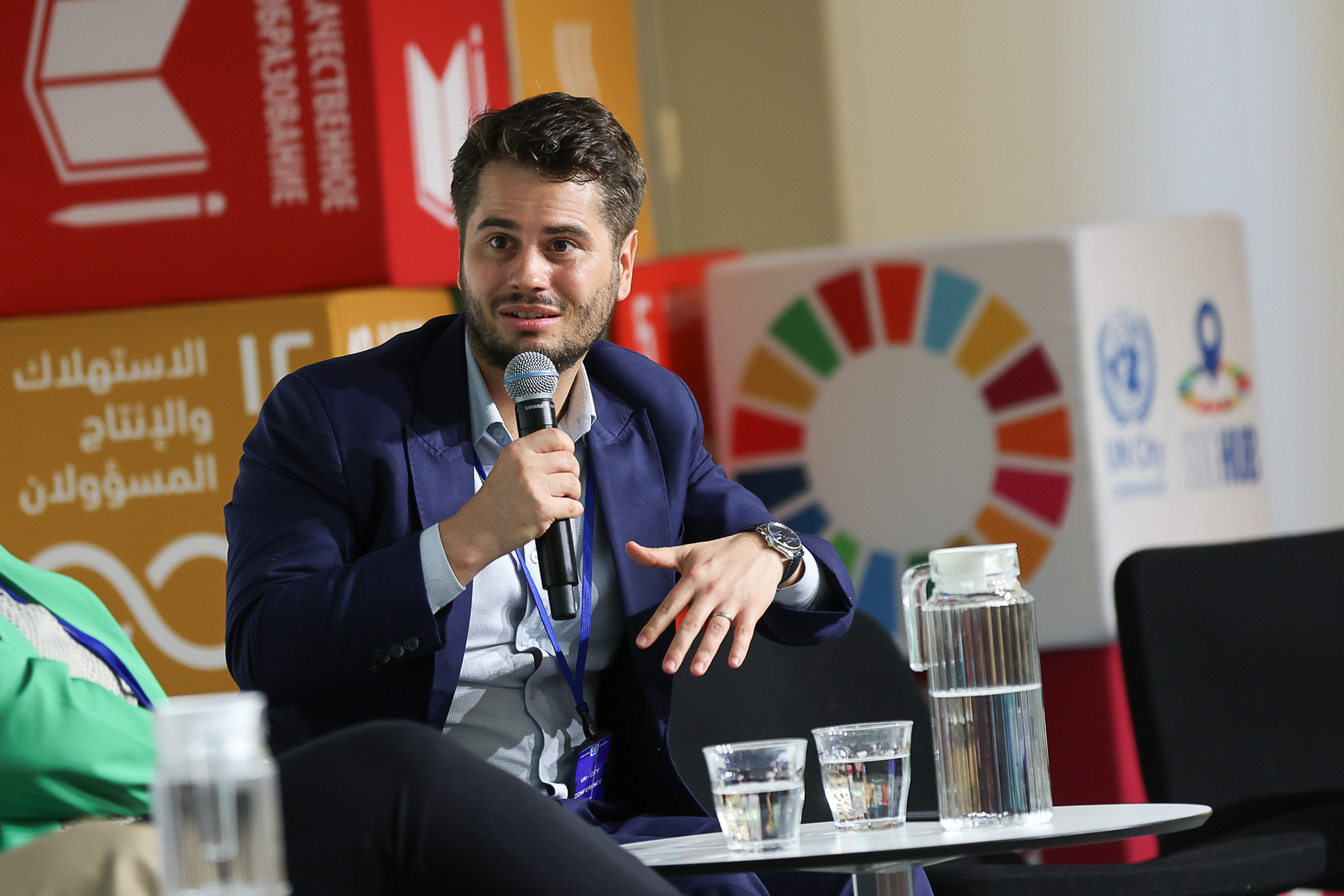
Sebastian Groh, Co-Founder and Chief Executive Officer, SOLshare International, Bangladesh

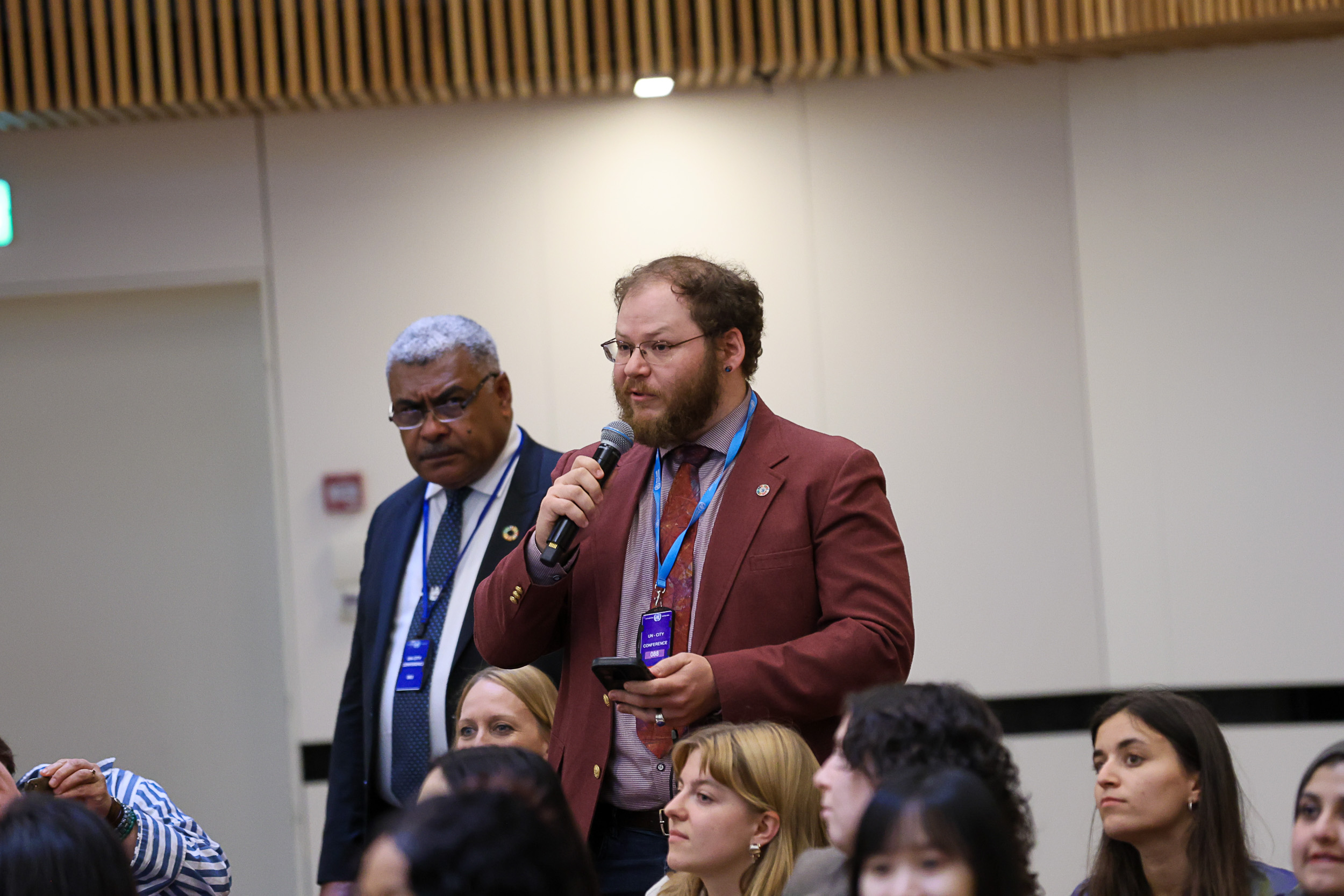
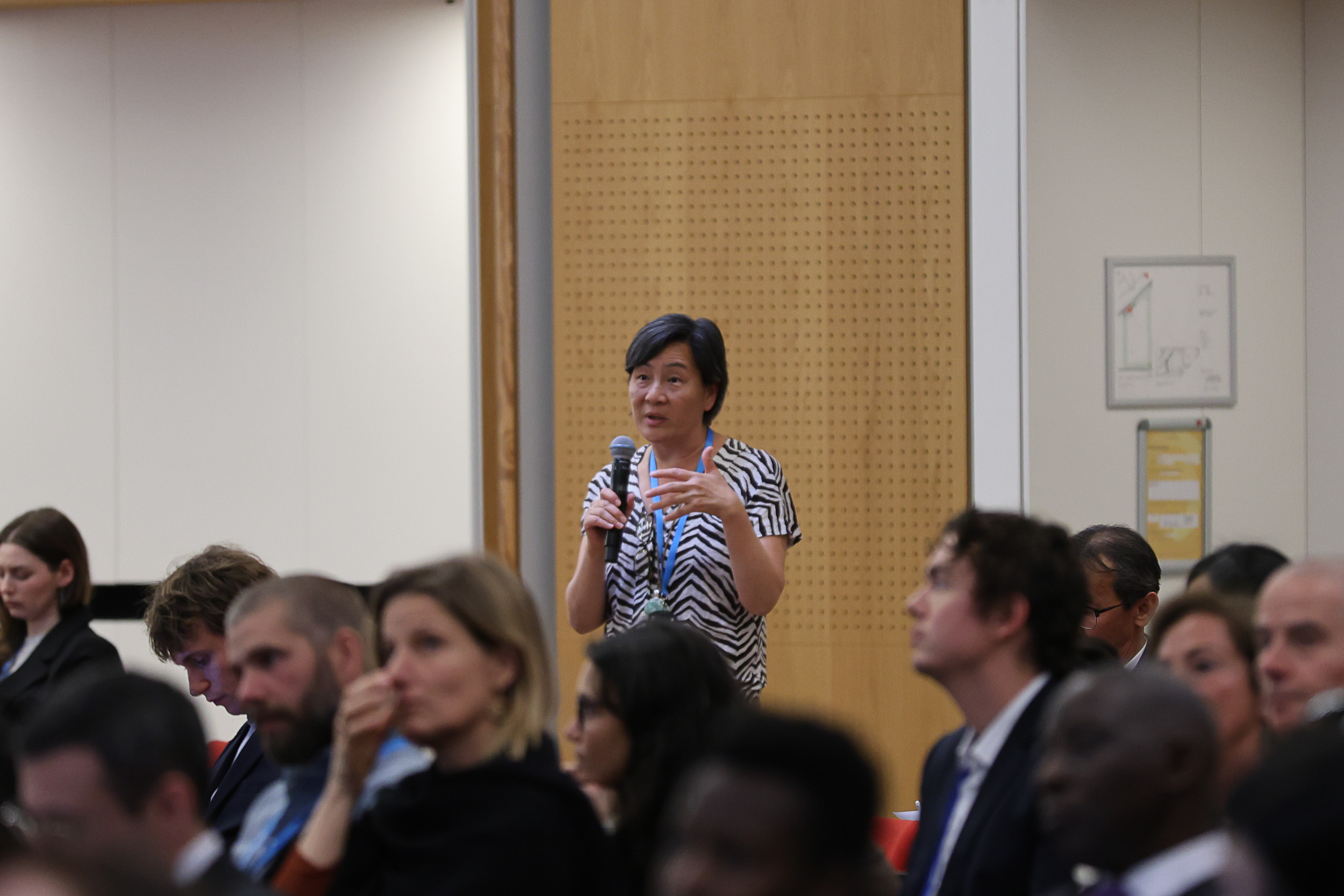
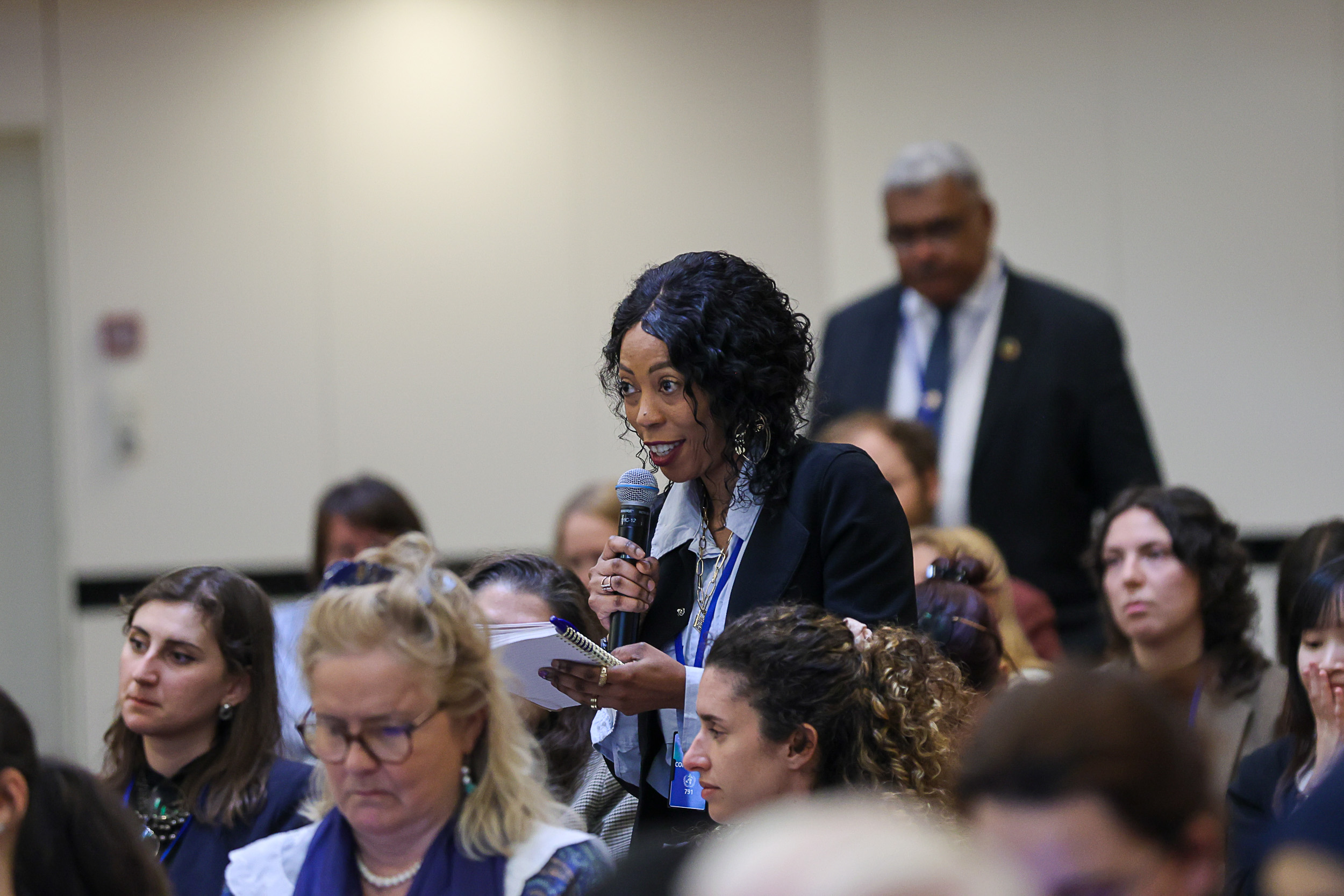
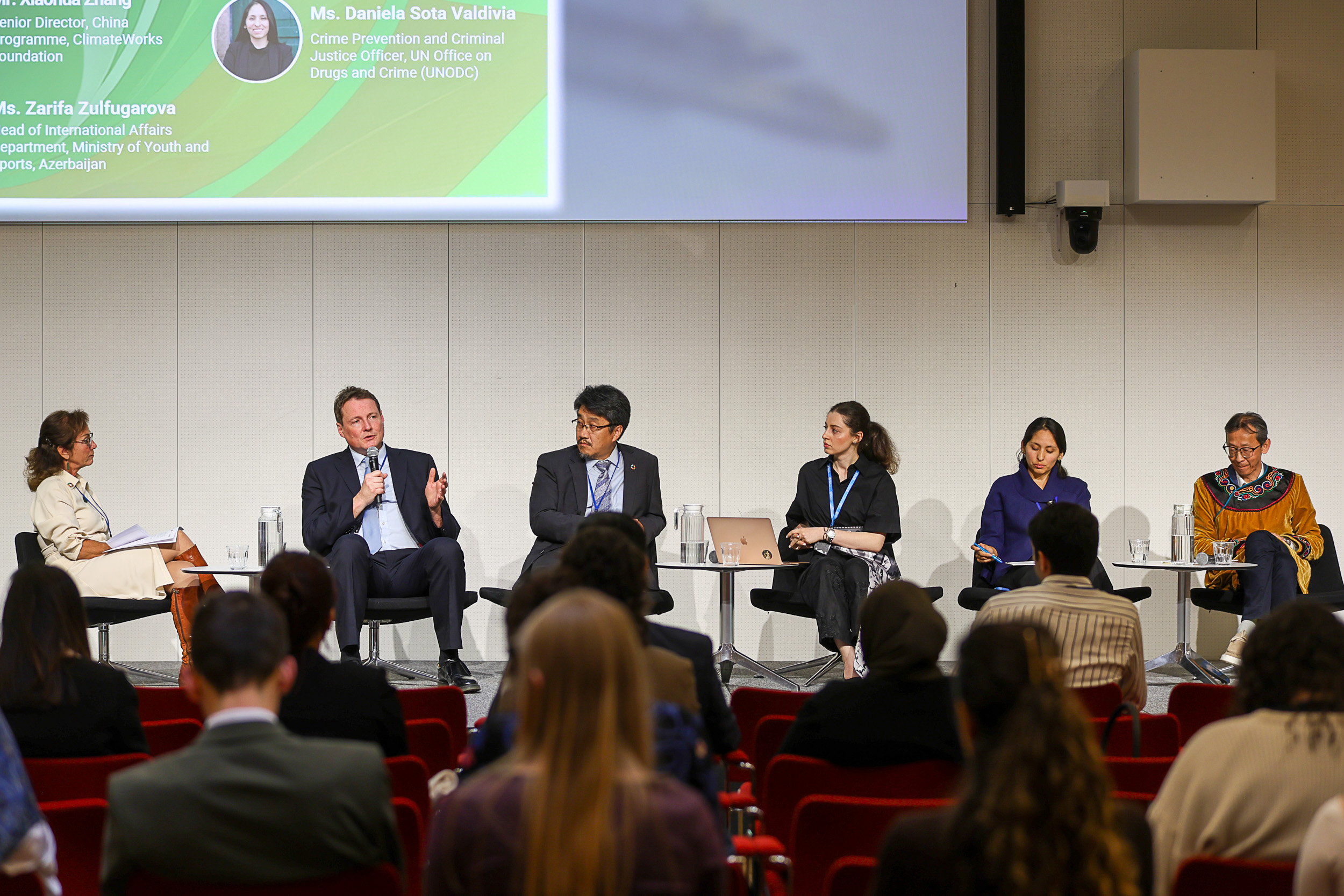
From L-R: Meagan Fallone, Founder, Step Up Advisers; Tom Mitchell, Director, International Institute for Environment and Development (IIED); Xiaohua Zhang, Senior Director, China Programme, ClimateWorks Foundation; Zarifa Zulfugarova, Head of International Relations Department, Ministry of Youth and Sports, Azerbaijan; Daniela Sota Valdivia, Crime Prevention and Criminal Justice Officer, Corruption and Economic Crime Branch, UN Office on Drugs and Crime (UNODC); and Rodion Sulyandziga, Chair, Indigenous Peoples Global Coordinating Committee
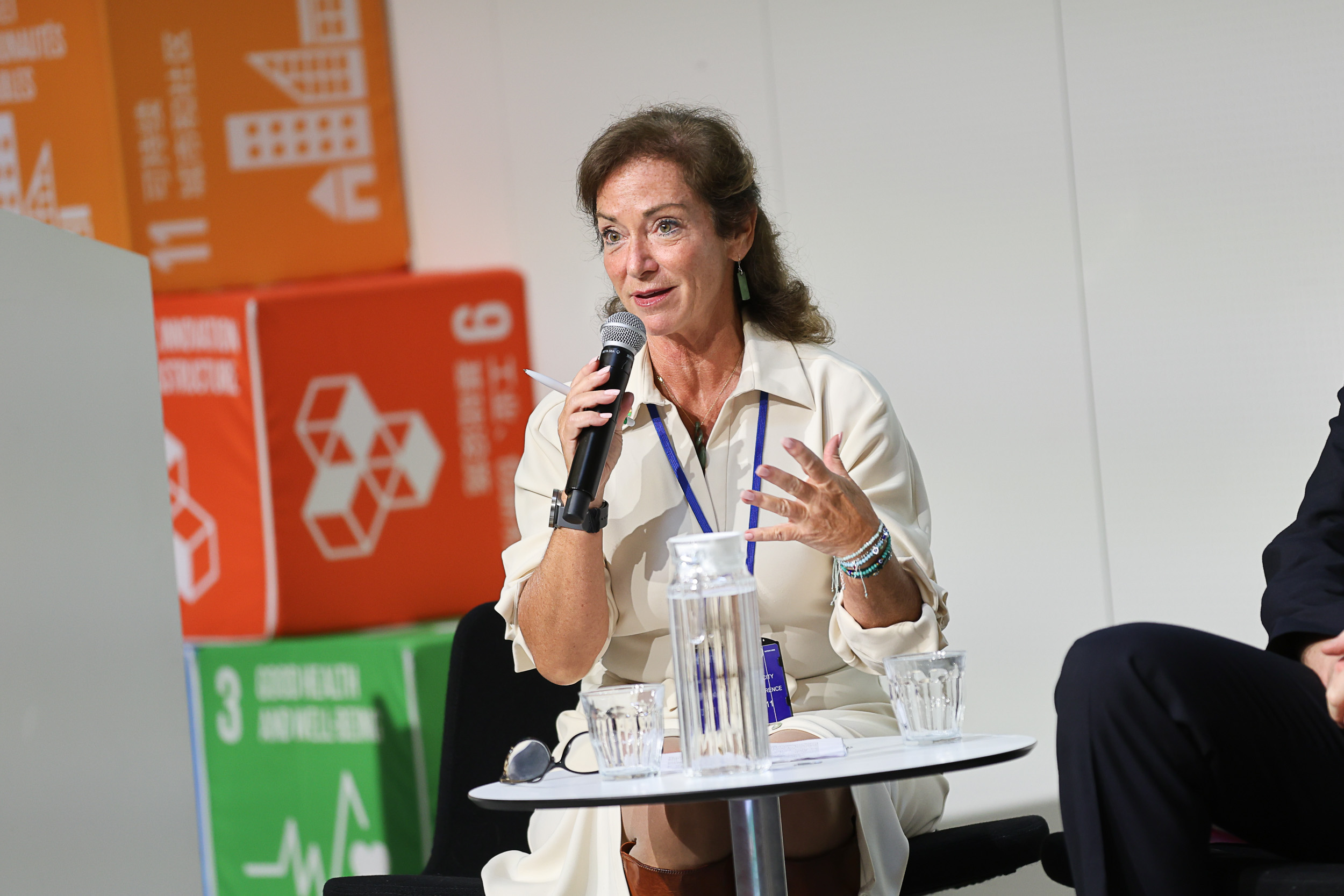
Meagan Fallone, Founder, Step Up Advisers
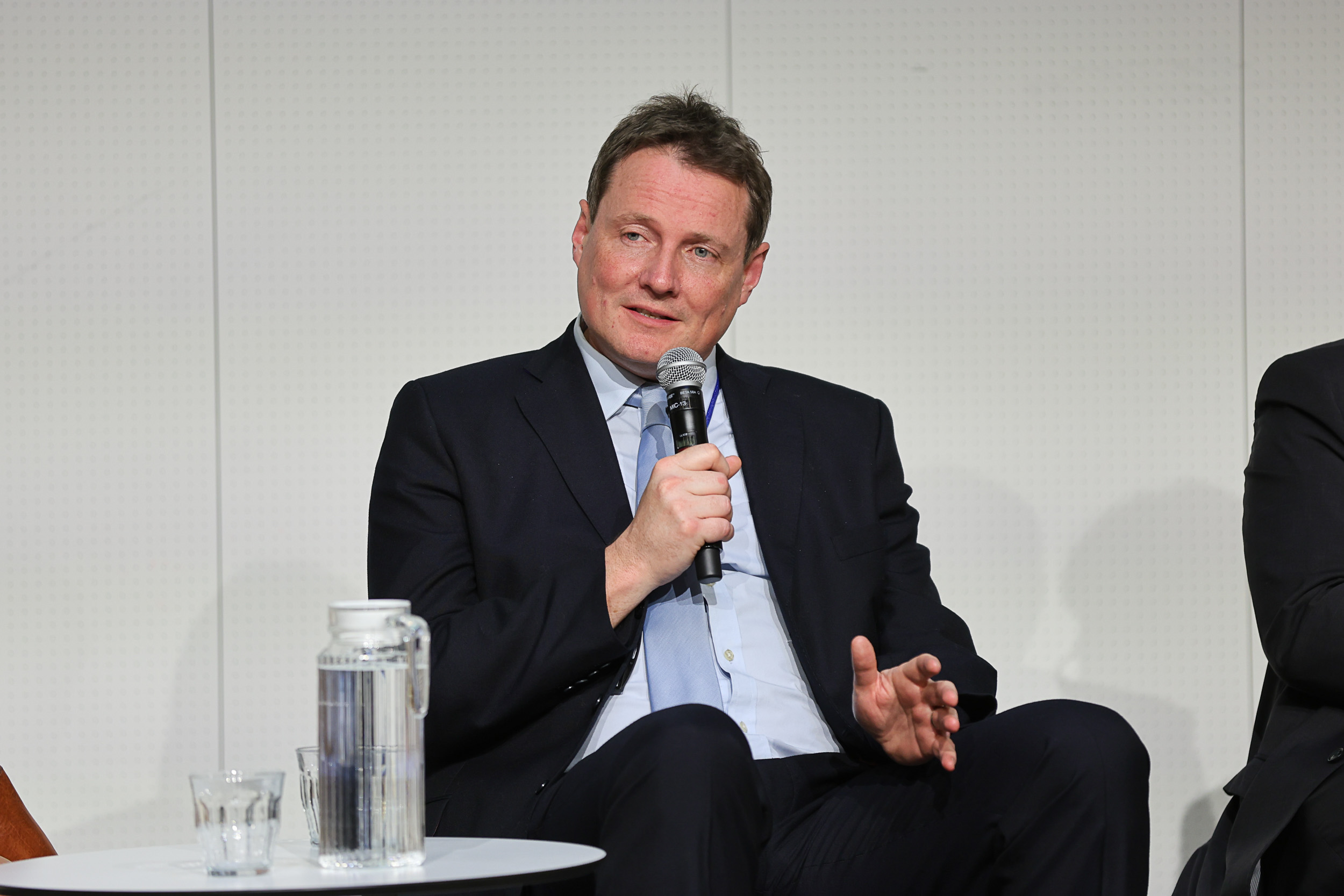
Tom Mitchell, Director, IIED
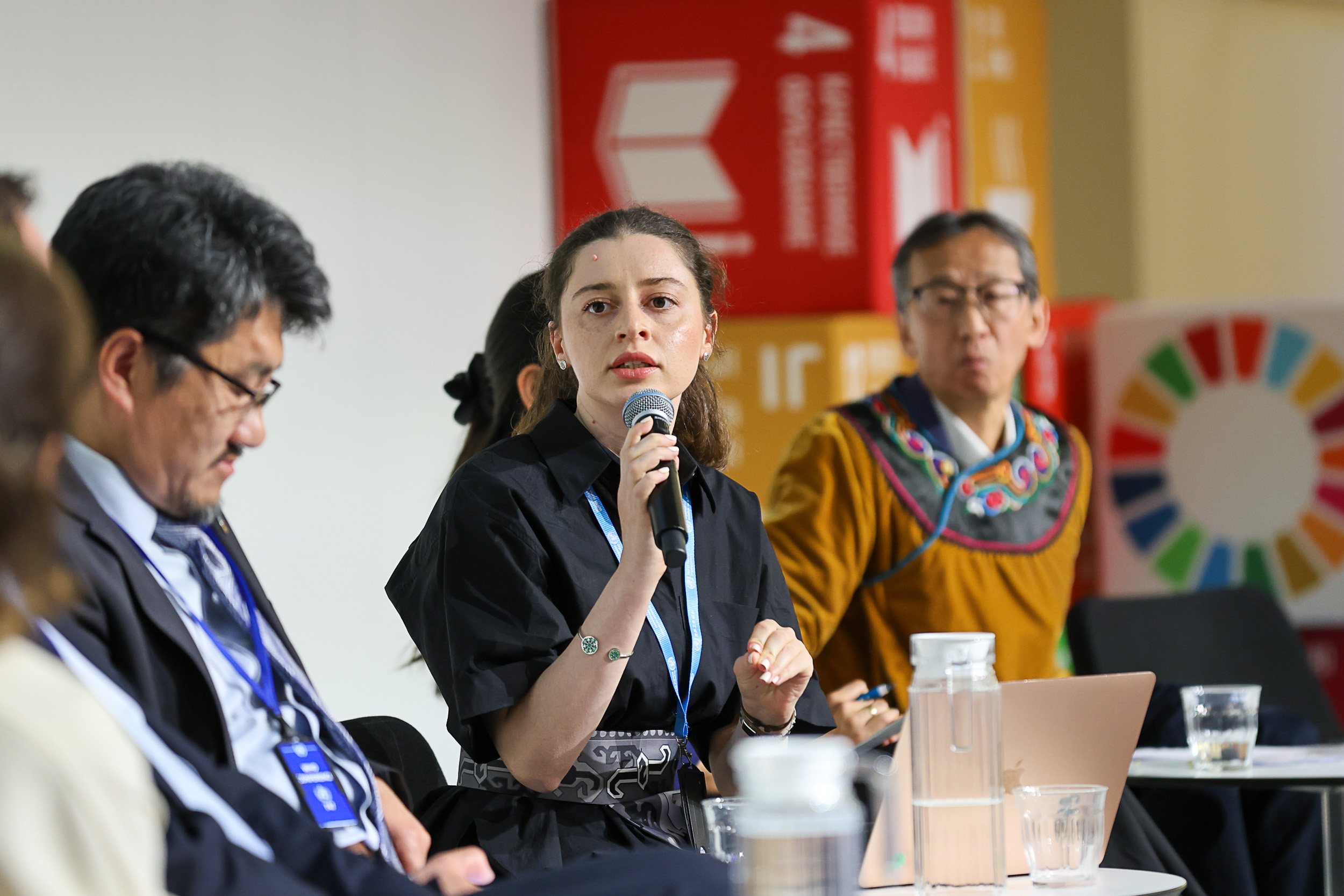
Zarifa Zulfugarova, Head of International Relations Department, Ministry of Youth and Sports, Azerbaijan
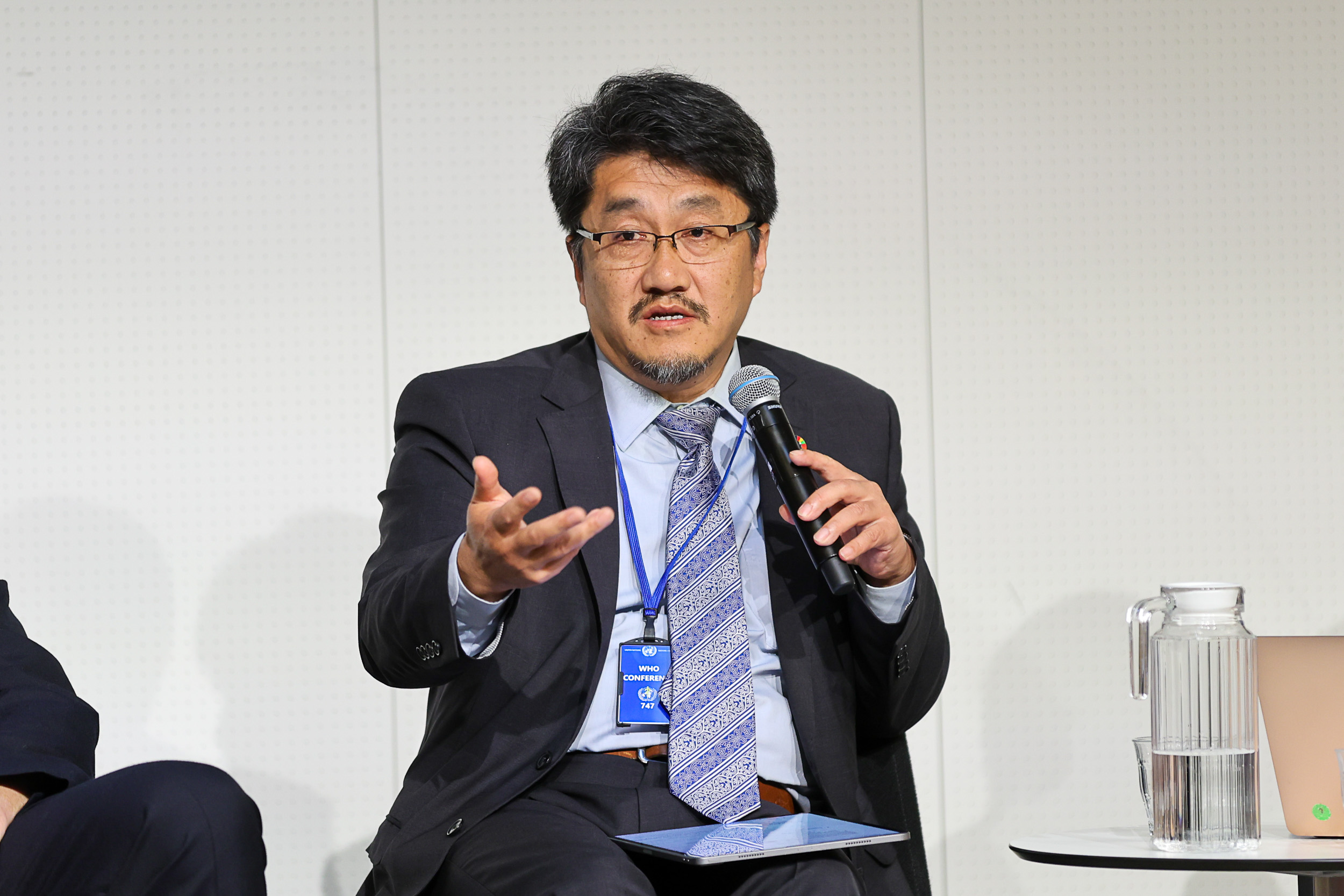
Xiaohua Zhang, Senior Director, China Programme, ClimateWorks Foundation
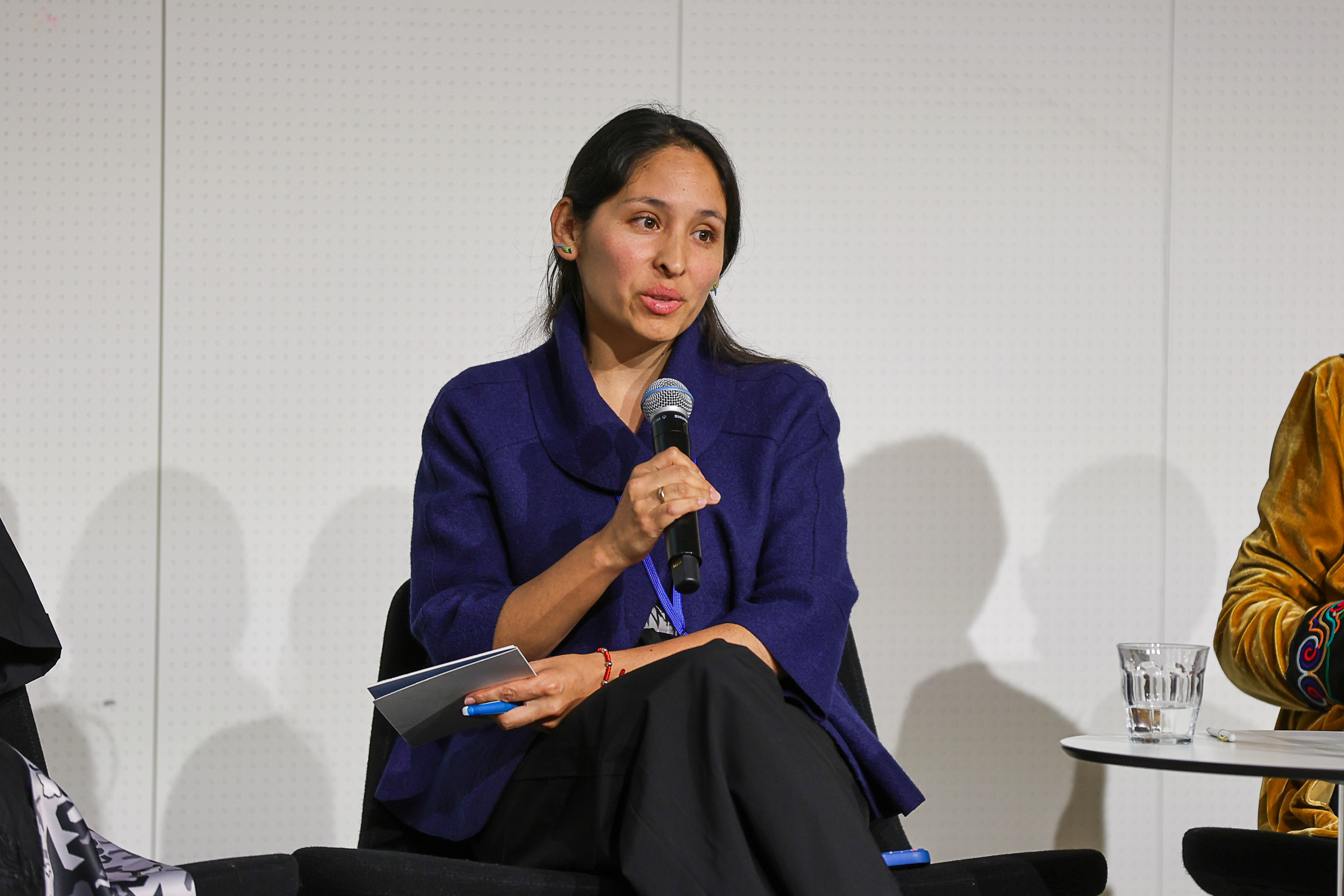
Daniela Sota Valdivia, Crime Prevention and Criminal Justice Officer, Corruption and Economic Crime Branch, UNODC
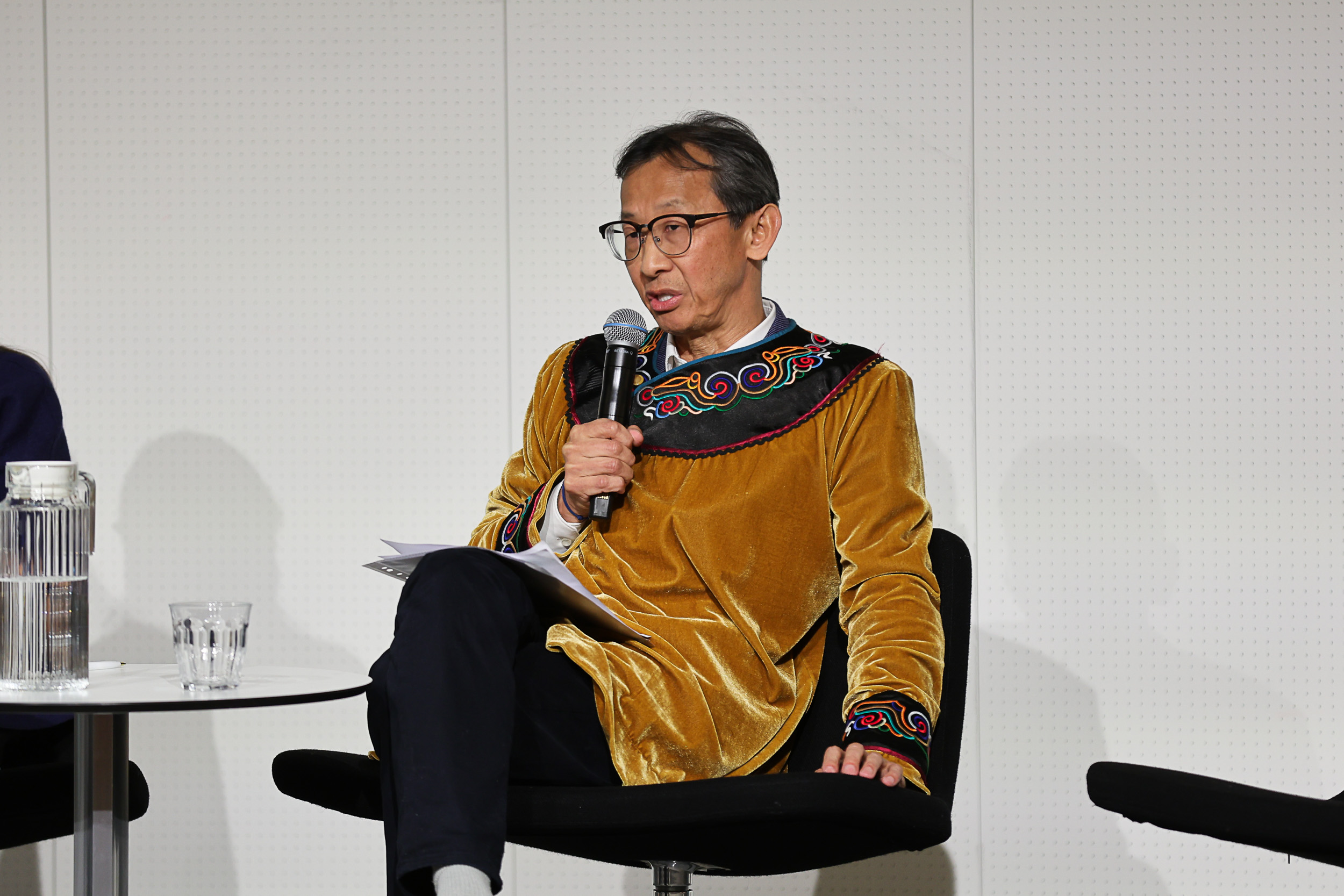
Rodion Sulyandziga, Chair, Indigenous Peoples Global Coordinating Committee
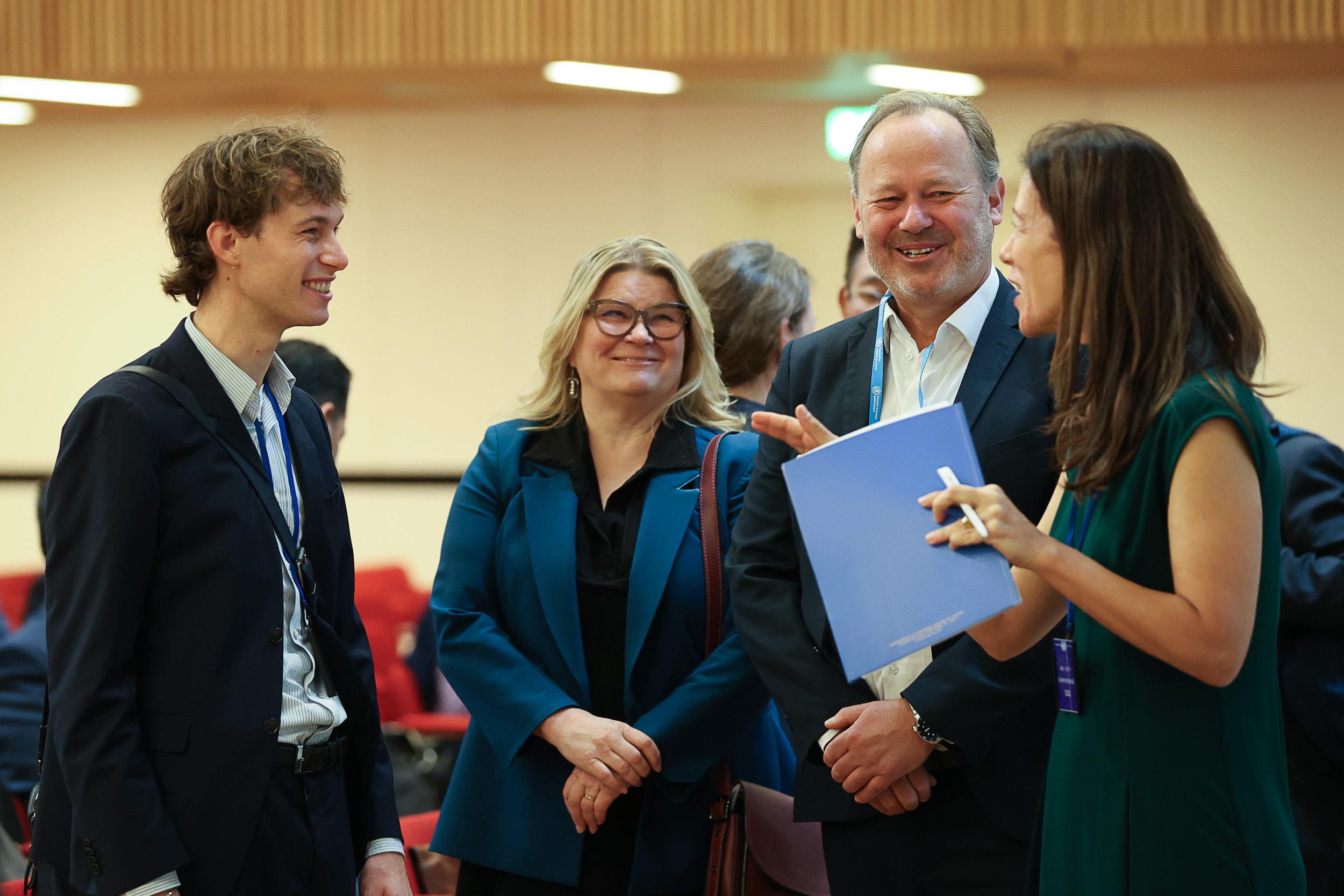
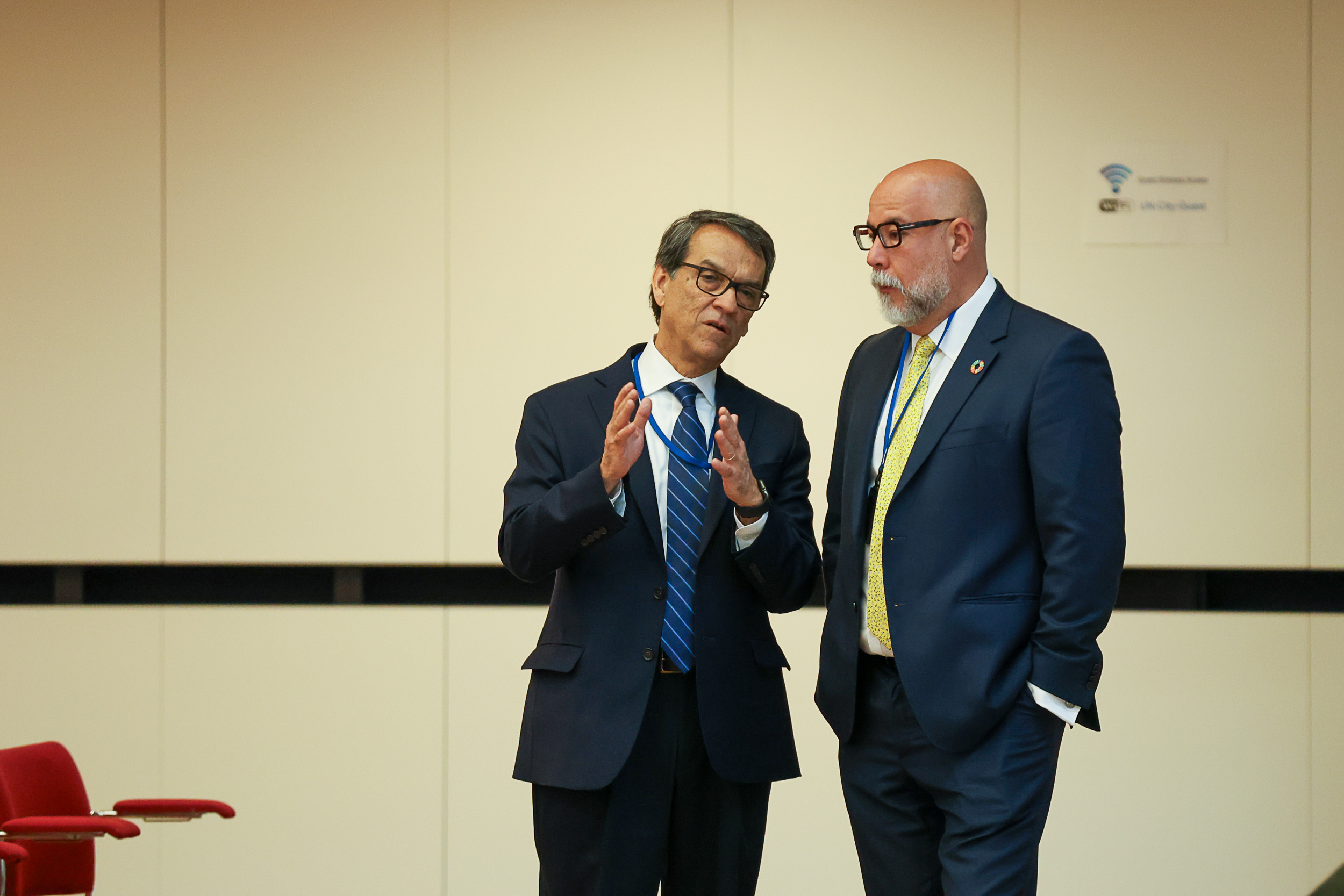
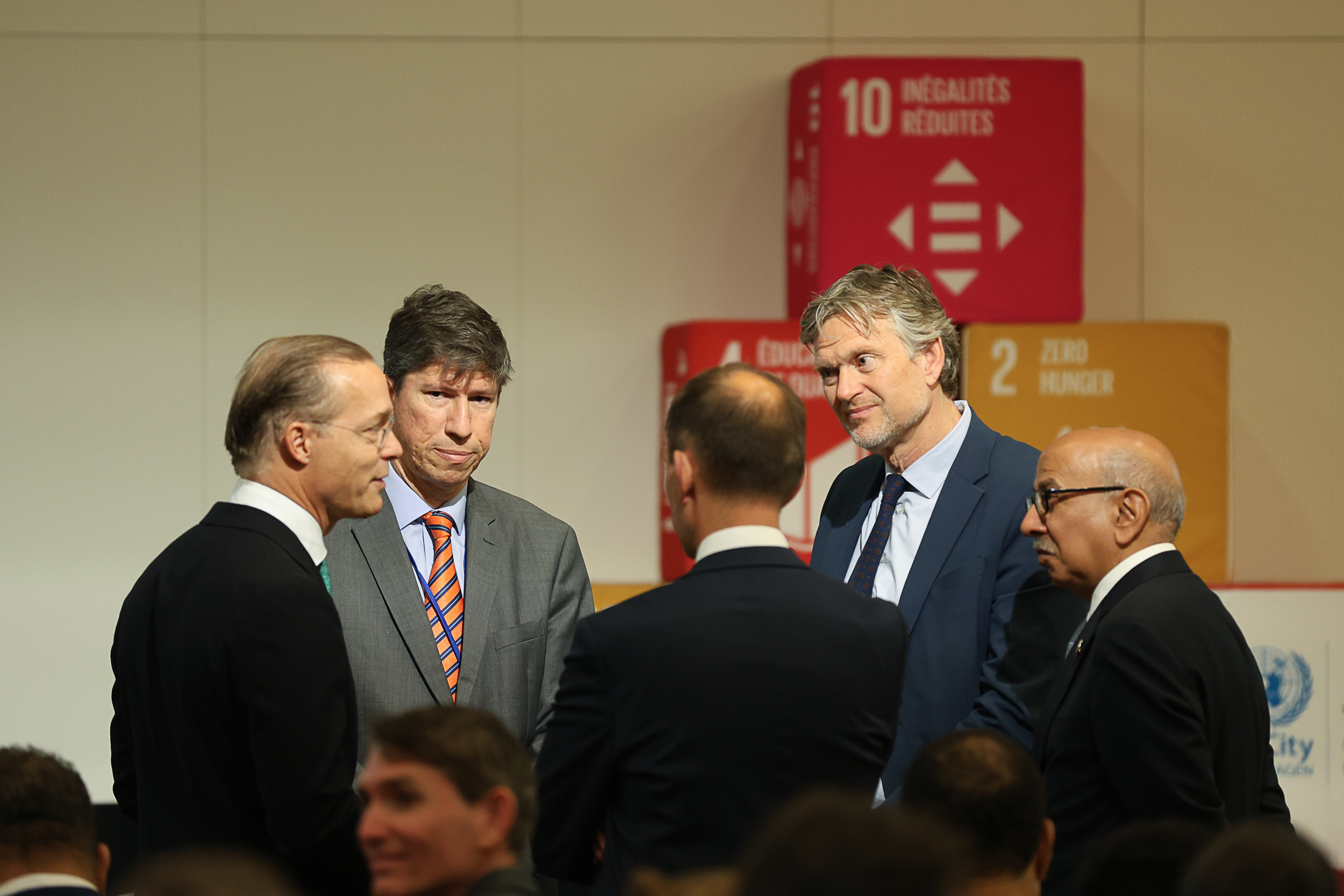
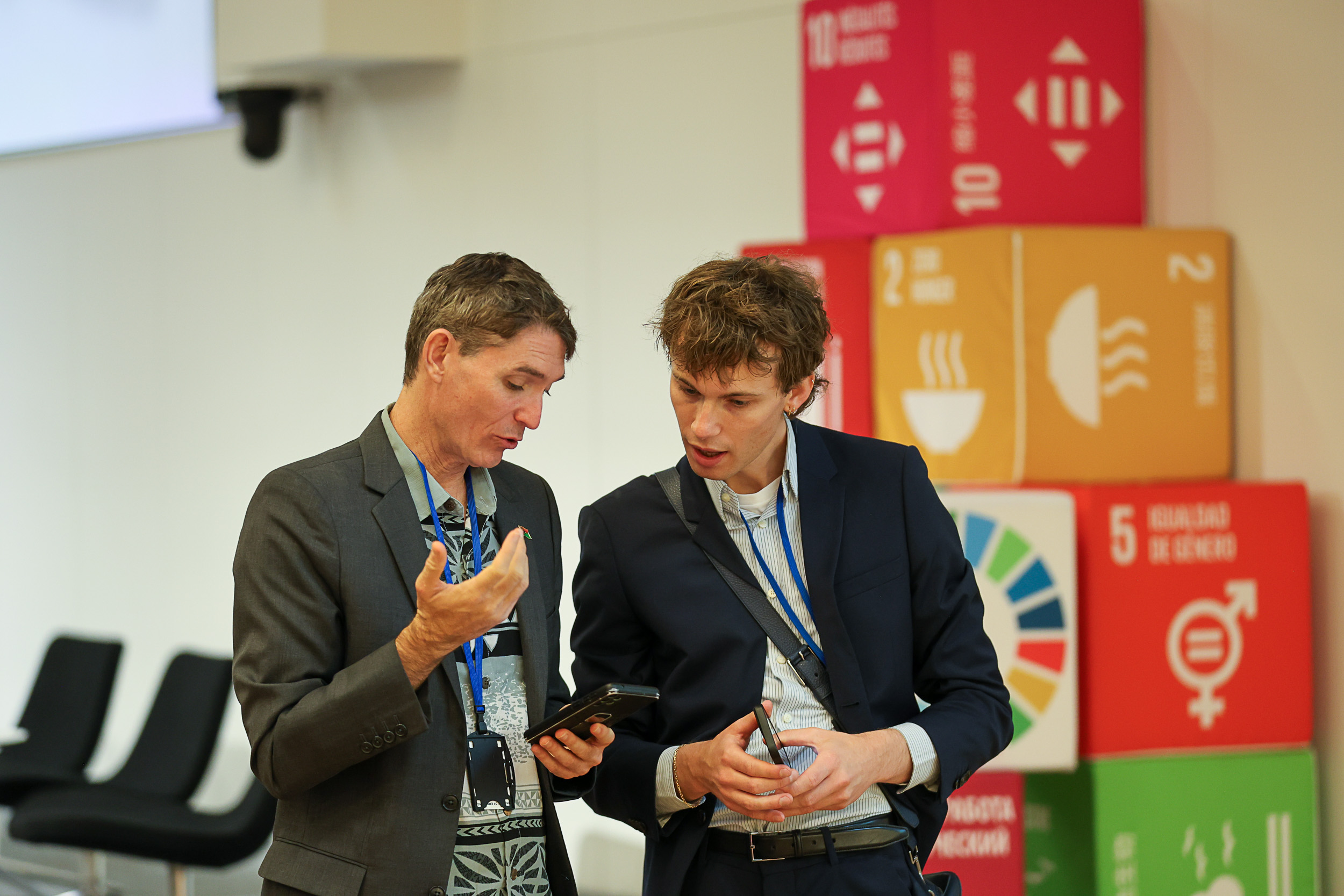
Between Sessions
Around the Venue