
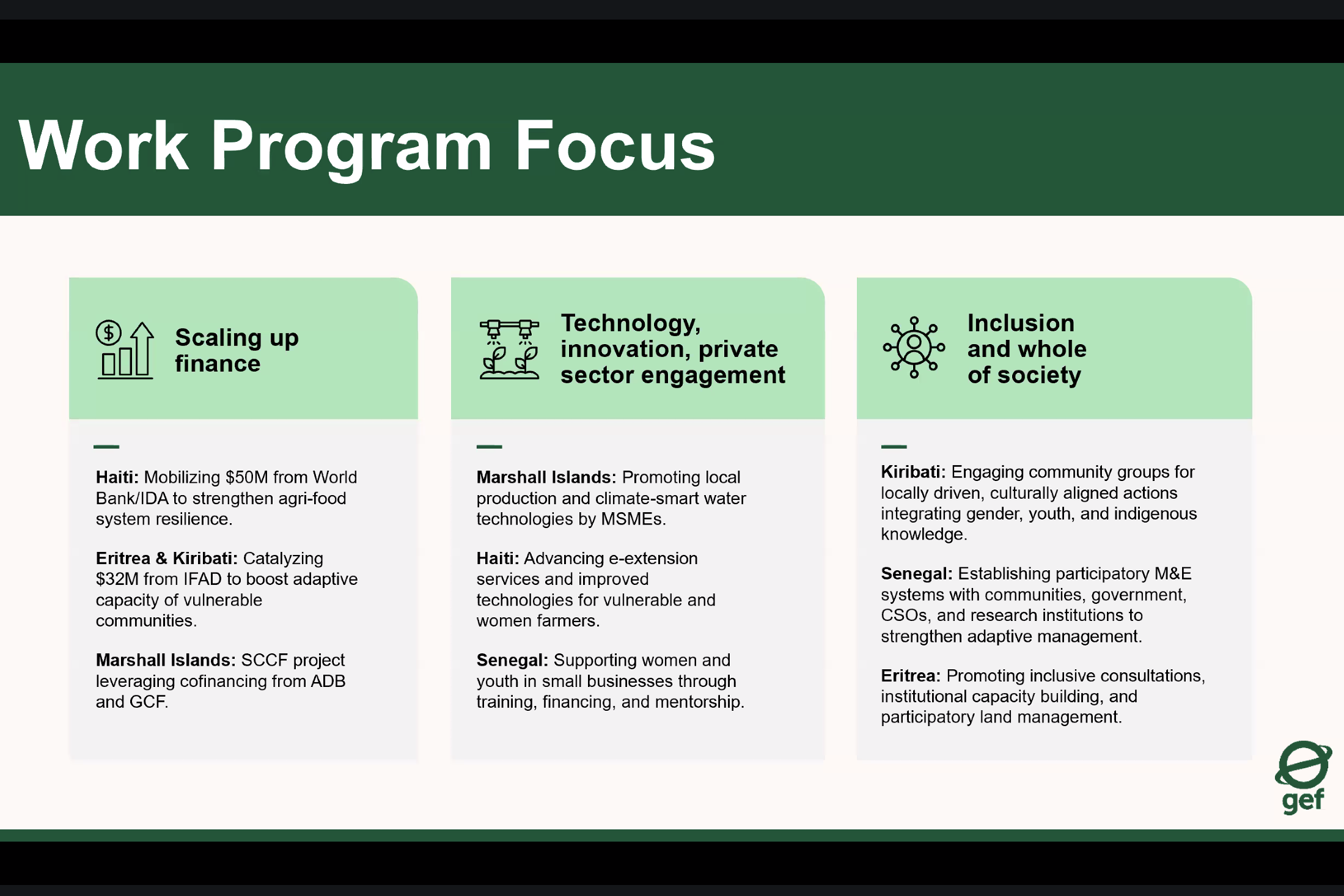
The 39th Meeting of the Least Developed Countries Fund (LDCF) and Special Climate Change Fund (SCCF) Council have approved a Work Program that will channel USD 52.26 million toward climate change adaptation priorities in four least developed countries (LDCs), two of which are also small island developing states (SIDS), and in one non-LDC SIDS. The Work Program is expected to mobilize an additional USD 116.84 million in co-financing, including nearly USD 90 million from international financial institutions.
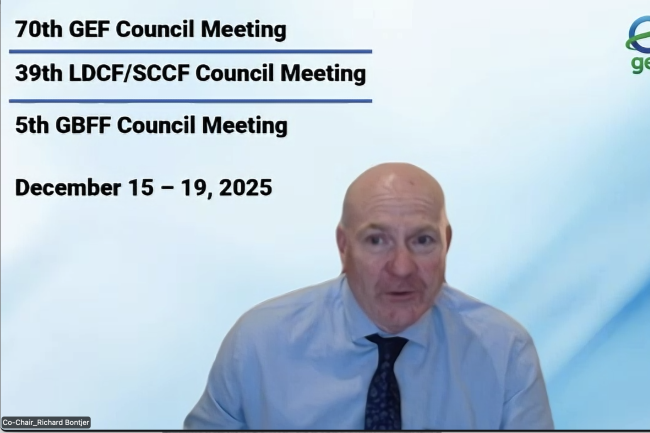
Council Co-Chair Richard Bontjer, Australia, opened the LDCF/SCCF Council meeting, highlighting that the two Pacific projects – in Kiribati and the Marshall Islands – included in the Work Program demonstrate that the GEF’s multi-trust fund modality is functioning effectively.
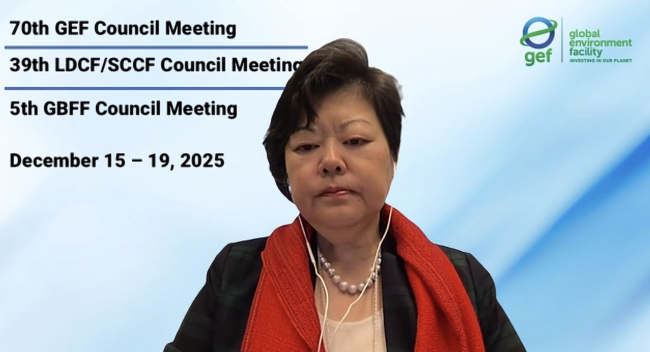
Chizuru Aoki, GEF Secretariat, presented the Work Program, noting it comprises four LDCF projects and one SCCF project, and has a strong emphasis on SIDS, which receive USD 33 million – more than 60% of total requested resources.
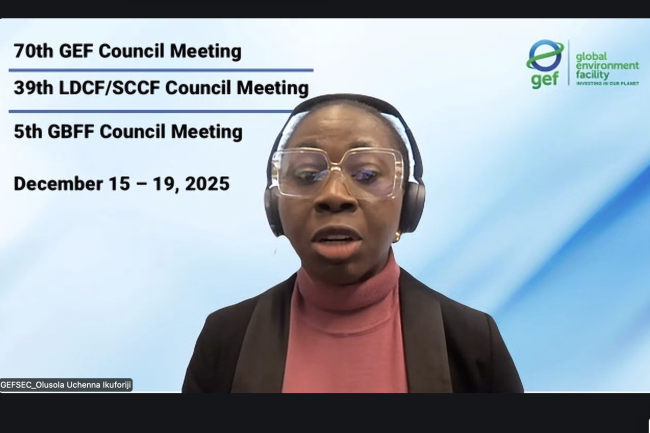
Olusola Ikuforiji, GEF Secretariat, expanded on the project concepts, noting an inclusive whole-of-society approach is woven throughout the project cycles, and that, on gender, the two funds reflect a deepening commitment to gender equality.
In terms of results, the five projects are expected to: deliver adaptation benefits to nearly 190,000 people; support 24 adaptation-related policies and plans; and engage 74 enterprises in climate adaptation and resilience actions.
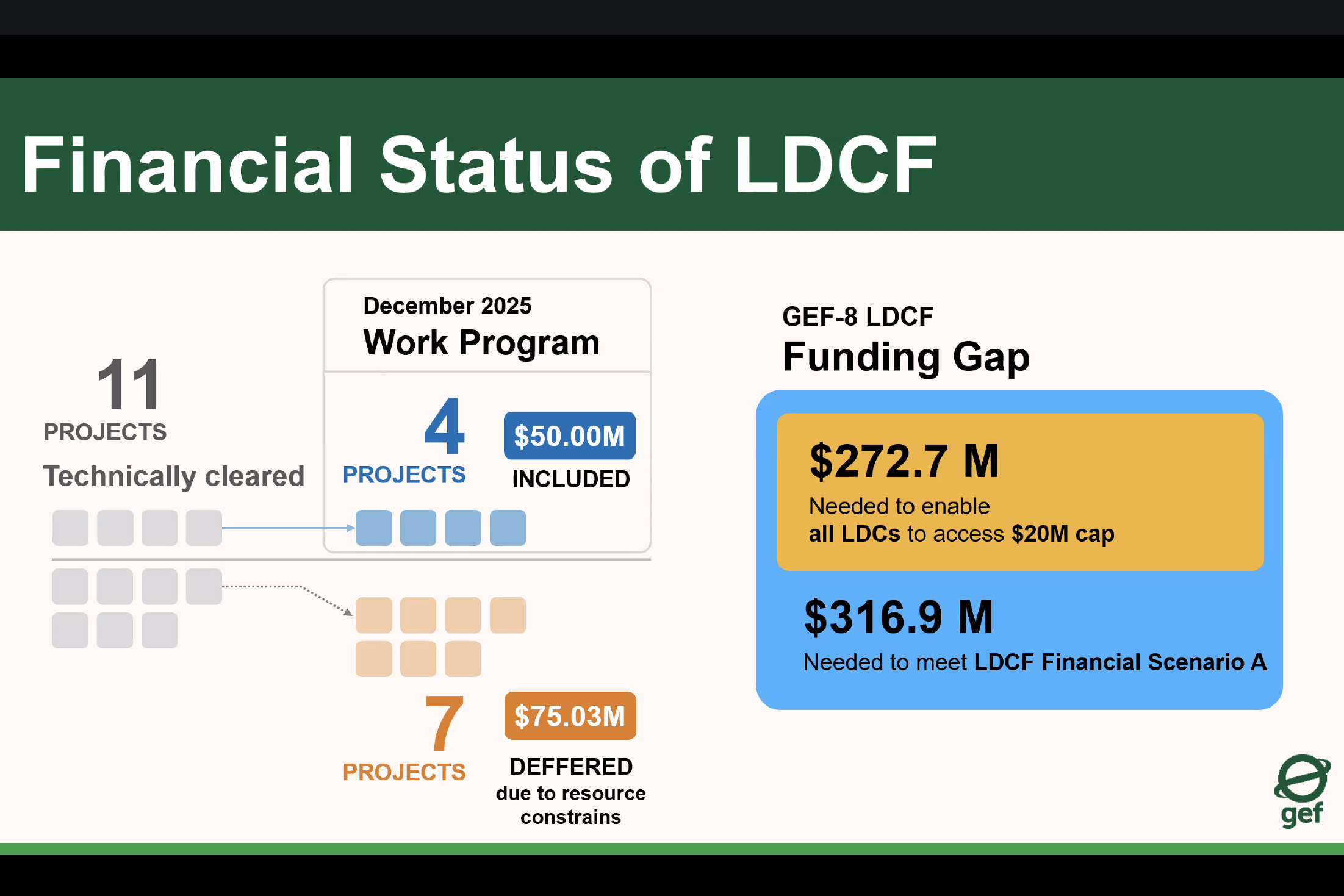
The Secretariat also highlighted the financial status of the LDCF, noting that while 11 projects had been technically cleared, only four could be included in the current Work Program due to resource constraints, leaving seven projects deferred. The Secretariat also reported on the need to address the LDCF funding gap of USD 272.7 million to enable all LDCs to access the USD 20 million cap, and USD 316.9 million to meet Financial Scenario A, underscoring the need for additional donor contributions.
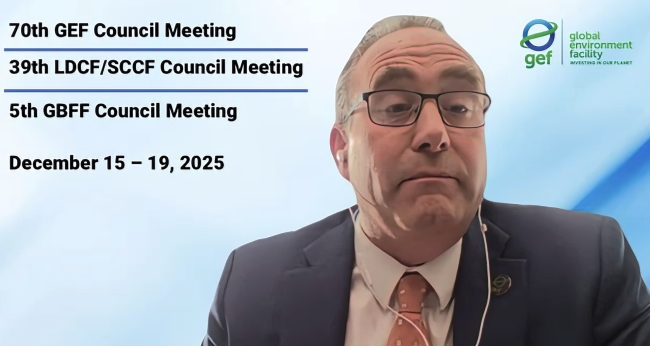
Jason Spensley and Ladu Lemi, GEF Secretariat, presented the LDCF/SCCF Progress Report, which covers the reporting period from 1 April to 30 September 2025. They highlighted that since inception, LDCF projects are expected to reduce vulnerability for 88.9 million people, with 5.89 million trained in adaptation planning and implementation, and 3,795 private-sector entities engaged across multiple sectors.
For the SCCF, they reported that projects are expected to reach 12.53 million direct beneficiaries, train 271,888 people, and support climate-resilient management of 5.3 million hectares of land, particularly in agriculture and sustainable livelihoods.
Council members welcomed the report, underscored progress toward achieving gender targets, and highlighted the SCCF’s important role in supporting innovation.
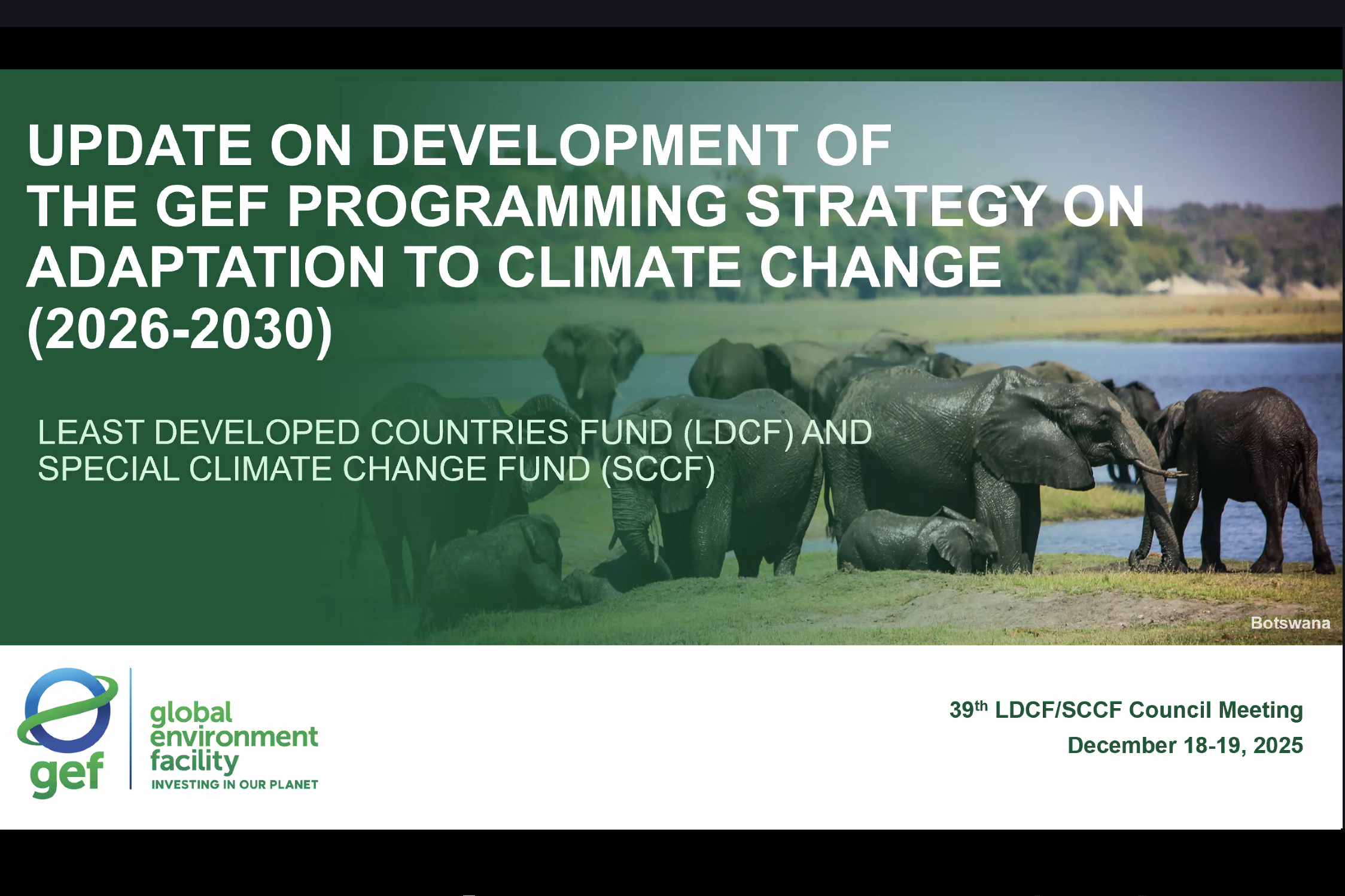
The Council also considered an update on the development of the GEF programming strategy on climate change adaptation for the LDCF and SCCF, as well as the funds’ Annual Monitoring Review for fiscal year 2025.
On the monitoring review, the GEF Secretariat reported strong portfolio performance across both funds. They highlighted key lessons, including the importance of:
- effective leadership and active stakeholder participation;
- adaptive management and open communication;
- institutional capacity and continuity, given the impact of staff turnover; and
- policy stability, as changes in government policies can significantly affect project implementation.
The LDCF/SCCF Council will continue its work on Thursday, followed by the fifth meeting of the Global Biodiversity Framework Fund (GBFF) Council.
Selected Images
Tshewang Dorji, GEF Secretariat
Adão Soares Barbosa, incoming Chair of the LDC Group

Nicolas Gundlach, Council member, Germany
Ravi Janjwadia, GEF Secretariat
Wampie Libon, Council member, the Netherlands
Sagar Aryal, GEF Civil Society Organizations (CSO) Network
Jonas Volden Weltan and Lauren Naville Gisnås, Norway
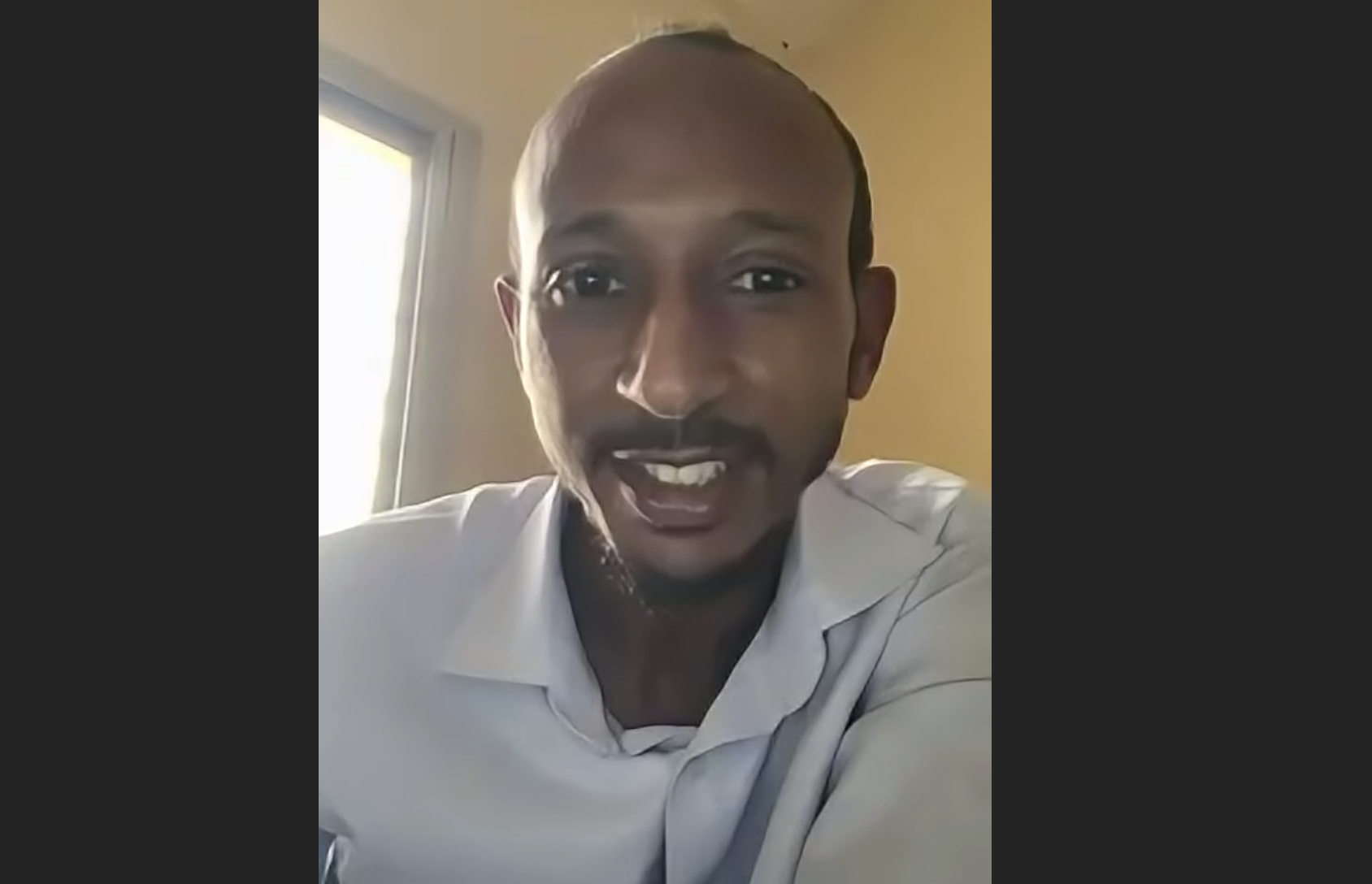
Aliou Mustafa, GEF Indigenous Peoples Advisory Group (IPAG)
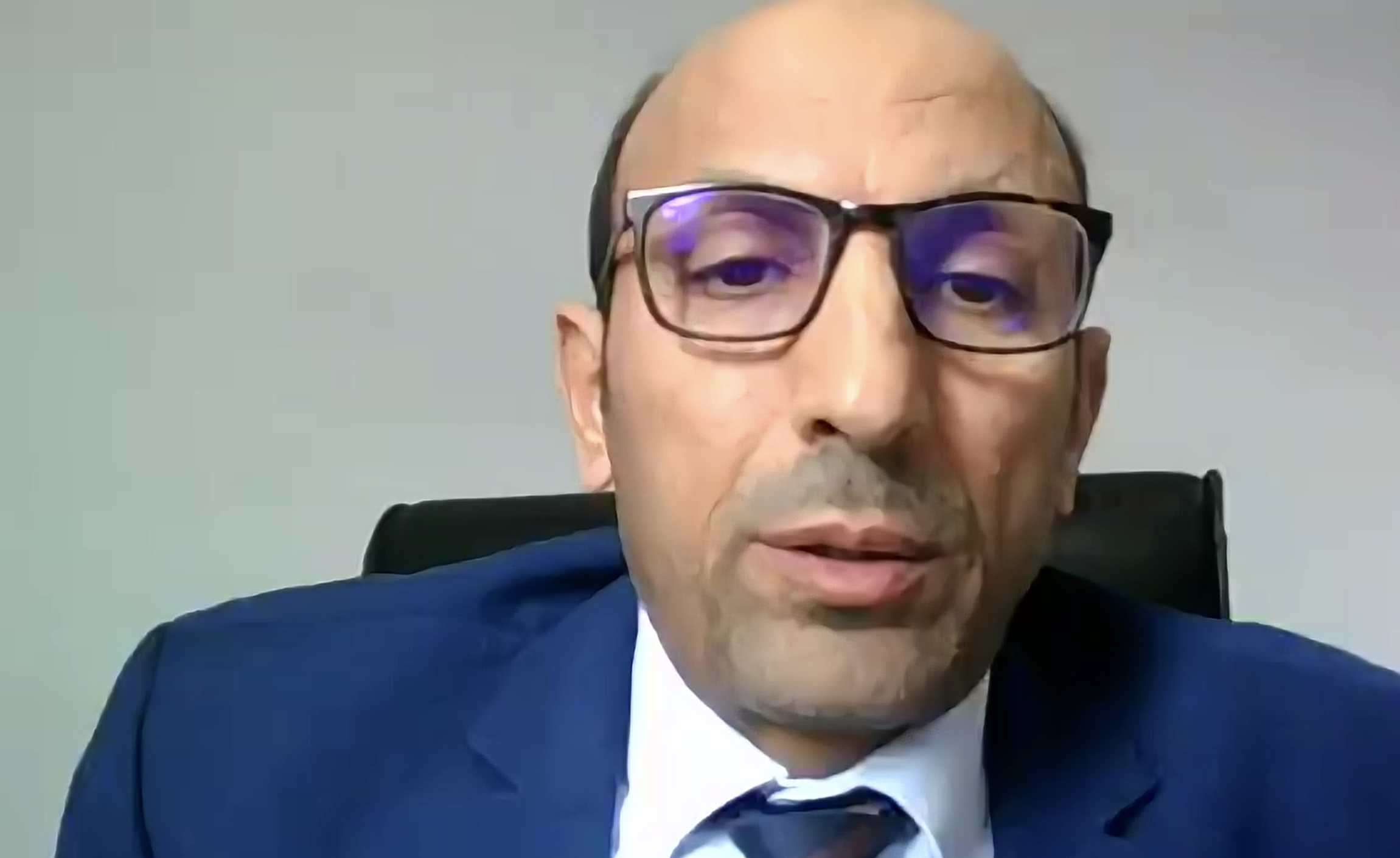
Rachid Firadi, Alternate Council member, Morocco
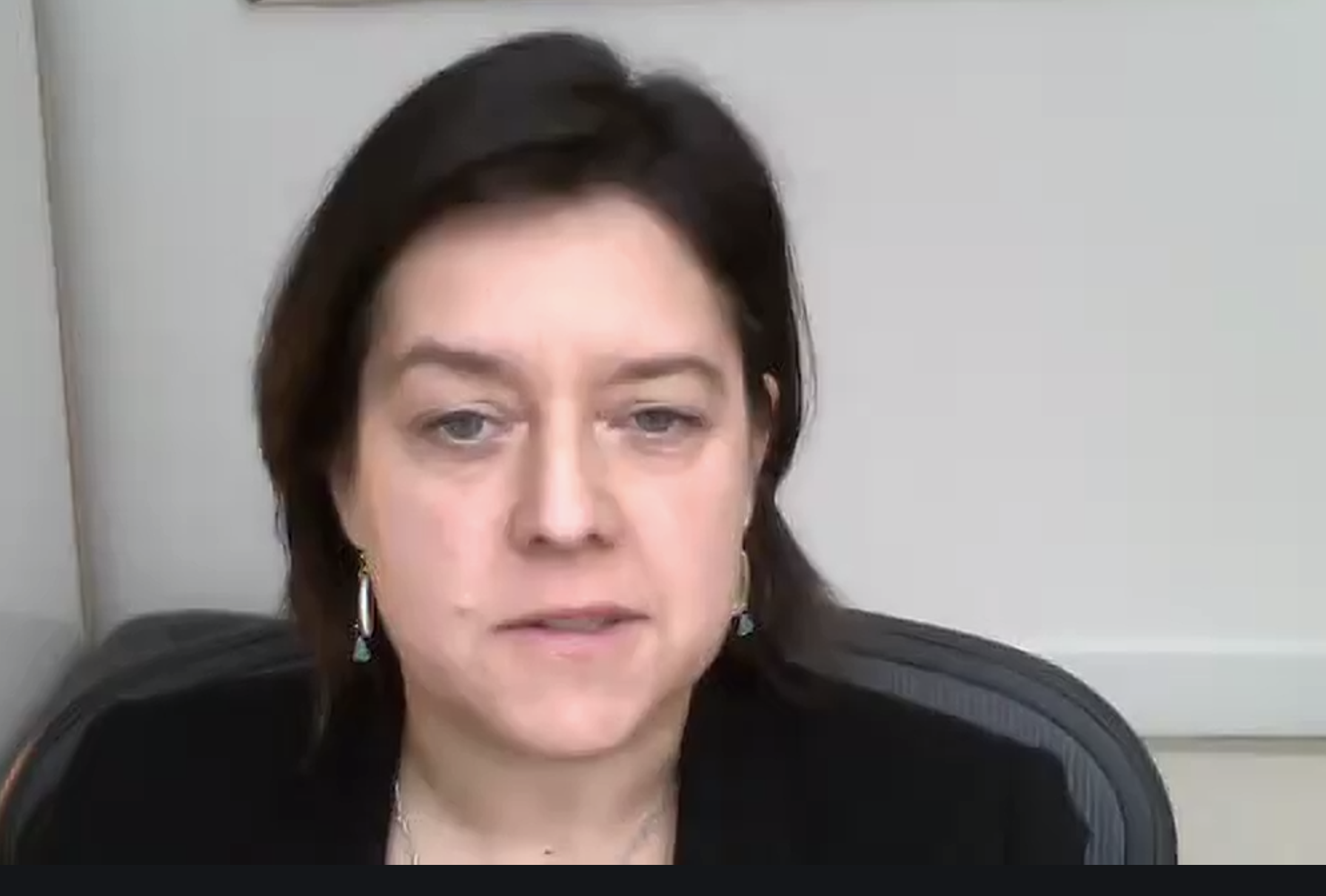
Catherine Potvin, Council member, Canada
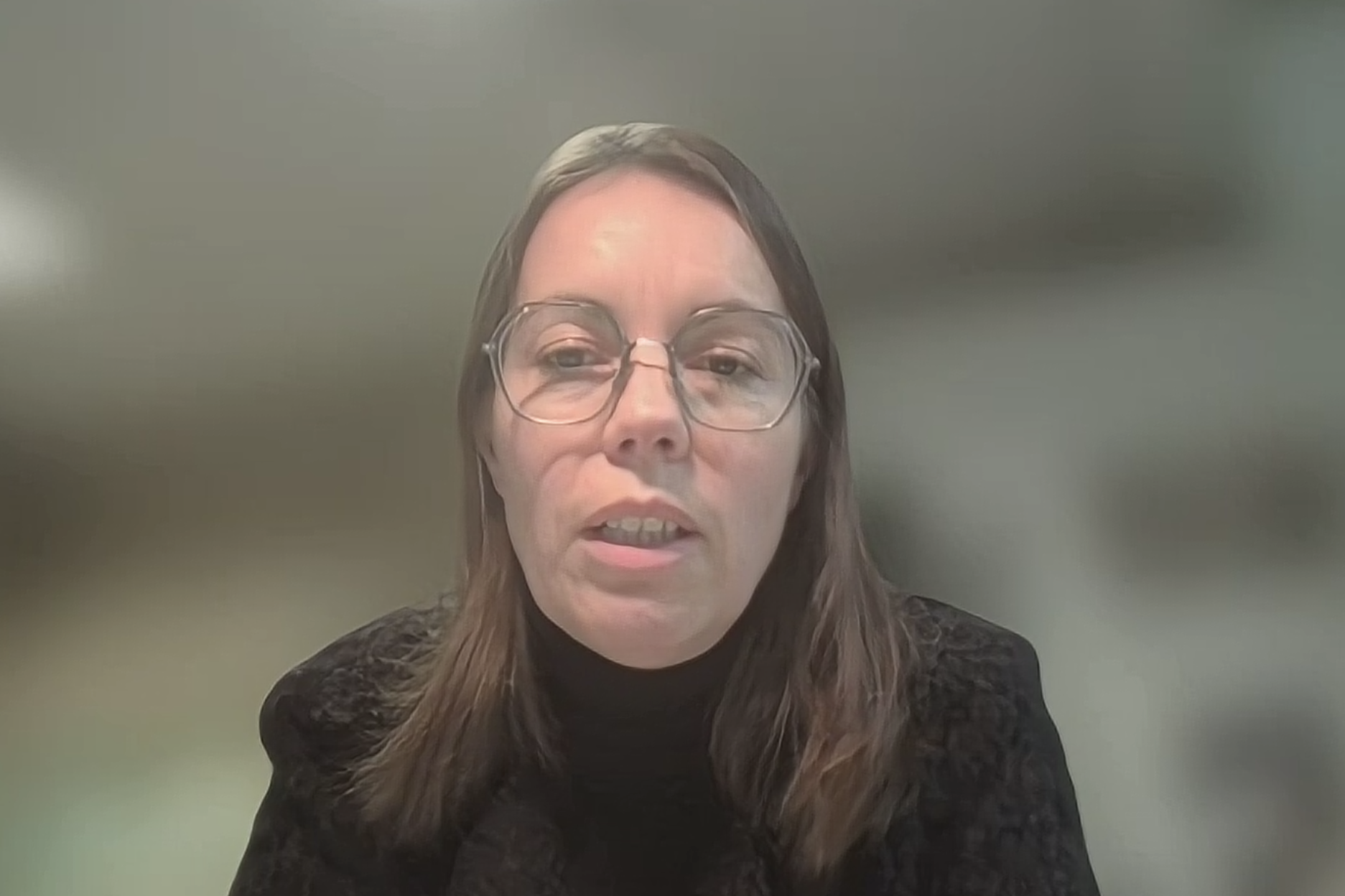
Stephanie Bouziges-Eschmann, Alternate member, France