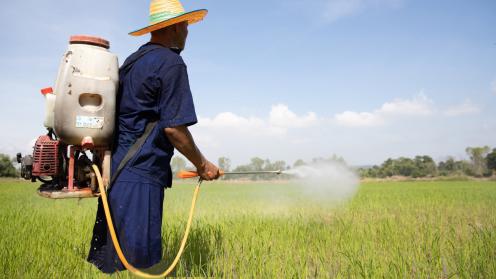
Not all pesticides present the same benefits or risks. There is growing recognition that highly hazardous pesticides (HHPs) cause severe and irreversible damage to human health and the environment. The Global Framework for Chemicals aims to phase out HHPs by 2035. The Food and Agriculture Organization (FAO) has worked to define HHPs and is part of several initiatives to reduce farmers’ exposure.
One FAO project on HHPs in Mozambique sought to understand farmers’ use and exposure. This project contributed to Mozambique banning several pesticides and, following its obligations to the Rotterdam Convention, submitting notifications of this regulatory act. Since the 17th session of the Chemical Review Committee (CRC), the Committee has tried to assess these notifications. It is a tricky set. Each has varying information available on farmers’ exposure to the specific pesticides, because the project prioritized some chemicals over others. Some substances were only registered for veterinary uses, but the survey asked about crops. As a few members noted, farmers use substances at hand, regardless of how national legislation may register them.
CRC again debated these notifications at length. It set aside one pesticide, methidathion, where additional information provided by Mozambique showed that it was not imported to the country, and, therefore, it was difficult to conclude that farmers were using and exposed to it. Members seemed to agree that carbaryl meets the Convention’s criteria because it was shortlisted and, therefore, more information was gathered on how farmers use, and are exposed to, the pesticide. A few observers disagreed, saying that the information was about pesticides generally, not carbaryl specifically. Disagreement remains on the notifications for five pesticides.
Members agreed that the EU’s notifications for three pesticides - methiocarb, chlorothalonil, and diazinon - met the criteria to be included in the Rotterdam Convention’s prior informed consent (PIC) procedure. But no further action can be taken yet: the Convention requires two countries, from two different PIC regions, to provide notifications that meet the criteria.
Selected Images
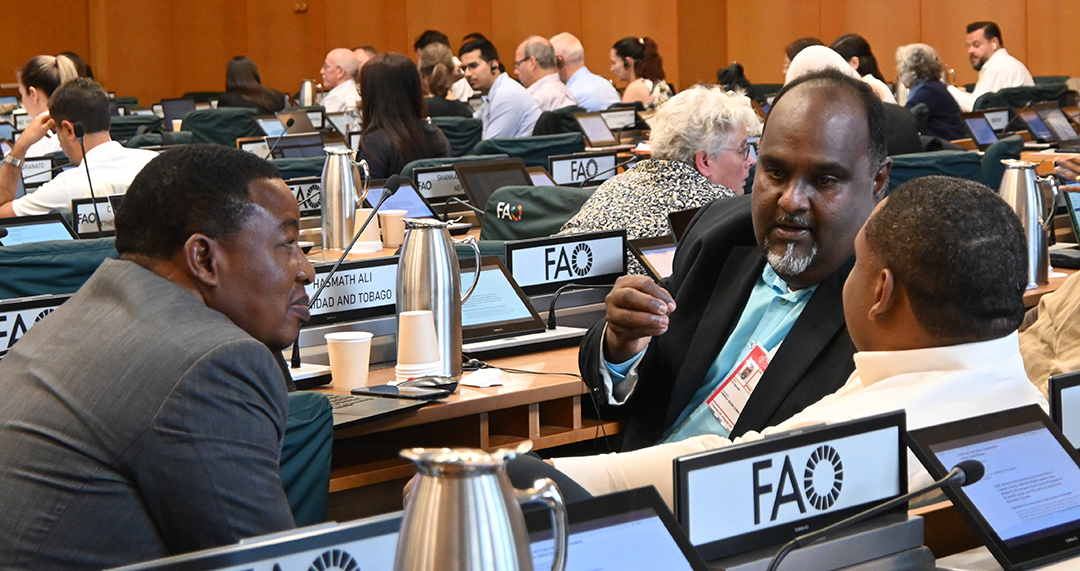
RC members Daniel Ndiyo, Tanzania, and Hazmath Ali, Trinidad and Tobago, speak with Stephen Sangster, Belize.

CRC member Joseph Edmund, Ghana
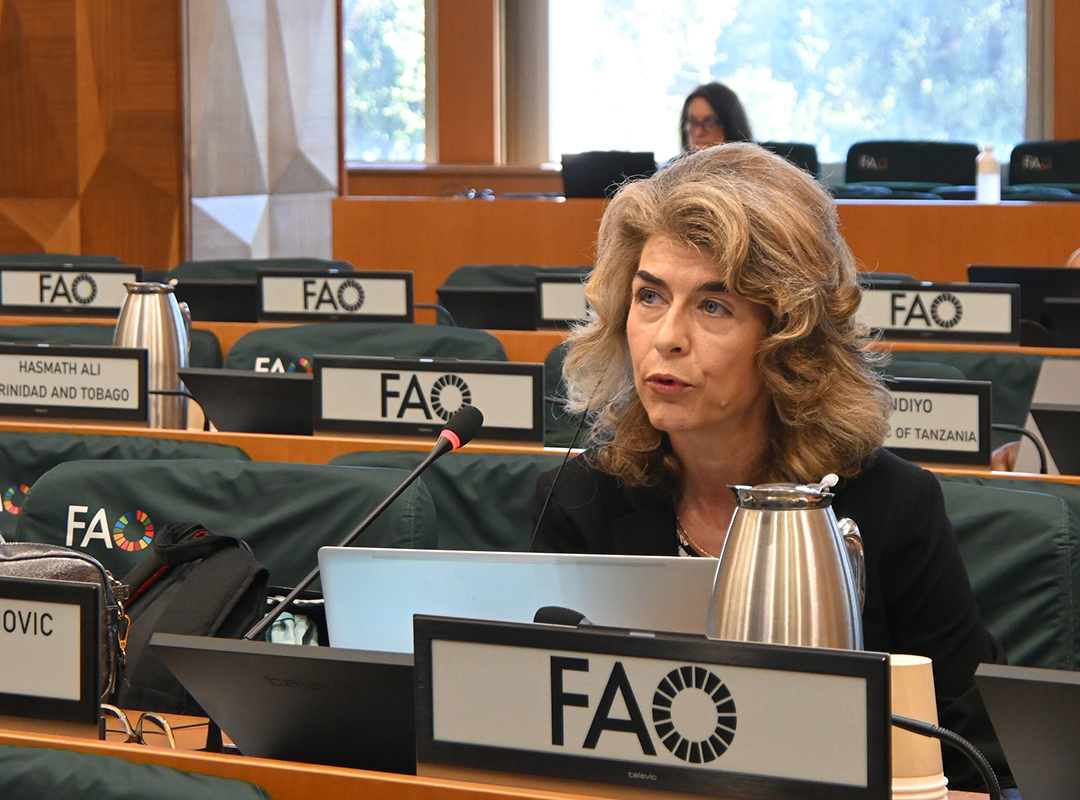
CRC member Suzana Andrejevic Stefanovic, Serbia
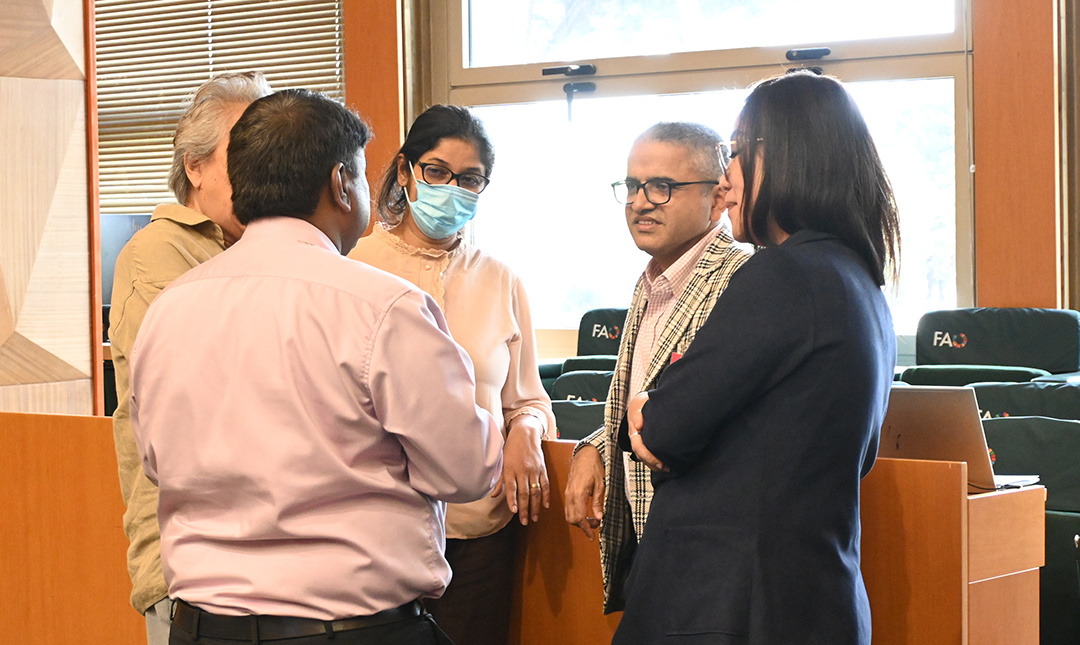
CRC members from the Asia Pacific Region