Global Crop Diversity Day is an event organized to highlight the importance of crop diversity and to discuss how to protect it for future food security. The 2025 event took place in Lima, Peru, on the eve of the Governing Body meeting of the International Treaty on Plant Genetic Resources for Food and Agriculture (ITPGRFA).
Focusing on cryopreservation and the promotion of opportunity crops to strengthen the conservation and use of crop diversity, Global Crop Diversity Day 2025 featured:
- The first deposit for the new cryo genebank of the International Potato Center (CIP);
- The launch of Vegetables4Life, a global initiative to promote vegetable biodiversity; and
- Expert discussions on strengthening the global system through innovation and collaboration.
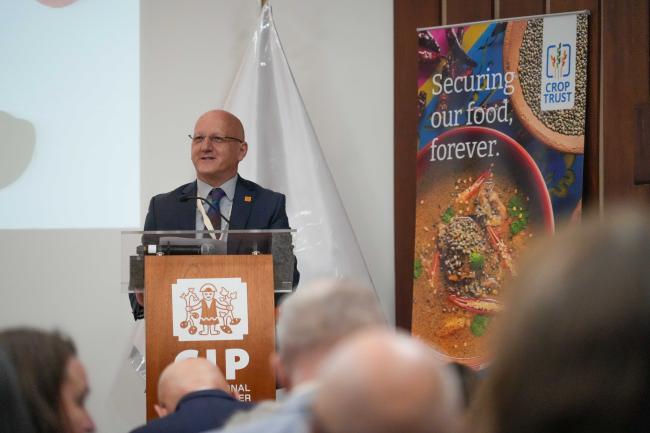
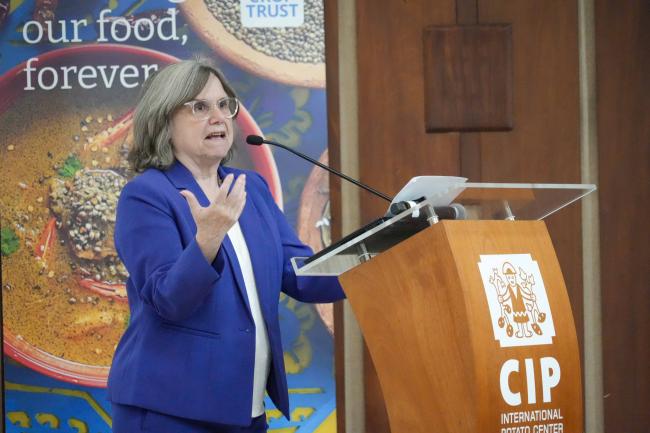
Joel Ranck, Head of Communications at CIP, opened the event. Simon Heck, CIP Director General, highlighted efforts by Peru’s government, communities and research institutes to conserve, share, and utilize biodiversity.
Kent Nnadozie, ITPGRFA Secretary, expressed hope that the innovation and collaboration showcased will feed into the work of the upcoming meeting of the ITPGRFA Governing Body, adding that “shared heritage comes with shared responsibilities.”
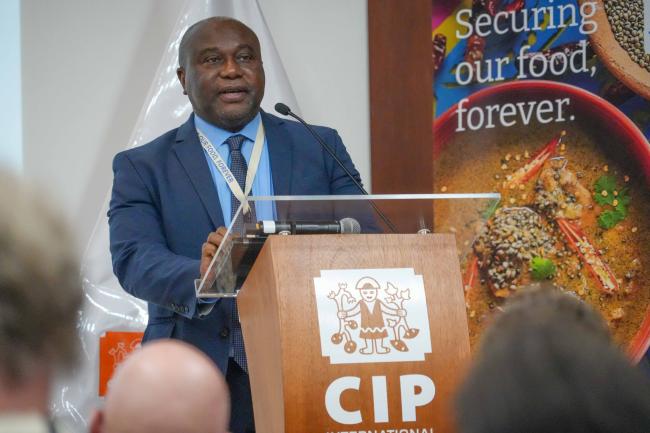
Closing the Gap in the Global Genebank System
Moderated by Heike Baumüller, Crop Trust, this session addressed challenges faced by genebanks and possible solutions. Highlighting the milestones in the global genebank system, Geoffrey Hawtin OBE, 2024 World Food Prize Laureate, drew attention to the 1996 Leipzig Conference on Plant Genetic Resources, the adoption of the ITPGRFA, and the establishment of the Svalbard Global Seed Vault.
Addressing the evolution of research capacities, Sandra Cristina Kothe Milach, CGIAR Chief Scientist, highlighted the importance of advancements in cryopreservation for clonally propagated crops.
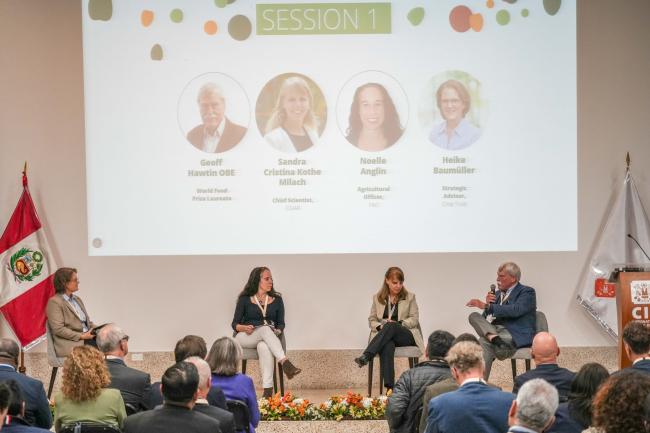
Noelle Anglin, FAO Commission on Genetic Resources for Food and Agriculture, drew attention to the main improvements in the genebank system, including common standards for conservation and documentation, quality management, and improvement of database systems.
Panelists stressed the need to enhance utilization of genebank materials, ensure funding and capacity-building, and improve data interoperability. They further highlighted the role of the ITPGRFA Multilateral System (MLS) of access and benefit-sharing in not only sharing material but also attracting funding.
Cryopreservation: From a Regional Hub to a Global System
Rainer Vollmer, CIP, presented CIP’s Cryo Vault inaugurated in November 2024, highlighting its contribution to conservation of clonal crops and cost efficiency. On live streaming from the Cryo Vault, participants witnessed César Tapia, Instituto Nacional de Investigaciones Agropecuarias (INIAP), Ecuador, making the first safety backup deposit of 15 groundnut and four potato accessions.
Joachim Langbein, Deutsche Gesellschaft für Internationale Zusammenarbeit (GIZ), drew attention to Germany’s funding for cryopreservation for clonal and recalcitrant crops. Highlighting the successful launch of the Latin American hub, Sarada Krishnan, Director of Programs, Crop Trust, called for funding to secure the long-term conservation of clonal crops in Africa and Asia.
Diversifying Production Systems for Resilience and Food Security: The Role of Opportunity Crops
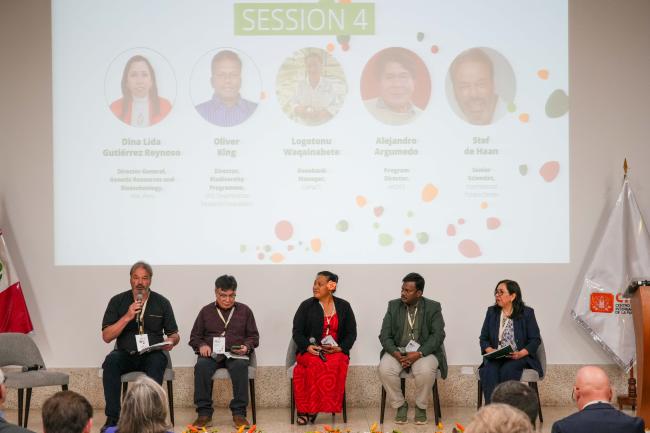
A panel facilitated by Stef de Haan, CIP, discussed how neglected opportunity crops can strengthen resilience, diversify diets, increase income, and support sustainable farming systems.
Dina Lida Gutiérrez Reynoso, Director General of Genetic Resources and Biotechnology, Instituto Nacional de Innovación Agraria (INIA), Peru, shared examples of INIA strategies of ex situ and in situ conservation, including on tropical fruits such as camu camu. Oliver King, MS Swaminathan Research Foundation, highlighted their work with tribal communities on on-farm conservation across the value chain.
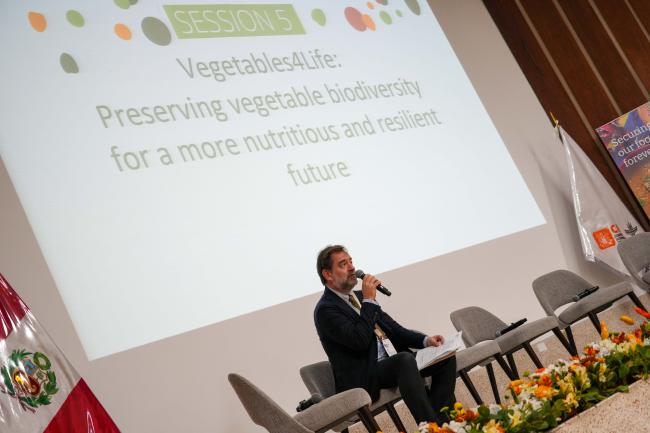
Logotonu Waqainabete, Pacific Community's Centre for Pacific Crops and Trees, stressed that diversifying goes beyond the production system, to touch upon health, culture, and livelihoods.
Alejandro Argumedo, ANDES, urged developing a system that builds close collaboration between in situ and ex situ conservation, bridges knowledge systems, and allows for genebank accessions to continue evolving in farmers’ fields. He proposed a global network of in situ sites and communities connected to food-producing ecosystems, which could be linked to global genebanks.
Panelists discussed criteria for prioritization of opportunity crops conservation, highlighting cultural and spiritual aspects, resilience, and nutritional value.
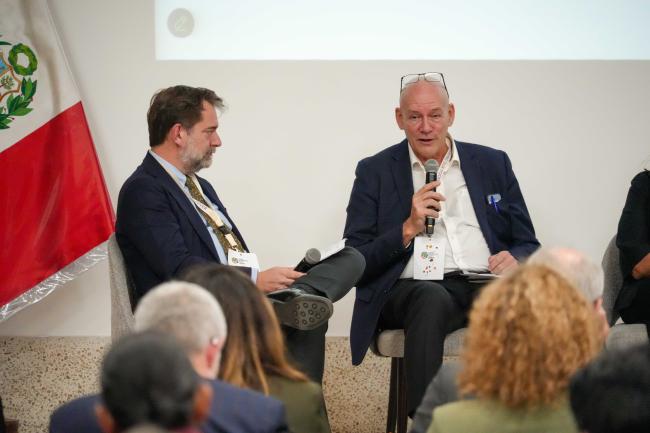
Vegetables4Life
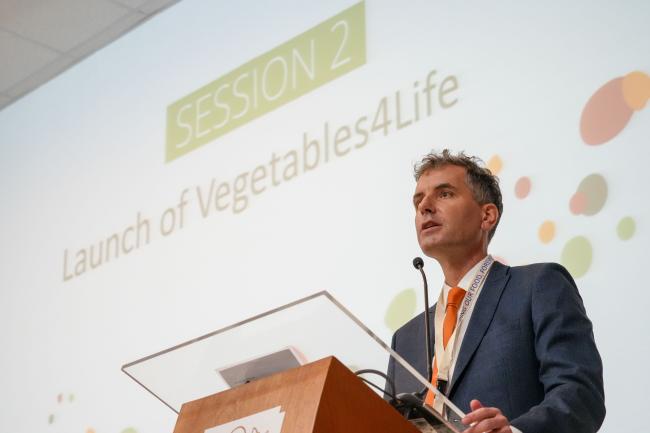
Drawing attention to the rapid loss of vegetable biodiversity and the health risks associated with low vegetable consumption, Maarten van Zonneveld, World Vegetable Center, launched Vegetables4Life, a 10-year global initiative led by the World Vegetable Center.
Colin Khoury, New York Botanical Garden, called for a global movement aiming to reverse loss of vegetable biodiversity and improve nutrition for all. Stefan Schmitz, Executive Director, Crop Trust, stressed rescuing, conserving, and using vegetable genetic resources to enable development of varieties that are resilient, healthy, and affordable.
Experts from Africa and Latin America reported on progress made and the way forward, Sognigbe N’Danikou, World Vegetable Center, presented on the African Vegetable Biodiversity Rescue Plan 2025-2034.
Bettina Heider, CIP, presented the roadmapr co-designing a regional strategy for vegetable conservation in the Americas. Sarada Krishnan, Crop Trust, stressed the importance of the initiative for both cultivation and nutrition. Daniel van Gilst, Norwegian Agency for Development Cooperation, drew attention to mobilizing resources from new sources, such as military budgets.
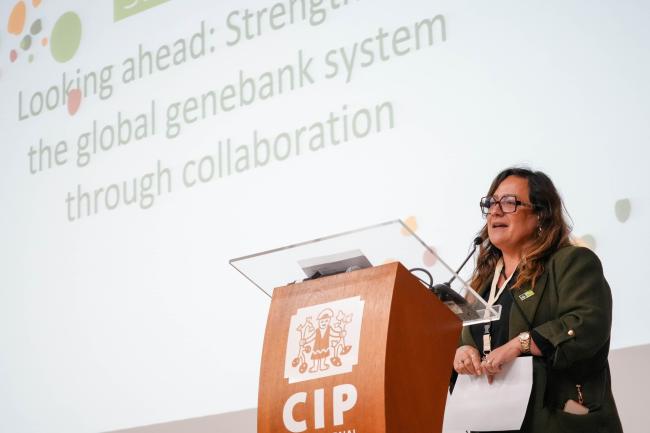
Looking Ahead: Strengthening the Global Genebank System through Collaboration
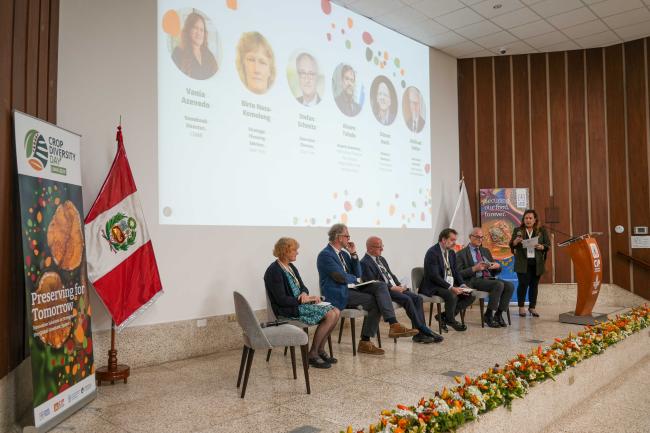
Concluding the day’s discussions, a panel facilitated by Vania Azevedo, CGIAR Genebanks Director, explored how collaboration can help build a more resilient global genebank system. Azevedo highlighted gaps related to sustained funding, political support, access to data and interoperability, use of technologies, and better linkage to farmers.
Marie Noelle Ndjiondjop, Africa Rice, reported on the recently concluded CGIAR Annual Genebank Meeting, which highlighted the challenges faced by genebanks and explored opportunities for innovation and collaboration.
Michael Keller, Secretary General, International Seed Federation, discussed ways to incentivize private sector engagement in crop conservation, calling for trust and better collaboration with the CGIAR. Birte Nass-Komolong, Papua New Guinea National Agricultural Research Institute, called for improving communication to foster collaboration between national and international partners.
Álvaro Toledo, ITPGRFA Deputy Secretary, addressed the necessary policy changes to foster global collaboration and better access, highlighting the need for the ITPGRFA to adapt to the evolution of both plant sciences and the policy environment.
Simon Heck, CIP Director General, stressed regional strategies, mobile technologies, and common metrics and language on crop diversity’s value. With Stefan Schmitz, Executive Director, Crop Trust, they presented new initiatives linked to the Genebank Academy and the Global Biodiversity Digital Hub.
In view of the upcoming ITPGRFA Governing Body meeting (GB 11), Alwin Kopse, GB 11 Chair, stressed the need to finalize the revision of the MLS and give users the opportunity to invest in conservation of plant genetic resources.
To receive free coverage of global environmental events delivered to your inbox, subscribe to the ENB Update newsletter.
All ENB photos are free to use with attribution. For the Crop Diversity Day 2025, please use: Photo by IISD/ENB | Andrés Felipe Carvajal Gómez
Crop Diversity Day Sessions
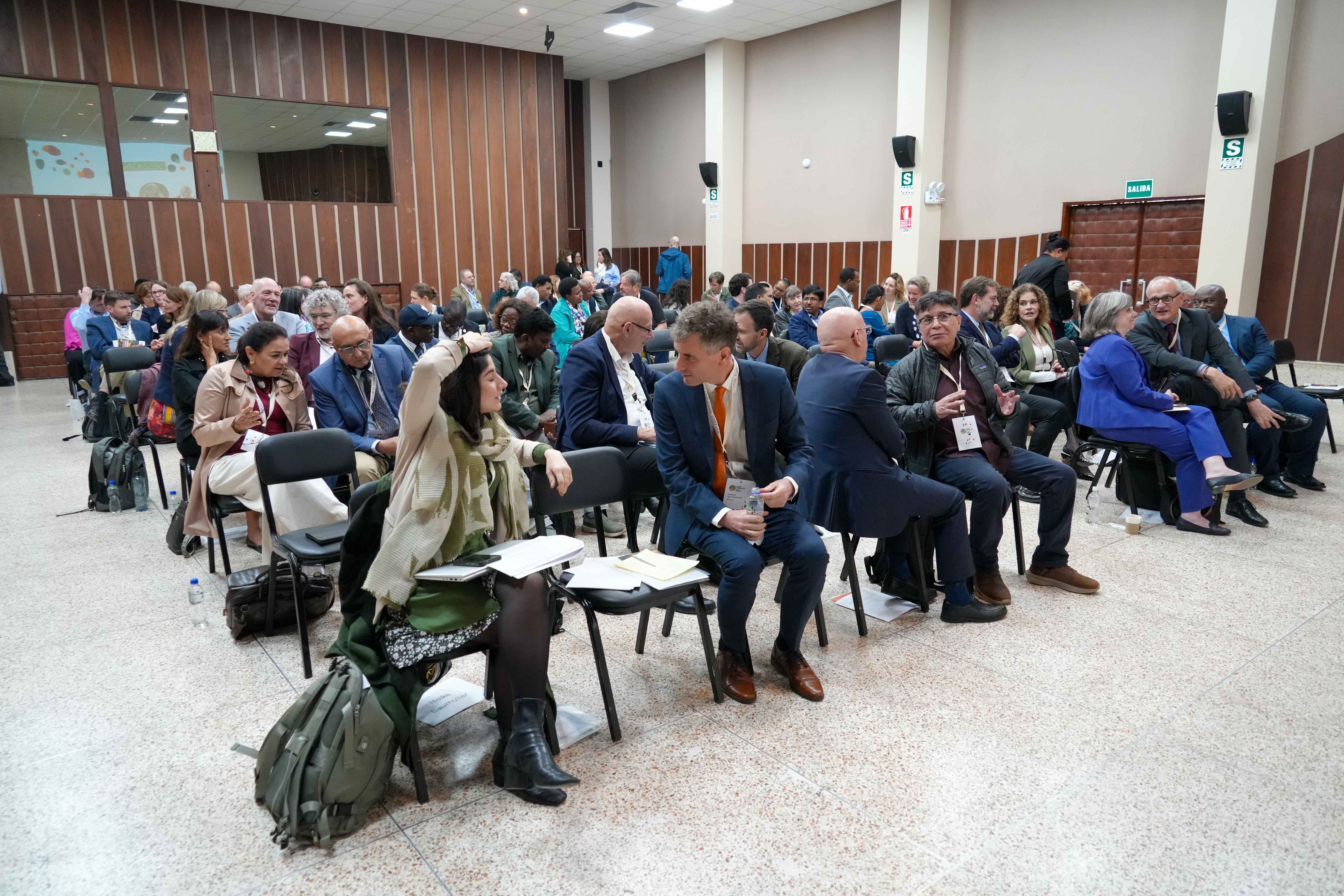
Participants discuss with partners in a panel-proposed activity
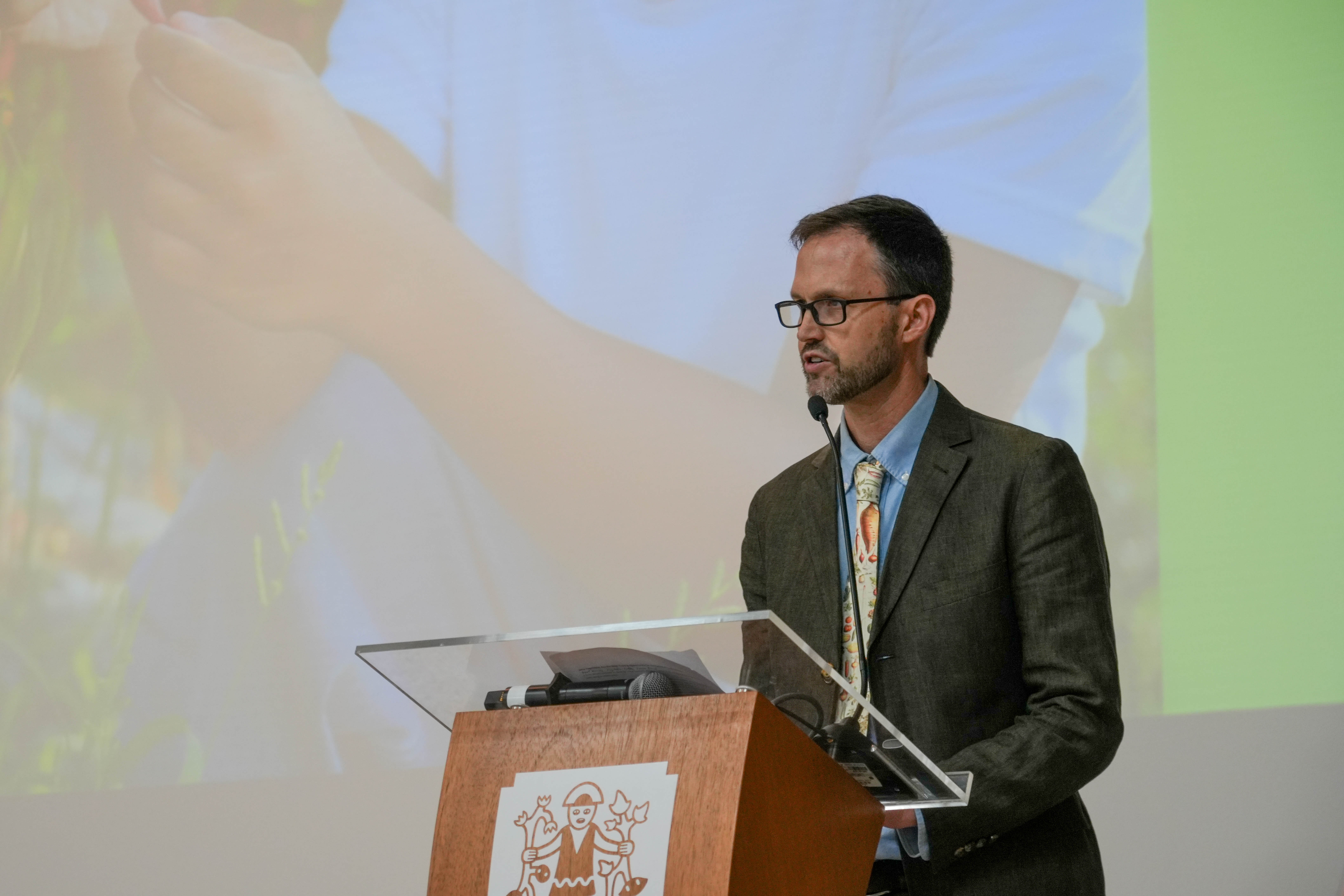
Colin Khoury, New York Botanical Garden
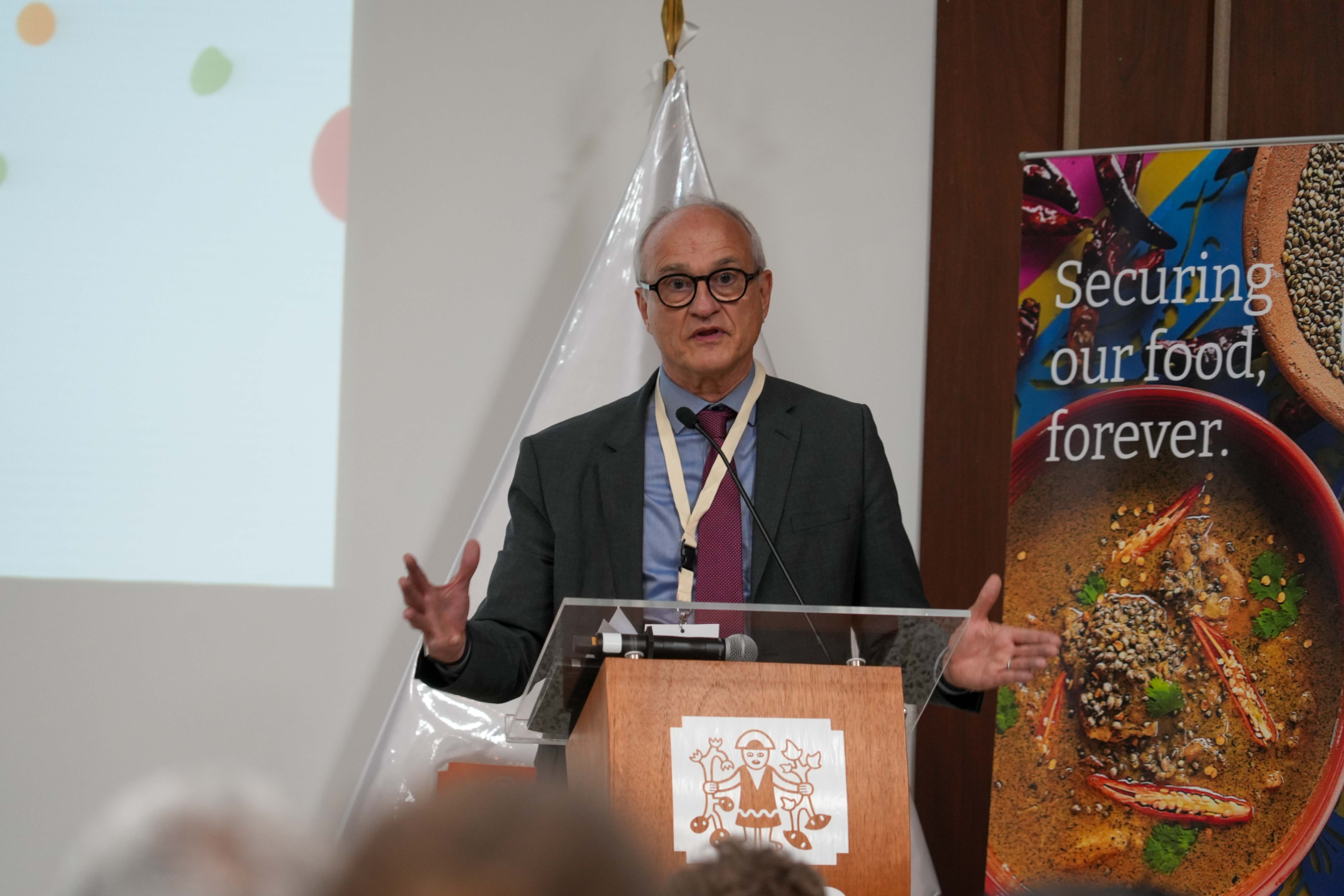
Stefan Schmitz, Executive Director, Crop Trust
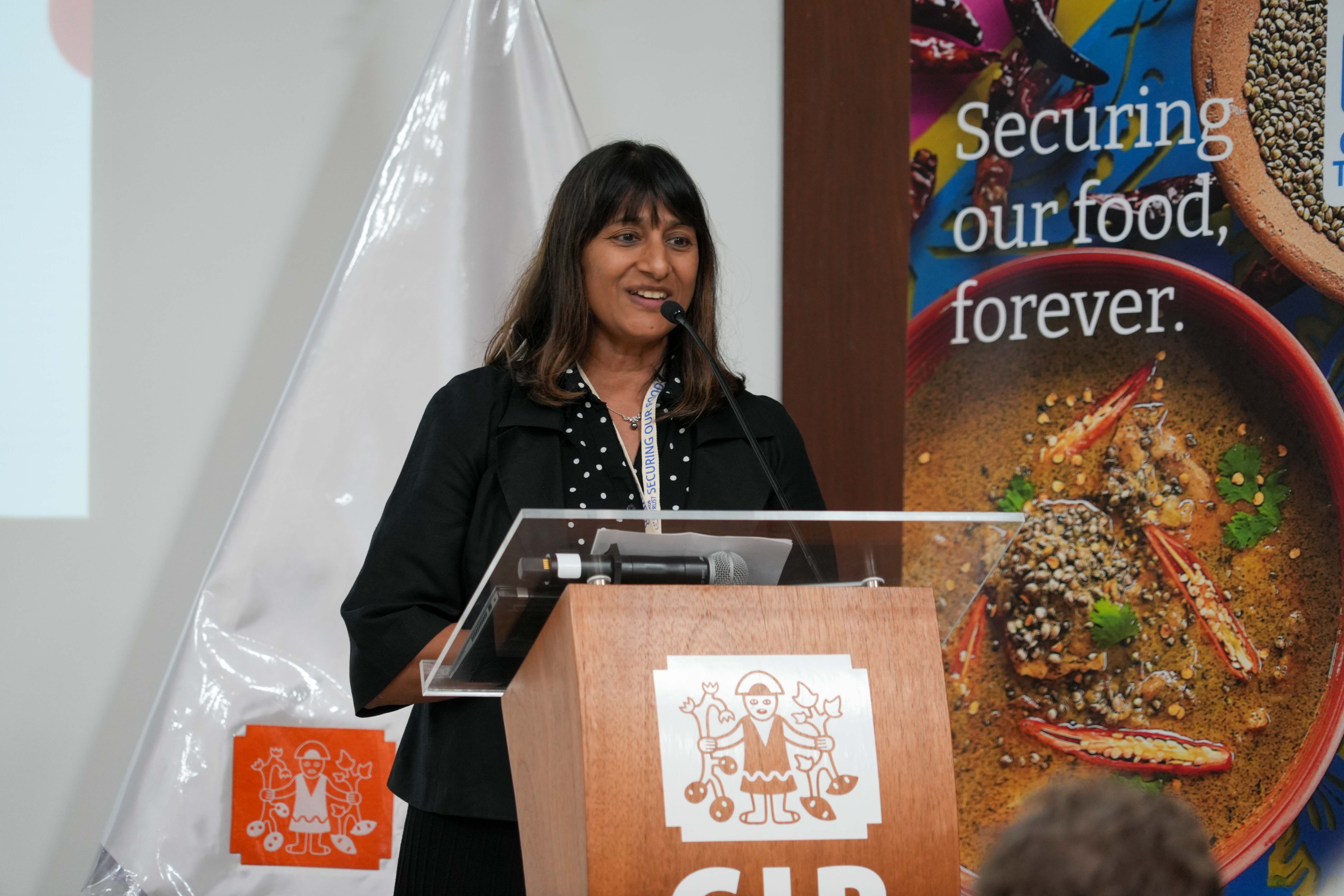
Sarada Krishnan, Director of Programs, Crop Trust
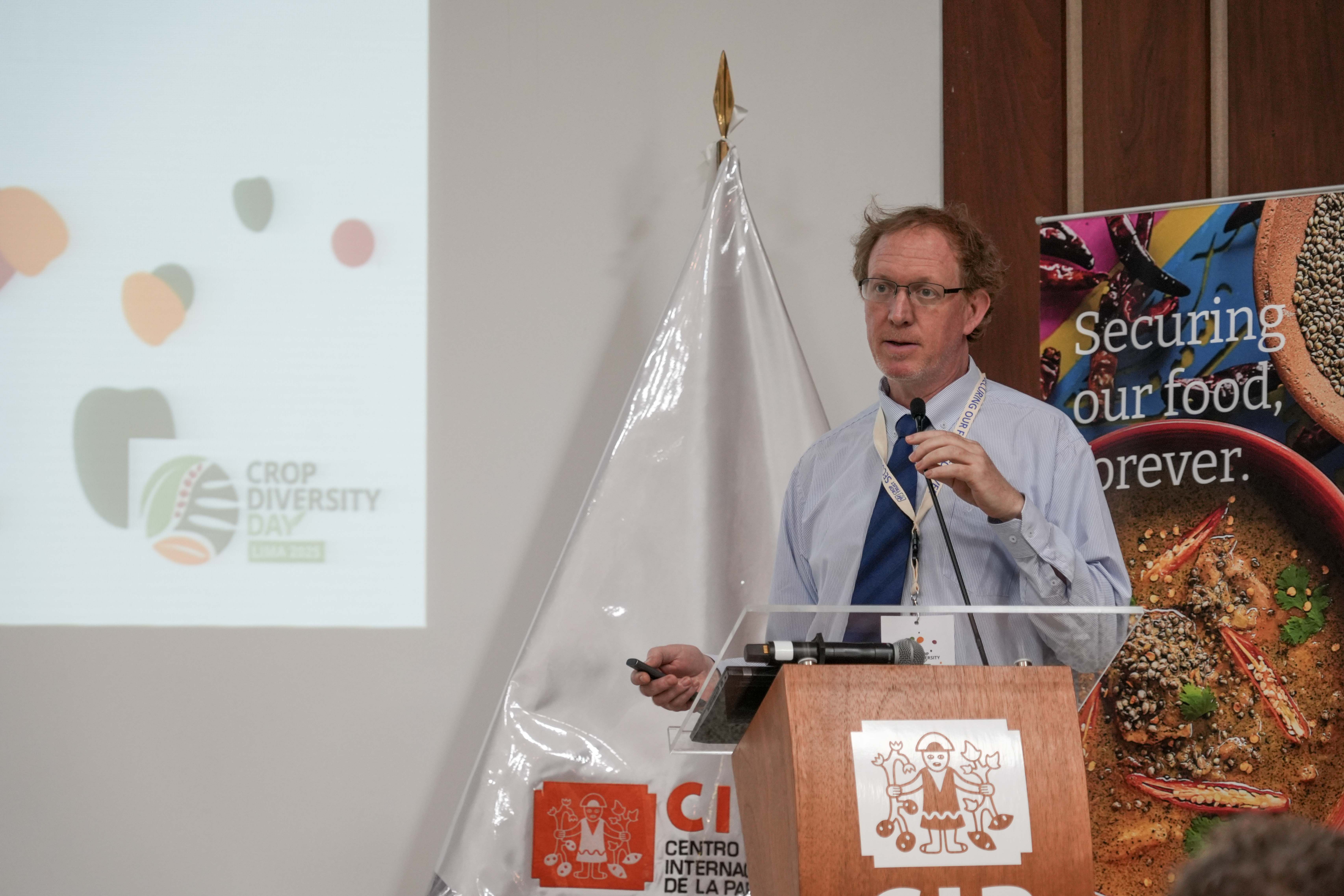
Rainer Vollmer, Associated Scientist - Cryopreservation, CIP
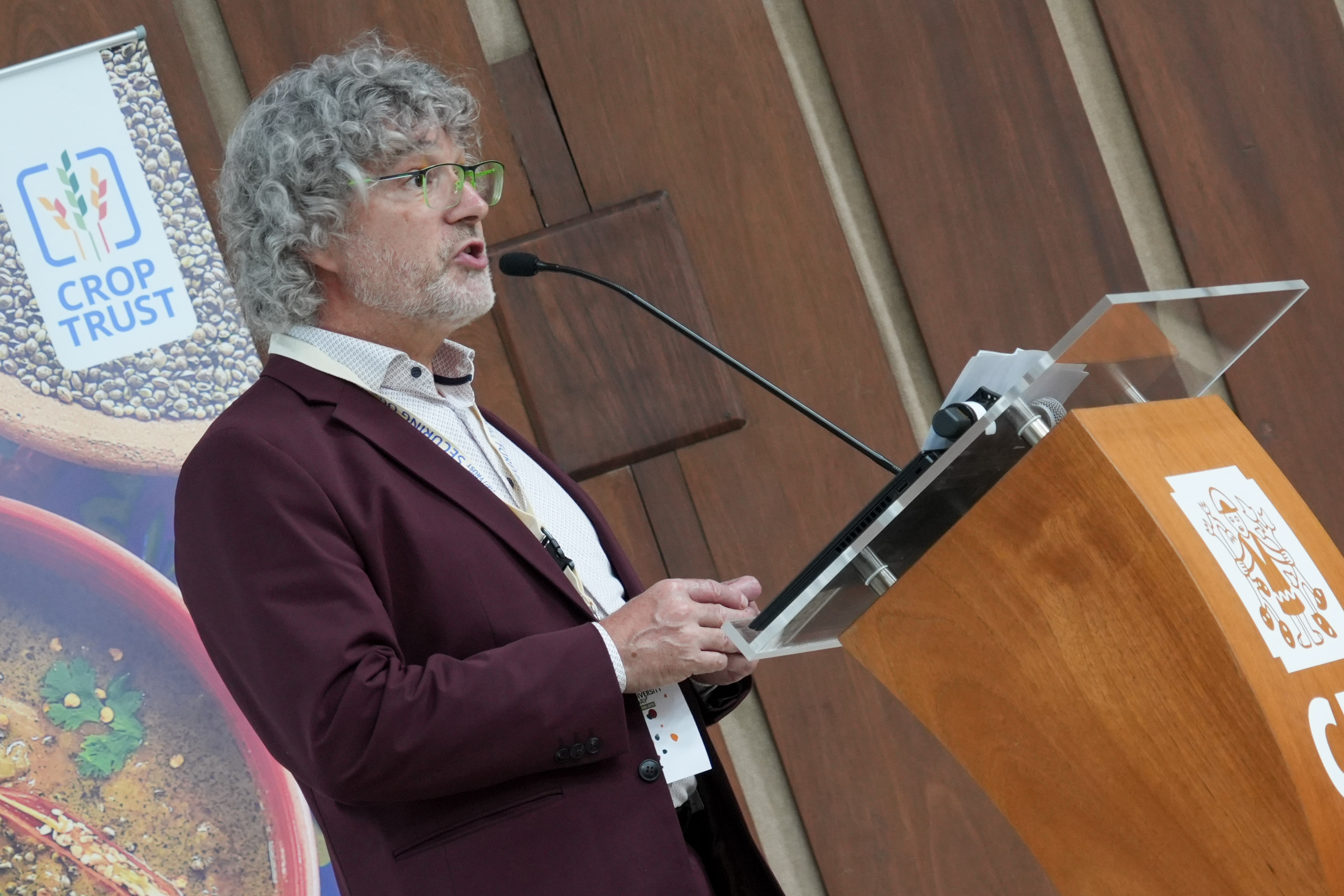
Joachim Langbein, GIZ
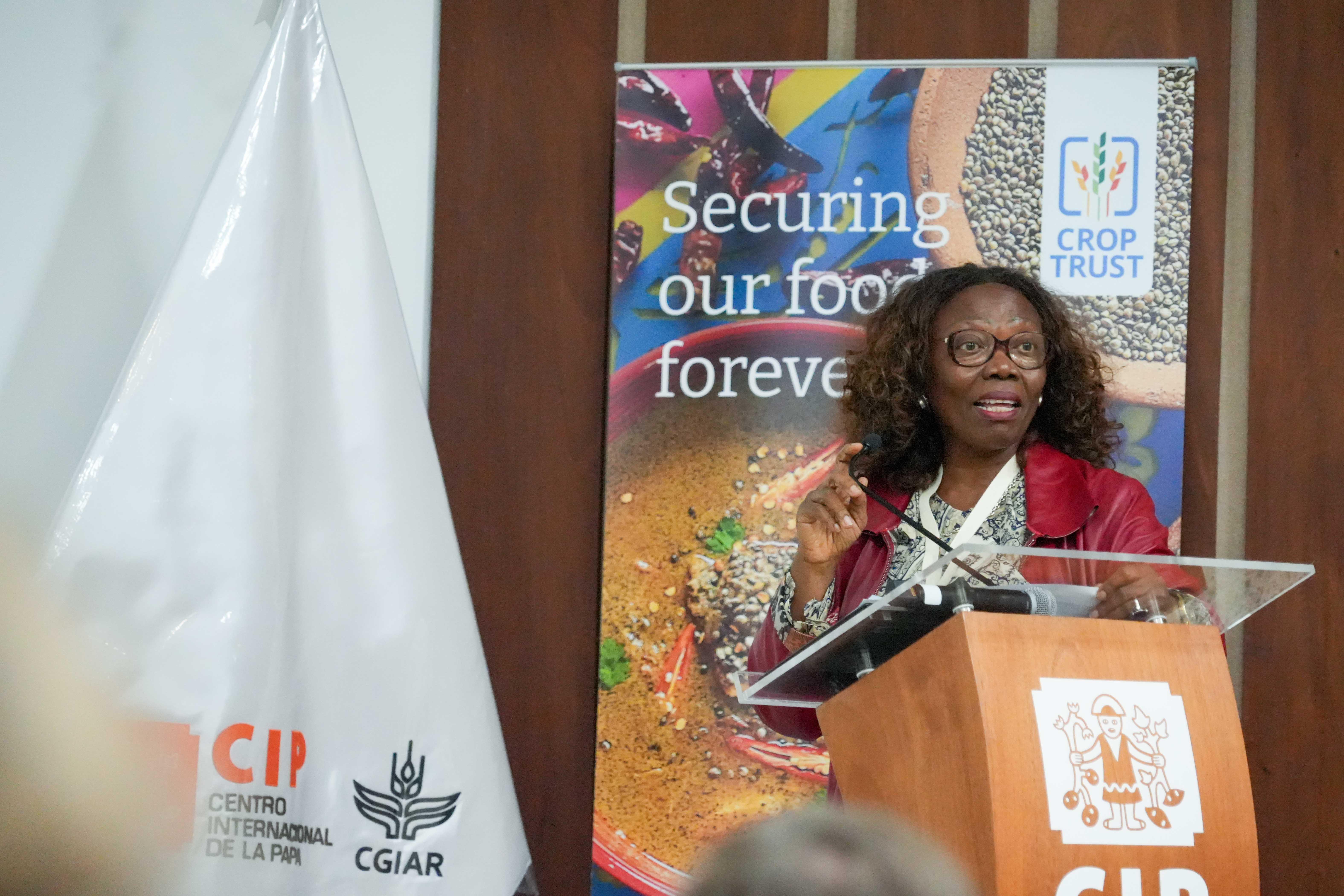
Marie Noelle Ndjiondjop, Head of Genetic Resources, Africa Rice
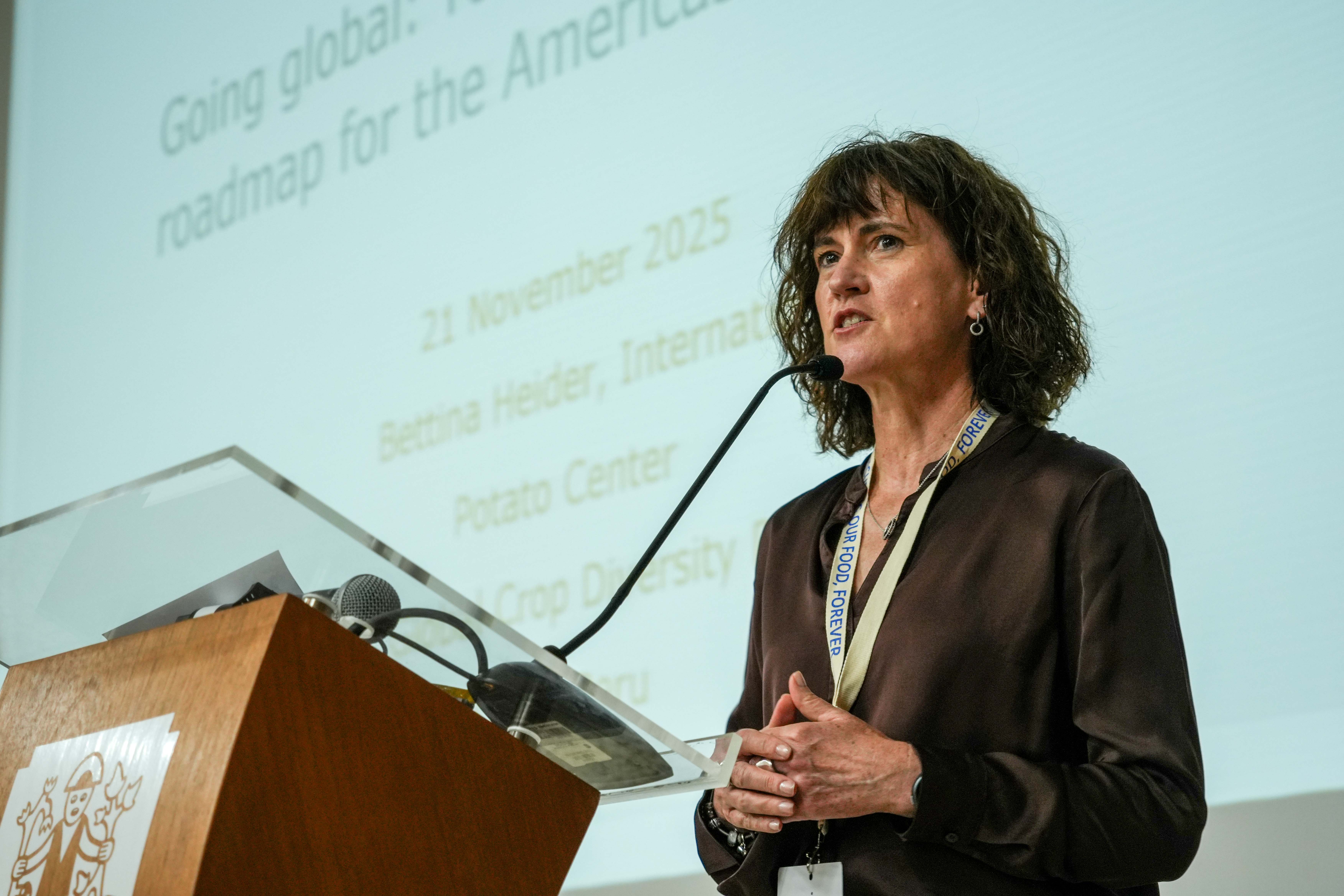
Bettina Heider, Genetic Resources Specialist, CIP
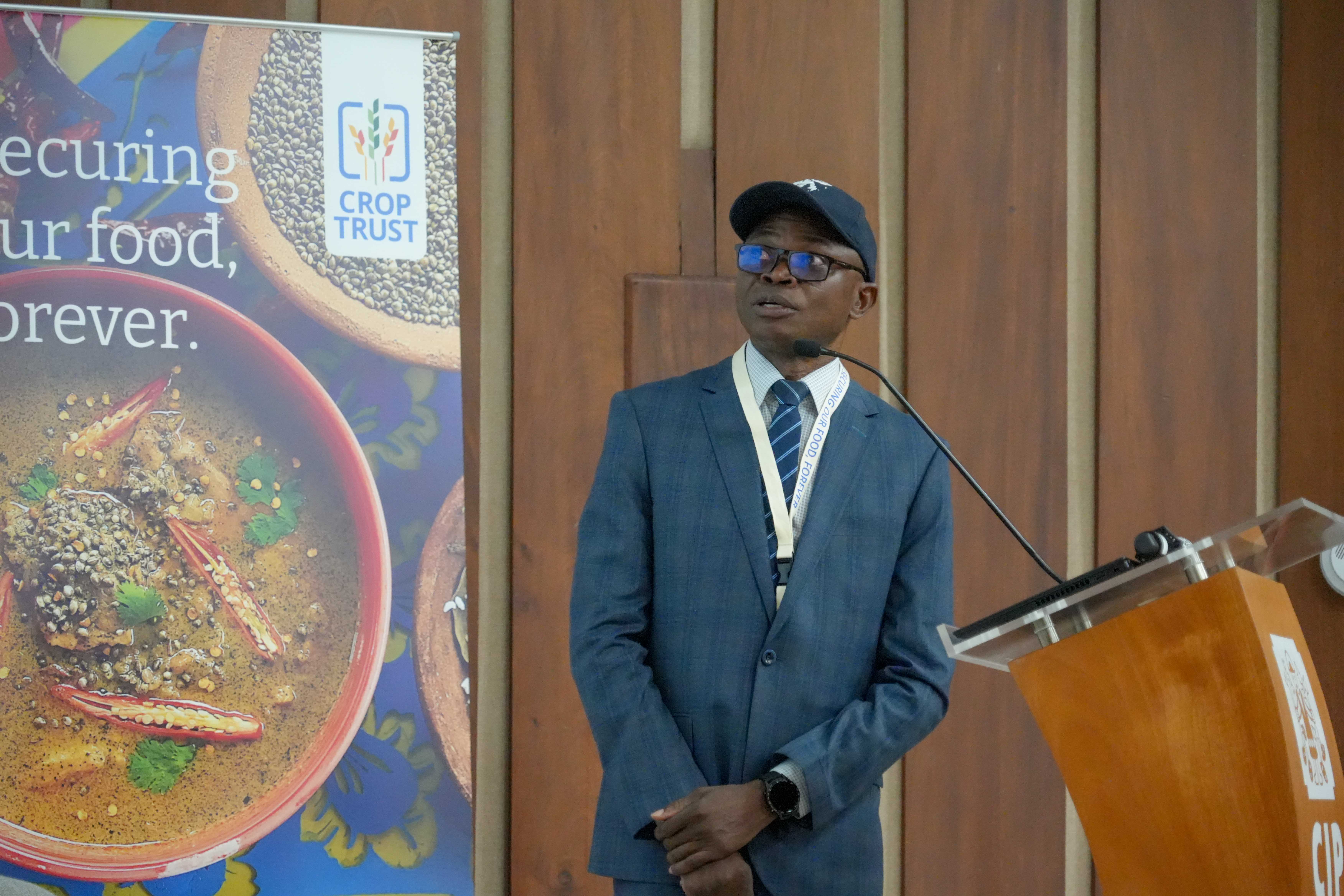
Sognigbe N’Danikou, Scientist, World Vegetable Center
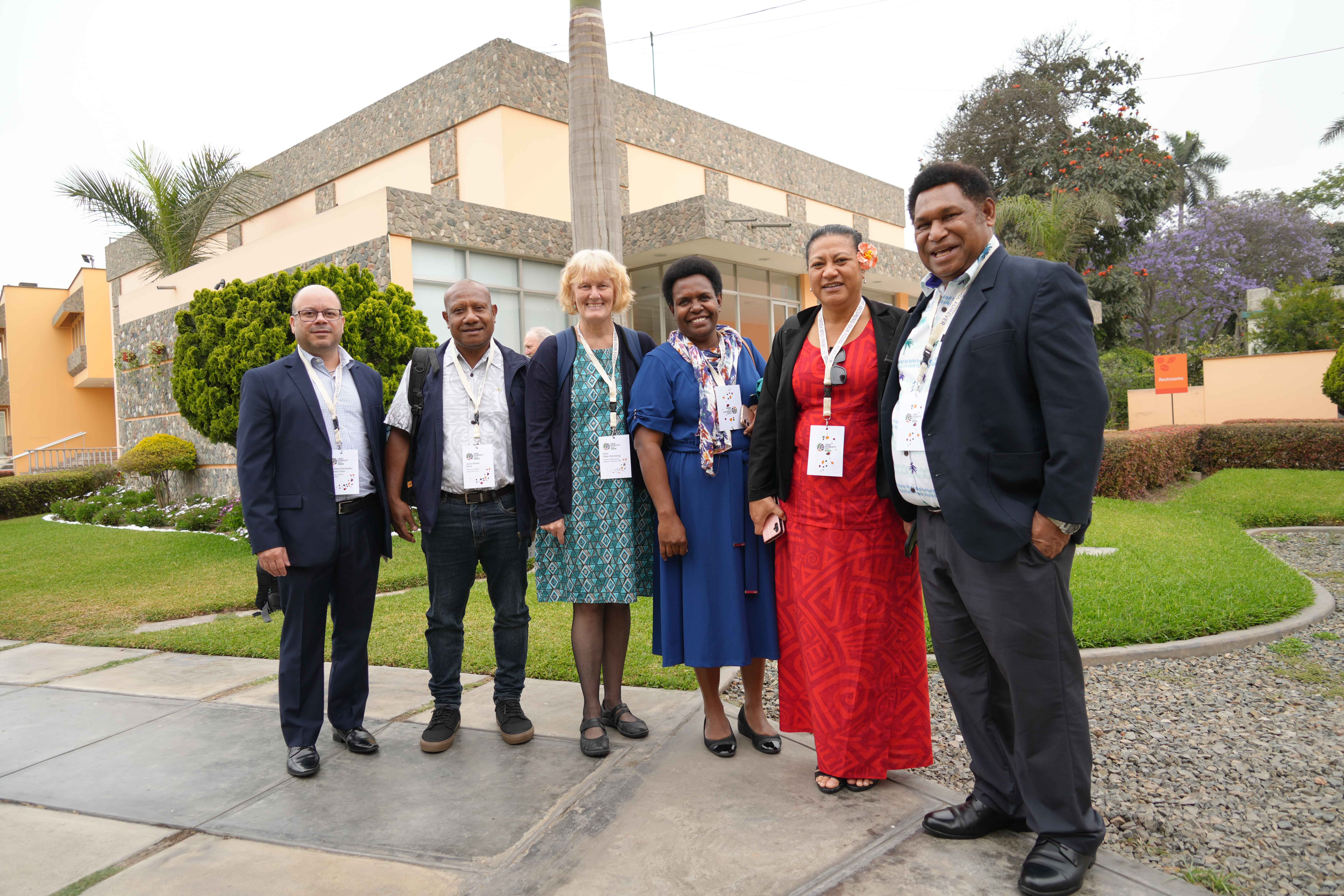
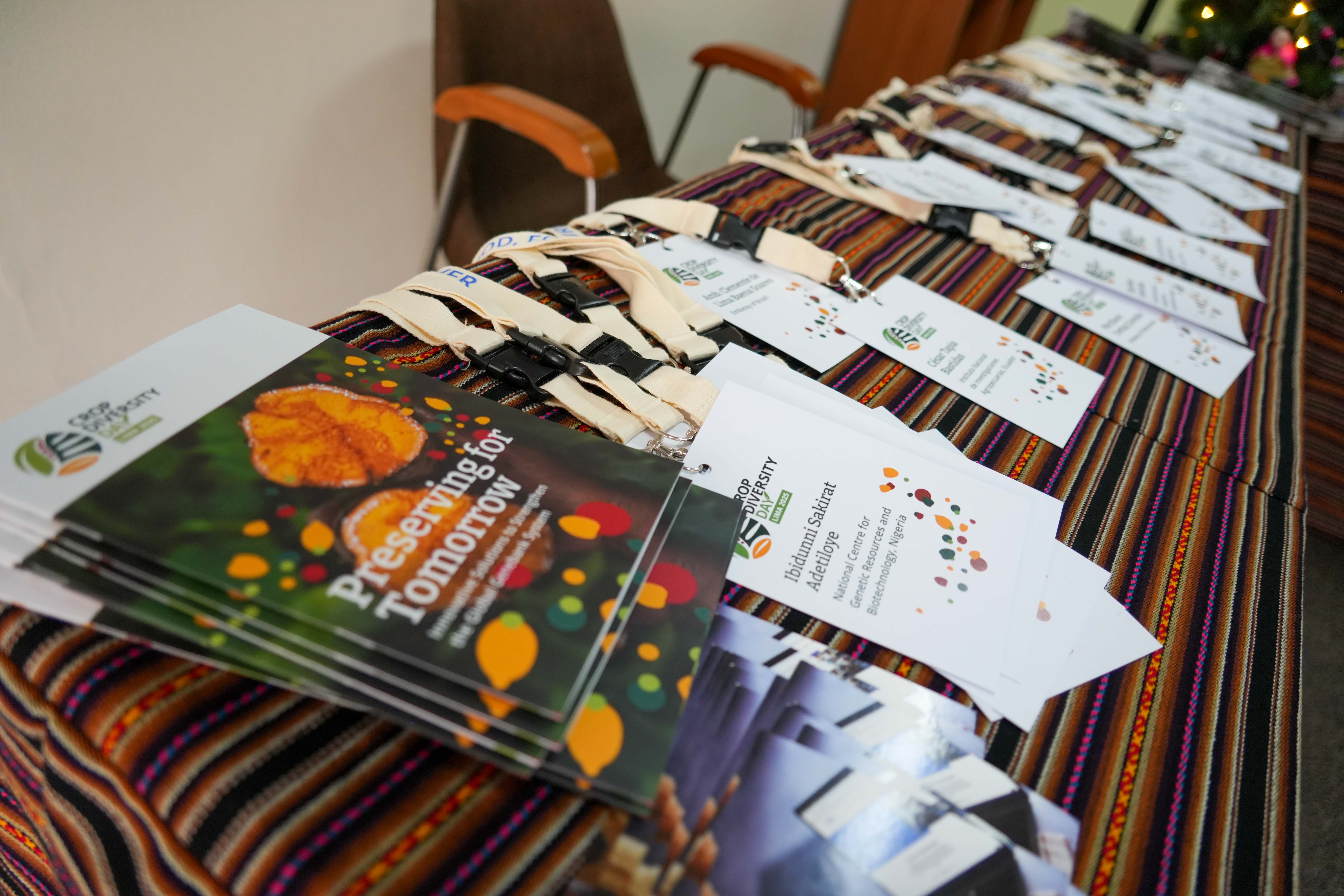
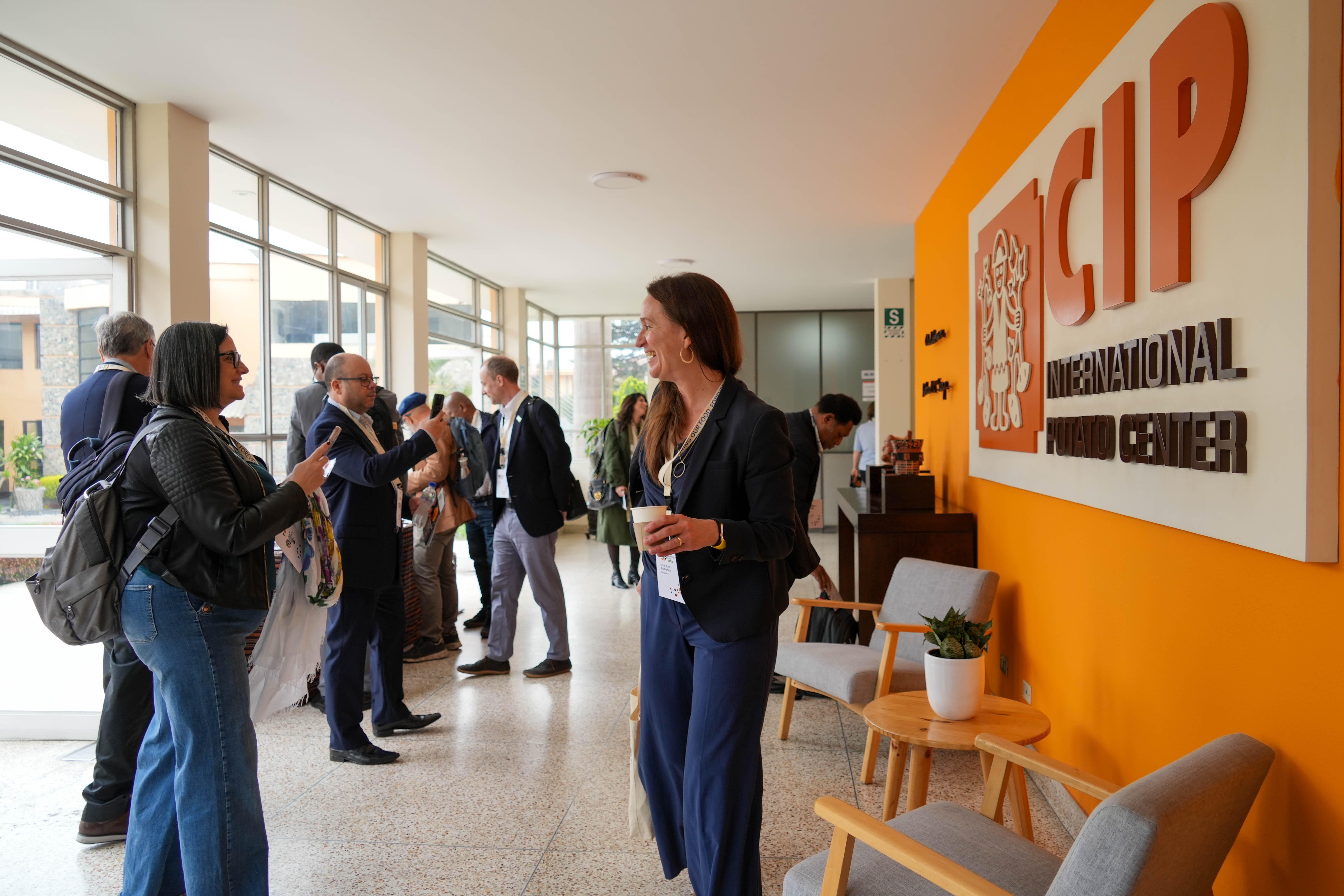
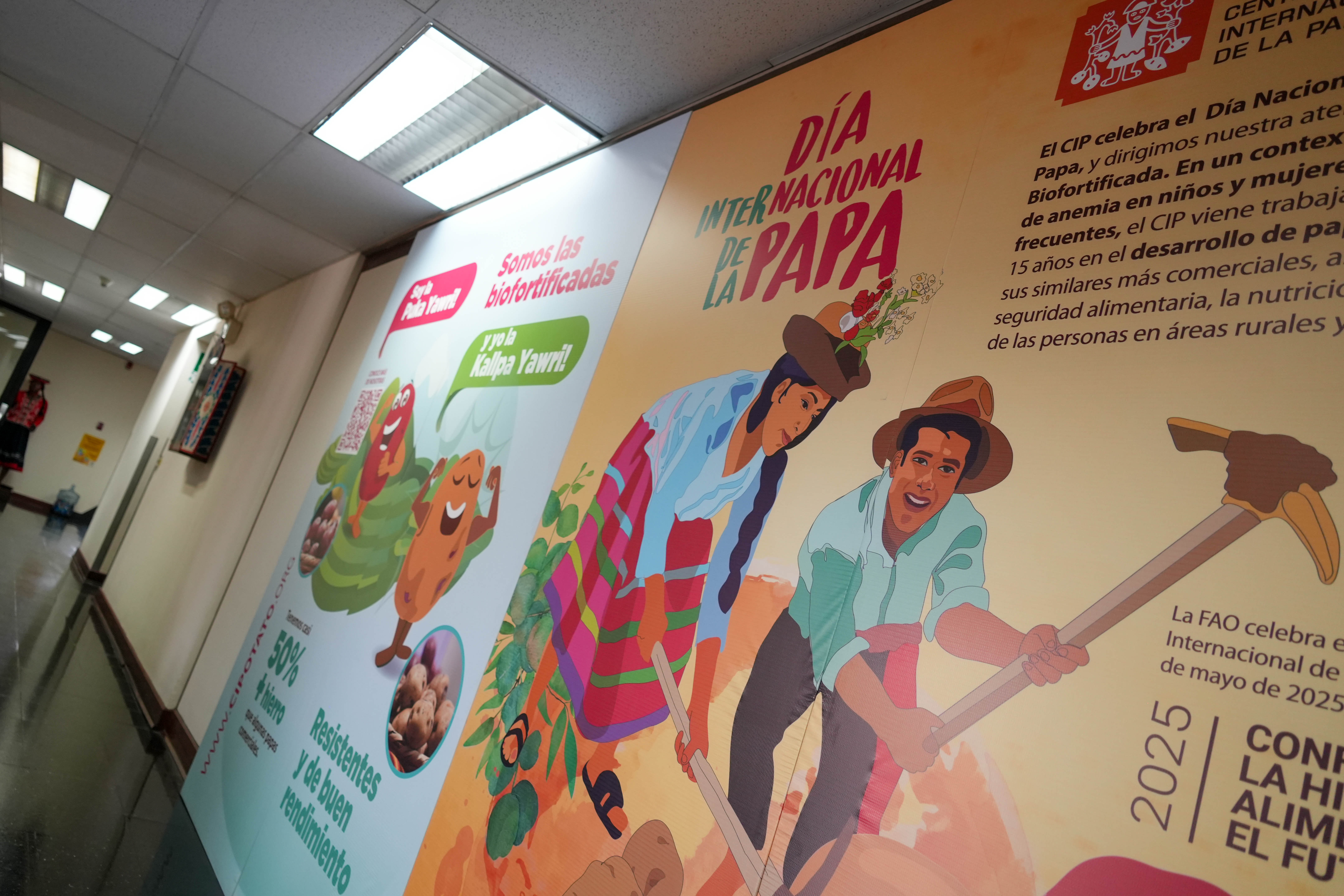
Around the venue
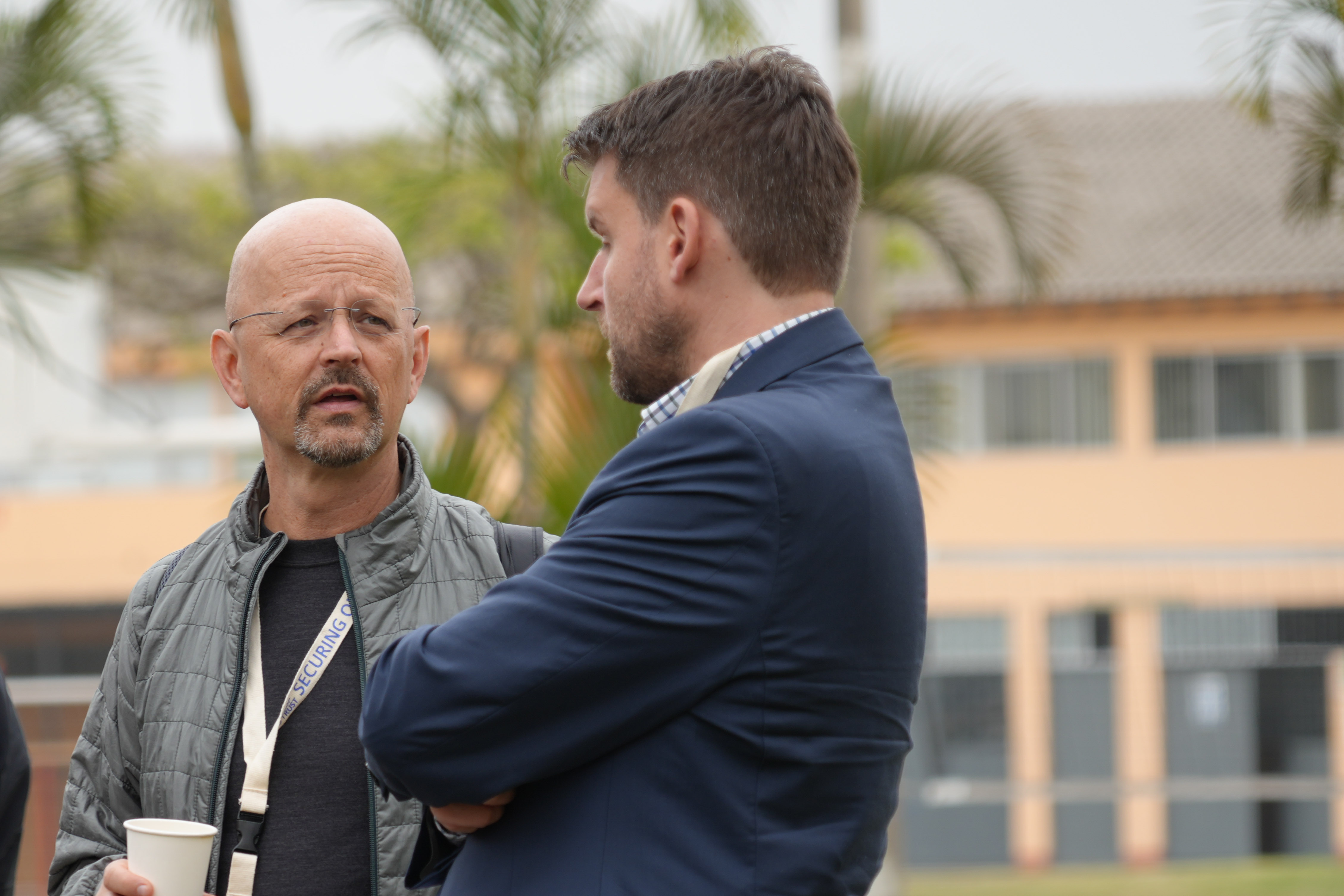
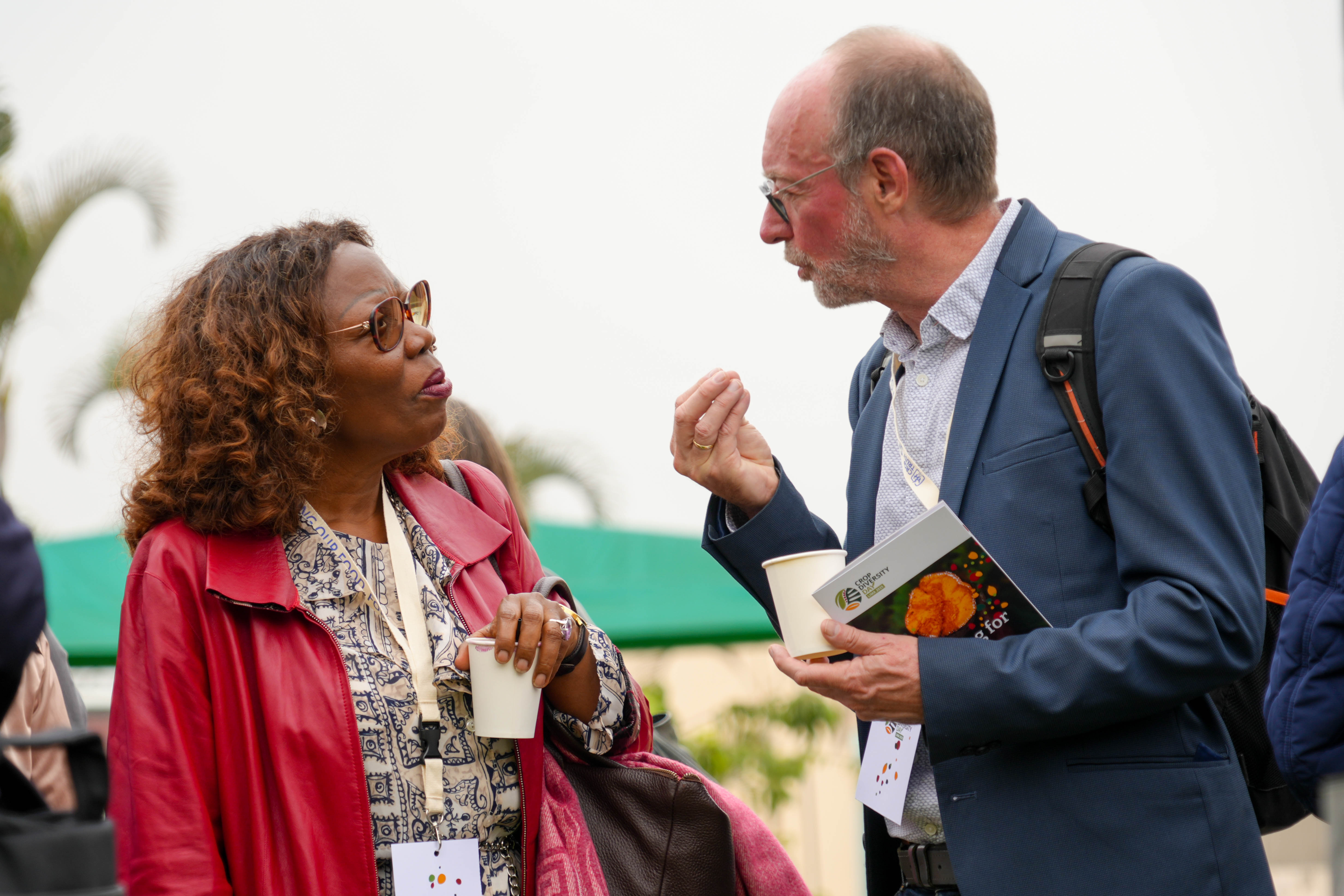
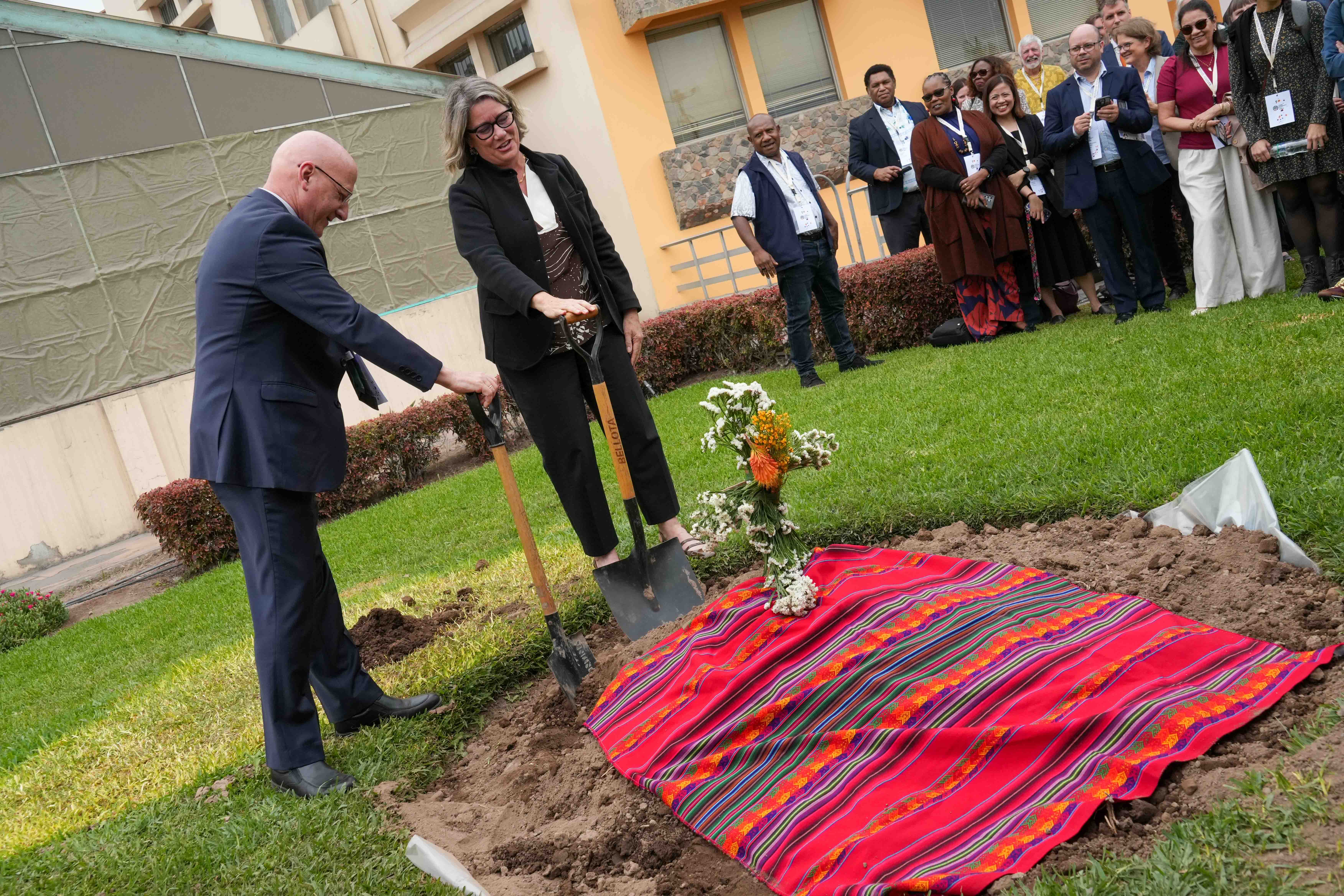
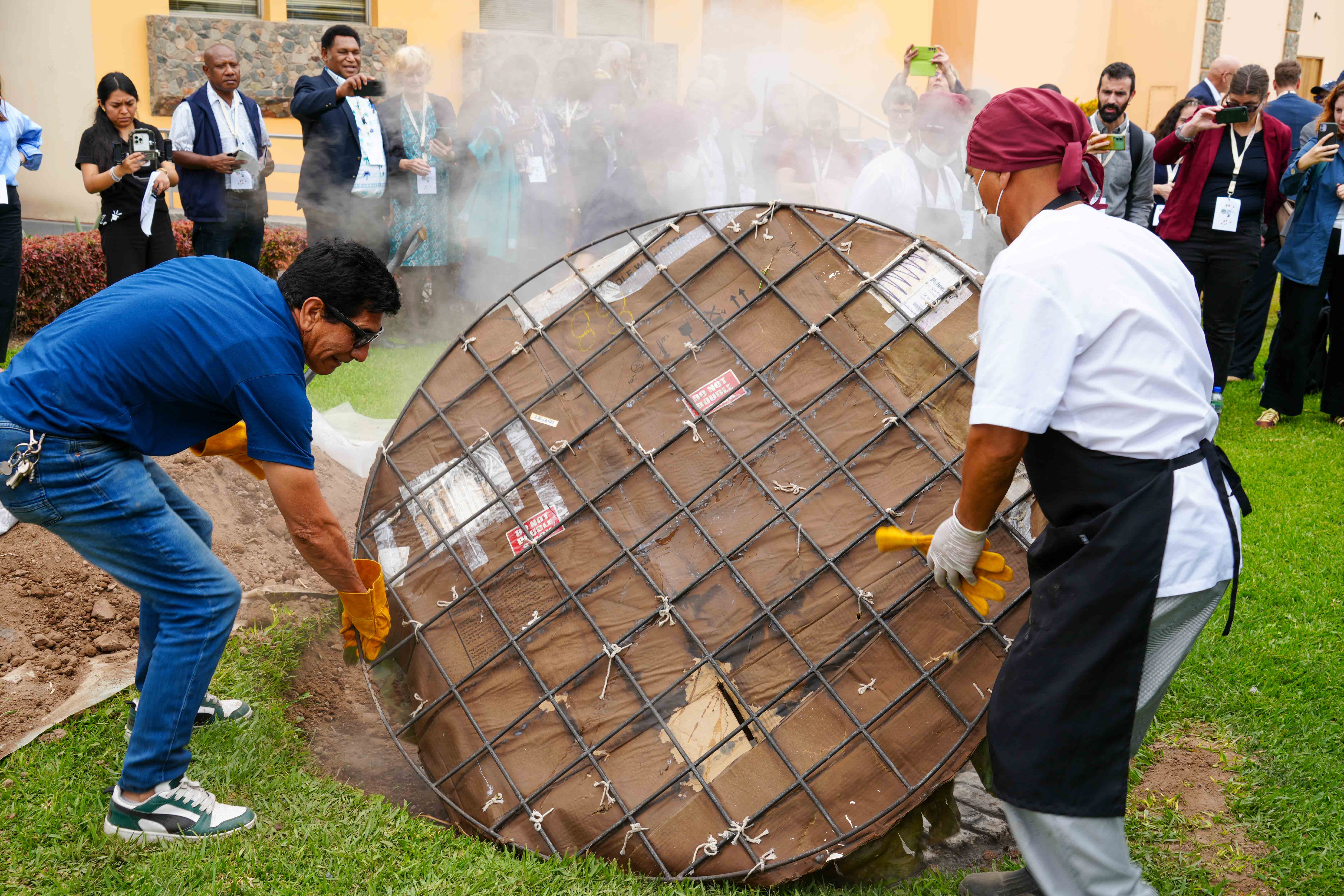
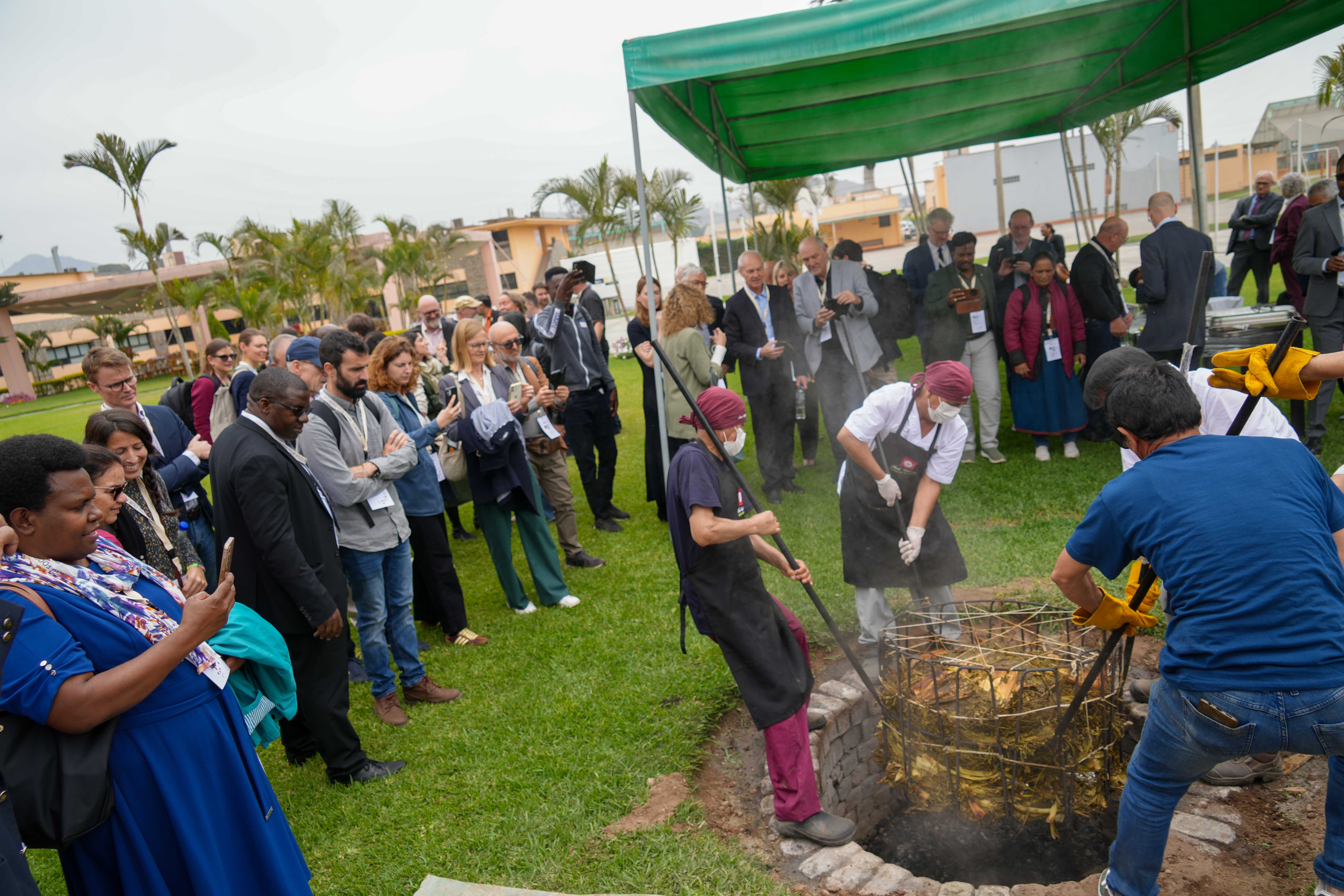
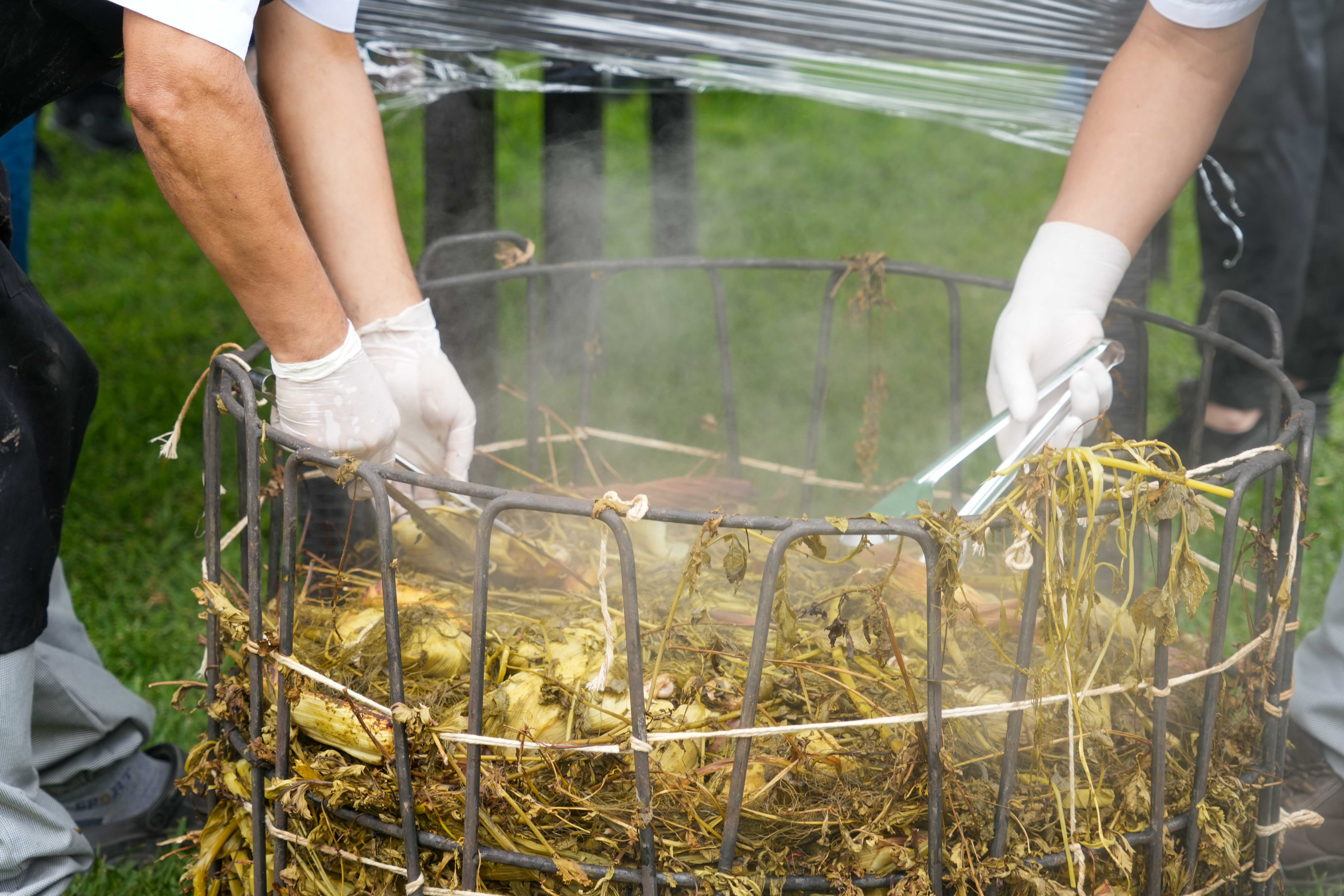
Traditional Pachamanca
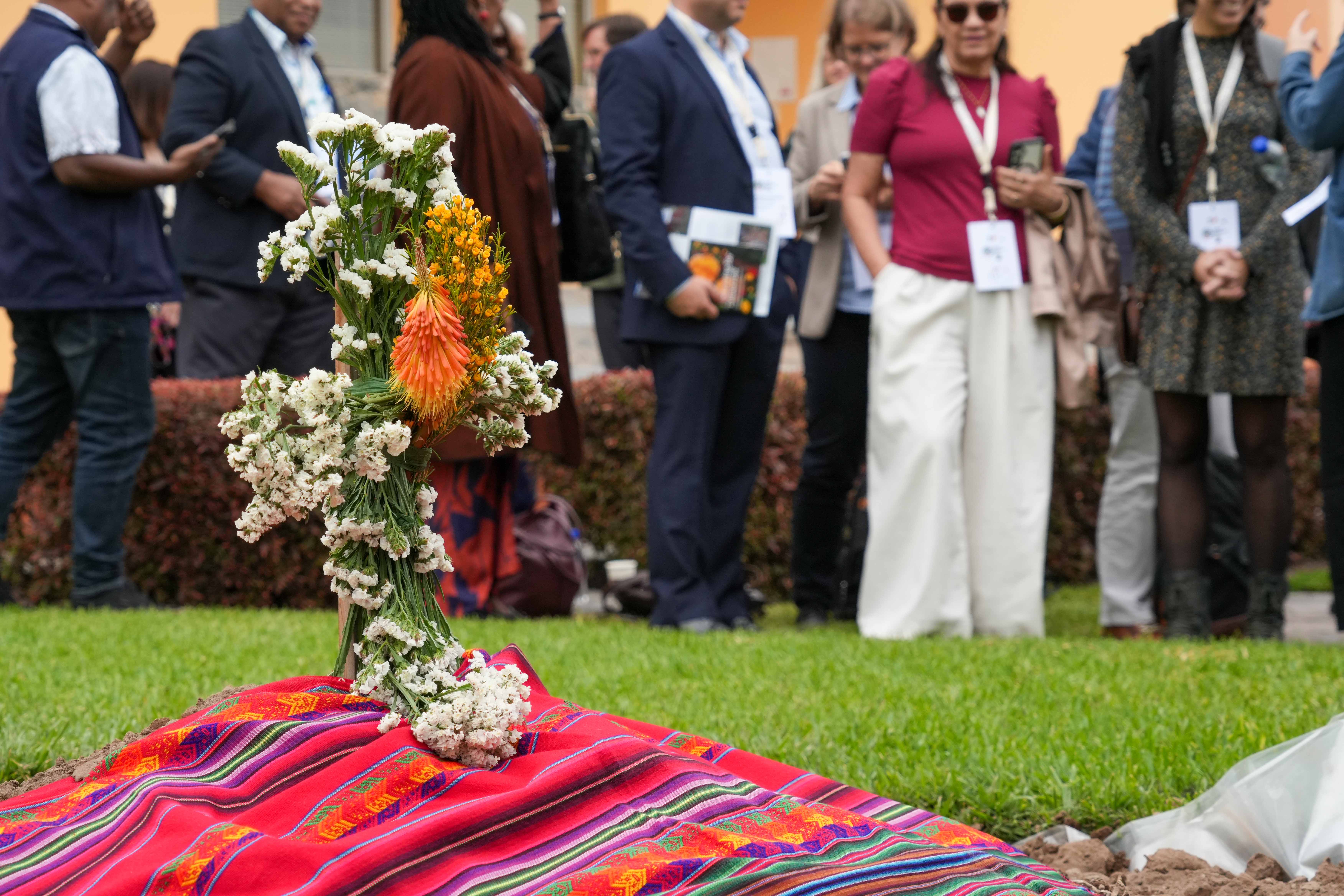
During lunchtime, participants witnessed the Pachamanca, an ancient sacred ritual in which Andean people return the food to the earth to be cooked.