
It is no easy feat for governments to agree on a joint response to global challenges. The discussions around the conservation and sustainable use of marine biodiversity of areas beyond national jurisdiction (BBNJ) is a testament to that. Despite mounting evidence of the various threats affecting ecosystems and species in the high seas, which account for nearly two-thirds of the Ocean’s surface, it took nearly twenty years to devise the BBNJ Agreement that was eventually adopted in June 2023. The achievement is ever more impressive as it was reached long after the wave of multilateral environmental agreements that sprouted in the 1990s, at a time when multilateralism is arguably under distress.
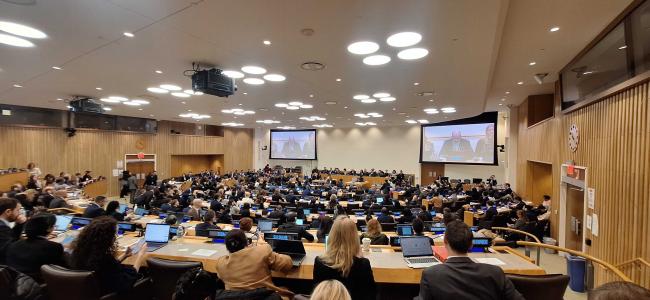
Adopting the Agreement was just the first step, however. Now the countdown is on towards reaching 60 ratifications, which will allow the Agreement to enter into force. Following this milestone, the first meeting of the Conference of the Parties (COP) is to be convened within one year. So far, the Agreement has 21 parties. At the current pace of ratification, the first COP may take place in late 2026.
The UN General Assembly established a Preparatory Commission (PrepCom) to pave the way for the convening of the Agreement’s first COP. It is tasked with addressing a number of seemingly procedural issues that will actually be decisive for the life of the Agreement.
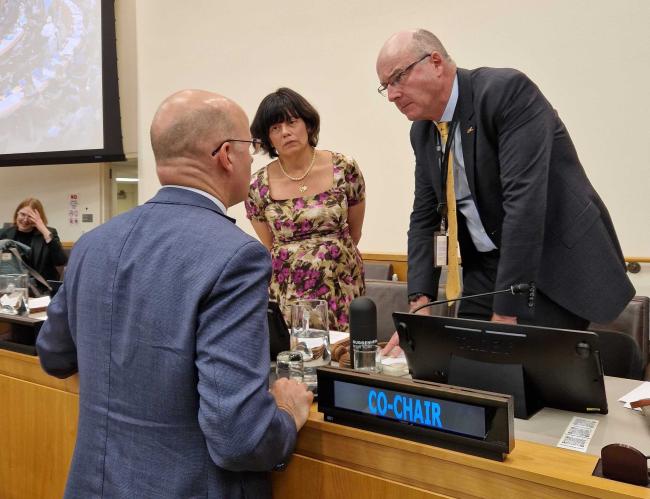
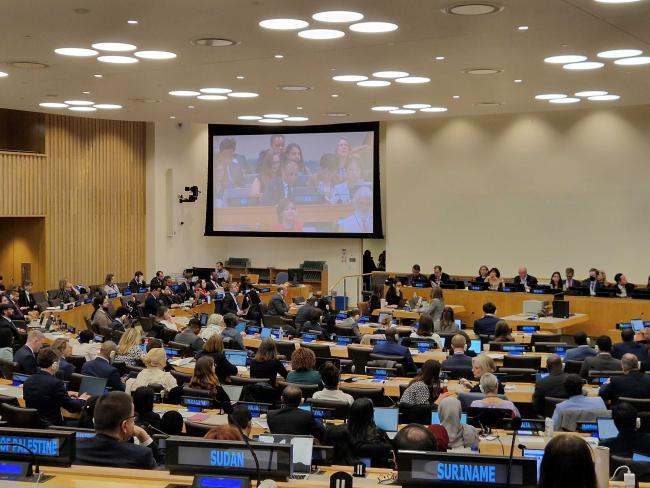
On the first day of the meeting, delegates started reflecting on the rules of procedure that will govern the proceedings of the COP. They shared views on a document containing draft rules of procedure, which the PrepCom Co-Chairs Adam McCarthy (Australia) and Janine Coye-Felson (Belize) prepared on the basis of rules of procedure of other instruments and processes. Delegates were unanimous in considering the draft as fit-for-purpose. Throughout the day, they highlighted: elements requiring further elaboration; elements they disagree with; and suggested additions.
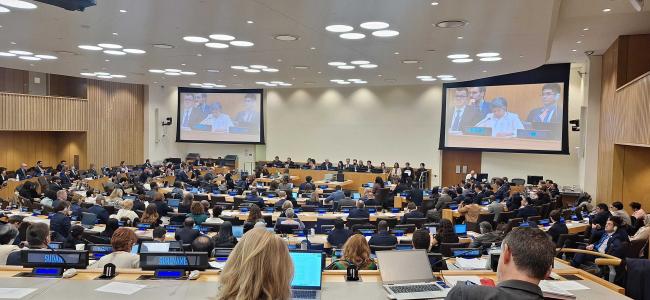
Delegates addressed, among other things:
- the frequency of COP meetings, with the Core Latin American Group suggesting to start with annual meetings to kick-start the implementation of the Agreement, followed by biennial meetings;
- where COP meetings should take place, with some pointing to the seat of the Secretariat or UN Headquarters and others suggesting a regional rotation;
- possible provisions for hybrid and virtual meeting formats, which may be needed in the context of global health emergencies;
- voting by regional economic integration organizations and by chairs of subsidiary bodies;
- the role of the secretariat and bureau in preparing provisional agendas;
- the participation of observers and their possible categorization; and
- whether the rules of procedure of the subsidiary bodies should be the same as those of the COP.
Discussions on the operation of subsidiary bodies under the BBNJ Agreement will be held on Tuesday.
To receive free coverage of global environmental events delivered to your inbox, subscribe to the ENB Update newsletter.
All ENB photos are free to use with attribution. For this meeting, please use: Photo by IISD/ENB.