
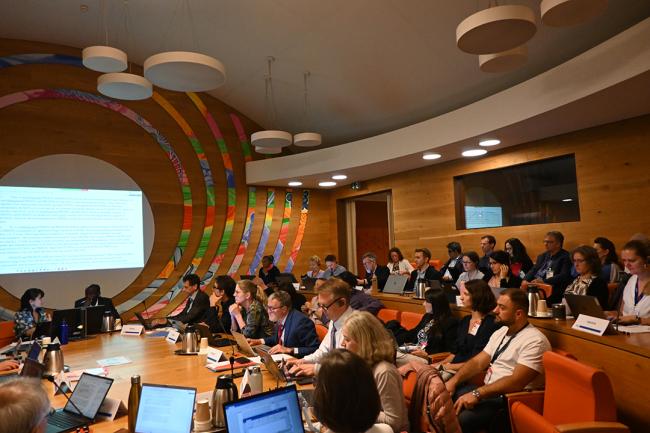
There are many ways to classify persistent organic pollutants (POPs), but one that perhaps matters the most for the 21st meeting of the POPs Review Committee (POPRC 21) is intentionally and unintentionally produced. The only candidate POP under review, brominated and brominated/chlorinated dioxins and furans (PXDD/PXDF), is potentially a “UPOP.” It is unintentionally released during combustion and industrial processes, and as a by-product, lacks any economic value. This is the first time POPRC looks at a UPOP, since all others were included in the original dirty dozen.
The draft risk profile for PXDD/PXDF was discussed throughout the day. The scope of the proposed listing was a major topic, as not all congeners seemed to meet the criteria of persistence to be considered POPs. While most members agreed to the scope being tetra- to octa-PXDD/PXDF, the added value of such detailed deliberations seems minuscule in the broader picture of the POPRC process. When members look at the risk management evaluation, they will have to consider options to manage releases, and according to some experts, it is not possible to differentiate between congeners in the process.
In other rooms, POPRC participants revised the indicative lists of three groups of previously-listed POPs. Each list is for a different group falling under the umbrella of per- and polyfluoroalkyl substances (PFAS, aka forever chemicals). Because they are so closely related, POPRC experts had to carefully consider how to address substances that could fall within the various groups.
These PFAS-related listings are found in many products, from cookware to airplanes. Work continued on how POPRC can get better and more timely information when it considers widely used chemicals. In tackling this huge task, members thought a useful place to start is surveying how parties interpret and apply the Convention, and their challenges in identifying POPs in products.
Selected Images
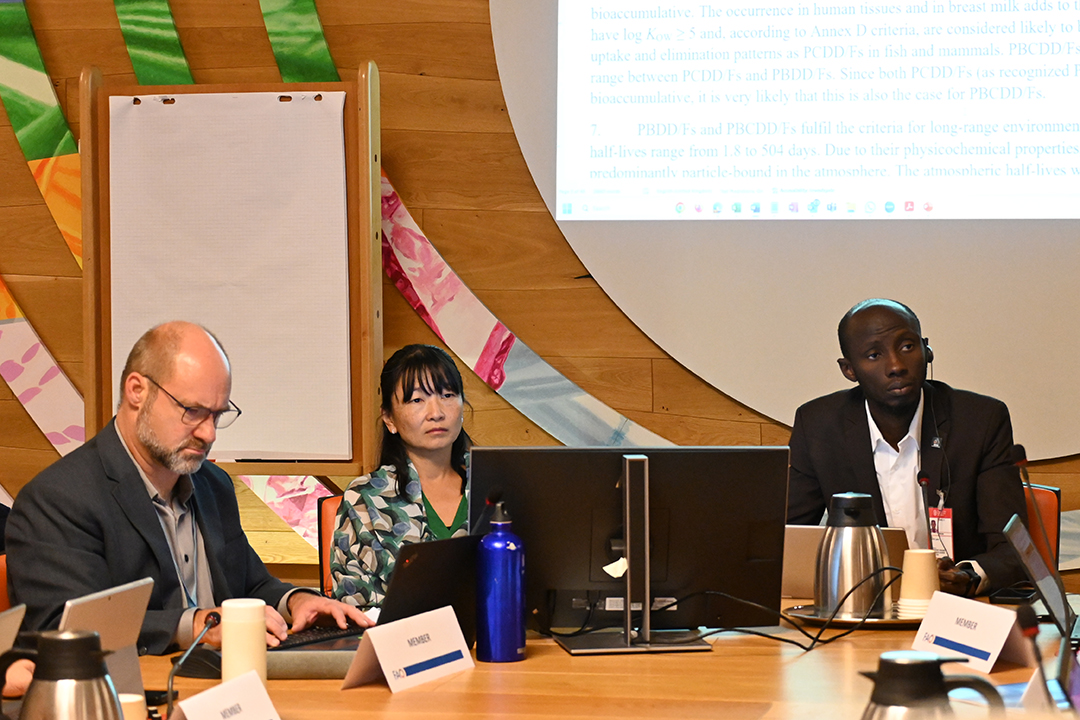
Alain Wittig and Kei Ohno-Woodall, BRS Secretariat, and Co-Chair of the Contact Group on PXDD/PXDF Lamin Jaiteh, The Gambia
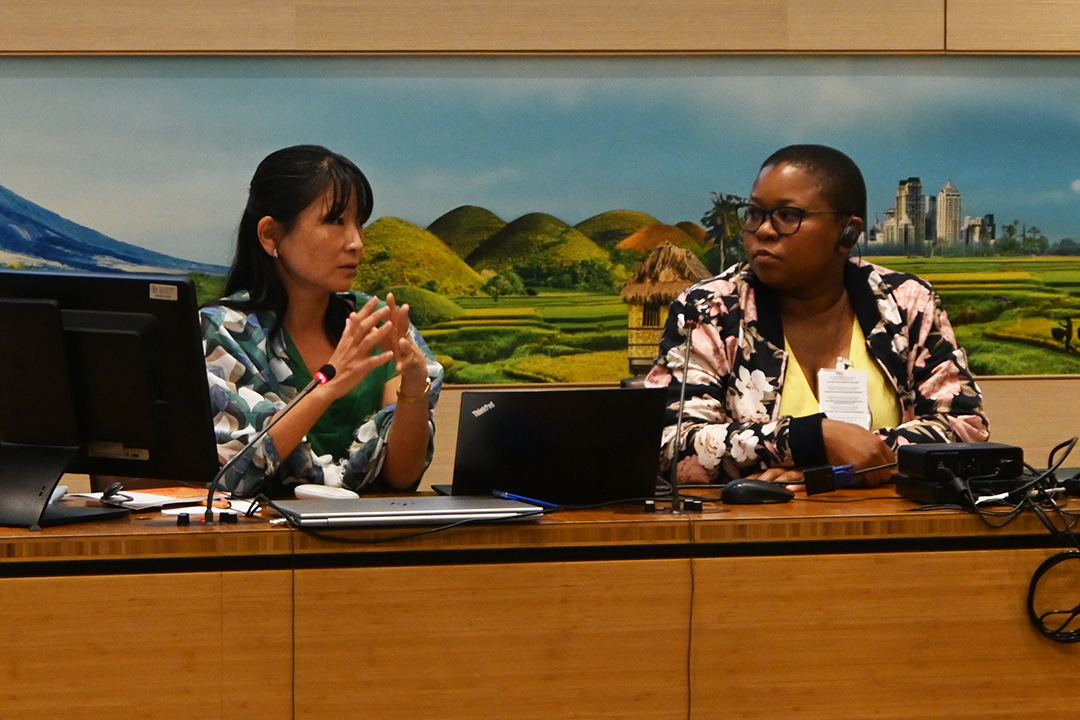
Ohno-Woodall, BRS Secretariat, and Chair of the Contact Group on indicative lists Thabile Ndlovu, Eswatini
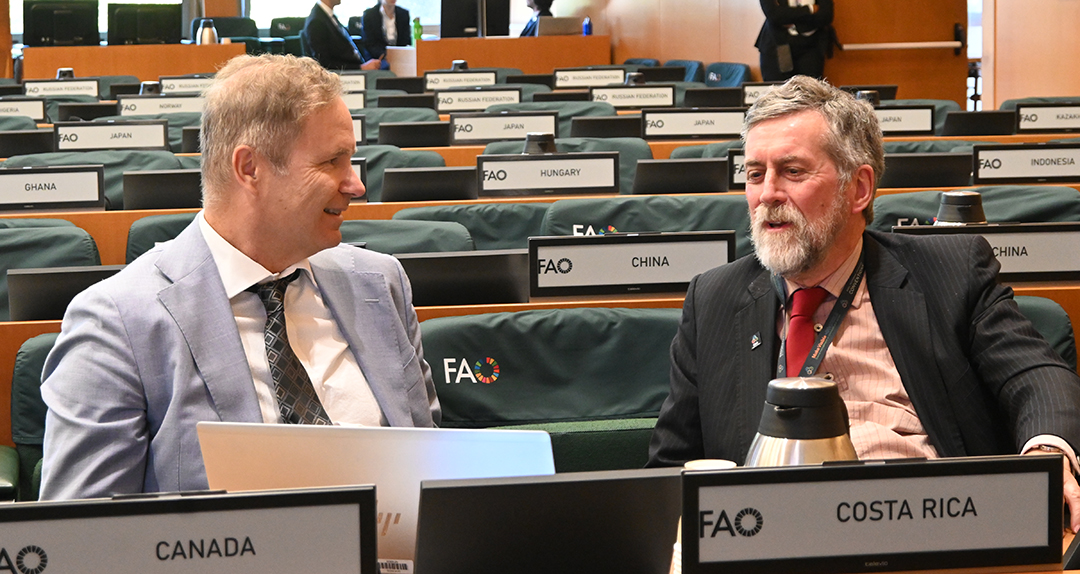
Global Monitoring Plan (GMP) Coordination Group Co-Chair Tom Harner, Canada, and POPRC Chair Peter Dawson, New Zealand

POPRC member John Mumbo, Kenya, and GMP Coordination Group Co-Chair Vincent Madadi, Kenya