About
The Conference brought together all stakeholders and allowed for a holistic debate and adoption of a political declaration that covered the depth and breadth of actions necessary to conserve and sustainably use the Ocean and marine resources.
Final report
Summary report 9–13 June 2025
All coverage
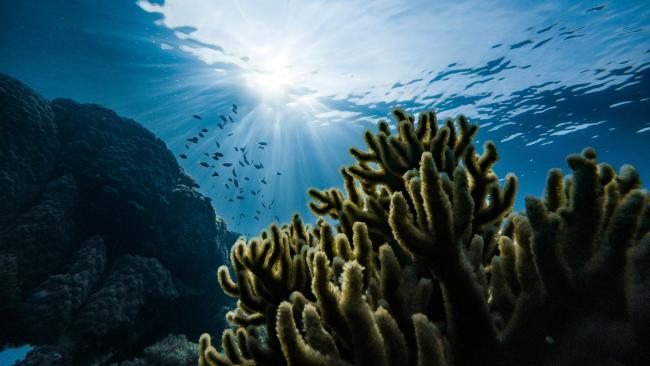
Covering 71% of the Earth’s surface, the Ocean is the place where the first lifeforms emerged billions of years ago and, even more importantly, a complex ecosystem offering life-sustaining services. In addition to directly supporting the livelihoods of more than three billion people worldwide as a source of nutrition and employment, the Ocean also provides genetic resources and non-living resources, and habitat, and contributes to biogeochemical cycling. Not only is the Ocean an important source of recreation, identity, and culture, but it also lies at the heart of the global climate system. It absorbs more than a quarter of the annual anthropogenic CO2 emissions while producing approximately half of Earth’s oxygen.
Despite its significance, the Ocean faces a multitude of challenges, including pollution, resource overexploitation, biodiversity and habitat loss, acidification, and rising water temperatures due to climate change. If these human-induced pressures are not effectively tackled, the invaluable services the Ocean offers to humanity, including as a climate regulator, are in peril.
The 2025 UN Ocean Conference (UNOC3) aimed to generate transformative actions to address ocean-related challenges. It sought to support the implementation of Sustainable Development Goal 14 (SDG 14) under the overarching theme: Accelerating Action and Mobilizing All Actors to Conserve and Sustainably Use the Ocean. In the words of French President Emmanuel Macron: “In 2015, we managed to inscribe [our] ambition in a universal UN framework thanks to the Paris Climate Agreement. In 2025, in the same vein, the conference in Nice will be foundational for ocean governance.”
UNOC3 included plenary sessions where UN Member States presented their commitments to the protection of the Ocean and the Ocean Action Panels, which brought together Member States, UN and international organizations, financial institutions and the private sector, academic institutions, and non-governmental and civil society representatives, including representatives of Indigenous Peoples and local communities, to discuss actionable solutions and promote cooperation. The Conference adopted an action-oriented, intergovernmentally agreed political declaration, the Nice Ocean Action Plan, accompanied by a list of voluntary commitments. Among other issues, UNOC3 prioritized:
- entry into force of the Agreement under the UN Convention on the Law of the Sea on the Conservation and Sustainable Use of Marine Biological Diversity of Areas beyond National Jurisdiction (BBNJ Agreement);
- mobilizing sources of finance to implement SDG 14 and support the development of a sustainable blue economy; and
- strengthening and better disseminating knowledge linked to marine science to enhance policymaking.
UNOC3 built on UNOC1, held in 2017 at UN Headquarters in New York, and UNOC2, held in 2022 in Lisbon, Portugal. Leading to UNOC3, a stakeholder meeting took place on 8-9 June 2024 in San Jose, Costa Rica, serving as a platform for the exchange of best practices related to ocean governance and health. The President of the UN General Assembly convened a one-day preparatory meeting on 2 July 2024.
UNOC3, co-chaired by France and Costa Rica, took place from 9-13 June 2025 in Nice, France. It was preceded by a sequence dedicated to civil society “We are the Ocean” beginning on 2 June, including three special events: the One Ocean Science Congress (4-6 June Nice), the Blue Economy and Finance Forum (7-8 June, Monaco), and the Ocean Rise and Coastal Resilience Coalition (7 June, Nice). The UN World Oceans Day 2025 was celebrated on 8 June.
The Earth Negotiations Bulletin (ENB) writers for this meeting were Asterios Tsioumanis, Ph.D.; and Katarina Hovden. The Photographer was Kiara Worth, Ph.D. The Editor was Pam Chasek, Ph.D.
To receive free coverage of global environmental events delivered to your inbox, subscribe to the ENB Update newsletter.