“The Ocean is living capital. When we invest in its health, we invest in our own.” “Progress toward preventing and reducing marine pollution has been marginal, and significant acceleration of global efforts is urgently required.”
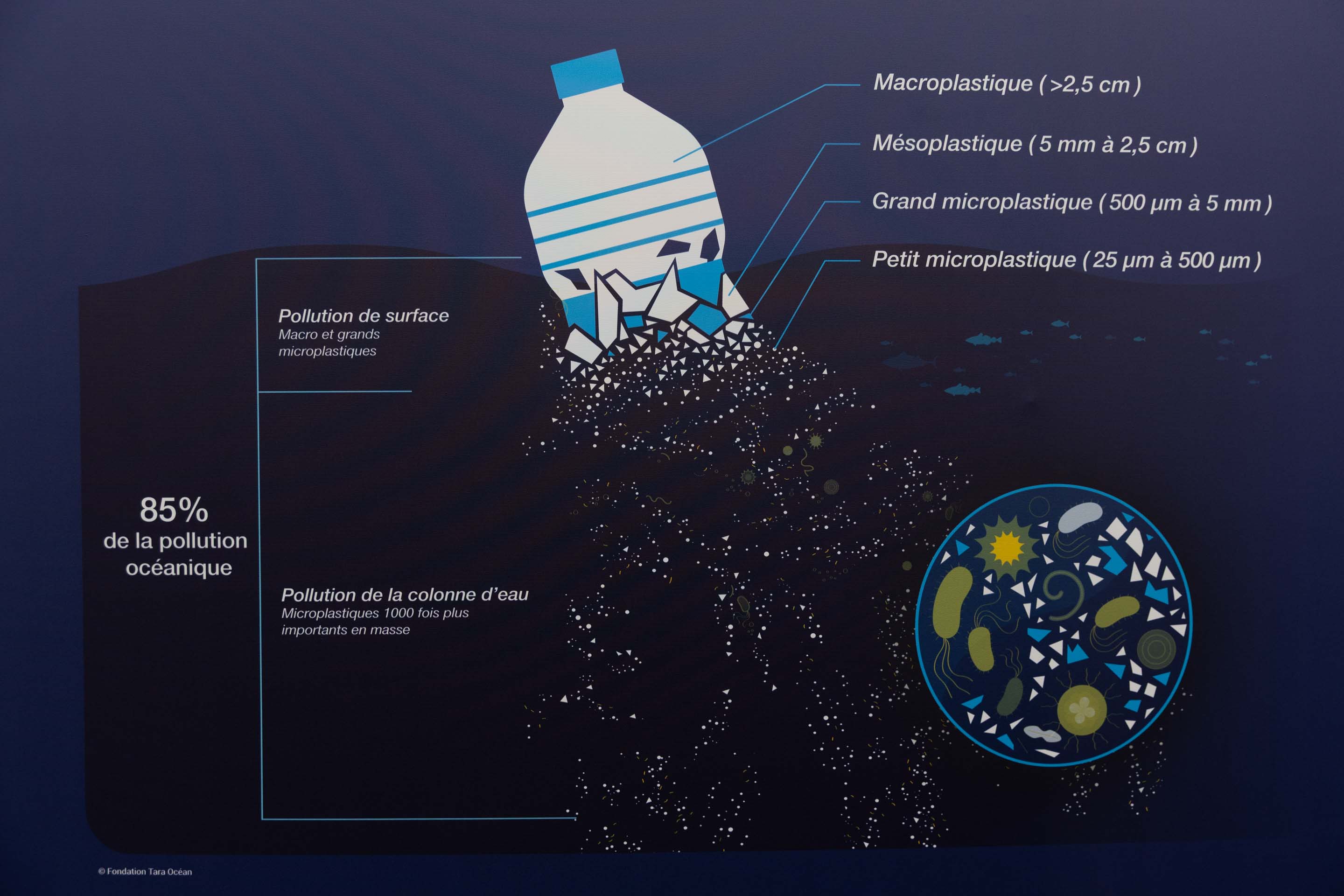
The two quotes by Karen Sack, Executive Director, Ocean Risk and Resilience Action Alliance (ORRAA) and Charles Goddard, Editorial Director, The Economist Group, moderators of the two Ocean Action Panels that convened during the day, captured the focus of the second day of deliberations at the third UN Ocean Conference (UNOC3). Discussions in the Ocean Action Panels focused on mobilizing finance for Ocean actions in support of Sustainable Development Goal 14 (SDG 14, life below water) and on preventing and significantly reducing marine pollution of all kinds, in particular from land-based activities.
Throughout the day, general debate continued in plenary with more than 50 high-level delegates presenting national efforts toward sustainable Ocean governance, reaffirming their commitment to a healthy Ocean. The full set of statements can be found here: https://webtv.un.org/en/asset/k15/k15im09ki7, https://webtv.un.org/en/asset/k1y/k1y10msnw6
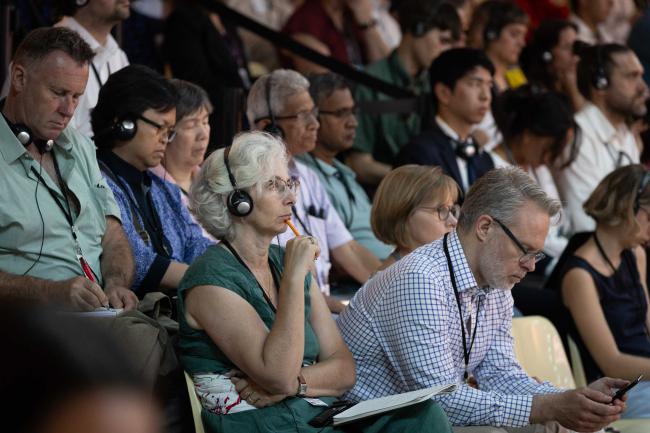
Co-chaired by Kamina Johnson Smith, Minister of Foreign Affairs and Foreign Trade, Jamaica, and Jóhann Páll Jóhannsson, Minister of the Environment, Energy and Climate, Iceland, the morning’s Ocean Action Panel highlighted the critical importance of closing the finance gap to achieve SDG 14.
Johnson Smith urged sharing best practices, data, knowledge, and expertise to identify challenges and opportunities in deploying innovative forms of financial mobilization. Jóhannsson underscored that, in addition to increasing financial flows, redirecting finance away from harmful subsidies and toward sustainability, ensuring that “no one is left behind” is equally important.
Participants, among other things:
- stressed the need to address the fragmented funding landscape, calling for rationalization and consolidation of the international financial architecture and the establishment of a dedicated global Ocean financing mechanism, with some highlighting the One Ocean Finance Facility;
- drew attention to innovative tools such as blue bonds, debt for nature swaps, blue carbon credits, and parametric insurance; and
- urged attending to implementation and capacity gaps for developing countries, in particular small island developing states (SIDS), including through simplified approval processes, carefully designed eligibility criteria, and modalities for direct access removing administrative and procedural barriers.
Devoted to actions that can contribute to meaningfully addressing marine pollution, the afternoon’s Ocean Action Panel was co-chaired by Messouda Mint Baham Ould Mohamed Laghdhaf, Minister of Environment and Sustainable Development, Mauritania, and Carsten Schneider, Federal Minister for the Environment, Nature Conservation, Climate Protection and Nuclear Safety, Germany.
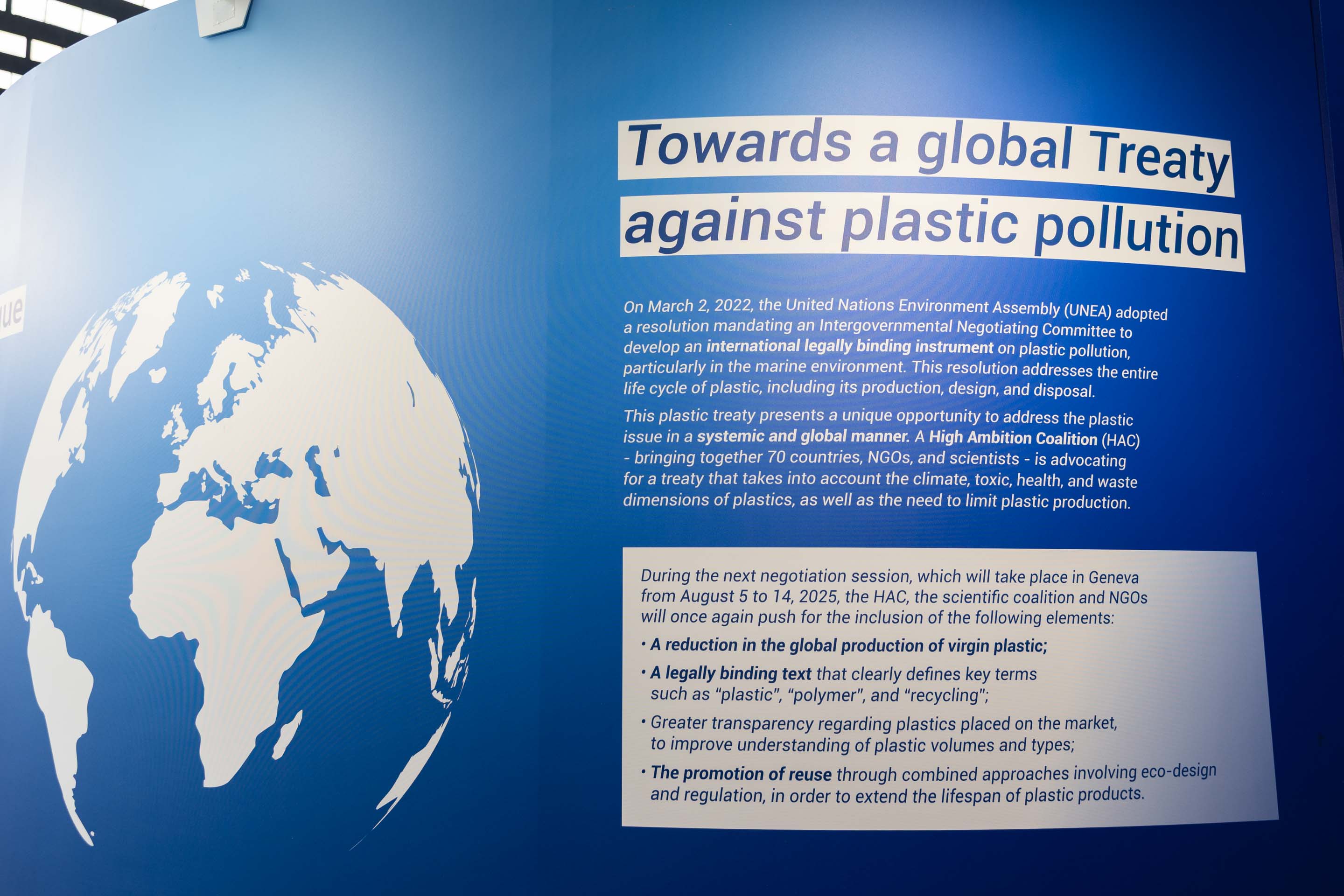
In opening remarks, Schneider stressed the need for an ambitious plastics treaty and highlighted action for the recovery and clearance of legacy munitions. Laghdhaf emphasized ongoing deliberations for the establishment of a global science-policy panel to contribute further to the sound management of chemicals and waste and to prevent pollution.
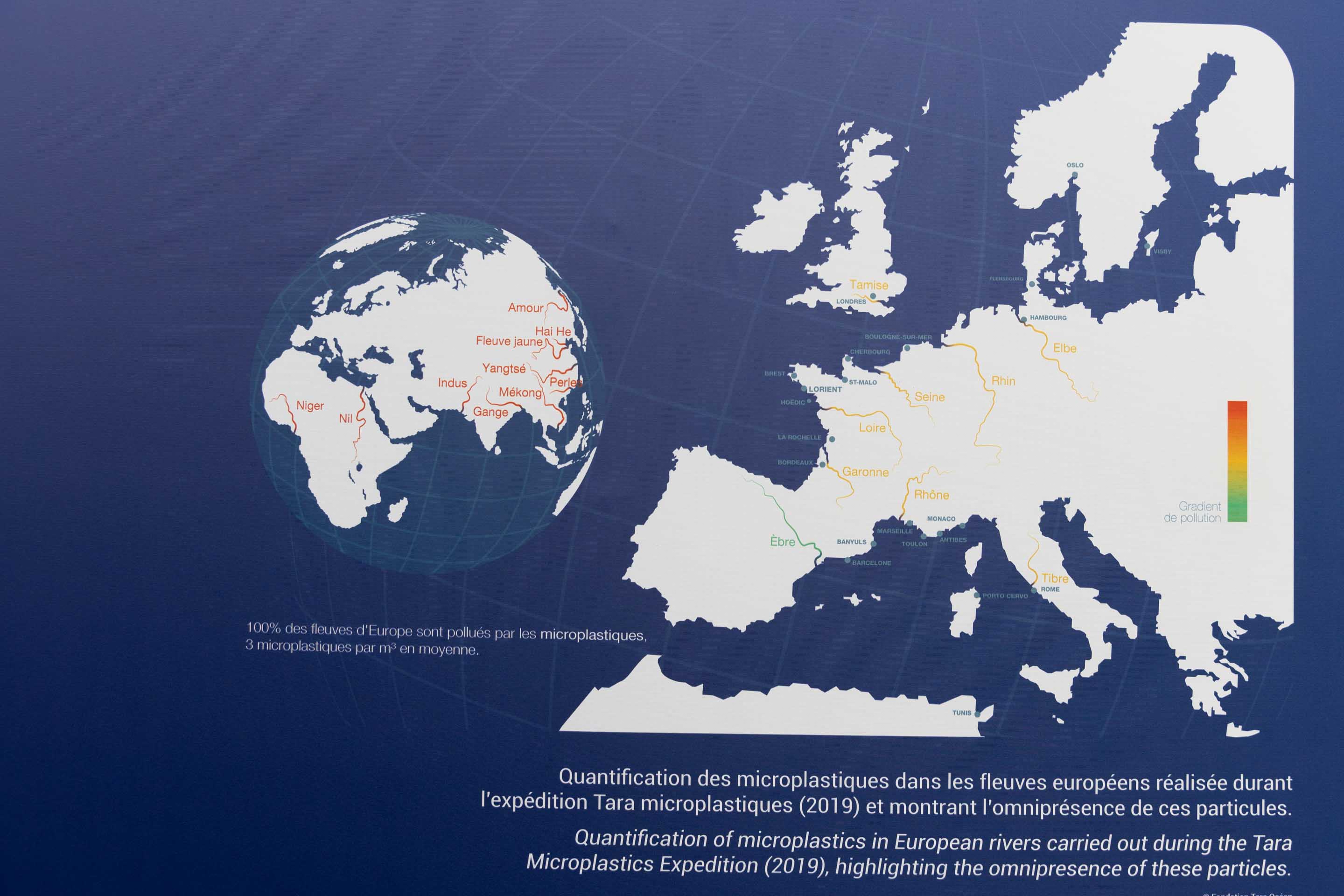
Stressing that “countries are working hard to get to the finish line,” Inger Andersen, Executive Director, UN Environment Programme (UNEP), expressed optimism regarding the conclusion of negotiations for a plastics treaty, and highlighted progress made in other areas, including through various international conventions on pollution control.
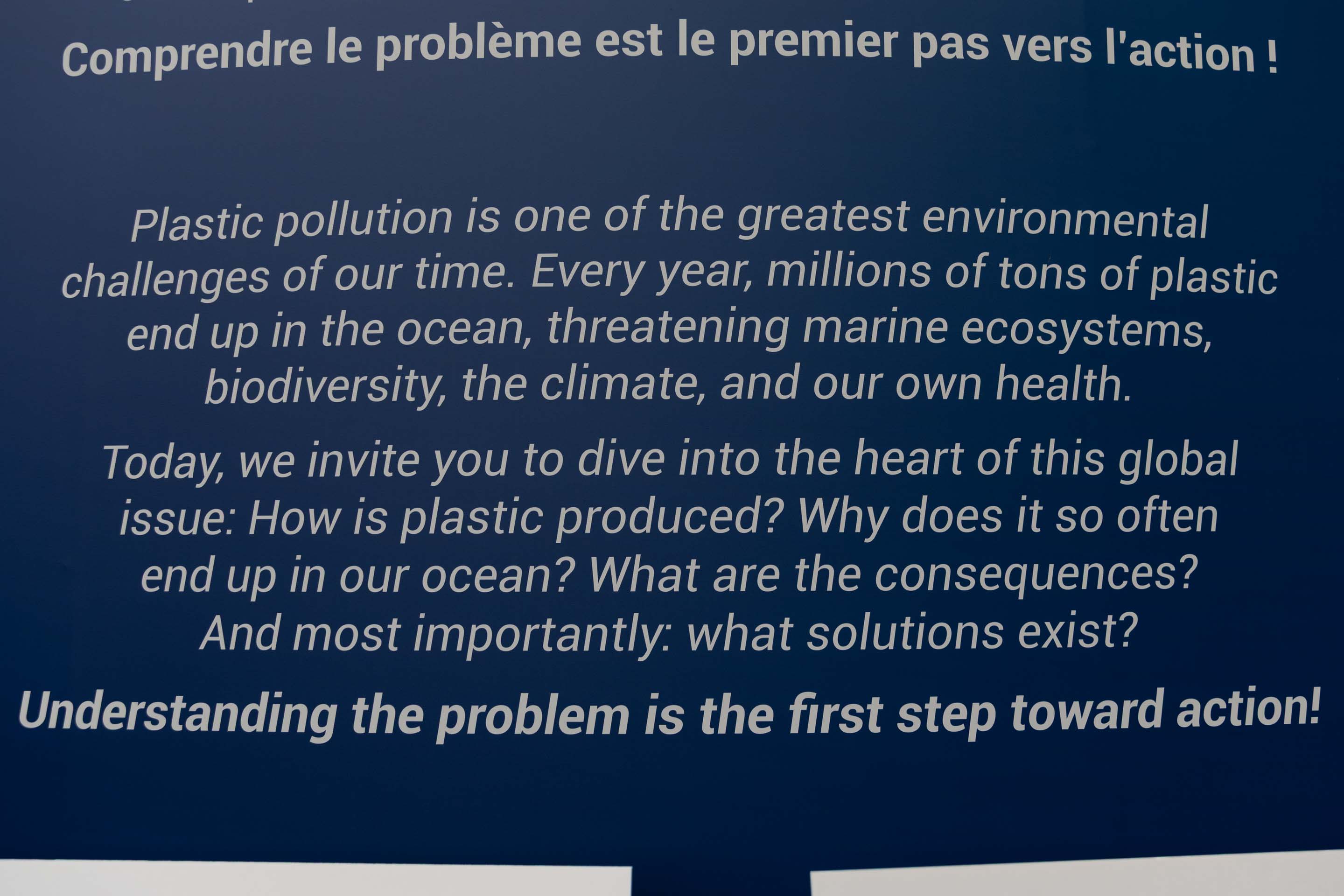
During discussions, delegates and participants highlighted the importance of reaching consensus on a plastics treaty addressing the entire lifecycle of plastics, emphasizing that it will constitute “a win for multilateralism, the environment, and human health”. They further underscored, among other things:
- the need for a collective approach and transboundary cooperation, stressing that pollution knows no borders;
- national and regional efforts concerning waste management and pollution control; and
- the need for greater international cooperation, technology transfer, capacity building, shared monitoring systems, and predictable financing to support developing countries, in particular SIDS, in operationalizing a circular economy and tackling marine pollution.
To receive free coverage of global environmental events delivered to your inbox, subscribe to the ENB Update newsletter.
All ENB photos are free to use with attribution. For the 2025 UN Ocean Conference please use: Photo by IISD/ENB - Kiara Worth
Ocean Action Panel 3: Mobilizing Finance for Ocean Actions in the Support of SDG 14

Panel speakers for Ocean Action Panel 3

Mafalda Duarte, Executive Director, Green Climate Fund (GCF)

Ulrike Decoene, Head of Communication, Brand and Sustainability, AXA Group

Panel Co-chairs: Kamina Johnson Smith, Minister of Foreign Affairs and Foreign Trade, Jamaica, and Jóhann Páll Jóhannsson, Minister of the Environment, Energy and Climate, Iceland

Pradeep Kurukulasuriya, Executive Secretary, UN Capital Development Fund (UNCDF)
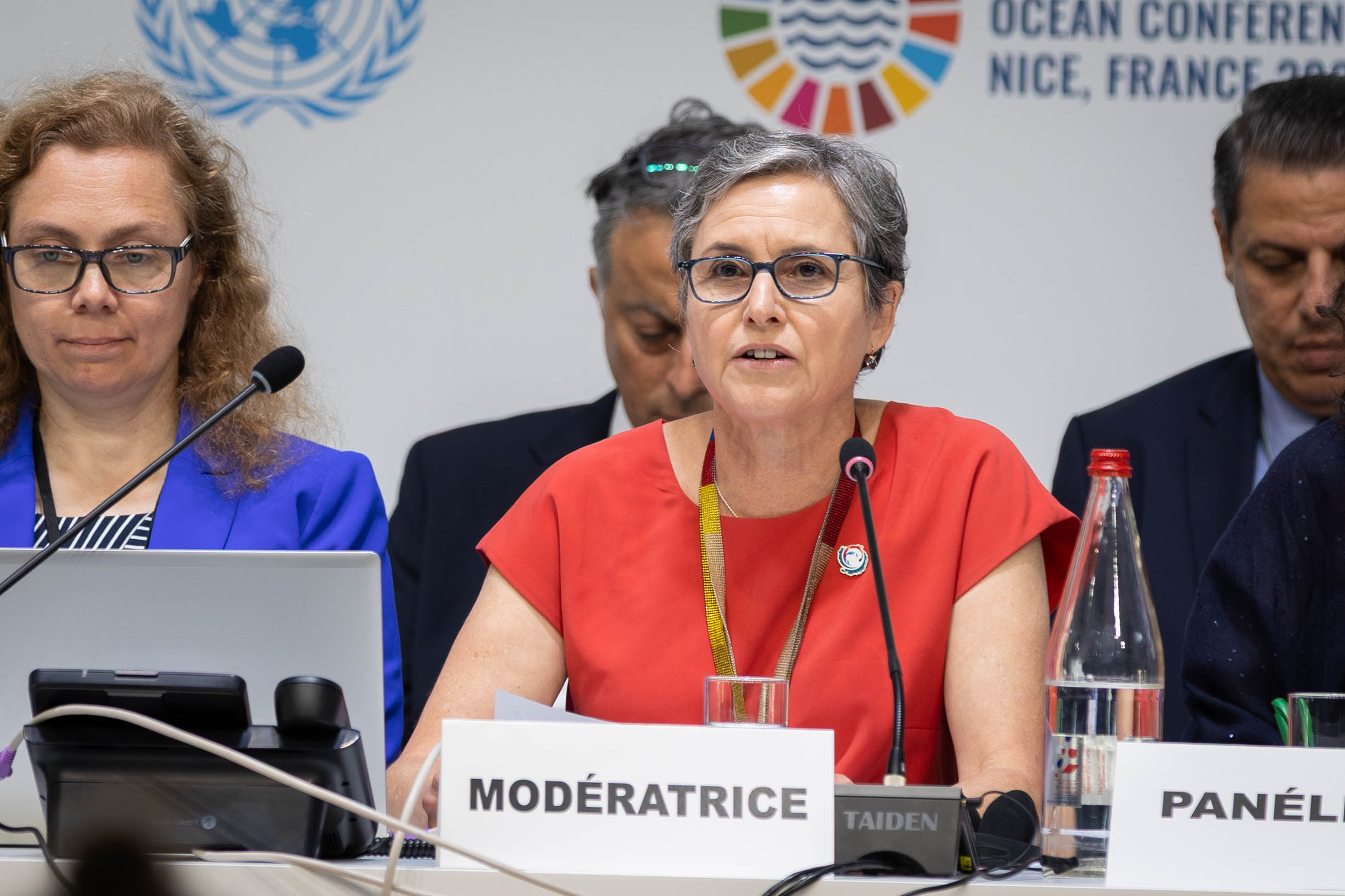
Moderator Karen Sack, Executive Director, Ocean Risk and Resilience Action Alliance (ORRAA)
Delegates listen to the interventions

Dona Bertarelli, Co-Chair, Bertarelli Foundation

Mathias Cormann, Secretary-General, Organisation for Economic Co-operation and Development (OECD)
Pieternel Boogaard, Managing Director, Office of Technical Delivery, International Fund for Agricultural Development (IFAD)

Jorge Moreira da Silva, Executive Director, UN Office for Project Services (UNOPS)


Cindy Larissa Rodríguez, Vice-Minister of Foreign Affairs, Honduras

Steven Victor, Minister of Agriculture, Fisheries and Environment, Palau, on behalf of the Pacific Islands States
Francine Pickup, UN Development Programme (UNDP)

Jing Wang, SEE (Society of Entrepreneurs and Ecology) Foundation
General Debate

The general debate continued throughout the day with ministers delivering statements

Jitendra Singh, Minister of Earth Sciences, India

Marianne Sivertsen Næss, Minister of Fisheries and Ocean Policy, Norway

Alicia Bárcena, Secretary of the Environment and Natural Resources, Mexico
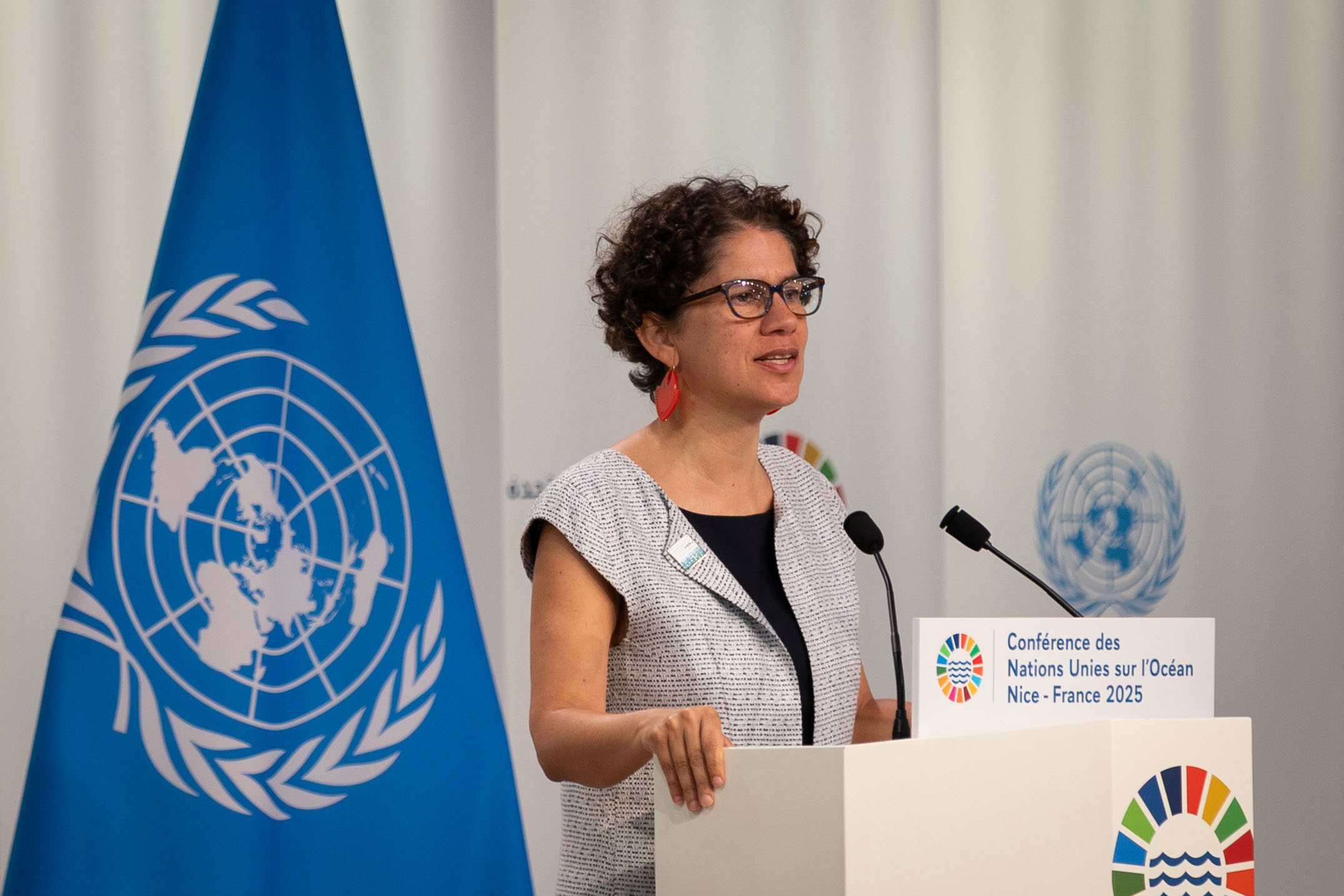
Maisa Rojas, Minister for the Environment, Chile
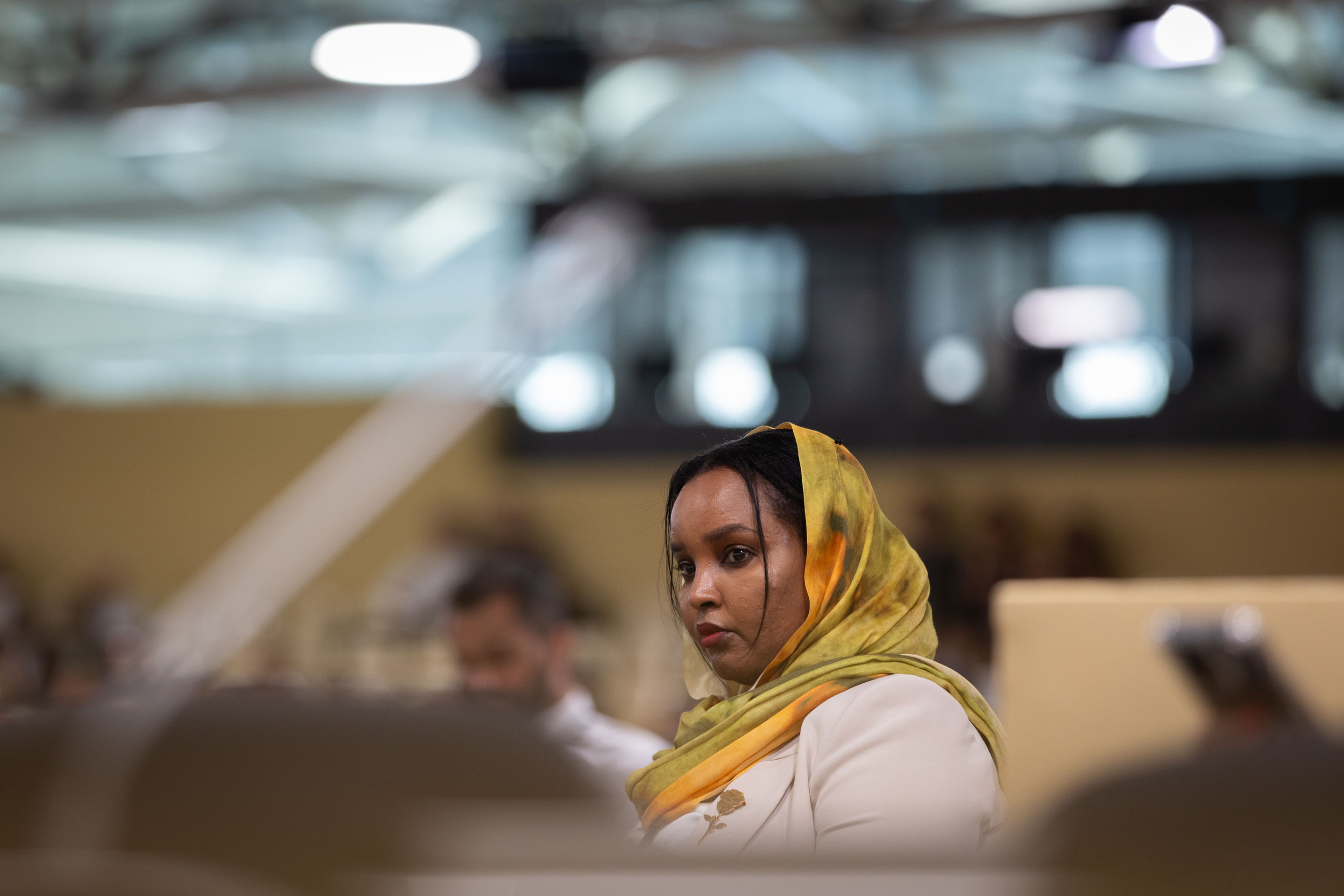
Delegates listen to the interventions
Ocean Action Panel 4: Preventing and Significantly Reducing Marine Pollution of all Kinds, in Particular from Land-based Activities
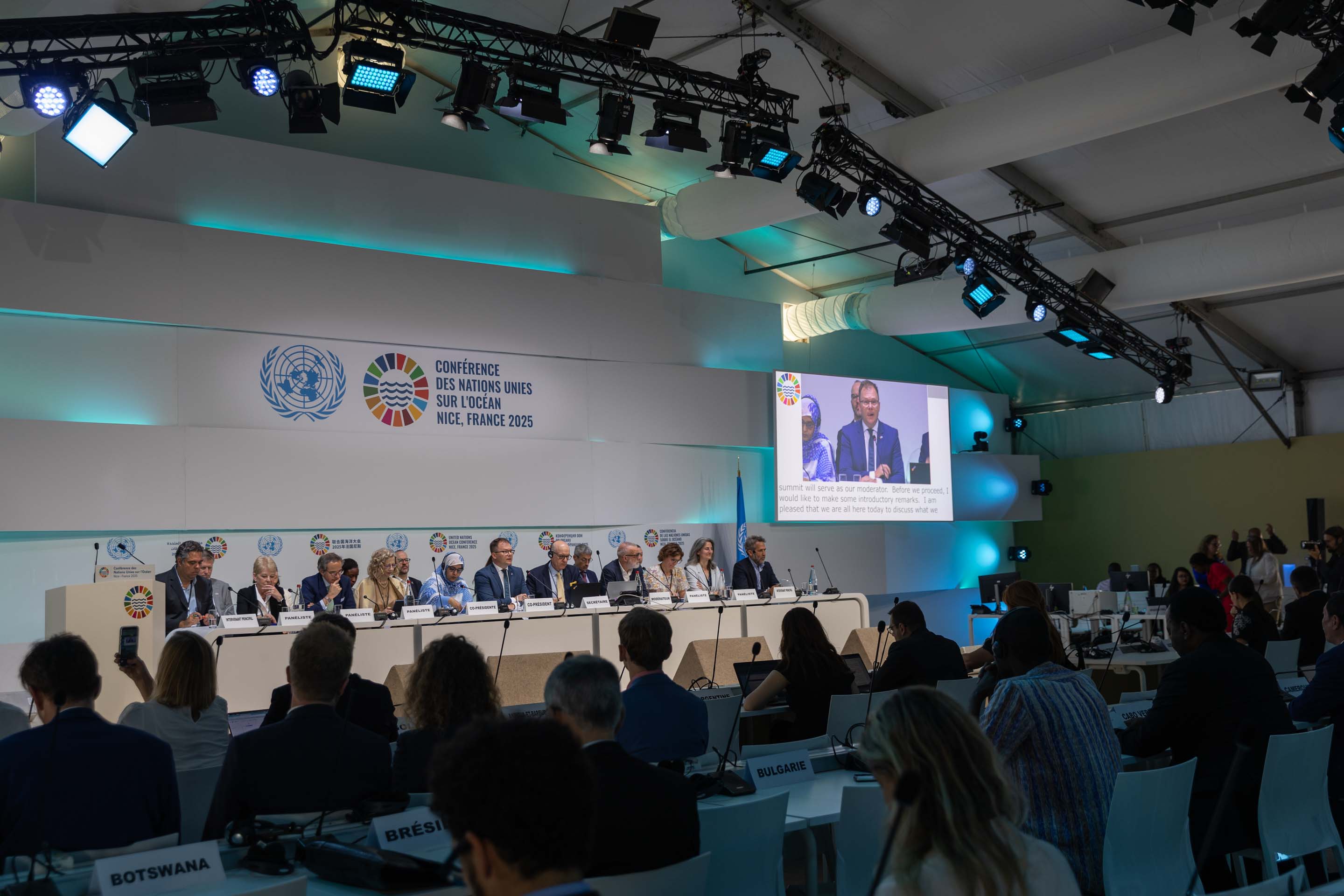
Panel speakers for Ocean Action Panel 4
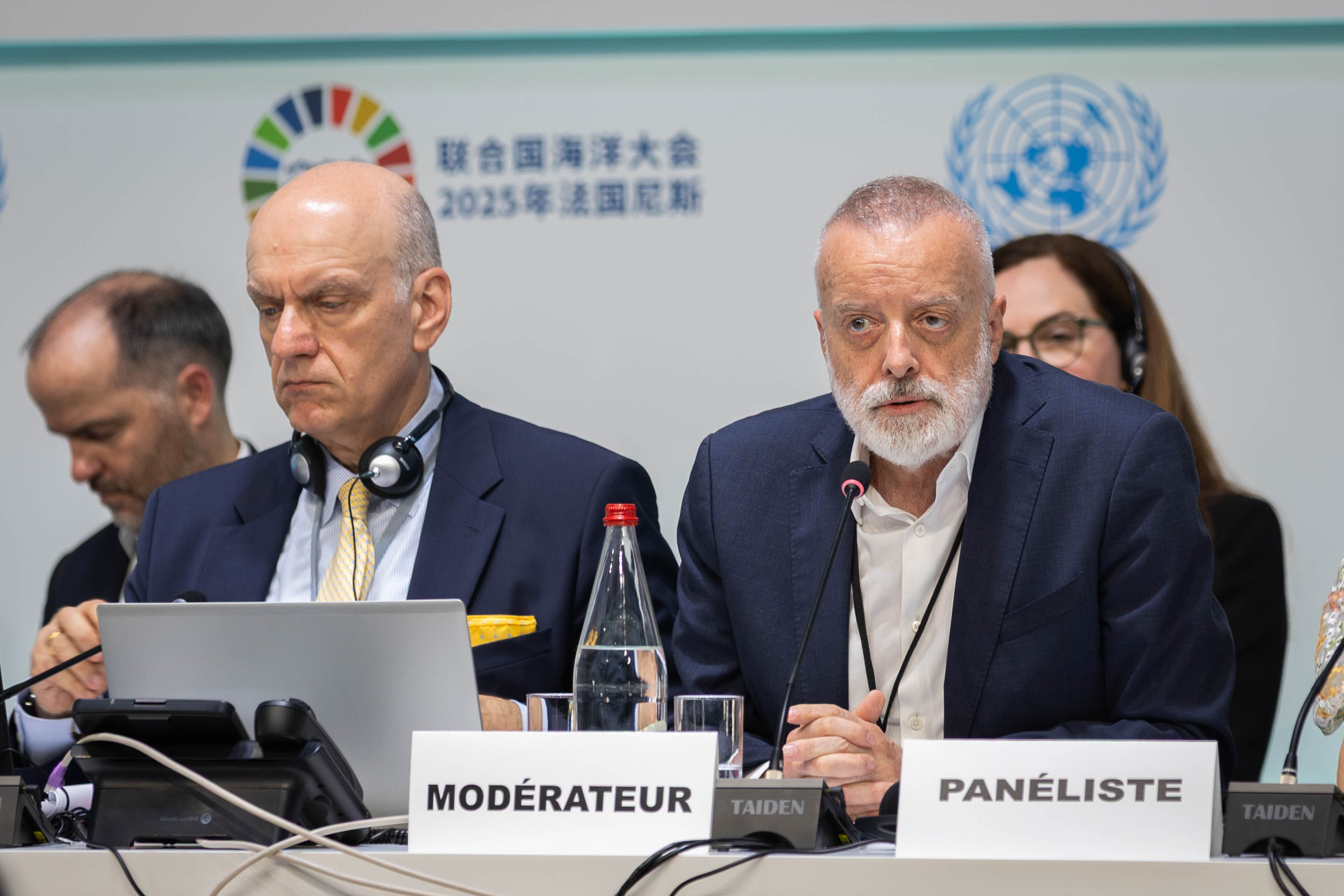
Charles Goddard, Editorial Director, The Economist Group
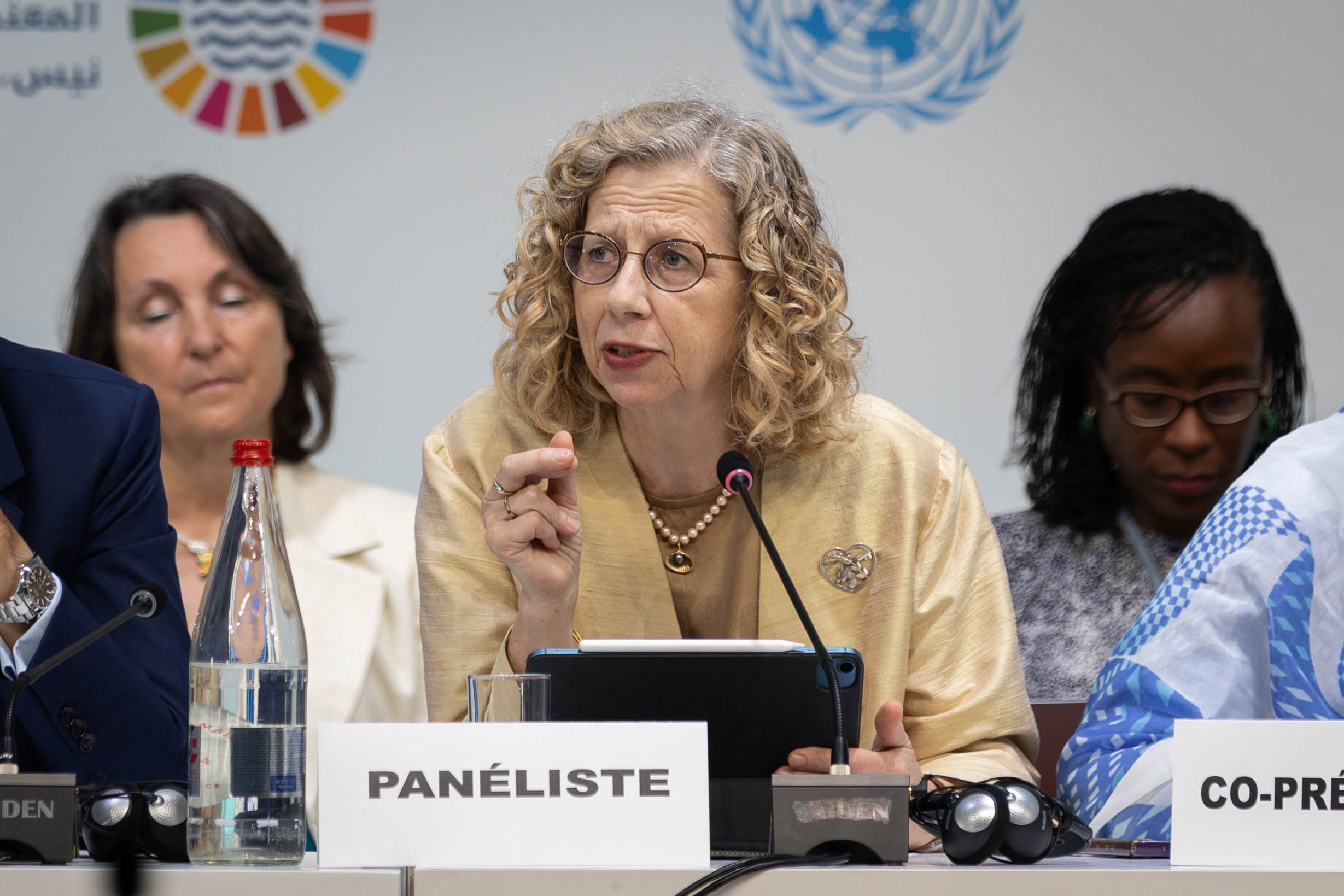
Inger Andersen, Executive Director, UN Environment Programme (UNEP)
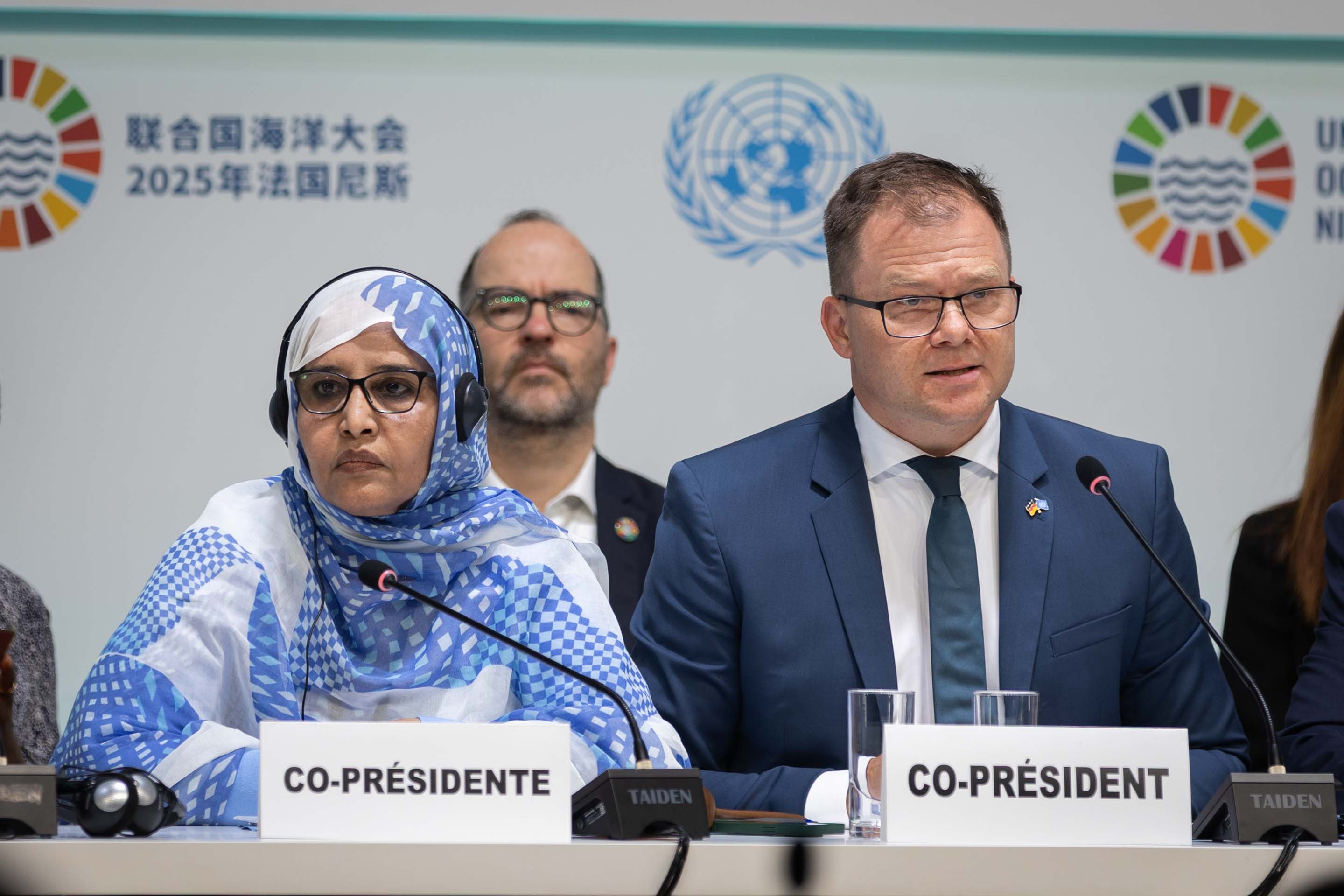
Panel Co-Chairs: Messouda Mint Baham Ould Mohamed Laghdhaf, Minister of Environment and Sustainable Development, Mauritania, and Carsten Schneider, Federal Minister for the Environment, Nature Conservation, Climate Protection and Nuclear Safety, Germany
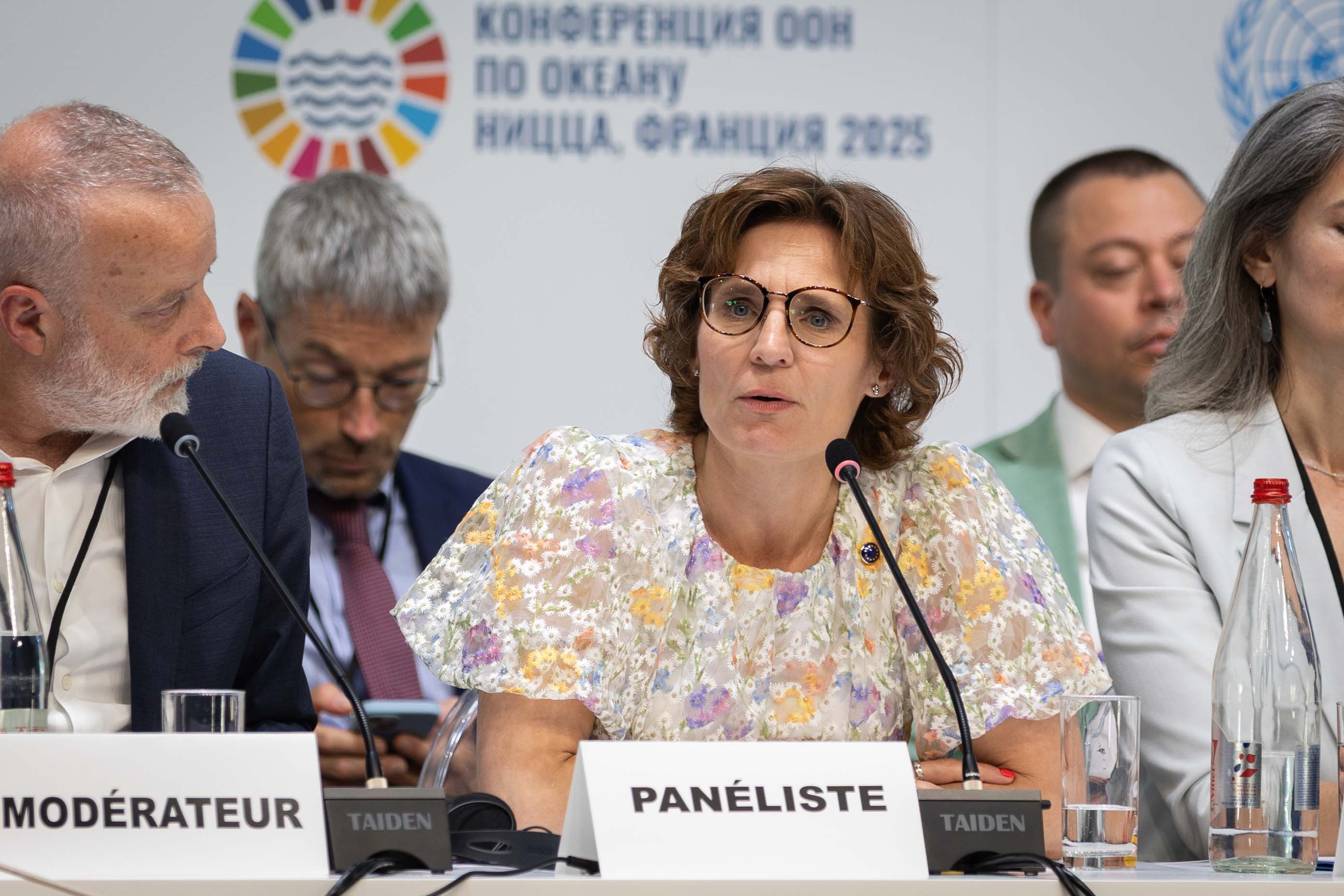
Jessika Roswall, Commissioner for Environment, Water Resilience and a Competitive Circular Economy, European Commission
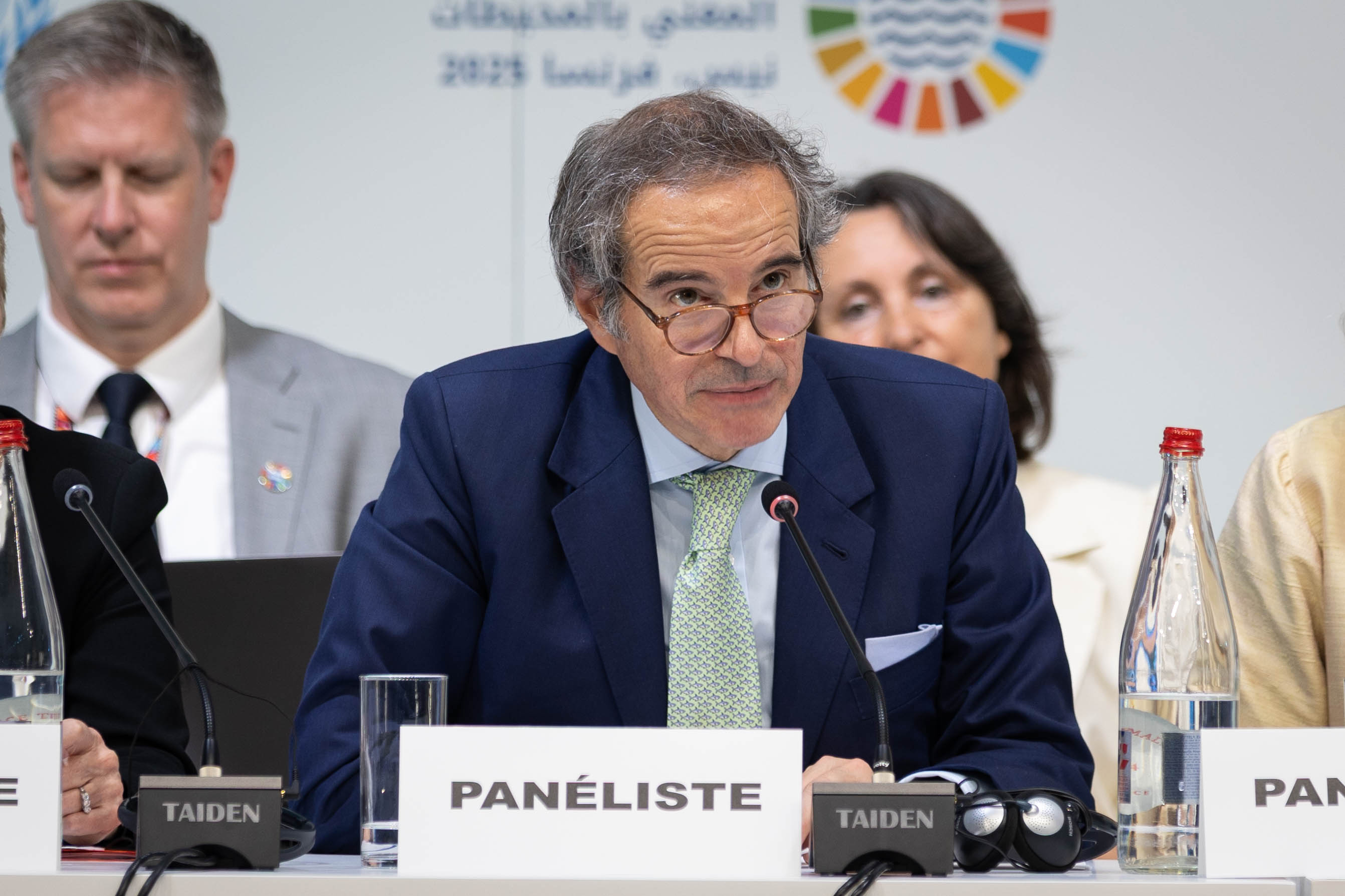
Rafael Mariano Grossi, Director General, International Atomic Energy Agency (IAEA)
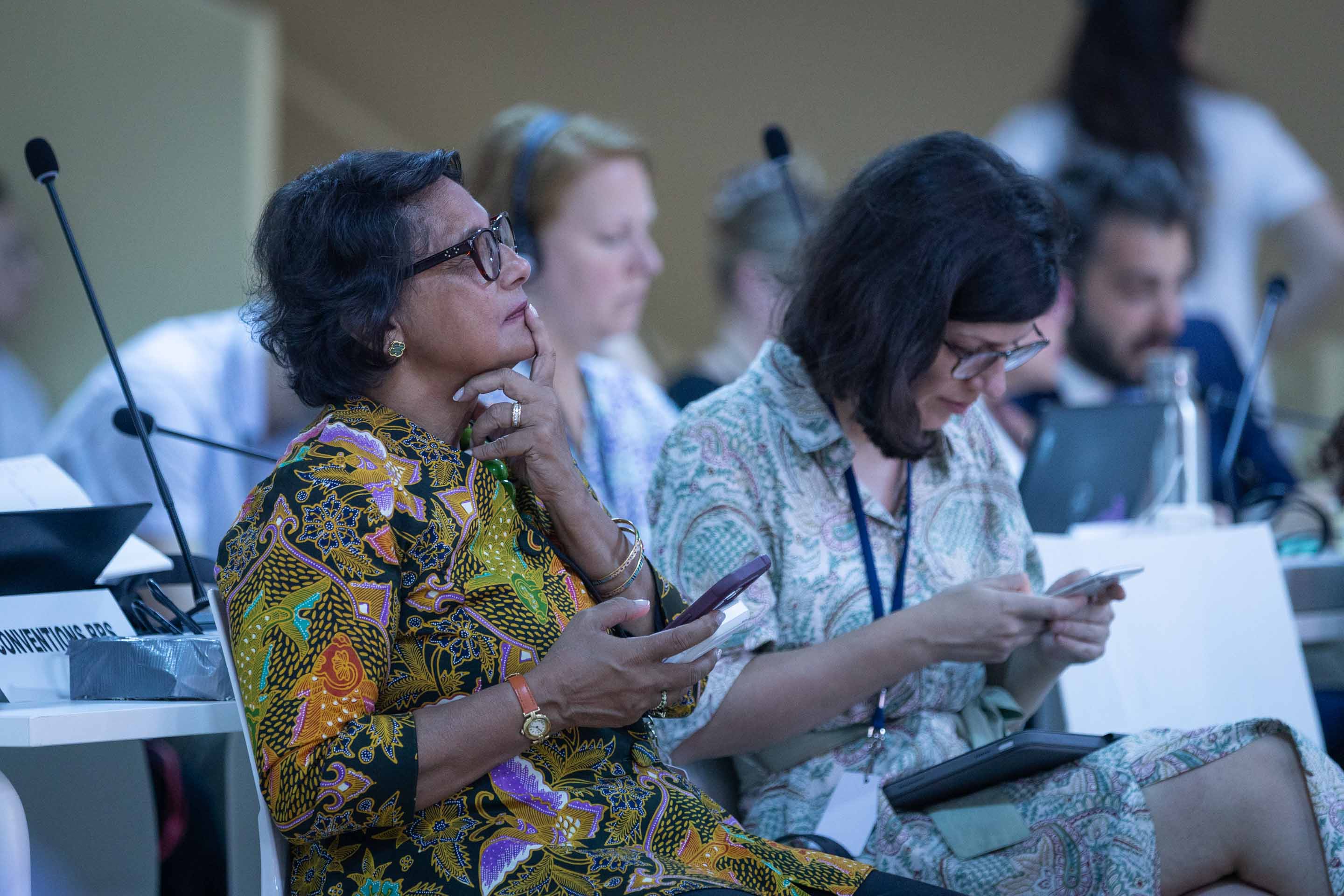
Jyoti Mathur-Filipp, Executive Secretary, Intergovernmental Negotiating Committee on Plastic Pollution, listens to the discussions
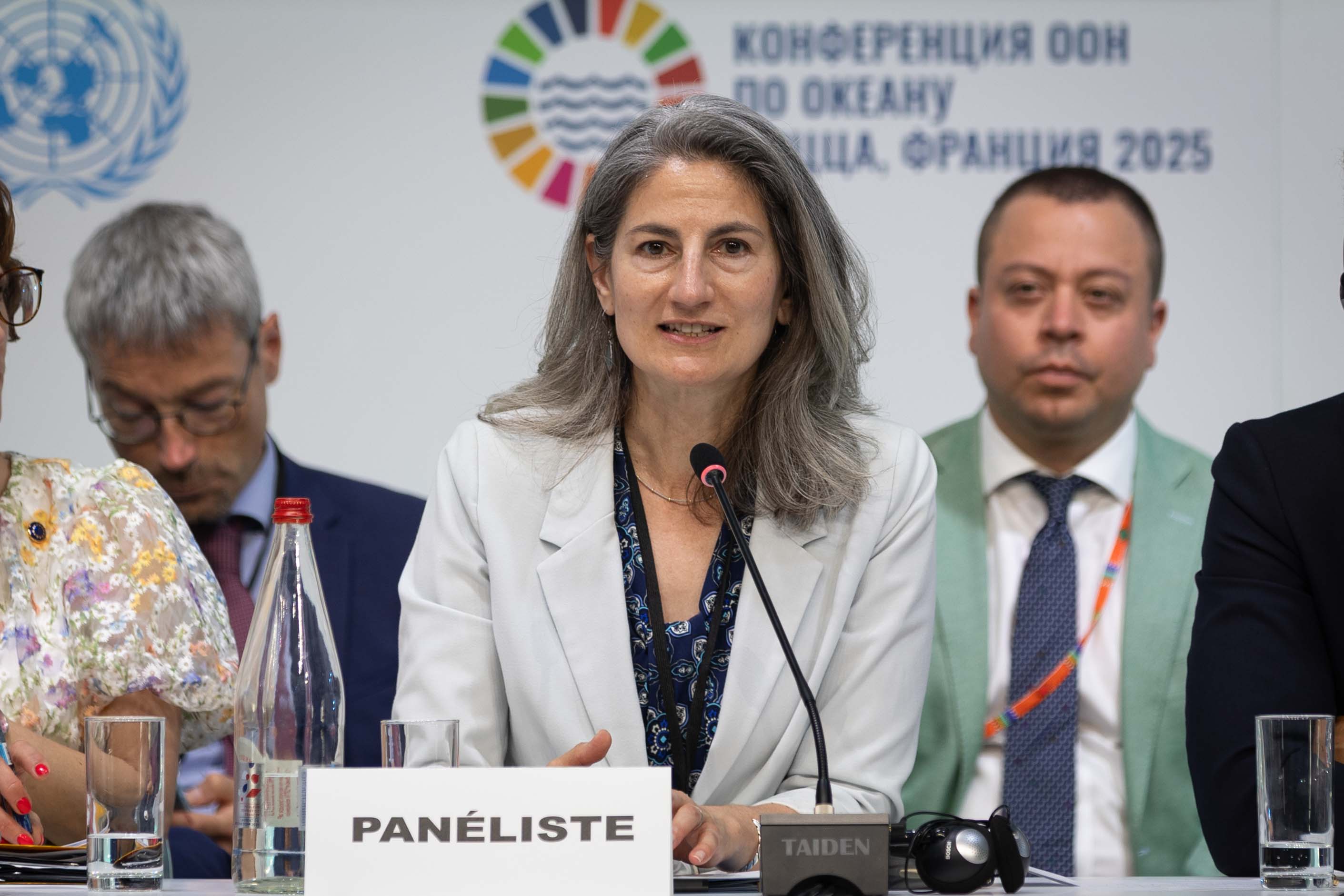
Janis Searles Jones, CEO, Ocean Conservancy
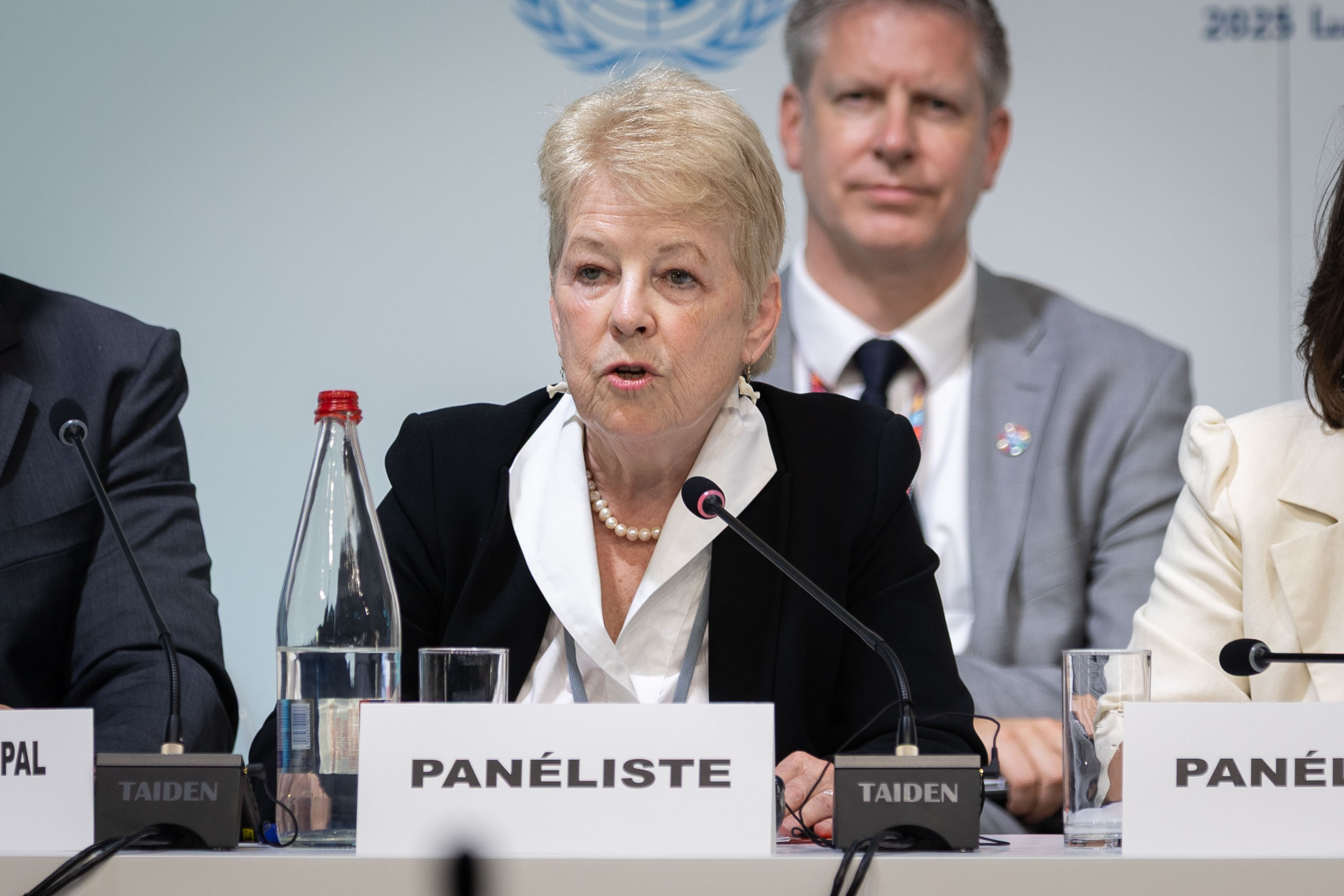
Wendy Watson-Wright, Chair, Joint Group of Experts on the Scientific Aspects of Marine Environmental Protection (GESAMP)
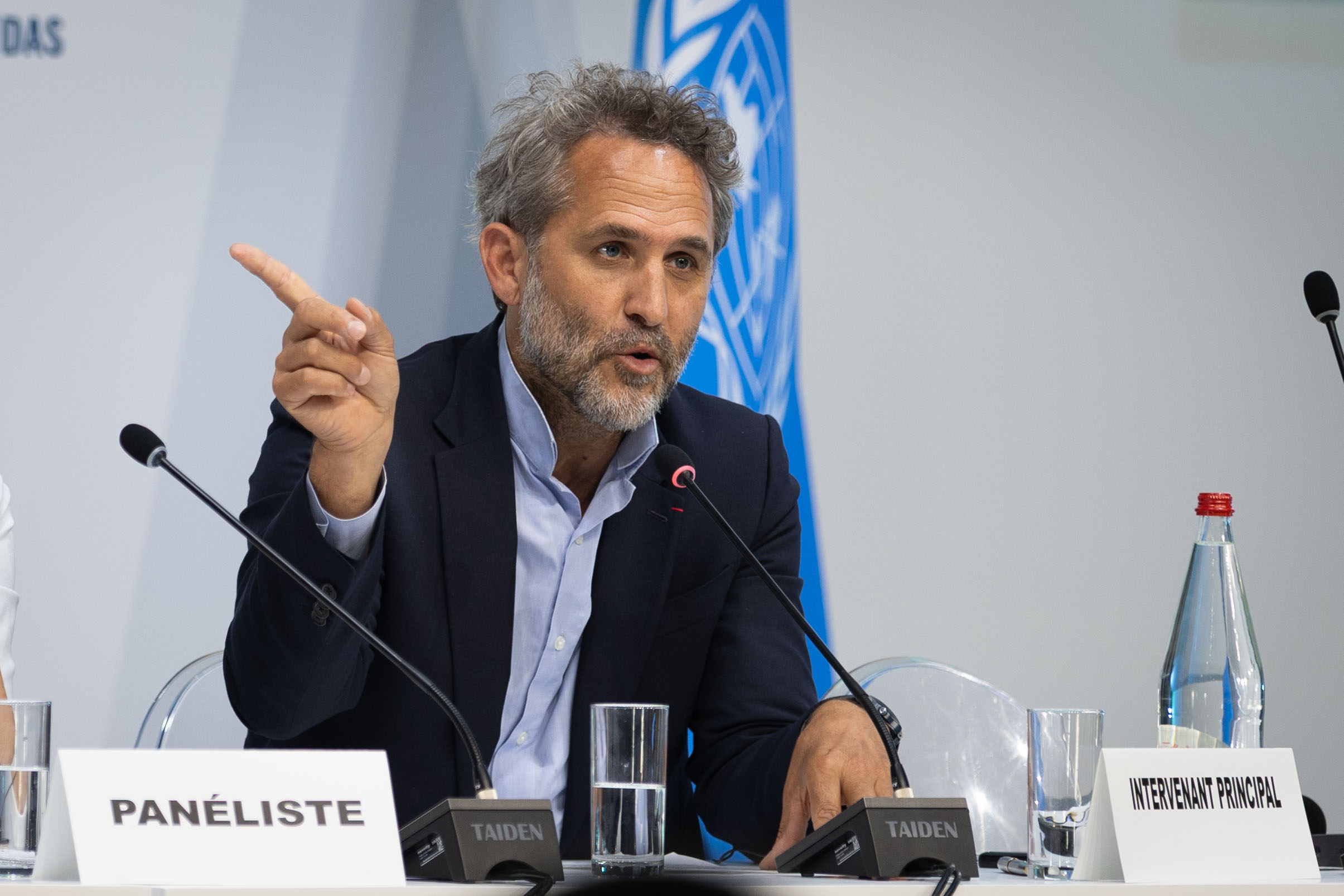
Romain Troublé, Managing Director, Tara Ocean Foundation
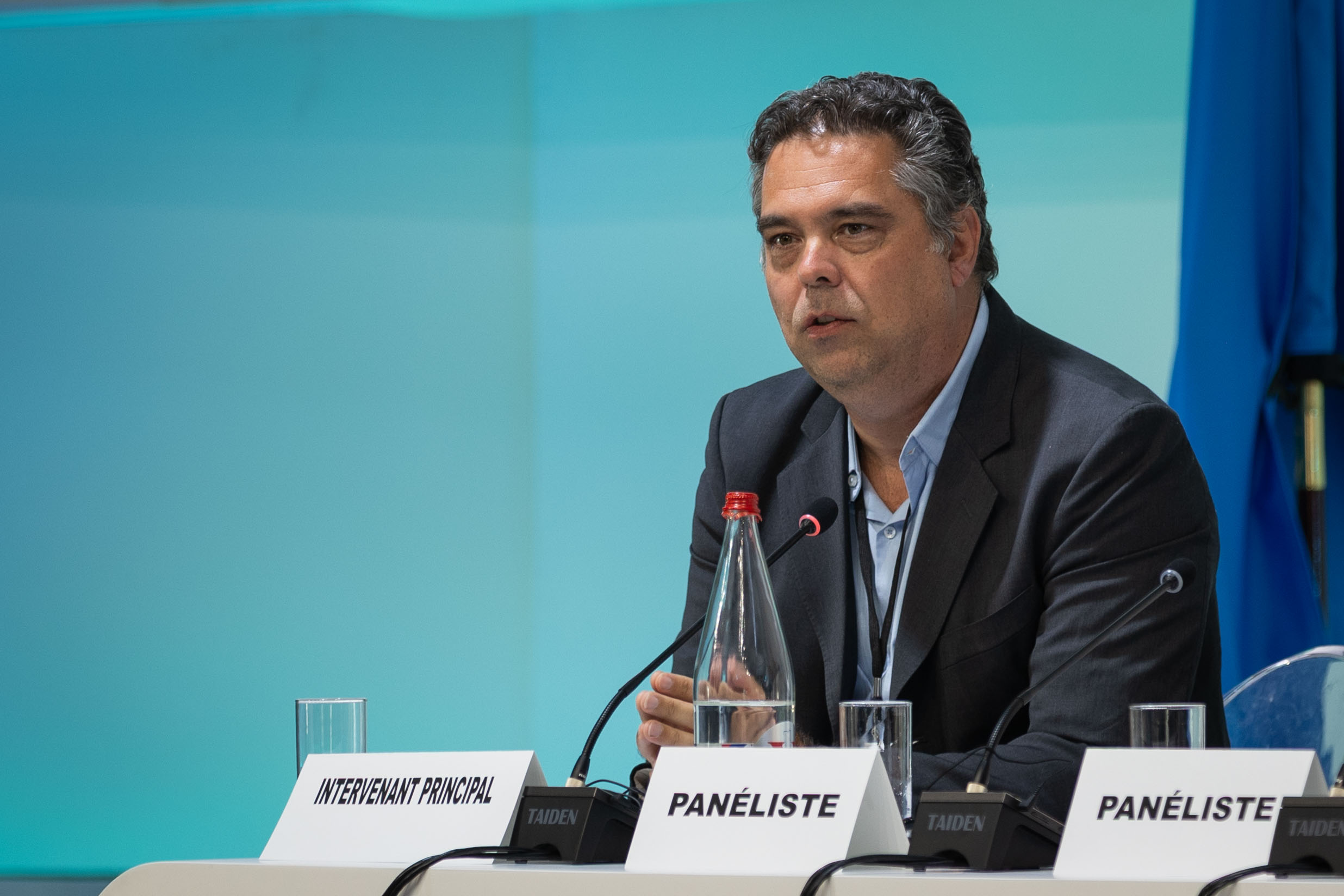
Alexander Turra, Convener of Oceans 20
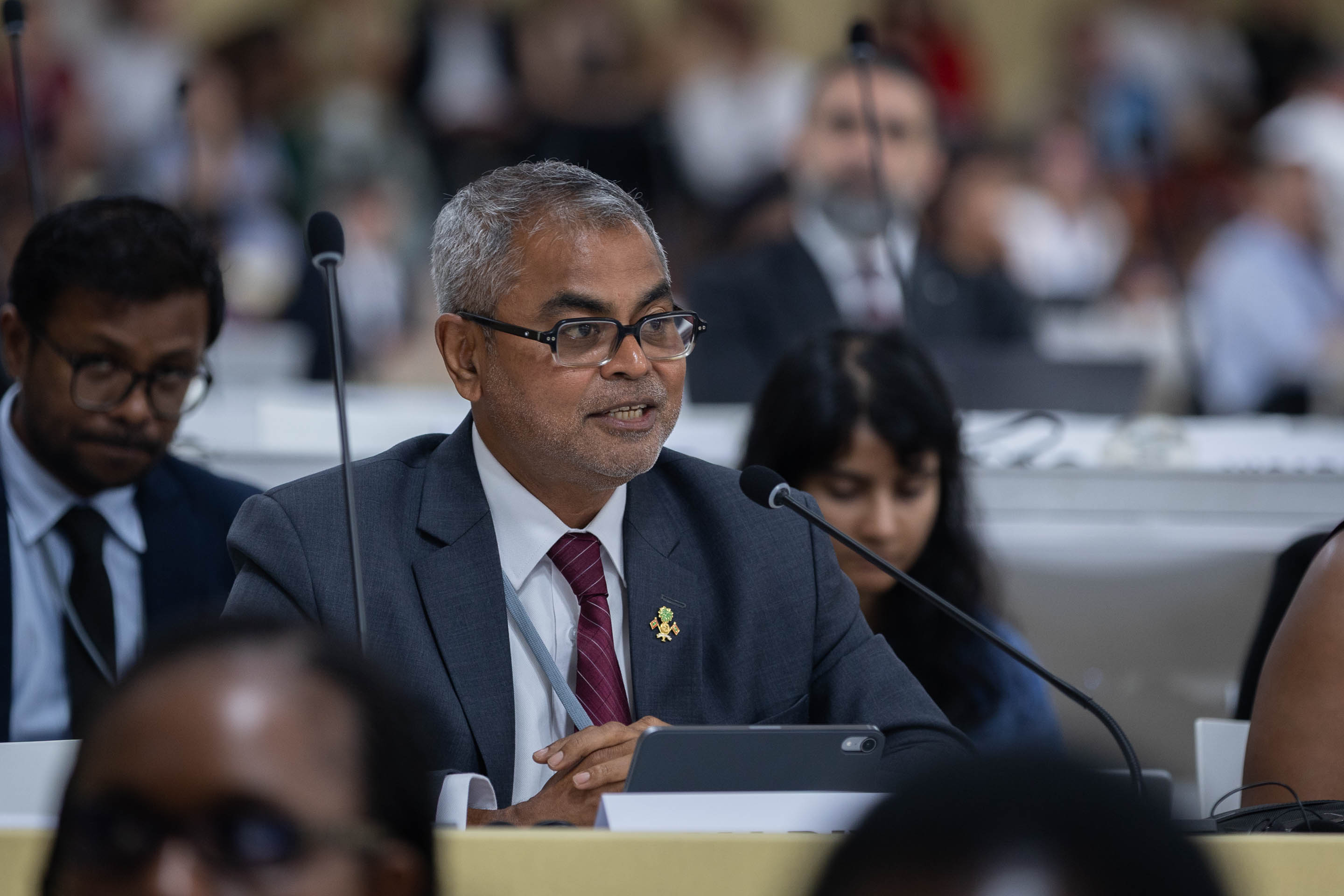
Thoriq Ibrahim, Minister of Tourism and Environment, Maldives
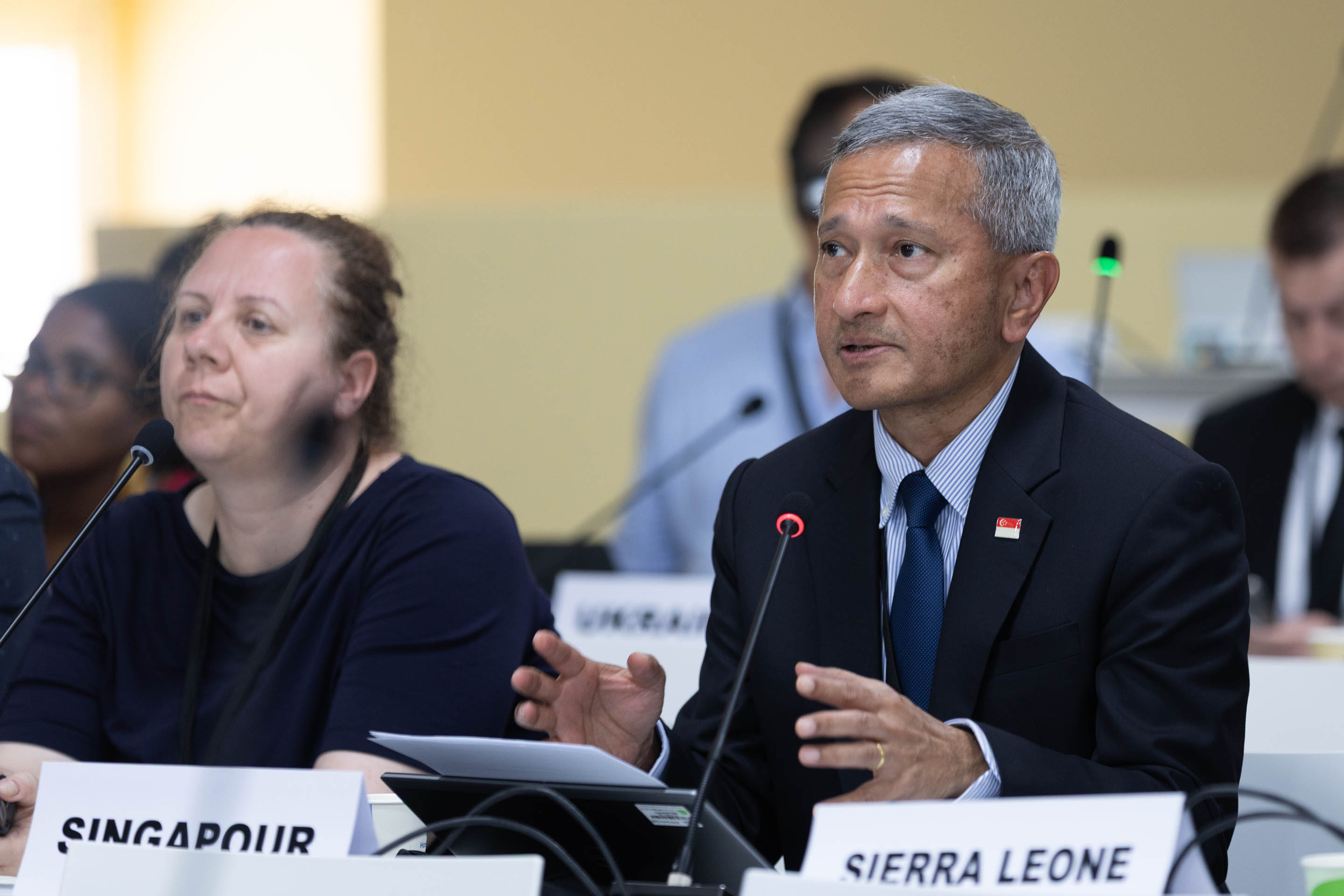
Vivian Balakrishnan, Minister for Foreign Affairs, Singapore
Around the Venue
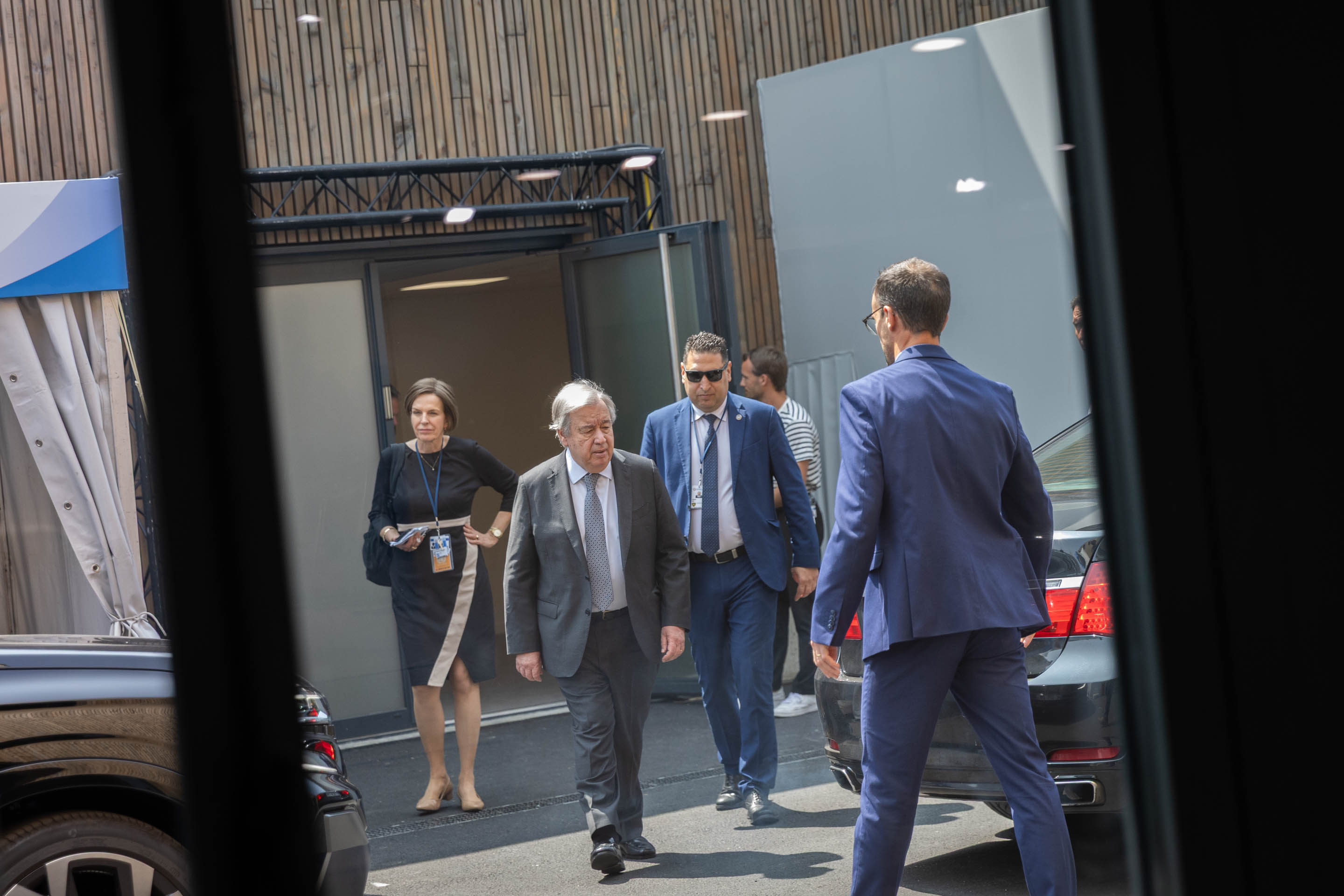
António Guterres, UN Secretary-General
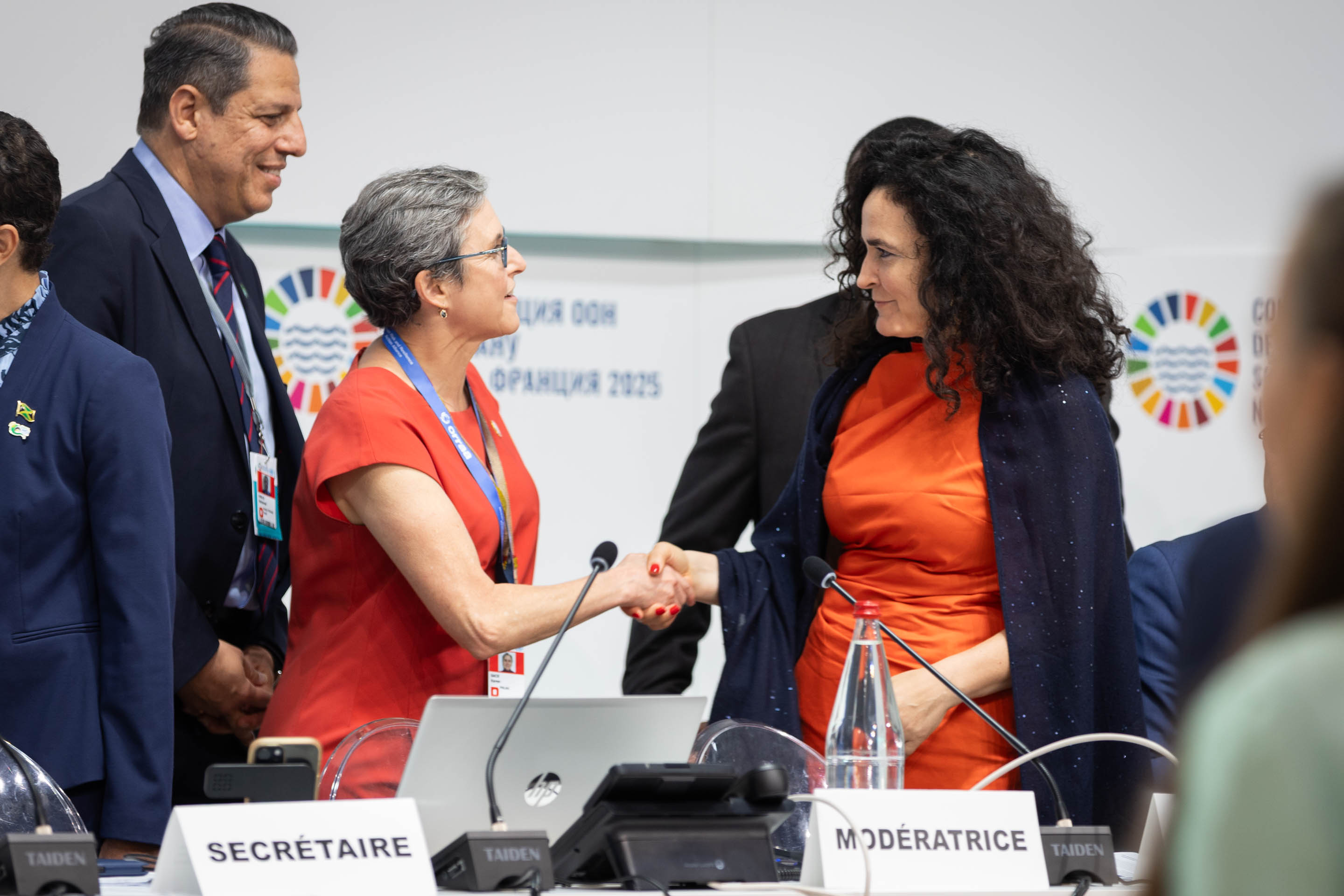
Karen Sack, Executive Director, ORRAA, speaks with Mafalda Duarte, Executive Director, GCF
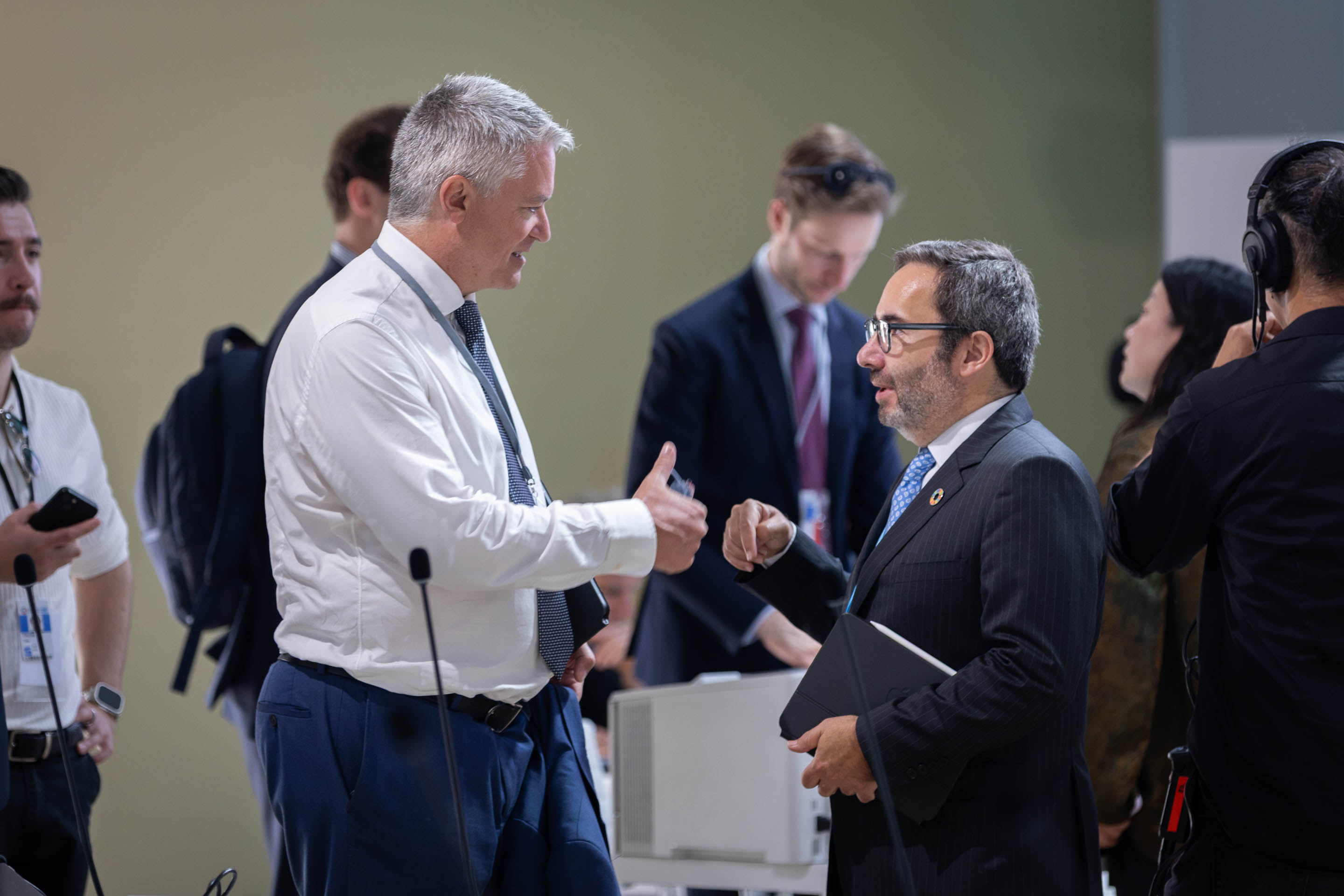
Mathias Cormann, Secretary-General, OECD, speaks with Jorge Moreira da Silva, Executive Director, UNOPS
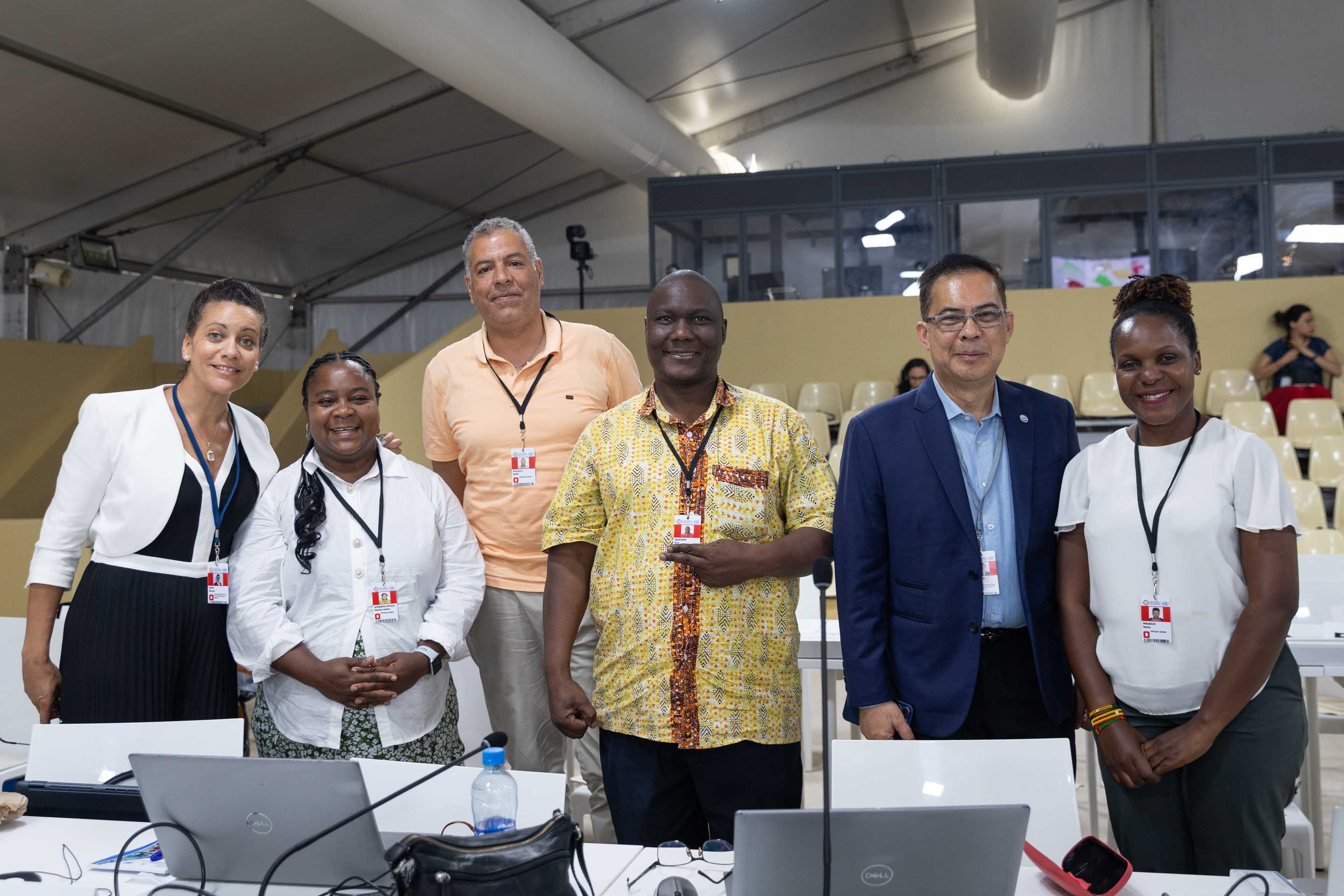
Delegates from the International Union for Conservation of Nature (IUCN) and the African Union (AU)

Around the Green Zone