A Fijian cultural ceremony of welcome—featuring dance, song, and symbolic gifts of mats made from local materials—reminded ministers and delegates that this first meeting of the Forum to convene in the Pacific was both symbolic and urgent. Manoa Kamikamica, Fiji’s Deputy Prime Minister and Minister for Trade, Cooperatives, Small and Medium Enterprises (SMEs) & Communications, called attention to the lived realities of the region. “The fight for climate justice is not theoretical,” he said. “It is the preservation of our identity.” He noted recent decisions in environmental governance which have recognized anthropogenic greenhouse gases (GHGs) as pollutants of the marine environment and the legal obligations of States to protect the climate system.
Ministers and senior officials at the meeting sought to build momentum for action, leveraging off of these recent developments. Delegates elected Mosese Bulitavu, Fiji’s Environment Minister as Chair, and Thoriq Ibrahim, Minister of Environment, Maldives, and Rasio Ridho Sani, Deputy Minister of Environment, Indonesia, as Vice Chairs. They then launched into substantive discussions on the challenges ahead.
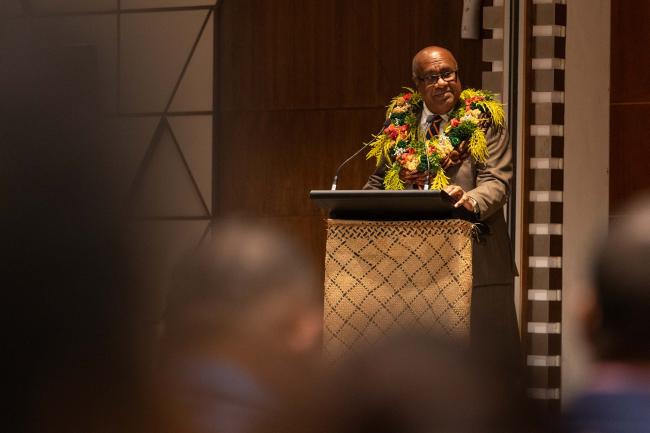
In the morning, a ‘Ministerial Dialogue on advancing sustainable solutions for a resilient planet in Asia and the Pacific’ took place. Many SIDS stressed the urgency for action on addressing sea-level rise. The Philippines noted that 63% of regional GDP for the Asia-Pacific (USD 90 trillion) is at risk due to nature loss and climate change. Several South Asian nations called for equal attention and international financing for both mitigation and adaptation, noting that adaptation is under funded.
Many countries urged making progress towards a plastics treaty. Tuvalu, the Cook Islands and Mongolia requested a resumption and conclusion of negotiations by the end of the year. Japan and the Republic of Korea called for increasing momentum through the UNEA-7 Ministerial Declaration. Sri Lanka proposed establishing a regional collaboration and monitoring arrangement to address marine plastic pollution to strengthen legal frameworks and bring in financing and technology.

Two side events took place at mid-day, on climate early warning systems (EWS) for resilience, and on catalyzing marine and coastal conservation as part of the ocean agenda.
In the afternoon, delegates launched into a multistakeholder dialogue about partnerships, highlighting examples of how partnerships have successfully built momentum for change. IUCN, for example, noted the BBNJ Agreement stemmed from the work of a high-ambition coalition for a high seas treaty and is almost ready to enter into force.
Hanna Helsingen, WWF Pacific, described her organization’s work in protecting “blue corridors” to protect whale and turtle migration routes, and called for a moratorium on deep sea mining, referring to the Ocean as “our greatest partnership.” Dirk Wagener, UN Resident Coordinator, Fiji Multi-Country Office, highlighted successes of multistakeholder cooperation, such as French Polynesia’s creation of the world’s largest marine reserve in 2025. Sangmin Nam, Director, Environment and Development Division, UN ESCAP, pointed to successes in renewable energy generation and action on air pollution. He invited countries’ cooperation to scale up a regional partnership for nature-based solutions.
Speaking on behalf of Major Groups and Stakeholders, Ajay Jha, Director, Centre for Community Economics and Development Consultants, cautioned that “multistakeholderism” may provide undue access to decision-making processes for corporations, while failing to provide corresponding benefits for LDCs. Fiji suggested that “inclusive multilateralism” can empower local actors by moving beyond consultations to co-design approaches.
Delegates also discussed the role of subregional organizations in accelerating sustainable solutions, which Bhutan called “the translators of global commitments into actions.”
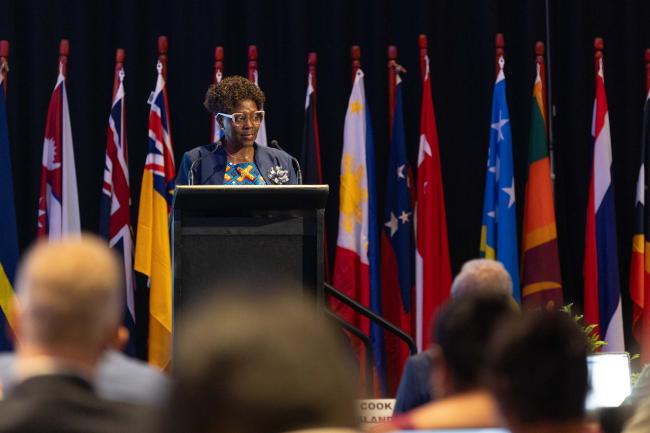
At the close of the day, delegates endorsed the Chair’s Summary. Elizabeth Maruma Mrema, Deputy Executive Director, UNEP, expressed appreciation to all delegates, participants, and organizers, stating that the meeting had been remarkable for the unprecedented participation from Pacific countries as well as from around the region, which she said had been an invaluable contribution to this milestone on the way to UNEA-7.
Bulitavu said the Forum had demonstrated “a true spirit of cooperation” and looked forward to delegates’ continued engagement in strengthening the regional environmental agenda. He closed the Forum at 7.23 pm.
To receive free coverage of global environmental events delivered to your inbox, subscribe to the ENB Update newsletter.
All ENB photos are free to use with attribution. For the 6th Forum of Ministers and Environment Authorities of Asia Pacific please use: Photo by IISD/ENB - Kiara Worth
Opening of the Ministerial Segment
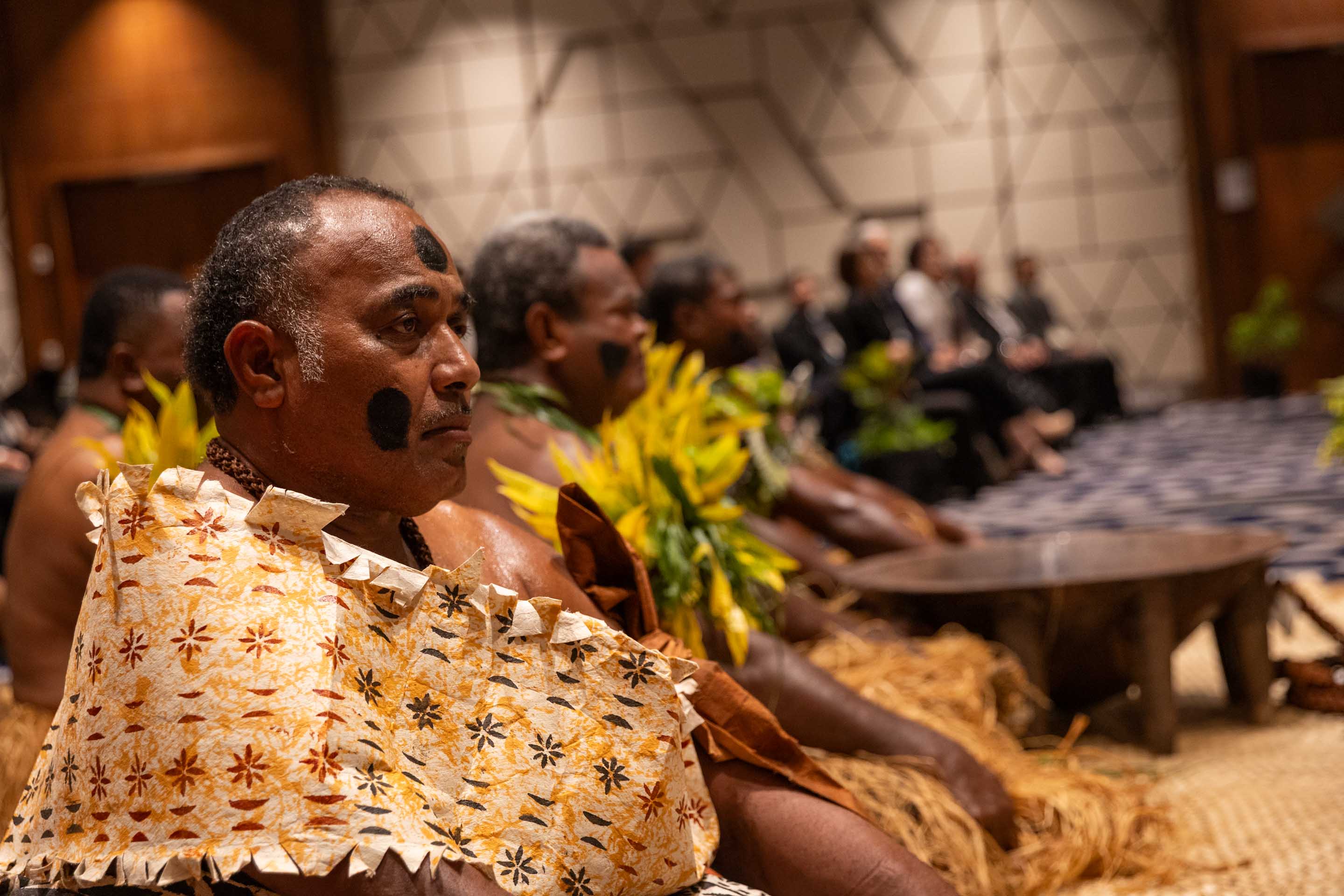
The Ministerial Segment opens with a traditional Fijian performance.

A whale tooth is offered as a sign of respect
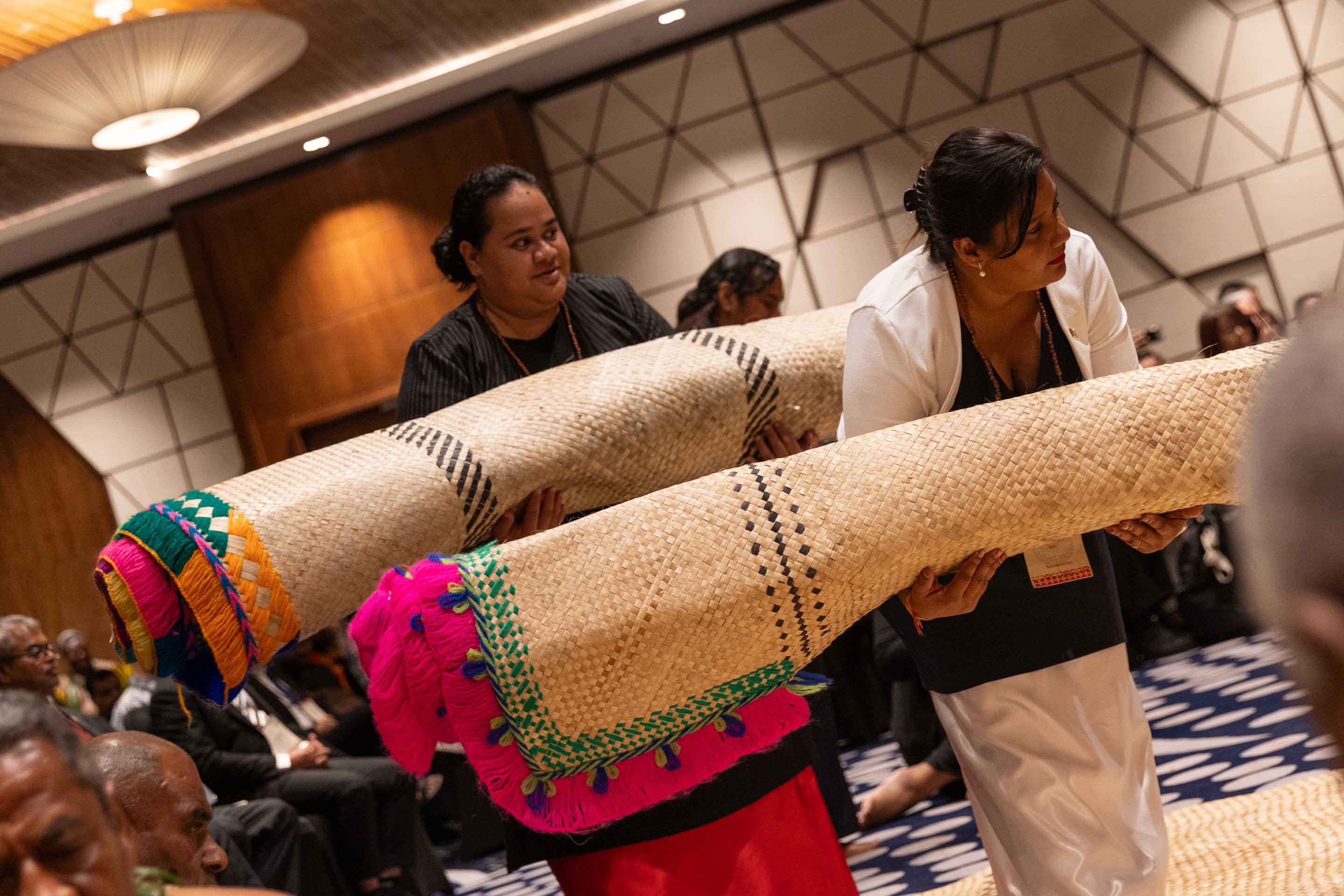
As a gesture of hospitality, women bring in woven mats so dignitaries can symbolically dry their feet

Kava, the traditional drink of Fiji, is brought in for the ceremony




The rituals are performed to song and movement

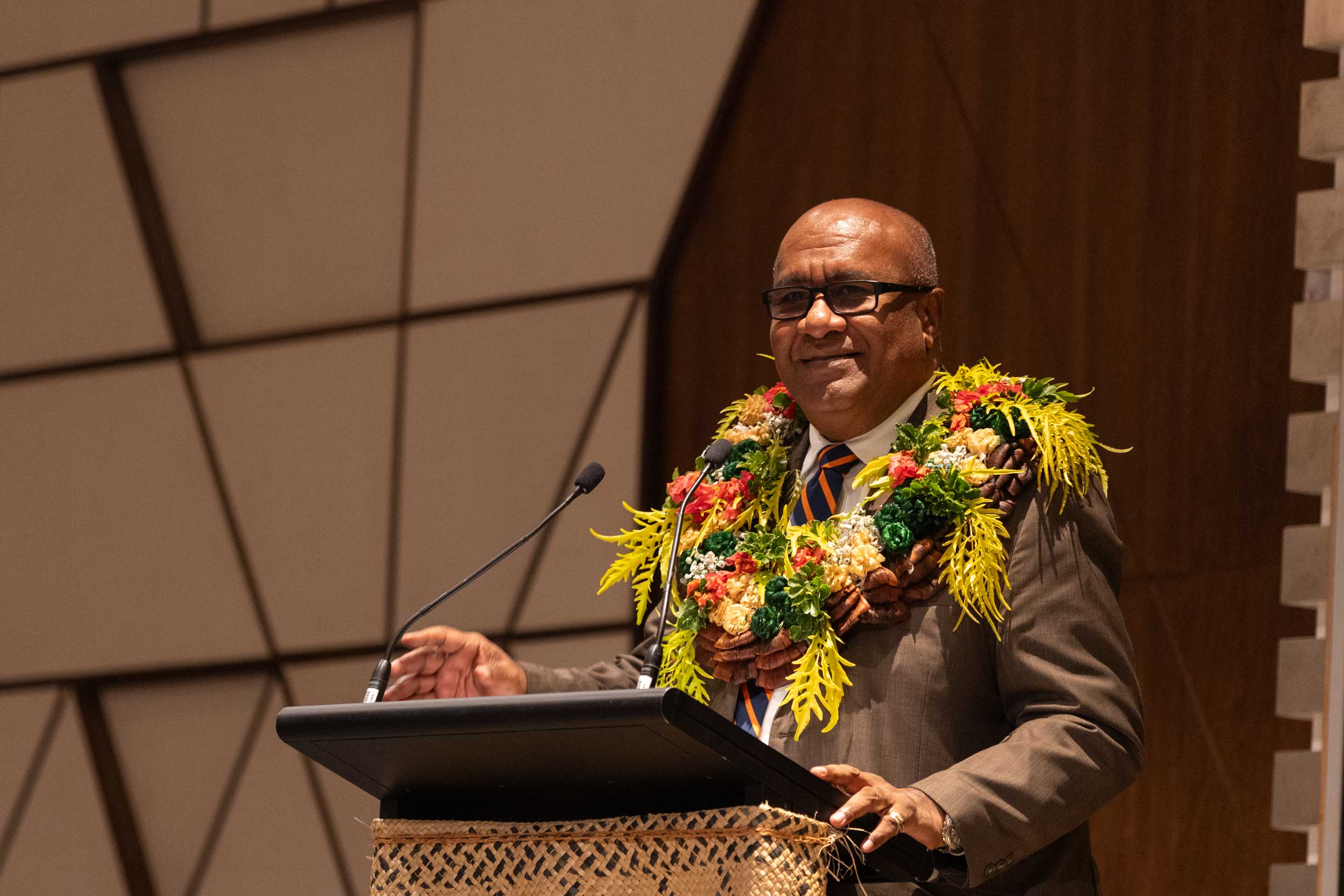
Manoa Kamikamica, Deputy Prime Minister, and Minister for Trade, Cooperatives, SMEs & Communications, Fiji
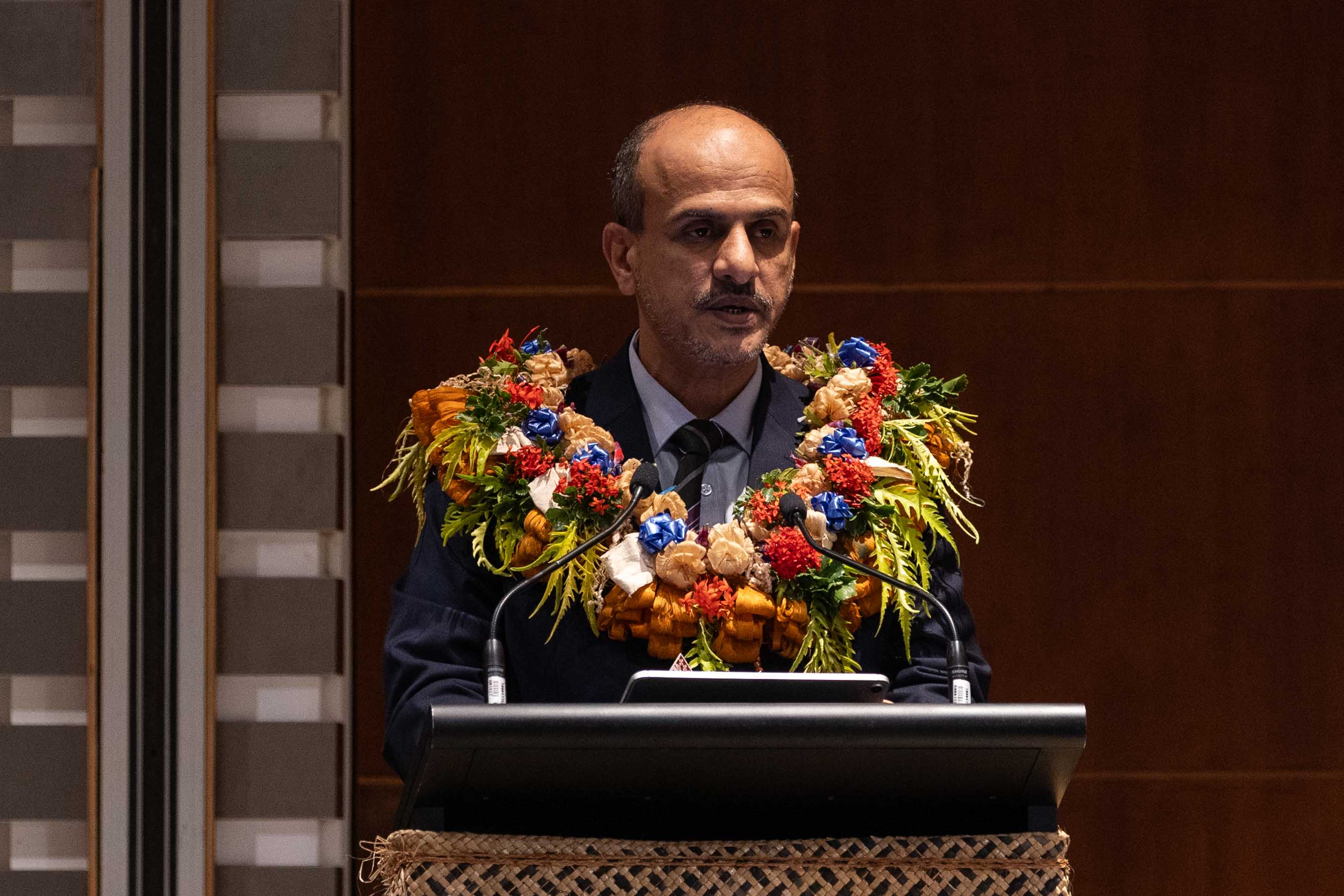
Abdullah Bin Ali Al-Amri, President, UNEA-7
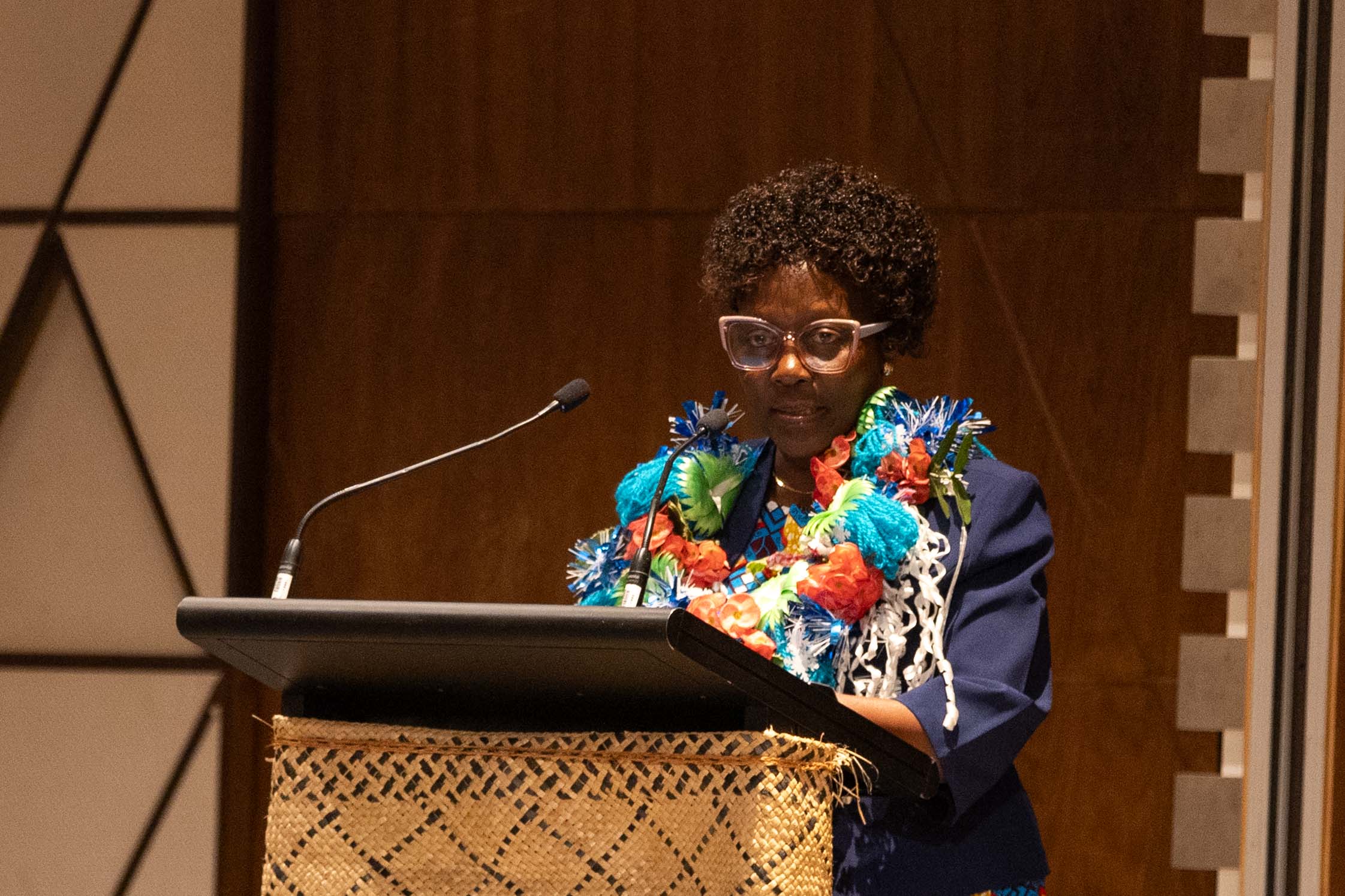
Elizabeth Maruma Mrema, Deputy Executive Director, UNEP
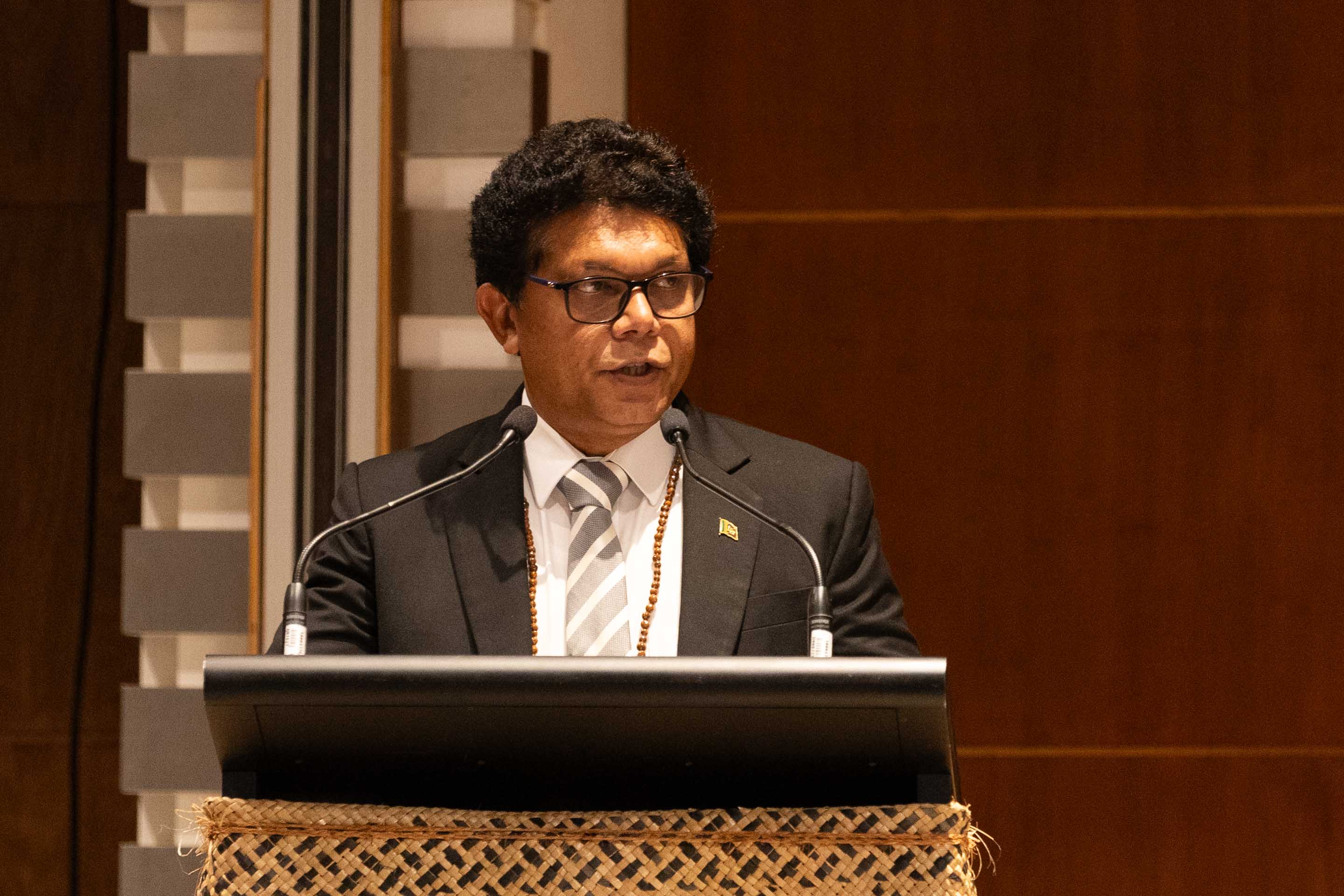
Dammika Patabendi, Minister of Environment, Sri Lanka, and Chair Representative, 5th Forum of Ministers and Environment Authorities of Asia Pacific
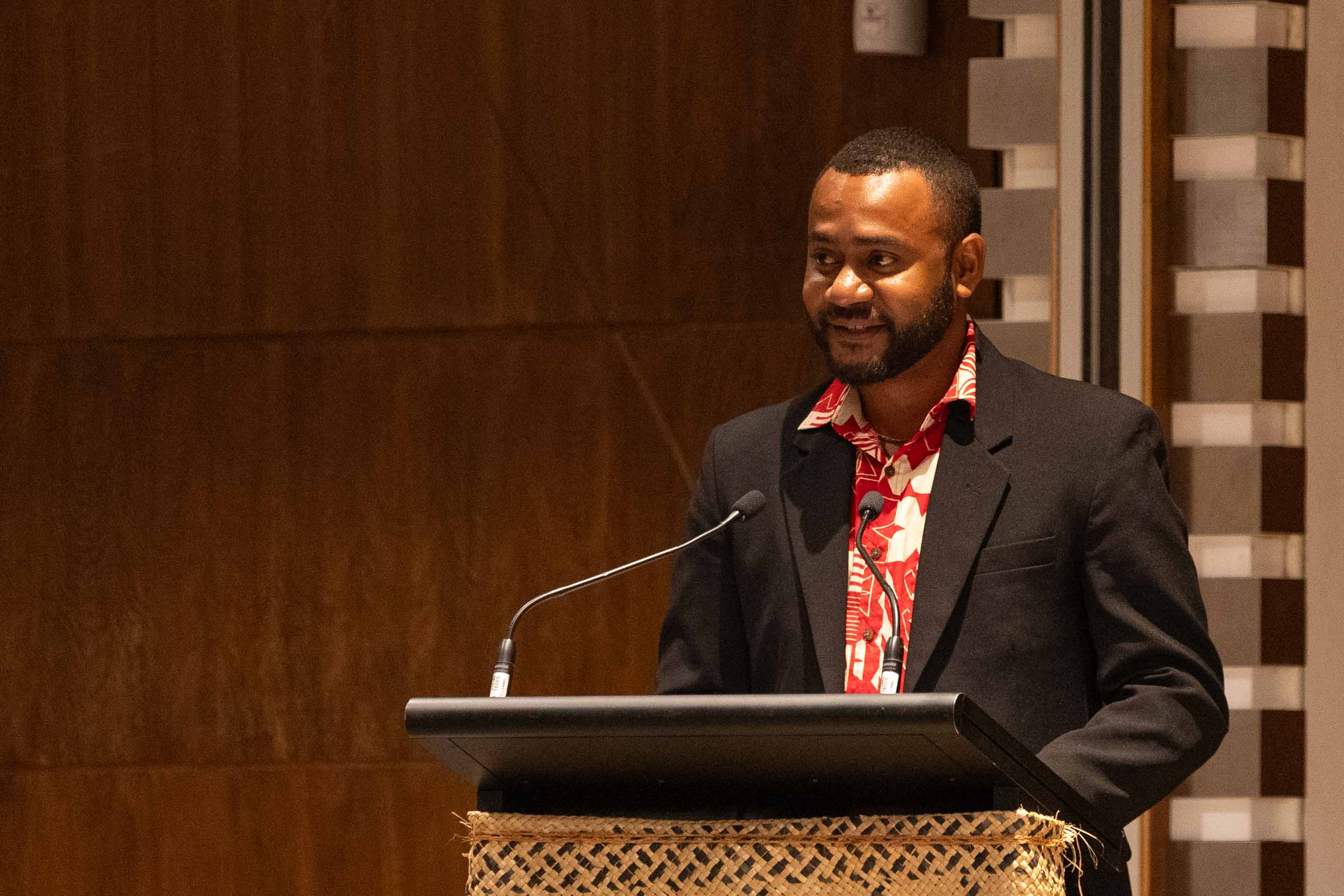
Eparama Qerewaqa, Asia Pacific Major Group for Children and Youth
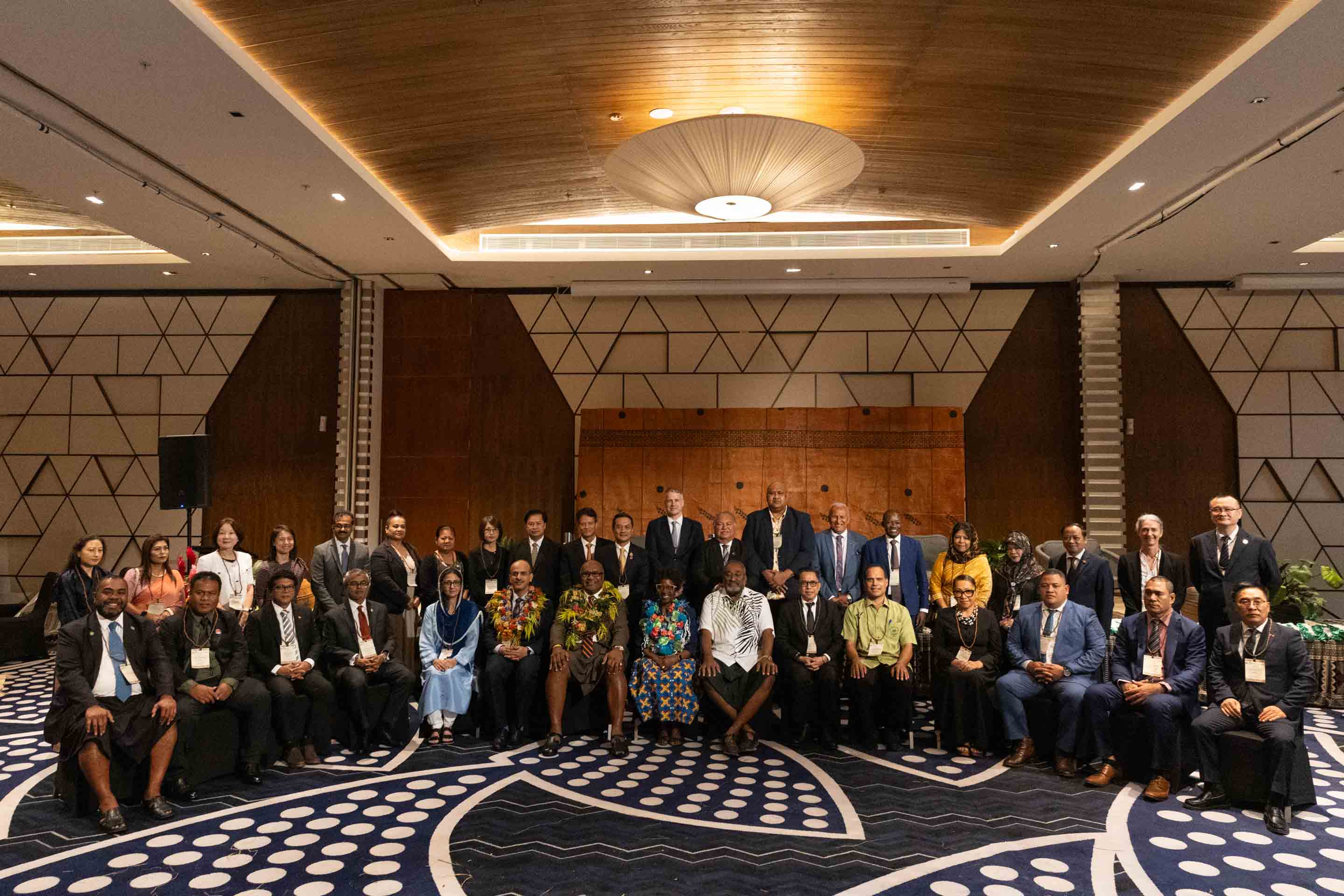
Family photo of dignitaries attending the forum
Ministerial Dialogue
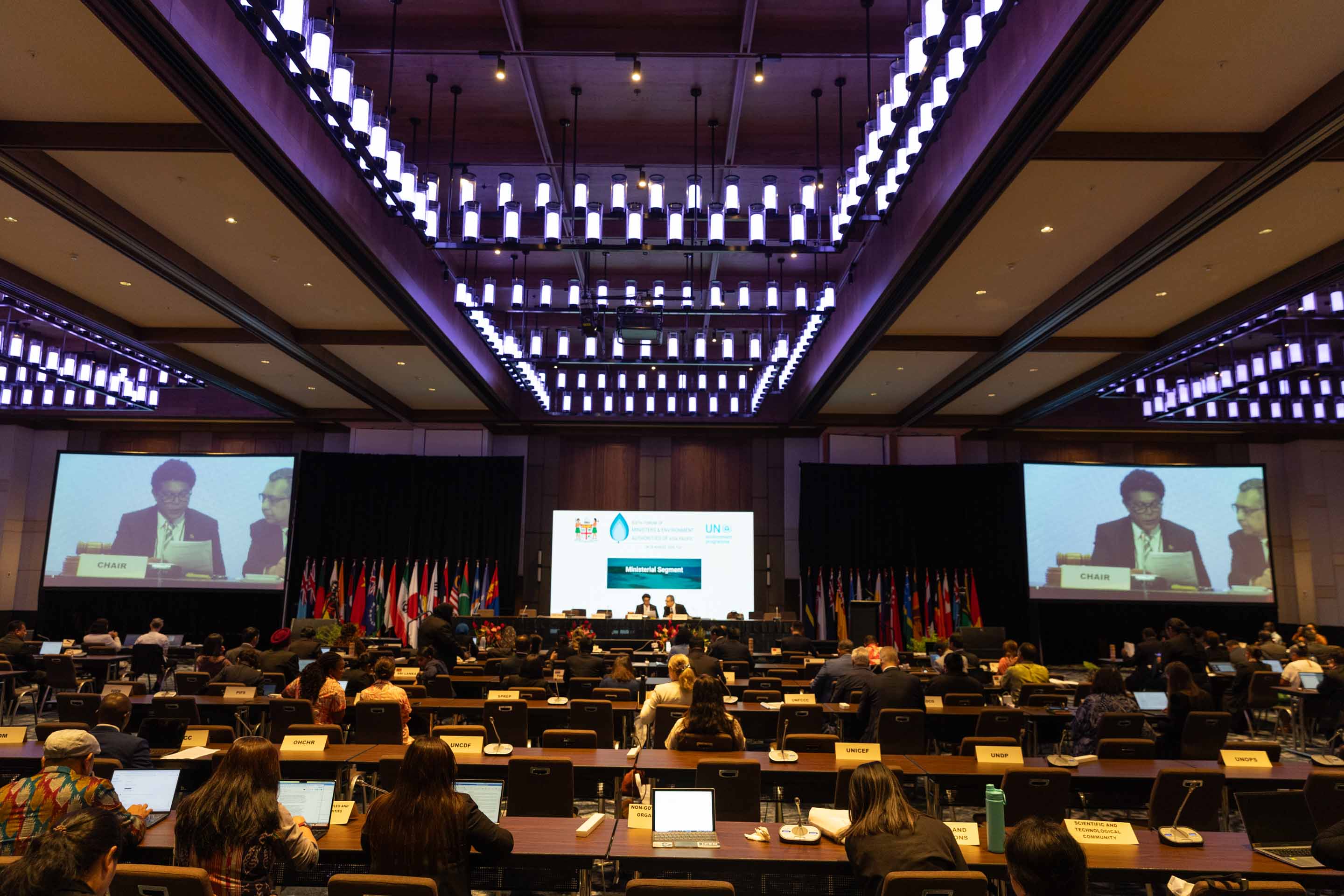
Delegates gather for the Ministerial Dialogue
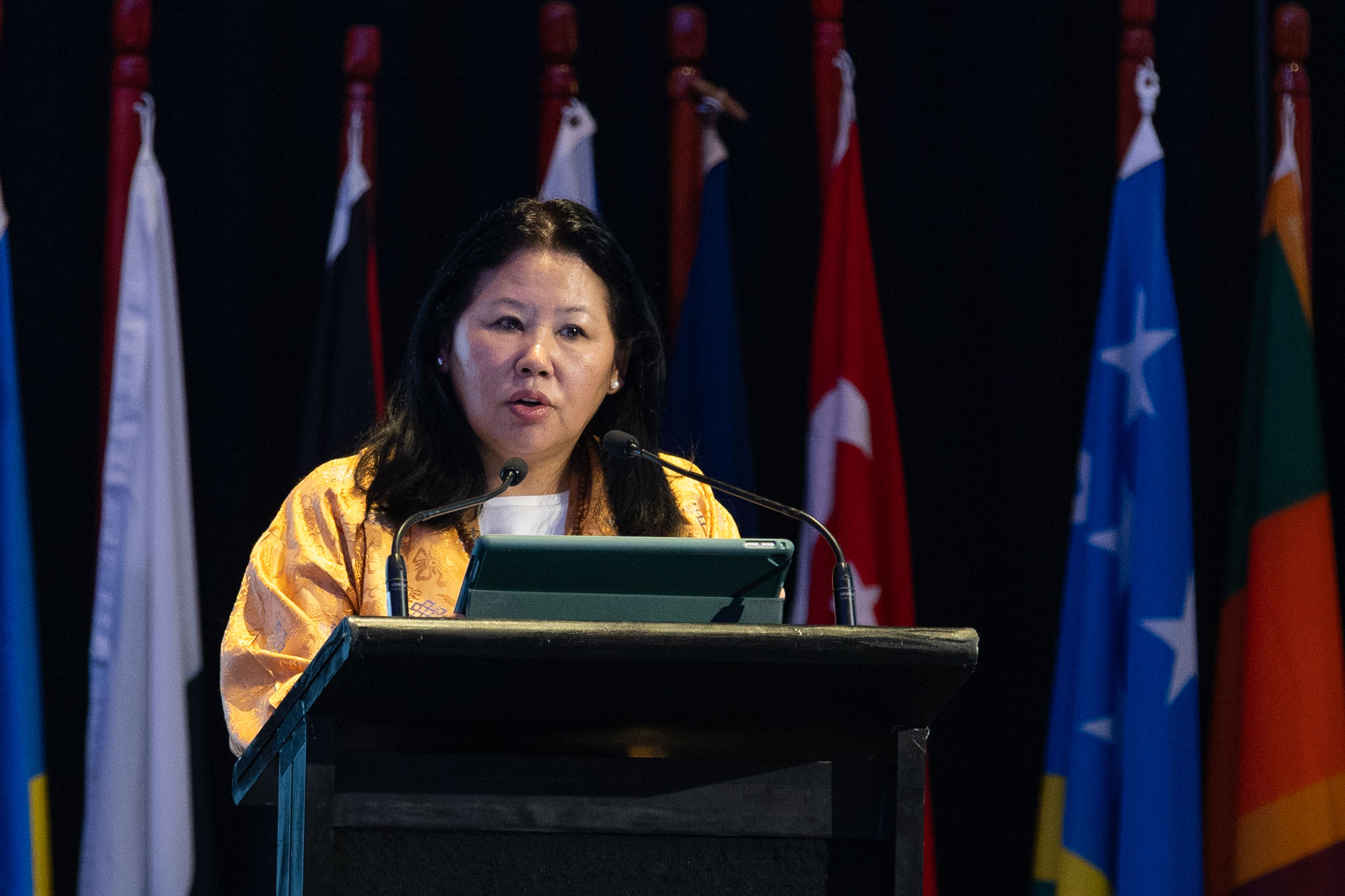
Dechen Tsering, Director, UNEP Regional Office of Asia Pacific (ROAP)
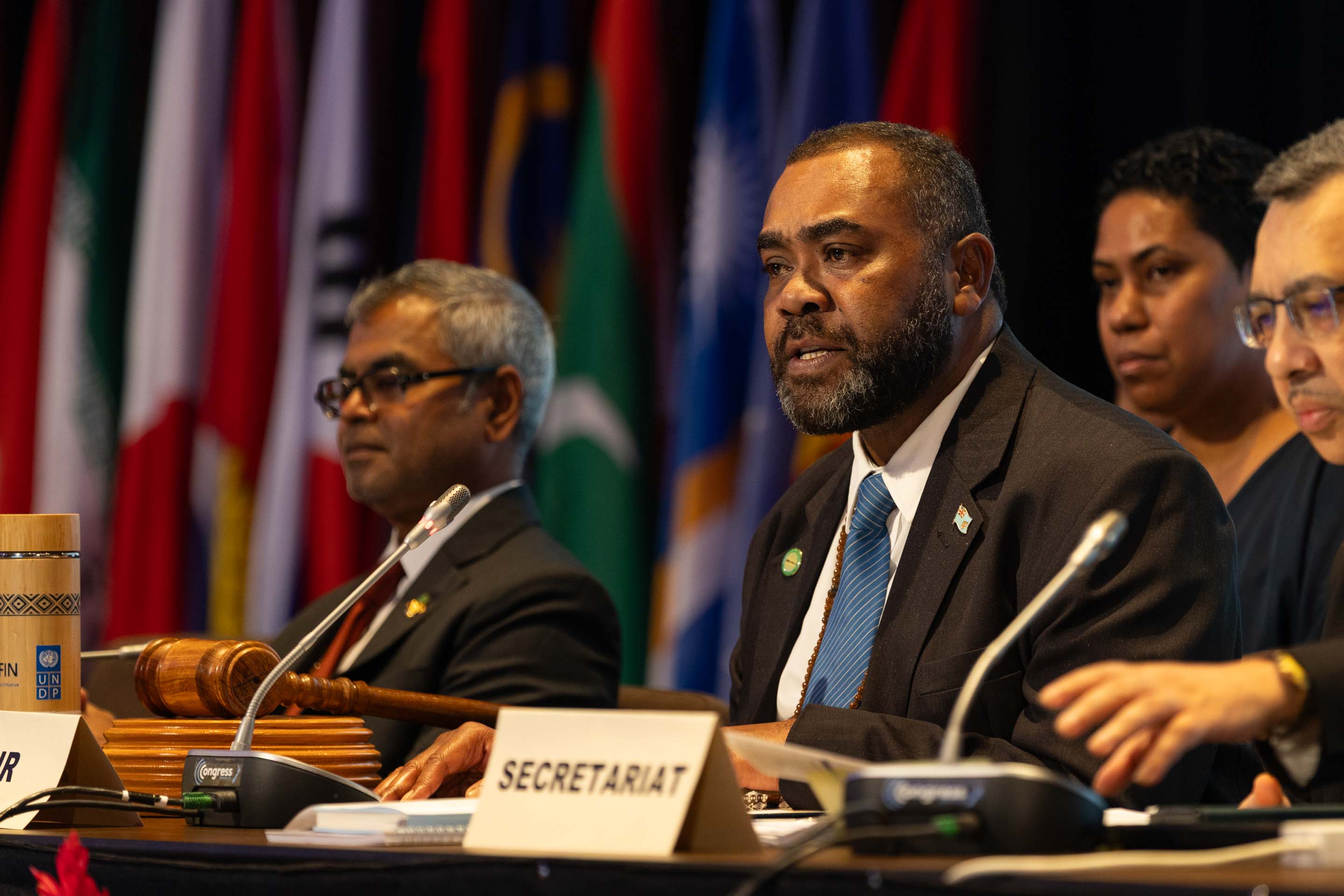
Mosese Bulitavu, Minister for Environment and Climate Change, Fiji
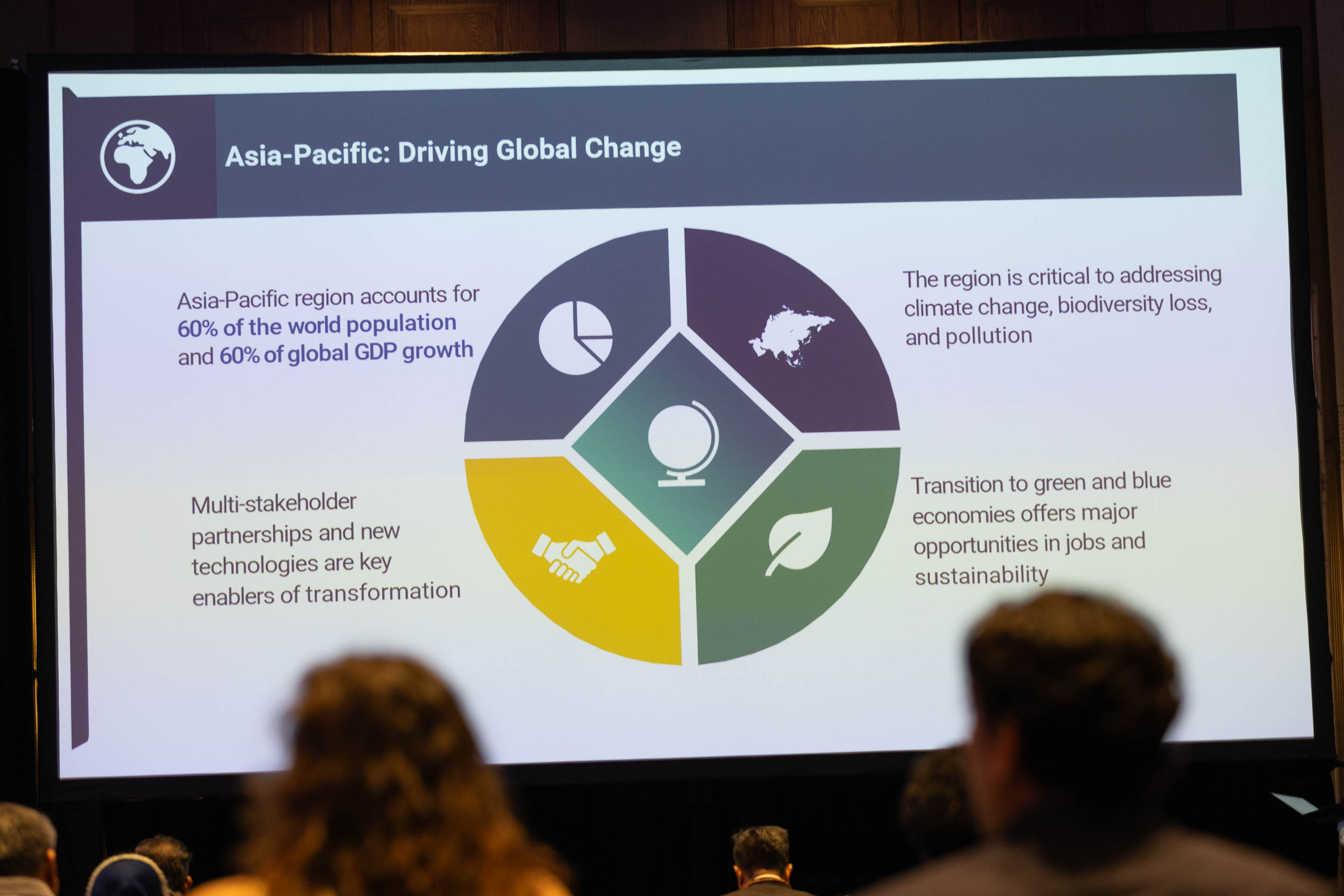
A slide highlights the important role of the Asia-Pacific in driving change
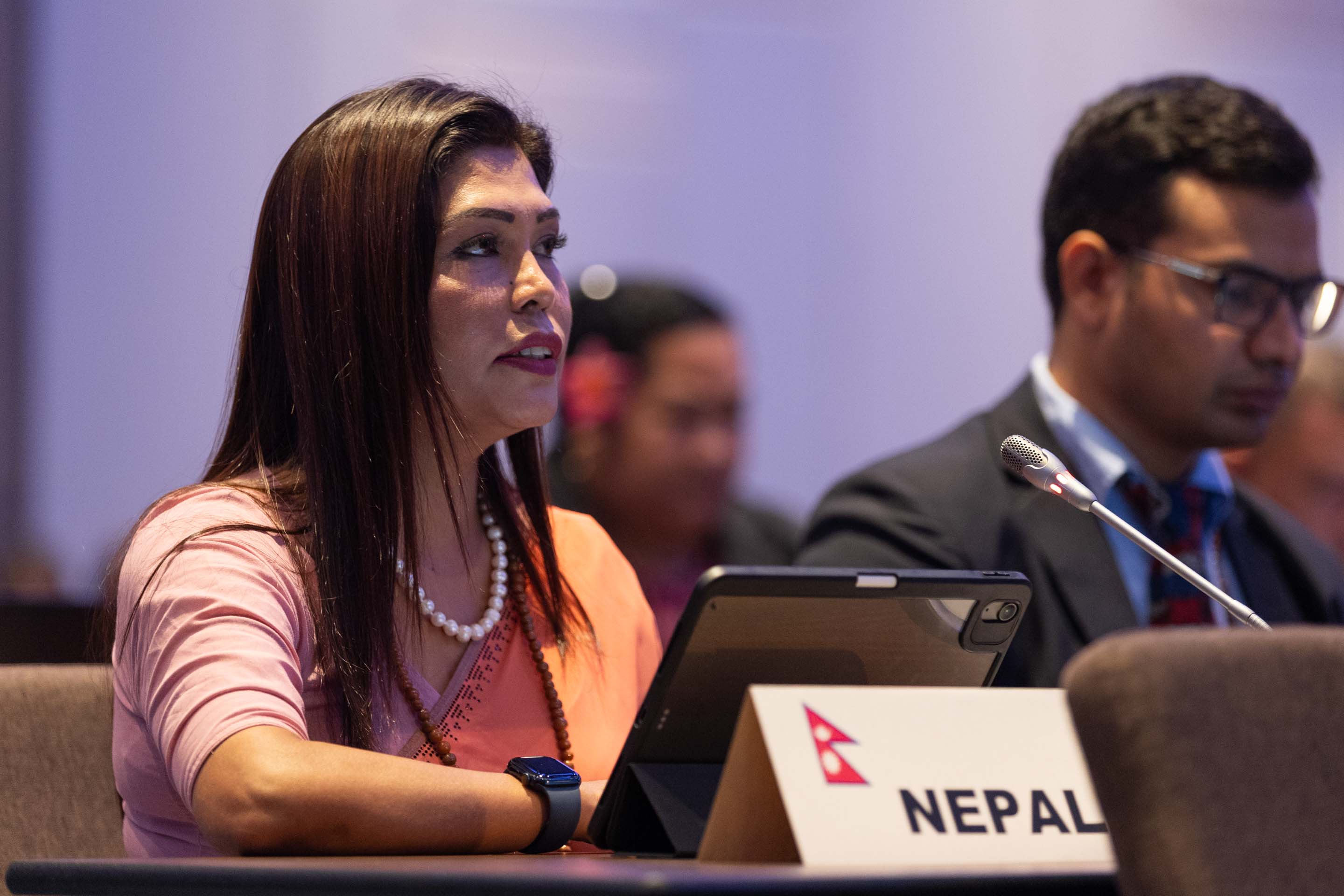
Rupa Bishwakarma, Minister of State for Forests and Environment, Nepal
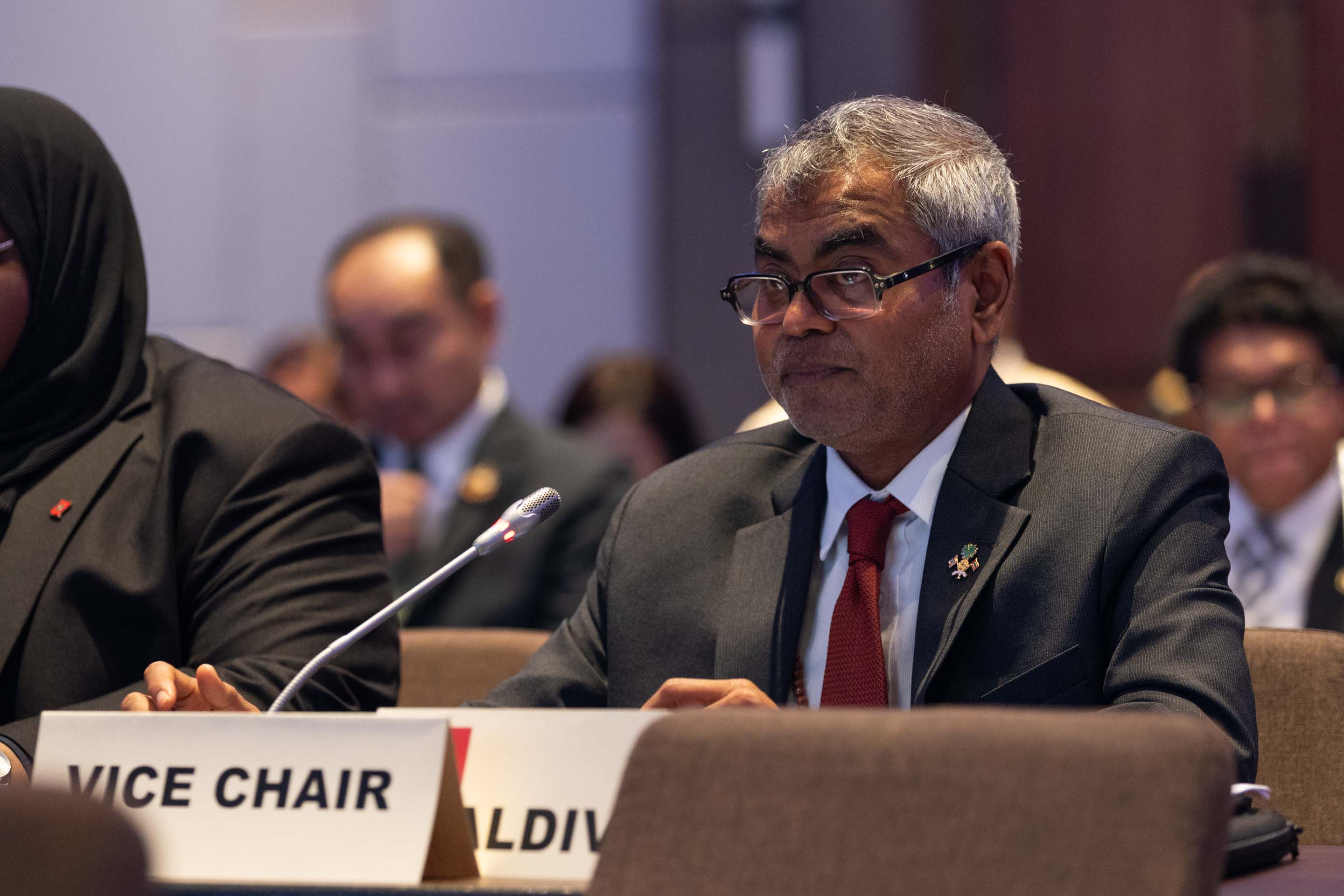
Thoriq Ibrahim, Minister of Tourism and Environment, Maldives

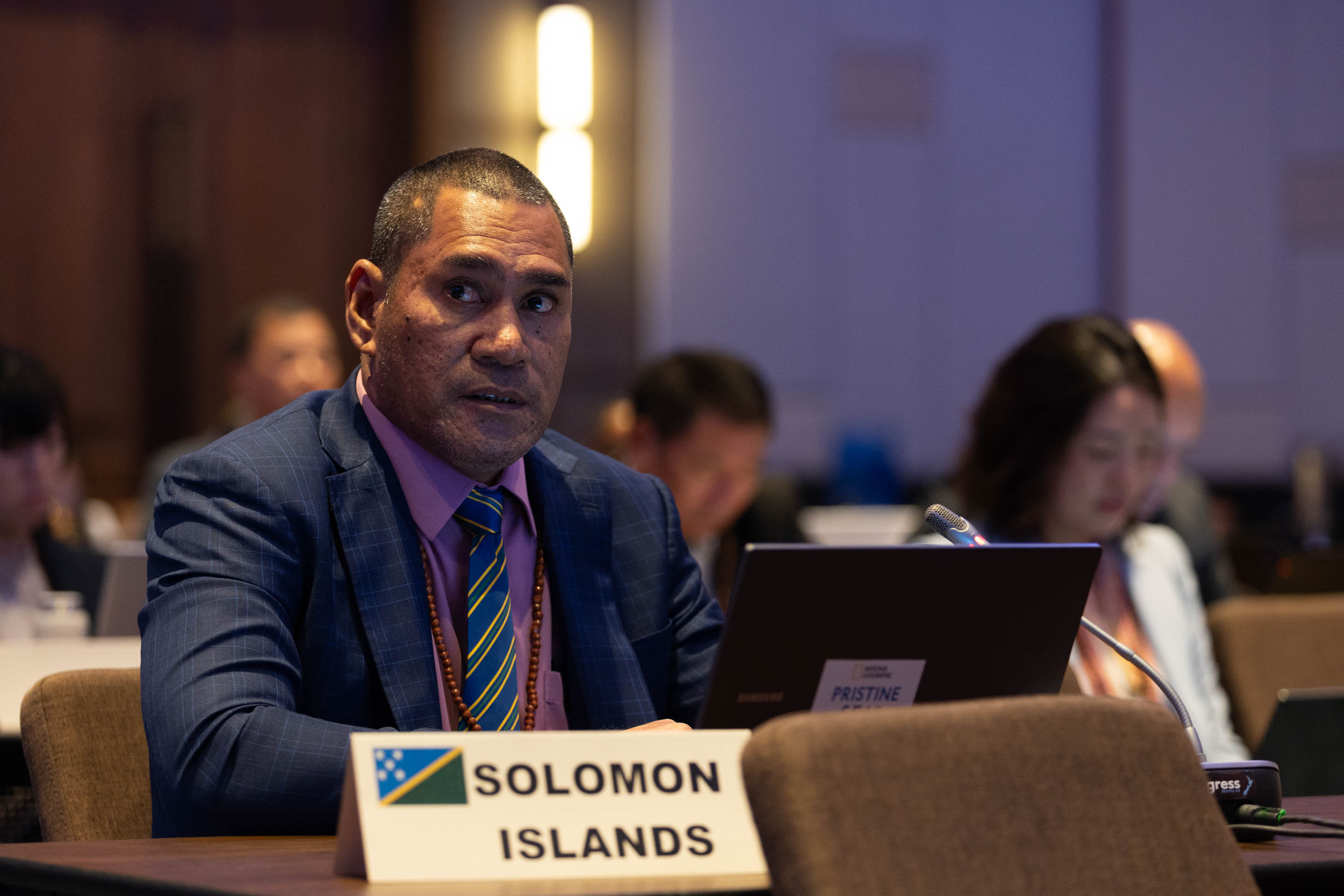
Polycarp Paea, Minister of Environment, Climate Change, Disaster Management and Meteorology, Solomon Islands
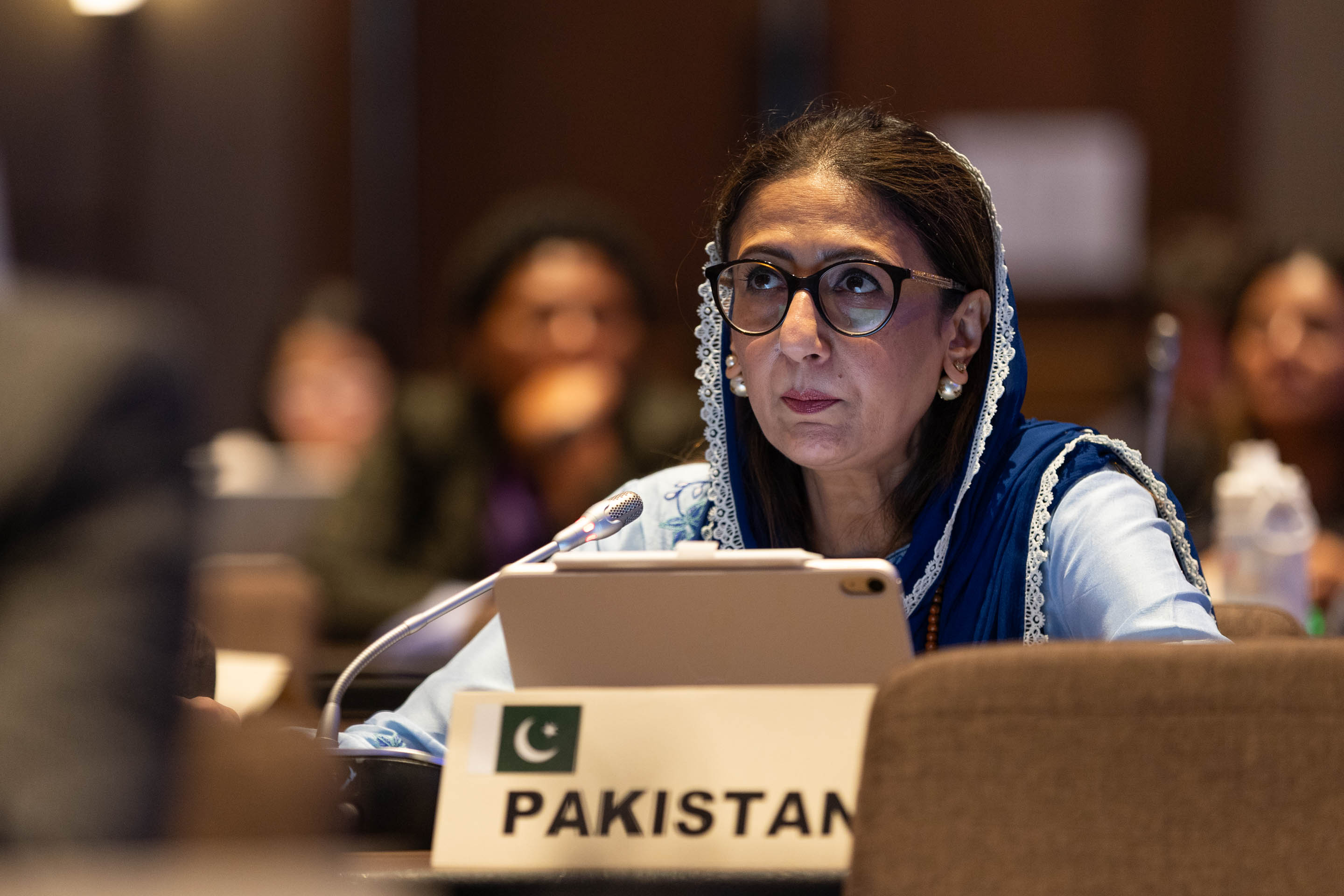
Shezra Mansab, Minister of State for Climate Change and Environmental Coordination, Pakistan
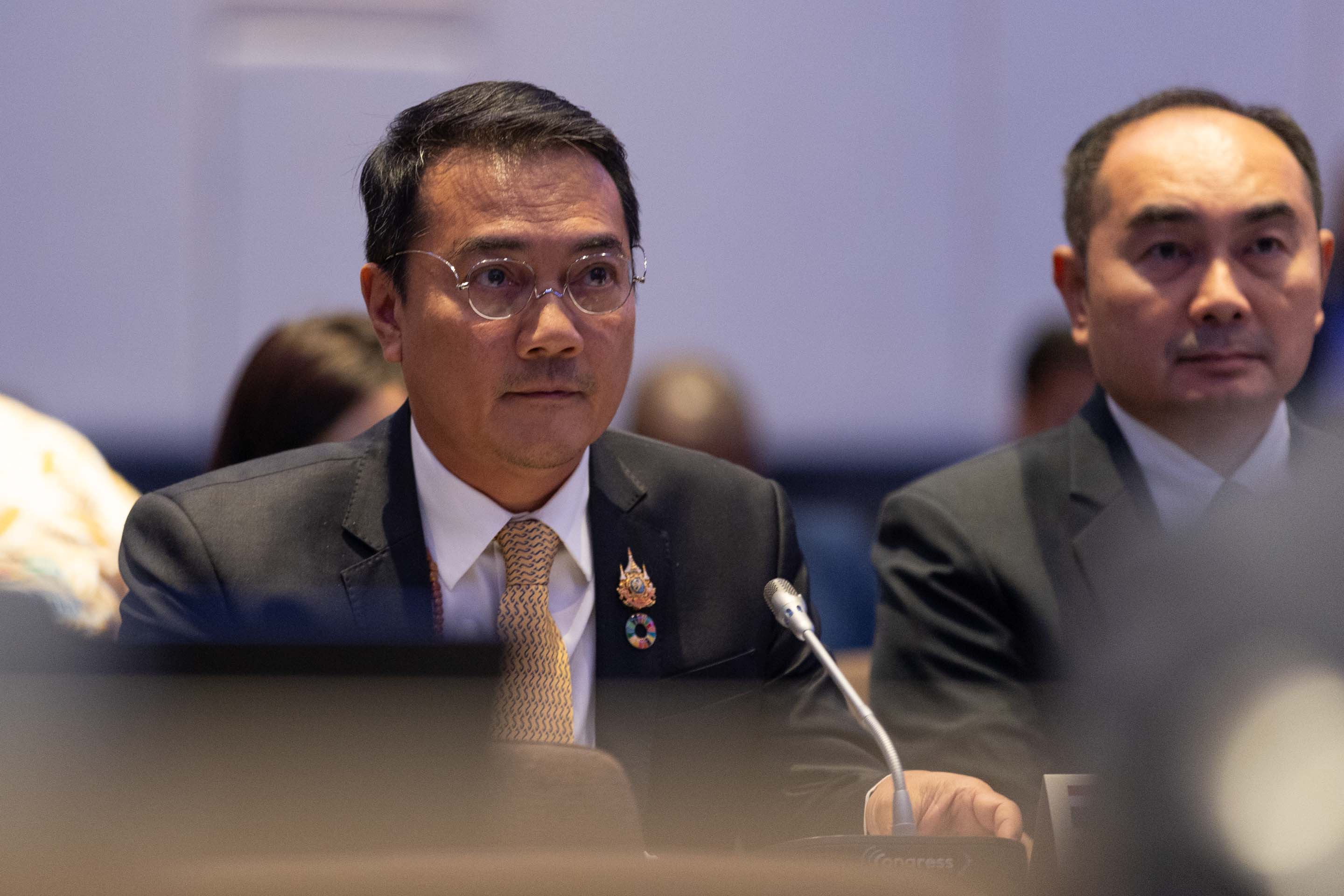
Narapat Kaeothong, Vice Minister, Ministry of Natural Resources and Environment, Thailand
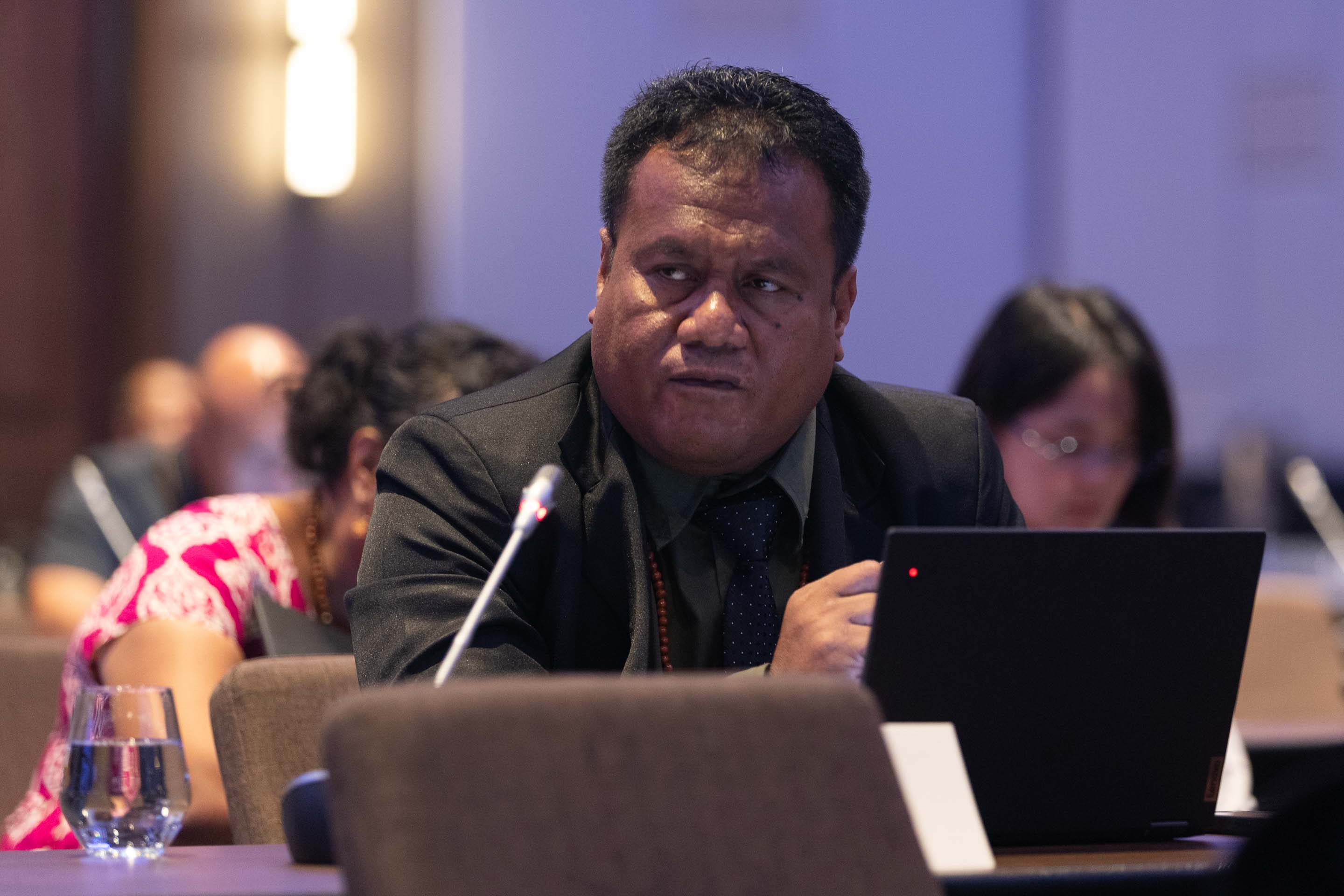
Tokaibure Rabaua, Minister for Environment, Lands and Agricultural Development, Kiribati
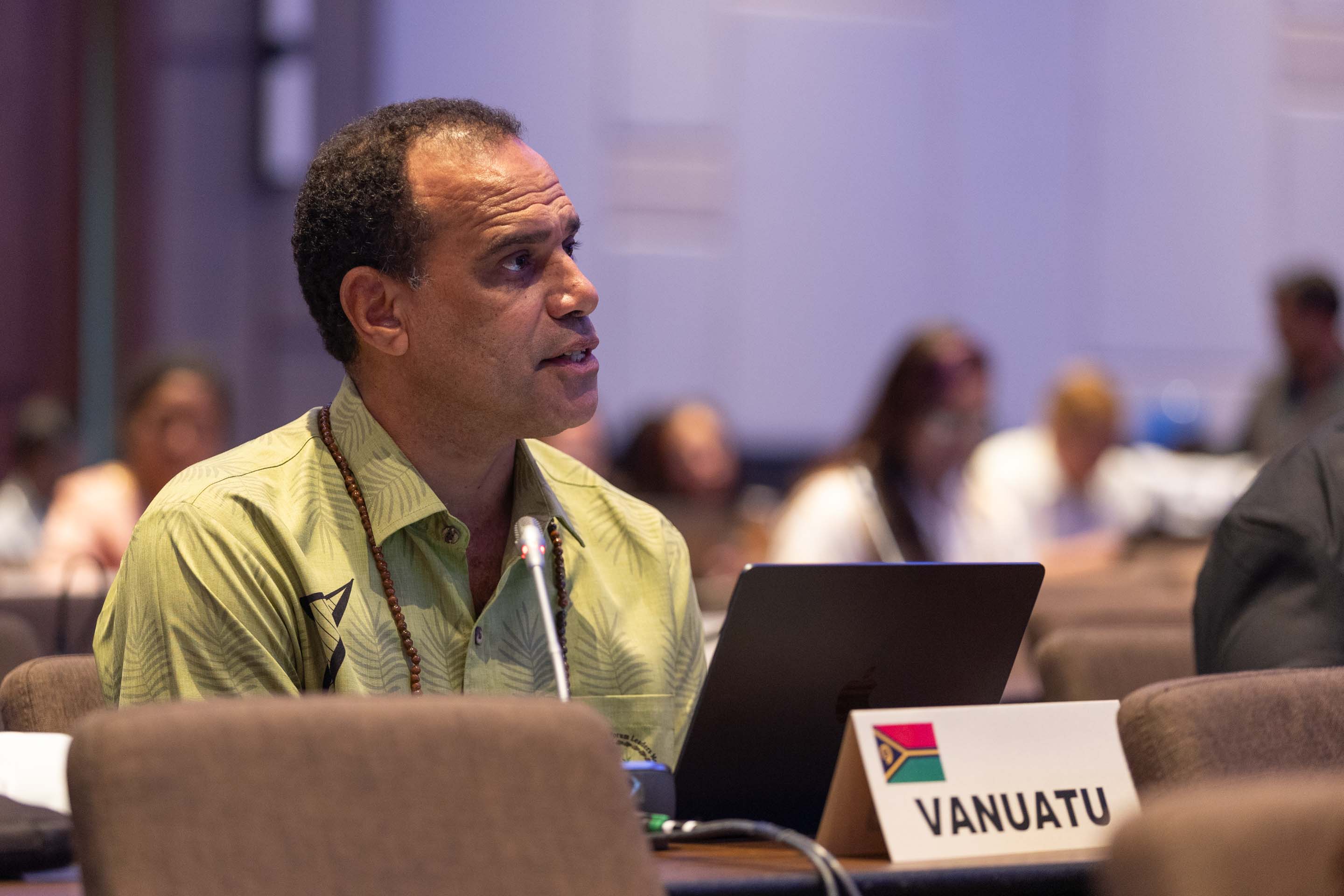
Ralph Regenvanu, Minister for Climate Change, Vanuatu
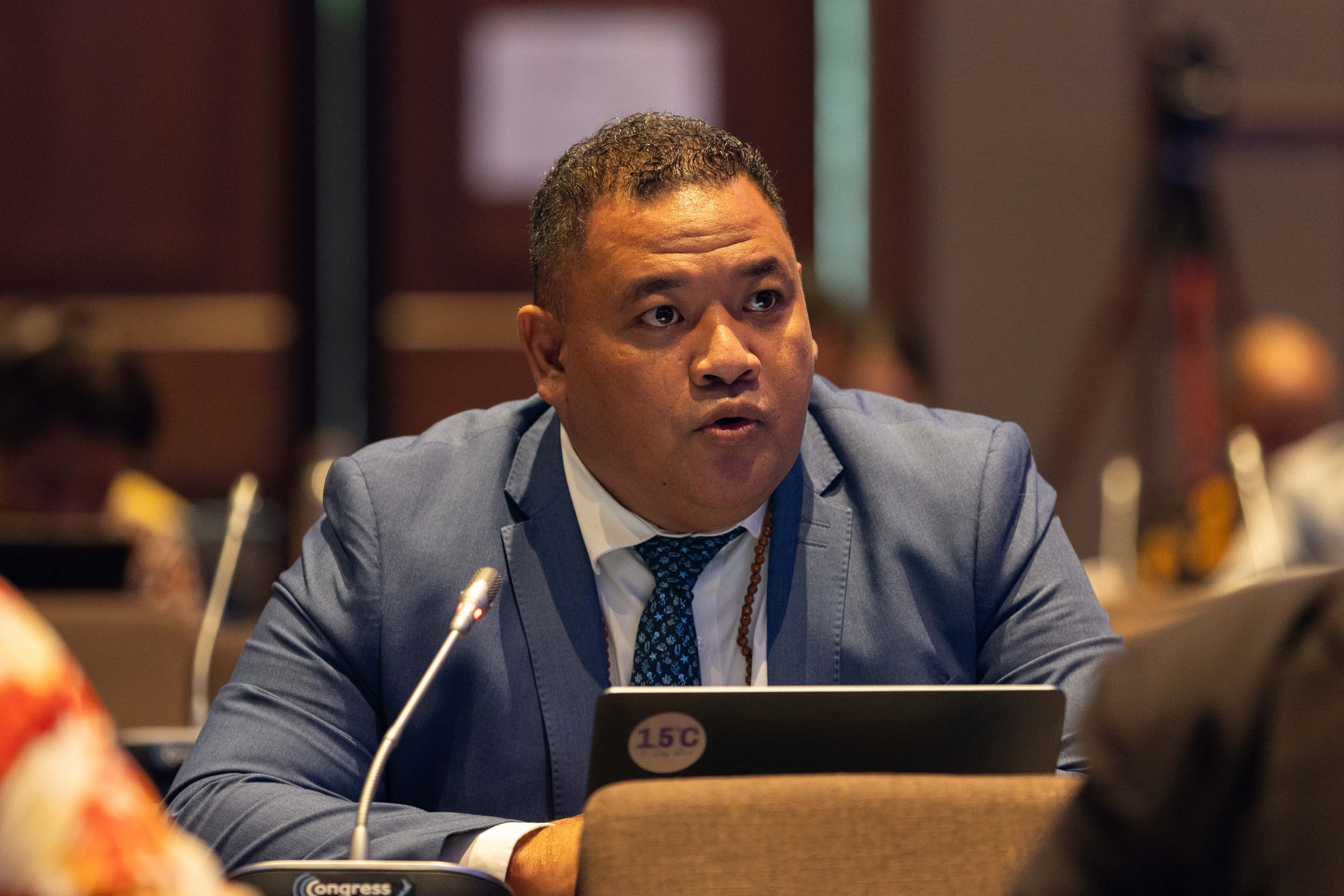
Maina Vakafua Talia, Minister for Home Affairs, Climate Change, and Environment, Tuvalu
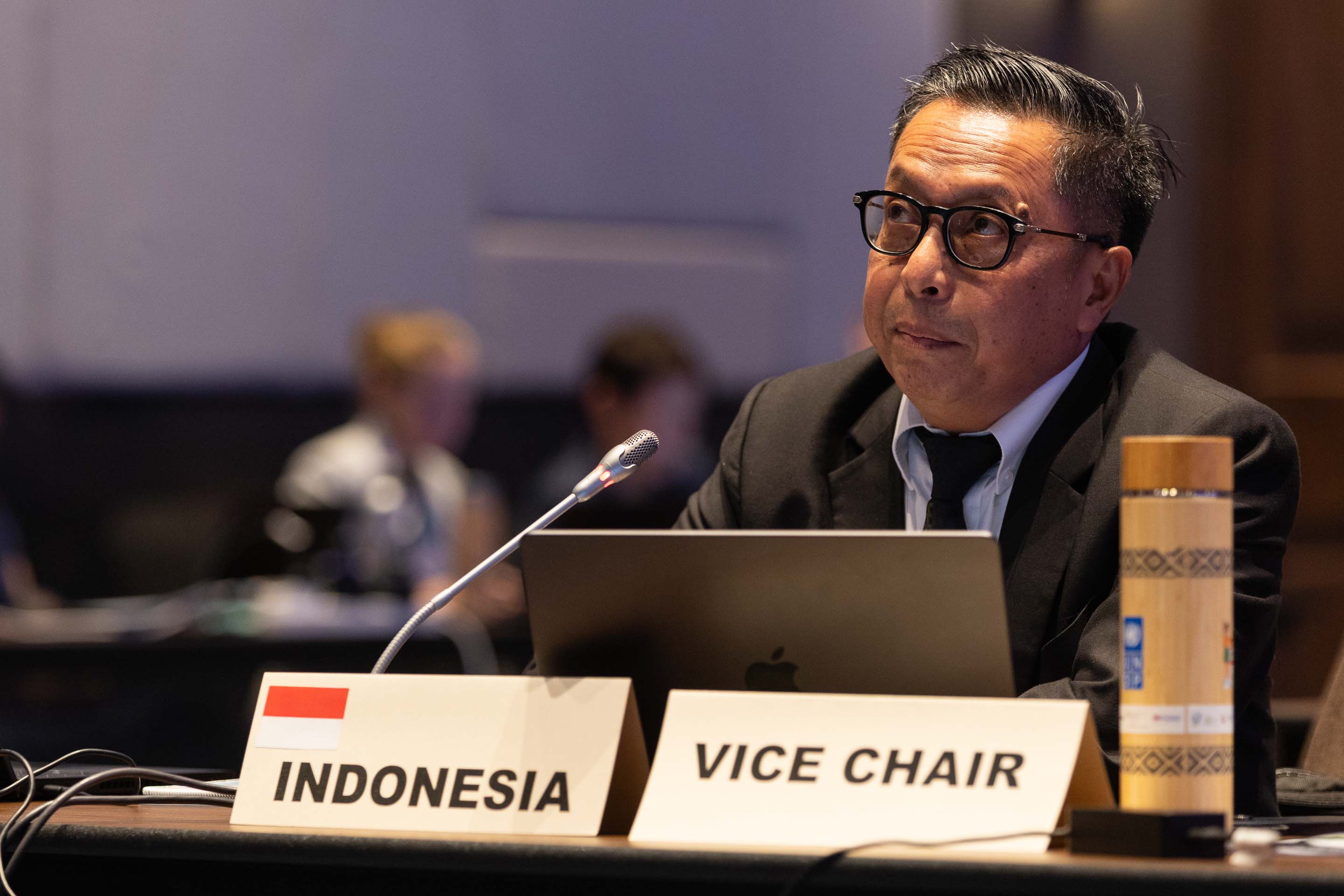
Rasio Ridho Sani, Deputy Prime Minister, and Minister of Environment, Indonesia
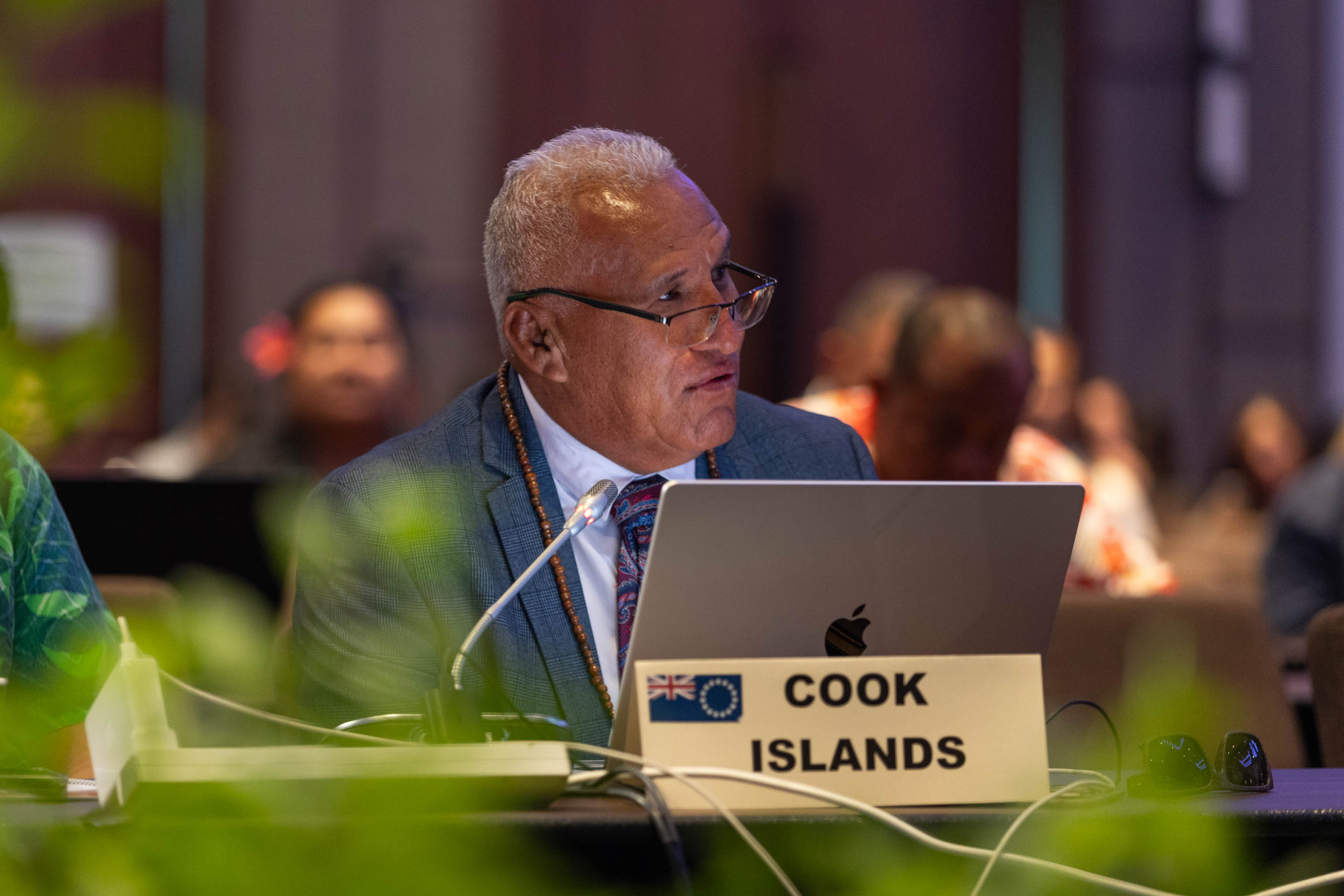
Tereapii Maki Kavana, Associate Minister, National Environment Service, Cook Islands

Batbaatar Bat, Minister of Environment and Climate Change, Mongolia

Afternoon Plenary
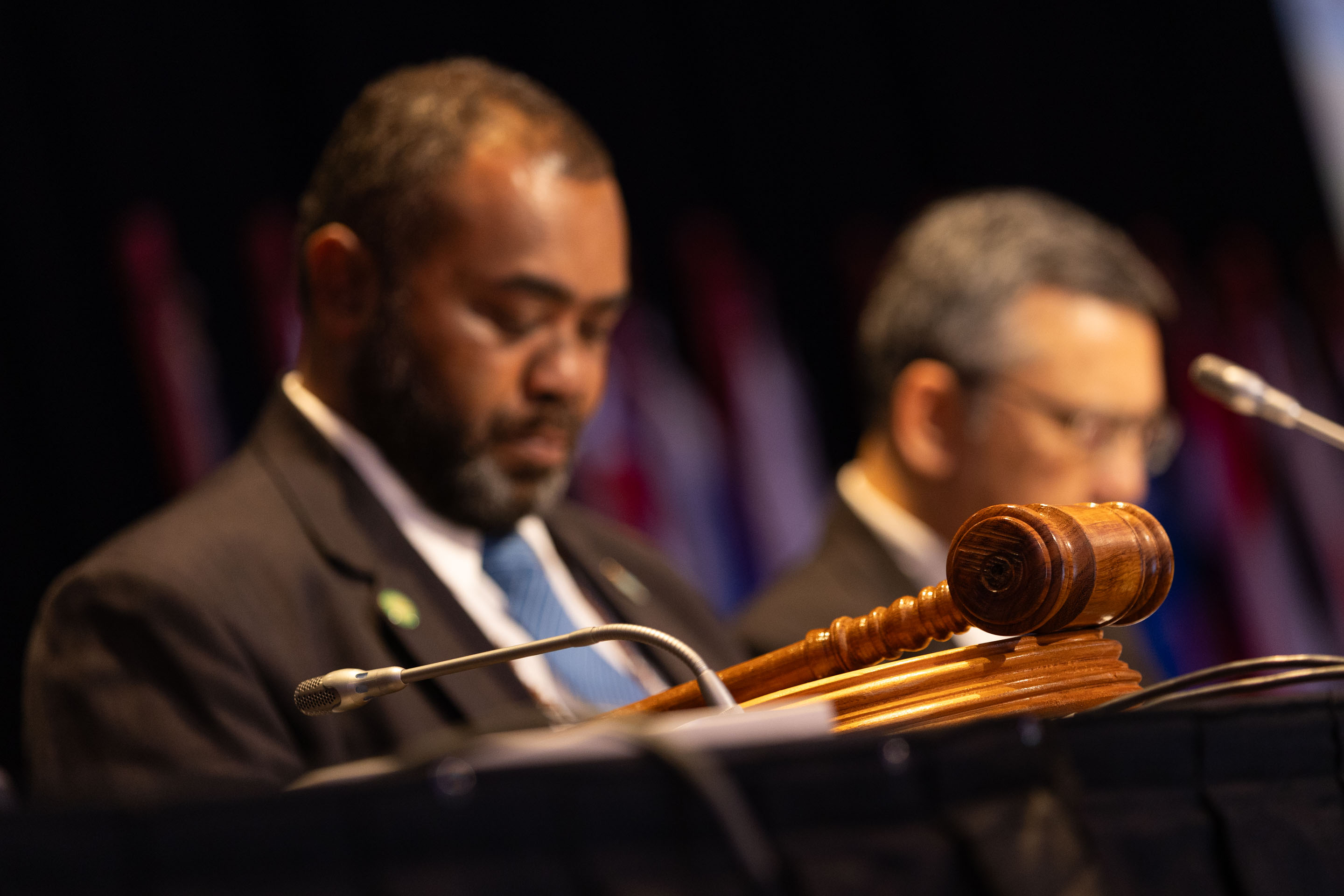
Mosese Bulitavu, Minister for Environment and Climate Change, Fiji, facilitates the afternoon plenary
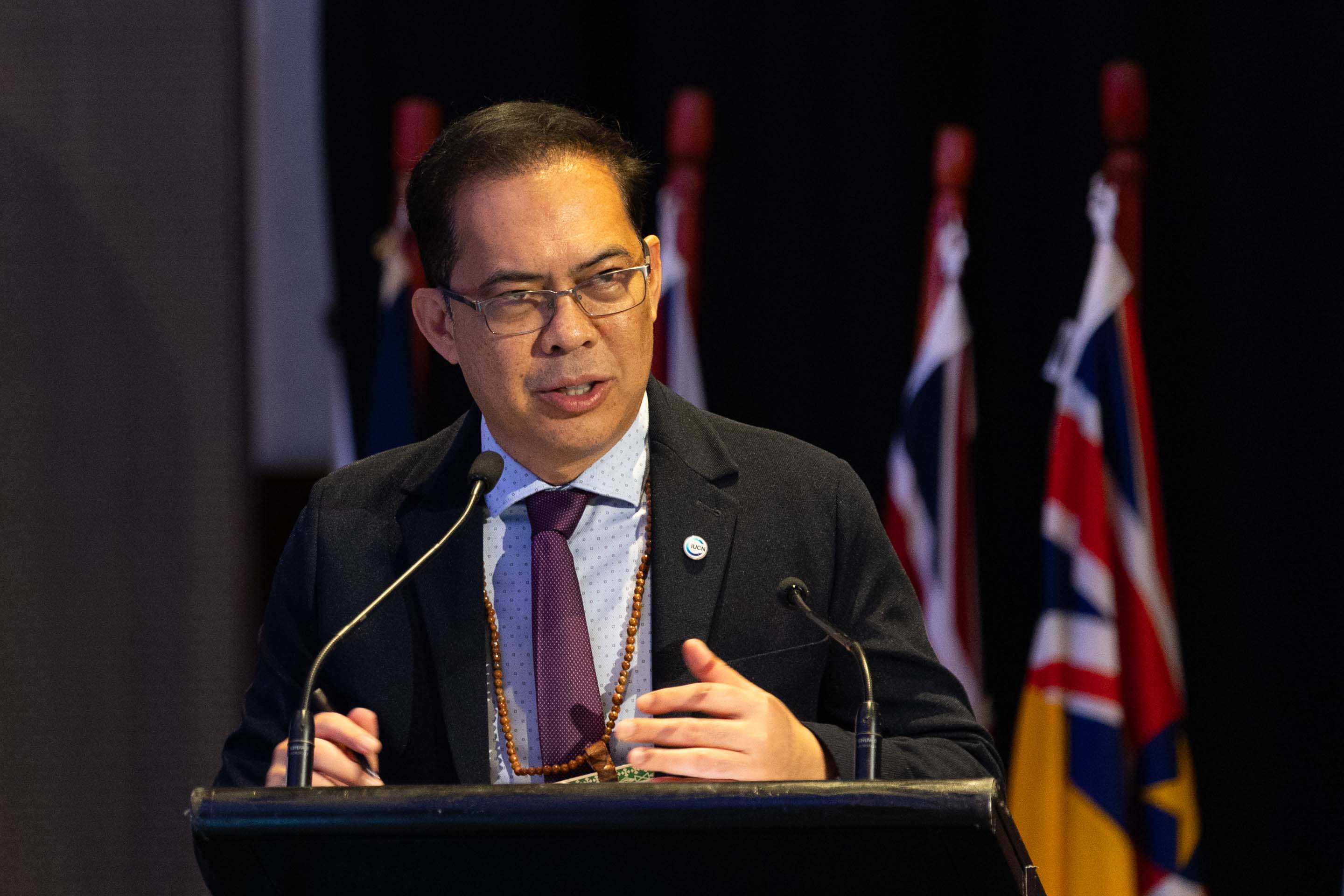
Dindo Campilan, Regional Director for Asia, IUCN
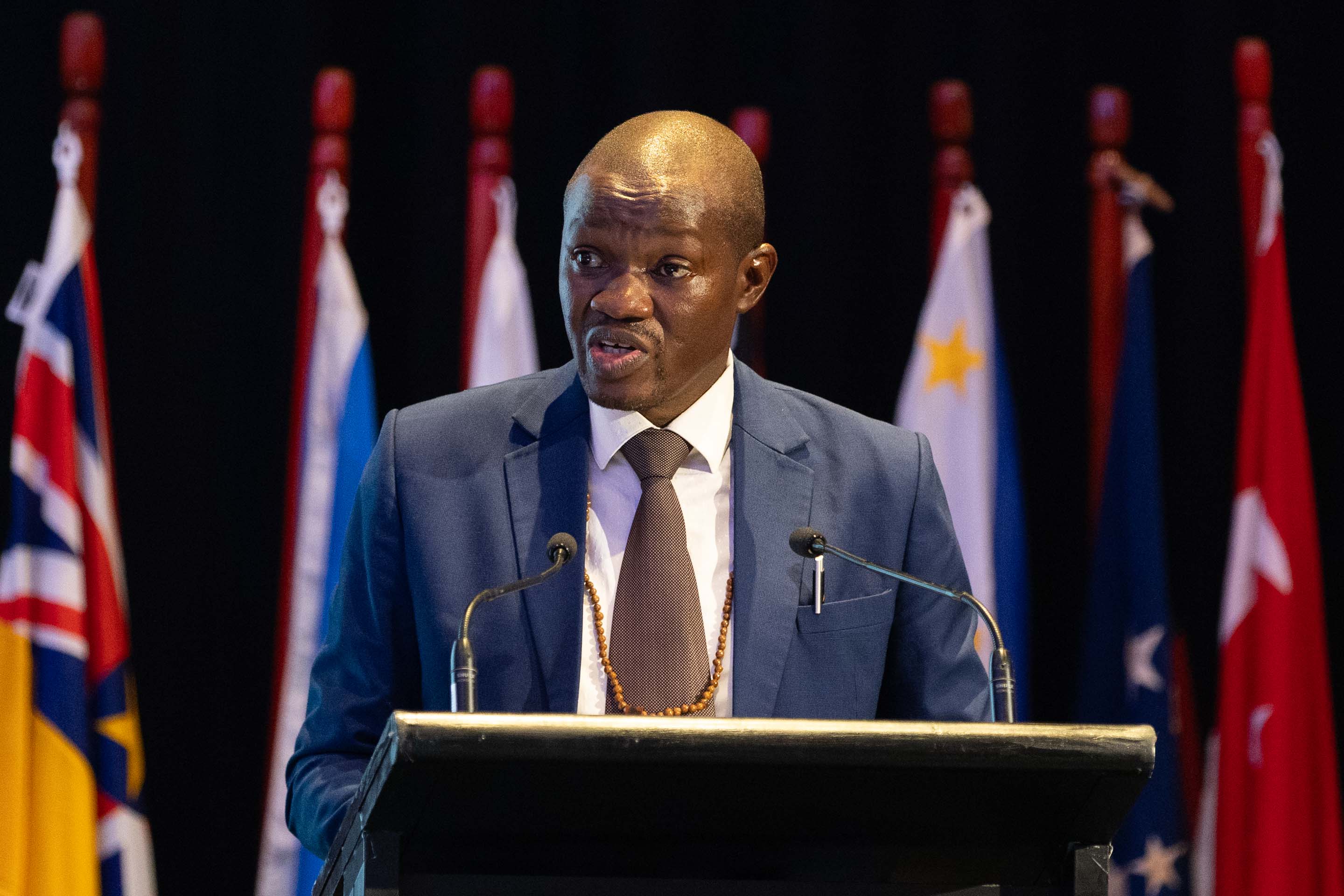
Ladislaus Chang’a, Vice-Chair, IPCC
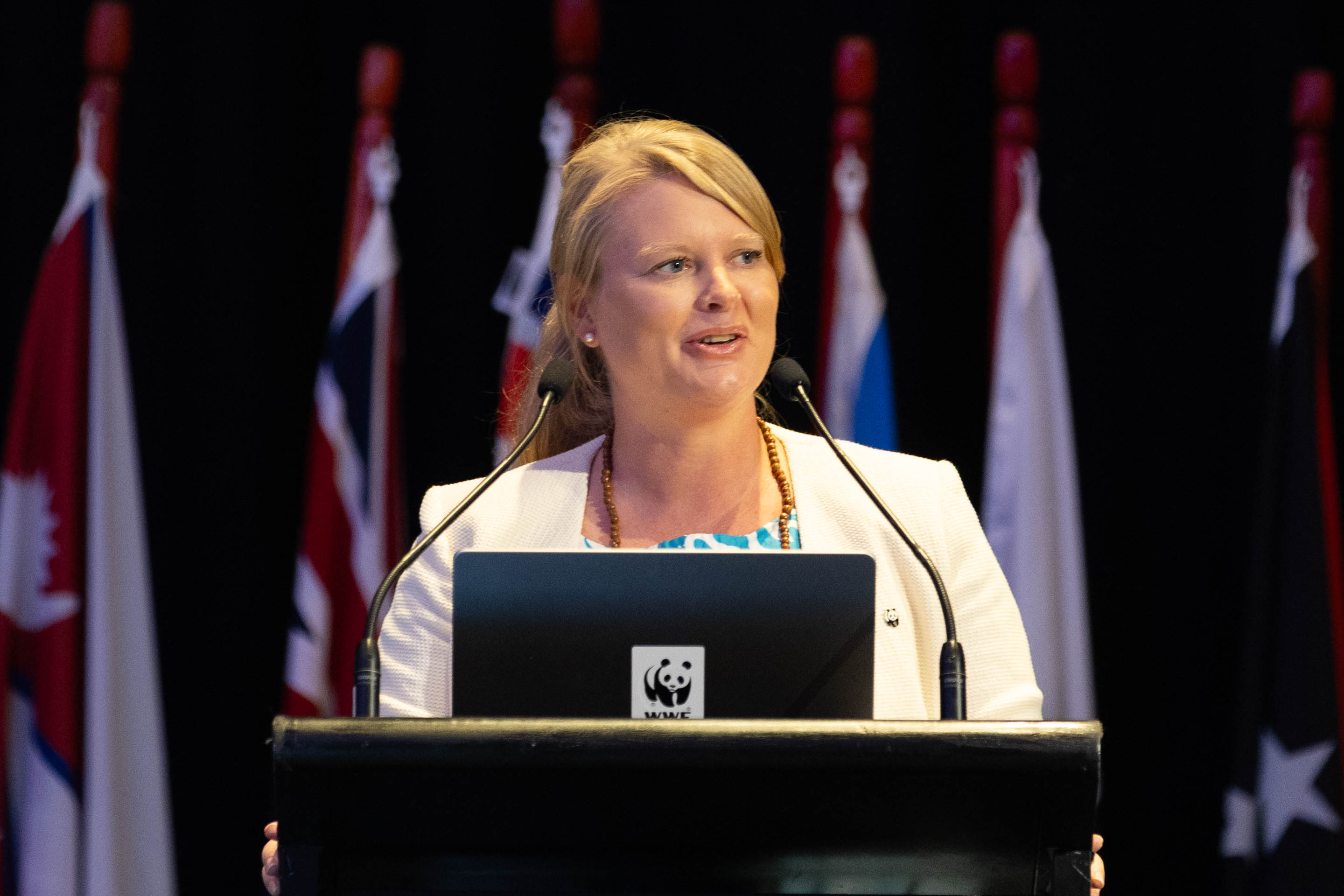
Hanna Helsingen, Director, WWF Pacific Office
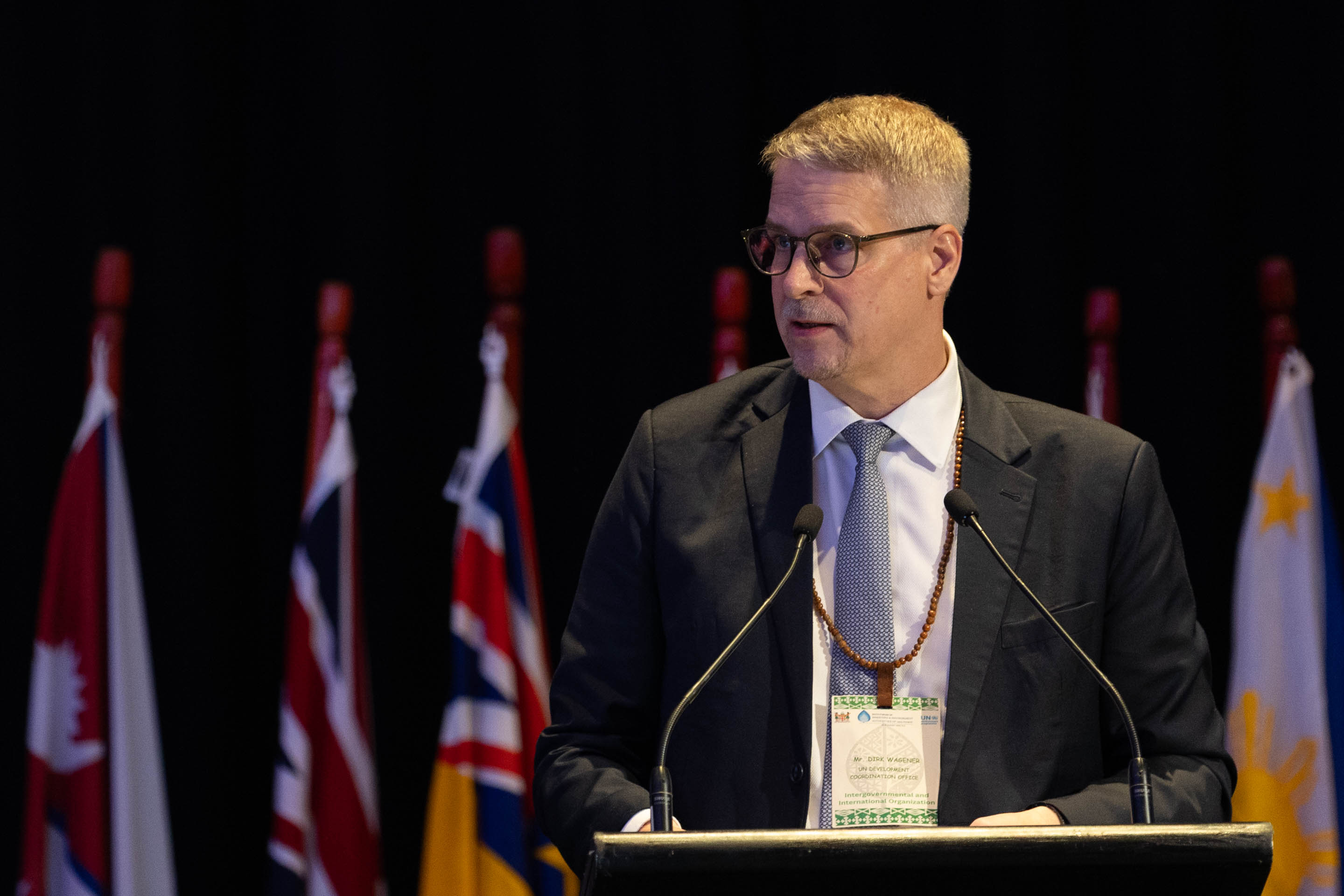
Dirk Wagener, UN Resident Coordinator, Fiji Multi-Country Office
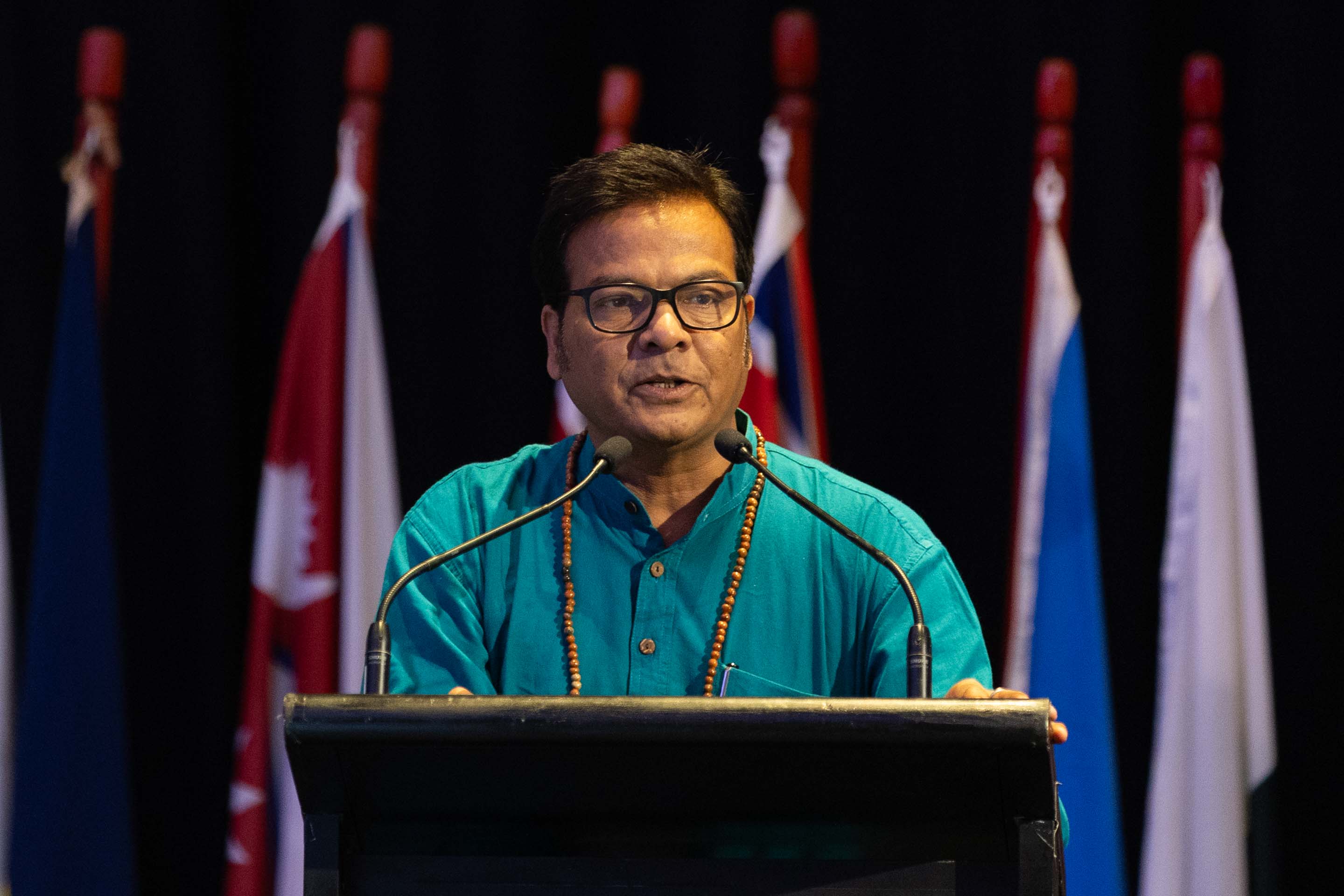
Ajay Kumar Jha, Asia Pacific Major Groups and Stakeholders
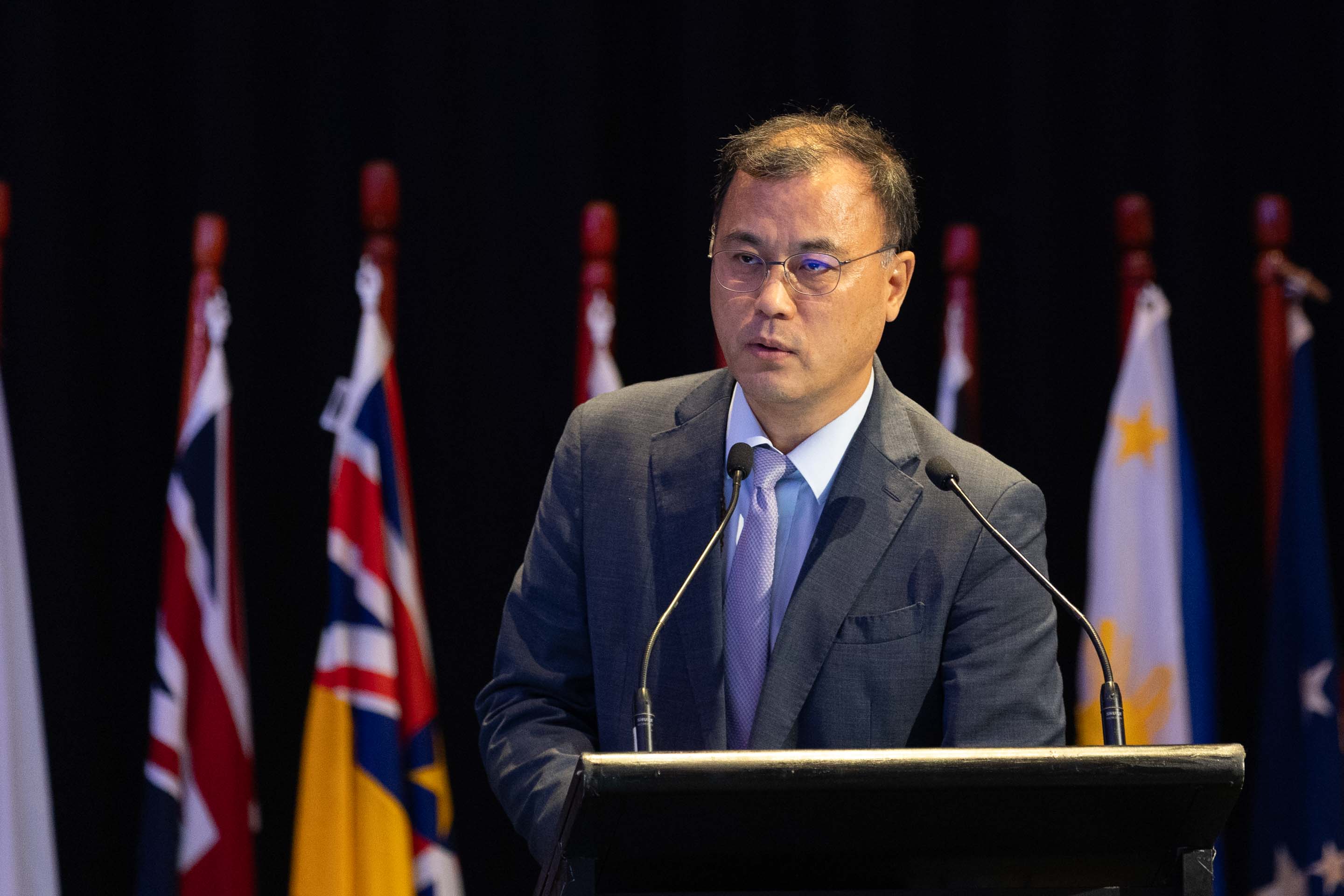
Sangmin Nam, Director, UN Economic and Social Commission for Asia and the Pacific (ESCAP)
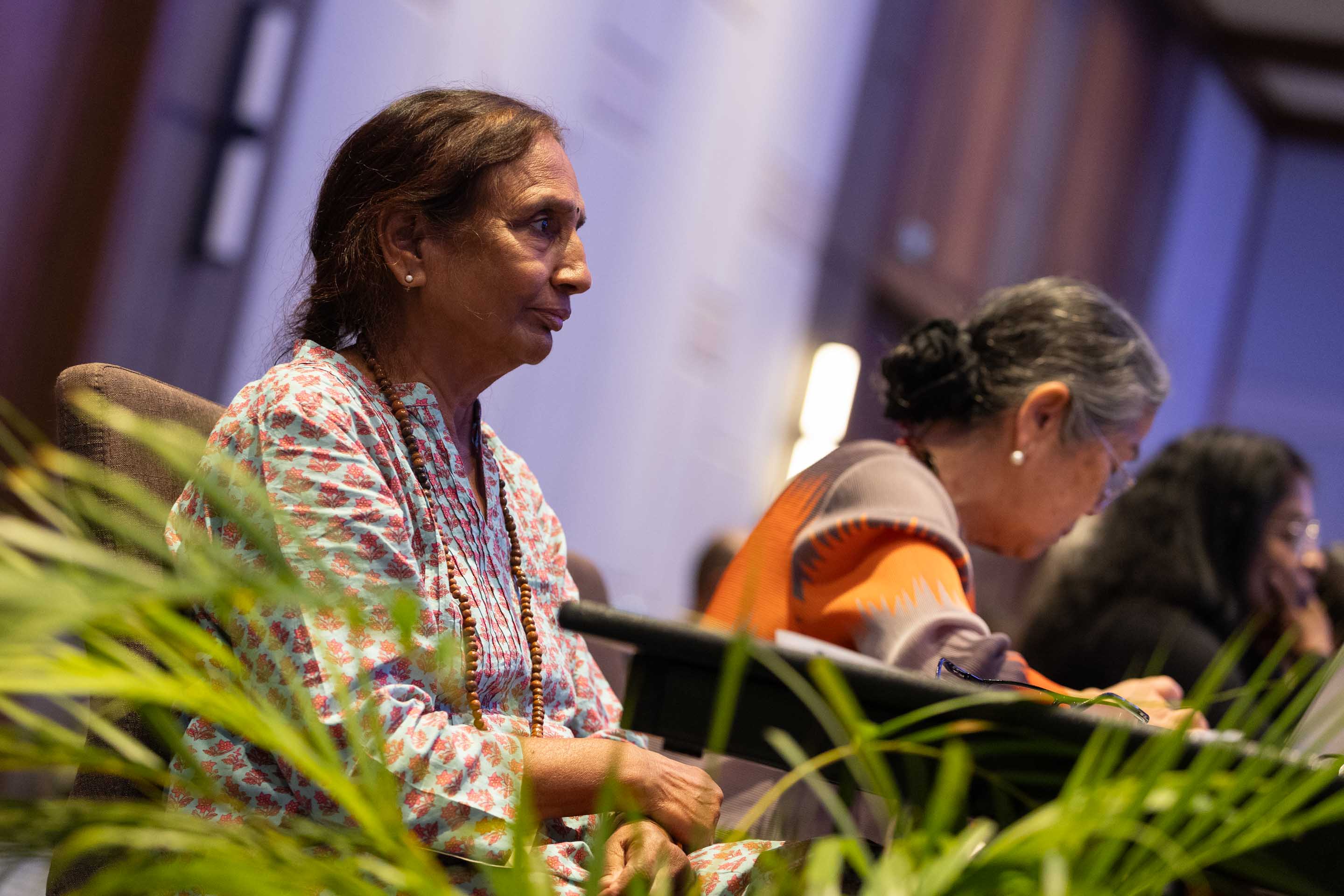
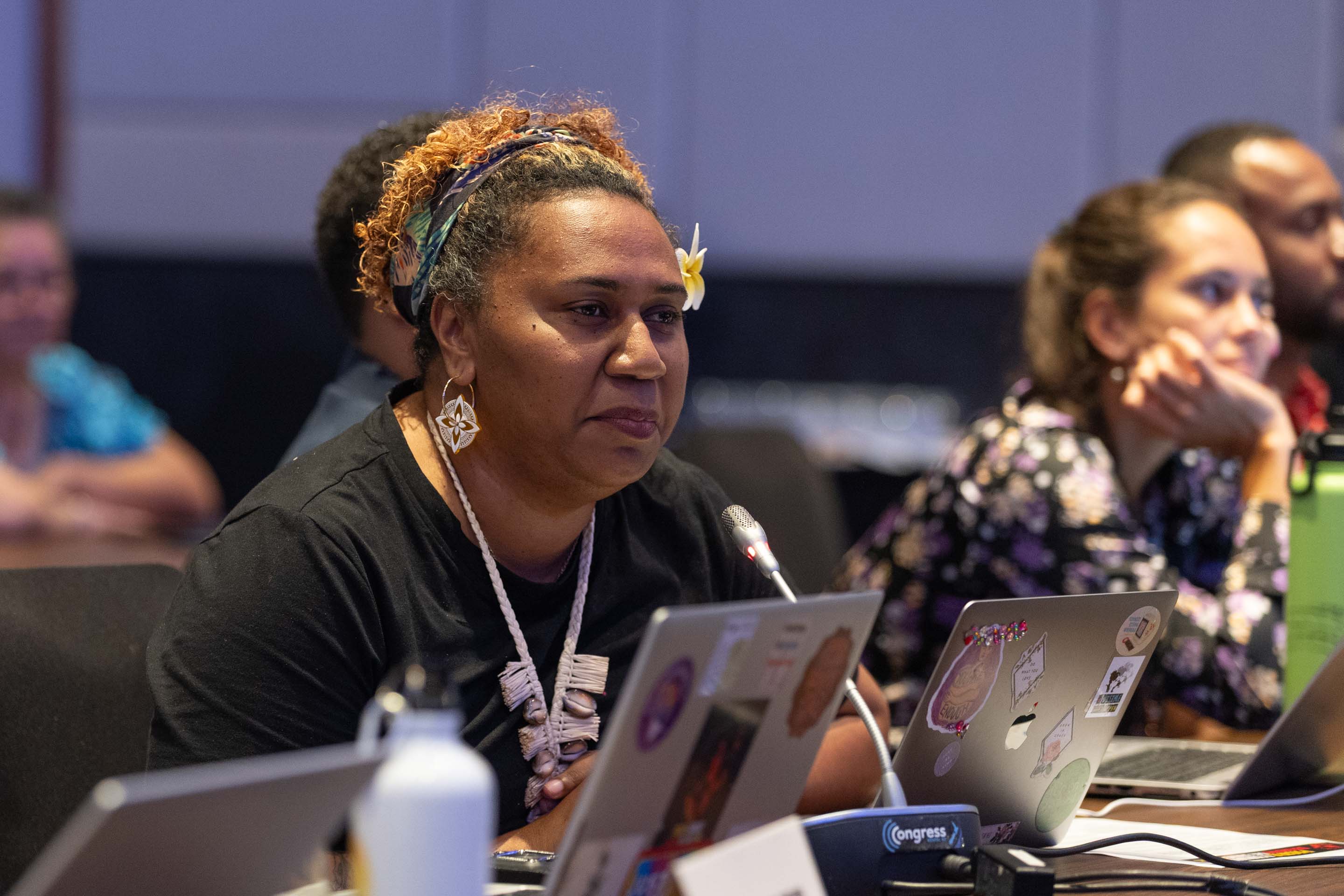
Viva Tatawaqa, Pacific Feminists Defending the Living Planet Network
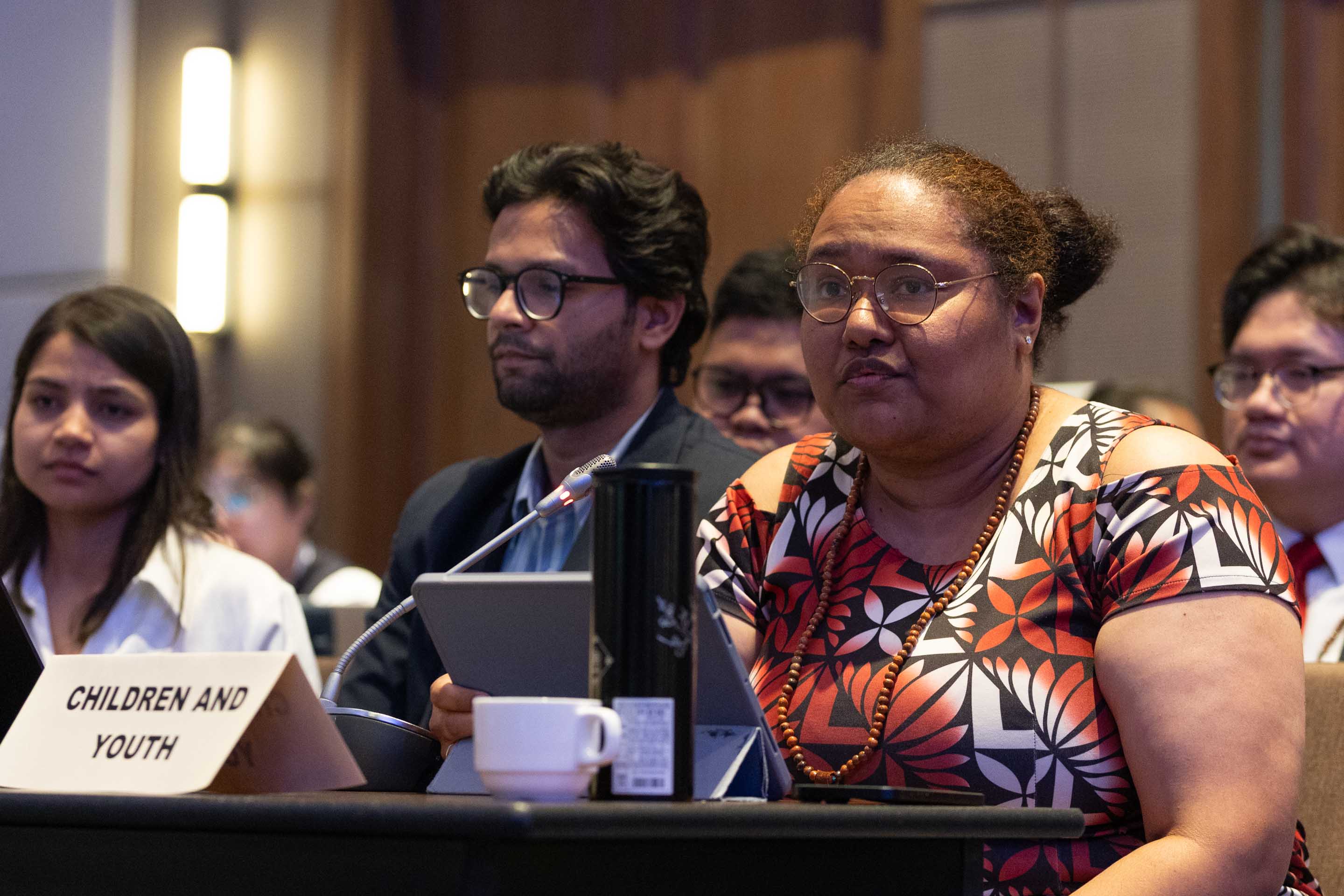
Susana Baleilololo, Children and Youth Major Group
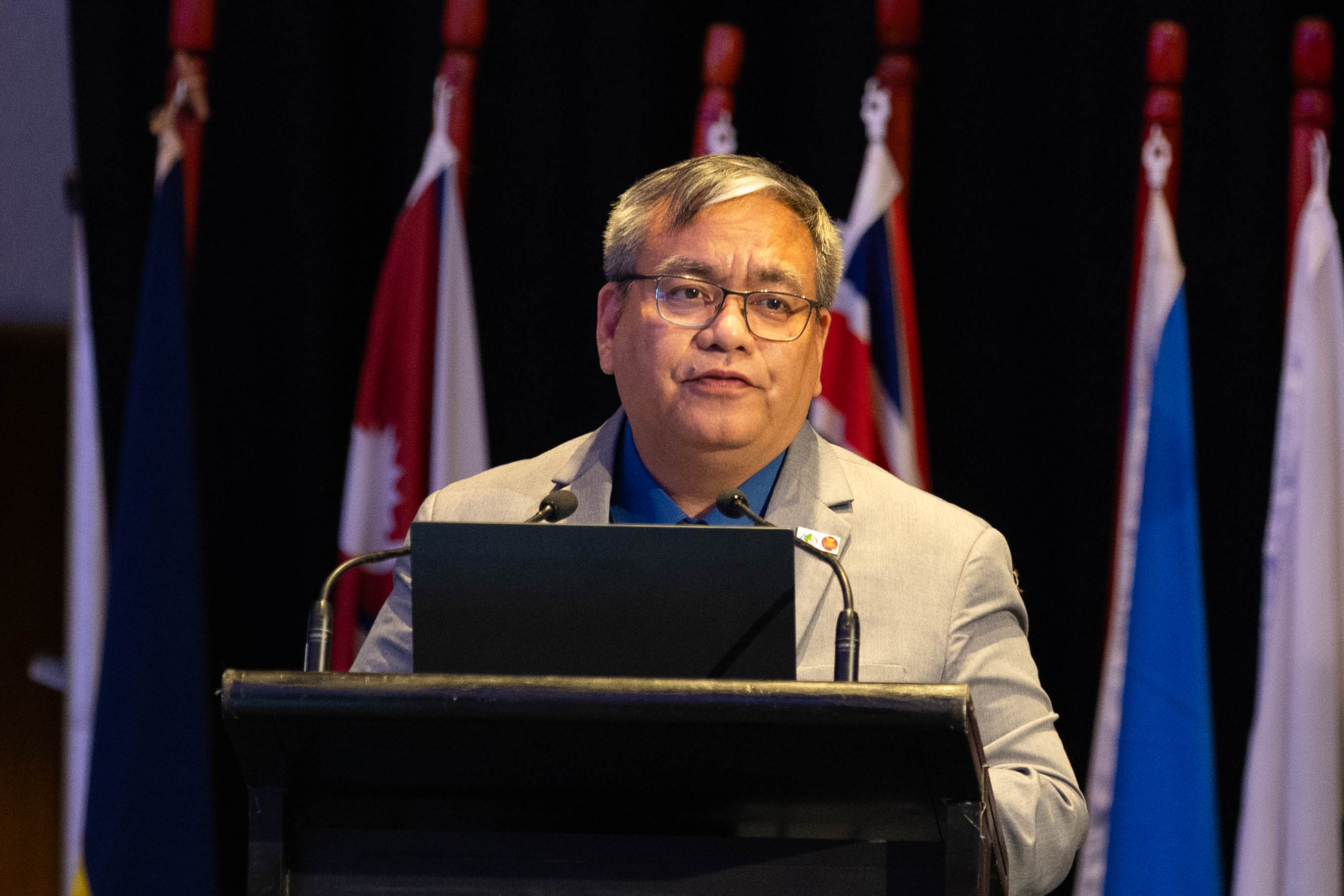
Jerome Montemayor, Executive Director, ASEAN Centre for Biodiversity
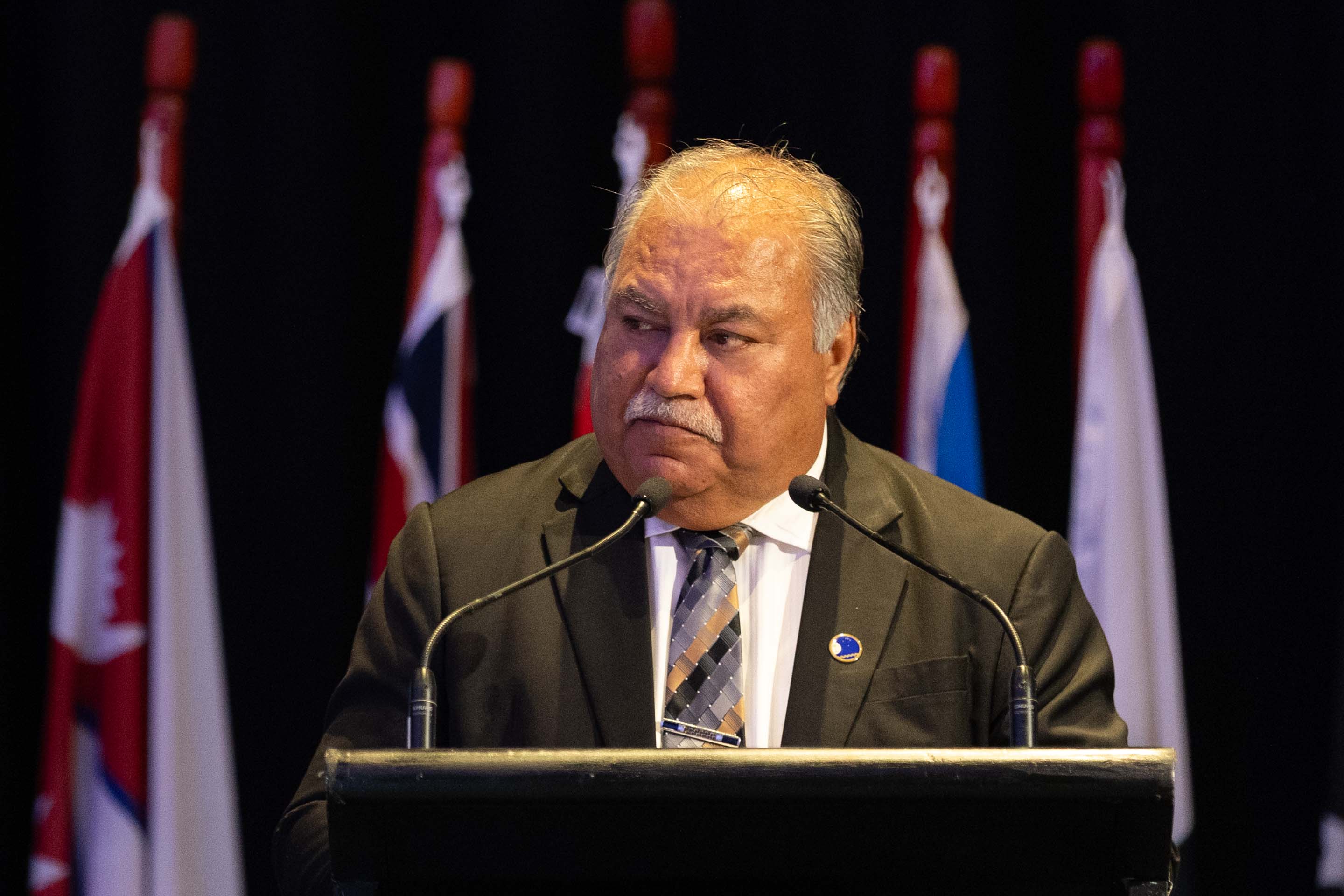
Baron Waqa, Secretary-General, Pacific Islands Forum (PIF) Secretariat
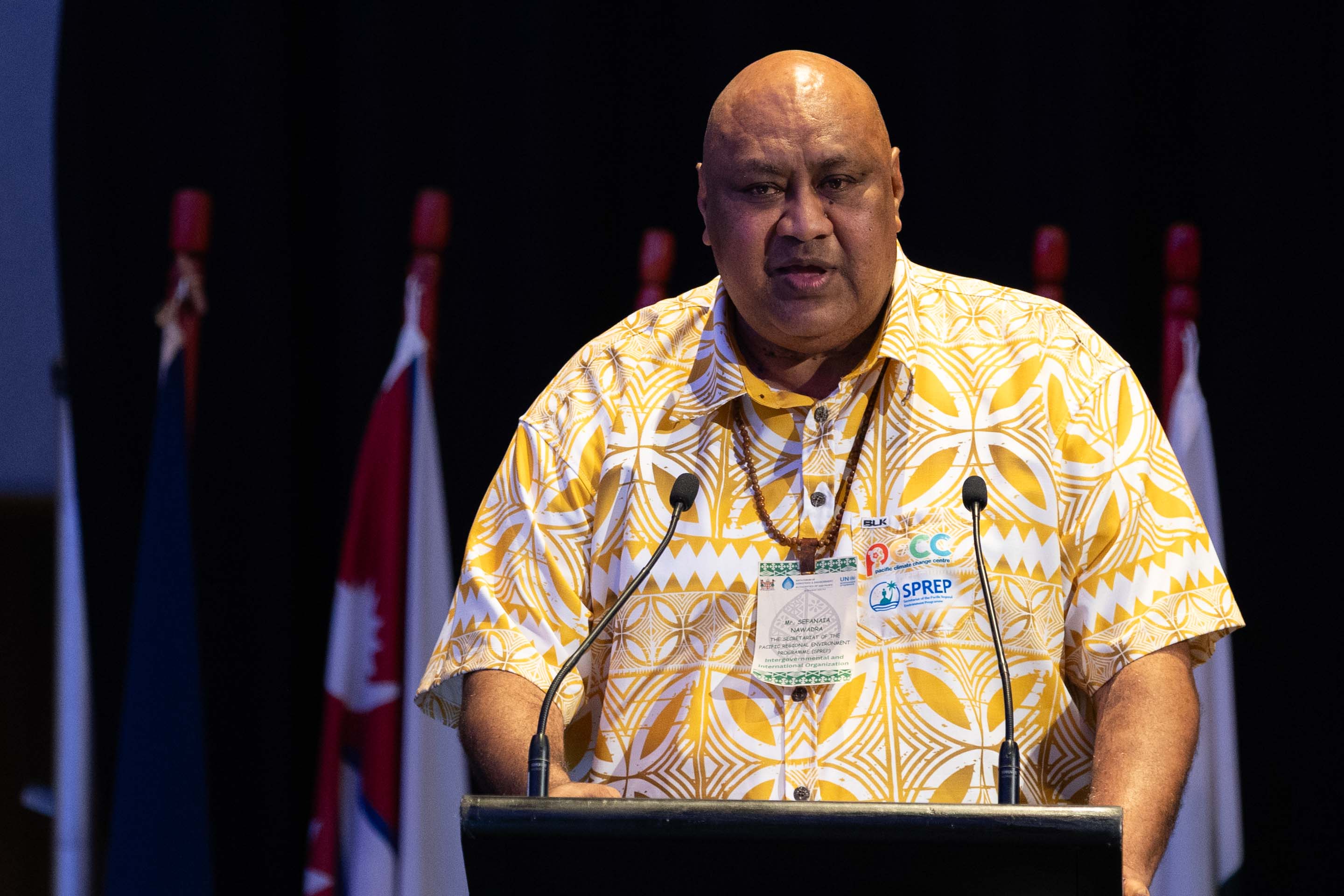
Sefanaia Nawadra, Director General, Secretariat of the Pacific Regional Environment Programme (SPREP)
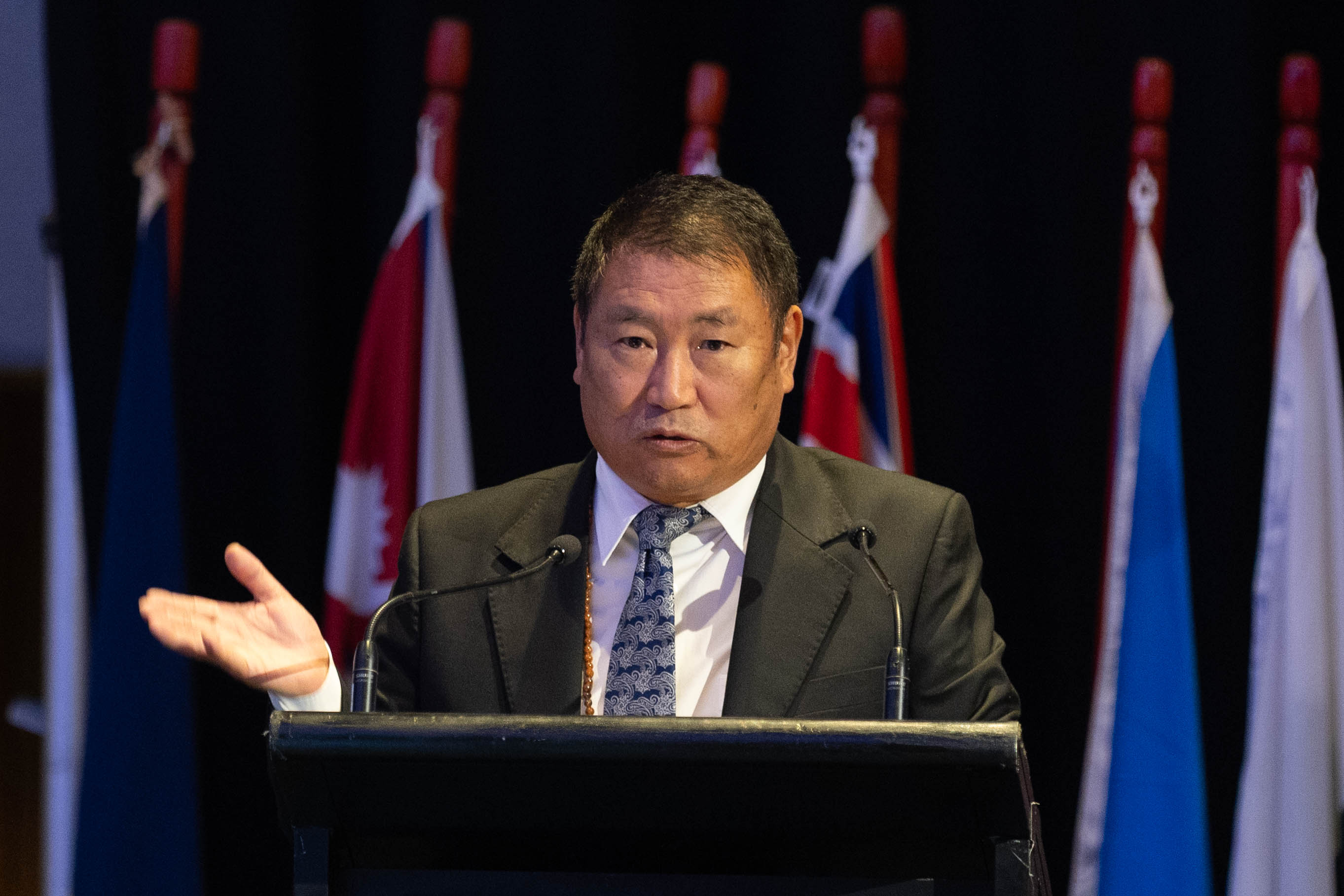
Pema Gyamtsho, Director-General, International Centre for Integrated Mountain Development (ICIMOD)
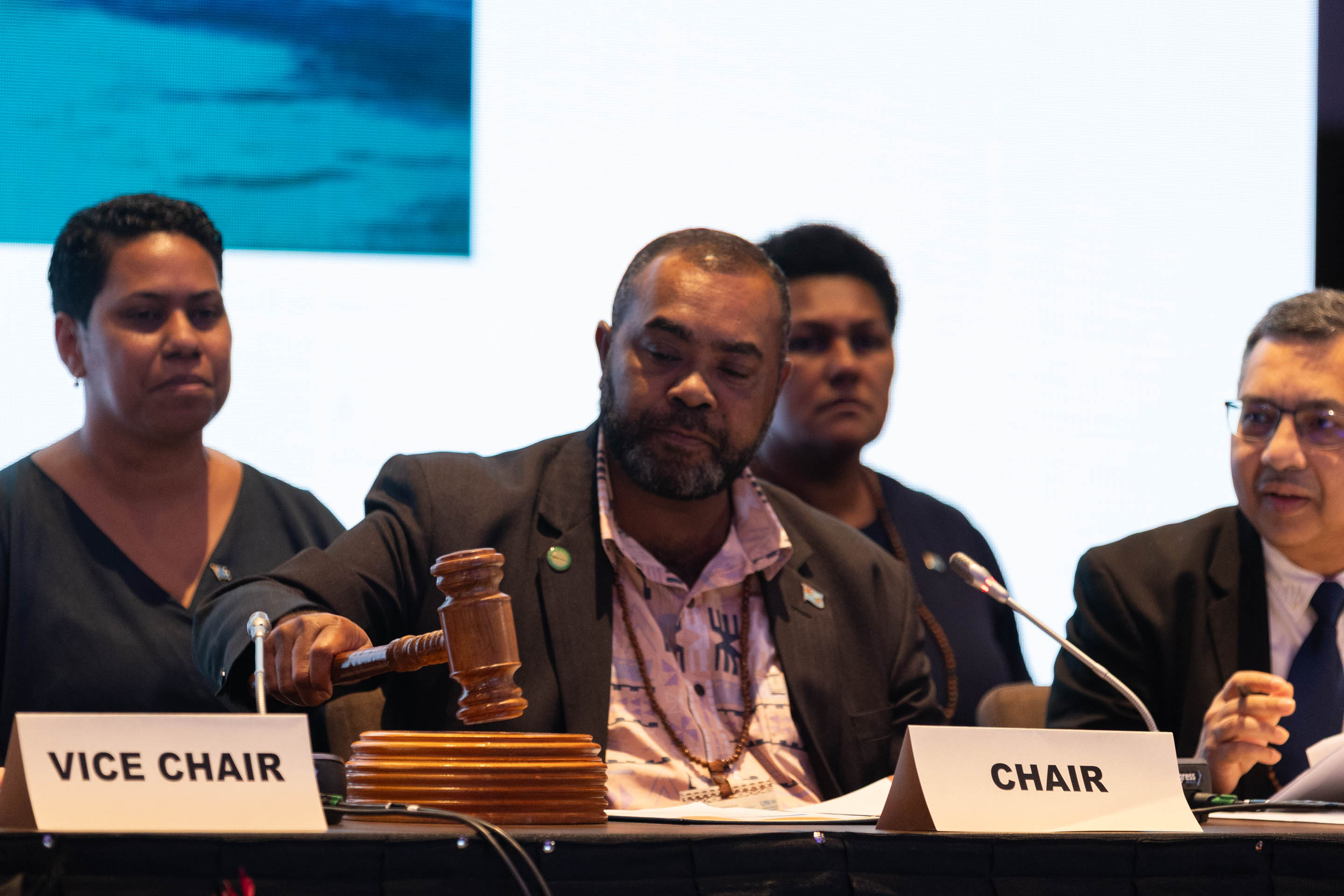
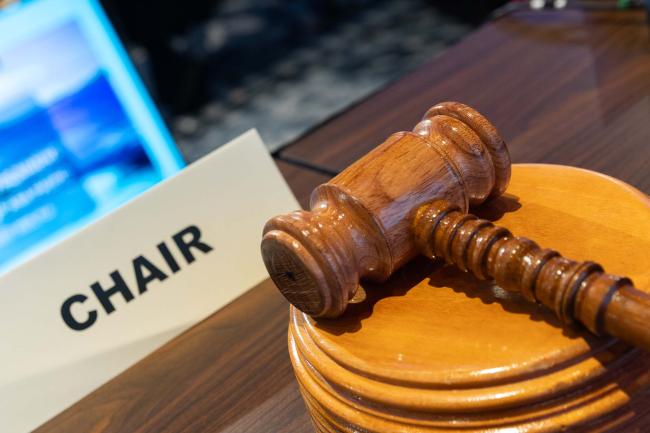
Mosese Bulitavu, Minister for Environment and Climate Change, Fiji, gavels the meeting to a close
Side Events throughout the Day
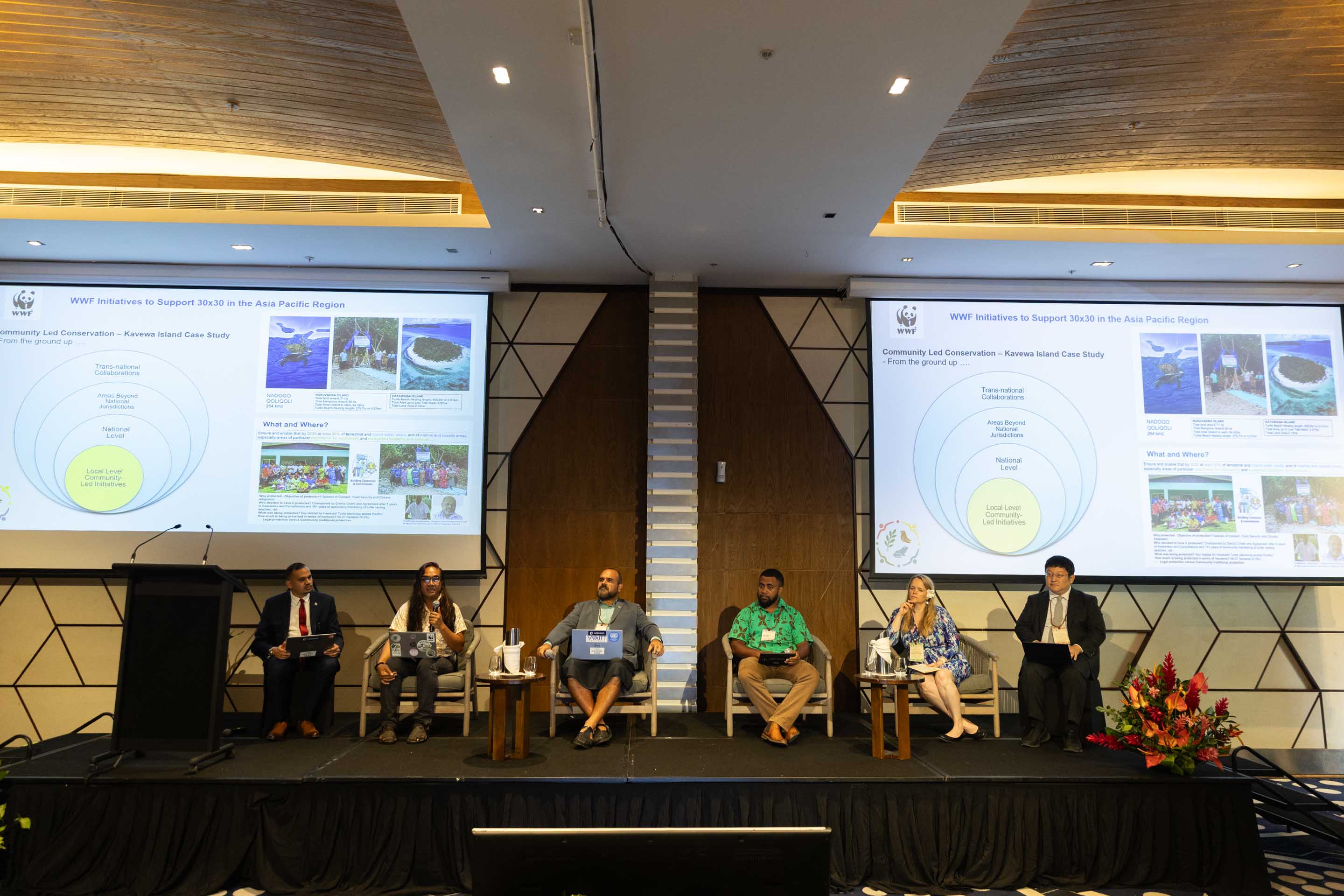
Panel speakers for the side event on “Uniting for 30×30: Catalyzing Marine and Coastal Conservation in the Asia Pacific”
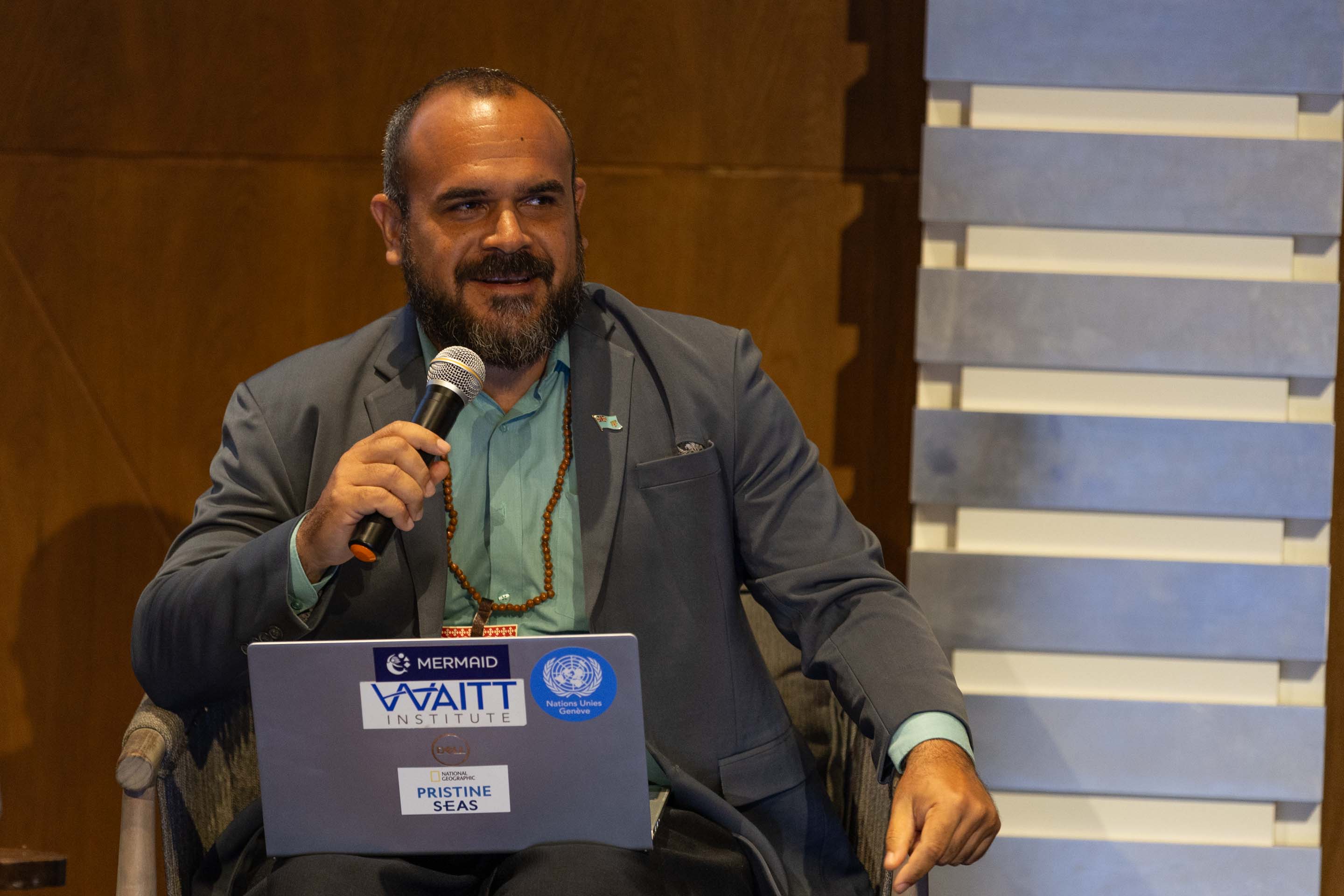
Andrew Paris, Fiji
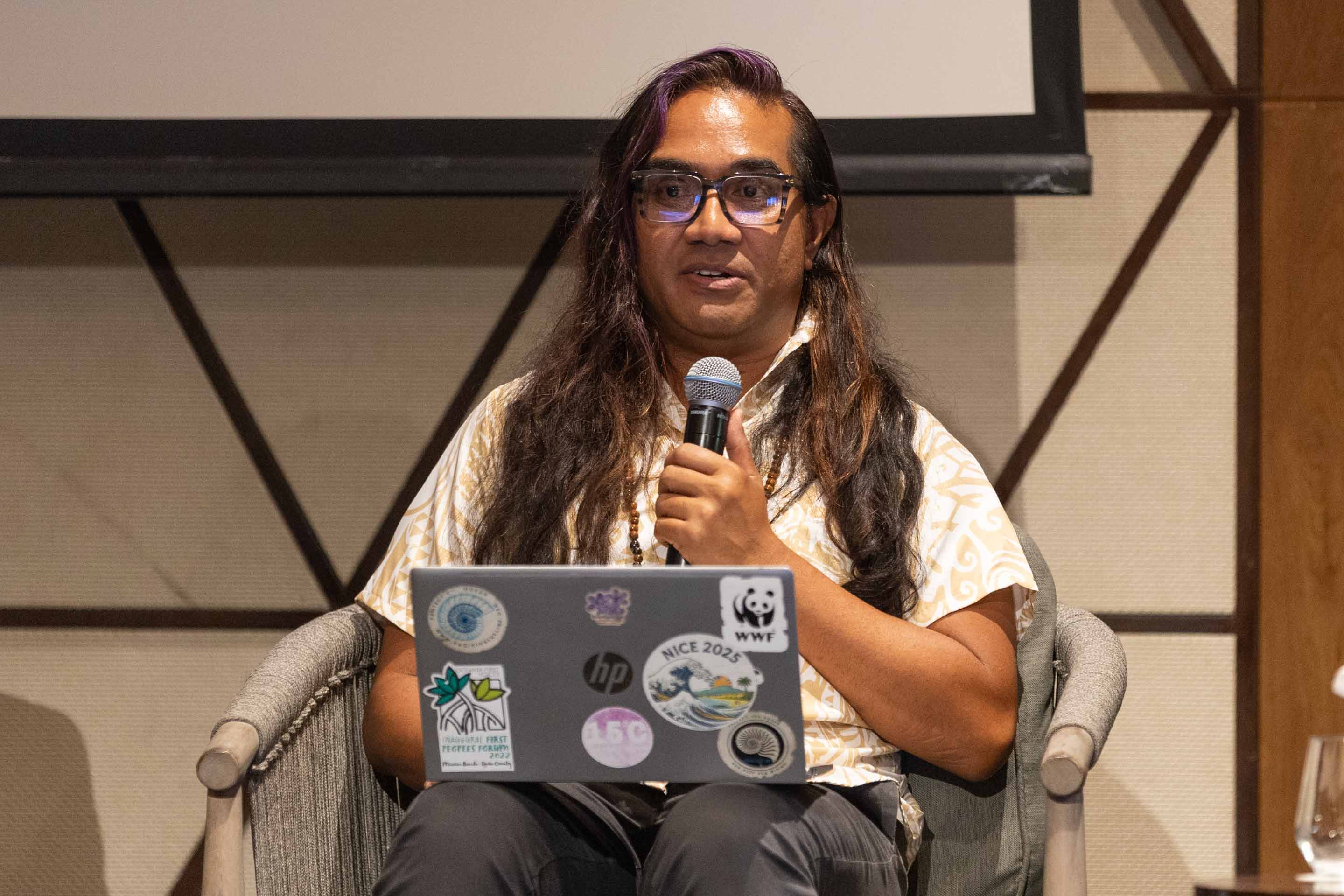
Alfred Ralifo, WWF
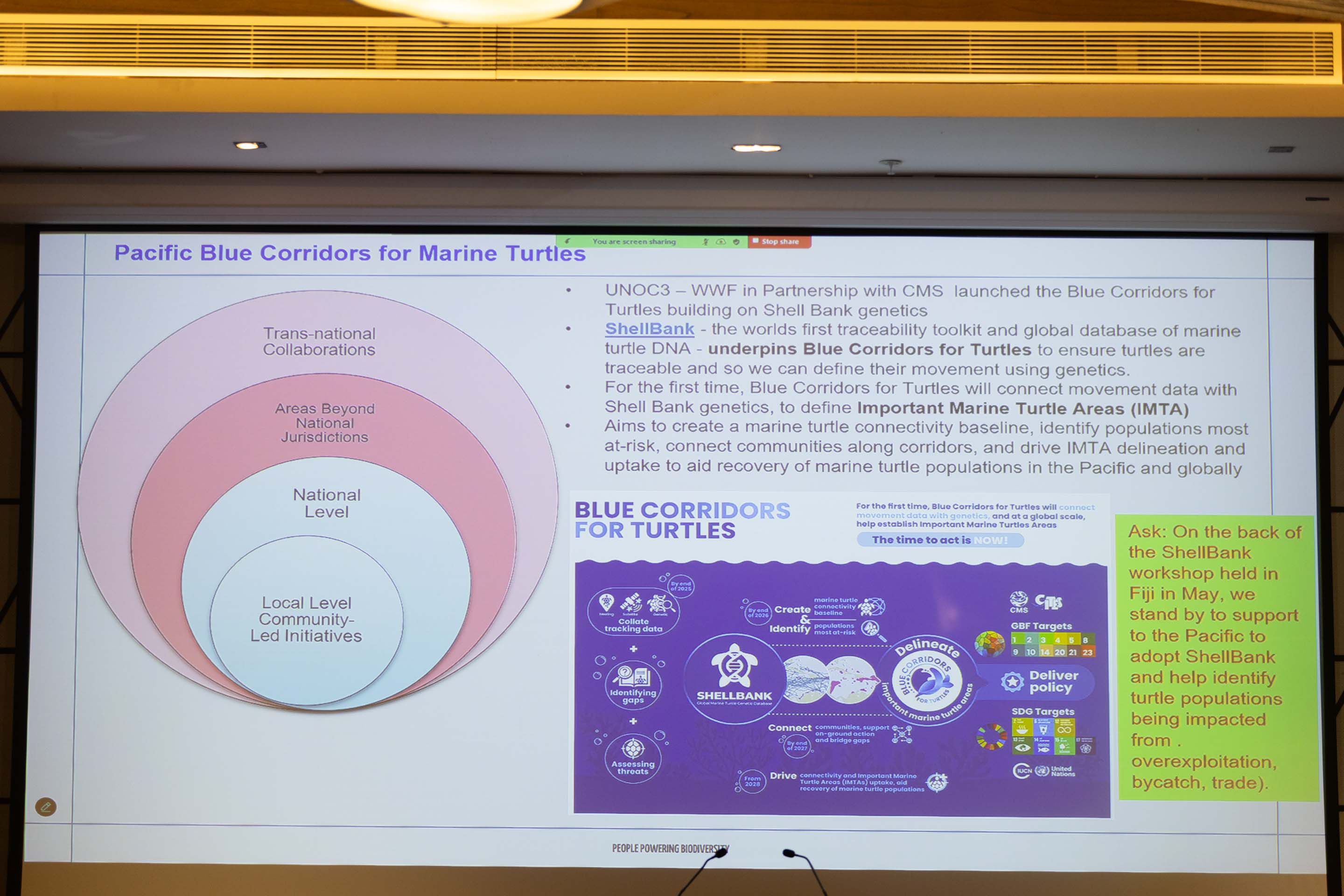
A slide from WWF highlights how local initiatives feed into transnational collaborations
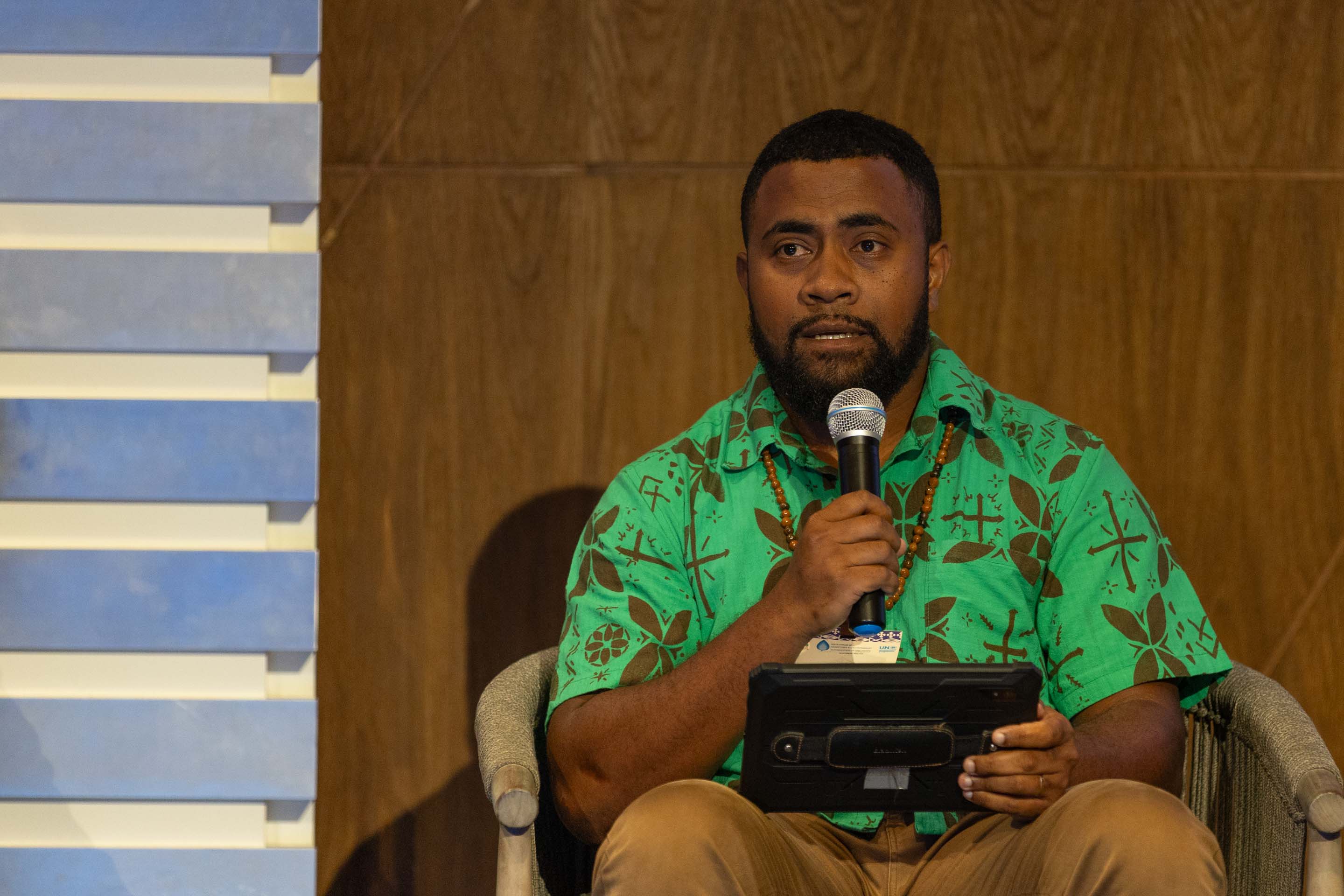
Inia Corerega, IUCN
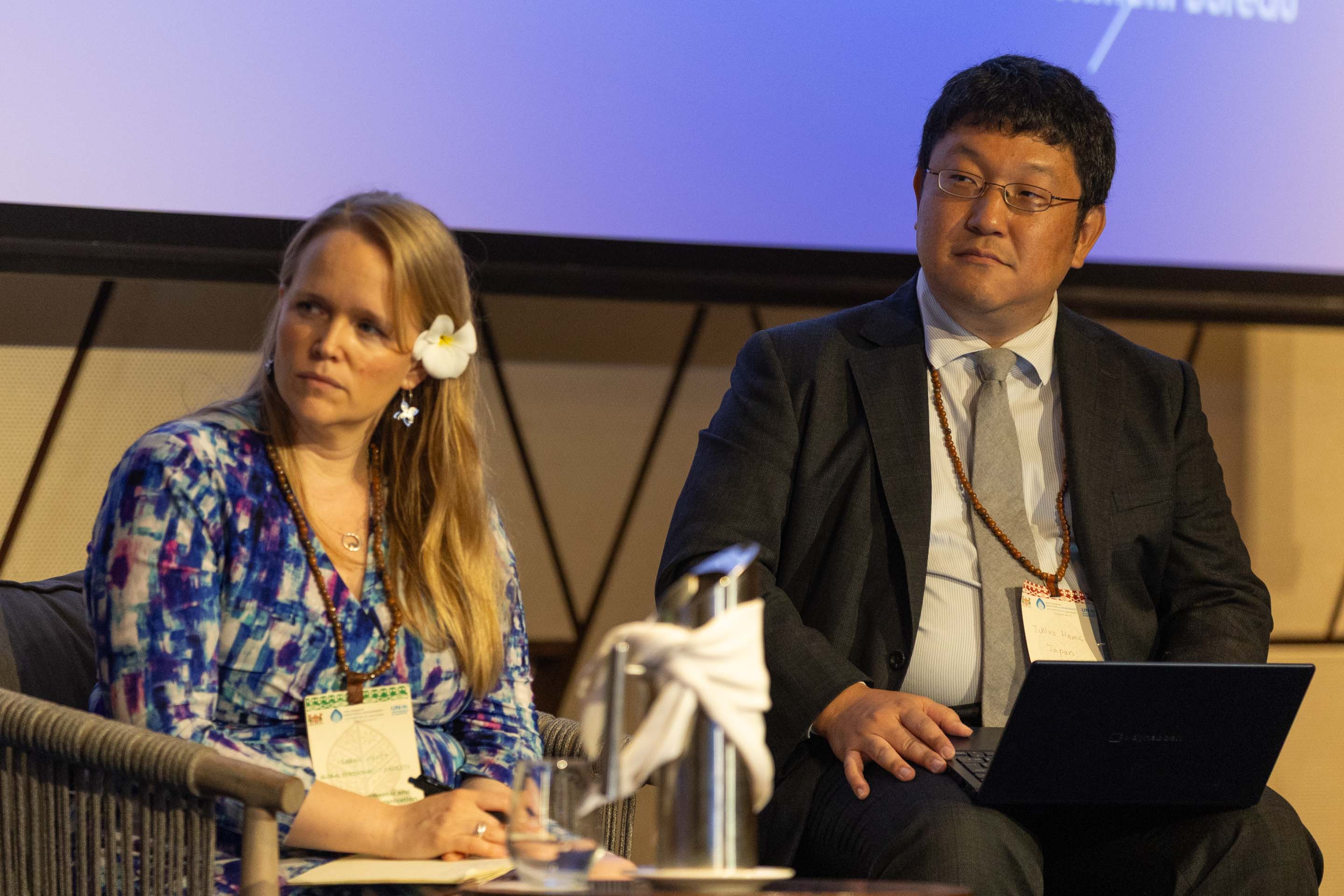
Sarah Wyatt, Global Environment Facility (GEF), and Ichiro Hama, Global Environment Bureau, Ministry of the Environment, Japan
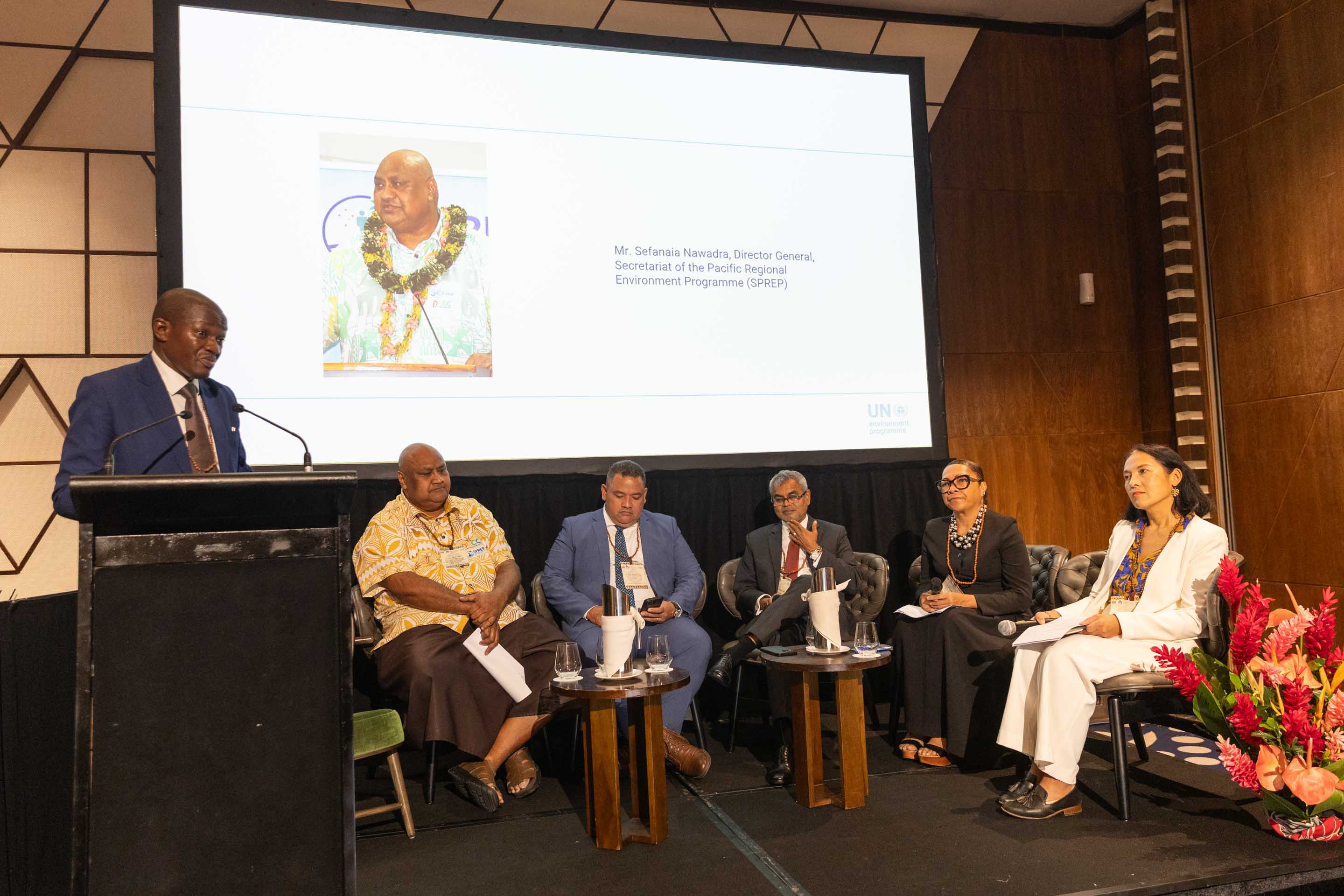
Panel speakers for the side event on “Climate Early Warning Systems for Resilience”
Around the Venue
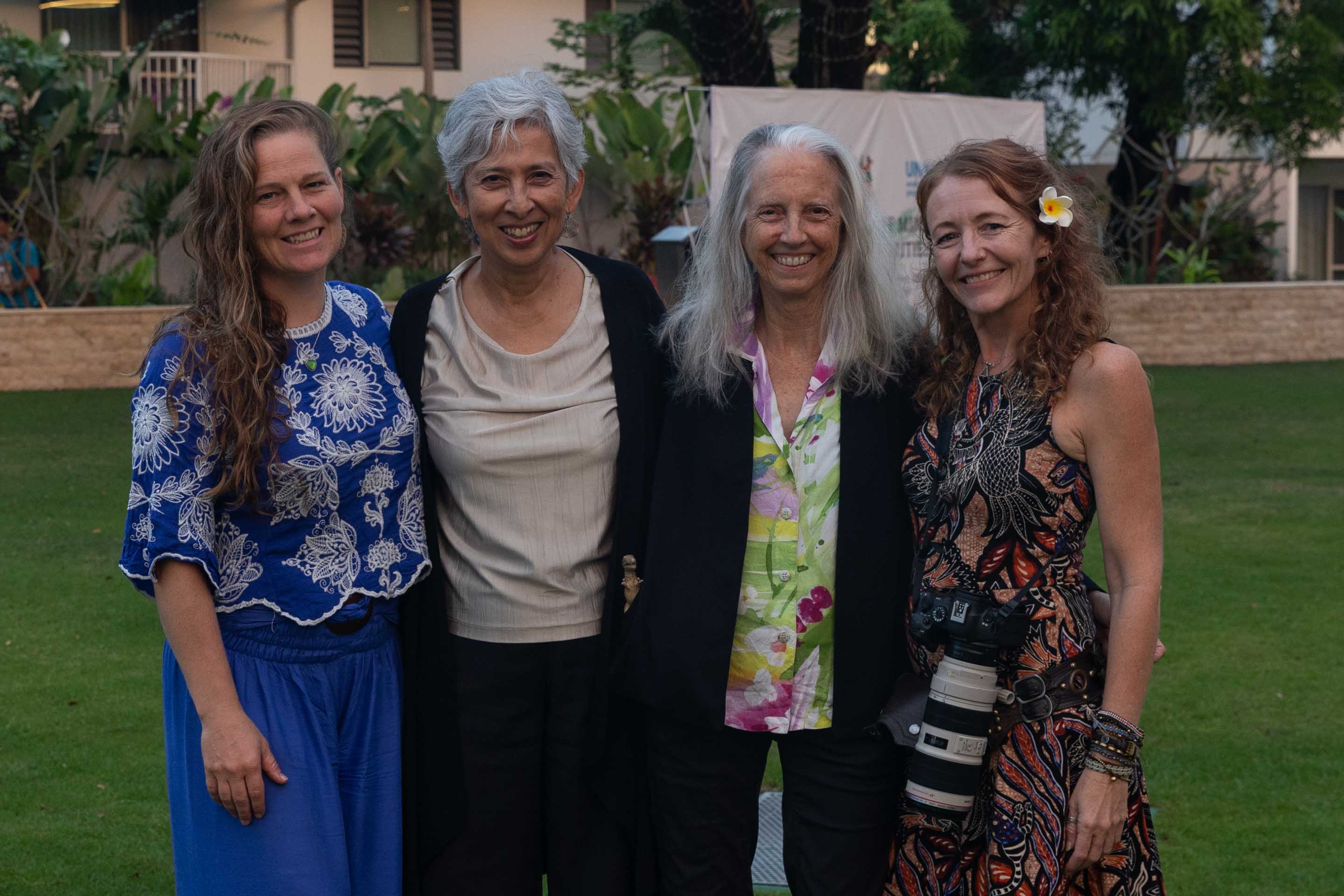
The IISD/ENB team covering the Forum: Liz Willetts, US; Delia Paul, Malaysia/Australia; Teya Penniman, US; and Kiara Worth, South Africa
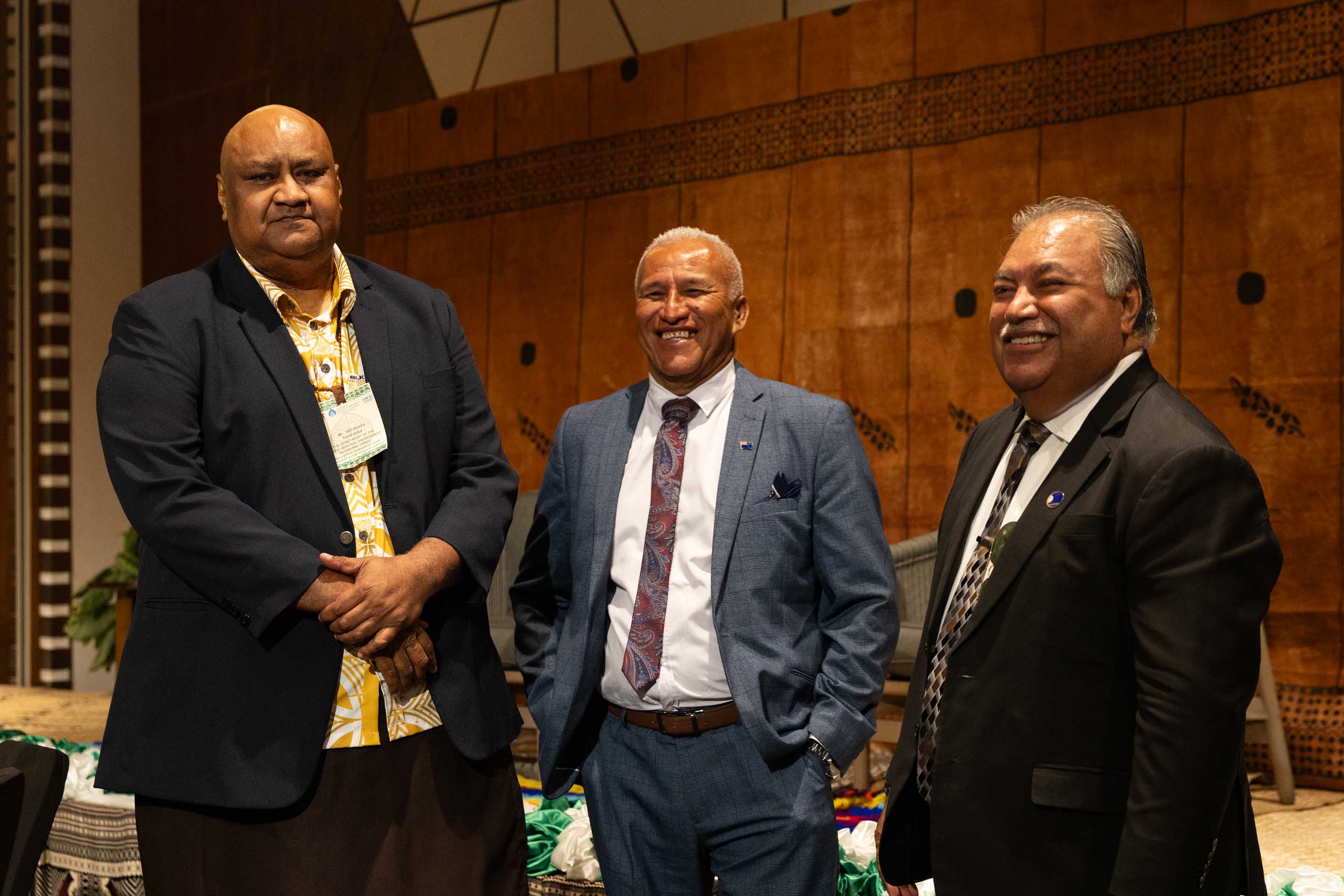
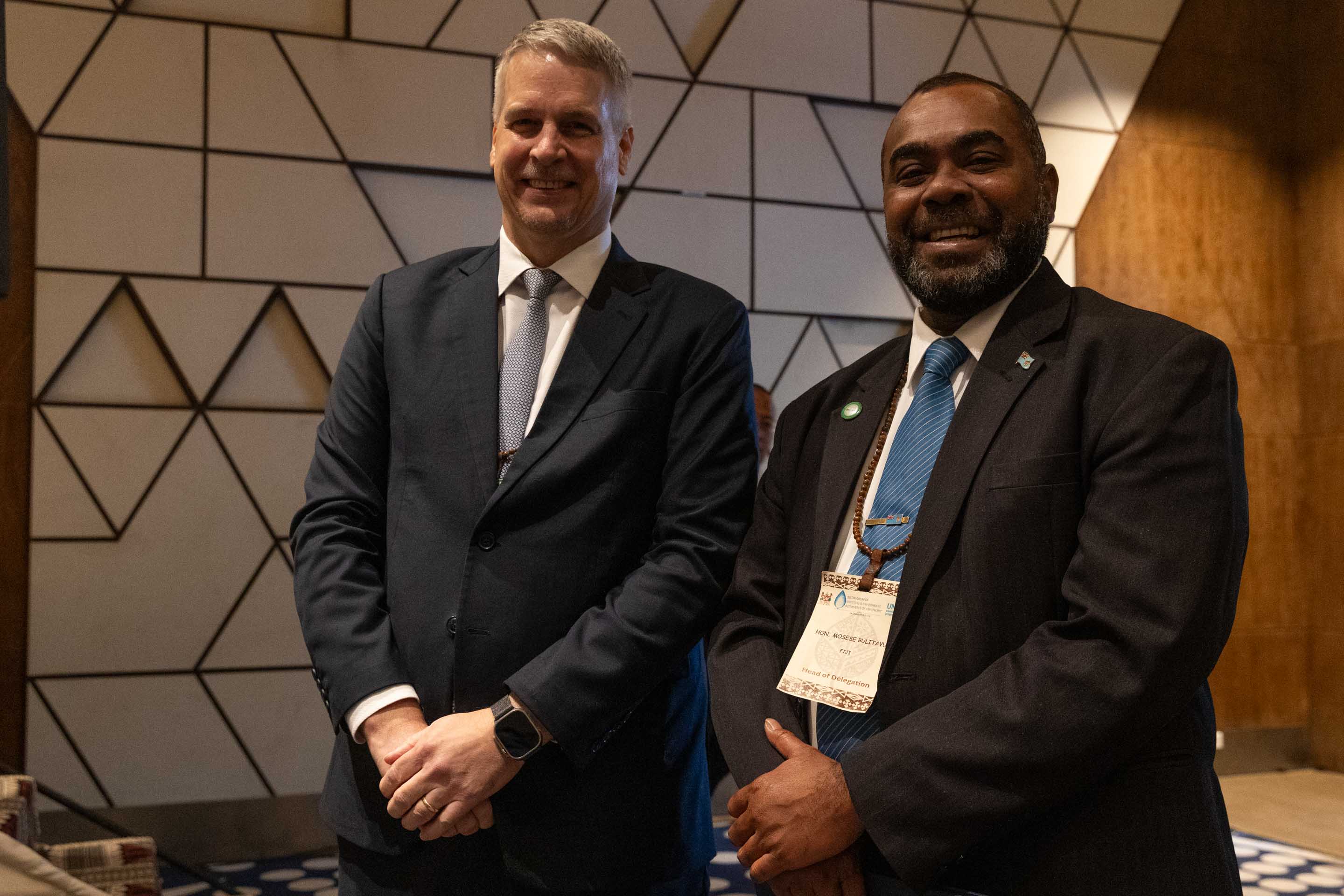
Dignitaries around the venue
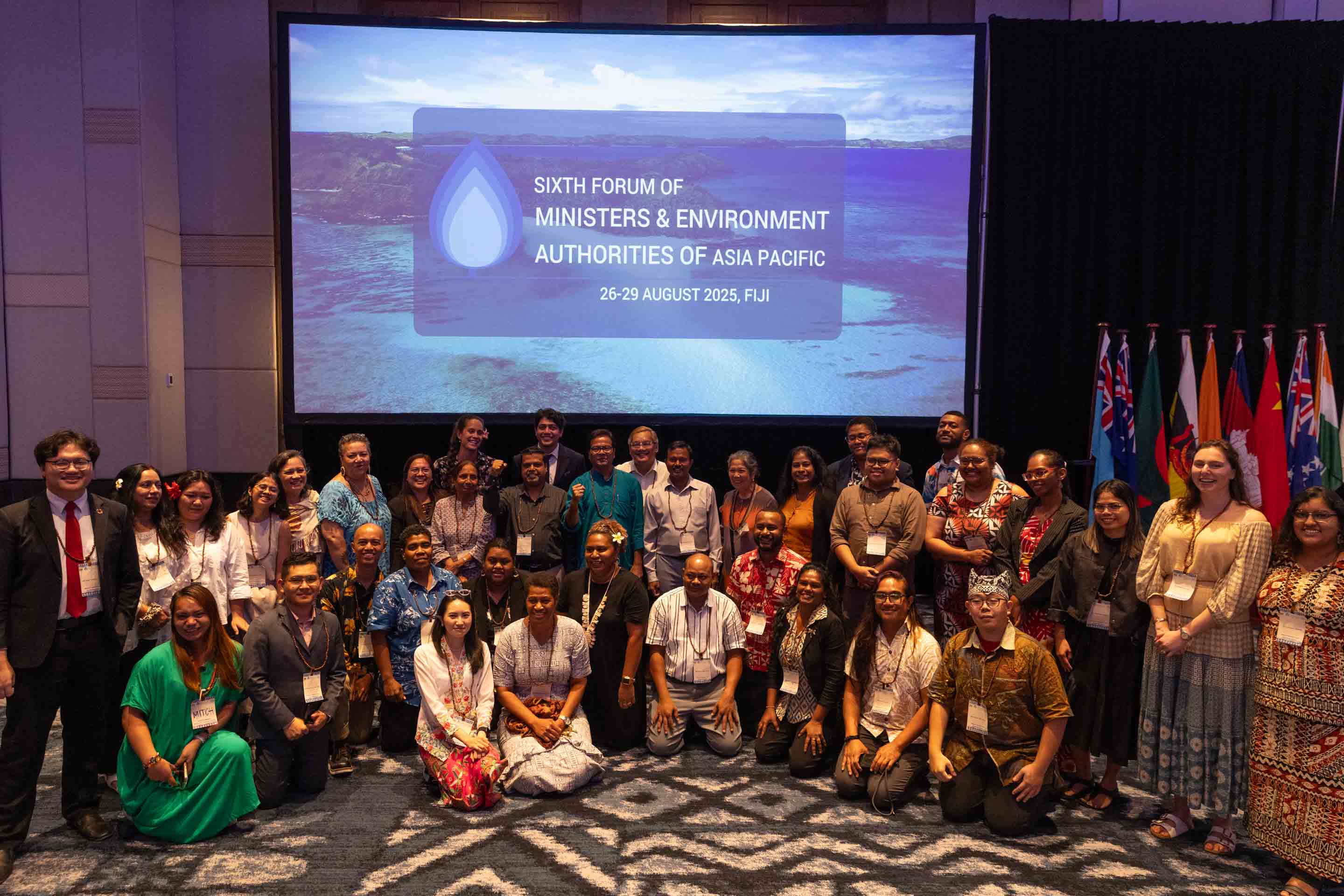
Civil society family photo
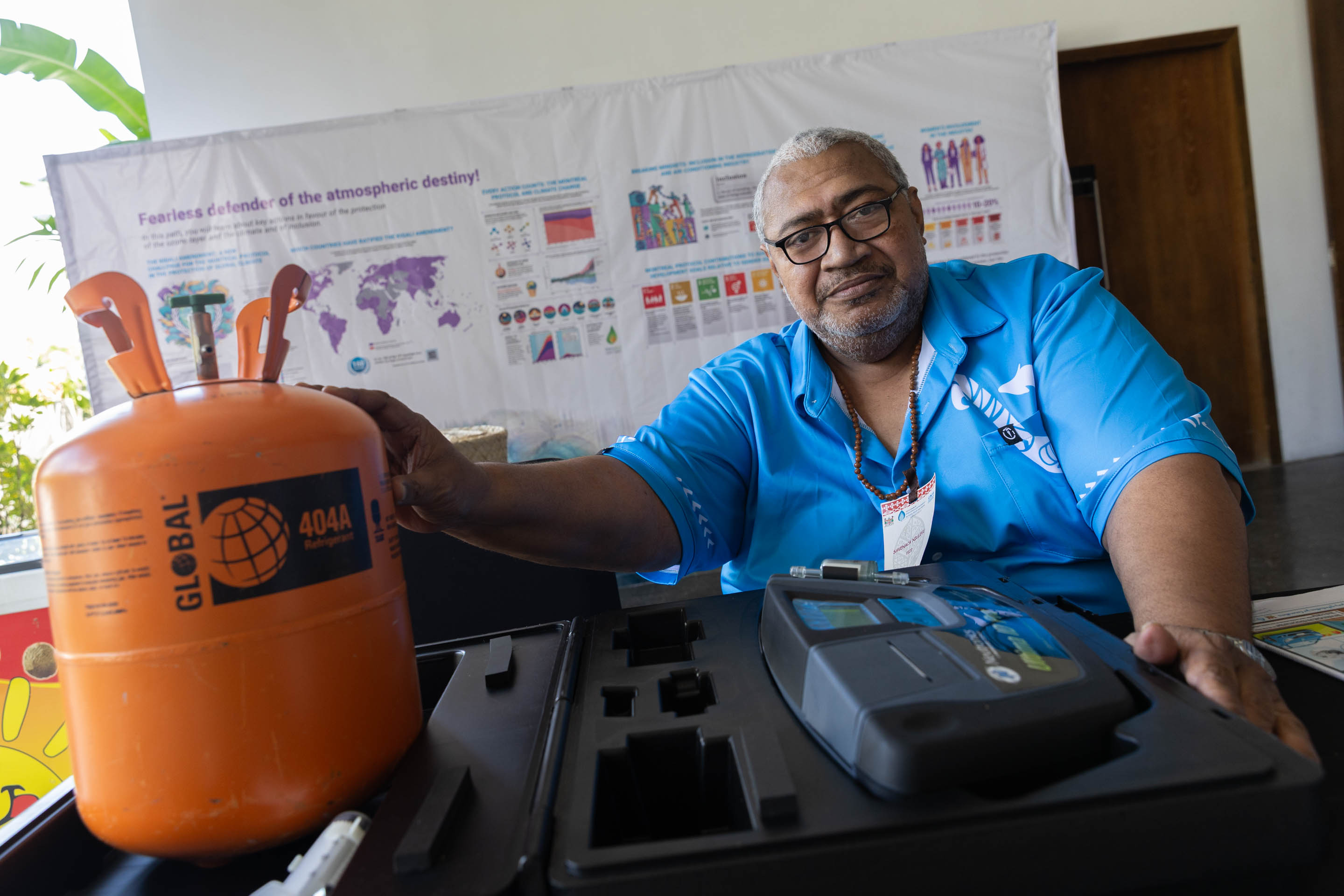
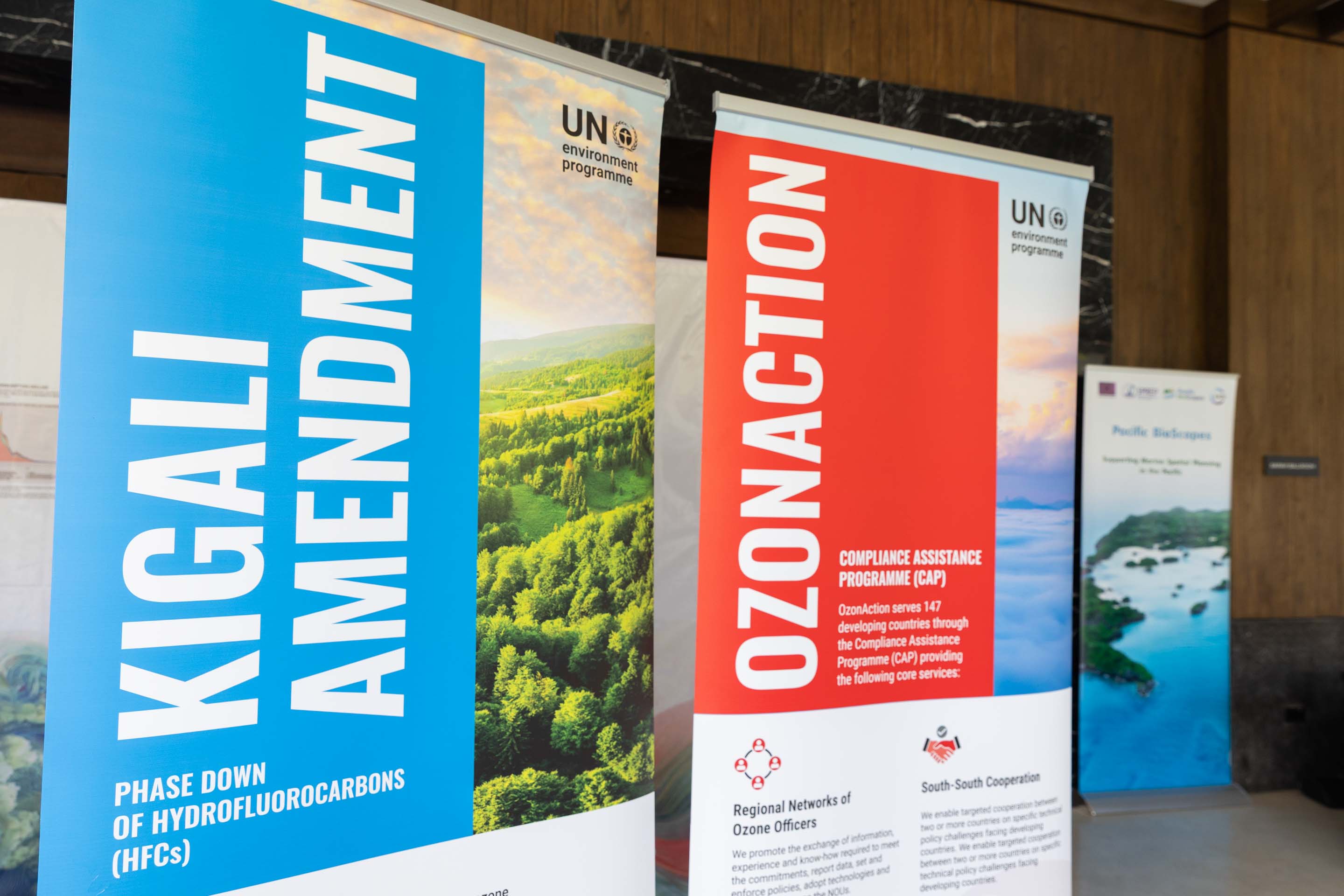
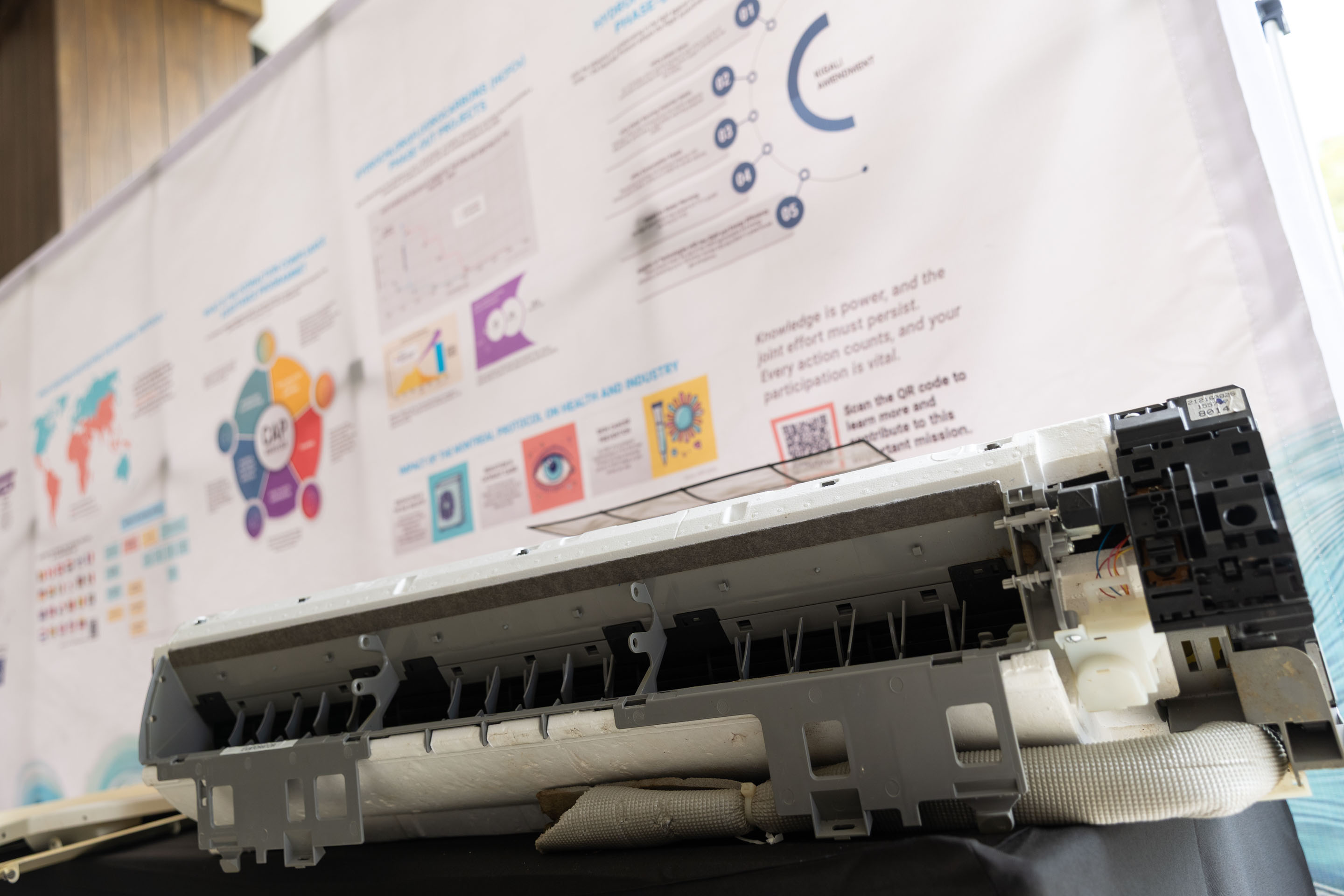
A variety of information booths around the venue highlight the work being done in Fiji to comply with the Kigali Amendment and to ensure broad environmental protection

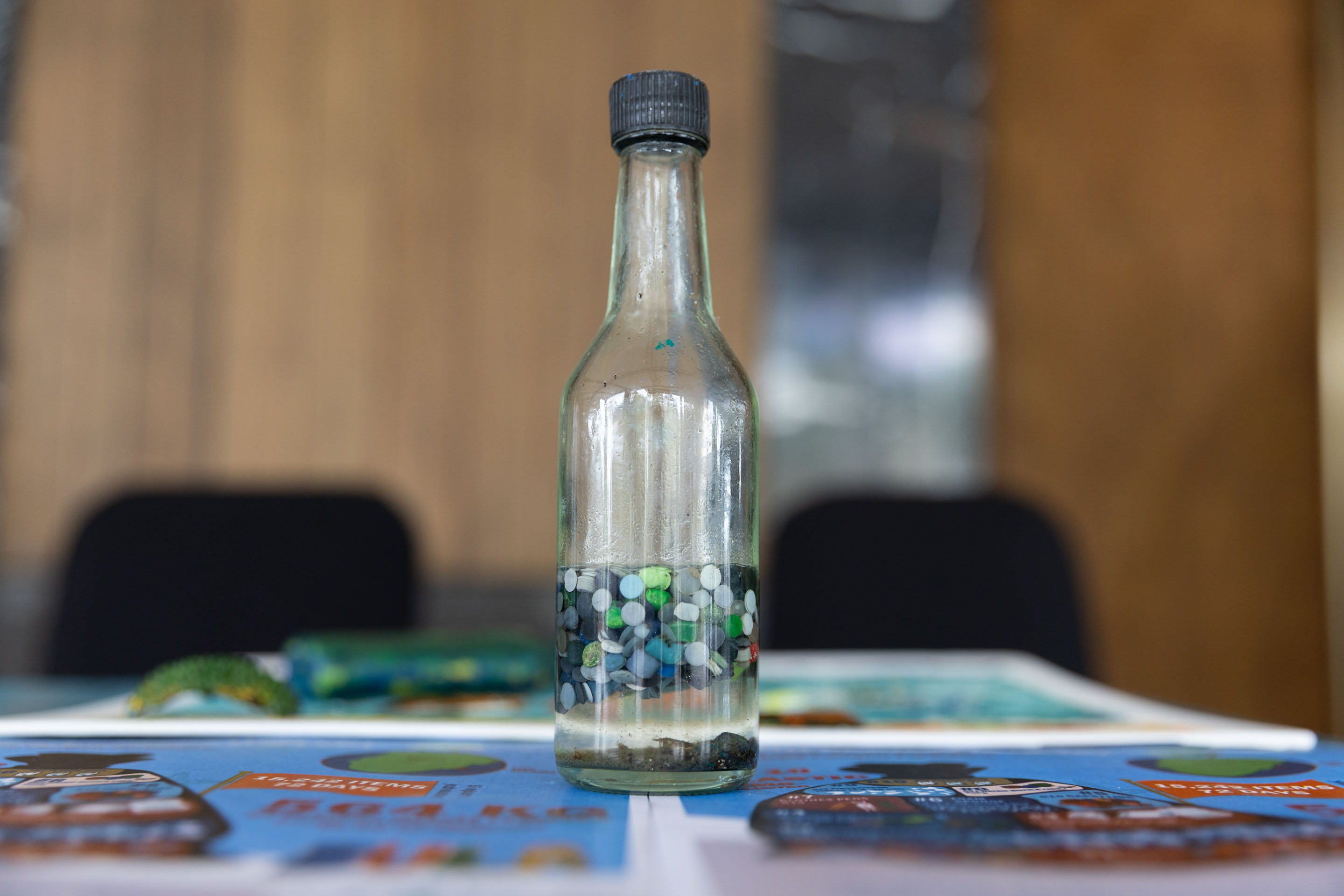
A bottle containing microplastics collected from the Ocean