About
More than 400 attendees from government, industry, and civil society focused on ways to diversify value in small-scale and non-metallic mining, establish legal frameworks for value addition policies, and align value addition with environmental protection.
Final report
Summary report 3–5 November 2025
All coverage
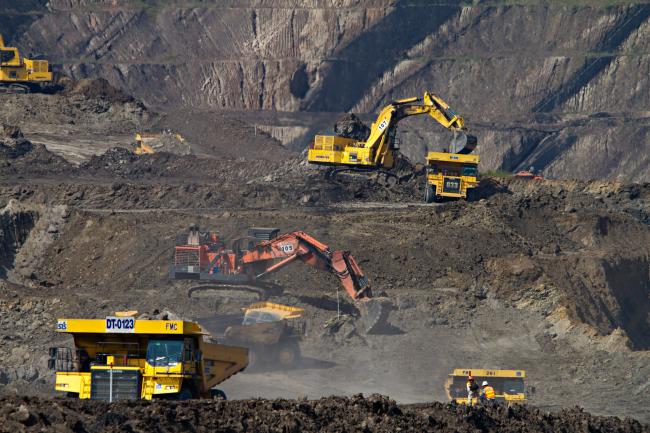
The mining industry provides essential minerals and generates income for social and economic development. However, the benefits of mining are not equally enjoyed. Governments of resource-producing countries, small businesses, and local communities may bear the negative impacts of environmental damage from mining activities, while never fully realizing the industry’s potential gains. The Intergovernmental Forum on Mining, Minerals, Metals and Sustainable Development (IGF) exists to redress the balance through policies that help governments foster a more sustainable mining sector.
Within this context, the 21st Annual General Meeting (AGM) of the IGF convened on the theme of ‘Value Beyond Extraction: Rethinking Mining for a Resilient Future’ and a key focus will be policies for value addition. As aid budgets shrink, mining can be an important contributor to domestic resource mobilization; thus, governments need to craft fiscal regimes to maximize revenue through well-designed taxes, royalties, and other policy innovations.
Sessions during this meeting focused on ways to diversify value in small-scale and non-metallic mining, establish legal frameworks for value addition policies, and align value addition with environmental protection. Participants also discussed related issues such as sustainable standards in mining, artisanal and small-scale mining, abandoned mine lands, and water governance in the context of mining. Sessions will offer a mix of presentations and sharing of experiences.
The 21st AGM took place in the lead-up to the 30th session of the Conference of the Parties to the UN Framework Convention on Climate Change (UNFCCC COP 30) in Brazil, providing a window into the actions that governments are currently taking.
Worldwide, the mining industry helps power the clean energy revolution by supplying the critical minerals that go into electric vehicles, wind turbines, solar panels, and other technologies, but is also a contributor to greenhouse gas emissions, pollution, and environmental degradation. At the IGF’s 20th AGM in 2024, participants discussed the need for improvements in reducing waste generation, greenhouse gas emissions and recycling and reuse of critical minerals, so as to minimize capital requirements for meeting their obligations under the Paris Agreement on climate. The meeting also took place in the same week as the Second World Summit on Social Development (WSSD), which convened in Doha, Qatar, marking a significant moment in international social development policy.
The IGF came out of the first WSSD, which took place in 2002 in Johannesburg, South Africa. The Johannesburg Plan of Implementation emphasized the need to enhance the mining sector’s contributions to social and economic development. Building on interest of countries with a significant mining sector, IGF was launched as a partnership in 2005, with 25 founding member countries. Since then, AGMs have been hosted by UN Trade and Development (UNCTAD) in Geneva, Switzerland. Canada and the Netherlands are core funders of the IGF. The partnership currently has 85 members, covering most of the world’s mining jurisdictions. The International Institute for Sustainable Development hosts its Secretariat.
The 21 AGM convened from 3-5 November at the Palais des Nations in Geneva, Switzerland.
The Earth Negotiations Bulletin (ENB) writers for this meeting were Delia Paul, PhD; Olivia Pasini; and Pauliina Upla. The Digital Editor was Anastasia Rodopoulou. The Editor was Leila Mead.
To receive free coverage of global environmental events delivered to your inbox, subscribe to the ENB Update newsletter.
