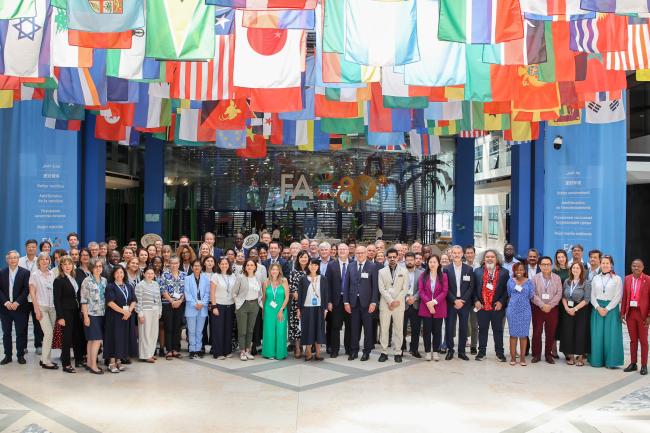
Agriculture and food systems are highly vulnerable to climate impacts, but they are also major contributors to greenhouse gas emissions. With over 8% of the world’s population, around 673 million people, not getting enough to eat, experts gathered for the Expert Meeting on Agriculture and Food to consider how to feed the growing world population while responding to climate change. The meeting is being co-sponsored by the Food and Agriculture Organization of the United Nations (FAO) and the Intergovernmental Panel on Climate Change (IPCC).
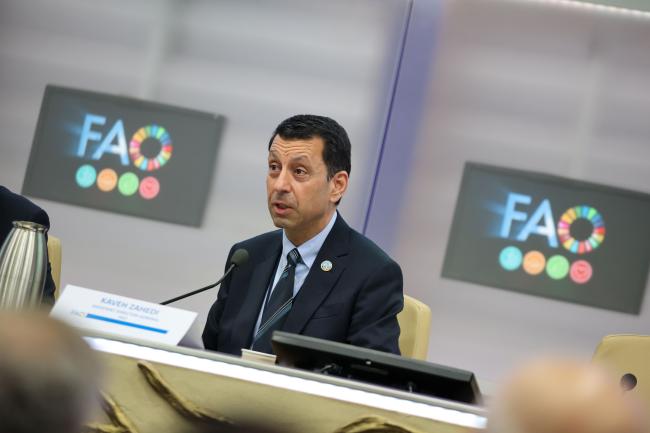
Opening the meeting, Kaveh Zahedi, Assistant Director-General and Director of the Office of Climate Change, Biodiversity and Environment, FAO, stressed the importance of agriculture and food systems to the seventh assessment cycle of the IPCC. Noting the cross-cutting nature of agrifood systems, he called for stronger integration across scientific disciplines to better inform climate policy and action.
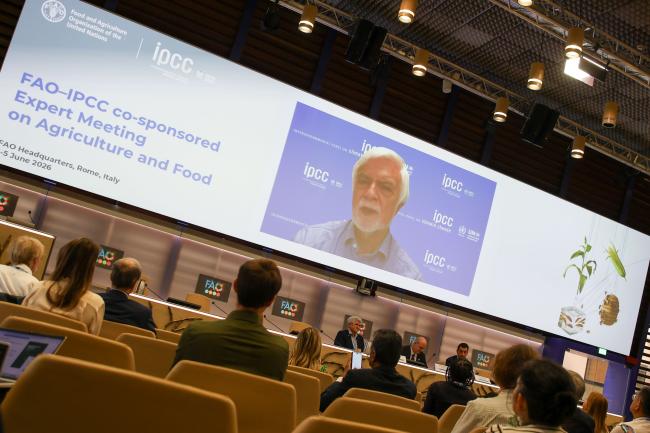
Jim Skea, IPCC Chair, speaking via video message, noted the joint workshop is taking place at a critical stage of the seventh assessment cycle, with IPCC Working Groups II and III developing dedicated chapters on agriculture and food.
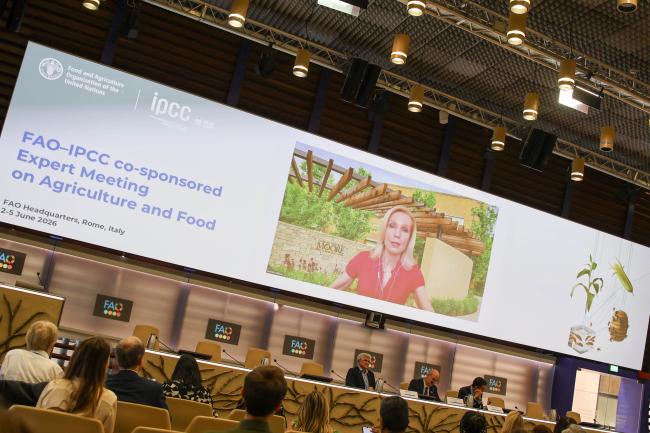
Sabine Miltner, Program Director, Gordon and Betty Moore Foundation, in a video message, underlined that while markets can be powerful agents of change, regulatory systems need to reinforce such change. She expressed hope that this workshop would contribute evidence-based policy making and better investment decisions.
Throughout the day, participants examined climate risks across agrifood systems, explored opportunities for adaptation and mitigation, and identified key research and policy priorities for building resilient and sustainable food systems.
The first session provided the scientific context for discussions during the week. In a keynote presentation Jean-François Soussana, Emeritus Research Director, French National Research Institute for Agriculture, Food and Environment, highlighted the complementarity of the Working Groups, noted gaps in how agrifood systems are being addressed across the seventh assessment cycle, and pointed to integration as essential but challenging. He stressed this meeting as an opportunity to connect external knowledge and strengthen the Seventh Assessment Report’s (AR7) cross-chapter framing on agrifood systems.
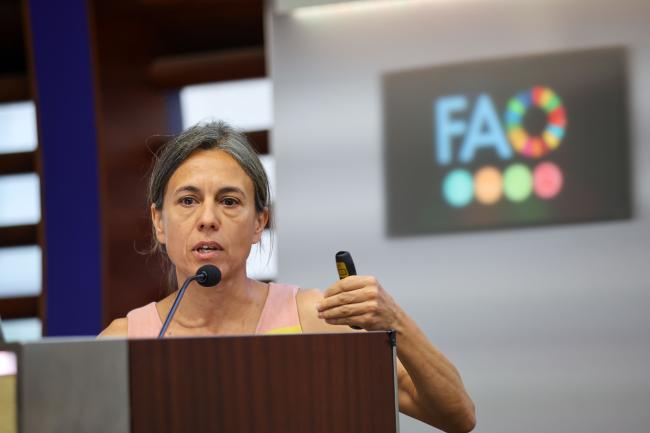
Marta Rivera Ferre, Spanish National Research Council, argued that assessments should move beyond sector-specific approaches and adopt more integrated food systems perspectives that better capture interactions among different sectors. She also highlighted the need to better incorporate Indigenous and local knowledge systems, and justice and equity considerations into food system transformation.
Eleanor Milne, Colorado State University, presented findings from the FAO’s recent paper, Update on Scientific Findings on the Interactions between Agriculture, Food Systems and Climate Change. She reviewed advances in areas including soil carbon management, livestock methane reduction, agroforestry, aquaculture, and emerging technologies, while highlighting continuing governance, finance, and research challenges.
In the ensuing discussion, participants considered how to communicate complex science to policymakers while maintaining the interconnected nature of food systems challenges. Several stressed that effective climate action requires whole-of-government approaches to break silos when dealing with intertwined problems, with one calling for “educating policymakers in complexity.”
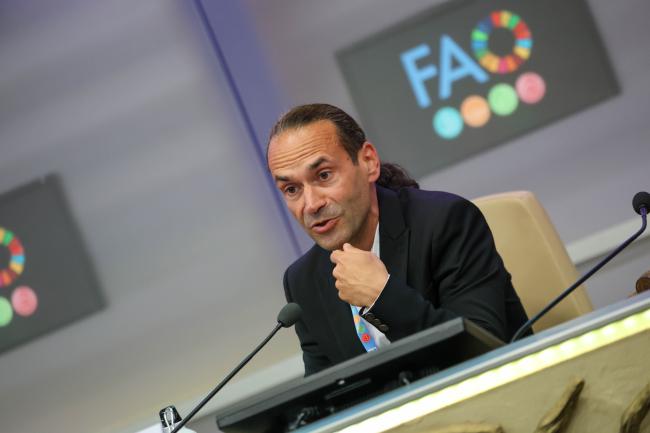
During the session on risk profiles and vulnerability hotspots, speakers considered how climate risks are distributed across regions, populations, and food systems. In his keynote presentation, Benjamin Sultan, French National Research Institute for Sustainable Development, pointed out main knowledge gaps, including:
- disproportionate concentration of international research and subsidies on global trade commodities;
- climate data gaps;
- the yield-centric paradigm; and
- the persistent under-representation of local knowledge.
In the subsequent discussion, participants highlighted additional knowledge gaps, including on:
- impacts of geological hazards on vulnerability and risks;
- changes in food systems vulnerability following climate-induced migration; and
- climate action as a vulnerability risk, such as afforestation that deprives Indigenous Peoples of their land.
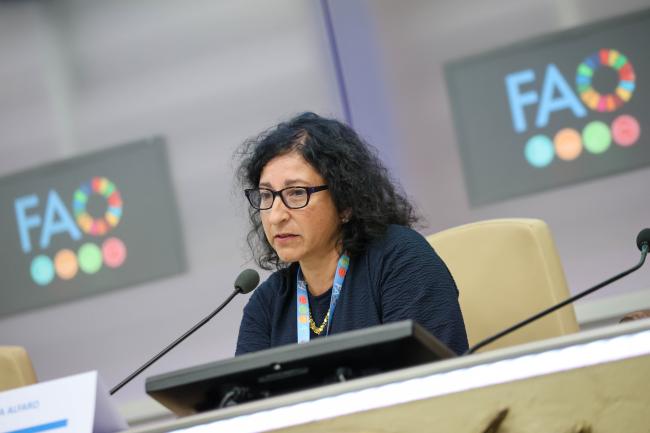
During the session on the implications of climate impacts for agrifood commodities and value chains, Marta Alfaro, New Zealand Institute for Bioeconomy Science Limited, highlighted the complexity of agrifood chains and provided specific examples of climate impacts and drivers in agrifood systems. She also identified several important knowledge gaps, including food safety, nutrition security, post-production impacts, and interactions between climate, food systems, and environmental outcomes.
Participants then gathered in four breakout groups focusing on livestock and pastoral systems, fisheries and aquaculture, crops and horticulture systems, and forests and multifunctional landscapes.
The first day concluded with a strong sense that the AR7 presents an opportunity to place agrifood systems at the center of climate assessments and to better reflect the complex links between climate change, food security, biodiversity, health, equity, and sustainable development.
To receive free coverage of global environmental events delivered to your inbox, subscribe to the ENB Update newsletter.
All ENB photos are free to use with attribution. For the Expert Meeting on Agriculture and Food please use: Photo by IISD/ENB | Anastasia Rodopoulou
Opening session
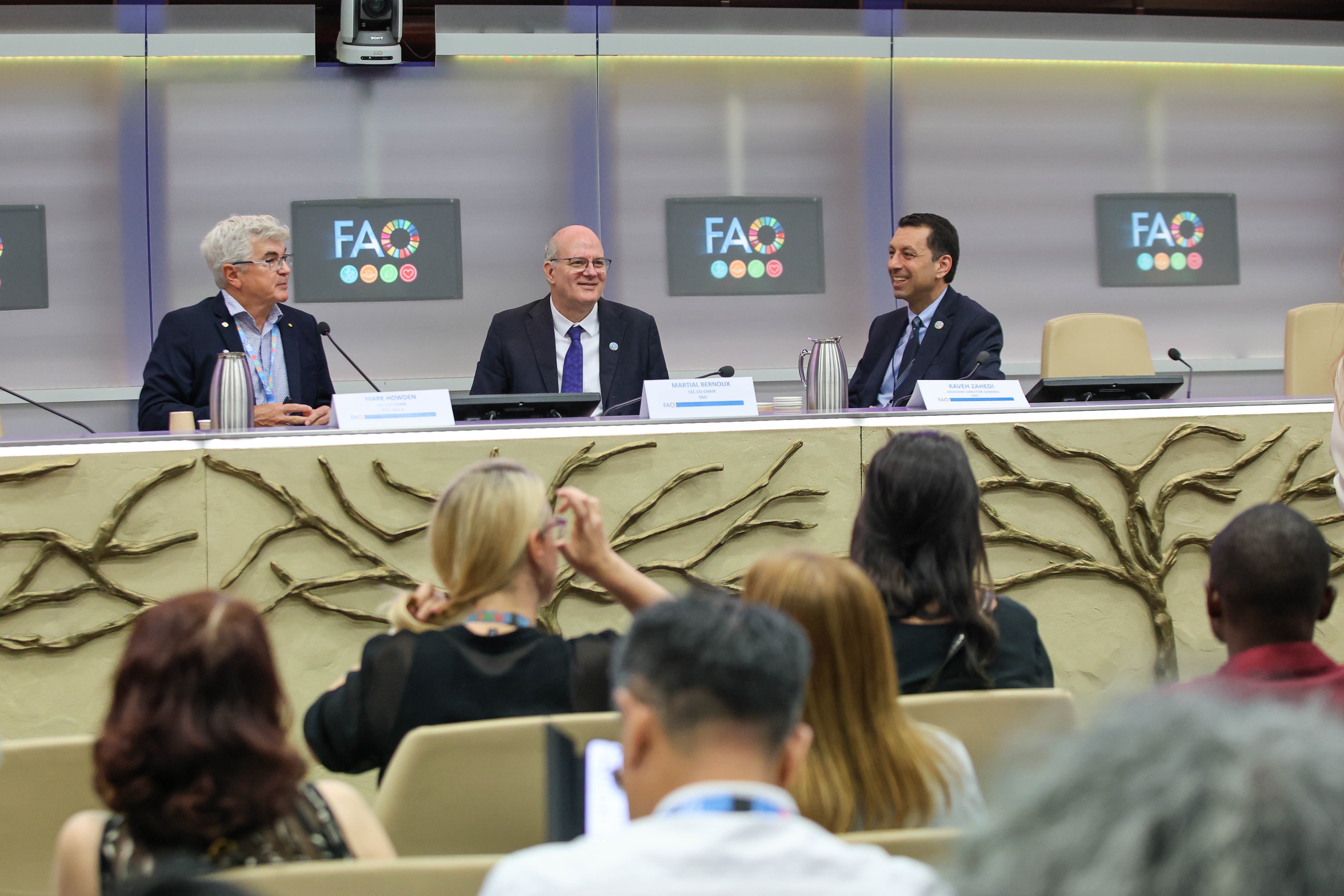
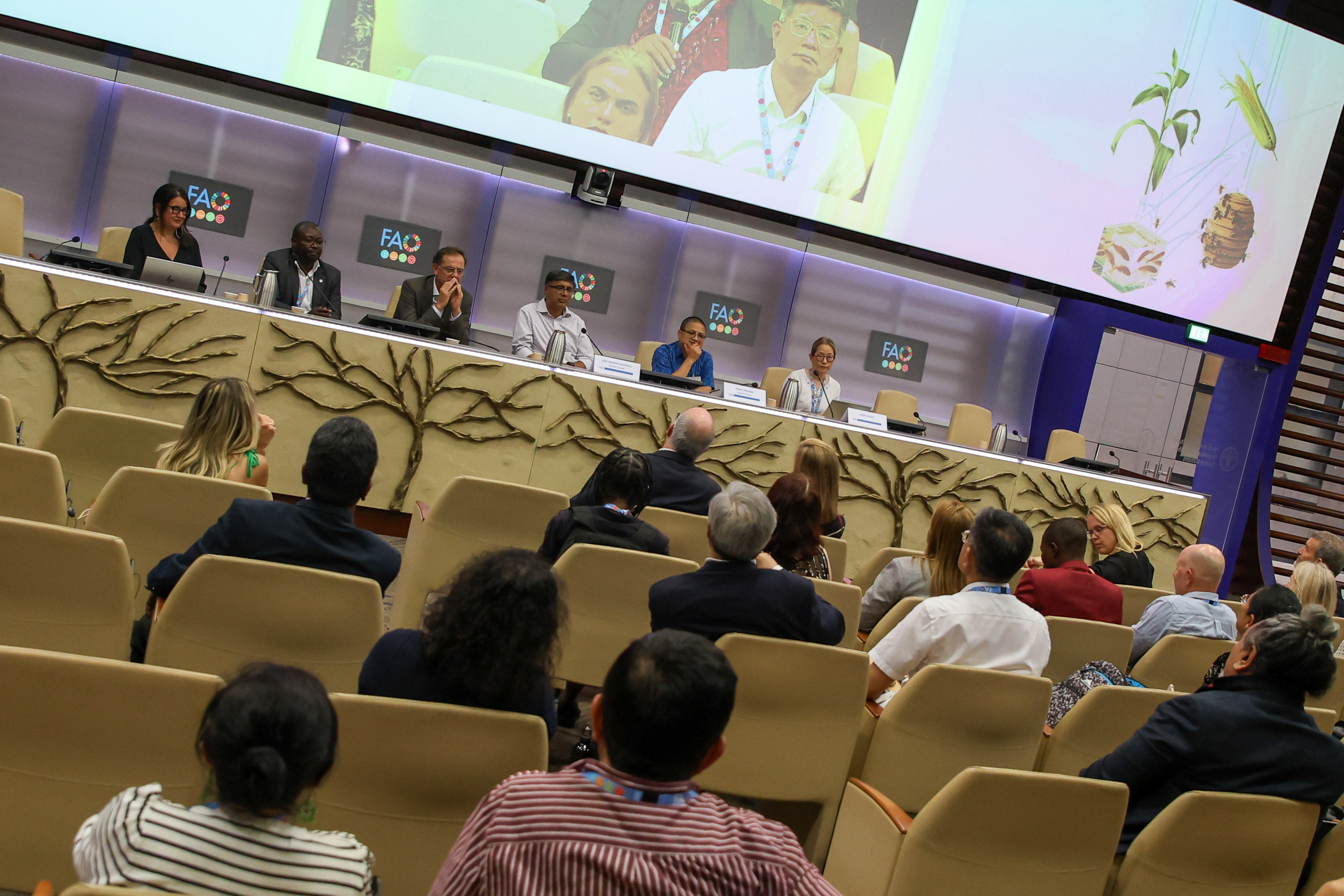
A view of the panel during the opening session
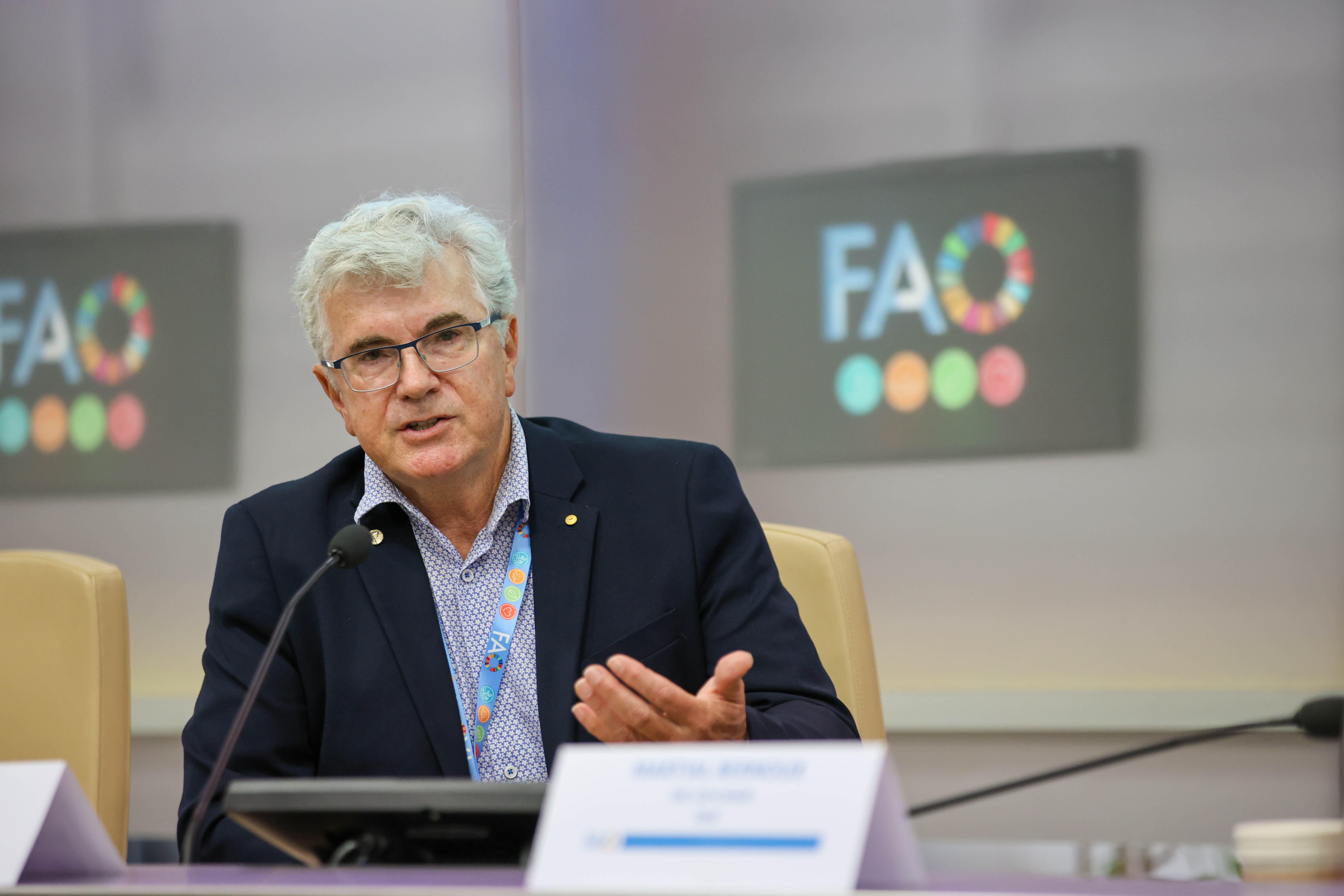
Mark Howden, Co-Chair, Scientific Steering Committee, and Vice-Chair, IPCC Working Group II
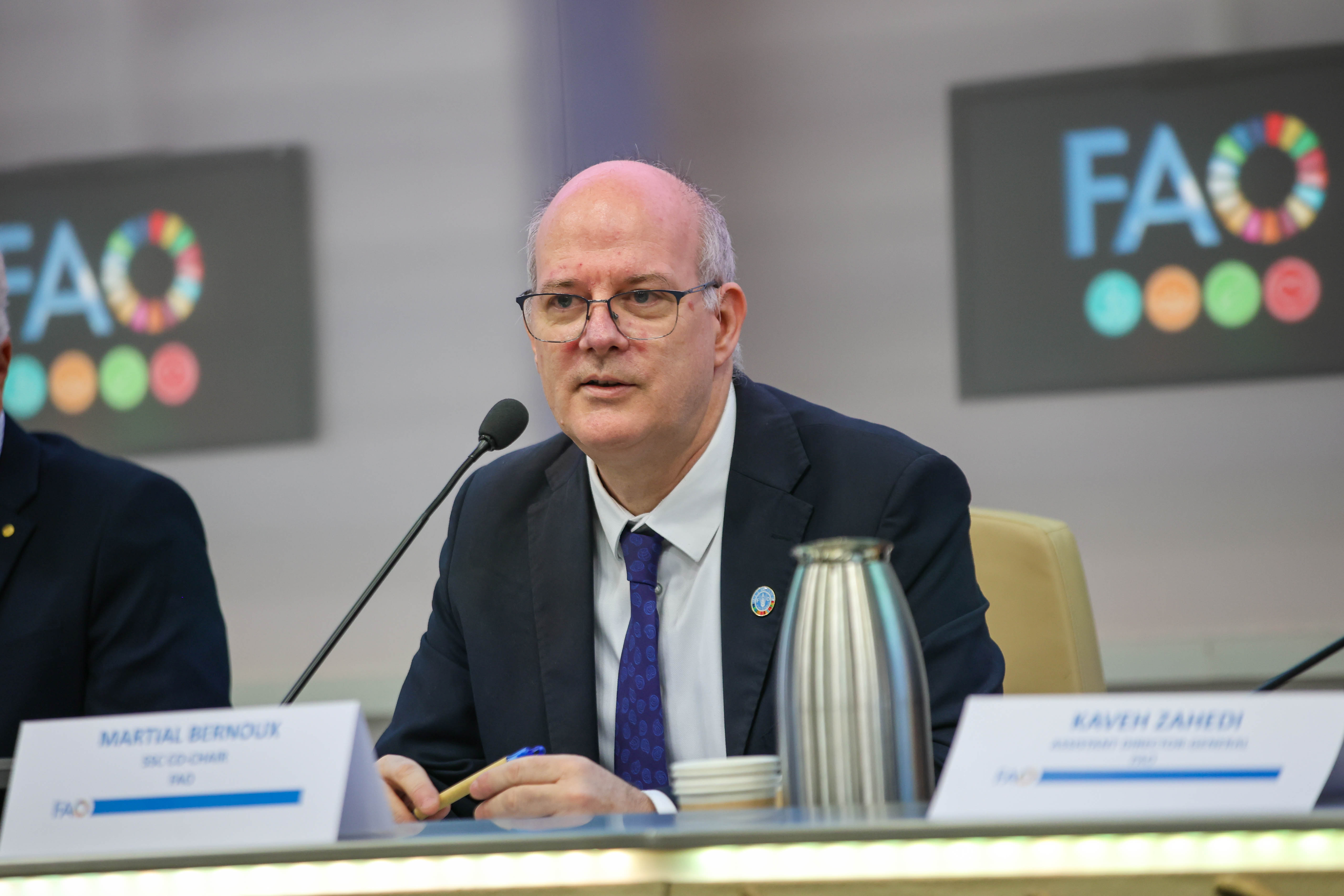
Martial Bernoux, Co-Chair, Scientific Steering Committee, and Head, Climate Change Team, Office of Climate Change, Biodiversity, and Environment, FAO
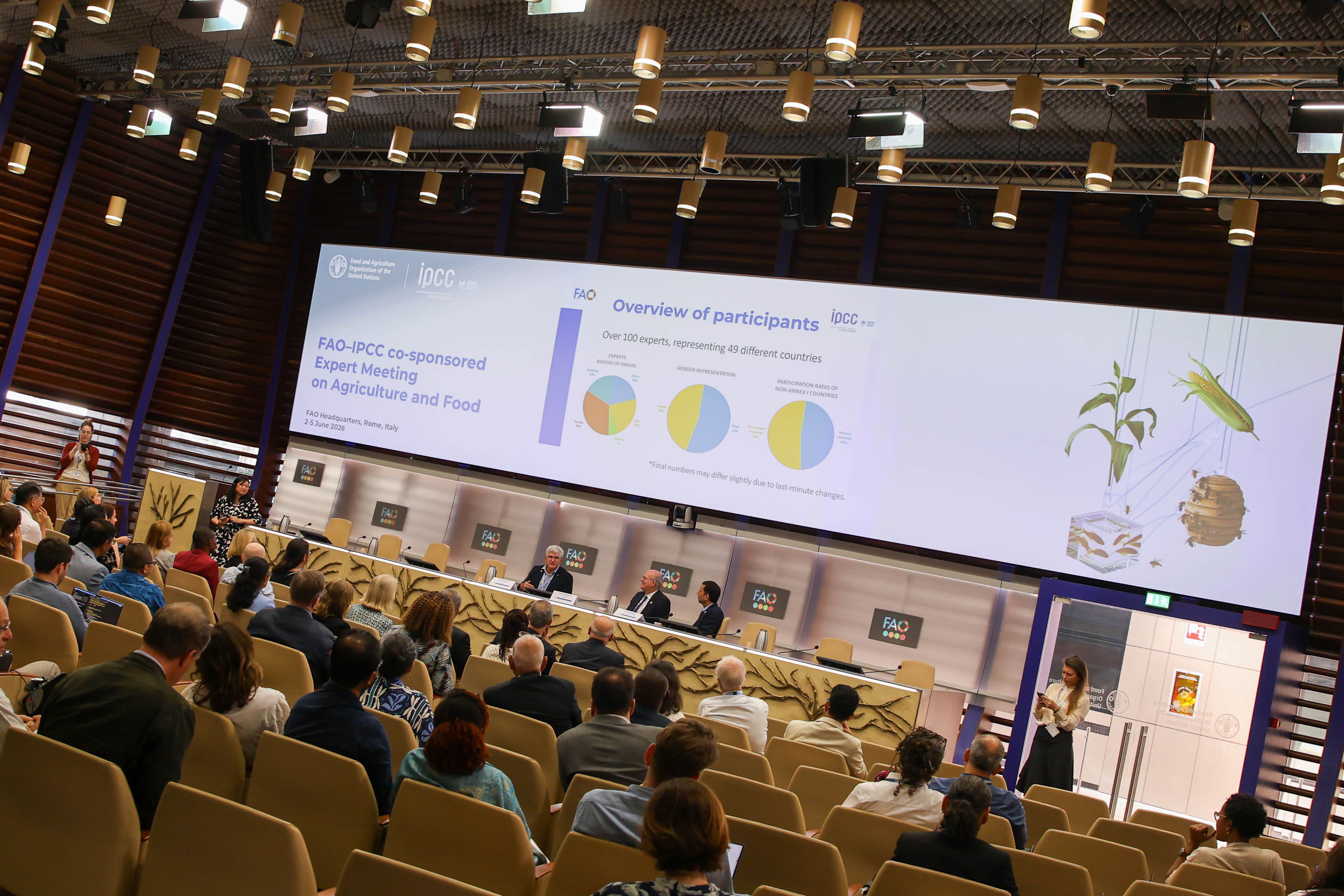
A view of the room during the opening session
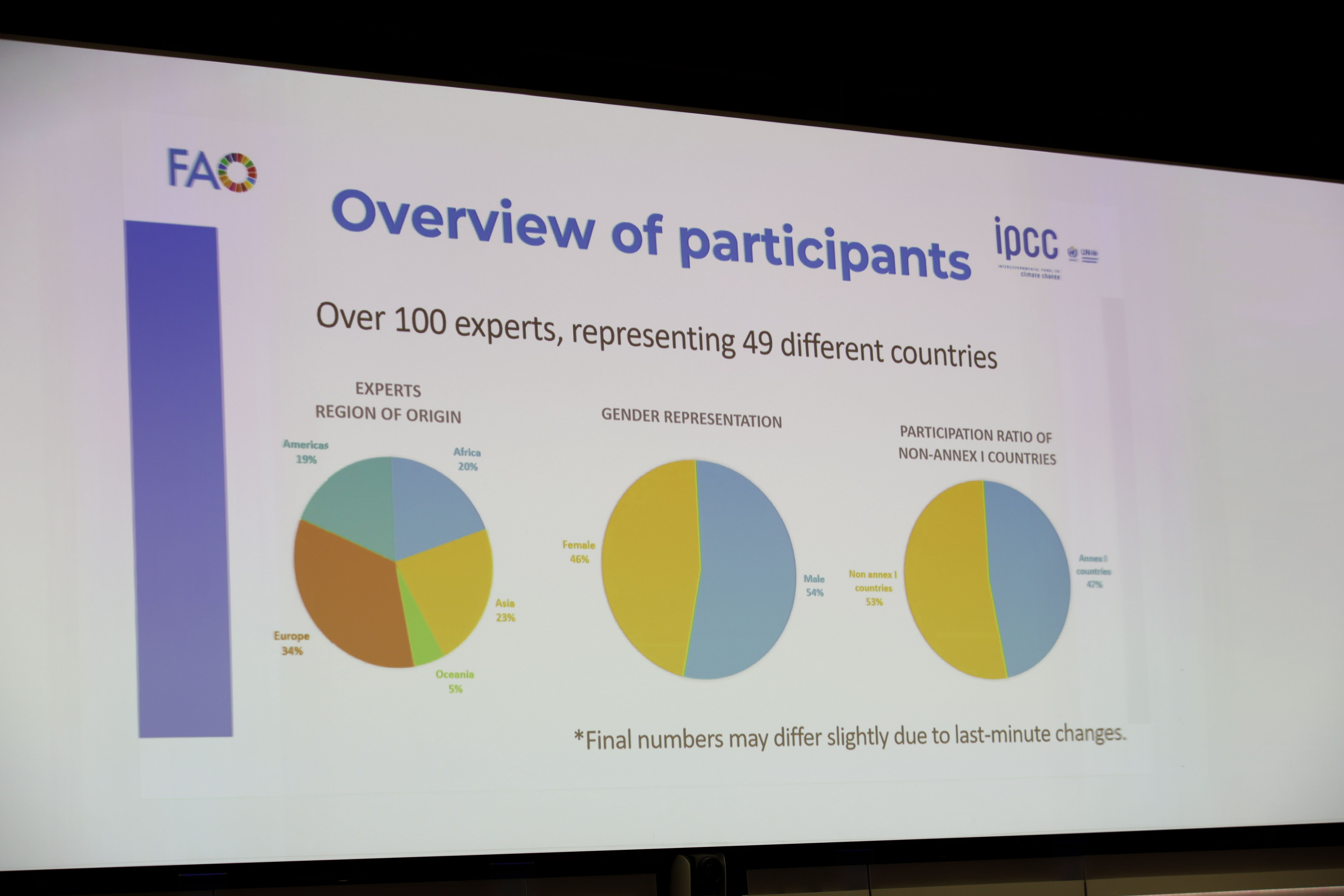
A slide showing an overview of participants
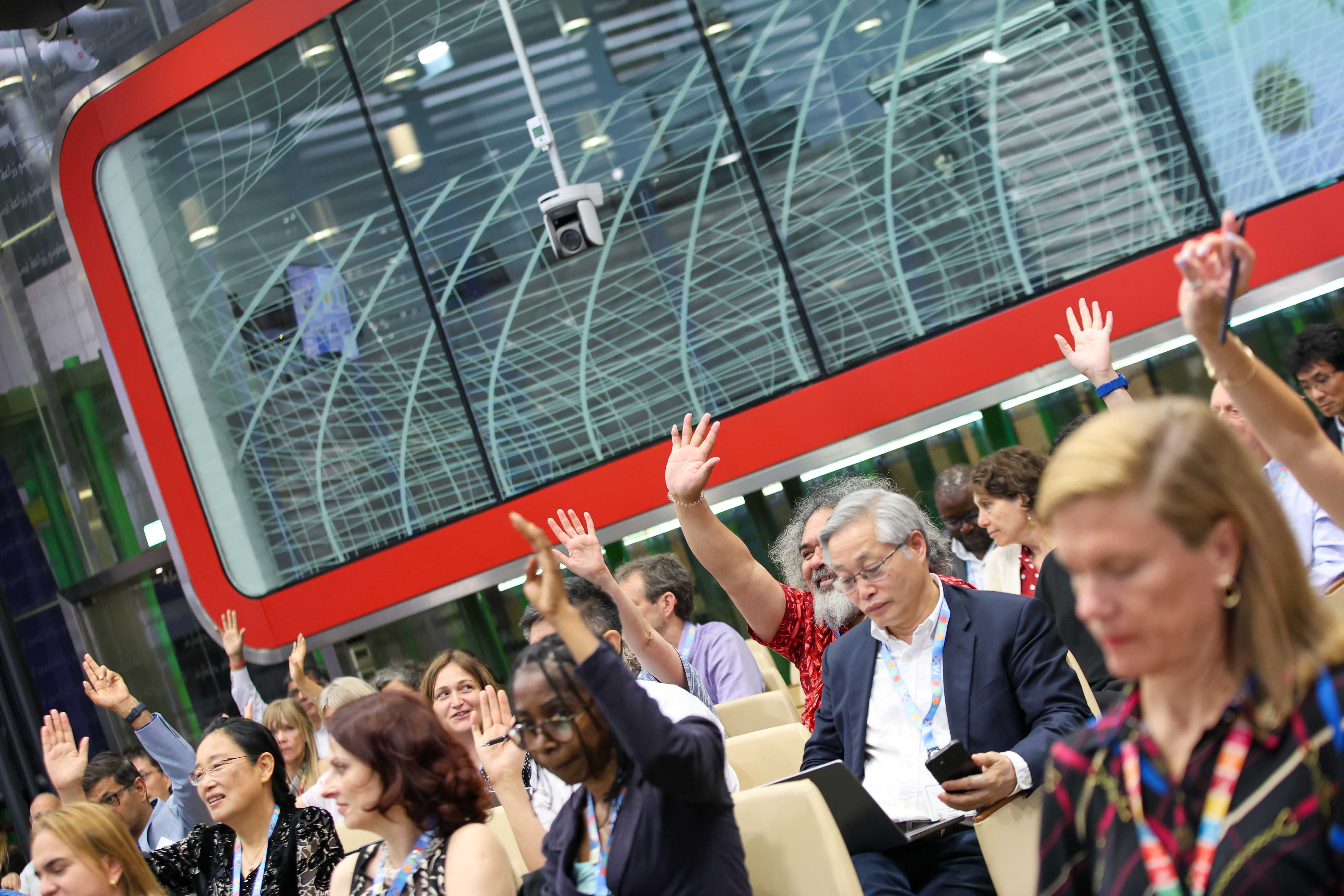
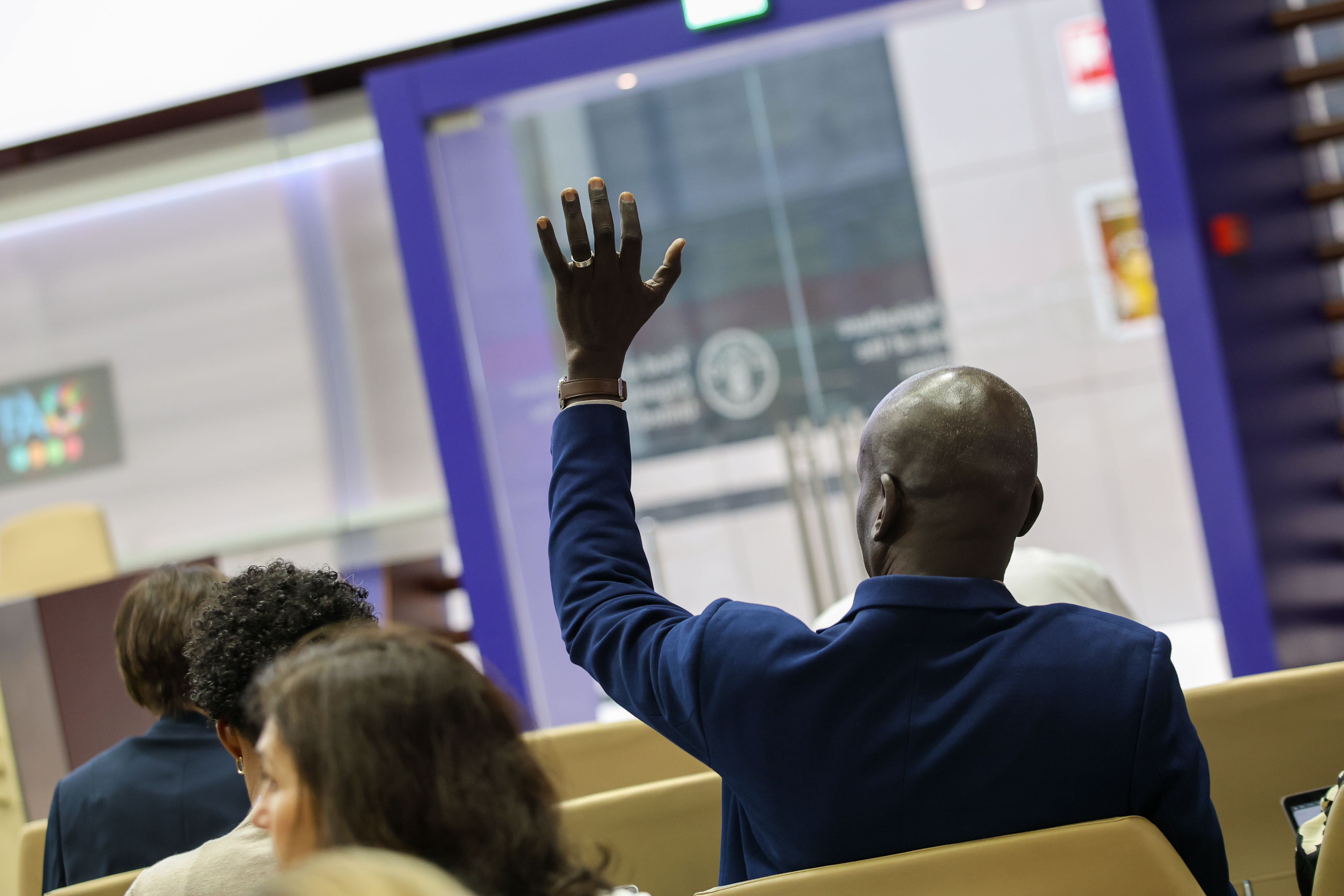
Participants raise their hands to share information about their areas of expertise.
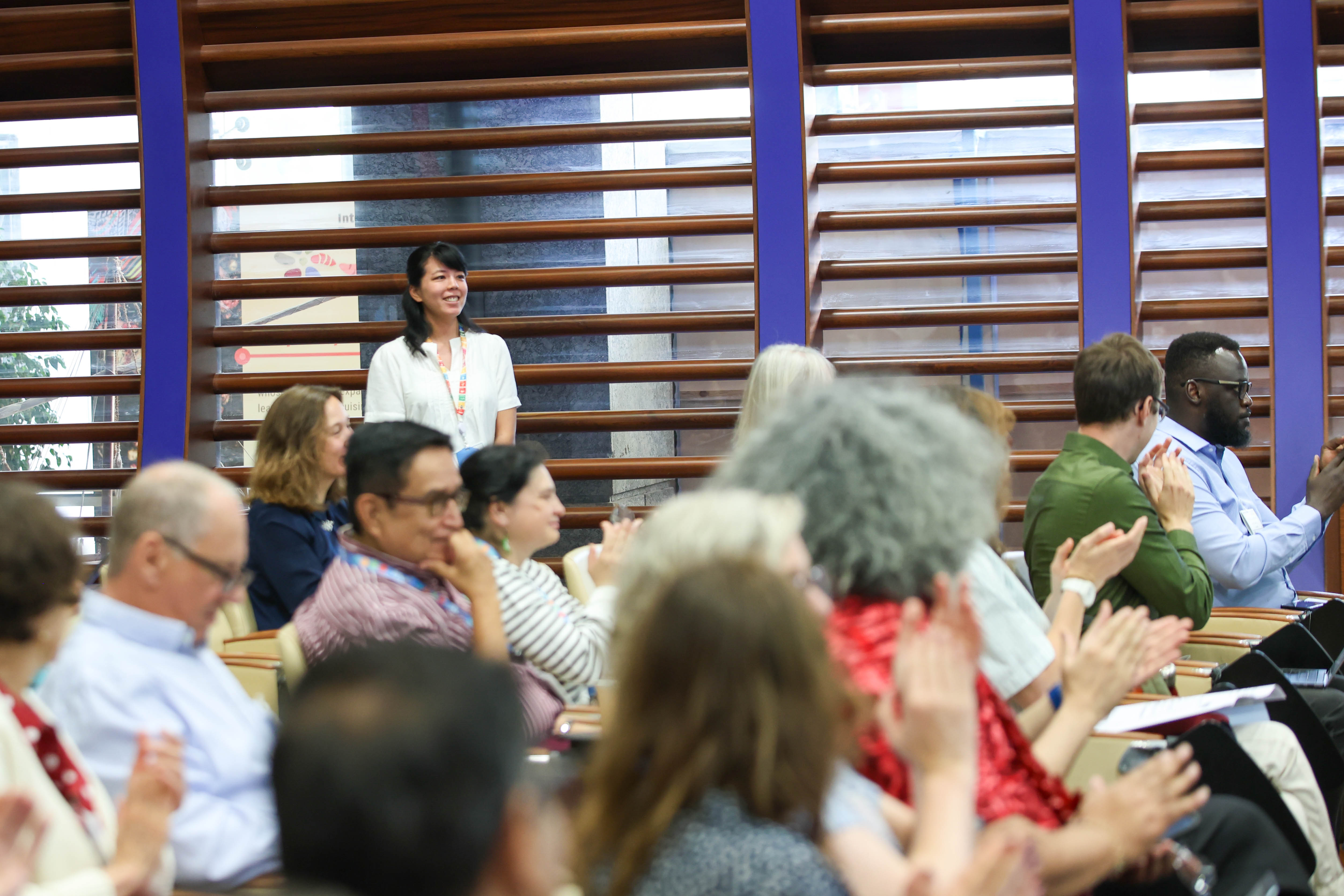
Participants appreciate Makie Yoshida, Climate Change Specialist, FAO, for her work during the preparations for the meeting.
Session 1: Scene Setting
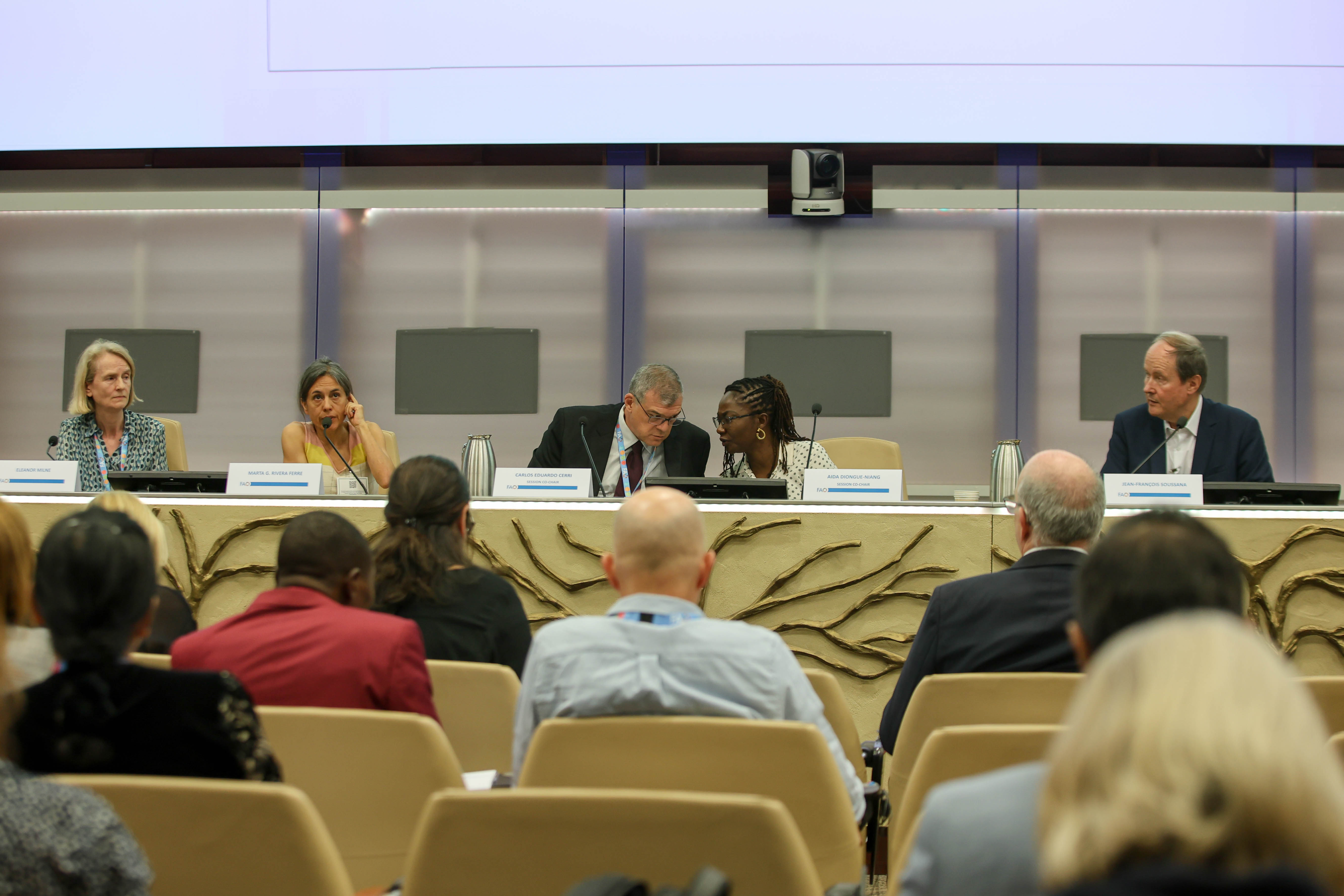
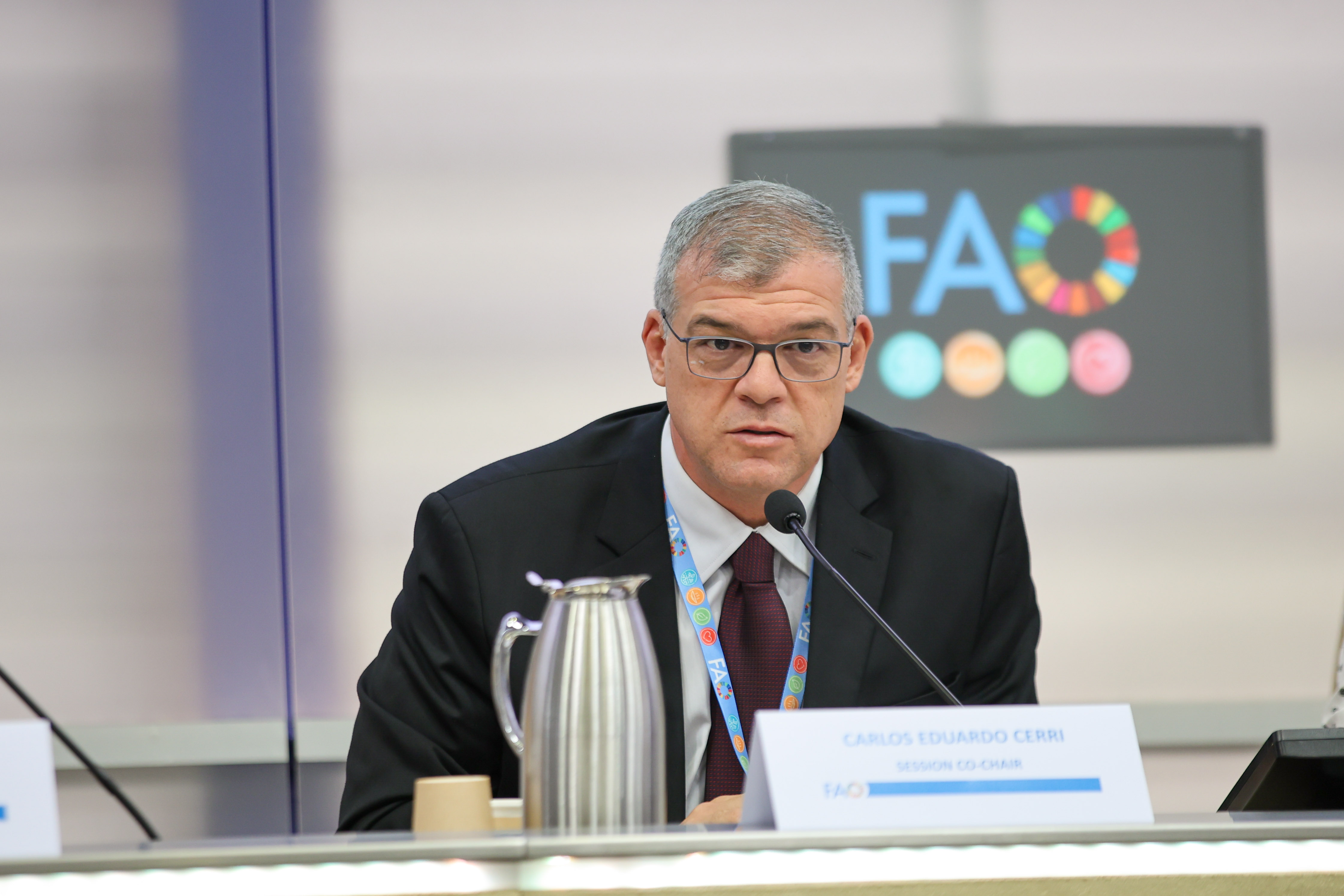
Carlos Eduardo Cerri, Director, Center for Carbon Research in Tropical Agriculture of the University of São Paulo
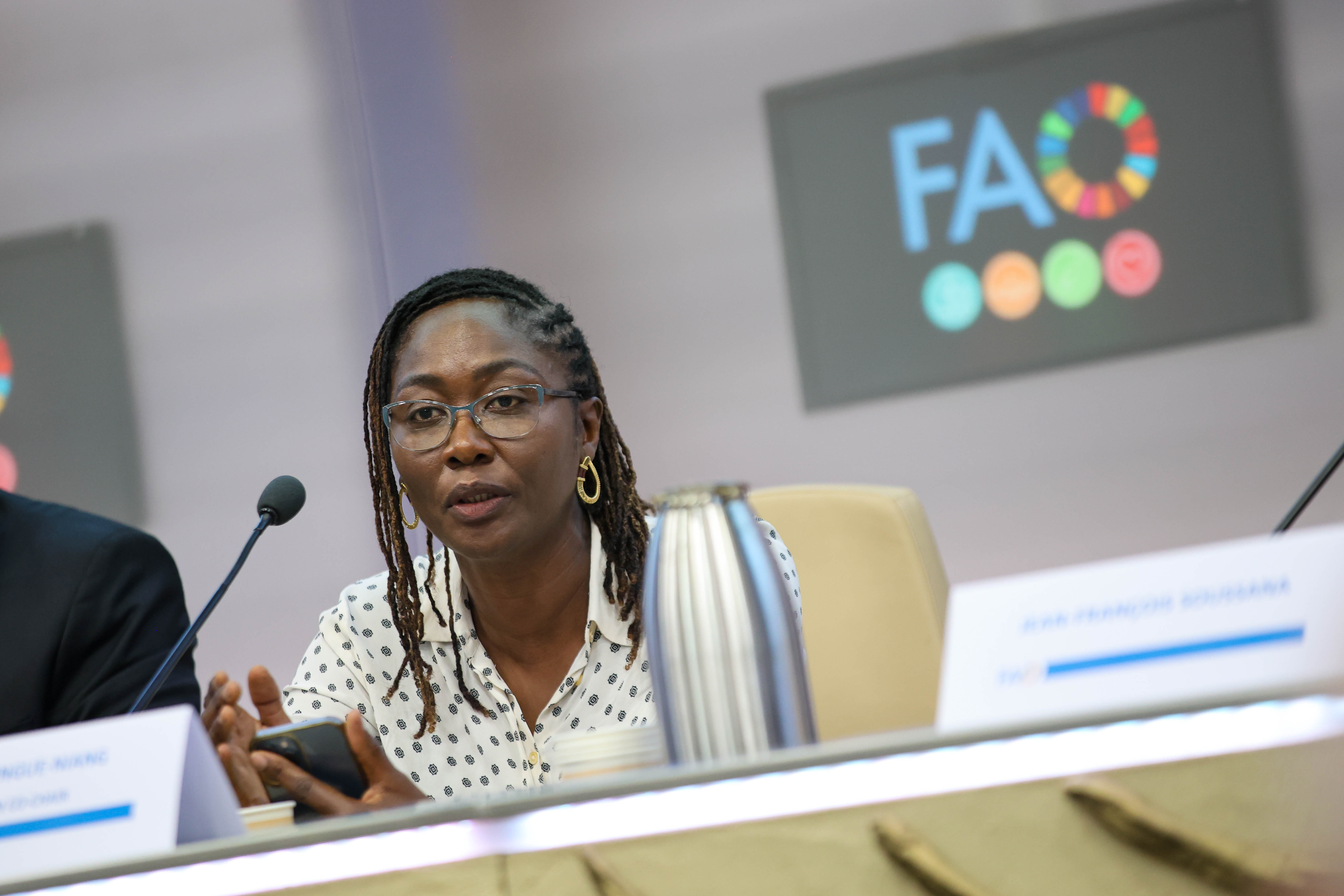
Aïda Diongue-Niang, Vice-Chair, IPCC Working Group I
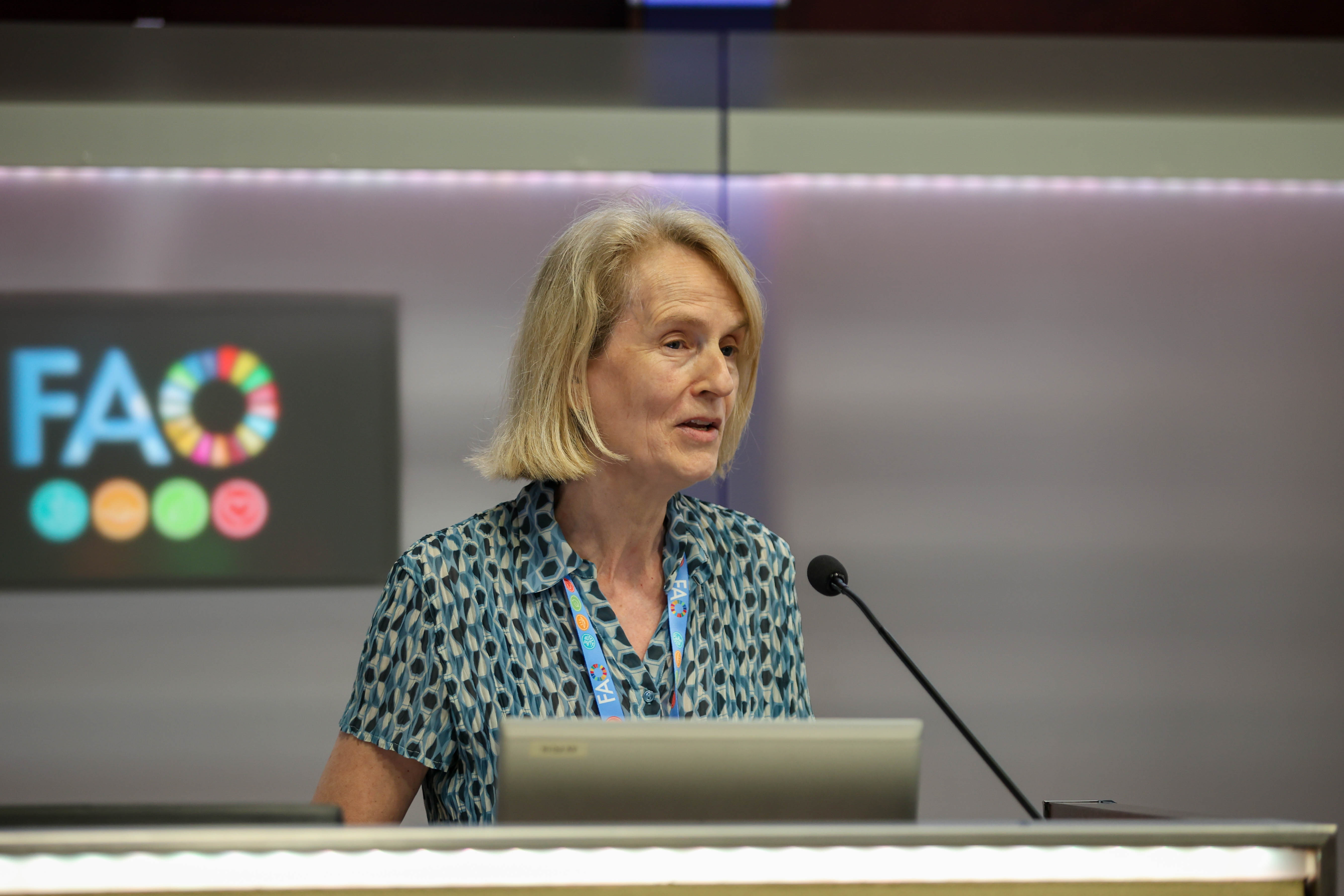
Eleanor Milne, Affiliate Scientist, Colorado State University
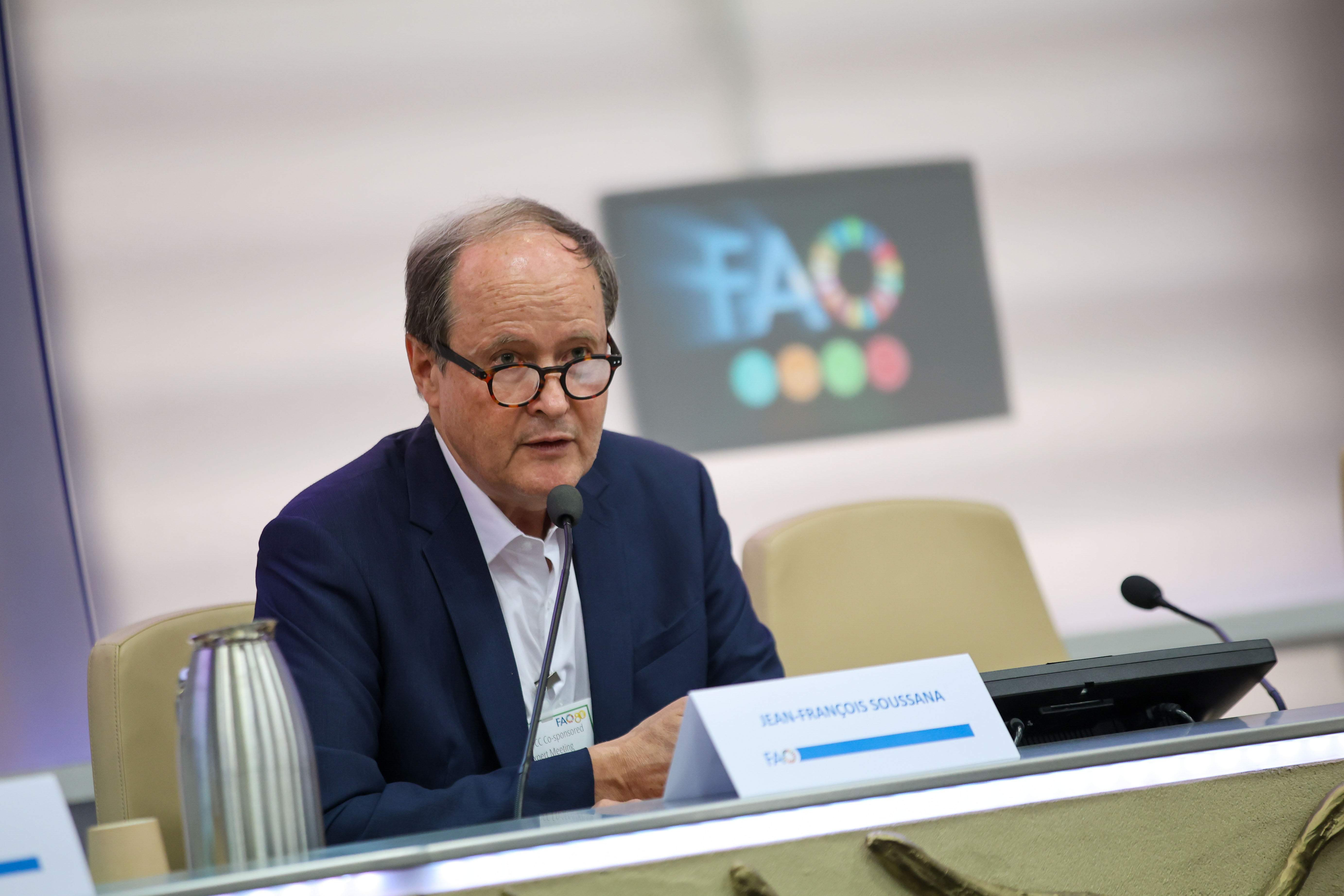
Jean-François Soussana, Emeritus Research Director, French National Research Institute for Agriculture, Food and Environment
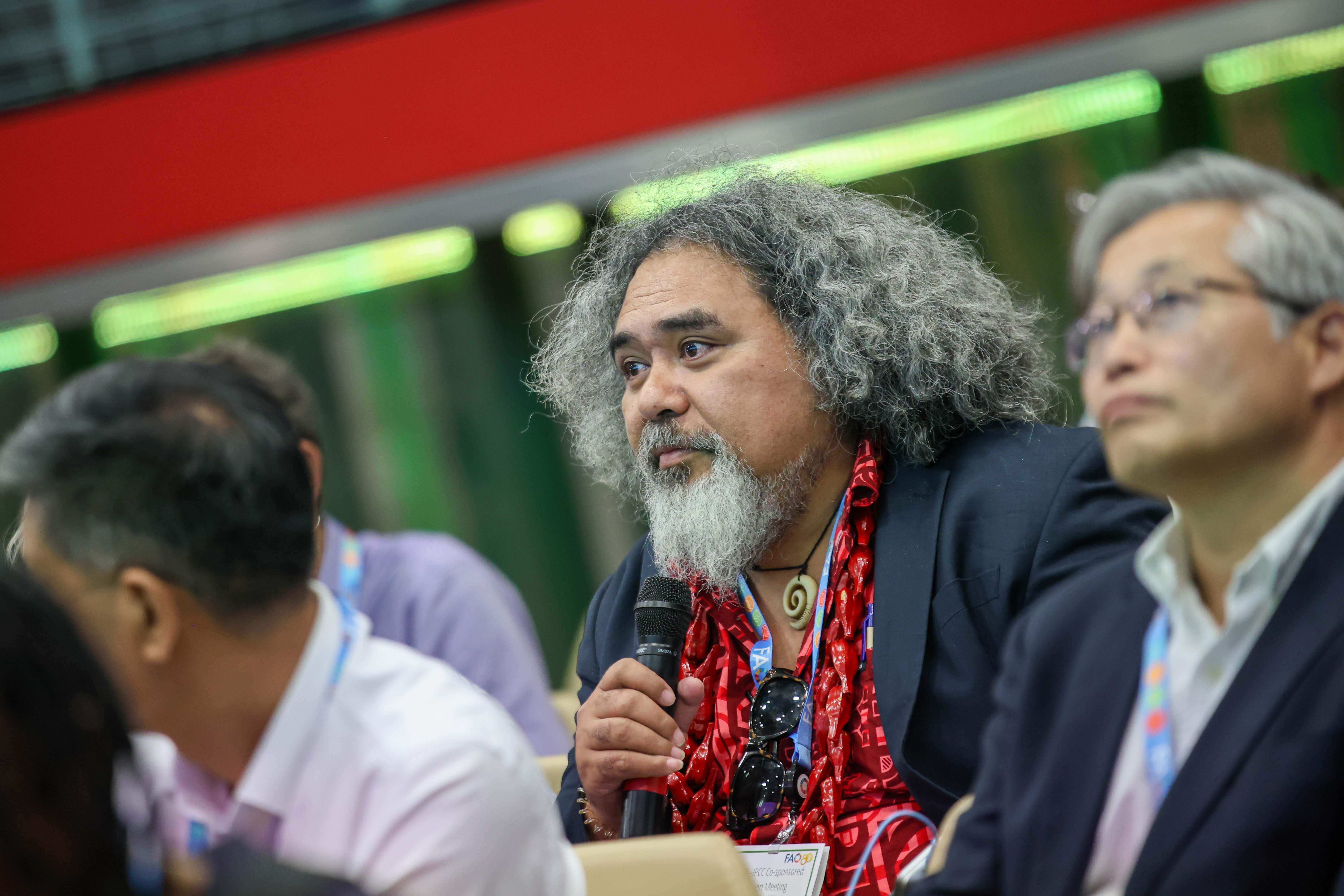
Viliamu Iese, University of Melbourne
Session 2: Risks profiles and vulnerability hotspots
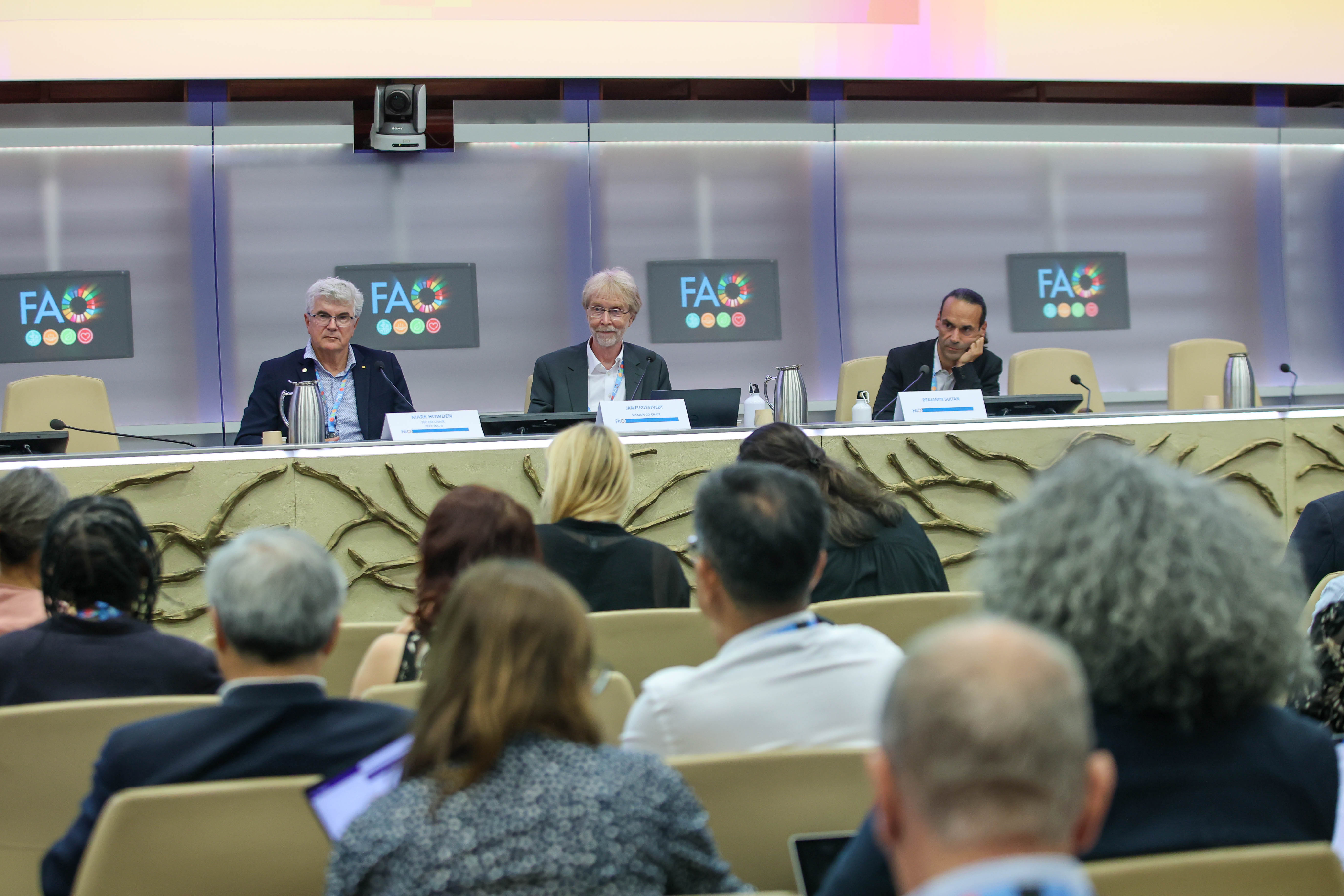
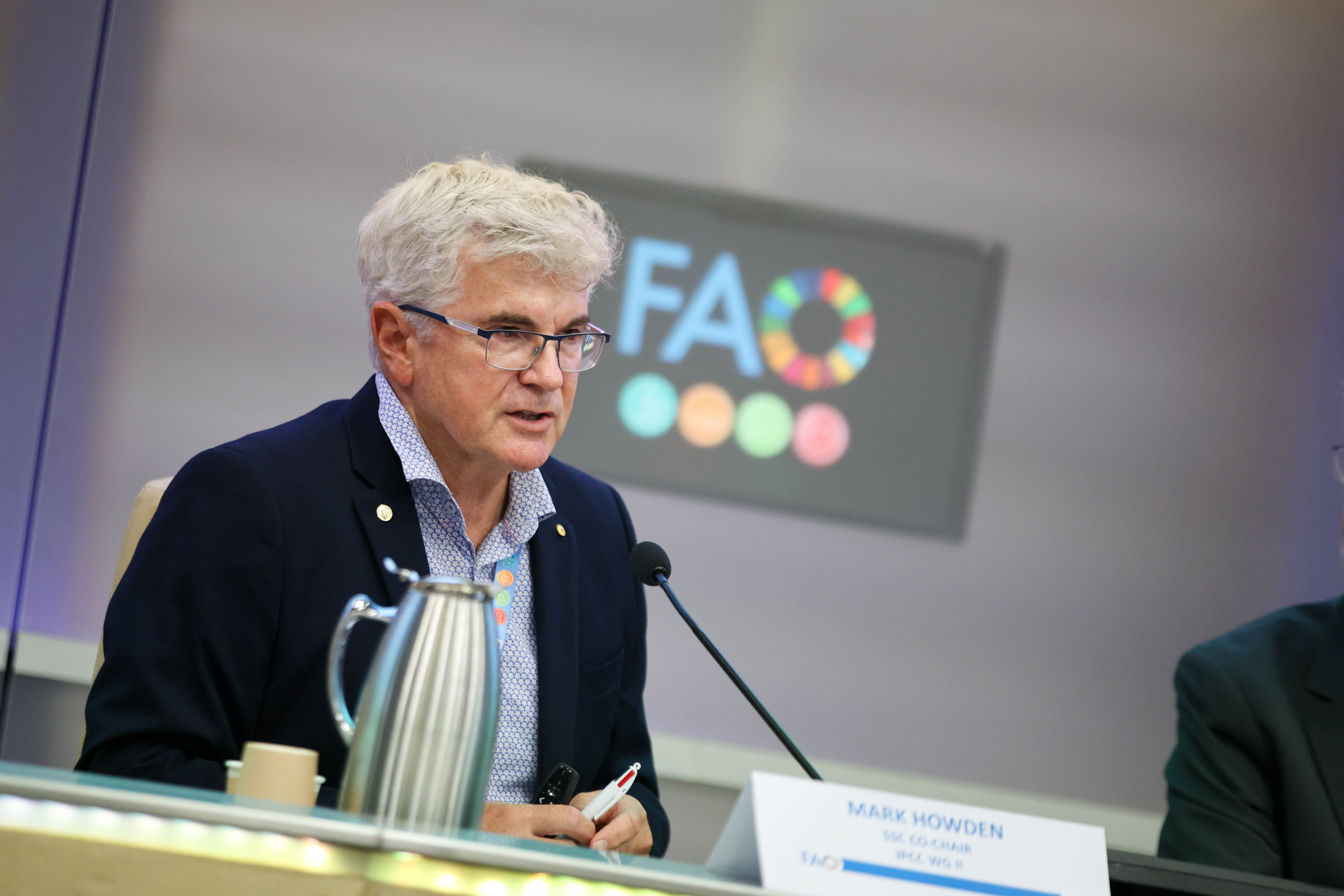
Mark Howden, Co-Chair, Scientific Steering Committeee, and Vice-Chair, IPCC Working Group II
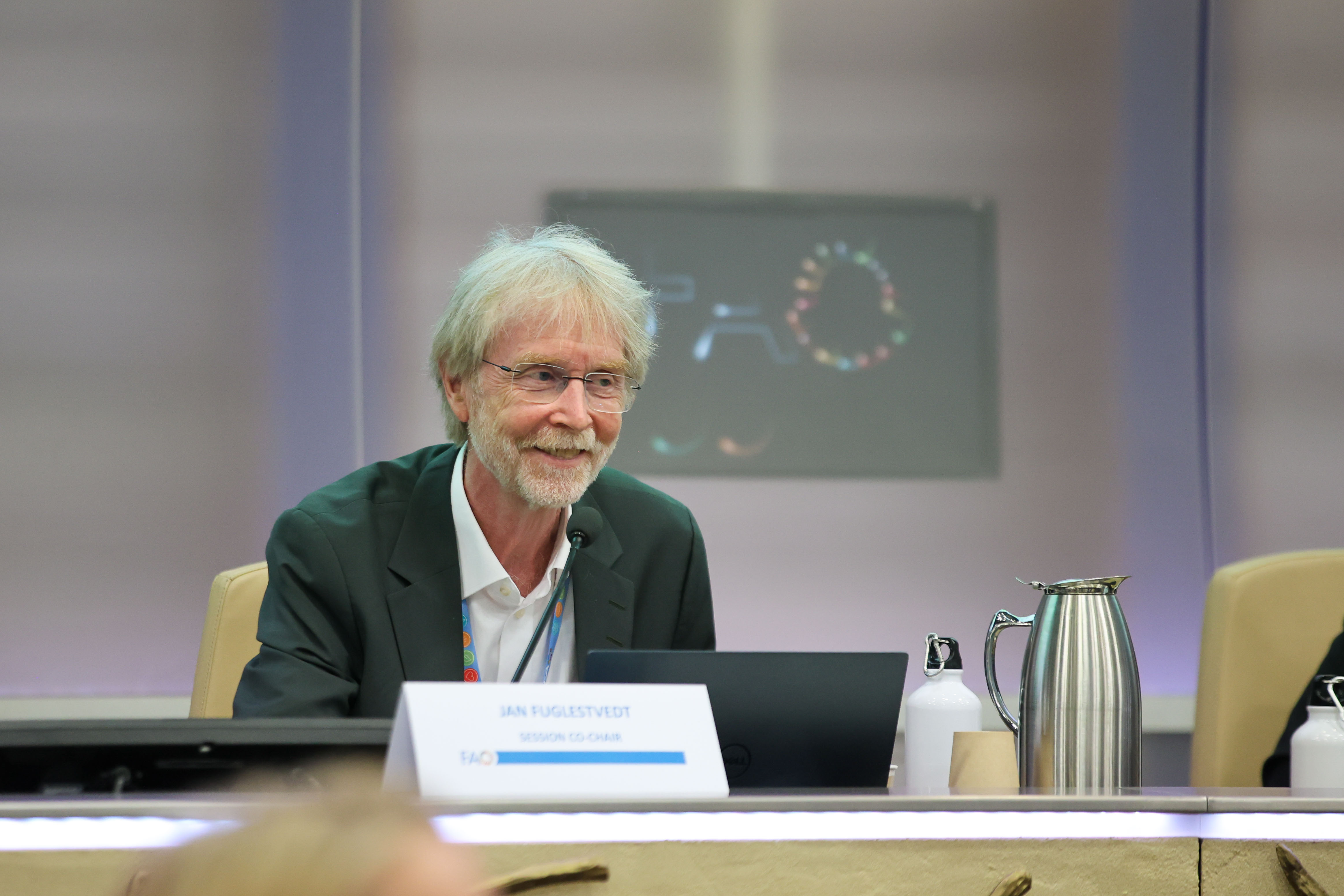
Jan Fuglestvedt, Vice-Chair, IPCC Working Group III, and Research Director/Special Advisor, Center for International Climate Research
Session 3: Climate impacts implications for agrifood commodities and value chains
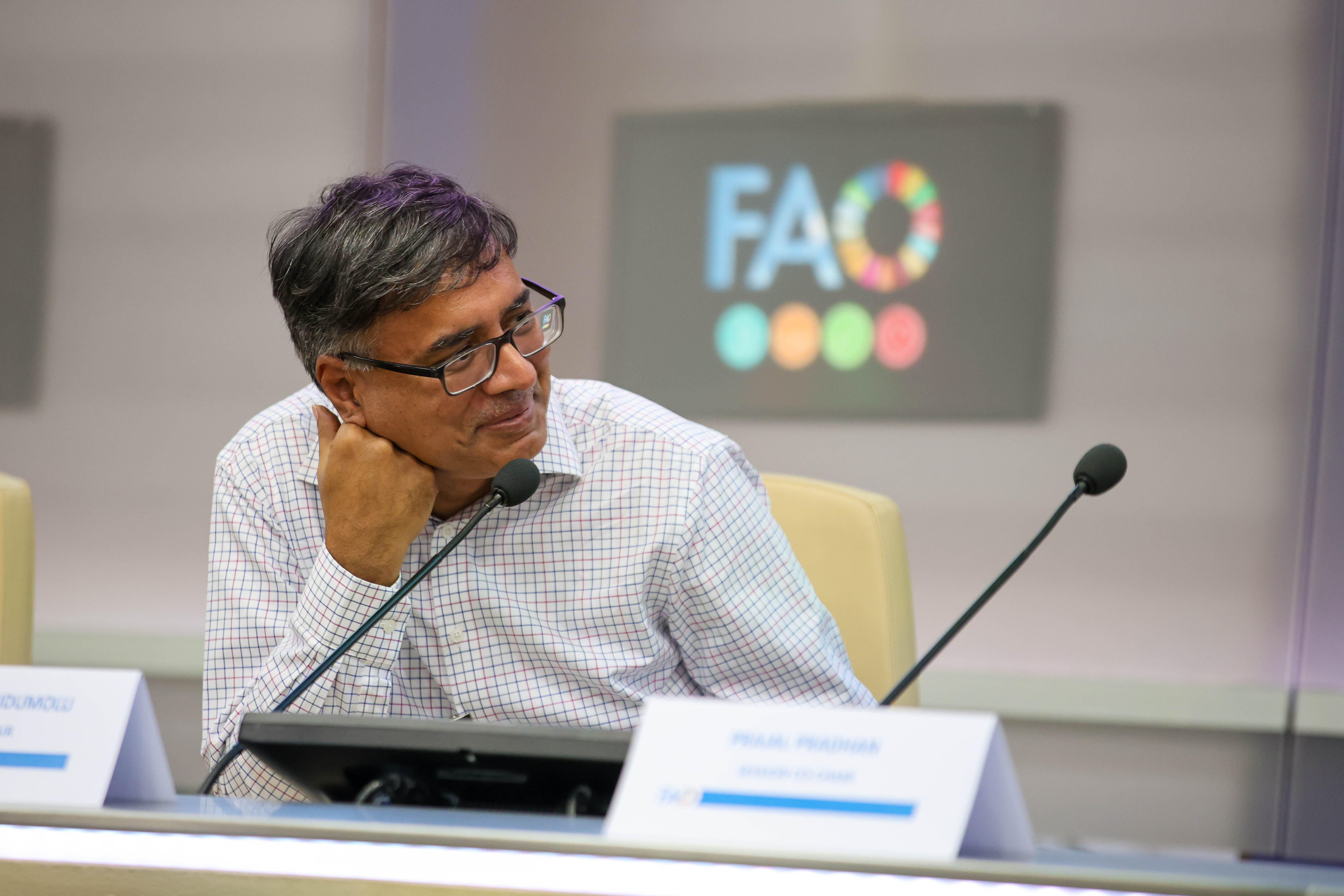
Uday Bhaskar Nidumolu, Principal Research Scientist, Commonwealth Scientific and Industrial Research Organisation, Australia
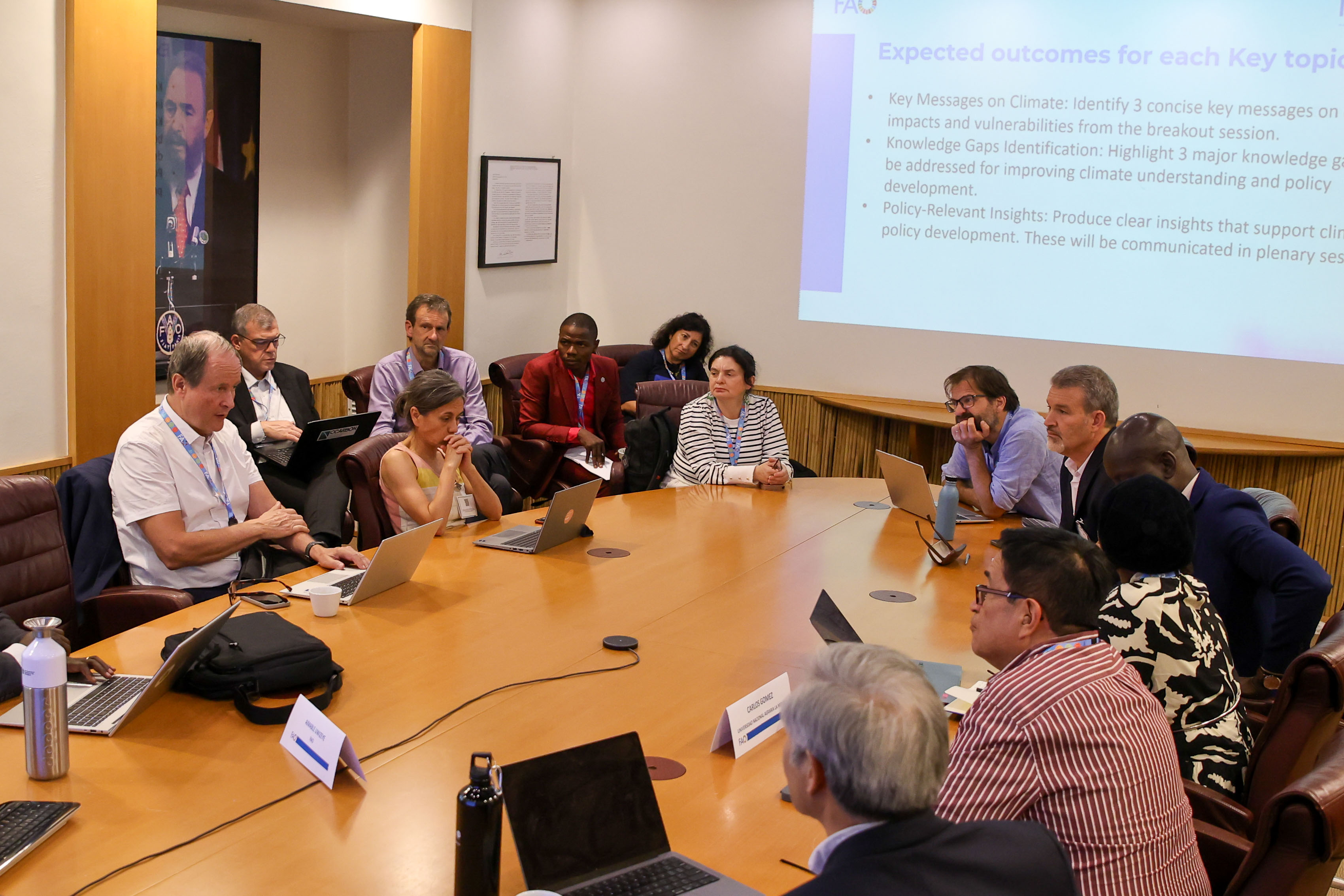
A view of the room during the breakout session on livestock and pastoral systems
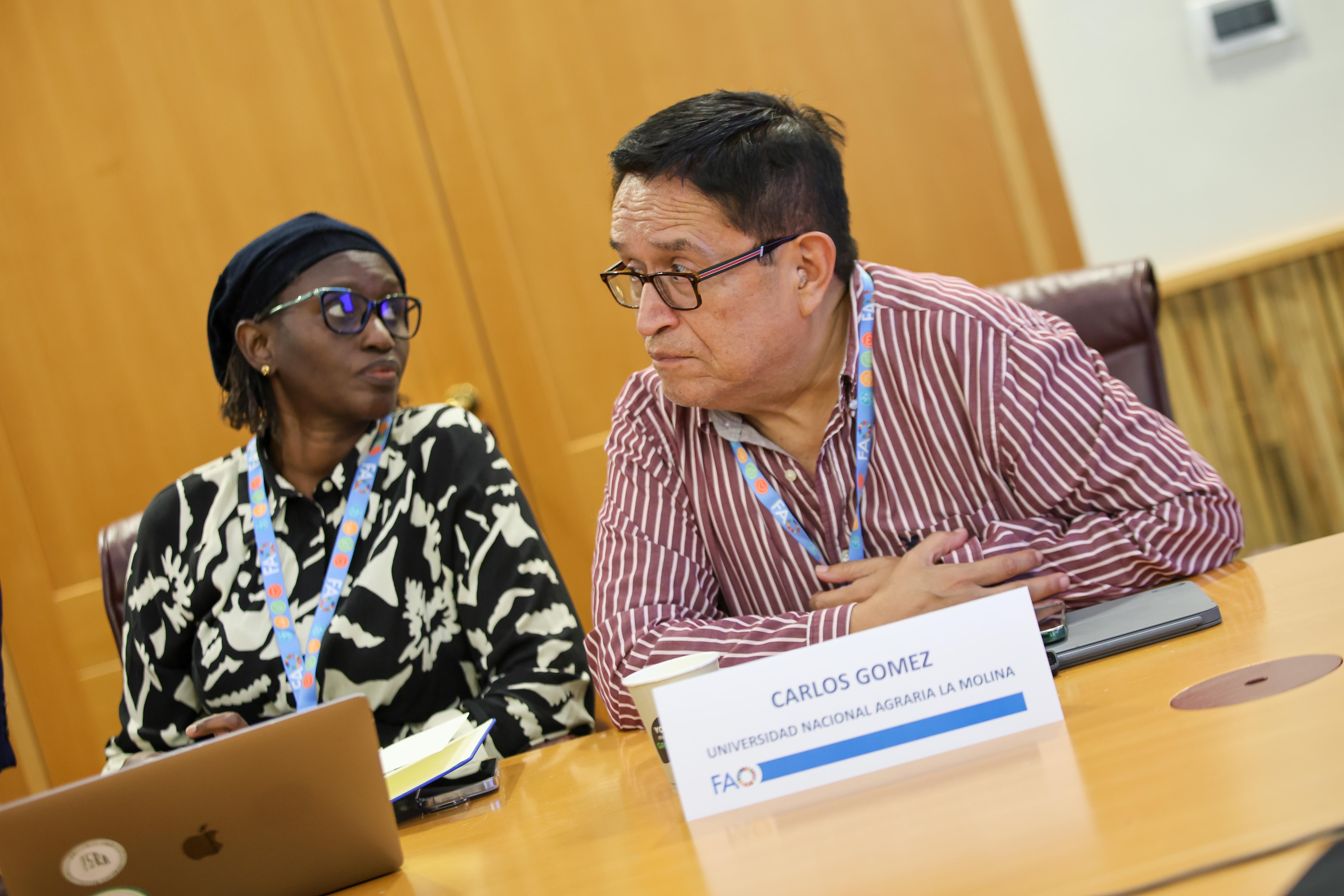
Carlos Alfredo Gomez Bravo, Professor, Universidad Nacional Agraria La Molina and Chair of the breakout session on livestock and pastoral systems
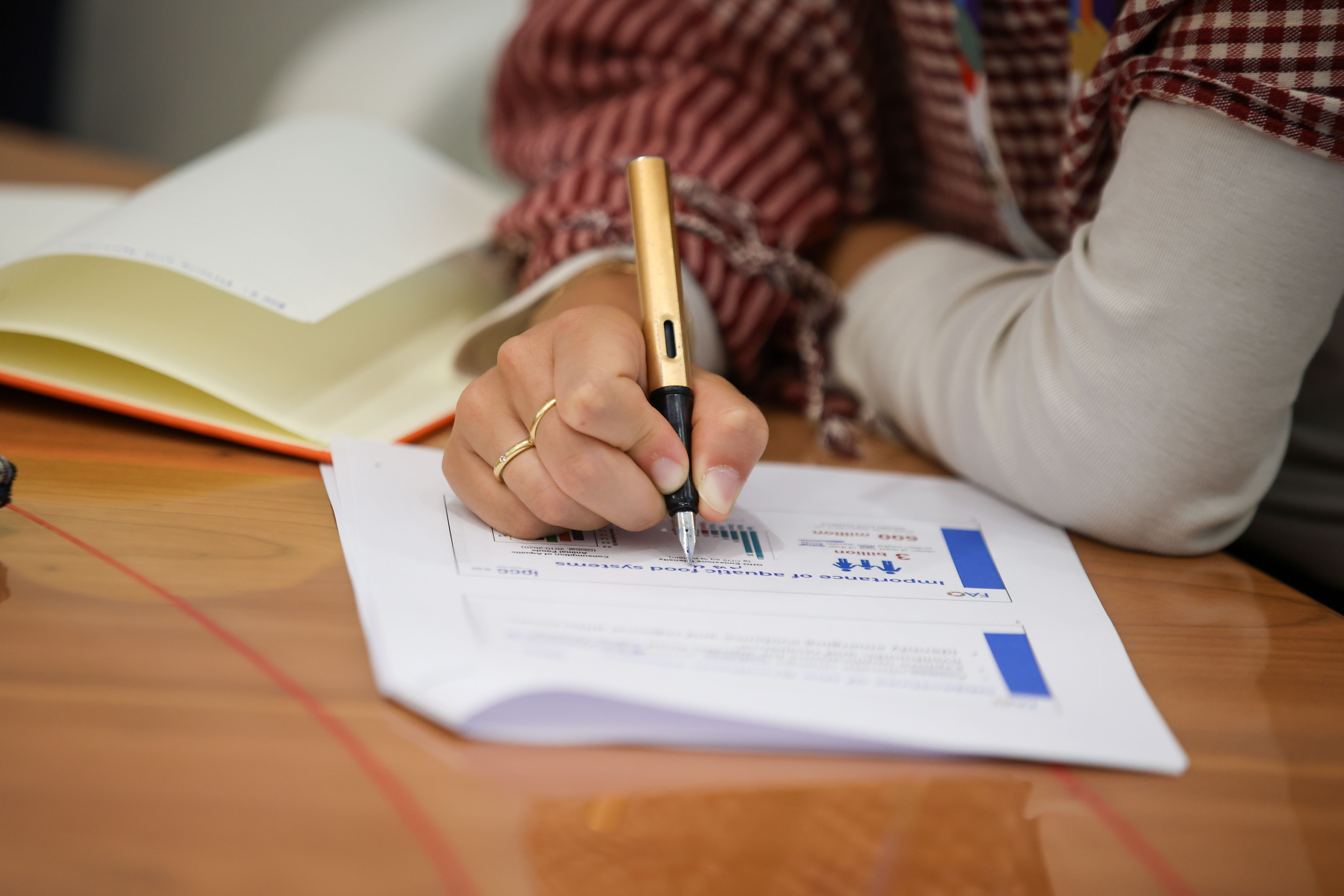
A participant takes notes.
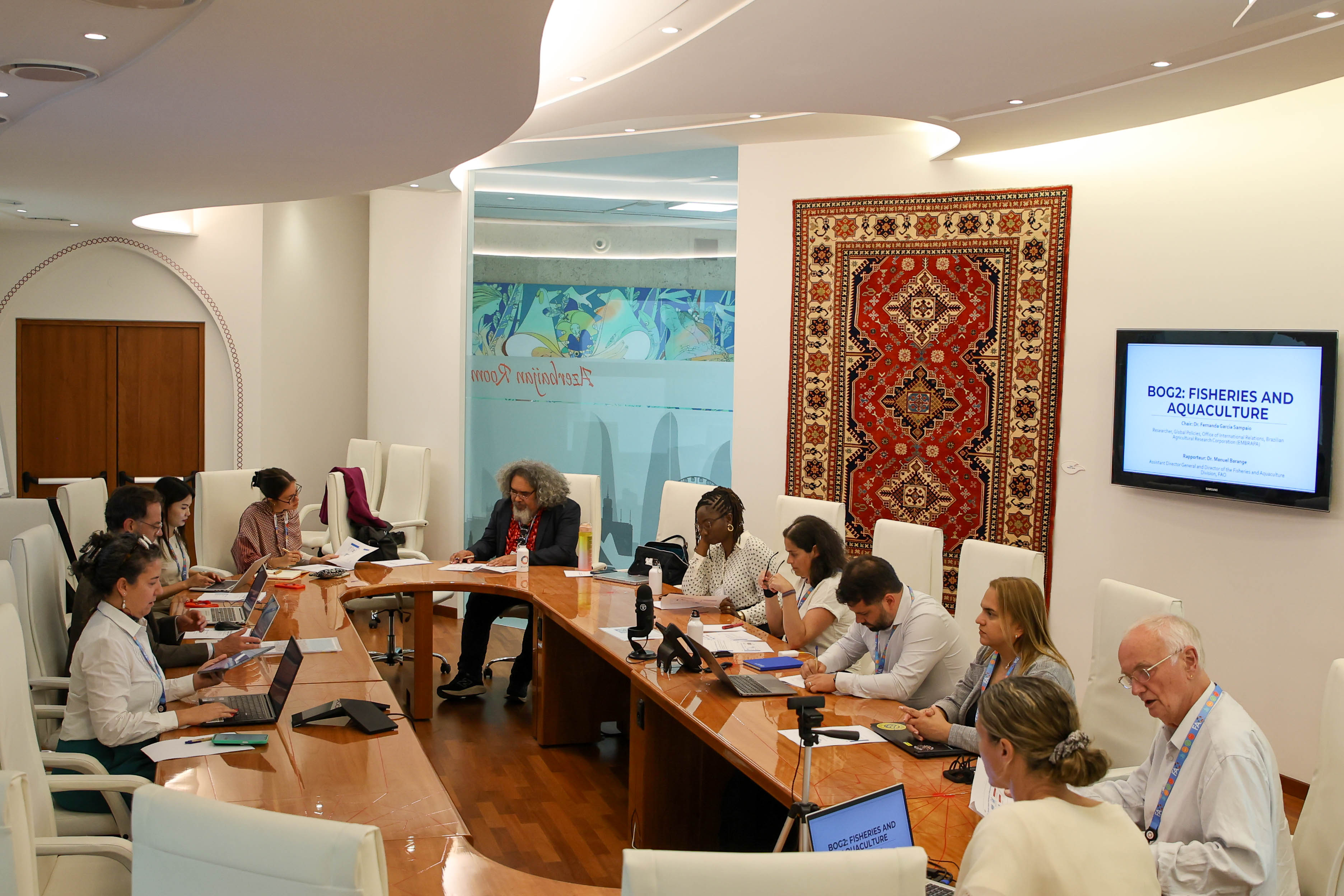
A view of the room during the breakout session on fisheries and aquaculture
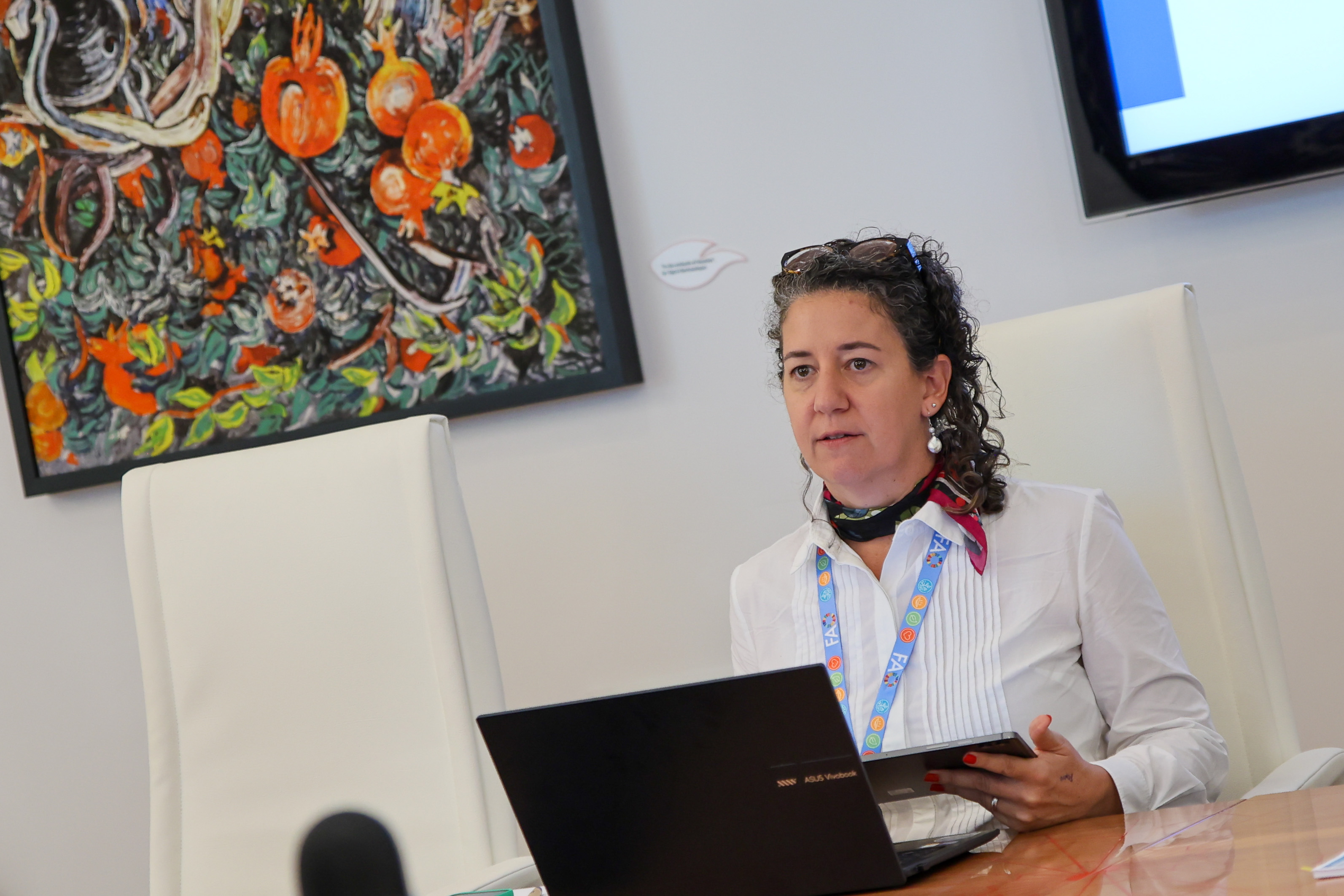
Fernanda Garcia Sampaio, Researcher, Global Policies, Office of International Relations, Brazilian Agricultural Research Corporation, and Chair of the breakout session on fisheries and aquaculture
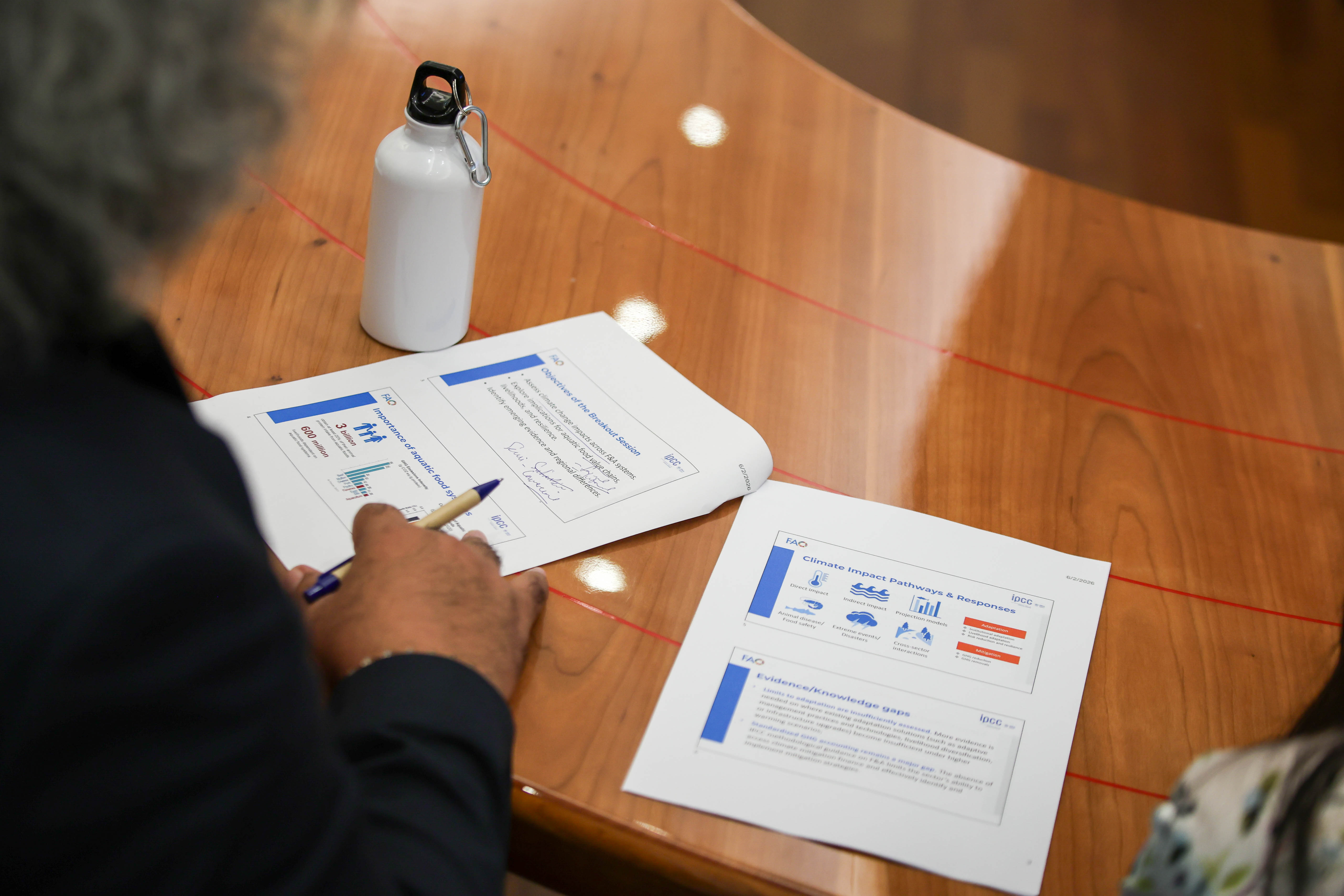
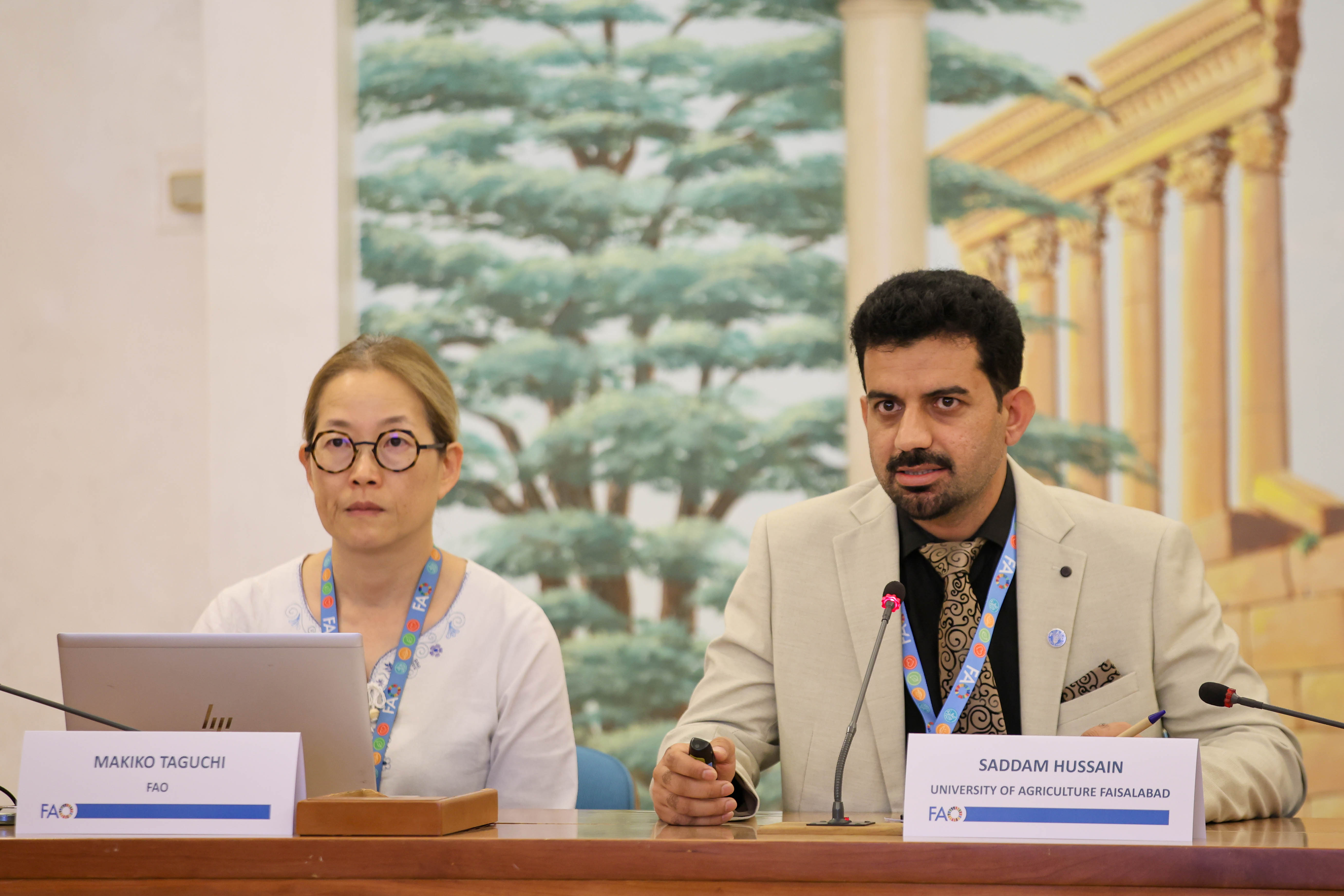
Makiko Taguchi, Agricultural Officer, FAO, and Saddam Hussain, Associate Professor, University of Agriculture Faisalabad, and Chair of the breakout session on crops and horticulture systems
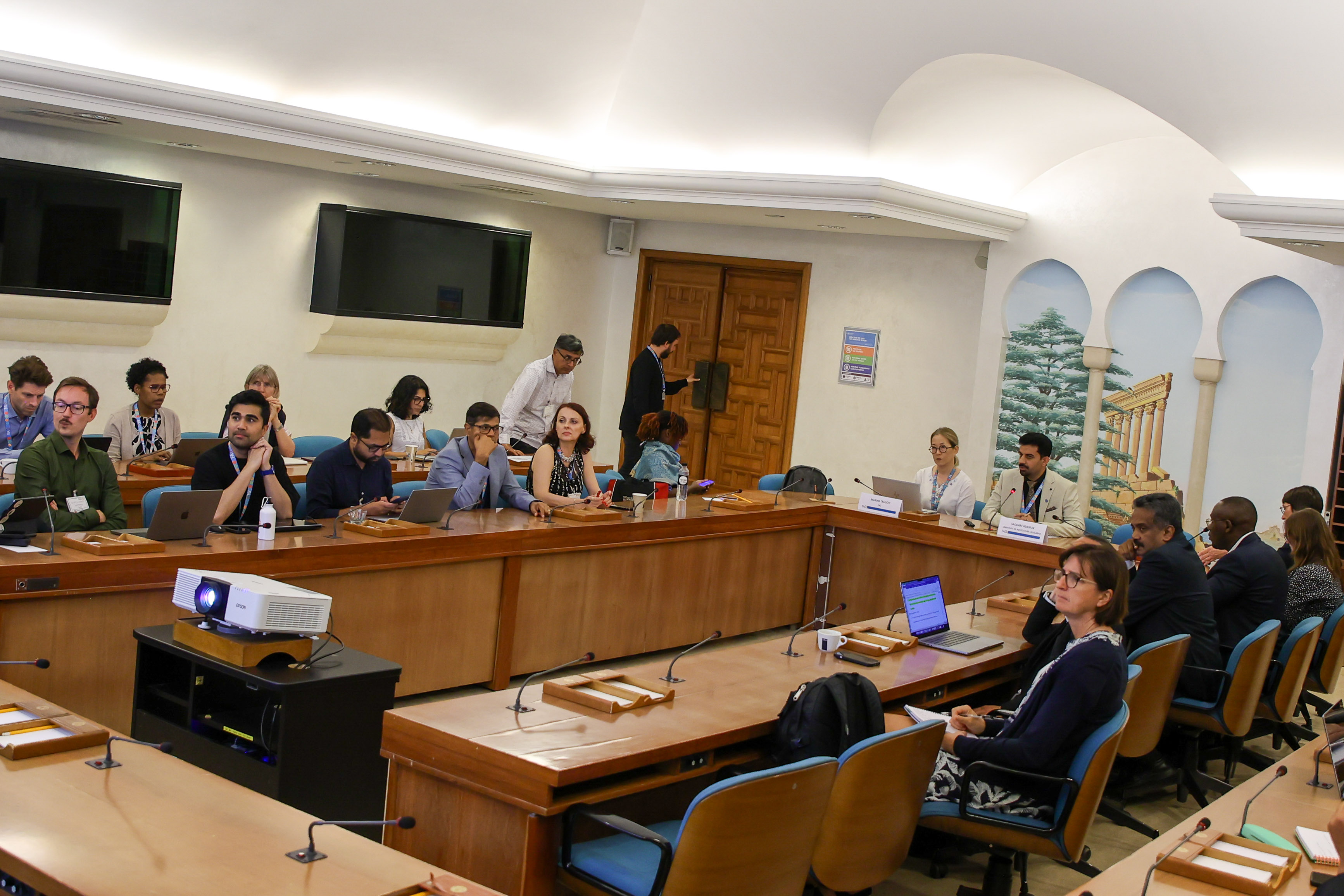
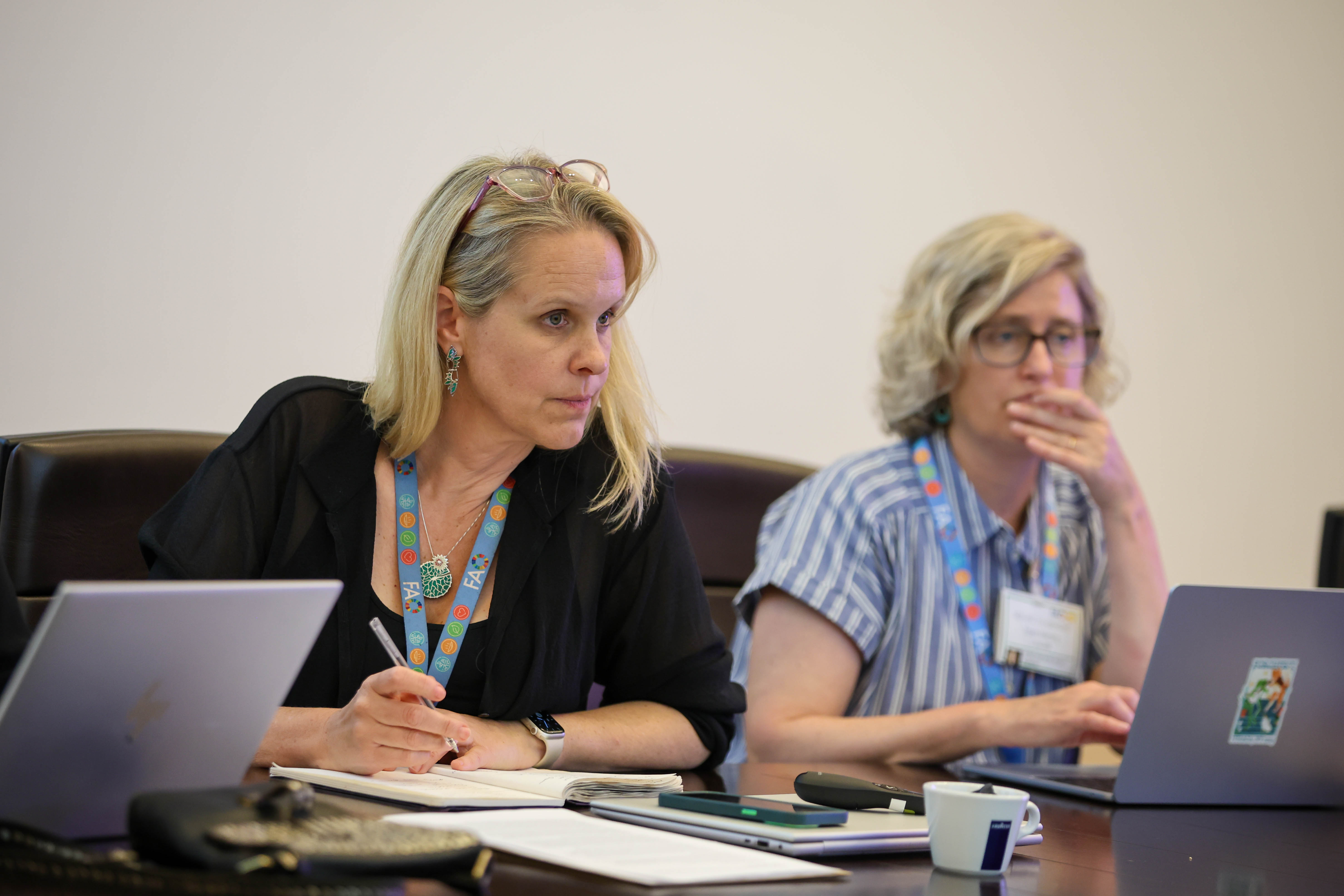
Amy Duchelle, Senior Forestry Officer, FAO, and Chair of the breakout session on forests and multifunctional landscapes
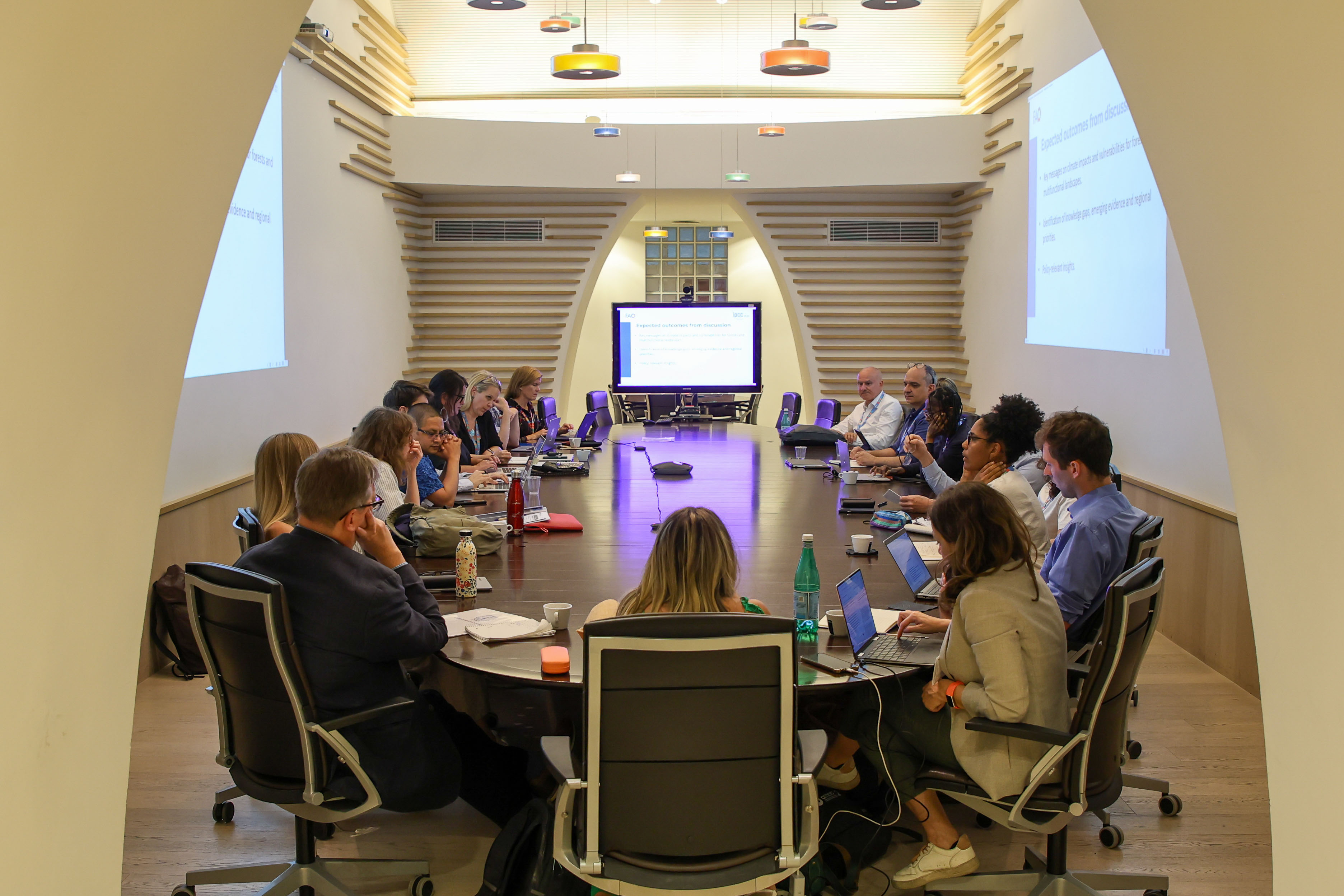
A view of the room during the breakout session on forests and multifunctional landscapes
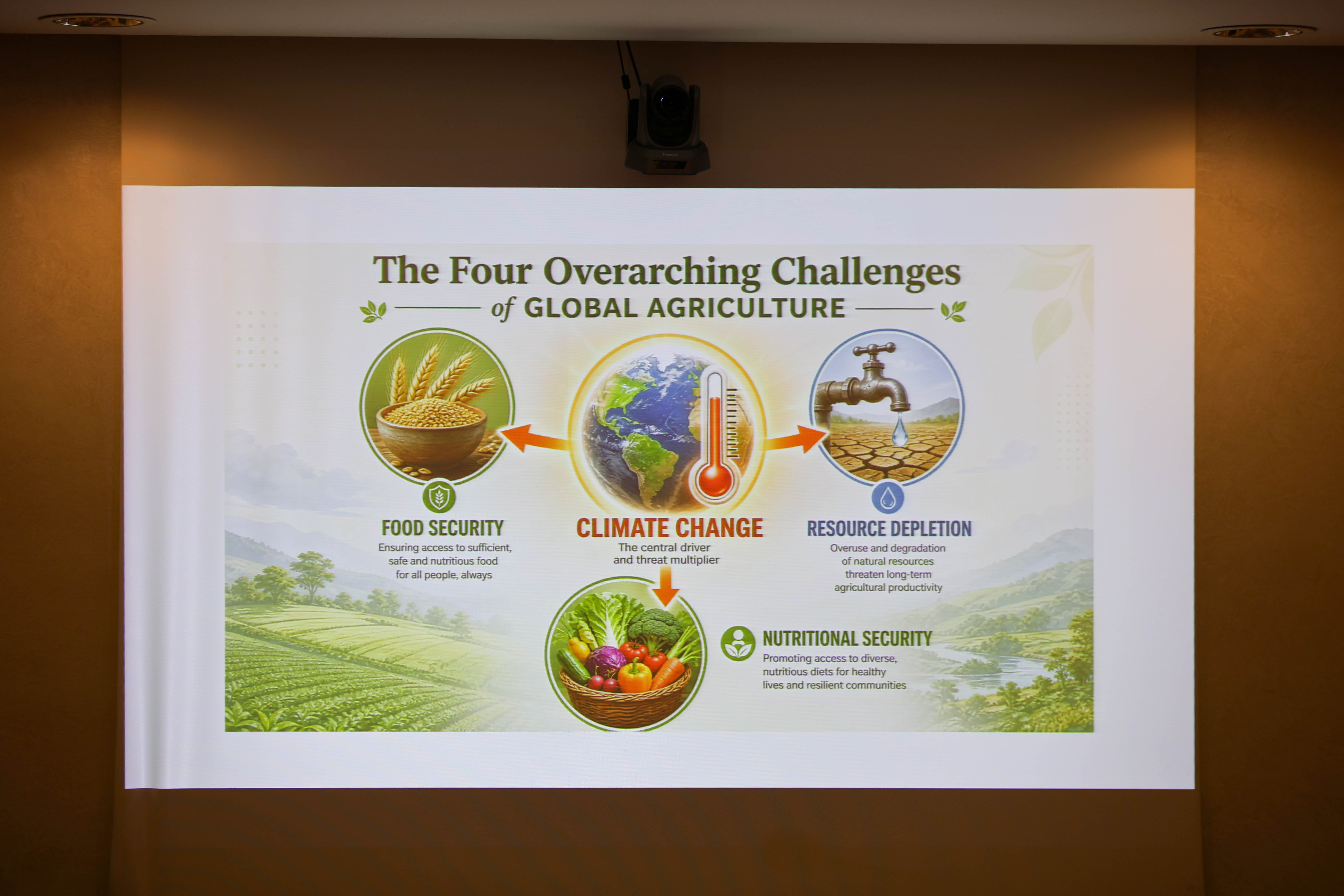
Plenary Session
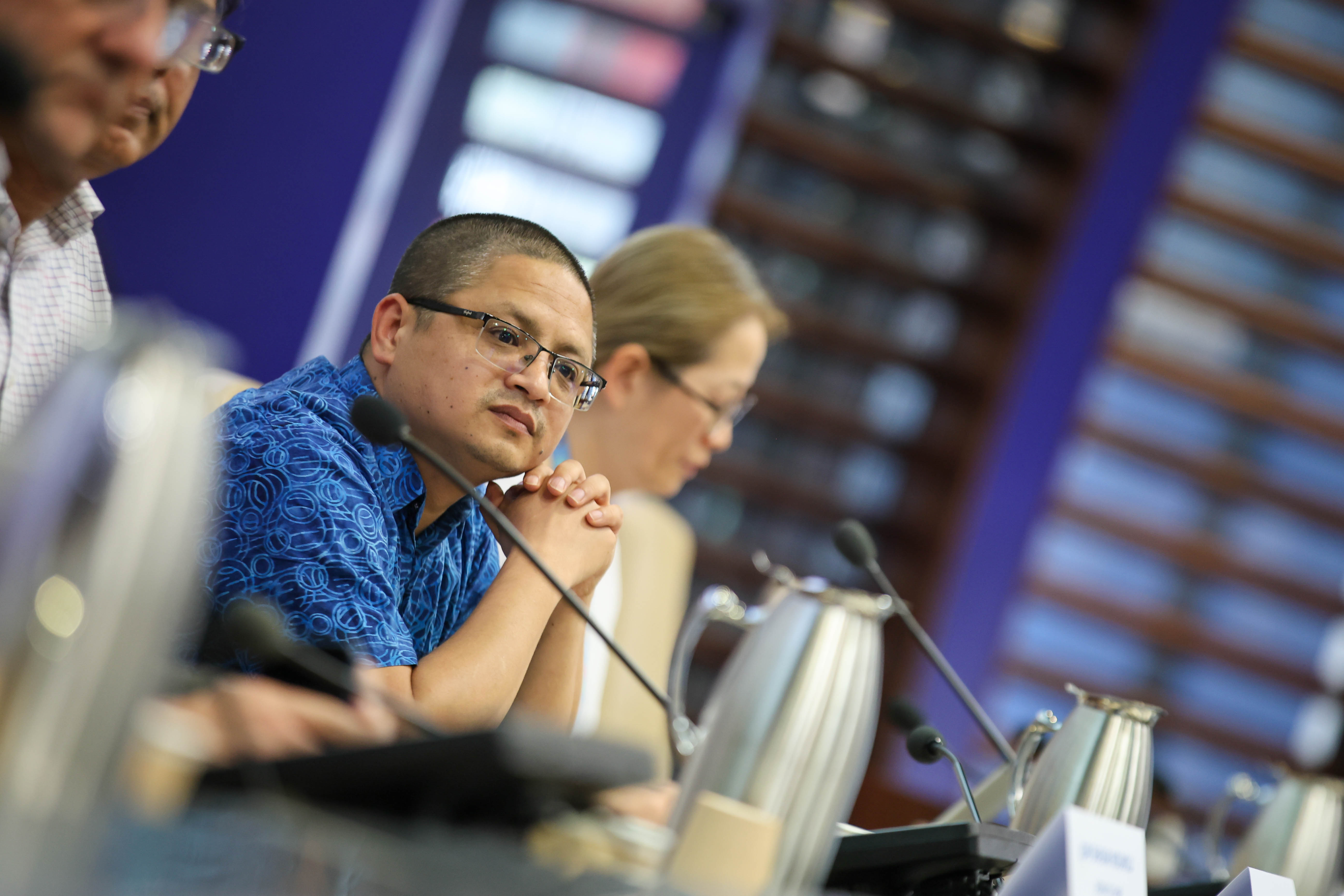
Prajal Pradhan, Associate Professor, University of Groningen, and Visiting Senior Scientist, Potsdam Institute for Climate Impact Research
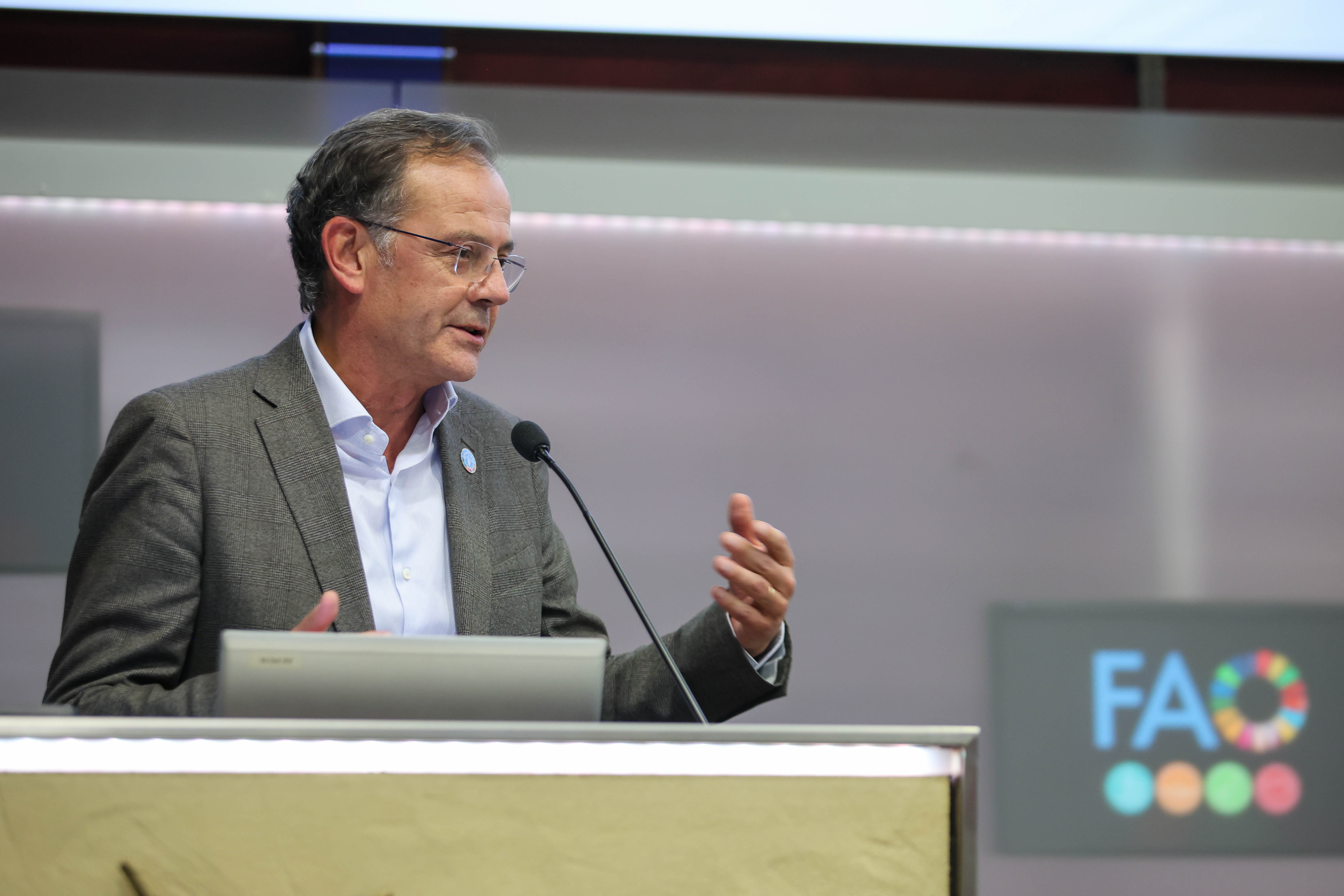
Manuel Barange, Assistant Director-General and Director, Fisheries and Aquaculture Division, FAO, reports back to plenary from the breakout session on fisheries and aquaculture.
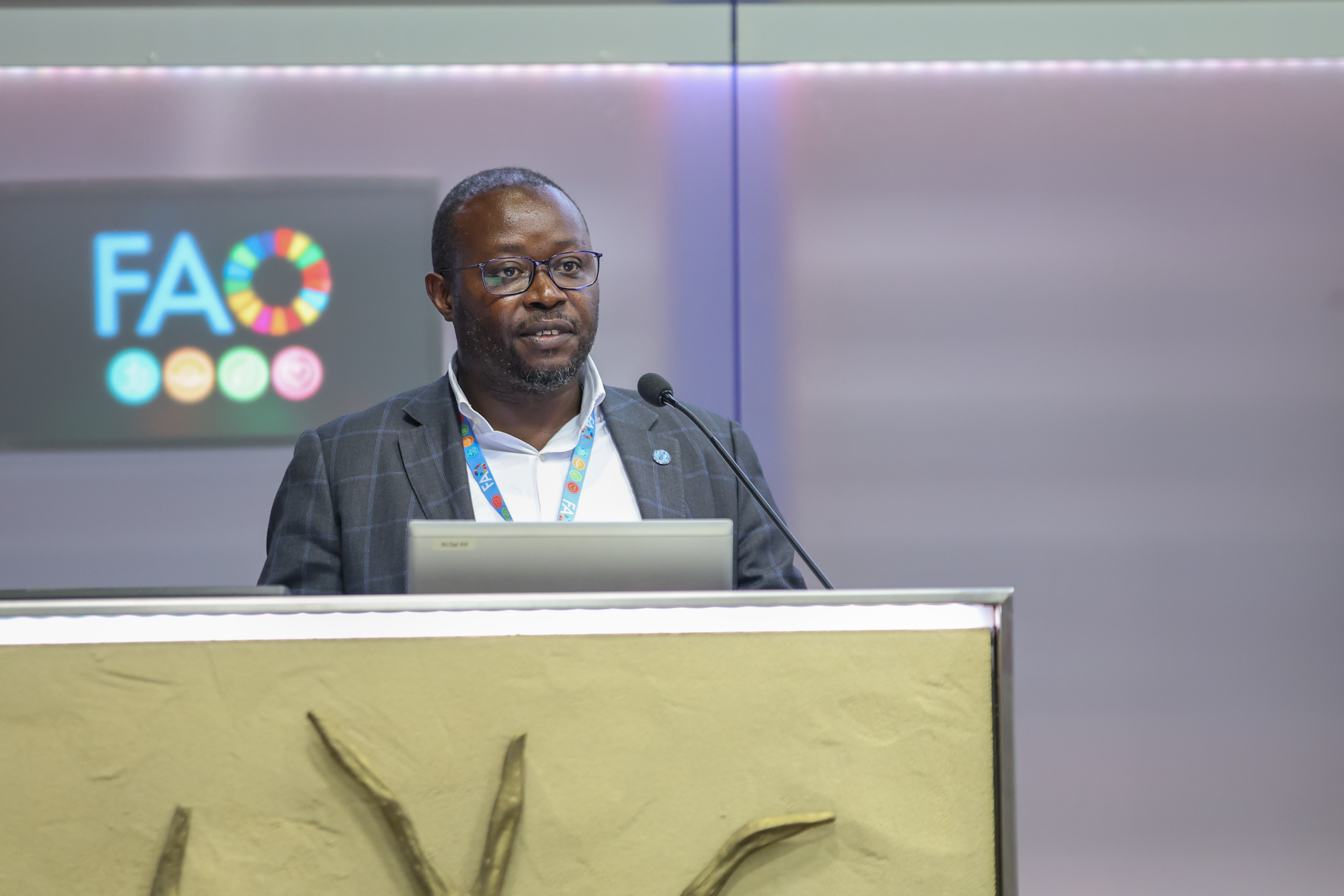
Aimable Uwizeye, Livestock Policy Officer, FAO, reports back to the plenary from the breakout session on livestock and pastoral systems.
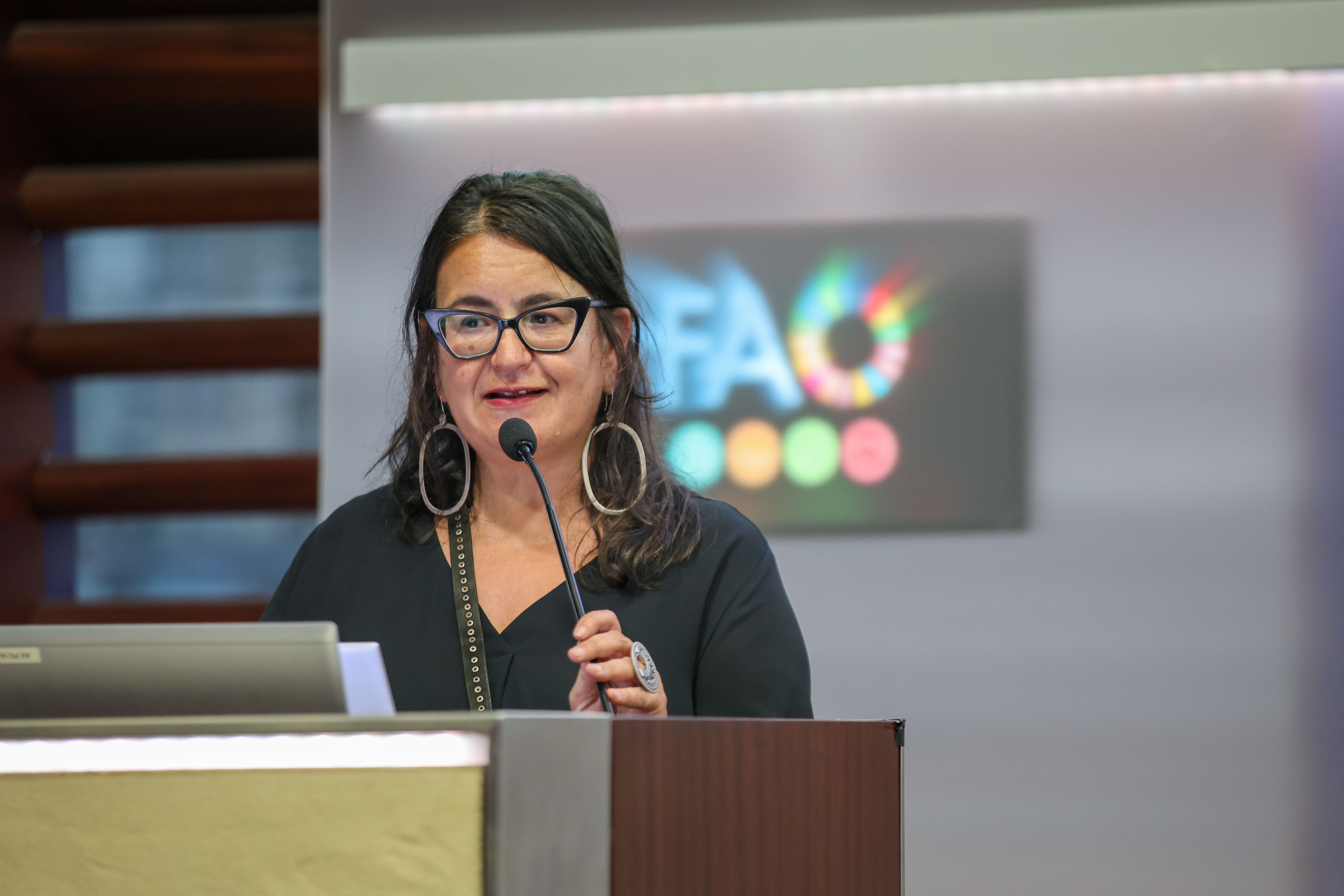
Houria Djoudi, Forestry Officer, FAO, reports back to plenary from the breakout session on forests and multifunctional landscapes.
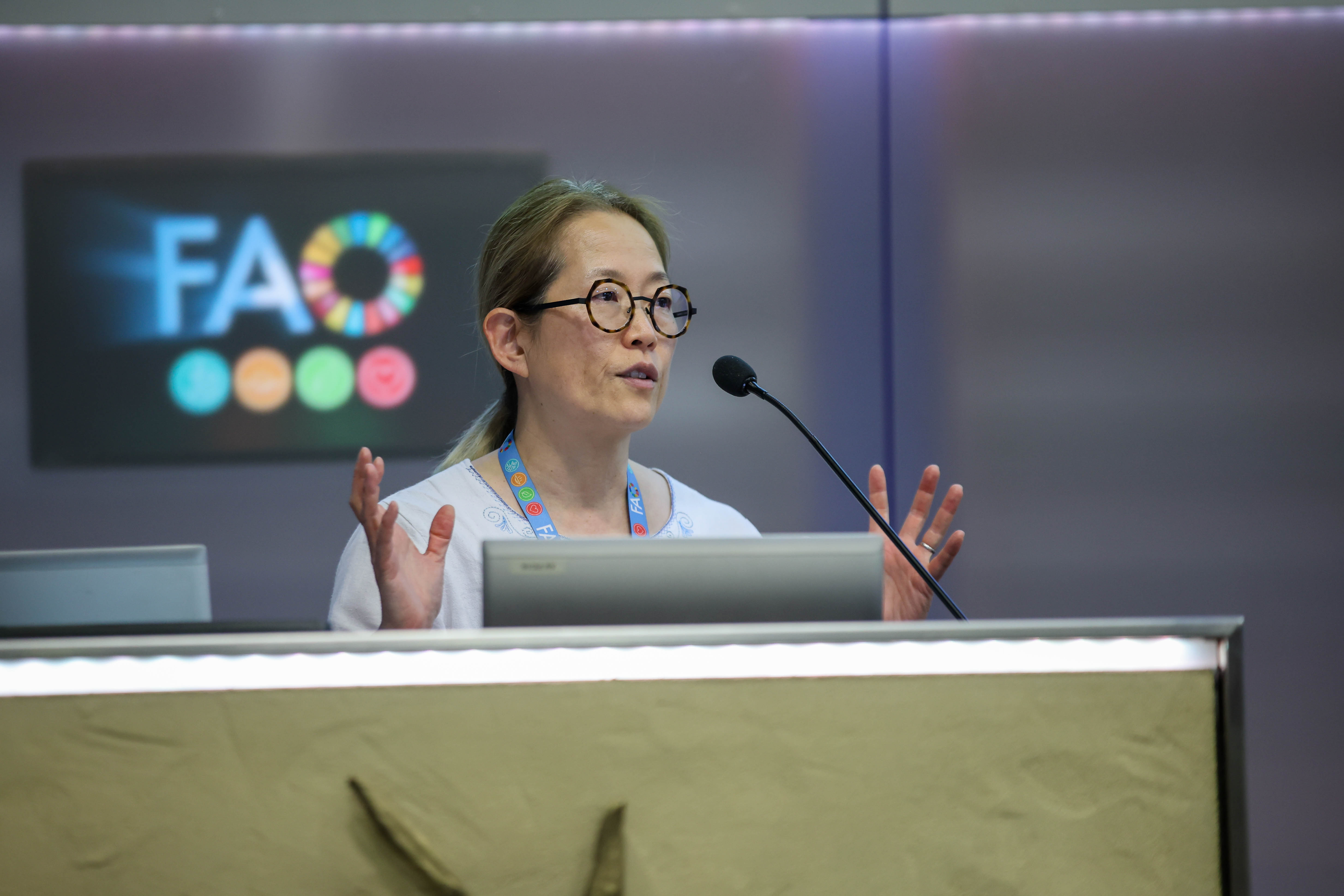
Makiko Taguchi, Agricultural Officer, FAO, reports back to plenary from the breakout session on crops and horticulture systems.
Around the Venue
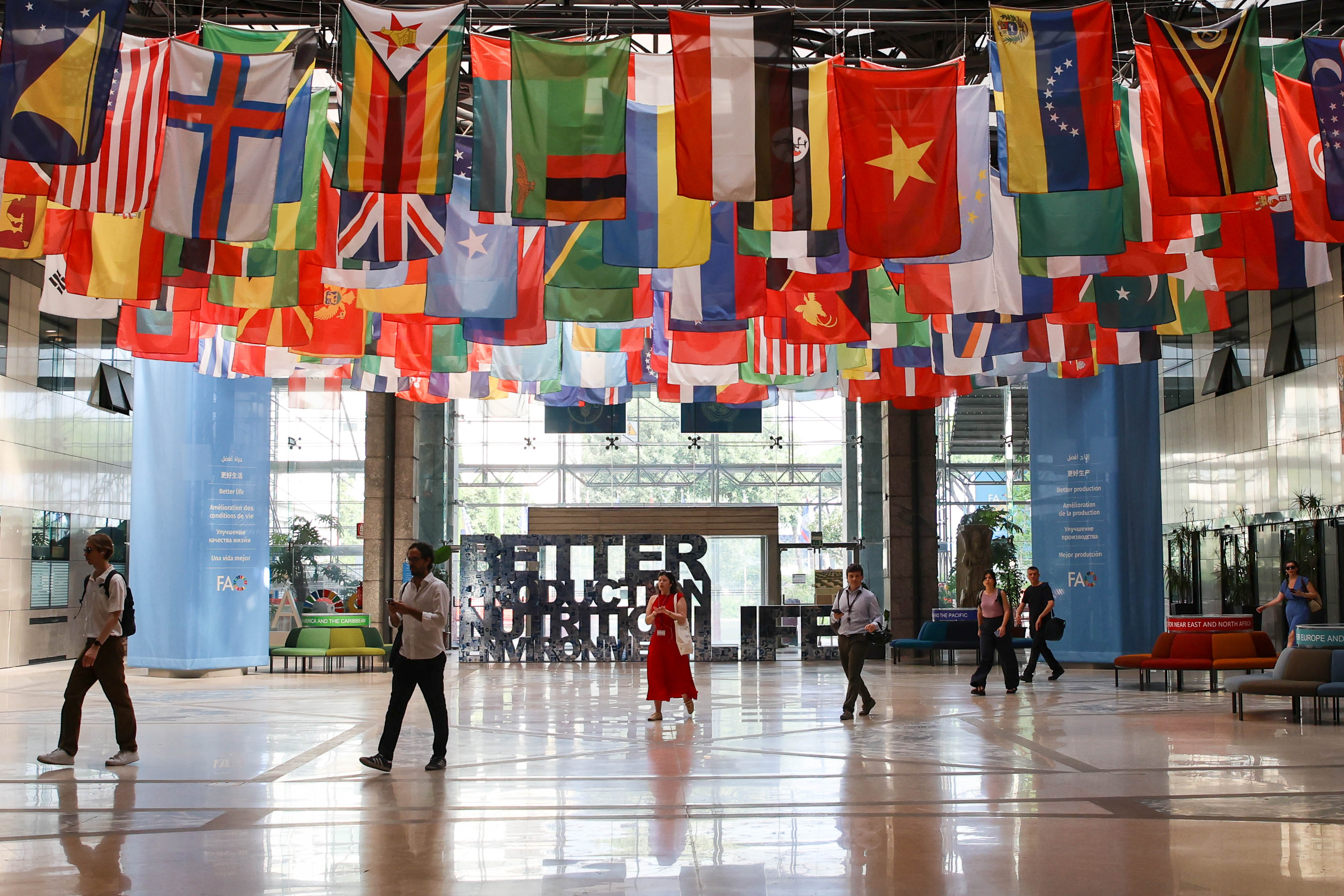
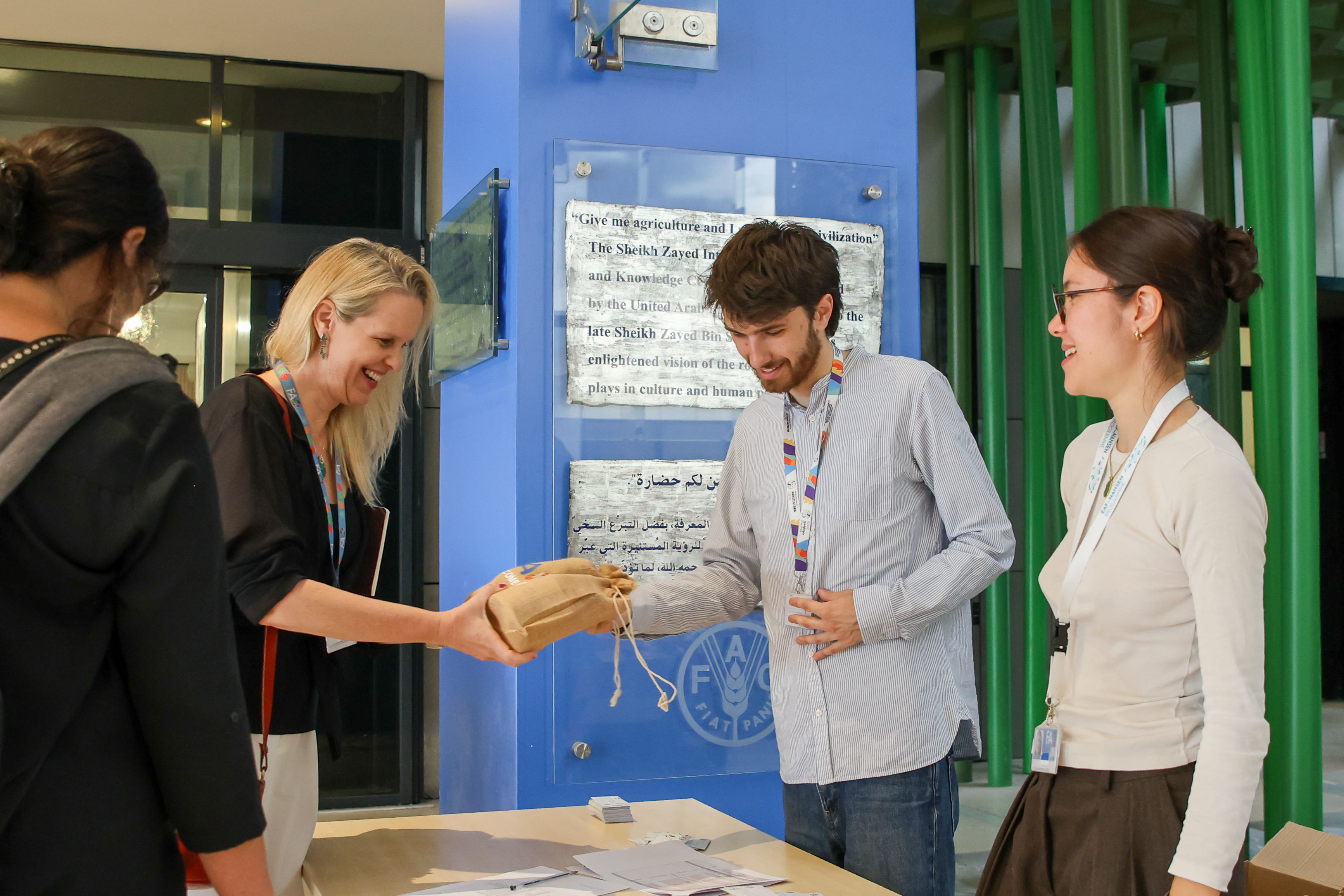
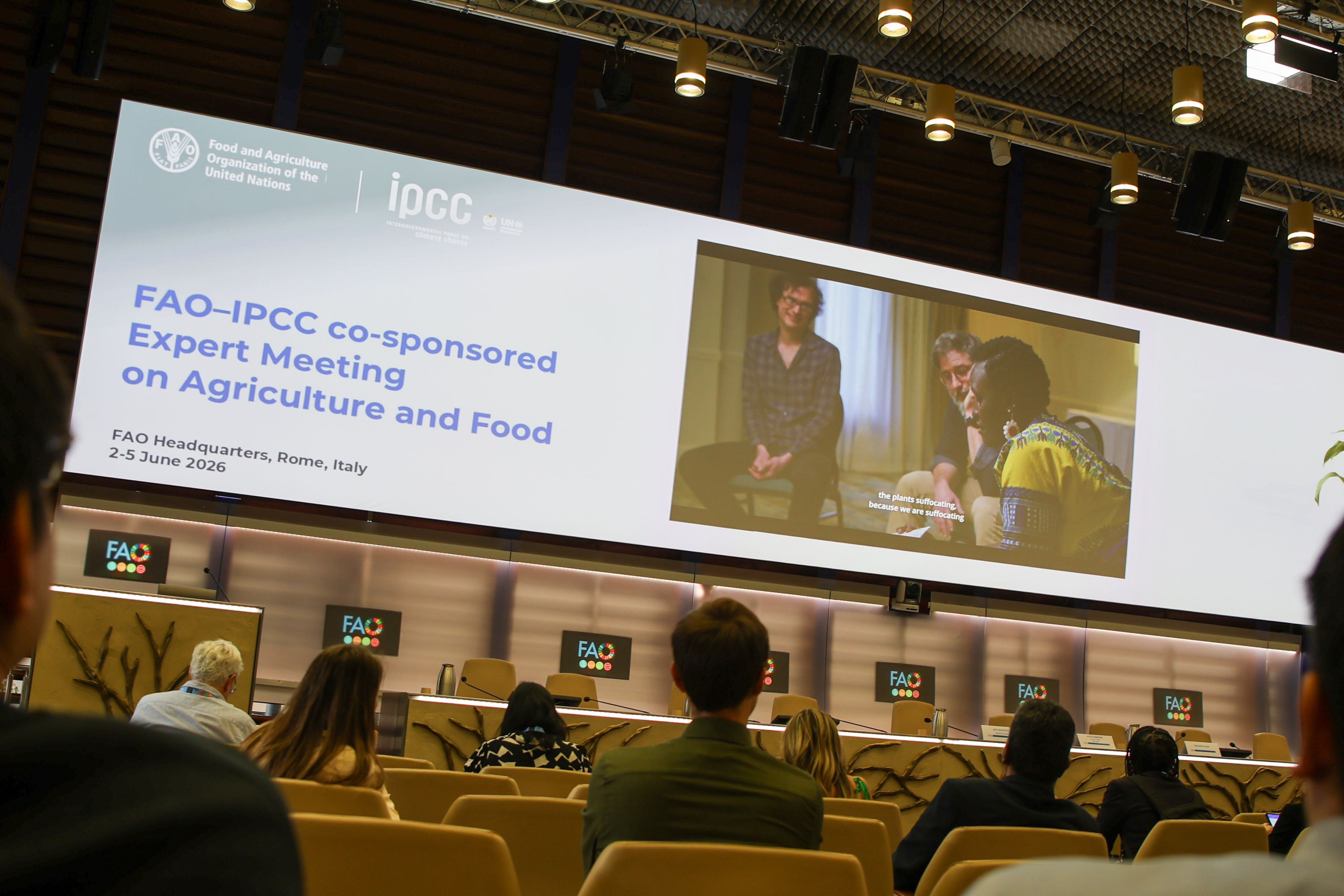
Participants watch a screening of “Climate in Therapy” during the lunch break.