About
Parties sought to match the ambition needed to reverse the alarming trends of wetland loss and degradation through increased synergies with other multilateral environmental agreements, institutional strengthening, enhanced implementation tools, partnerships and networks, and adequate financial support.
Final report
Summary report 23–31 July 2025
All coverage
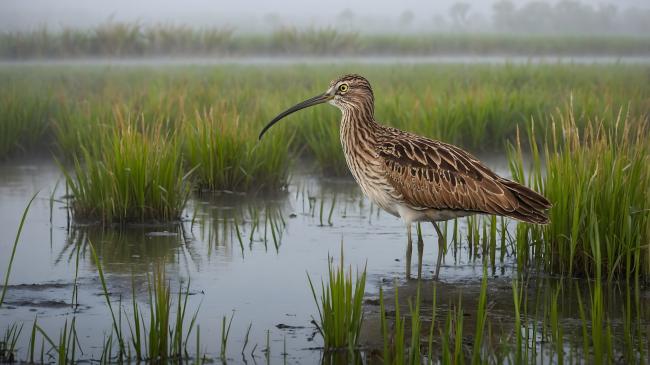
The Convention on Wetlands (also known as the Ramsar Convention on Wetlands) is the oldest of the modern global intergovernmental environmental agreements and one of the earliest to link conservation with sustainable use. Under its three pillars, the Convention’s 172 contracting parties commit to:
- work toward the wise use of all wetlands;
- designate suitable wetlands for the list of Wetlands of International Importance (Ramsar Sites) and ensure their effective management; and
- cooperate internationally on transboundary wetlands, shared wetland systems, and shared species.
As some of the world’s most productive ecosystems, wetlands help deliver on global commitments related to biodiversity, climate change, water security, human health, and the sustainable development goals (SDGs). Over the Convention’s 50+ years, the number of designated Wetlands of International Importance has grown to 2,536, encompassing nearly 258,000 hectares. The Convention’s work has resulted in increased wetland protection, public awareness, and local, national, and international cooperation. Despite these successes, the world’s wetlands are disappearing at alarming rates, due to impacts from land conversion, pollution, agriculture, and climate change.
At the fifteenth session of the Conference of the Contracting Parties (COP15), participants followed up on a number of issues raised at COP14, including: calls to align the Convention’s work more closely with the climate and biodiversity agendas, consolidation of existing resolutions, a proposal to delist Ramsar sites in disputed territories, and the impacts of war on Ukraine’s wetlands.
Following a high-level ministerial segment on the first day, COP15 considered a large agenda including administrative and financial matters, along with progress reports from the Secretary General and representatives of the Convention’s bodies on the implementation of the Convention.
COP15 also considered 25 draft resolutions, submitted by contracting parties and the Standing Committee, including:
- the Strategic Plan of the Convention on Wetlands 2025-2034;
- enhancing visibility and synergies with other multilateral environmental agreements and other international institutions;
- Ramsar Regional Initiatives 2025-2028;
- the process for recruiting a new Secretary General;
- establishment of the Waterbird Estimates Partnership;
- strengthening action on culture and wetlands;
- restoration of degraded freshwater ecosystems;
- strengthening national actions for the conservation and restoration of waterbird flyways;
- promoting incorporation of new technology and traditional knowledge;
- achieving the equitable governance and effective conservation of wetlands as protected areas and other effective area-based conservation measures;
- youth empowerment and integration;
- promoting sustainable lifestyles for the wise use of wetlands;
- recognition of river dolphins as key species for the conservation and sustainable use of wetlands in South America and Asia;
- education and participation for management of urban and peri-urban wetlands;
- assessing pressures on and risks to wetlands;
- an amended resolution on the Ramsar List that was deferred from COP14; and
- separate draft resolutions that propose updates to the Convention’s Programme on communication, capacity building, education, participation and awareness; the status of Ramsar Sites; and Ramsar Information Sheets.
COP15 took place from 23-31 July 2025 in Victoria Falls, Zimbabwe.
The Earth Negotiations Bulletin (ENB) writers for this meeting were Teya Penniman; Christina Fernandez; Fiona Kinniburgh, Ph.D.; Cristina Mundin; and Liz Willetts. The Digital Editor was Anastasia Rodopoulou. The Editor was Pam Chasek, Ph.D.
View past and future events
Past event
7th Meeting of the Conference of the Parties to the Ramsar Convention (COP7)
Past event
8th Meeting of the Conference of the Parties to the Ramsar Convention (COP8)
Past event
9th Meeting of the Conference of the Parties to the Ramsar Convention (COP9)
Past event
10th Meeting of the Conference of the Parties to the Ramsar Convention (COP10)
Past event
11th Meeting of the Conference of the Parties to the Ramsar Convention (COP11)
Past event
12th Meeting of the Conference of the Parties to the Ramsar Convention (COP12)
Past event
13th Meeting of the Conference of the Contracting Parties to the Ramsar Convention on Wetlands (COP13)
Past event
14th Session of the Conference of the Contracting Parties (COP14) of the Convention on Wetlands (Ramsar Convention)
Past event
15th Session of the Conference of the Contracting Parties (COP15) of the Ramsar Convention on Wetlands
To receive free coverage of global environmental events delivered to your inbox, subscribe to the ENB Update newsletter.
