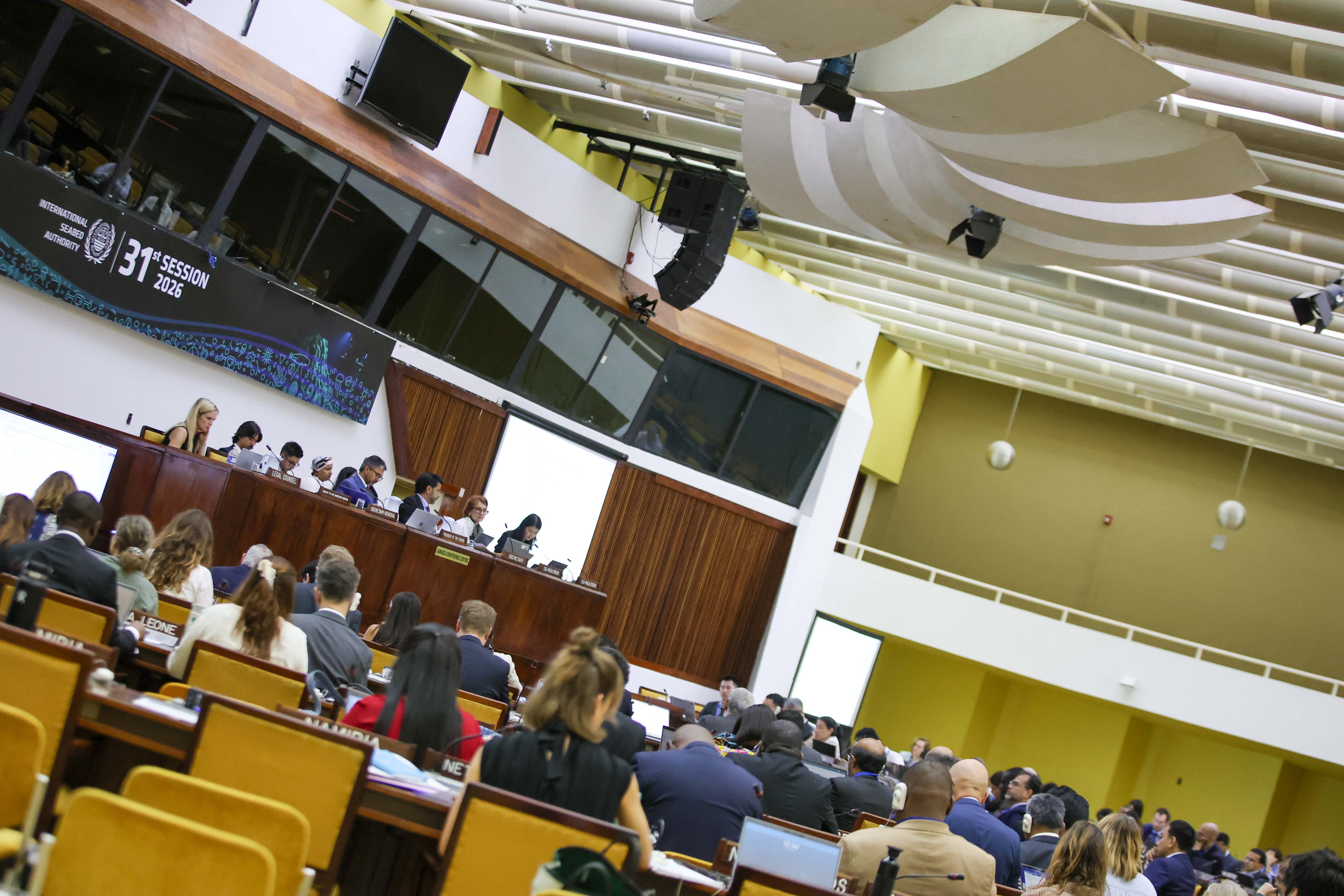
Safeguarding the rights and legitimate interests of coastal states, including those states across whose jurisdictions resource deposits related to deep-sea mining activities may lie, is a crucial issue in the development of the deep-sea mining regime. On Tuesday, the International Seabed Authority (ISA) Council considered how best to refer to these coastal states, as well as the modalities for consulting them before exploitation plans of work are approved.
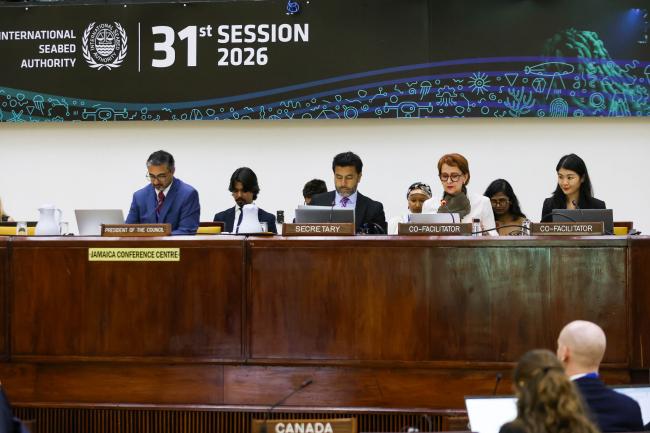
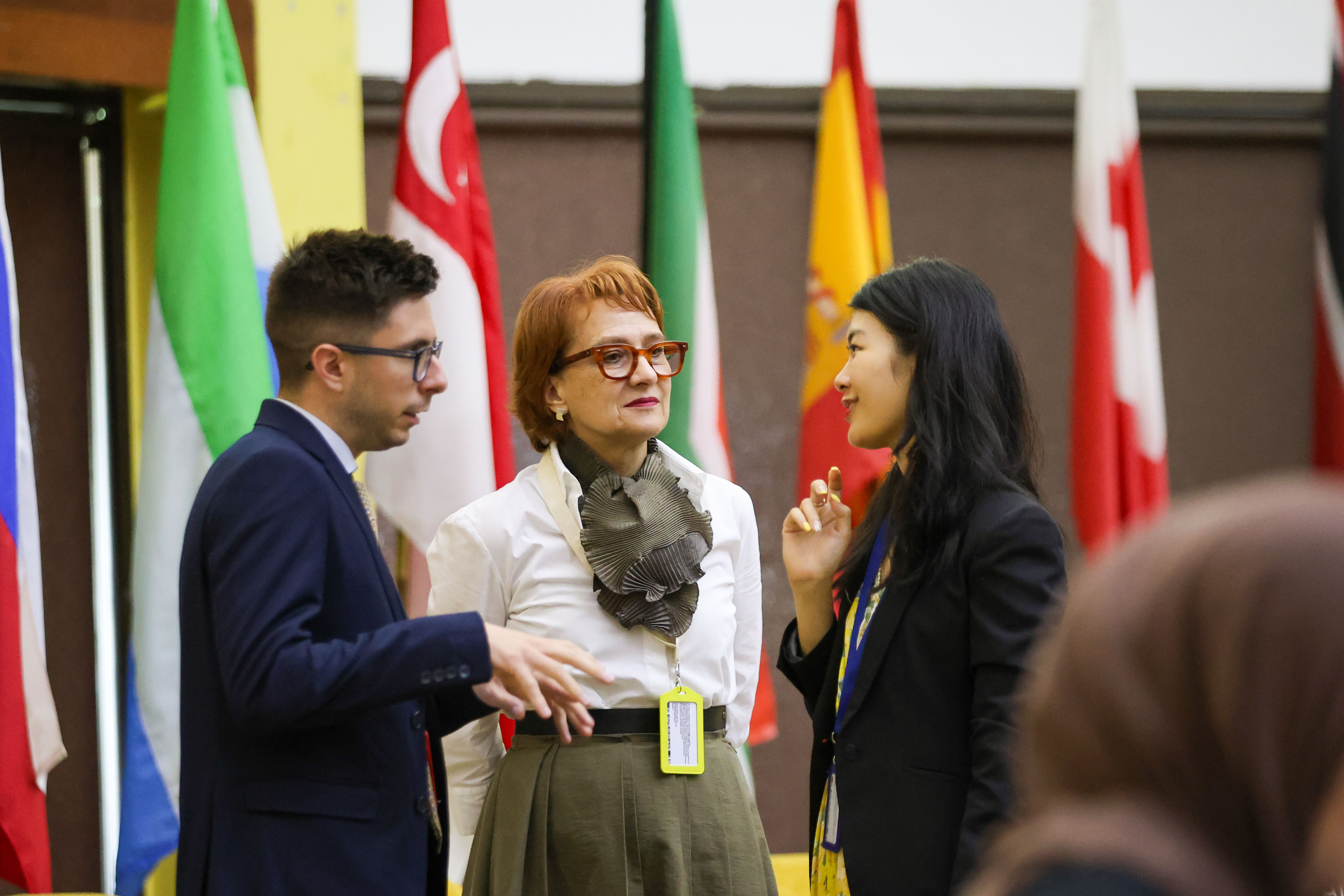
Discussions on this issue took place in an informal working group co-facilitated by Jessie Lim (Singapore) and Maria Luis Mendes (Portugal). Council members focused on regulation 93 ter (state and stakeholder consultation), and discussed who should be consulted, and when and how the consultations should take place.
Regarding who should be consulted, delegates discussed options including “relevant coastal states,” “potentially affected coastal states,” “adjacent coastal states,” or “adjacent coastal states that are most affected.” Most expressed preference for “potentially affected coastal states,” noting this, among others: reflects a precautionary approach, allowing for early identification of states whose rights may be affected; and is consistent with the language in Article 142 of the UN Convention on the Law of the Sea (rights of coastal states).
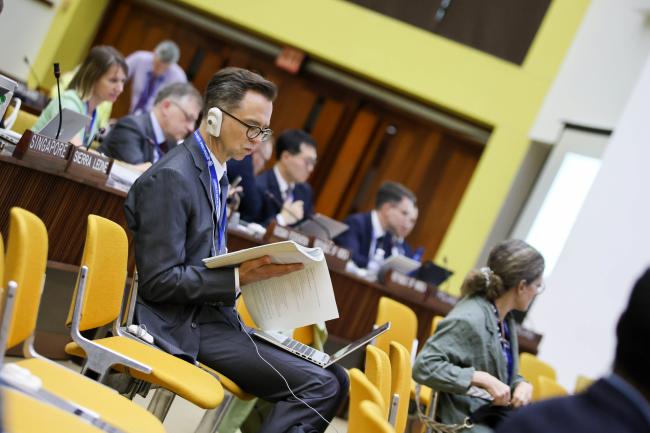
Views on when consultations should take place converged around a combined approach, with consultations beginning early in the approval process, potentially prior to submission of a plan of work, and continuing throughout the lifecycle of exploitation contracts.
There was also convergence on who should lead consultations, with most supporting a Secretariat-led process to ensure neutrality, transparency, and institutional oversight. On what consultations should cover, delegates supported a targeted approach focusing on among others, potential environmental impacts on, and implications for, coastal states’ rights, informed by documentation such as environmental impact assessments, management and monitoring plans, and closure plans.
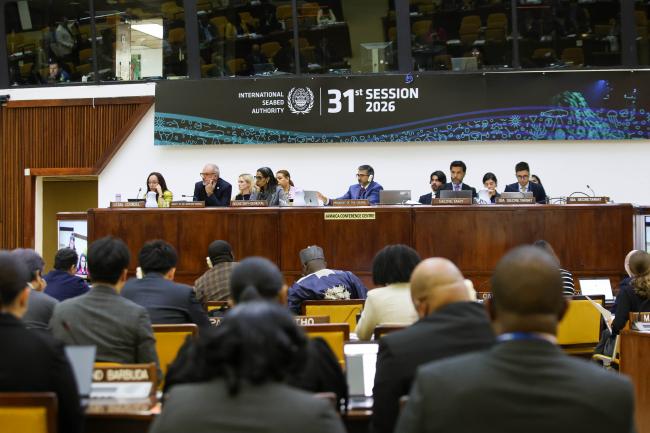
The Council also resumed discussions on cooperation with bodies and processes under the Agreement on Marine Biological Diversity of Areas beyond National Jurisdiction (BBNJ Agreement). The Council considered a draft Council decision on this matter.
Many delegations emphasized that it would be premature to adopt a Council decision on cooperation at this stage, given that BBNJ institutions have not yet been fully established. Several called for a cautious and flexible approach, noting that any decision adopted now would likely need to be revisited following the first BBNJ Conference of the Parties.
Some delegates proposed establishing a standing agenda item on cooperation, in order to enhance information exchange, and several supported ensuring the ISA’s participation as an observer in BBNJ processes to safeguard its mandate.
The Council agreed to defer consideration of the draft decision to the second part of the ISA’s 31st annual session, scheduled for July.
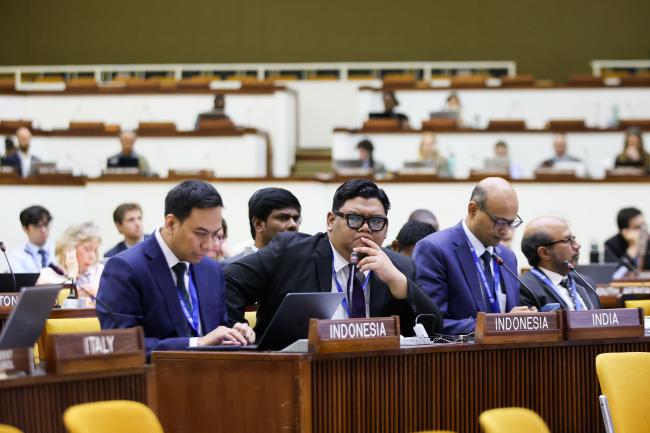
The Council also commenced its first reading of the annexes to the revised consolidated text of the exploitation regulations. These annexes contain the detailed technical and procedural provisions that support the core regulations, including templates, reporting requirements, and methodological guidance.
Delegates considered Annexes I (application for approval of a plan of work for exploitation contract) and II (mining workplan), providing their initial views.
Discussions on Wednesday are expected to focus on, among other things, environmental and regulatory elements of the exploitation regulations.
To receive free coverage of global environmental events delivered to your inbox, subscribe to the ENB Update newsletter.
All ENB photos are free to use with attribution. For the 1st part of the 31st session of the International Seabed Authority (ISA) Council meeting, please use: Photo by IISD/ENB | Anastasia Rodopoulou
Informal Working Groups
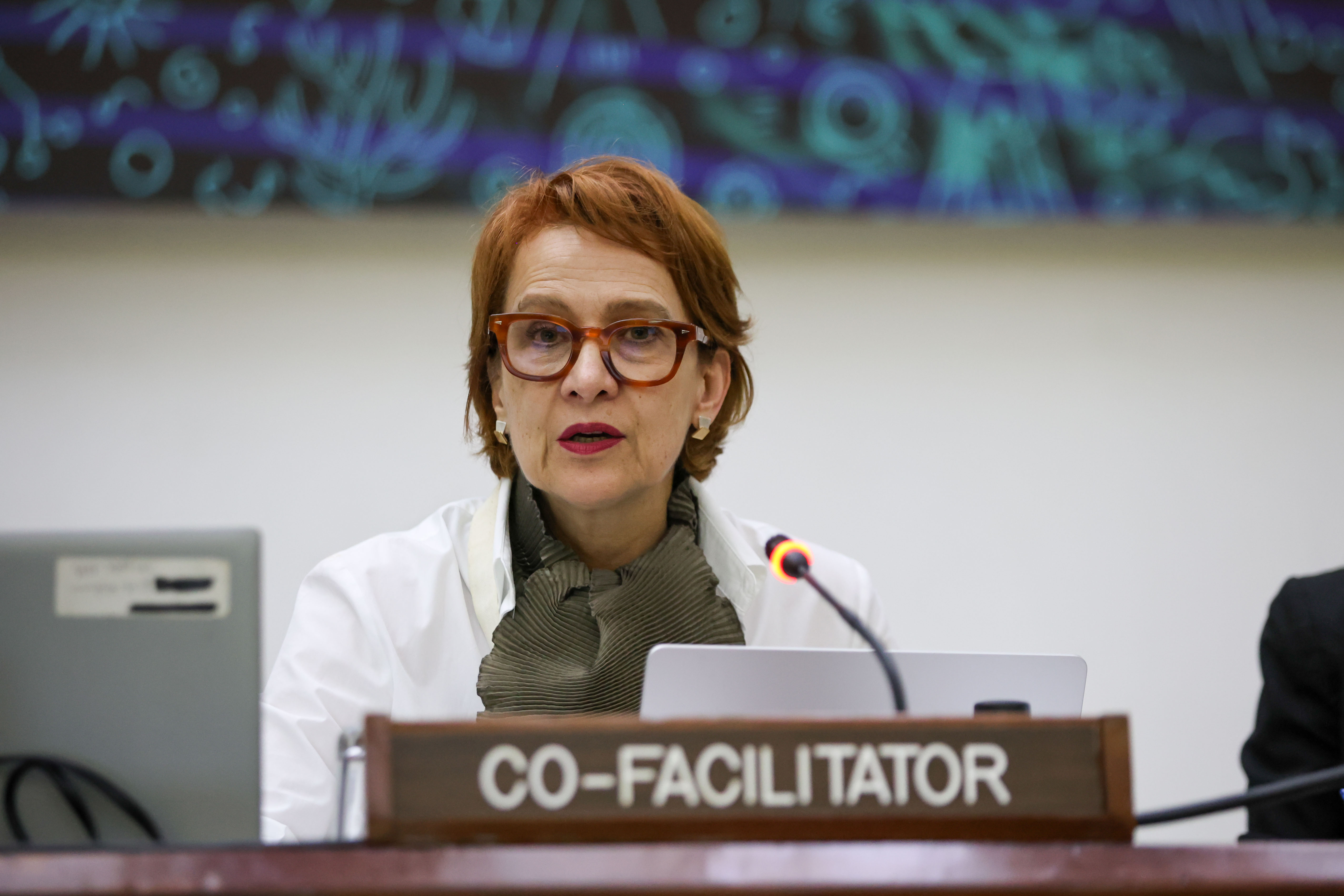
Maria Mendes, Portugal, Co-Facilitator of the Informal Working Group on Rights and Interests of Coastal States
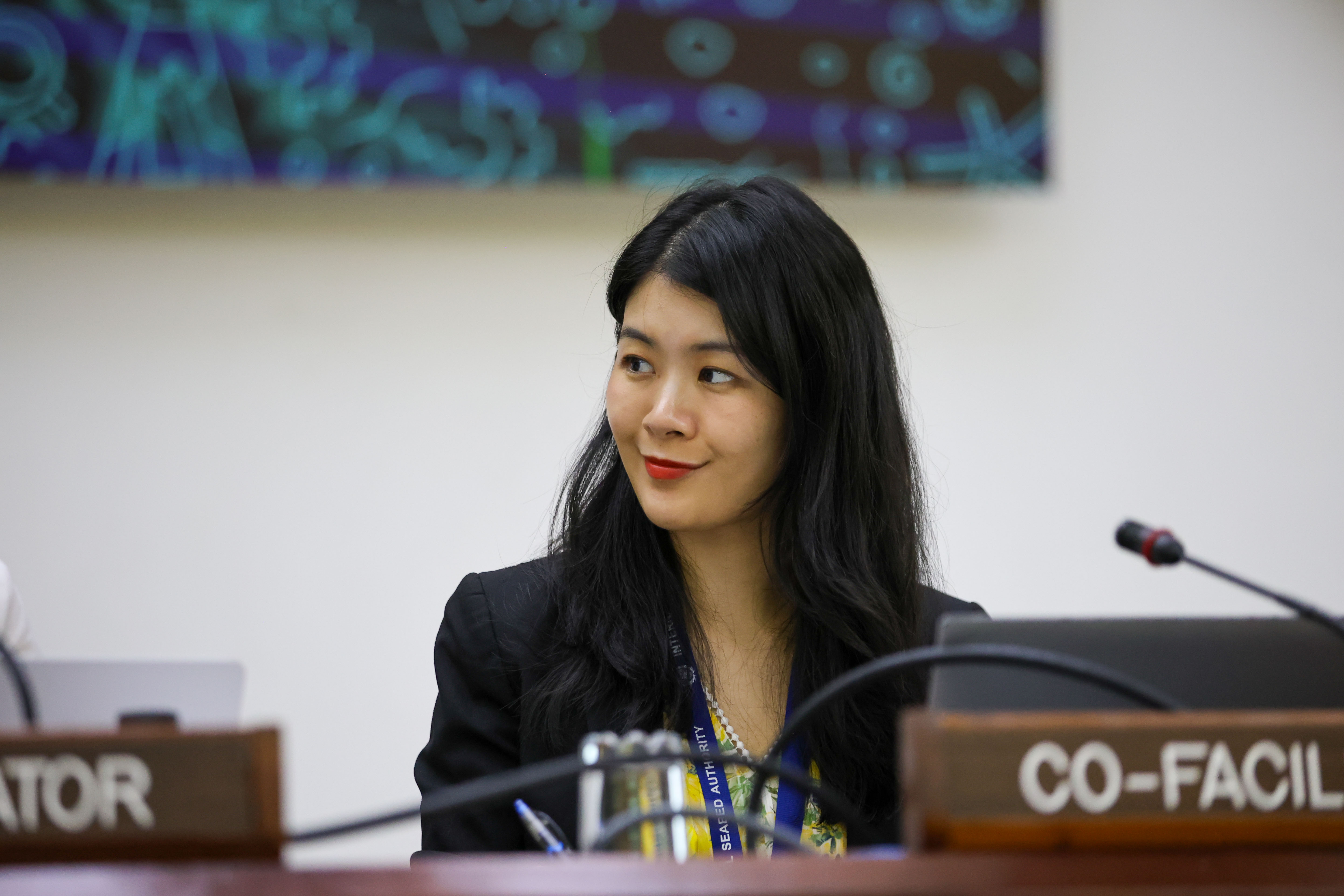
Jessie Lim, Singapore, Co-Facilitator of the Informal Working Group on Rights and Interests of Coastal States
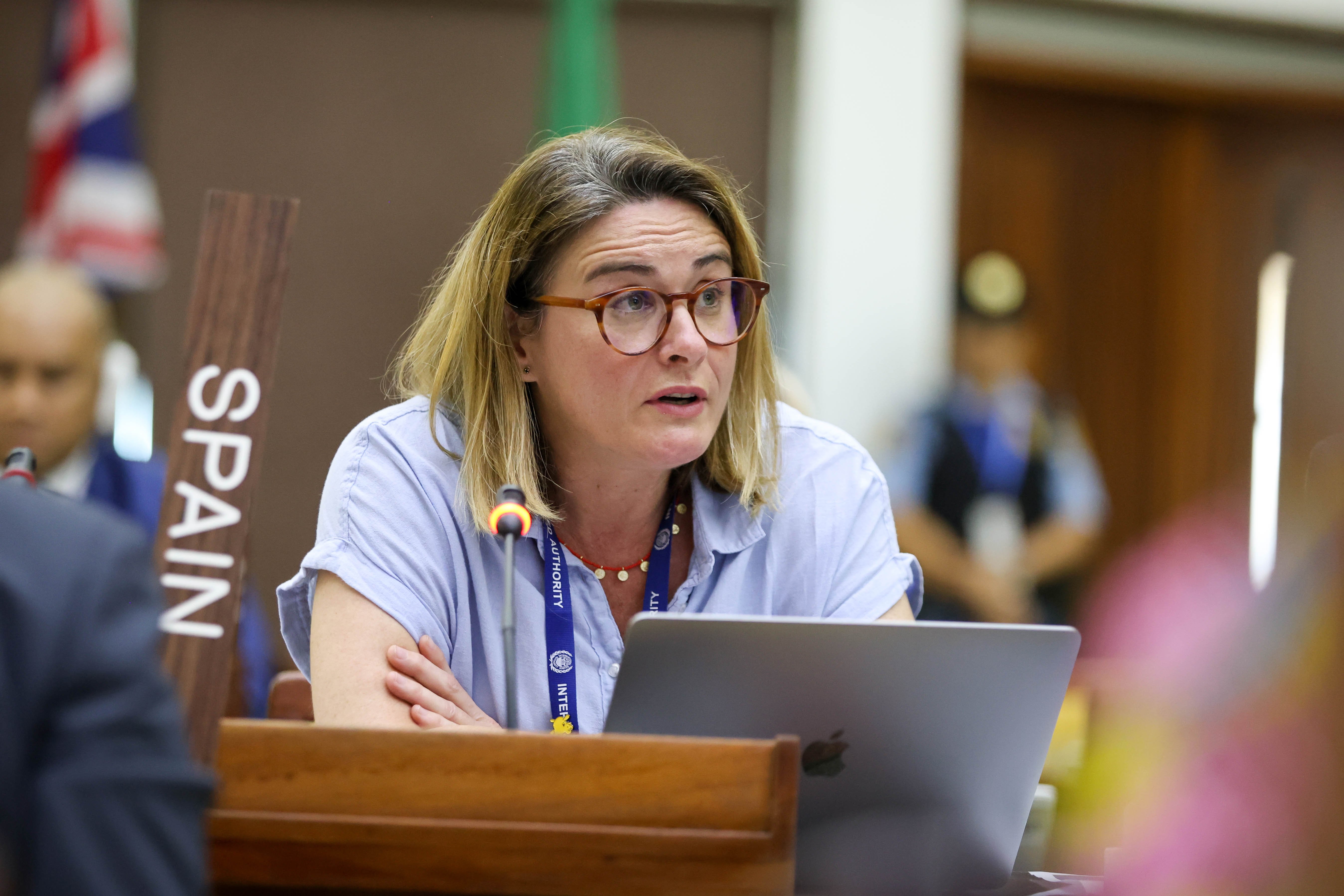
Gloria Fernández Arribas, Spain
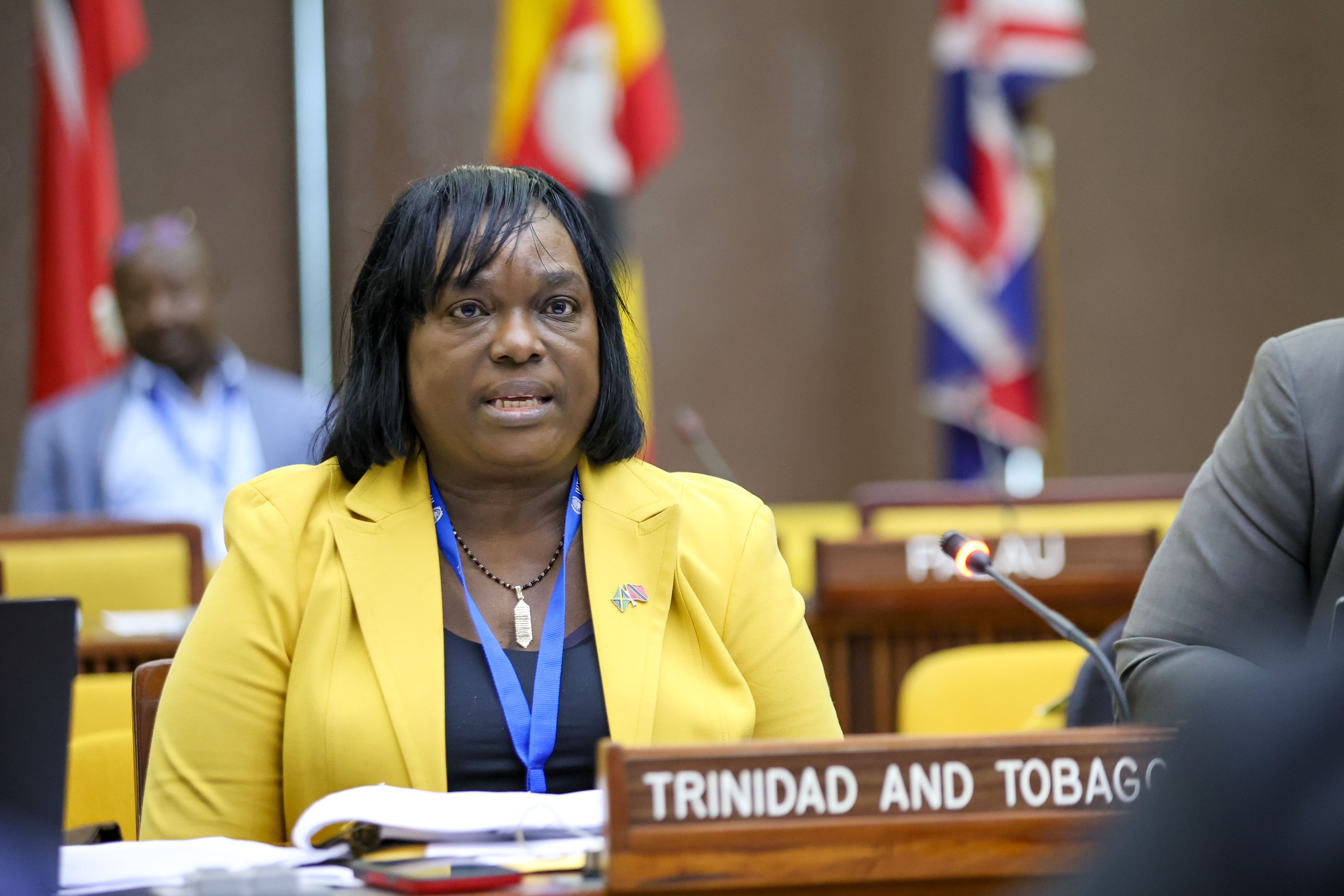
Deborah Thomas-Felix, Trinidad and Tobago
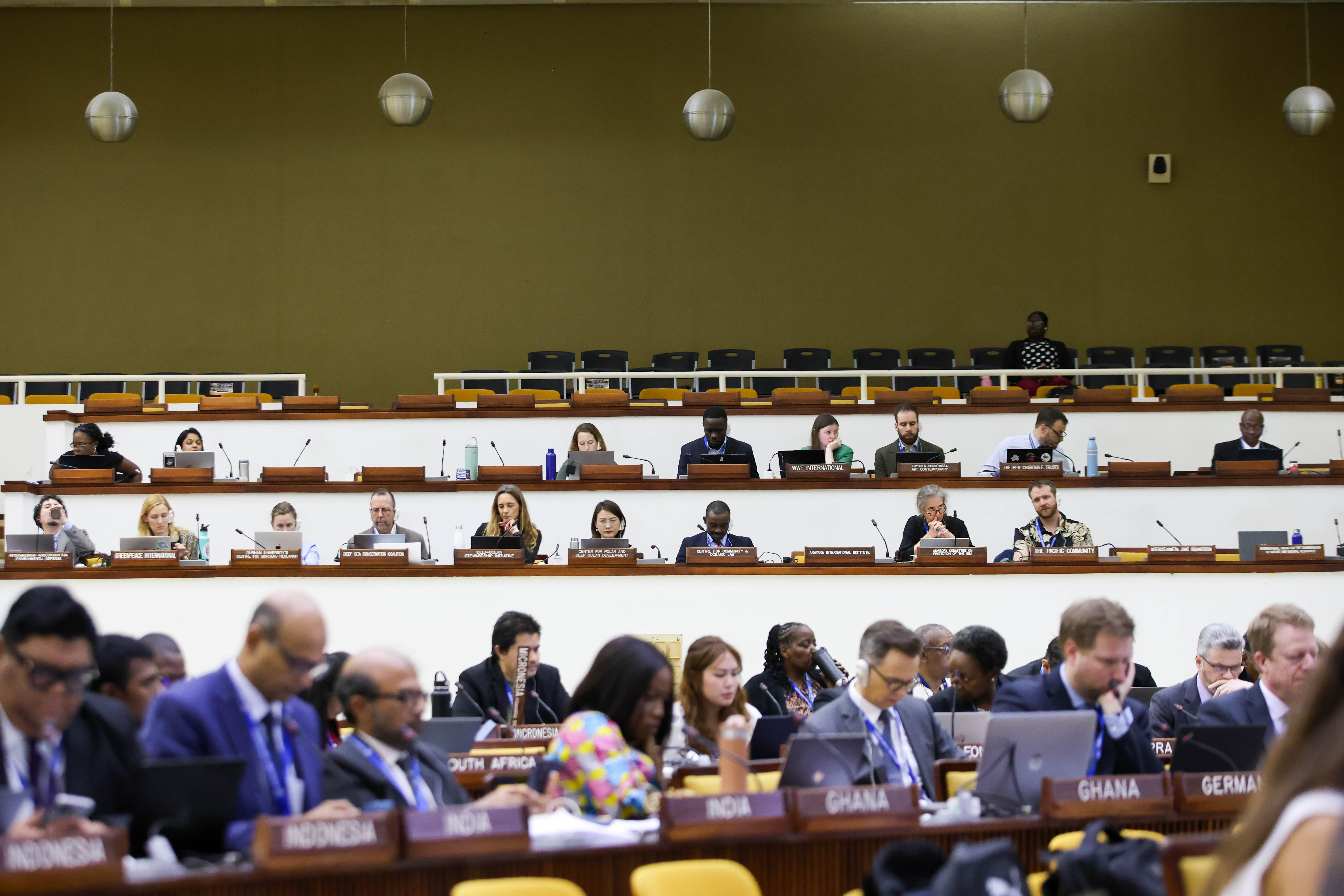
Observers follow the proceedings.
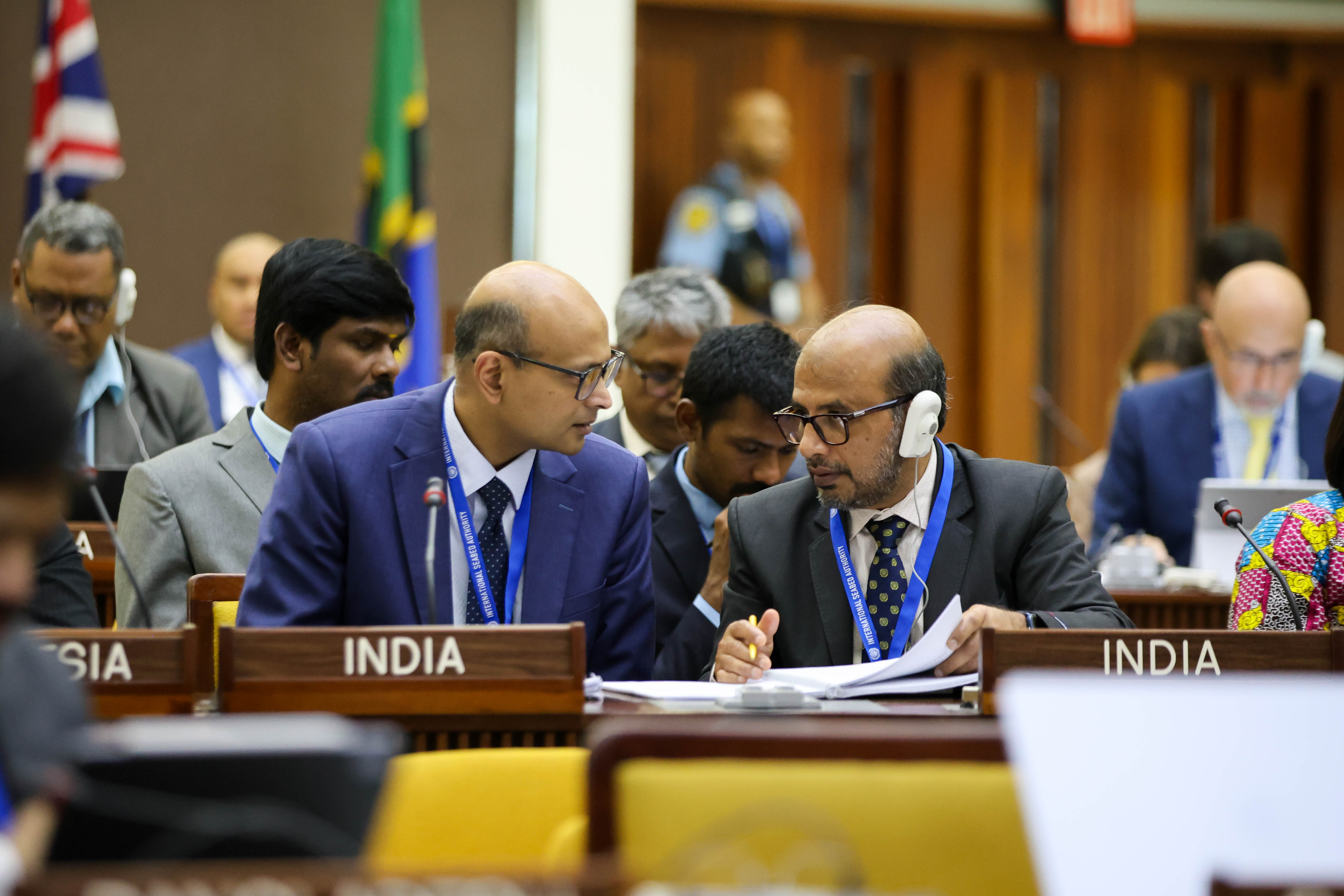
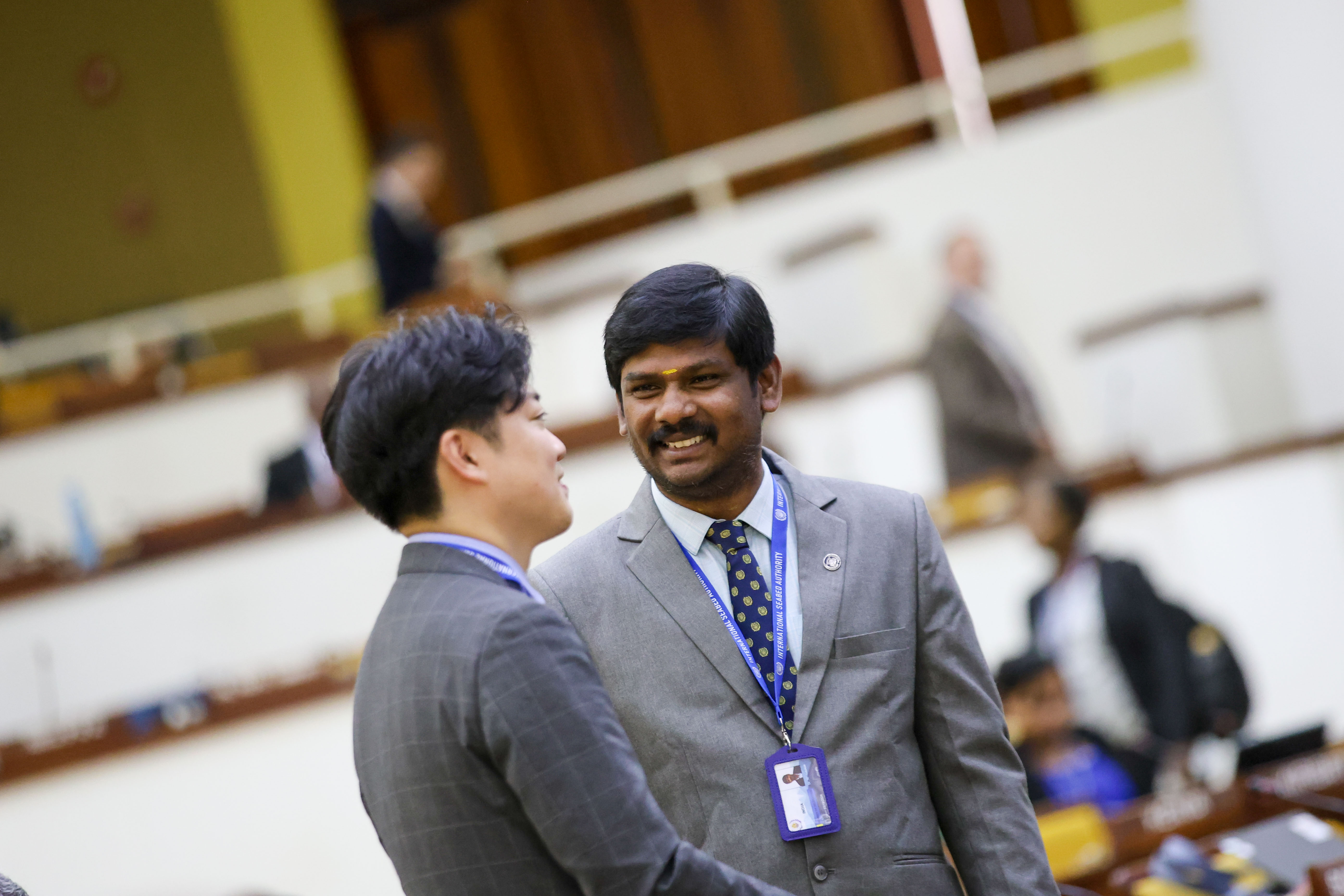
Delegates from India consult.
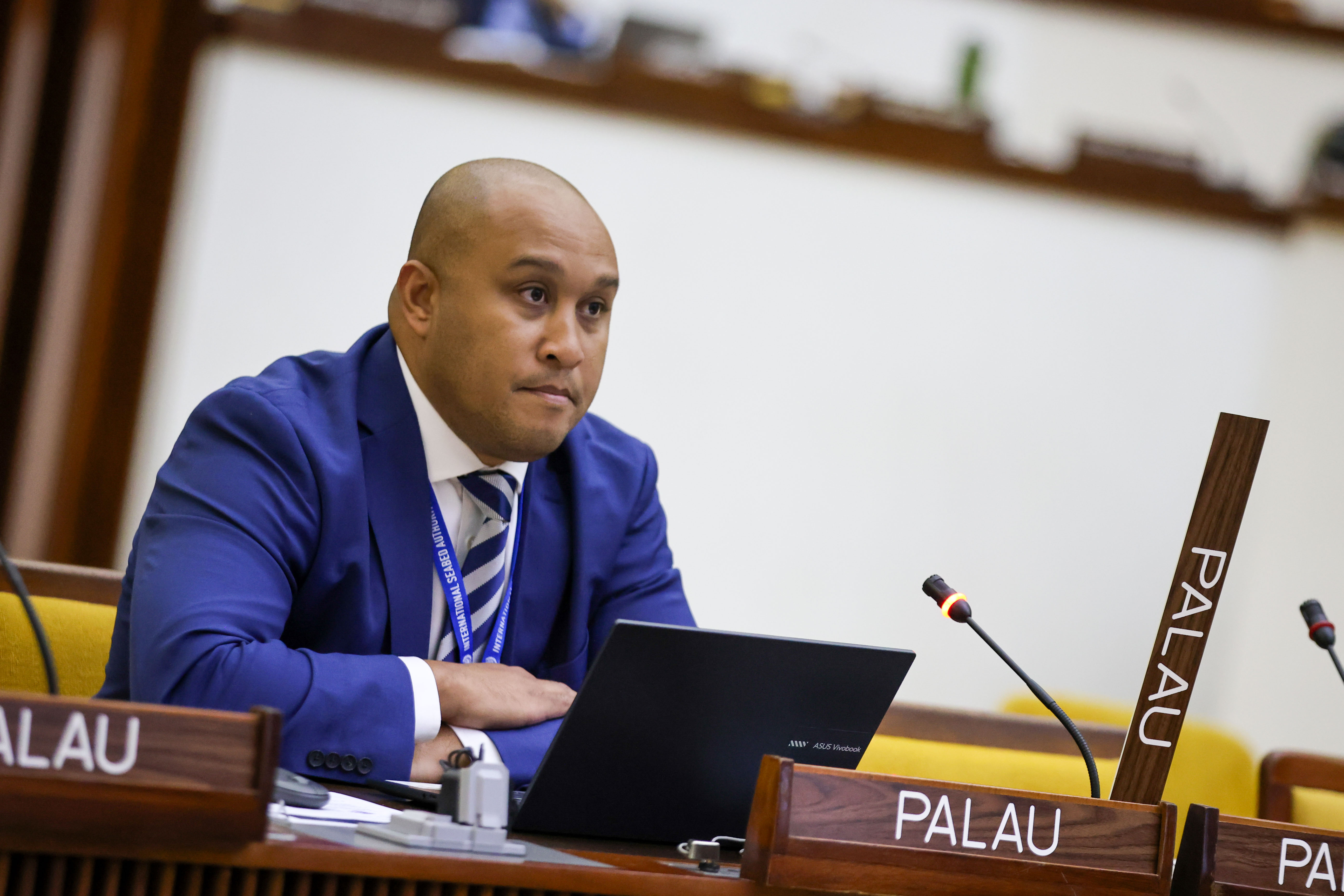
Charles Reklai Mitchell, Palau
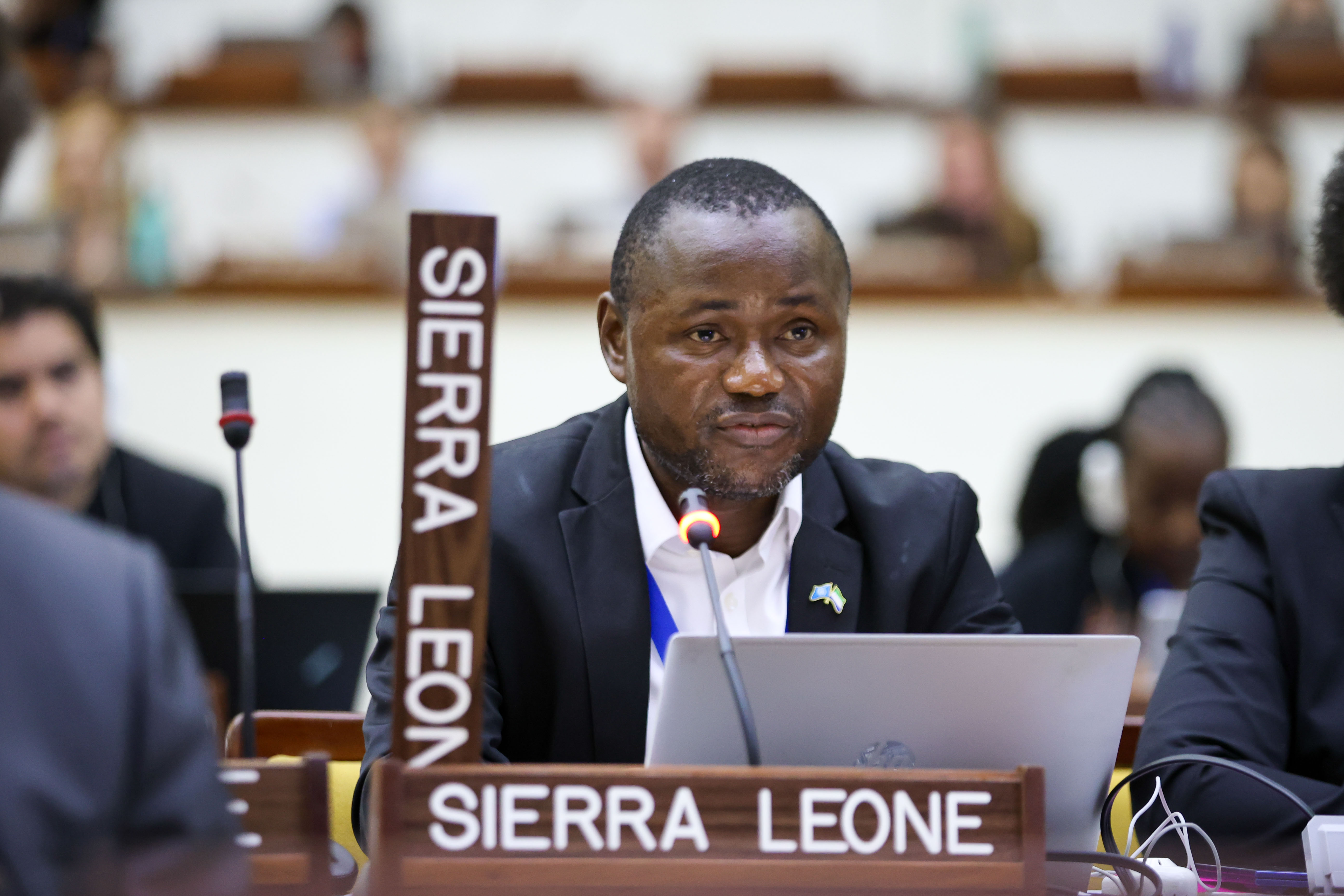
Allieu Koroma, Sierra Leone
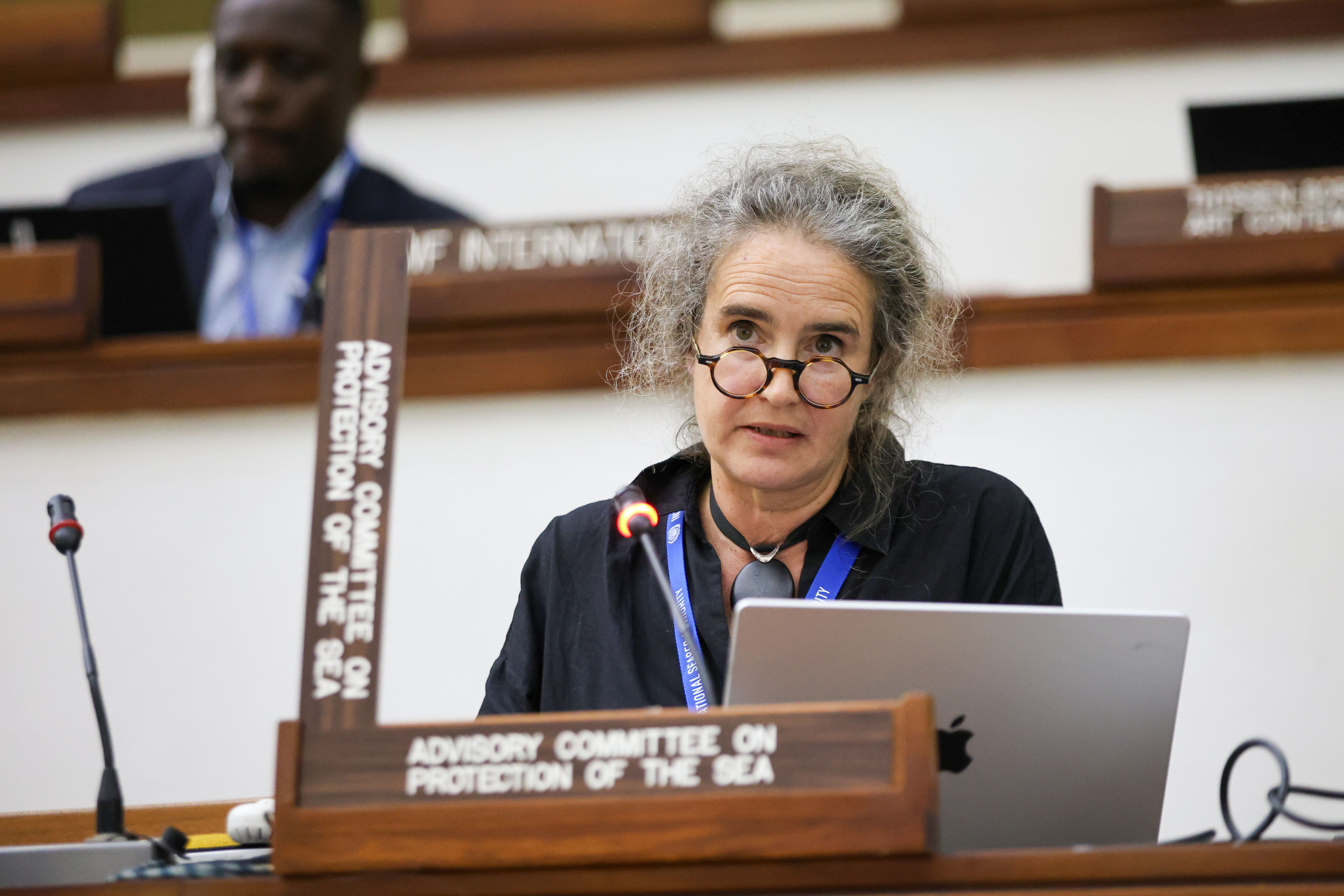
Youna Le Berre Lemaire Lyons, Advisory Committee on Protection of the Sea (ACOPS)
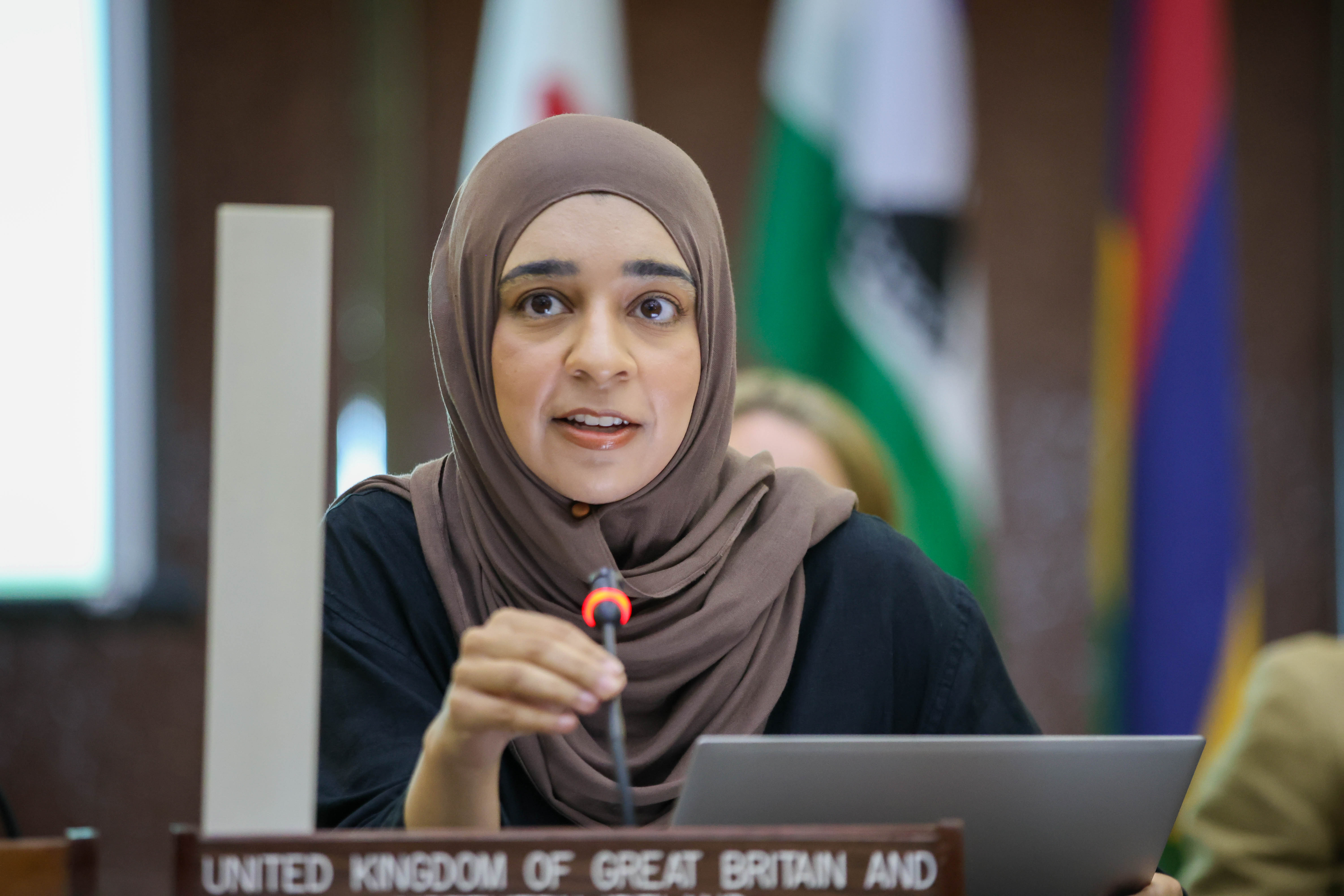
Humaira Hussain, UK
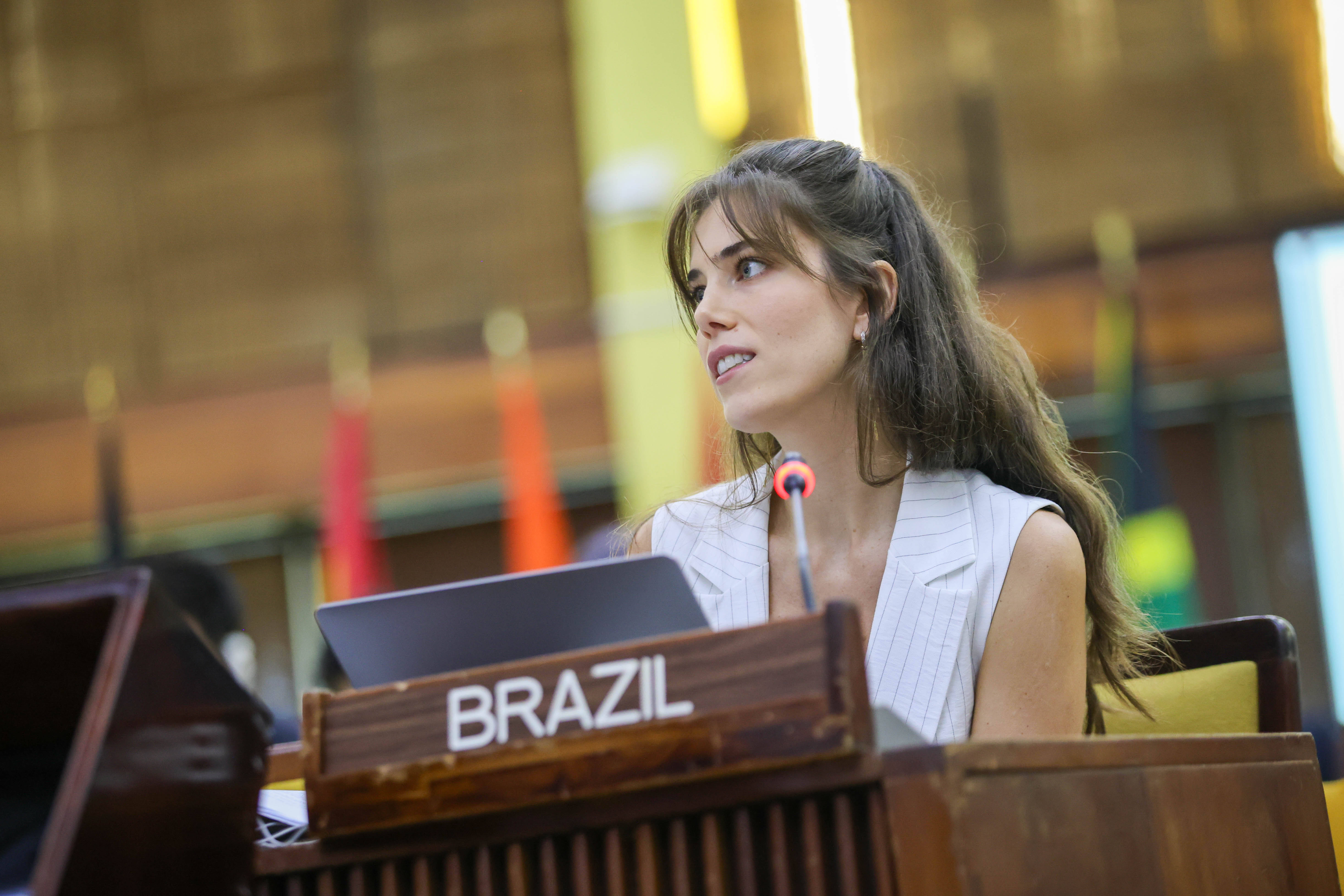
Bárbara Macedo Perrenoud, Brazil
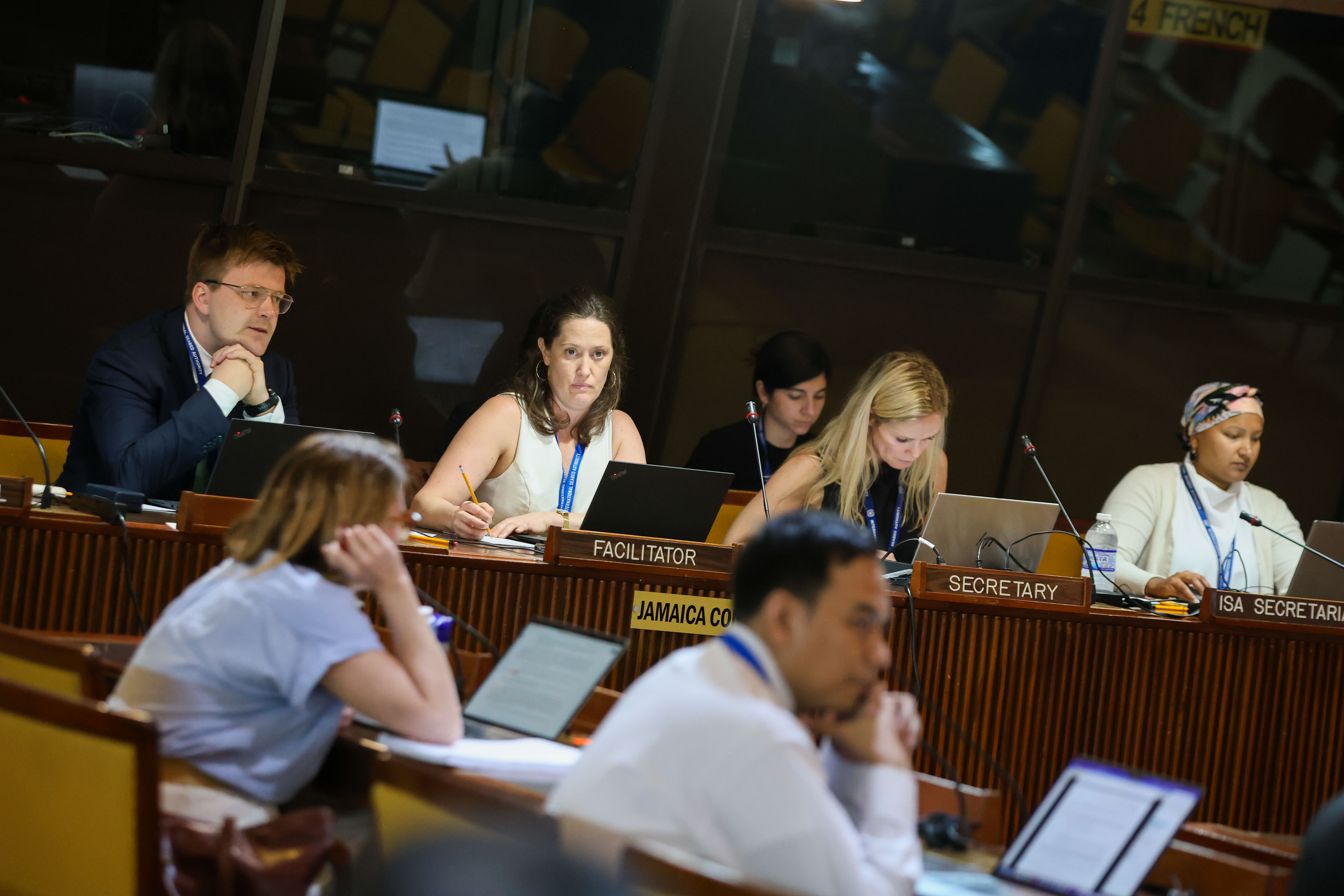
Dais during the Informal Working Group on ICE Mechanism and Establishment of the Compliance Committee, facilitated by Ingrid Vikanes, Norway
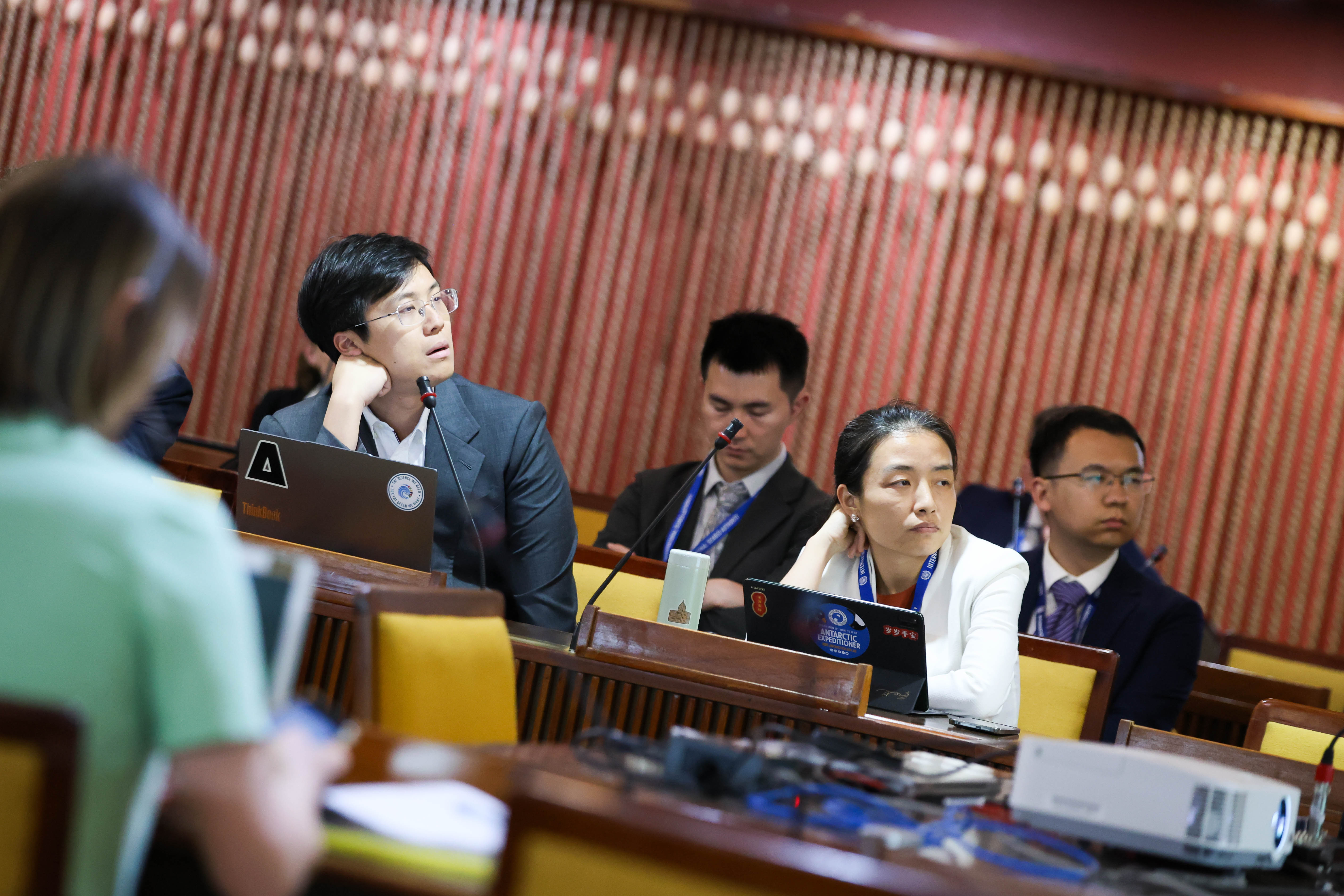
Delegates from China looking at the text on the screen
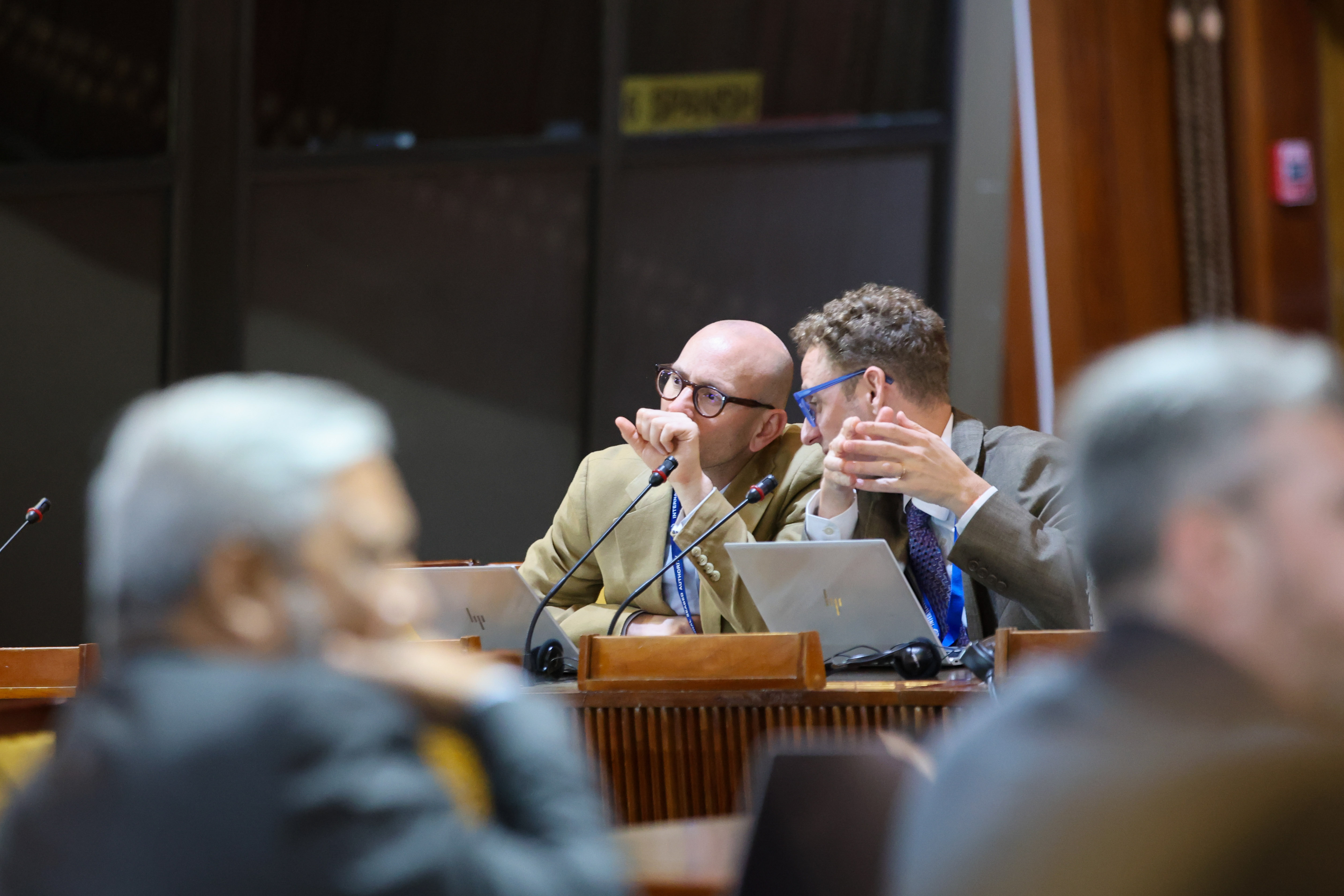
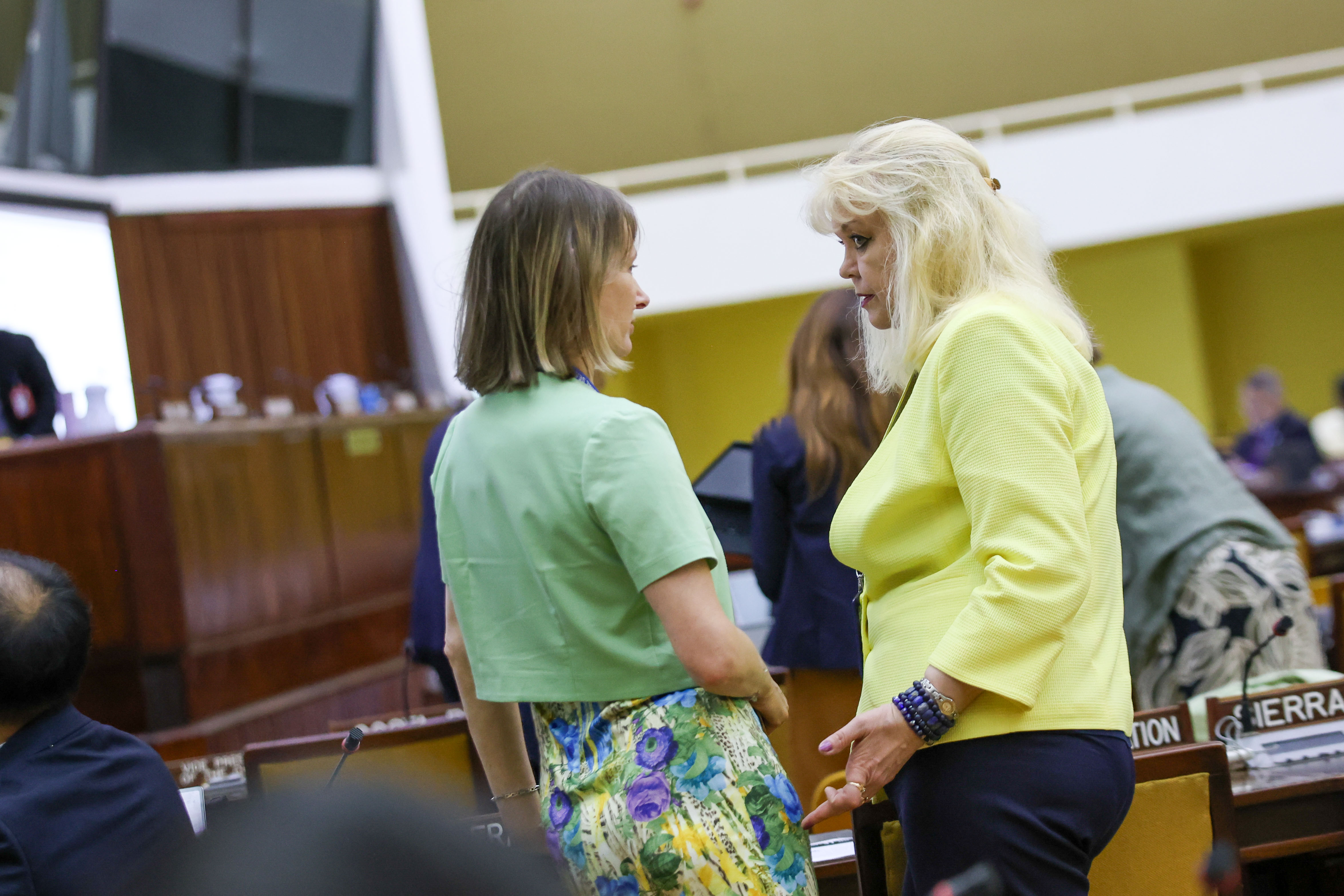
Delegates from the UK consult.
Council Meeting
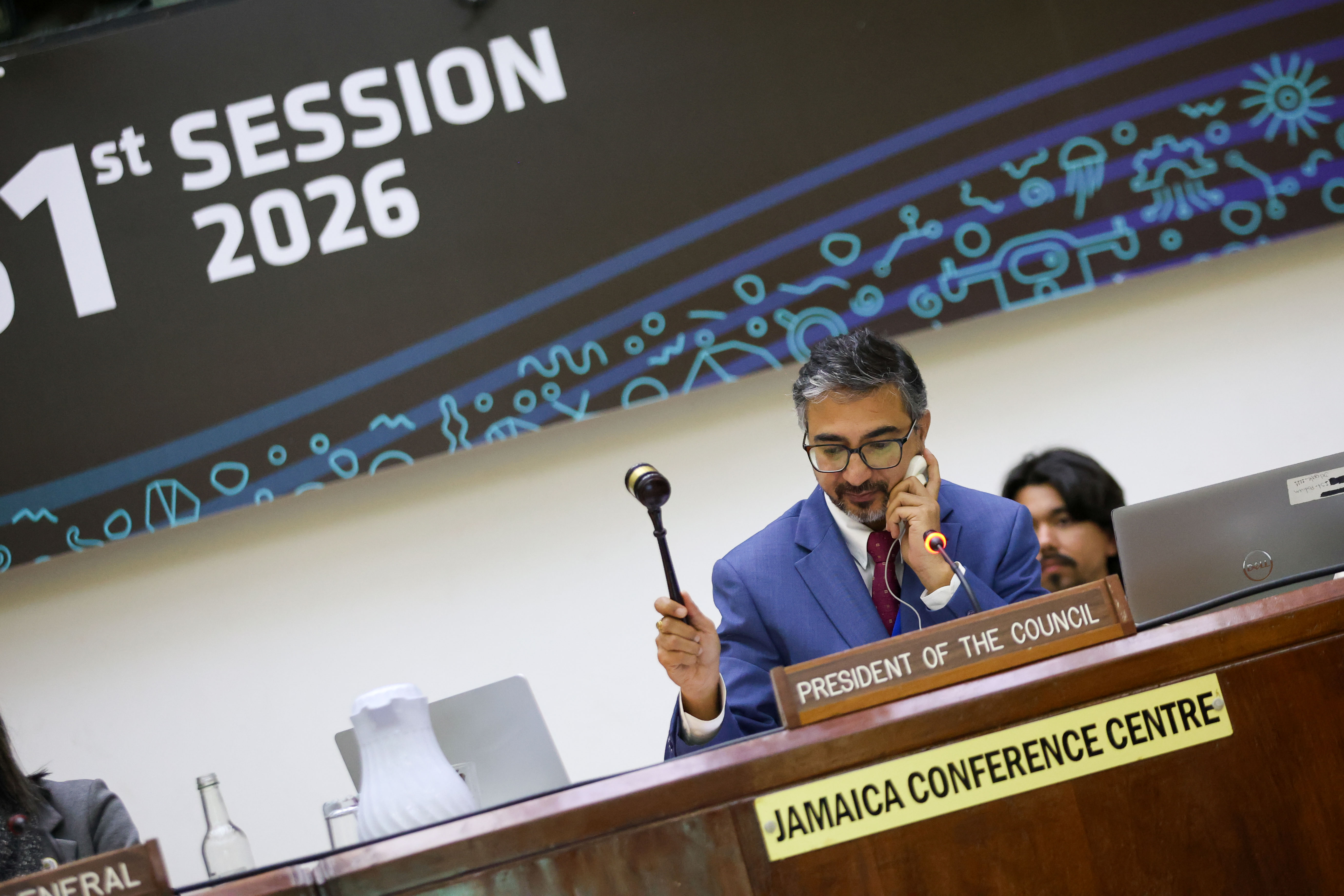
ISA-31 Council President Mayank Joshi, India
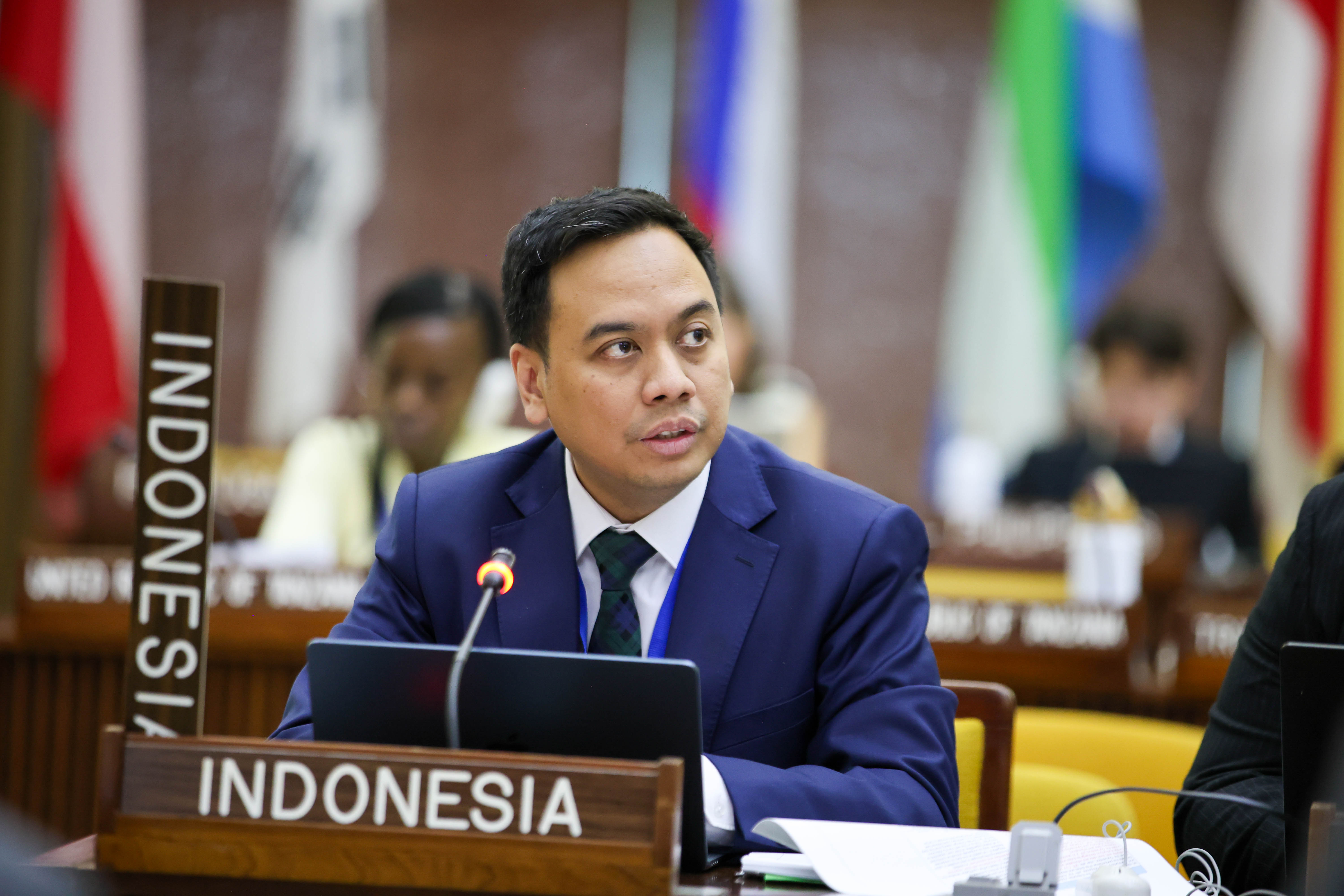
Muhammad Taufan, Indonesia
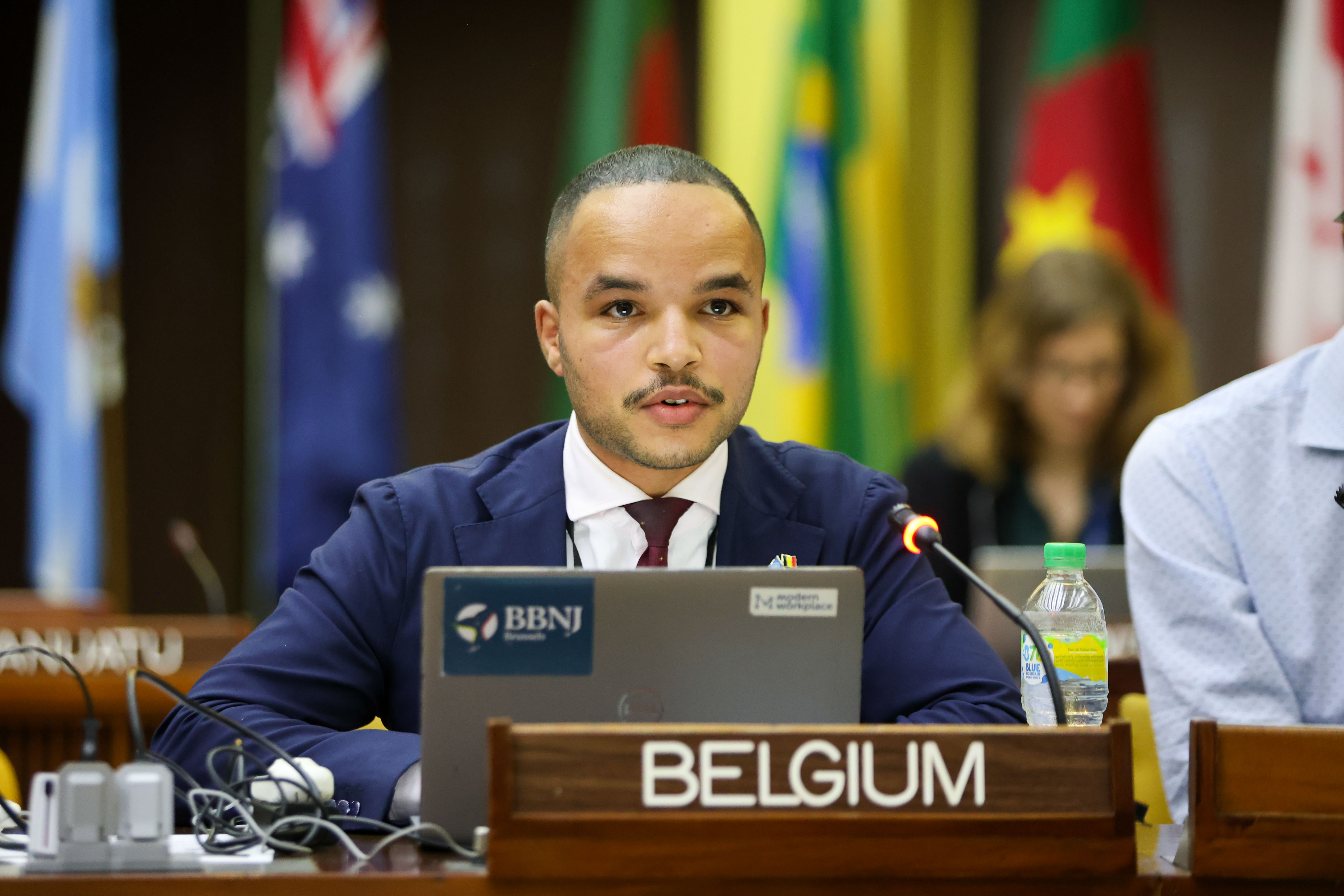
Thomas Voets, Belgium
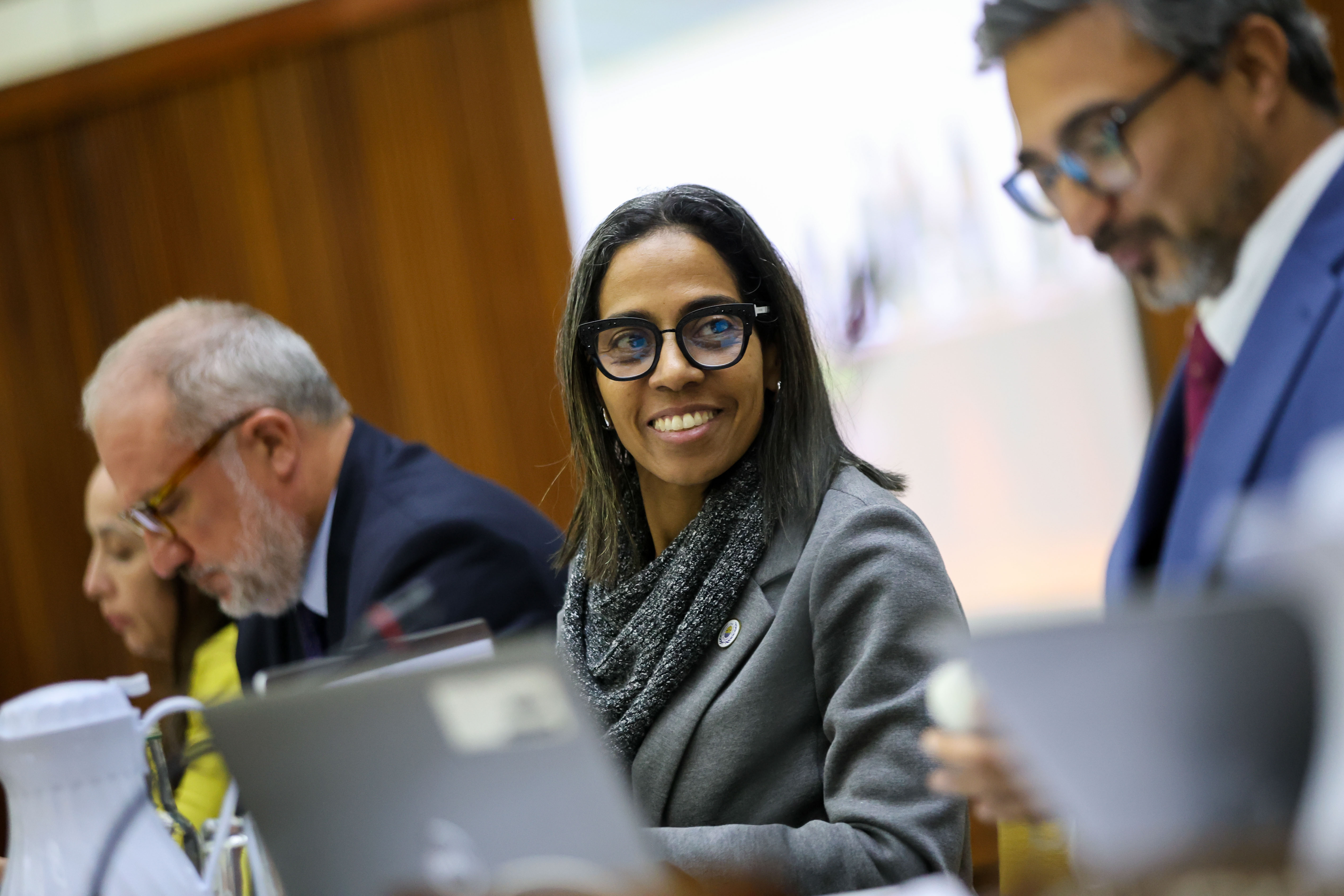
Leticia Carvalho, Secretary-General of the ISA
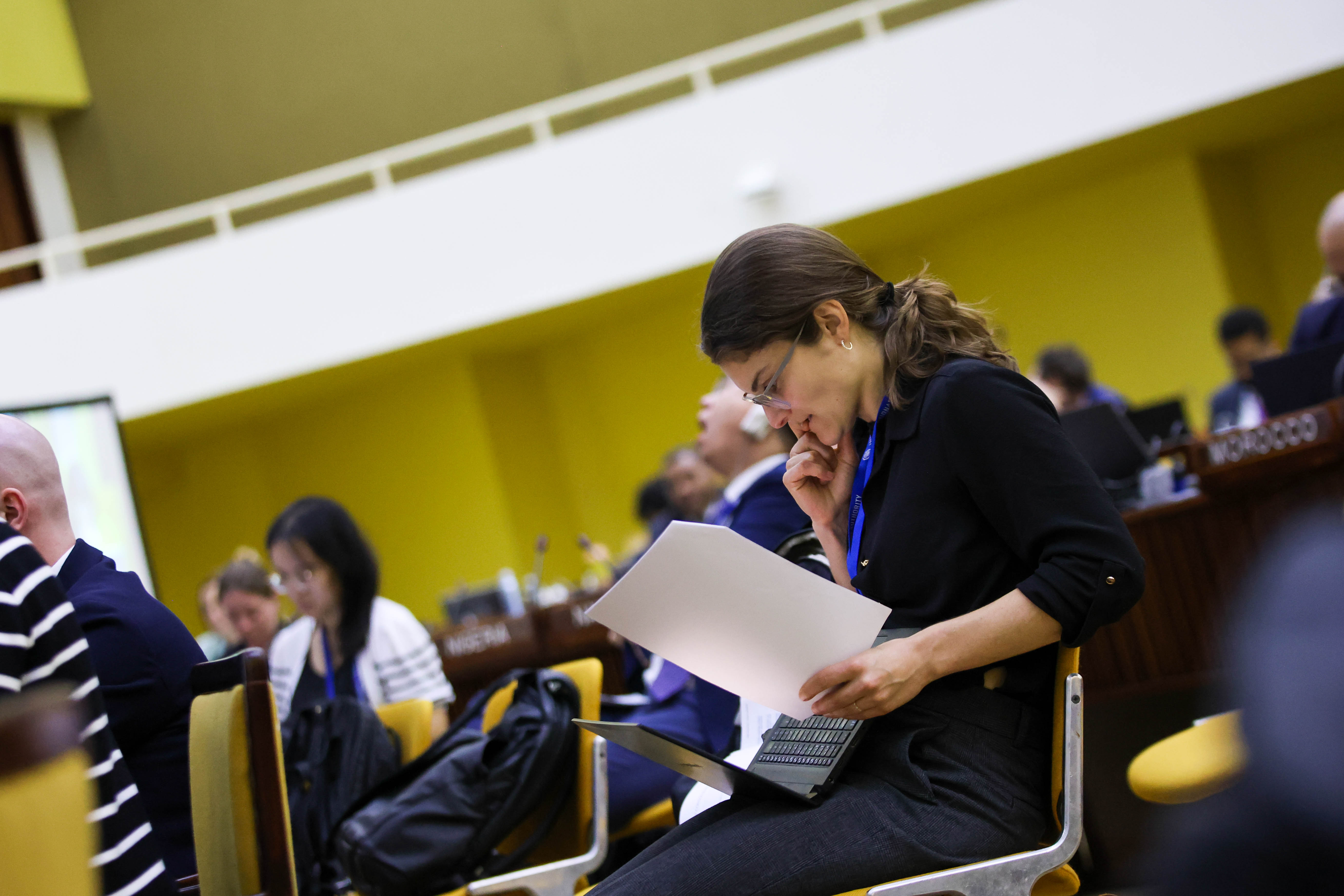
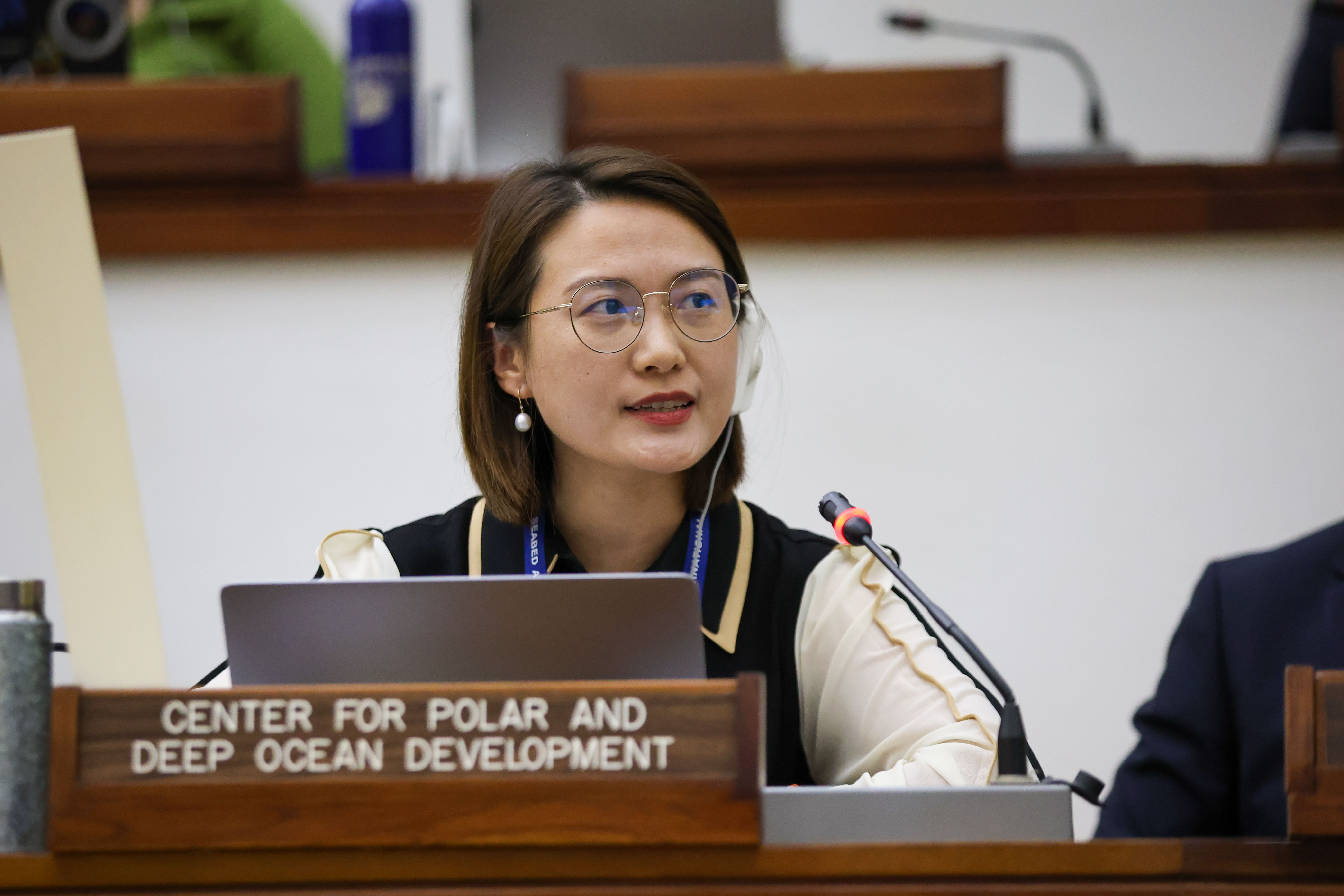
Lily Xiangxin Xu, Center for Polar and Deep Ocean Development
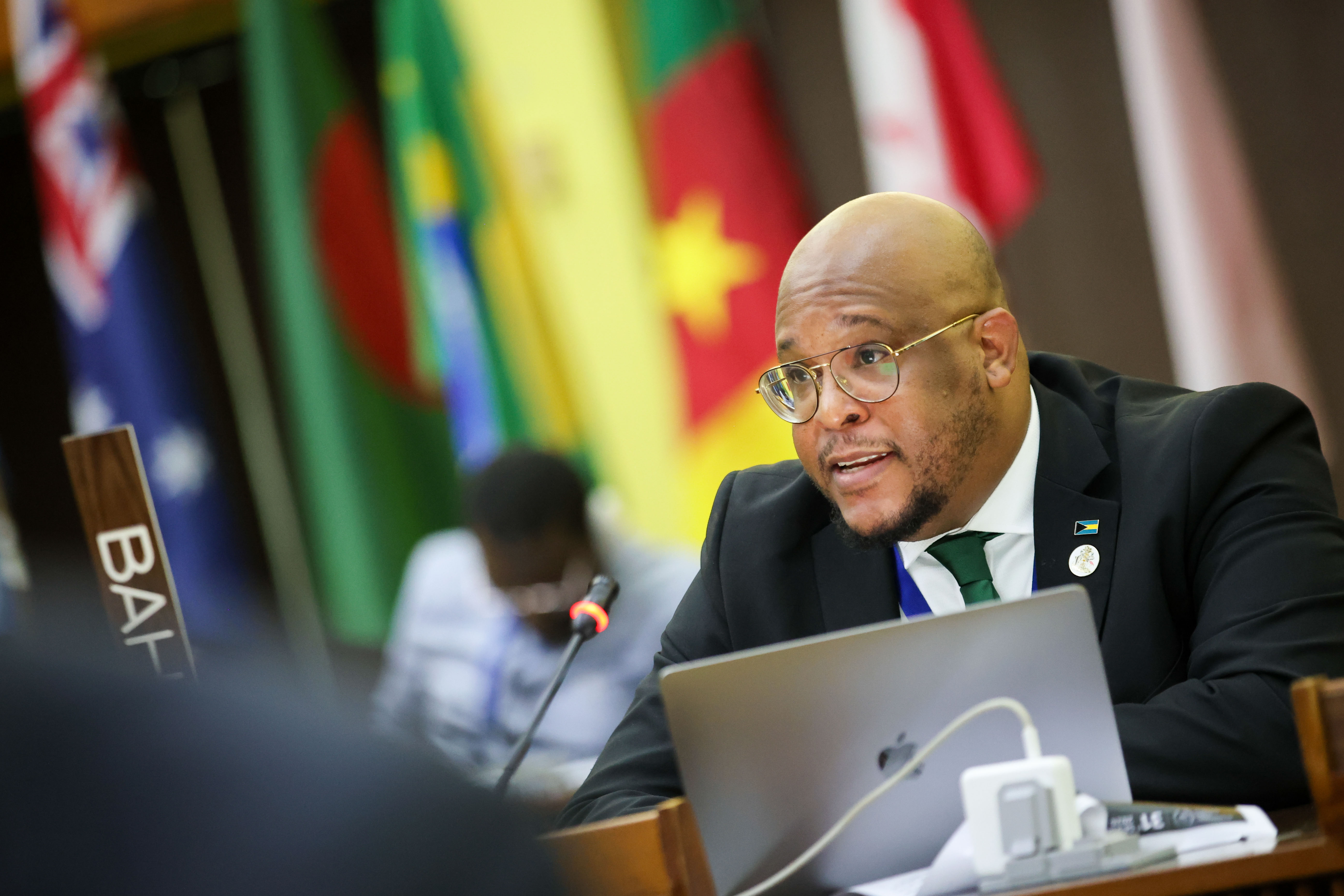
Shannon Anthony Bethel, the Bahamas
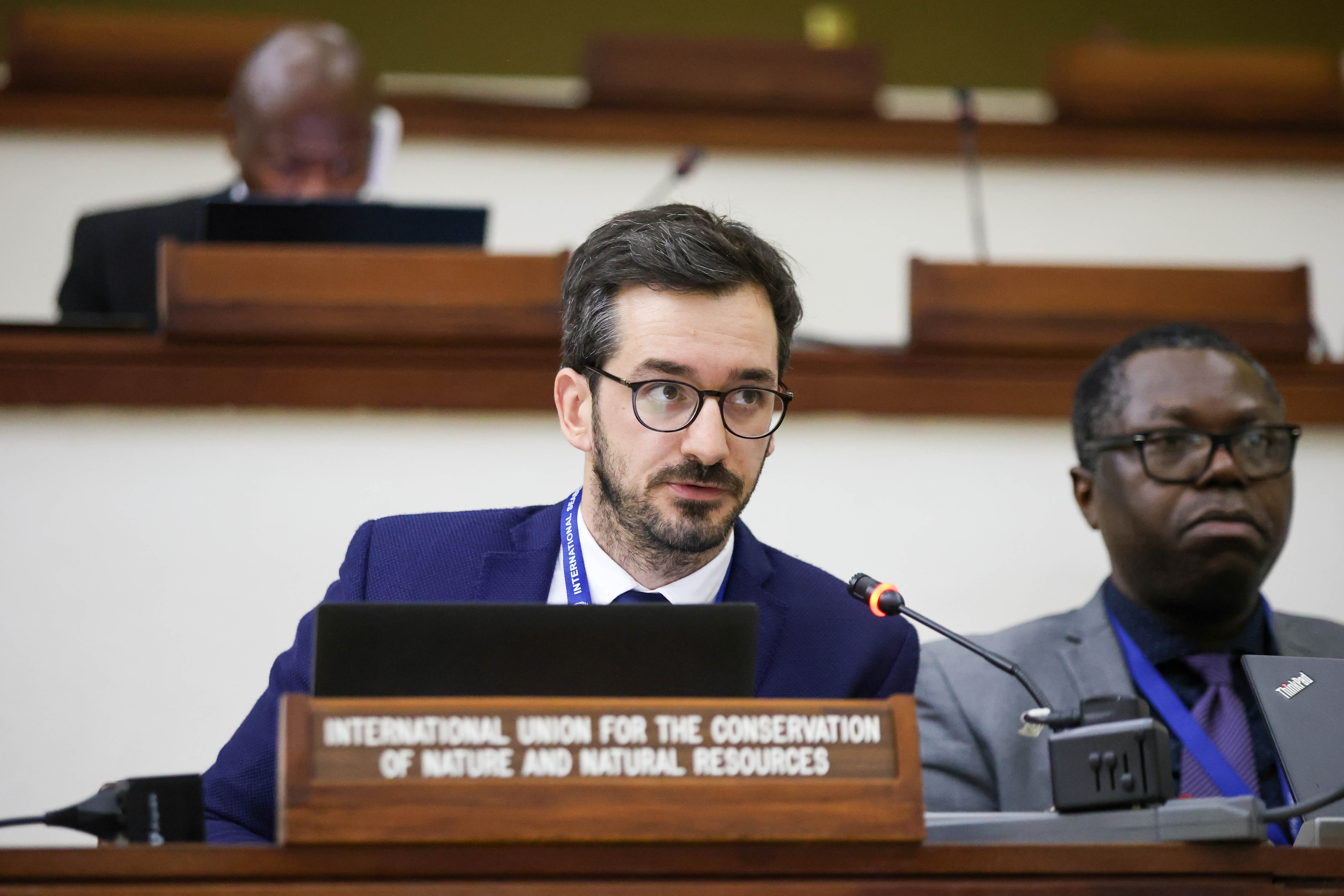
Clément Chazot, International Union for Conservation of Nature (IUCN)
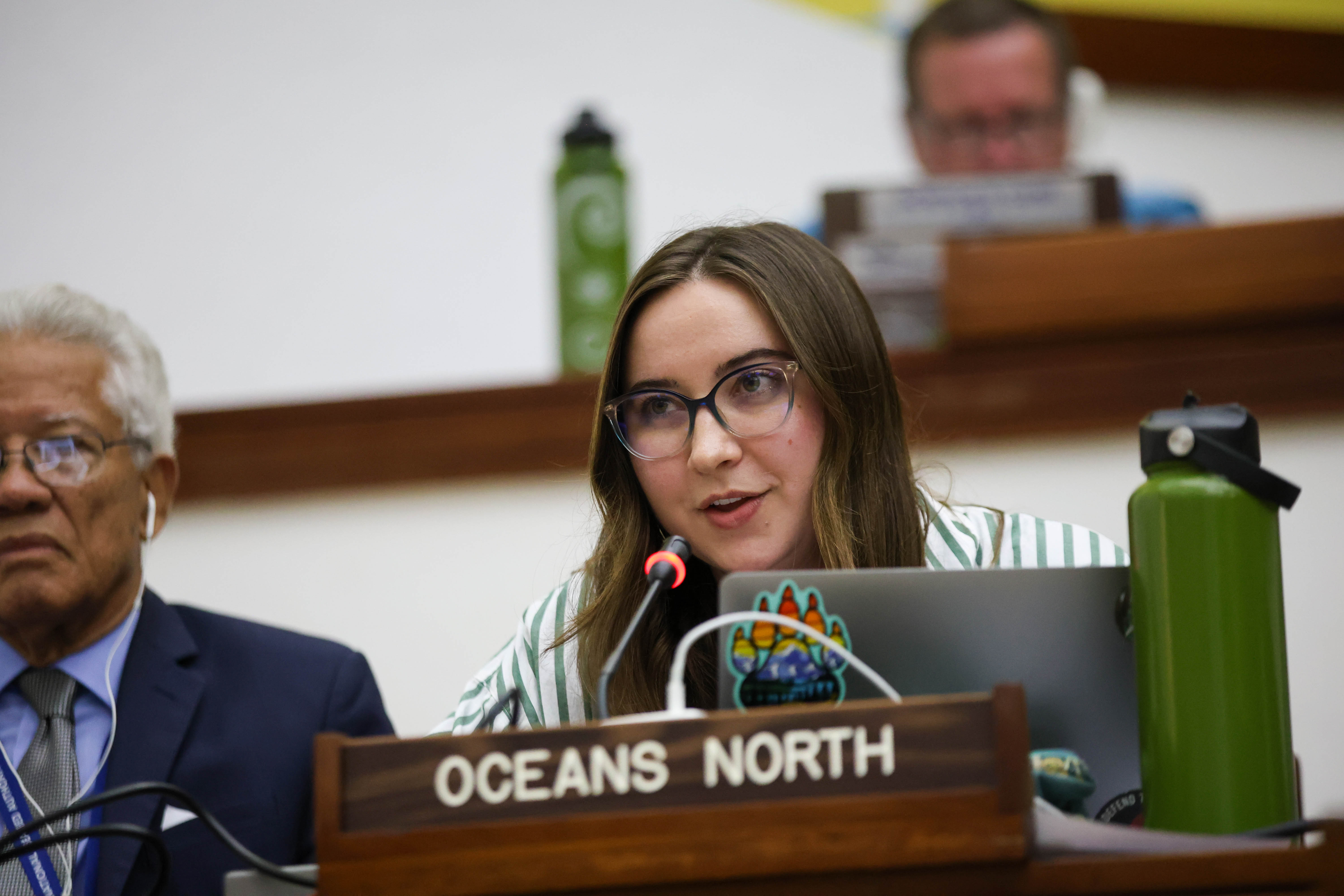
Nicole Zanesco, Oceans North
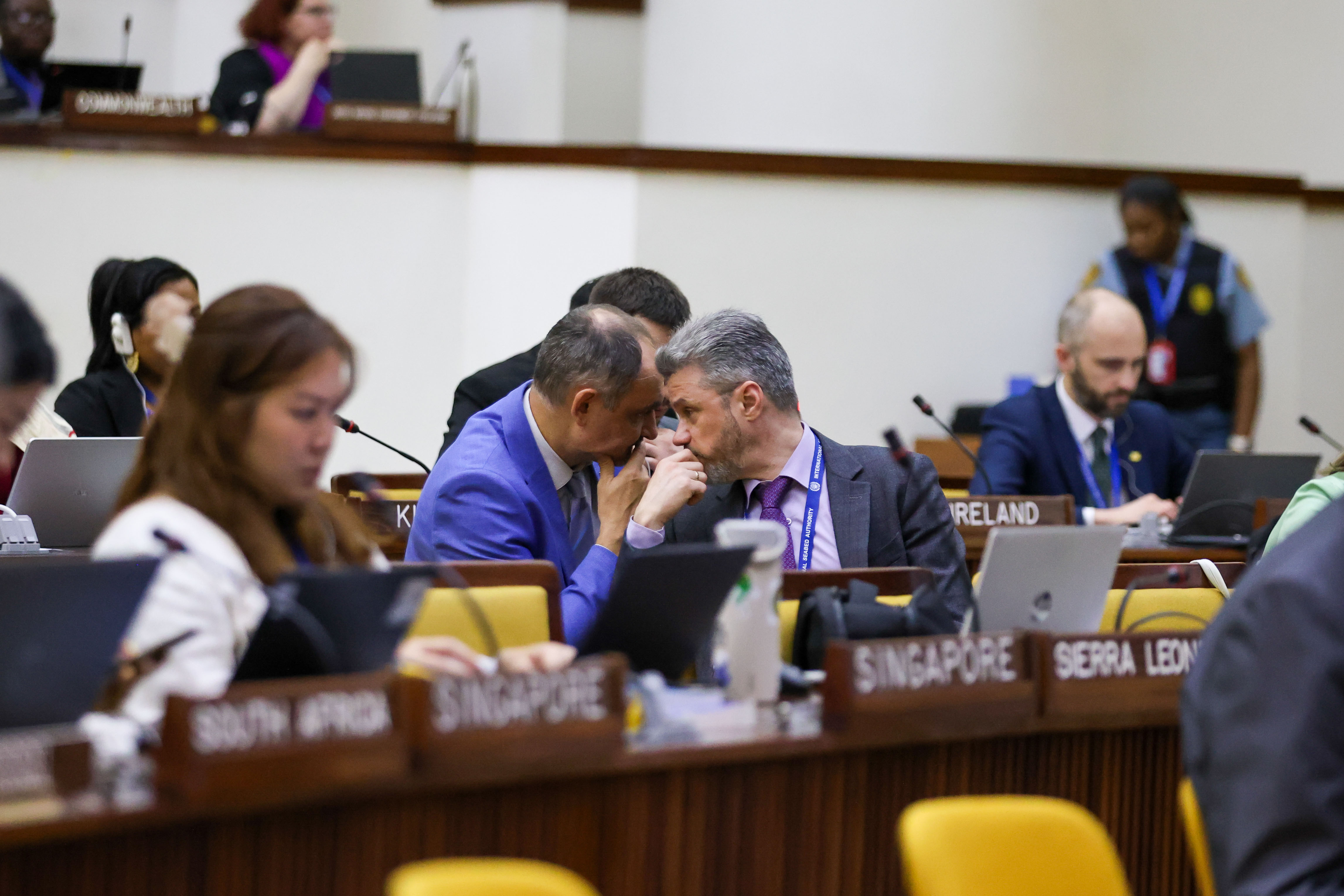
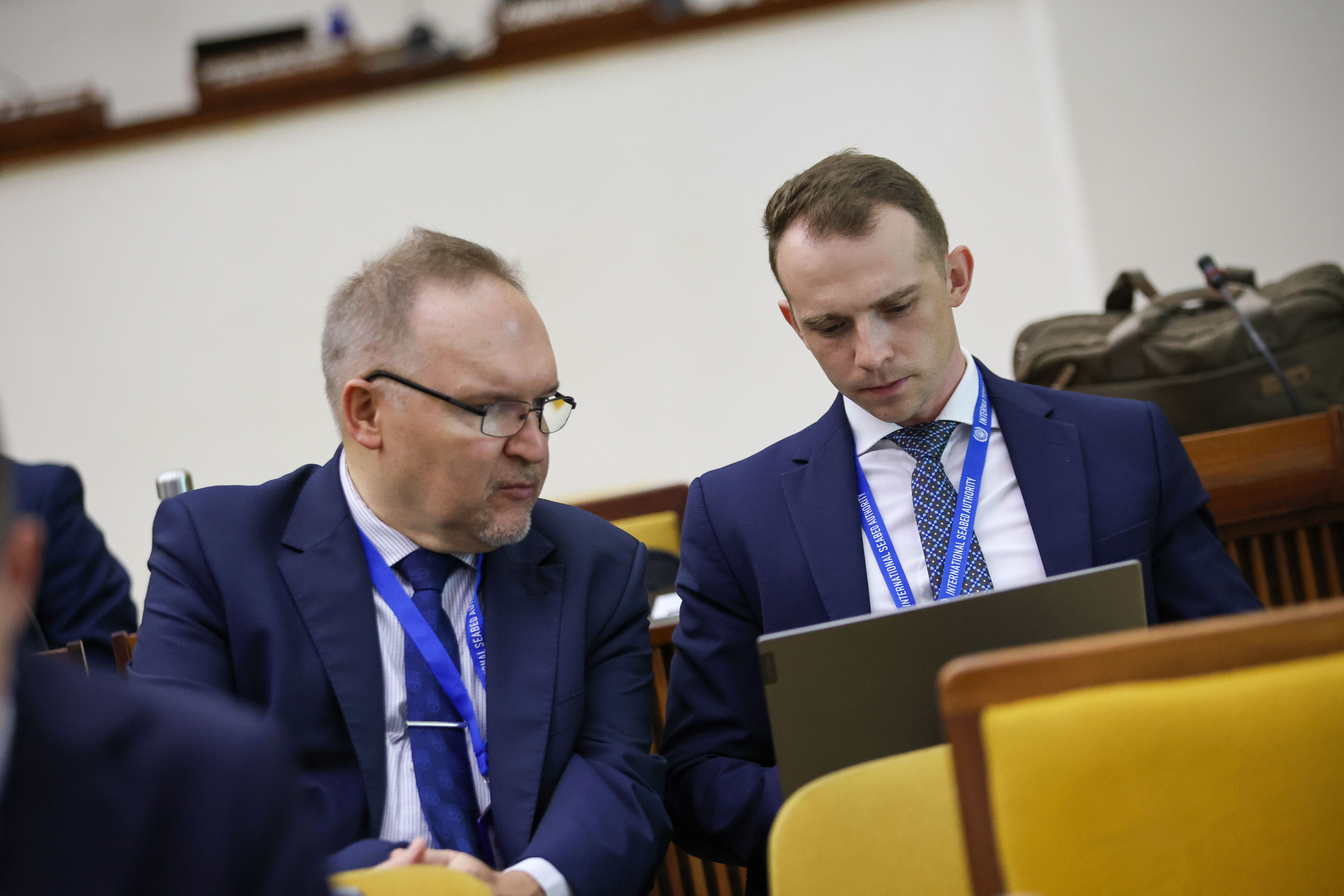
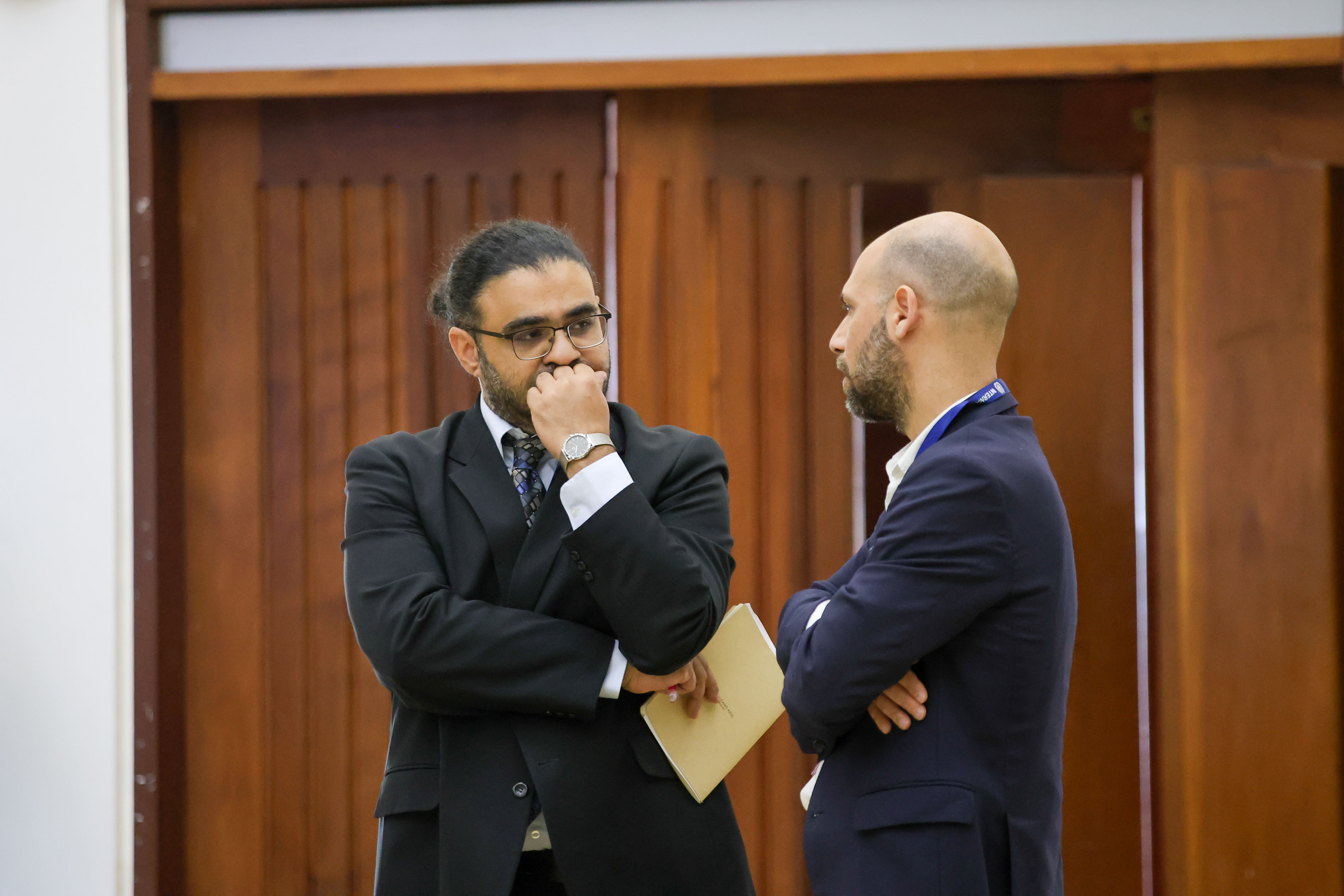
Delegates consult during the session.
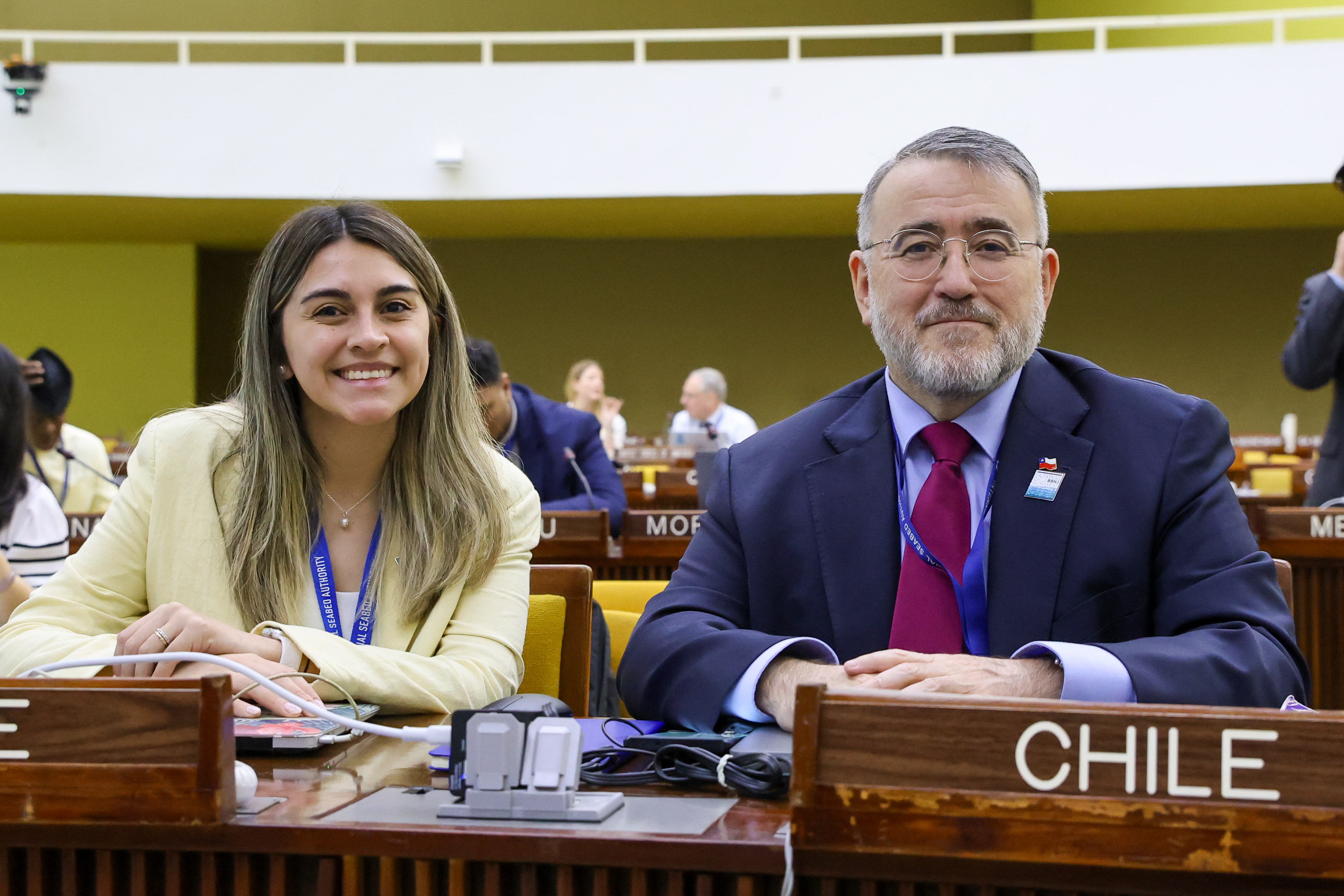
Delegates from Chile
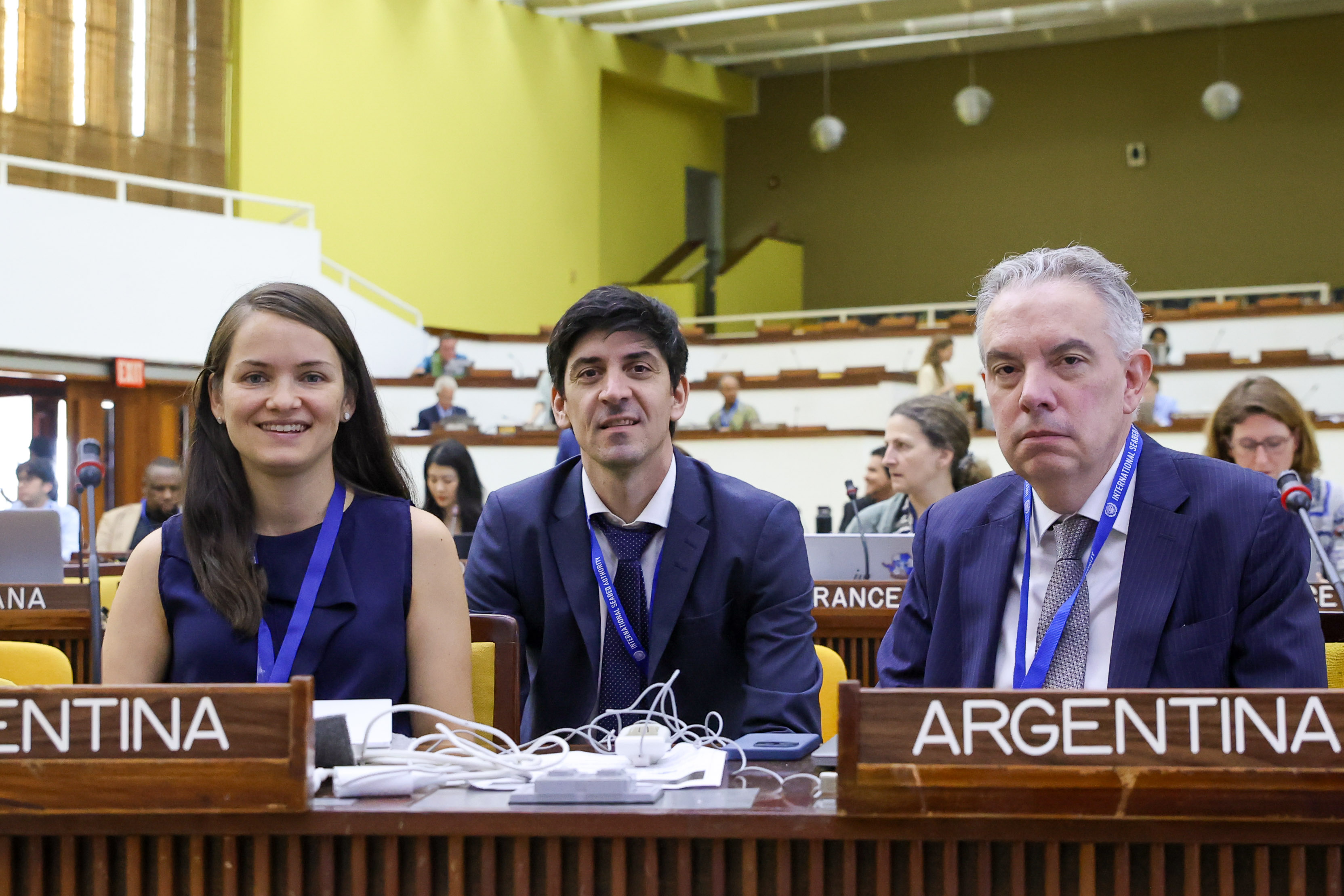
Delegates from Argentina
Selected Images
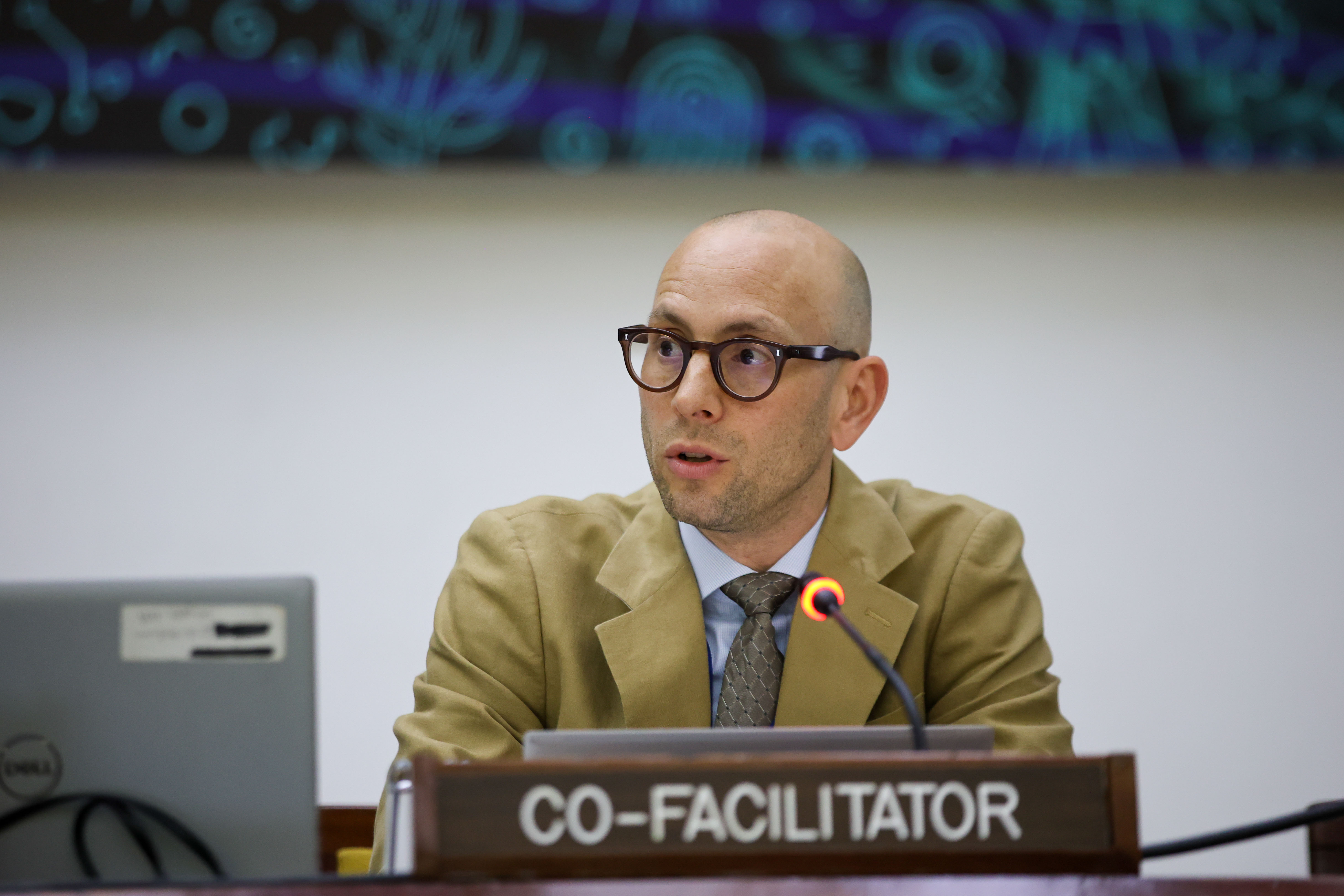
Fraser Janeczko, UK, Facilitator of the Friends of the President group on Modification of a Plan of Work

Around the Venue